Subscribe via:



Show Summary
The conversation explores the evolving trends in multifamily housing, the challenges faced in plumbing repairs, and the efforts to improve the reputation of pipelining in the DFW area. The speakers discuss the growing demand for multifamily units, the complexities of plumbing issues, and the importance of maintaining a good reputation in the industry.

Resources and Links from this show:
-
Listen to the Audio Version of this Episode
Investor Fuel Show Transcript:
Ryan (00:00)
A lot of times it’s when people are trying to sell their home. We get calls because an inspector came in and they’re trying to sell their home and all of a sudden now they’ve got a failing sewer report. They had a hydrostatic pressure test done and it failed and so they’ve had a plumber come out there and inspect and the plumber says, you got problems here. ⁓ here’s a quote to fix them. ⁓ A lot of times people don’t know that there is this other solution so they look at the bill and have sticker shock and they start researching.other alternatives
Dylan Silver (02:09)
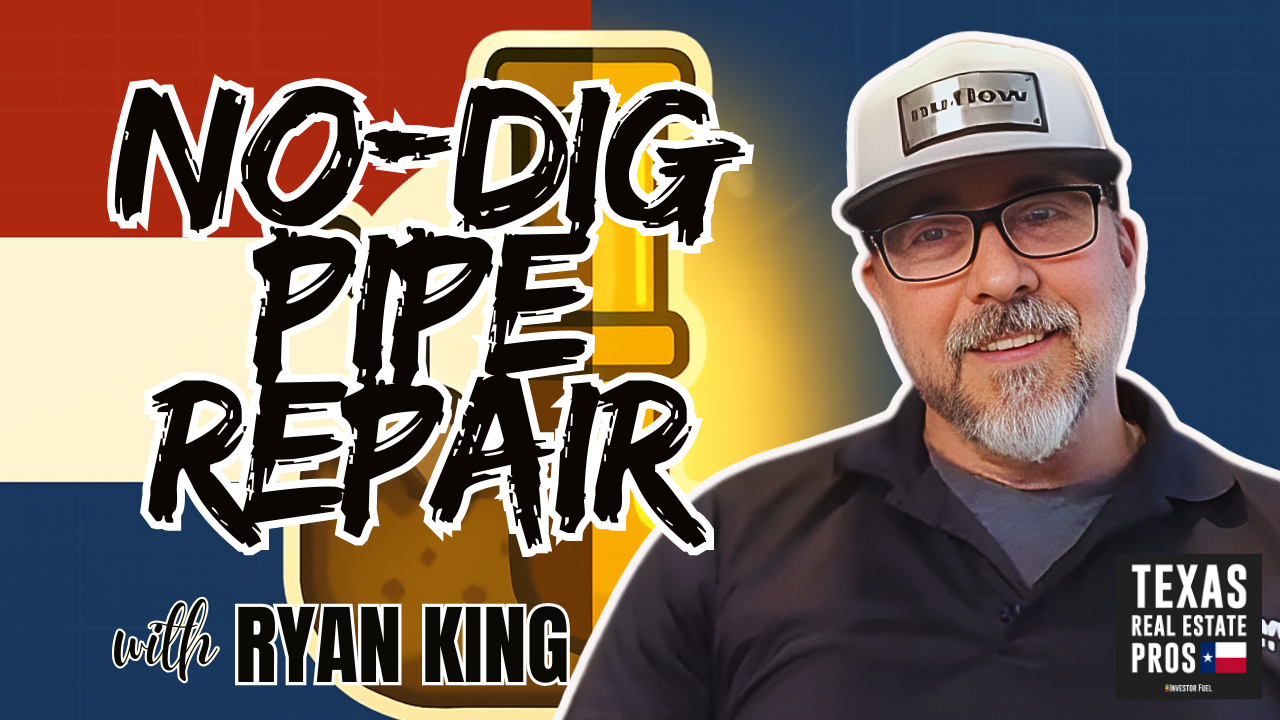
Hey folks, welcome back to the show. Today’s guest, Ryan King with Nu Flow Trenchless Pipeline Repair and DFW has a interesting strategy to repair pipes without trenching, right, as the name says. So Ryan, welcome to the show.Ryan (02:28)
Thank you for having me, I appreciate it. Good to be here.Dylan Silver (02:30)
Thank you for hopping on. We were talking quite a bit before the podcast and admittedly I’m a little bit of a fish out of water in this space because this is all new to me. But I think a lot of people might not be aware that they have an option when these issues arise with any type of pipes under the home and repair that might be needed. Walk us through what exactly is trenchless pipeline repair.Ryan (02:57)
Sure. Basically, the goal is to try to dig as little as possible, if not at all, to try to repair sewers and drains ⁓ that are pretty inaccessible. The costs for those can be pretty substantial, and the additional damage to a home’s foundation is something that doesn’t get talked about a lot.Because when they remove all that dirt from underneath the house, they really can’t get it all back in. And so you’re going to end up with shifting and avoiding opportunities for moisture and bugs to come into those spots. what we’re trying to do is save from future issues with damage to the home by fixing the pipes that are currently in the ground without having to trench and dig up all the infrastructure to replace it.
Dylan Silver (03:49)
Right, you know, when I think about excavating, really, right, you’re taking so much of the dirt underneath the home to gain access to the pipes. It seems like, of course, there’s going to be some settling issues. You just removed a whole chunk of earth underneath the home to gain access to it. Now, when folks are traditionally looking at some of these issues, is it because they have like an impending emergency? Is it becauseRyan (03:56)
Mm-hmm.Yeah.
Dylan Silver (04:14)
They’re aware that hey, there’s something maybe of slight blockage. What’s the typical reason folks are reaching out to you?Ryan (05:08)
A lot of times it’s when people are trying to sell their home. We get calls because an inspector came in and they’re trying to sell their home and all of a sudden now they’ve got a failing sewer report. They had a hydrostatic pressure test done and it failed and so they’ve had a plumber come out there and inspect and the plumber says, you got problems here. ⁓ here’s a quote to fix them. ⁓ A lot of times people don’t know that there is this other solution so they look at the bill and have sticker shock and they start researching.other alternatives
and you know we tried to be that ⁓ other option to come in there and offer hey we can fix this problem. A lot of times I’d give us about an 80 to 90 percent chance that we can repair that same situation without having to dig it up. ⁓ There are certain situations that we can’t you know we it’s a case by case basis but we’ll get those reports we’ll look at them and build
you know, tell us their story. We’re trying to get as much information as we can to determine whether or not we can actually do the job we say we can do accurately.
Dylan Silver (06:11)
Now, when you mentioned inspecting inspection issues, right? As a realtor myself, I’m thinking that that’s interesting. So you have effectively a seller who is unaware that they have an issue and now they’re failing an inspection, which is going to make it that the buyer is not going to be able to purchase his home and they won’t be able to take out a loan to buy the home because it’s got the failing inspection. So.Now they’re getting that sticker shock like you mentioned. I’m thinking immediately most people like you said are calling a plumber and they’re saying, wow, this is a huge bill. What are my other options? When folks are reaching out to you, is it through a Google search? they coming across you that way? Have they friends of friends referral network? Is it a little bit of everything?
Ryan (06:50)
Mm-hmm.So a little bit of everything because, I like we spoke beforehand, the technology is not new, but it’s new to a lot of people. I’d say about 90 % of people don’t know this is out there that we talk to. So most of the time, it’s people just researching online. the lining installers are trying to get the word out. We’re trying to do a collective effort to talk to people like yourself, get videos online, explain the process.
So most of our work comes from Google searches from people who got something from someone and a quote from someone that they just wanted to double check. Is there another solution? There’s people we get as referrals from work that we’ve done. So I would, I would give it about a 60 40 60 Google 40 % referral now. And I’m sure as time goes on that, will probably move to maybe a 50 50. But it’s going be a while before we kind of
Dylan Silver (07:54)
Yeah.Ryan (07:56)
get the word out to people so they know that this is an alternative that’s out there and it’s viable.Dylan Silver (08:02)
Walk me through if you can, a little bit of the mindset from the seller, right? When they’re, you know, sailing along and selling their home, let’s say it’s going great, they find, you know, potential buyer, they order the inspection, or maybe they order the inspection before ⁓ finding the buyer, and then they run into an issue.and they realize, okay, we are going to have to get this fixed. What typically are sellers thinking at that point? Are they thinking, hey, I don’t know if we can afford this, I don’t know if we can sell our home, do we have the money for this repair, hey, how are we gonna finance this, that type of thing.
Ryan (08:41)
Yeah, unfortunately those repairs that they’re kind of like the big four, I tend to call them, you you got your foundation, you got your roof, AC, and you got your plumbing. You might have a few in there that I’m not accounting for, but ⁓ those are some big line items. ⁓ And any way you slice it, one of the four can kind of take a deal out of the mix. So, ⁓When it comes to the sewer system, typically the seller used to be different during COVID and that whole real estate boom, where people would just buy in homes, sight unseen. They didn’t care, they just wanted the home. And unfortunately now we’re starting to get calls of people coming back and saying, hey, we bought this house two, three years ago, we didn’t know what we bought and now we’re stuck with this bill. So there are buyers that we get calls from that.
They just found out about it, they’re now sellers, they’re trying to sell their home and buyers are now putting the spurs to them saying, hey, we need to get this fixed. ⁓ And so it can deter people from being able to sell their homes because of the size of the price points of the repairs. ⁓ So what we try to do is offer as many options as possible. We have different products to address multiple different types of
brakes that can be a lot more cost effective than going in there and tunneling it all out and digging it up. Unfortunately, sometimes we just can’t do that without putting a lot of liner in the ground in order to get the home to pass pressure test. ⁓ I’m doing a very thorough job and multiple inspections. It’s a very tedious process to make sure we can get it to pass to the quality of the buyer. But we walk
both the seller and the buyer through the process to make sure that they understand that this is what we’ve got to do to get it to where you want to buy this house.
Dylan Silver (11:15)
I’m thinking about all the different ways that folks can come across, you know, this type of alternative solution. And I’ve noticed this as a investor friendly agent myself, realtor, but also as a consumer, as a, as a someone who was looking for a home as a first time buyer, unrelated to what we’re talking about right now. But in many cases you come into kind of a hitch in the process and someone says, well,you this is it or, you know, this is the price and you’re thinking, well, I can’t afford that. And then you kind of just throw your hands up in the air and there’s going to be a percentage of people who do that. We say, well, I guess this isn’t the right time then now. Whereas if they had just, you know, gone to one other person, one other lender, or in the case of, you know, a ⁓ pipe issue, you know, trenchless repair, they might’ve had their solution resolved for less.
and also less time.
Ryan (12:13)
Yeah, I mean, case in point, we’ve had probably five or six people just in the past two, three days that called us with a simple issue that was a single break. And they get a quote from the plumber to come out there and do it. it was more than what they were willing to afford or expected. Most people don’t expect these things to happen. It’s out of sight, out of mind. And then all of a sudden, they’re wanting to sell their home.boom, they’re stuck with this huge repair that needs to be done. The beauty about what we do is we can minimize the amount of liner we put in, specifically on a newer home, which we do fix a whole lot of PVC. So with PVC, we put in shorter sections of liner to fix particular breaks because usually you have long 20 foot sections of PVC that’s great, there’s no problems, but always in the joints.
joints and the fittings are always having problems and so that’s what we have had a solution for is offering these smaller point repairs to take care of those areas so that you’re not having to line the whole house. You’re not having to dig 50 feet to go get to that one spot or break down through your foundation to expose that and usually with the repairs that they do even when they get to those spots are failure points for the future.
because they might work for five, six years, ten years, whatever, but eventually they become a problem again down the road. Now you’re spending the money twice.
Dylan Silver (13:43)
How often, Ryan, can people use something like a homeowner’s insurance to get something like this covered? Is that ever possibility?Ryan (13:52)
Yes, actually. ⁓ The most insurance, you have to go talk to your provider about it. But ⁓ they have what they call riders or ⁓ little, I believe they call them riders. But basically you have to pay a little bit extra for it to cover sewer systems. Most of the time insurance companies aren’t going to cover anything related to sewer. They will only cover the damage caused by the sewer. So if it flooded your house.They will cover the repairs to get your home back to where it was before the flood. They won’t fix the problem that caused it. ⁓ So from right now, from what my knowledge is, they will cover some companies like Liberty Mutual. not sure if I can throw names out, but I will because we’ve worked with them on a project recently where they will help as long as you have this clause.
Dylan Silver (14:38)
Yeah.Ryan (14:45)
They will cover the pipe that comes out of your house and connects to the city service. So the yard can be treated, but under slab, unfortunately, they still are leaving that to the homeowner to fix. But at least you can have a third of your project covered through your insurance policy if you have this rider and they offer it.Dylan Silver (15:48)
That’s a big deal. mean, I think about how expensive these projects can get. I think, you know, if you are, whether you’re looking at trenchless or, you know, traditional route, having nothing in place is maybe saving you money short term. But then when you go to sell your home, ⁓ all of these issues can arise. Are you seeing that there’s a certain age of a home where⁓ you’re expecting at that point maybe some percentage of blockage whether it’s know 20, 30 year home ⁓ or is it not as black and white as that you know you might have a newer home that could have some issues as well.
Ryan (16:28)
Yeah, I I spoke with a gentleman yesterday. His house was 10 years old. He’s already got problems with it. He’s probably had issues with it and he just found out about it. This is probably more my guess, but we get ranges from homes that were built in the 50s and some homes that were built only a few years ago. A lot of it is again, way that it was constructed, the soils around the area, how, howperson living there uses the system, some people don’t realize, you just can’t throw absolutely everything down the pipe and expect it to just disappear. You do have to take care of your sewer system because it’s just like, you know, out of sight, out of mind, you just toss it and it goes away. You don’t think about it. But then, you know, when you toss the wrong thing down there, like in some cases of tenants, we’ve had people throwing vapes down the pipe.
Dylan Silver (17:09)
Yeah.Ryan (17:19)
and rags, t-shirts, creatures in a pipe, know, animals get into those pipes. You just don’t know and those things get stuck and now you’re causing some big issues. So it’s a hit or miss.Dylan Silver (17:33)
How, well wanna ask a granular question about your business, Nu Flow. How far outside of DFW are you going? you strictly based in DFW? Are you seeing business outside of DFW as well?Ryan (17:46)
⁓ Most of the time we’re in the DFW area. Every now and then, depending on the size of the project, we’ve done some work ⁓ in the surrounding areas of the DFW Metroplex. ⁓ We’ve done some work in Oklahoma. ⁓ But ⁓ if it’s a larger project, like a commercial site or something, we’ll make arrangements to go and ⁓ take our gear and go out there. But it is case by case.Dylan Silver (18:13)
We are coming up on time here, Ryan. Where can folks go to learn more about trenchless pipeline repair? How can they reach out to you or get in contact with your team at Nu Flow?Ryan (18:24)
Sure. ⁓ The website is a great resource. put a lot of energy into putting a tremendous amount of content on the website. Just go to nuflowdfw.com It spells N-U-F-L-O-W, but you make sure you add DFW for Dallas Fort Worth.com. And then we have an AI chat bot that we’ve integrated in our website. You can ask it virtually any question and it will bring up the page with that information in there.And if it can’t answer your question, just give us a call. We’ll try our best to answer and give you as much information as you want, probably more information than you cared for. So just let us know. ⁓
Dylan Silver (19:04)
Ryan, thank you. ⁓Again, thank you so much for coming on the show today.
Ryan (19:08)
Thanks for having us, we greatly appreciate it.