Subscribe via:



Show Summary
In this conversation, Michael Muse shares his journey from a young age immersed in tax forms to becoming a tax and AI architect. He emphasizes the importance of mindset in business, the necessity of understanding tax strategies, and the value of having a supportive team of advisors. Michael also discusses the difference between tax credits and deductions, and highlights his new projects aimed at teaching financial literacy to children.

Resources and Links from this show:
-
Listen to the Audio Version of this Episode
Investor Fuel Show Transcript:
MICHAEL MUSE (00:00)
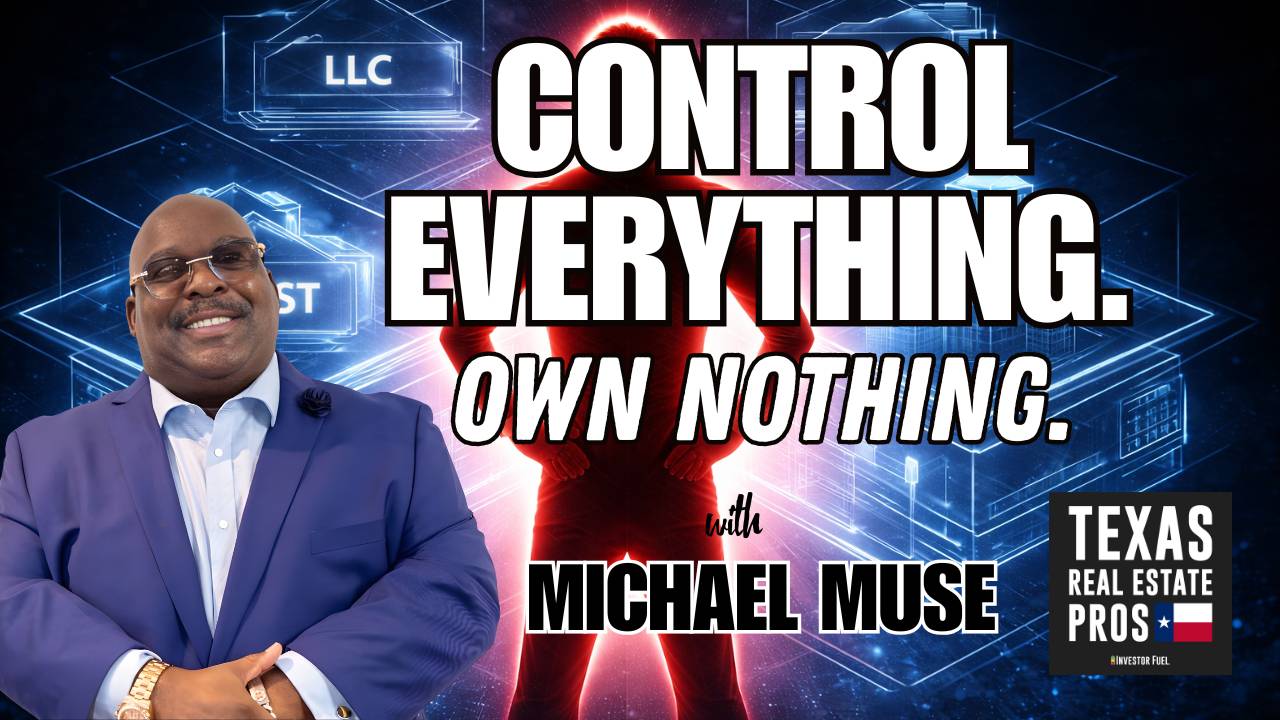
start day one, day one in business. And actually I’ll take it even further than that. If a person say they’re serious and they’re serious about growing it into a wealth structure for themselves, let’s actually get looking to the estate planning so we can actually structure from top to the bottom. So that way we put you in a position where you control everything and own nothing.Dylan Silver (02:00)
Hey folks, welcome back to the show. Today’s guest, Michael Muse is a tax and AI architect, helping people lower their tax liability while also incorporating strategies to build wealth. You can find him online and on YouTube at Michael Muse One. He’s between Detroit and the DFW Metro. Michael, welcome to the show.MICHAEL MUSE (02:23)
Dylan, thank you so much. It’s always a great opportunity to talk and share my vision, share my story. So definitely want to thank you first and foremost for giving me this opportunity.Dylan Silver (02:34)
Hey, thank you for coming on. And I mentioned to you that I was taking a look at your channel before hopping on here and you were doing a planning session. I felt like I was in the room with everybody else and really walking them through everything from what is an S Corp to what is the mindset that you need to have when looking at managing your own assets. So talk to me about how you got into this space and on coaching people and on helping guide them.with their tax rate, but also with their mindset,
MICHAEL MUSE (03:08)
Definitely, definitely doing the first thing I grew up in, I didn’t have a choice. So we’ve been in business 53 years, second generation. So the two things that were prevalent as I was learning how to read and write as a five and four, five and six year old, my mom would put tax forms in front of me, the 1040s, Schedule Ds, Schedule Cs. So I was learning at a very young age and seeing in real life of people living their life and going through.the formalities of starting a business, buying property, and then the real estate side, my parents bought HUD house back in the days. People might sound a little dated, but back in the eighties, people bought houses from the HUD department. And a lot of times those houses were very inexpensive. And even at four or five years old, summertime, my parents would buy a HUD house. I would have to go in and help them, even at four or five years old, pick up paper and…
Wipe down sinks and wipe down toilets. So my work ethic started very early. And so as I progress and get become an adult, I bought my first real estate property when I was 21, because I was already taught and I saw through, got a chance to see real life examples. They always say, if you want to be great, the first way to become great is
Dylan Silver (04:20)
Wow.MICHAEL MUSE (04:34)
You have to follow examples and look at what a person has done wrong. I think too often when we look at successful people, we look at what they’ve done, but we don’t look at the challenges they had to face to get to where they are. And that’s where the mindset part come in. It’s easy to want to have things and do things, but until you see it for yourself or experience it,Or it’s even better when you can just watch someone else experience it and know not to do it. I know this might be kind of funny here, man. I remember I was working manufacturing and one of the guys was upset and he was kind of down on his luck. We had just got our profit profit sharing check. And I said, man, why are you looking like that, man? He said, man, let me show you why he opened the check stub up. He had three spaces. Child support, $100 child support, child support, $100.
Dylan Silver (05:54)
Yeah.Mm. Mm.
Mm.
MICHAEL MUSE (06:18)
Sothat was $300 and we’re talking the early nineties.
So I made it a point that if I want to be great, you had to be able to watch another man’s mistakes and just make sure you don’t even follow those mistakes. I think that’s the first building block of greatness. So once it came to the real estate and the taxes, just followed. My mom was a great empathetic leader and teacher, and she really went all out to help people with their businesses. She went all out to help them get grants. And so I want to make sure
that I do something that has, that’s not oftenly done in businesses, having a successful second generation business. So I can honestly say last year we surpass what we’ve previously done in any single year last year. So I’m excited. I’m excited about that. And, and the one thing that sets us apart, it’s not just me. have a team of people from tax attorneys and role agents. I got
Dylan Silver (07:13)
Incredible.MICHAEL MUSE (07:25)
all kinds of people in AI development, IT people that I work with because businesses, businesses all over. I love what Jim Rohn saying, ⁓ success loves speed. And so I rather the mindset that I try to make sure I teach ⁓ my clients is that don’t be afraid to make mistakes. It’s better to make mistakes early on and learn ⁓ and move quickly to get back up.And also get that mentor or coach, preferably a coach that you’re paying because now they’re way more invested when you pay. Because when you have a coach, the best analogy I have for people is that a coach could tell you what’s around the corner before you get there because they’ve already been there. And so that’s the type of experience that I try to give my clients who get in business. That’s the type of guidance I give them with tax strategies. Like I say, I have seen.
Dylan Silver (08:04)
Yeah.MICHAEL MUSE (08:25)
people not use tax strategies. have seen people who do. And I say one of my best stories that when I had a client who owes set the previous year, he owes $750,000 in taxes. through coming up with an actual plan for him, we were able to amend his taxes and wipe the weight at $750,000 debt. And he ended up getting a refund for $25,000. so that changed everything. So that’s what we love to do.Dylan Silver (08:49)
Yeah, that’ll change, she’ll respect.MICHAEL MUSE (08:54)
We all, understand you had to have a, get the growth plan, strategy plan. You had to have a succession plan. And so even right now I’m teaching and training my grandkids so that in the next few years they could be even be fully active in a business so that it could go to a third generation.Dylan Silver (09:14)
When we talk about tax strategy and when we talk about creating companies, one of the things that I almost never hear you get spoken to, and correct me if I’m wrong here, if I’m completely wrong here, let me know, is that if you’re a W-2 worker, but a lot of what you’re doing could be characterized outside of your job as a business. Let’s say you’re passionate about music and you’re traveling for… ⁓what you’re passionate about. Maybe you’re not making money now, but you’d like to in the future. If you have that set up as a business, you can do things like deduct the miles that you spend driving to and from, you know, events that you’re not necessarily paid for, but that are a way for you to brand yourself. But people aren’t thinking like that when they’re just starting out.
MICHAEL MUSE (10:35)
think the biggest issue with people when they do get into business, they do go out with their passion, like you say, they don’t take the business side over with that passion. And they operate it as a hobby. And that’s the reason why a lot of people, IRS have disqualified those deductions because they say, hold on, you’ve been doing this for 10 years, you haven’t made any money. And based on what you say you’re spending money on, we don’t see enough of it.going towards a business investment and just kind of piggyback off what you just said. I’m in, if I have a client that’s in the music, I’m making sure even if they’re going to an event that’s not theirs or if they’re going and they’re not getting paid, I’m making sure they make documentation of what they’re trying to learn from the experience, whether it be from the artists, the promotion, the venue, because that’s
That’s a whole different tax credit, which is research and development credit. And that’s a tax credit that most counties and CPAs are not talking about. They’re not teaching their clients how to get into those credits. And those are credits that, the biggest thing I try to explain people, it’s a big difference between a credit and a deduction. A tax credit is way more powerful than a deduction. See, a deduction, you go take your wife out to eat and you…
You write that off your tax bill. That’s just some money that comes off your tax liability. Okay. A tax credit is dollar for dollar. So I try to make sure I’m positioning my clients to say, let’s do what we need to do to be compliant and get some of these research and development credits. Cause they’re here. Let’s make sure that all the, ⁓ all the rules under one big, beautiful bill, let’s put these things in action. And so that’s, that’s what we pride ourselves on.
Dylan Silver (12:28)
Yeah.I’ve heard a lot of people in multifamily tell me that there’s been, and single family, large scale, ground up construction, tell me that there’s been a lot of development, not just driven by affordable housing, but driven by the big, beautiful bill and the explosion of cost seg analysis and things like this. And so when I think about these larger trends that people,
in the macro who are doing scale are aware of and yet most people, and I include myself in this, never thought about taxes until you have to pay a big tax bill, right? It’s a rude awakening, but I mean, I’d rather be awoken at some point in time than never at all. Do you think that there is a way, and I’m not even sure how this would work for folks.
MICHAEL MUSE (13:08)
Exactly.Dylan Silver (13:23)
to get some exposure to and make it interesting for folks to learn about tax strategy before they have to pay a tax bill? Is there a reason why with everything that we have right now, no one is at a large scale championing that?MICHAEL MUSE (13:40)
think one thing is, I say the first thing is the tax code is long and complex. And I think that the tax code has over almost 80,000 pages. so very few people who are in the industry who are willing to step out and do the extra personal care to ask the question, because the reason why most people don’t think it’s an issue, because let’s look at it from the W-2 standpoint.person with a W-2 is already being conditioned to give the IRS money. Where a successful wealthy business, a business that has even a family office attached to it, they’re the total opposite. They’re trying to pay the least amount as possible and they do that because they have all the right things in place and they kind of tie that into the real estate. If a person wants to be successful in real estate, whether it’s one, four properties or eight properties,
You have to have your advisors in place. You have to have your banker in place. You have to have your financial advisor in place. You have to have your attorney in place. You to have your CPA and accountant in place. And the key is what makes it different. What I teach my clients is they need to all know each other and work together for you. If they’re not all working together for you, then you’re wasting your time. They should all know each other and they should be working for your benefit. And that’s not how…
too many people get into business and they get into real estate and they operate as a long ranger. Where, where if you want to be successful in business, business success is a team, business is a team sport. You know, if I want to see Ryan Silver do good, that means I need to, as I come across people and they say, you know what, I’m looking for a certain house. I’m looking to be in a certain area.
I need to have a pipeline to send those people to you and vice versa. When those people come, you said, man, I bought this property. I don’t know what to do with tax time. Vice versa. You send people to me. think when we people get to the point, they understand that you need to be in a community of people where we can all work together and that all of your advisors that you have, you’ve already vetted them all. And you can have an actual game plan. One that
that’s gonna build and grow into a legacy type wealth situation for you.
Dylan Silver (16:40)
Yeah, I think on a whether you have a company with hundreds of employees or whether you are yourself and a partner, you should be looking at, I need a second opinion here. This decision should not be run by me alone because that tends to put you in an echo chamber of your own thoughts. And that’s probably one of the worst places where a lot of people can be. Right. And so even if you’re just starting out, and I think maybe even more importantly, if you’re just starting out havingMICHAEL MUSE (16:53)
Absolutely.Dylan Silver (17:08)
those advisors who you mentioned, like you pay them, right? And maybe you can’t afford the premier service that they have, but you slowly start to work in as many as you can at a way that makes sense because whether it’s something like, does this deal make sense from a tax strategy perspective? We understand it cash flows. What about from the tax strategy perspective? Or, hey, we need something that is going to work within the available credit that we have. Is this the type of loan that we should be looking for?Is there something else that we should be looking at in this case, right?
MICHAEL MUSE (17:42)
Absolutely.Dylan Silver (17:44)
You know, and when we talk about some of the different ways where people are deploying capital, I can speak for newer real estate investors and newer realtors when, as I mentioned earlier, you’re not really thinking about taxes until you’ve got the tax bill to pay, like at the end of the year. And that’s when you start to look at, okay, well, what do I gotta do differently next year? And so on and so forth.MICHAEL MUSE (18:02)
Mm-hmm.Dylan Silver (18:10)
I want to ask you, do you think that there’s ever a time ⁓ where it’s too early to be looking at tax strategy or should you really start the moment that you start your business?MICHAEL MUSE (18:22)
start day one, day one in business. And actually I’ll take it even further than that. If a person say they’re serious and they’re serious about growing it into a wealth structure for themselves, let’s actually get looking to the estate planning so we can actually structure from top to the bottom. So that way we put you in a position where you control everything and own nothing.Dylan Silver (18:50)
Yeah.control everything and own nothing. Yeah, I mean, that’s the you don’t want to get to come back to your personal right if you if you’re you know, you want to have that that shield of protection. We talk about that a lot, especially when we’re talking about some of these creative deal structures like subject to when people talk about land trusts and you know, being able to assume mortgages and this type of thing. ⁓ People definitely get into Hey, how do I shield myself from a liability standpoint?
MICHAEL MUSE (19:00)
Absolutely.Dylan Silver (19:20)
while also being able to make sure that this transaction works and exchanging hands of the necessary tools in that real estate transaction. are actually coming up on time here though, Michael. Where can our audience go? can folks go if they’re interested in reaching out to you or your team and any new projects that you work?MICHAEL MUSE (19:41)
Number one, just started my new project, two projects, the first one. We teach businesses AI because we understand that if we can help you save time, we’re going to help you save money. Well, for over 30 years of business consultation experience, we want to position you to make sure that you’re spending your time on rather new generating activities versus running out and just being busy activities. So that’s one thing we do. So the name of that business is AI Business Mastering. So we have a community where weputting together that you can learn AI at a small scale. And if you just don’t have the time, let us build it out for you. Let us take the hard work off for you. Then the next thing is dealing with committed to our kids, man. This goes right back to what you said earlier. Too many people are financially illiterate. I have come across people who have making millions of dollars, but they are financially illiterate.
They’re paycheck to paycheck. They’re from deal to deal. so I started earlier this year, the Future Funders AI Academy, teaching kids financial literacy and AI literacy, because in order for our kids to be successful, if they don’t have those two things in place right now, they’re already behind. And so we set that up. We’re working on getting the road out into schools and also with the general public.
next month so anyone wants to get with me on that you can you can give me you can give us a call at 833-972-2004 that’s 833-972-2004
Dylan Silver (21:23)
Michael, thank you so much for your time. Thanks for coming on the show today.MICHAEL MUSE (21:27)
Thank you so much, I appreciate you Dylan.