Subscribe via:



Show Summary
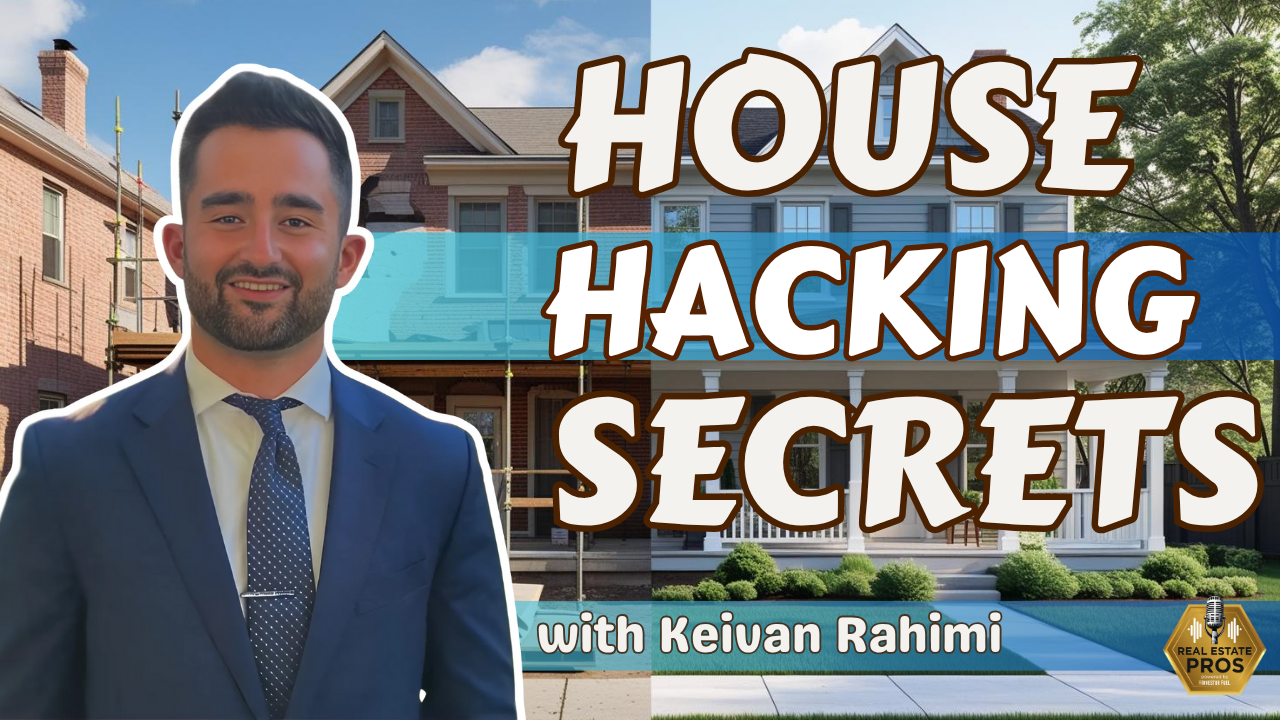
In this conversation, Keivan Rahimi shares his unique journey into the real estate industry, influenced by his family’s background. He discusses the challenges and opportunities for young investors in today’s market, emphasizing the importance of creative financing strategies. Keivan also provides insights into the Indianapolis real estate market, highlighting trends and the impact of out-of-state investors. The discussion concludes with Keivan’s contact information for those interested in learning more about his work.

Resources and Links from this show:
Listen to the Audio Version of this Episode
Investor Fuel Show Transcript:
Keivan Rahimi (00:00)
One strategy that thinks a little unorthodox and nobody talks about is if you’re a person that they don’t have the down payment money, but you know somebody that
for example, let’s say for example, this is for a personal home. Let’s say there’s a home that’s listed for 200,000. Let’s say that there’s some deferred maintenance on it. And let’s just say ballpark it, we’ll appraise for 300,000. So if you’re able to find somebody that can buy that home cash, 200,000, you do the work to get it up to the appraised 300,000 mark,
when they buy it for 200,000 from a friend, family member, whoever, you put a note on that. And you basically put a mortgage on it. And then when it’s time, all the work’s done and you get your appraisal, you go and refinance that money. therefore you can pull that 200,000 off. And then let’s say 300,000. So you need $60,000 down 20%. Let’s say you’re all in, you spend $10,000 on the rehab.
even $20,000, that equity $60,000 from a 300,000 appraisal to a 220,000 all-in price that you got to pay back to your friend, family member, that 60,000 equity that you now have is your down payment.
Dylan Silver (02:50)
Hey folks, welcome back to the show. Today’s guest is based in Indianapolis, Indiana and works as a property manager and also is an investor in Duplexes, four units and looking at commercial residential deals. Please welcome Keivan Rahimi. Keivan , welcome to the show.
Keivan Rahimi (03:10)
Hey, how’s it going Dylan? Thanks for having me.
Dylan Silver (03:12)
It’s great to have you on great great to have you here and I always like to start off at the top by asking folks how they got into the real estate space.
Keivan Rahimi (03:20)
Yeah, my journey is a little bit, I think, unique compared to some others. So ⁓ I grew up in a real estate family. So ⁓ my mom and dad have been involved in it. And I remember in high school, I was at the leasing office, at the apartments, doing all of that. ⁓ So my dad’s from Iran, a little town outside of Tehran. My mom’s from Kokomo, Indiana, a little farm town here in Indianapolis.
North of Indianapolis. So they actually met in Japan, Dylan, and got married there, came back. And when they first got back, you know, they didn’t have a lot of money. And they were able to buy one home, single family on the west side by the Speedway, by the Indy 500. And, you know, did all the work themselves, bought the next one, next one. And eventually,
My dad was able to quit his job, I think at SMC back at the time, and went full time into real estate. And 25, 30 years later, you know, we’re managing apartment complexes and doing some cool things here around town. So I kind of grew up with that background. And I would say my starting level is a little bit one step up from them. So I’ve got access to the capital and, you know, different relationships that they’ve built over the past.
couple decades.
Dylan Silver (04:40)
did you always know you were gonna be a real estate guy?
Keivan Rahimi (05:30)
No. So I think like most college kids, you don’t know what the hell you’re going to do. So I graduated in 2020 from DePaul University, got kicked out because of COVID. And as you know, Dylan, back then it was hard to find a job. So I actually worked with Sherwin Williams for a couple of years and then didn’t like that. And finally went into real estate full time.
Dylan Silver (05:43)
Yeah.
That’s right.
the COVID genre and actually just right now, I mean, it’s definitely an interesting job market and climate. I have a good buddy, I talk about this a couple times in the show, who’s in the staffing world in San Antonio, good friend of mine. And we talk often about, you know, the jobs that are hiring and what’s the market like. And I get such an interesting perspective because he works with the employers and I’ve never had that perspective.
Keivan Rahimi (06:06)
Ahem.
Dylan Silver (06:23)
before and I think just for young people now it’s definitely an interesting space and a lot more competition. But that’s why I’m passionate about the real estate space because it provides all people the ability to create their own generational wealth and start somewhere right. You don’t have to start with 32 unit commercial residential property but.
Keivan Rahimi (06:33)
Thank
Dylan Silver (06:48)
You could start with a land deal or a modular home or a fix and flip or that maybe that might be a lot, right? You could start wholesaling, right? So many ways to get into the business. Since your parents were in the business, Kayvon, when you got in after leaving Sherwin Williams, did you know, hey, this is gonna be the first couple of deals that I’m doing? Did you ask them for advice? And what was the process like for you getting into the business?
Keivan Rahimi (07:13)
So for me, it’s a great question. For me, I would say, so there’s two sides to this. There’s learning how to look for a deal, acquire a deal. There’s three. And then there’s the rehab side, it’s kind of in the middle. And then there’s the property management side on the back end. So I kind of got thrown in. I had to learn all of it. I kind of say I’m a hybrid of my parents and their partners because I…
kind understand each side. still learning, but I would say for the management side, the hardest part was learning, you know, being confident and learning how to delegate to maintenance to fix problems. For the rehab side in the middle, you know, learning how to talk and negotiate with contractors, ⁓ learning about picking up material, them getting material, what materials needed. And then on the acquisition side,
I would say, you know, that’s more of the podcasts, reading, learning, because there’s a lot more information that’s needed. And I remember when I first started dealing after work, I would, there’s a little part of town called Crown Hill Cemetery, where a lot of my properties are at, and I would drive two or three hours up and down the streets, putting in the addresses on my phone, going to the property record card.
looking up the address, getting the owner’s name, sending out mailing. And I’ve gotten a couple hits, a couple properties from that. So like you said, you don’t have to start out with a 35 unit apartment building. Start out with one house, one duplex, but it takes a lot of work and planning, knowledge, and then actually going out and doing it. And that was the big hurdle, I think for me and a lot of people starting out.
Dylan Silver (08:58)
You know, the duplexes, triplexes, quadplexes, I mean, you have a direct experience with this so you can speak to this. A lot of young people, college graduates are not aware. I’ve spoken with a number of lenders who’ve backed me up on this that in some, many cases, actually, it may be easier for college grads to qualify for multi unit than a single family home, a duplex, a triplex, a quadplex. And that’s due to
the cash flow. So they’ll see, okay, well, there’s three units here, there’s two units here, this will rent for this, they’ll cover this portion of it. If you’re able to kind of house hack and maybe have a buddy go in there with you. Now you’ve got two people renting one side out, and then you could have another person renting the other side out. lenders may actually look at that and say, okay, we’ll take a shot on this versus the single family home, which is one income.
Keivan Rahimi (09:48)
Correct. ⁓ I think there’s one factor though when you get out on the streets and the reality is that ⁓ there’s two different types of products you’re going to buy. There’s the one that needs significant work and if you’re able to do that, you can create a little bit of equity at the end and then the lender may work with you. But the problem with that, Dylan, is that you have to have all cash to buy the property, all cash to the rehab.
Dylan Silver (10:48)
Right.
Keivan Rahimi (10:48)
The other
side of the other product is going to be mostly finished, almost turnkey. You know, both units are still empty. The lender is still not going to give you money or give you a loan because you got to have renters in it. So like all my properties, I have to rehab it, put people in both sides or however many units there are before the bank will even say here’s a loan or even talk about refinancing. So I think there’s.
there’s more that goes into it than, ⁓ know, right. Yeah. Just like you either have to have cash on the front end or you have to have cash for a down payment. So for the younger generation, it’s, it’s kind of tricky right now, you know.
Dylan Silver (11:18)
in the place.
It’s true. And you know what? I’m glad we’re having this conversation because I’m a realtor in Dallas and I’m in a wholesaler and I was just having this conversation actually with my broker. I really got to leave the wholesale world and move into different world now because my broker’s like no wholesaling, but that’s a different story. But the investing side of it, it’s almost like in order to buy a home right now for young people, you have to have the mindset of an investor.
You’ve got to be looking at, what are the programs that I can use to qualify? You know, how am I going to do down payment assistance? Or what am I going to do to, you know, partner with people? Or how am I going to, you know, get money from family or so on and so forth? It’s like practically a blood test and you’re next of kin. And you know, making sure the sun and the moon and the stars align in order to qualify. At least that’s been my experience.
in my limited time as a realtor in my two years in the wholesale game. And so what can young people do? I mean, you were talking about how it’s a little bit tricky for just buying a duplex that’s got to be rented out. What can young people do right now if they’re looking at trying to have their own place, be on the deed of these properties instead of renting?
Keivan Rahimi (12:46)
Yeah, so, you know, everyone knows that there’s a lot of renters right now. It’s hard for, you know, people under 30, 30 to mid 30s to buy their own homes because the prices are high, interest rates are high.
One strategy that thinks a little unorthodox and nobody talks about is if you’re a person that they don’t have the down payment money, but you know somebody that
for example, let’s say for example, this is for a personal home. Let’s say there’s a home that’s listed for 200,000. Let’s say that there’s some deferred maintenance on it. And let’s just say ballpark it, we’ll appraise for 300,000. So if you’re able to find somebody that can buy that home cash, 200,000, you do the work to get it up to the appraised 300,000 mark,
when they buy it for 200,000 from a friend, family member, whoever, you put a note on that. And you basically put a mortgage on it. And then when it’s time, all the work’s done and you get your appraisal, you go and refinance that money. therefore you can pull that 200,000 off. And then let’s say 300,000. So you need $60,000 down 20%. Let’s say you’re all in, you spend $10,000 on the rehab.
even $20,000,
that equity $60,000 from a 300,000 appraisal to a 220,000 all-in price that you got to pay back to your friend, family member, that 60,000 equity that you now have is your down payment.
So, I mean, theoretically, you’re walking into the property with no money coming out of your pocket. Now, if that appraisal is a little less than 300,000, you may have to put a little bit in for that difference.
Dylan Silver (15:14)
Have you tried the strategy?
Keivan Rahimi (15:15)
I have, And it worked.
Dylan Silver (15:16)
Okay, a couple
questions about it. So I know in Texas, if you do a transfer of money before qualifying for a loan, that it’s going to get flagged because they’re gonna say, well, this isn’t your money. We need the whoever transferred you this money, they have to be on the loan because we see, you know, 2030, whatever it is $60,000 got transferred to you in the last 90 days, they need to be on the loan there with you. Okay, go.
Keivan Rahimi (15:29)
Thank
Mm-hmm.
You gotta season it.
Dylan Silver (15:44)
What’s that process like for you?
Keivan Rahimi (15:44)
So you have to season the money. So the money’s gotta sit in an account for three or four months. So yeah, it’s called like seasoning money.
Dylan Silver (15:54)
Okay, so the seasoning, and then I like that term. And then ⁓ with the note, I mean, I know a lot of note specialists, I’ve don’t have direct experience with this, I’d say tangentially, because I’ve worked with people who do, but this is a complicated space. So if someone’s an amateur coming in, or even if they’re someone like myself, who’s been involved, but might not have the specific skill set of the notes, how would we logistically go about this? Would we talk to a real estate attorney? How would what would
Keivan Rahimi (15:57)
Hahaha
Dylan Silver (16:23)
What steps would we take?
Keivan Rahimi (16:24)
I would recommend finding a broker or a mortgage broker that works with real estate, works with creative financing. Real estate at the end of the day is just creative financing. That’s all it is. ⁓ So now your traditional broker or mortgage broker, ⁓ that’s a connection that you definitely want to have if you want to go with a creative financing route.
Dylan Silver (16:50)
I
Keivan Rahimi (16:50)
It works
with multifamily too, like duplex, investment properties, it’s the same thing, same concept.
Dylan Silver (16:56)
I want to pivot a bit here at K-Von and ask you about the Indianapolis market. I don’t know too much about the market out there other than I imagine the speedway is an interesting area. Is there a lot of development around the speedway? We actually have a speedway out here. I want to say it’s called like Texas Motor Speedway. It looks like a, I’m not a big, I’m not into that world, but it looks like a huge deal out here. What’s it like out there? It’s got to be huge.
Keivan Rahimi (17:19)
So
I don’t want to hate on Speedway, but it has not gone up in 20 years because my dad beats himself up on buying houses out there instead of like other areas. It just hasn’t changed much, Dylan. But the market here, it’s definitely hot right now because there’s properties, mean, like crack houses full of trash, good areas.
Dylan Silver (17:30)
Really?
Keivan Rahimi (17:47)
You know, three, four years ago they were trading for 90 to 100,000 as is now you’re looking at like 110 to 120. The appraisals are coming in really high for the stuff I’ve got going on on the commercial side, larger properties, apartment complexes. Right now the interest rates are killing it.
Dylan Silver (18:07)
Yeah.
Keivan Rahimi (18:08)
What I’m seeing, especially on the East side here in Indianapolis is we’ve got a lot of out-of-state investors coming in, buying these larger apartment complexes, jacking rents up for a couple of years, and then selling it based off those rents. So you factor that in with higher interest rates. These performers are not cash flowing. So we’ve had a little struggle working with
commercial brokers and analyzing deals, but it’s good for the market. The market’s really hot right now and there’s a lot more on the market too, sitting on the market longer, so.
Dylan Silver (18:46)
It’s an interesting one. You know, I have a couple of buddies who are flippers out here in Texas. One of them gave me this phrase, you know, it’s not a trap house. It’s a trap home. We’re turning it into a trap home. And, you know, he’s got Airbnb’s that will be on and kind of that’s his his thing. And so it’s an interesting area. I’ve worked in that space.
Keivan Rahimi (18:48)
Ahem.
Dylan Silver (19:11)
prior to being a realtor for almost two years. so it’s a really interesting space. I love the distressed space. I think it’s a need that ⁓ needs to be met. And I think people who work in that realm definitely have their hands full, but love it as well. We are coming up on time here though, Keivan . Where can folks go if maybe they’d like to learn a little bit more about your business out there in Indianapolis or reach out to you, get in contact with you?
Keivan Rahimi (19:40)
Yeah, ⁓ so I love what I do. I love real estate. Like you said, know, transforming older properties, bring communities up and having a good space for people to live in. That’s important to me. You can find me on Instagram. It’s just first name underscore last name underscore or LinkedIn. I try to stay active on LinkedIn. Feel free to DM me, ⁓ reach out any questions. I love to…
show you what I know and I’m always learning too. I may learn something from you. So don’t hesitate to reach out.
Dylan Silver (20:13)
Keivan , thank you for coming on the show here today.
Keivan Rahimi (20:16)
Appreciate it, Dylan. Yeah, thank you.