Subscribe via:



Show Summary
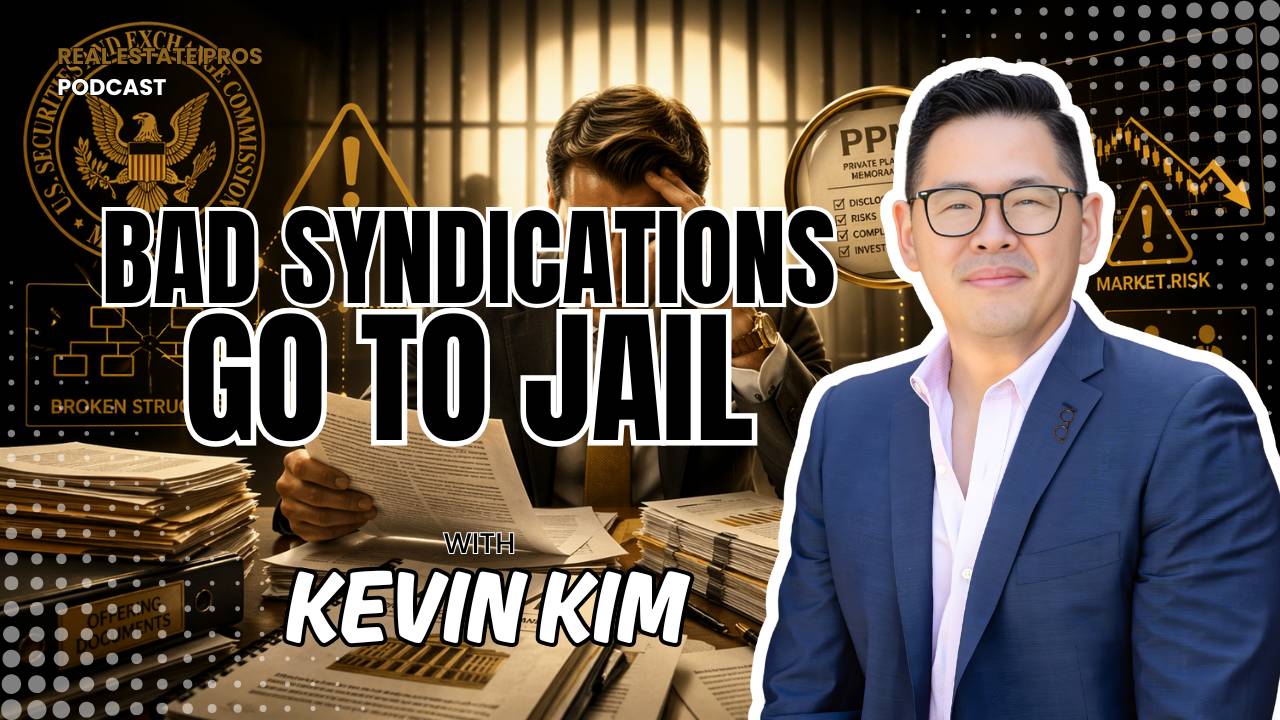
Kevin Kim, a leading expert in private lending and securities law, shares insights on the institutionalization of private lending, navigating larger multifamily deals, and the importance of proper securities compliance. This episode offers valuable guidance for real estate investors and fund managers looking to scale responsibly.

Resources and Links from this show:
-
-
- Investor Fuel Real Estate Mastermind
- Investor Machine Real Estate Lead Generation
- Mike on Facebook
- Mike on Instagram
- Mike on LinkedIn
- Fortra Law’s Website
- Kevin Kim on LinkedIn
- Fortra Law on LinkedIn
- Fortra Law on Facebook
- Fortra Law on Instagram
- Fortra Law on Youtube
- Fortra Law’s Email Address: [email protected]
-
Listen to the Audio Version of this Episode
Investor Fuel Show Transcript:
Kevin Kim (00:00)
they can do for cheap. That’s one of the biggest. I mean, I don’t cause I don’t cause that much, but I’m like shocked sometimes of how cheap people can get when it comes to this stuff. Like it’s really frustrating sometimes because you are running a securities offering. You are you are managing other people’s money. Do you want to be cheap about this?
Dylan Silver (01:52)
Hey folks, welcome back to the show. Today’s guest, Kevin Kim leads Fortra Laws Corporate and Securities Practice, where he focuses on fund formation, private placements and securities offerings for private lenders and real estate investors nationwide. He’s a nationally recognized expert in mortgage fund formation and has advised hundreds of offerings while also serving as the lead instructor for the American Association of Private Lenders Certified Fund Manager Program.
He hosts the podcast Lender Lounge with Kevin Kim, where he interviews
leaders in the private lending industry and shares insights on how this space is evolving. Kevin, thanks for taking the time today.
Kevin Kim (02:28)
thanks for having me. Appreciate you taking me on.
Dylan Silver (02:31)
Today, private lending feels fragmented to a lot of investors. At a high level, how institutionalize is this space actually today?
Kevin Kim (02:43)
Exceptionally so. Private lending, what once called hard money lending, you know, it revolves around two, two or three core asset classes in residential real estate, right? So it’s what we call fix and flip, ground and construction and rental loans, DSCR loans. And the very first two, fix and flip and construction, they reference as now residential transitionary loans. And since about 2019 has become the darling of Wall Street.
So there have been many, I would say institutionally backed or institutionally owned organizations that have come to the market and become household names and really dominate the rankings in originations nationwide. And many of them are clients. And so it’s a very, very institutionalized sector. It’s becoming much more standardized and commoditized.
to the point that rate of securitizations are now being done with these loans. And so you can definitely say it’s quite institutional on a national scale. And DSCR has always been institutional and it’s come to our sector on private lending and it’s here to stay it seems and is a very big market for it for our client base. And so we find that private lending has definitely become very institutional in its approach and it’s become ⁓ the fragmentation is still there.
but it’s really starting to become such that even the ⁓ smaller lenders at the local level are interacting with the institutions in some way, shape or form. Either they’re borrowing from them, they’re selling loans to them, or they’re table funding to them or corresponding to them. And so it’s become quite popular from that perspective as well. So we encourage a lot of lenders who are starting out to interact with the institutional markets.
Dylan Silver (04:34)
one to four units, right? And then ESCR, I’ve seen quite a bit of for smaller multifamily, like let’s say, you know, a couple of apartments to 20 units or so, is there hard money operating in that space or does it pretty much stop at, you know, one to four units?
Kevin Kim (04:54)
Well, so it depends on what you call hard money, but I would say yes, there is. So on the bridge lending side, there is a mass market for bridge loans and construction loans in multifamily, regardless of the size, right? And so the hard money lenders that you’re thinking about that do fixed inflip loans, many of them will do small multifamily, usually, you know, sub 10 units, right? And then there’s a huge market for larger multifamily loans as well.
On the DSCRs, on the perm financing side, most DSCR lenders are focusing on the smaller multifamily, right? Because there’s no capital markets for the larger, more conventional, like 100, 200 unit multifamily. But there is a market for 10, maybe up to 20 unit type multifamily deals. ⁓ And it’s just a matter of ⁓ finding the right lender to make it fit.
Dylan Silver (06:34)
You mentioned finding the right lender. think that can be a bottleneck for a lot of investors as they’re scaling. I’ve had people on the show tell me capital is a big bottleneck for them, especially as they’re looking at making larger acquisitions because, as you mentioned, the same lenders that are going to do ⁓ a single family deal are up to 10 units won’t bite on a 20 unit deal. Where can folks potentially go to find some of these
Kevin Kim (06:40)
Mmm.
Mm-hmm.
Mm-hmm.
Dylan Silver (07:02)
lenders who are lending on more doors.
Kevin Kim (07:06)
Yeah, so if you’re looking at more conventional multifamily, that’s going to be kind of 20 plus unit, 10 plus unit, kind of larger stuff, you probably want to find yourself in the commercial bridge lending sector, right? So I would strongly encourage your audience to look at the various online resources that are available to them. So my friend Rocky runs a website called Private Lender Link. They have both multi-commercial and one to four family. It’s basically a directory of lenders, right? And a lot of other valuable education.
Scottsman’s guide great resource right on the shot Scottsman’s guide they do a great resource. Also like I would encourage them to attend local local ish multifamily focused investor events. So for example, at beginning of next month, I’m headed to Dallas for the local Dallas middle market multifamily event. A lot of multifamily lenders show up to that right and so and they do you know all shapes and sizes above usually
They kind of want to see the loan start at about $5 million, right? So you’re just looking in the wrong sector. And then if you’re looking in the conventional hard money world of the older legacy lenders, many of the lenders that are what we call balance sheet lenders that operate off of a debt fund, they will offer multifamily as well. So it’s just a matter of finding them. And if your audience needs any help, we’re always happy to direct those needs to our clients. We represent most of the private lending market.
Dylan Silver (08:33)
Now, when folks are scaling and they’re getting into these larger deals, one of the challenges, hurdles that people have to encounter is they have to go from thinking more like a deal maker into thinking like a securities operator on some level. And I imagine that’s a lot of the consultation that you’re having with folks.
Kevin Kim (08:47)
Mm-hmm.
100%. Yeah, we do a lot of consults with both real estate sponsors who are now getting into bigger deals and they either want to syndicate or maybe do a fund because their deals are starting to look very similar or they’ve done a bunch of syndications and they want to do a roll up into say a REIT for performing rentals. We do a lot of that with real estate sponsors. A lot of times what’s oftentimes overlooked is the formalities in place. There’s a lot of folks that do securities
PPMs and like that, but they’re not securities counsel. They don’t have a securities background. And so that’s the thing is like, you want to make sure that you’re talking to an actual securities attorney, not just someone who just happens to put together a PPM for you. ⁓ Because this stuff is dangerous if you mess it up. if you read a lot of the online news websites in real estate, enforcement and…
and fraud actions are high, you don’t want to mess around here because you could end up in an orange jumpsuit. So is it really important to make sure you do it correctly in accordance with SEC guidelines and be conservative in your approach because you don’t want to take liberties with those regulations. There’s a lot of folks that do and it’s very scary out there.
Dylan Silver (10:37)
That’s actually a great point that I think needs to be emphasized because there’s a lot of people that don’t understand that this is potentially criminal liability. You mentioned orange. You mishandle a syndication that could potentially land you in jail, in prison. So you don’t want to be unsure of how to…
Kevin Kim (10:42)
Yeah.
100%.
Correct. Correct.
Dylan Silver (11:03)
operate a syndication, even if you’re just getting started. Ignorance is no excuse, right? Speaking of which, there seem to have been over the last five or six years or so, a ton of syndicators get into the space, which created an interesting market. I’m in Texas, I think all over the Sun Belt, you felt this, where there was a multifamily explosion, seemingly, and a lot of deals that are now either dying on the vine or…
The operators are in some type of financial distress. I have my own opinions as to why this happened. From your perspective, I’d love to hear what happened to where there is some kind of distress in the multifamily space currently.
Kevin Kim (11:46)
I mean, there’s a combination effect, right? So you’ve got a combination effect of interest rate environment, combination effect of values is not being there. And then you also have unnecessarily, an ⁓ unnecessary level of aggression when it comes to the lending side, right? So many sponsors went in thinking, okay, rates are gonna stay here. Five years ago, the rates weren’t, aren’t where they are today. They were much lower. And lenders as rate, as their cost of capital goes up,
because the interest rate environment is climbing, they’re less inclined to extend if they’re a bridge lender, right? And so they’re going to call it defaults and they’re going to call loans due. Beyond that, you also have the valuation problem. rates are not one, what, cap rates have not turned out where we thought they would be. And that’s a natural evolution of oversupply. ⁓ and also frankly, poor, poor planning on the developer’s part, right?
You know, they’re just jumping into a market they thought was hot and they’re not realizing, wait a minute, there’s a significant amount of supply coming on online, right? So that issue, especially in Texas, was a major, it is continuing to be a major issue, both in one to four and multifamily. And then you have the last component, and this is really the sponsor’s faults. I can’t say that this is anyone else’s fault, but sponsors, poor underwriting, taking on way too much credit, particularly in the, in the form of preferred equity, right? And a lot of sponsors took prefect equity on their deals.
without truly understanding what they were doing. And prefect equity can get really aggressive really fast. It’s not for everybody. I would argue that many lenders, many borrowers took on these deals without the sophistication of understanding as to what they were signing. so, and unfortunately in the commercial sector, is caveat and Torpala, you really should have done your homework and you really should have invested in legal dollars to negotiate that transaction when you did it. And so now,
not only is your property at jeopardy, but you’re also your company’s in jeopardy because the prefectly deals are typically going after the company. So, you know, it’s a it’s a combination thing. ⁓ Nice part is it seems that, know, at least in most major MSAs in Texas and a lot of other major metros, it’s starting to kind of come out. You know, the distress is kind of start the hair is kind of starting to be resolved and sponsors are finding their way through slowly but surely.
We’re seeing the same thing in the credit world. Our commercial clients are more active than they once were. But at the same time, sponsors are not finding fresh new deals. They’re really just spending a lot of time doing workouts and finding opportunity and distress. Well, sidelines too, yeah. But they’re finding opportunity, but the opportunity is all coming from the distress sector. Which is fine if you can find it. But it’s definitely a tough time.
Dylan Silver (14:20)
Sit on the side.
Building construction,
luxury, multifamily apartment complexes may be slowing down. People may be focusing on. Yeah. ⁓
Kevin Kim (14:35)
⁓ meaningfully. Yeah, I was on a call
yesterday getting ready for a panel and for that Dallas conference I was mentioning. And they’re all all the sponsors were just as it was. Yeah, we’re we’re quiet right now. You know, rightfully so. And, you know, we’re excited about the future. But you know, we’re we’re busy dealing with our portfolio, you know, so
Dylan Silver (14:53)
Now, one of the risks that people have when they’re getting into this space is past successes. And fortunately, now we’re been going through this past couple of years, so people see, hey, this is what can go sideways on these deals. But you had a period from 2014 until 2020 where people were hitting their pro forma in like half the time, lots of variable debt. And so those trends continued up until
somewhat current day, as far as variable rate debt goes specifically, are you seeing that people are less inclined to taking out variable rate debt on these larger commercial loans?
Kevin Kim (16:16)
I mean, unfortunately, they have no choice sometimes, right? So a lot of the more institutional structures are gonna be variable, adjustable rate. But yeah, I mean, in general, since the rate hikes, you know, in 21, 22, I think that most people are very, you know, reticent on interest rate exposure. And the, but the problem is, is that they’re kind of used to taking a lot of exposure, right? So that’s the issues, they’re not fine.
Lenders are less likely to provide as much leverage as they once did. being careful too. Borrowers are expecting a lot of financing. They shouldn’t be able to, they shouldn’t take it. And that’s the difference is that what I’m seeing is sponsors are saying, okay, well, we’re going to go back to the drawing board on our underwrites because we really have to think about what’s available out there, but also what we want to take. And they’re being very cautious. that’s, cautious underwriting is the real reason why you see a lot of the…
In the mess of multifamily, there were a lot of meaningful success stories and there were conservative underwrites and there were conservative raises and very straightforward syndications, nothing too complicated. And those guys made it through. And I think that that’s telling, right? And it wasn’t the most sexy deal, but it was also, hey, they lived to fight another day, the investors got their money back, they made some returns.
pay back their loans. Everything was done correctly. that’s to me is what I think sponsors are really starting to think about again, is they’re going back to that more conventional, more conservative mindset in their approach. And lenders are appreciating it too. The average LTVs are shrinking, ARVs are shrinking in multifamily and conservatism is coming back, primarily just because the values aren’t there.
And that’s a good thing, I think. In the aggregate, it’s a good thing because it’ll allow confidence on the agency side, it’ll allow confidence in perm financing. And we really need that for the Bridgelander to get more confident over time.
Dylan Silver (18:20)
The time horizons, typically these, from what I understand, many of these loans are five years and people were hoping to hit their exit within three to five years. Are you seeing now that time horizons are expanding where people are saying, hey, we may need to look at seven years or perhaps longer?
Kevin Kim (18:32)
Yeah.
Yeah. And that’s where the, you know, on the smaller multifamily and one to four where DSCR has become quite the boon, right? Quite a positive thing. And there is a word that there is similar type products coming out for larger multifamily. It’s kind of like a mini perm product or a privately run perm product that’s not agency. And the idea there is to get the guys out of these bridged loans faster. Because that’s really the ultimate issue is that
Most of the time these high horizon issues, it’s about liquidity sale, right? And what they’re realizing is yeah, yeah, it may be harder and harder to move these properties. Well, you know, the reality on the ground is you’re going to have to really consider becoming an operator. And that is what it is in the market today.
Dylan Silver (19:29)
A bonus question here for you, Kevin. ⁓ When folks are reaching out to you, ⁓ they’re a fund manager or they’re scaling and they’re looking at ⁓ becoming a fund manager. What’s some of the biggest misconceptions that you see people commonly have?
Kevin Kim (19:46)
they can do for cheap. That’s one of the biggest. I mean, I don’t cause I don’t cause that much, but I’m like shocked sometimes of how cheap people can get when it comes to this stuff. Like it’s really frustrating sometimes because you are running a securities offering. You are you are managing other people’s money. Do you want to be cheap about this?
And that’s the funny part about it. Like beyond that, it’s it’s the and that goes to the mentality of cutting corners, right? Like, you know,
This stuff has to be done right professionally with the right team in place, not just me, but also a bunch of other vendors. And, you know, that’s important. people who have been convinced, I guess you can say by some guru that has no securities background, it’s a trend. And it’s really frustrating because a lot of these sponsors, they’re good people. They’re not trying to cut a corner, but they’ve been
you know, hypnotized by the, you know, cheap things and the easy ways. And that’s really one of the funny parts. Like raising money is hard, managing funds, managing other people’s money is hard. It’s supposed to be hard. And so that’s one of the things that kind of is a common mistake and common misunderstanding. This isn’t supposed to be easy. If it was easy, everyone would do it. Right. And past five years of showing you a lot of people tried doing it and many of them failed. Right. And so
You know, my philosophy is, know, do it right the first go around and mitigate those risks for yourself.
Dylan Silver (21:23)
We are coming up on time here, Kevin. Any new projects that you’re working on and then as well, what’s best way for folks to reach out to your team?
Kevin Kim (21:27)
Yeah.
Yeah, best way to find us is just find us online website for the law firm fortralaw.com, F-O-R-T-R-A-L-A-W dot com. My email is [email protected] you can find us there. We’re all over LinkedIn. You know, we’re all over social media. So it’s pretty easy to find us. We also have a YouTube page for our podcast lender lounge. So please check that out if you’re a private lender. Yeah, product wise, you know, one of the things in real estate that we’re working on it’s
is kind of an alternative to syndication using series LLCs and also a lot of roll ups we’re having discussions about. Roll ups are an interesting move for folks that are the ones that have made it through and are now holding on to a bunch of performing rentals, rolling them up to make them tax efficient. It’s a really good idea. Another thing that we’re doing a lot of lately is we’re working a lot in kind of the fringe sectors of real estate. We’re we’re seeing a lot of interesting things come around of clients raising money overseas.
or clients exploring Opportunity Zone again, because it’s starting to come back. So that’s an interesting thing that we’re working on lately. And then in private lending, really, it’s just a matter of ⁓ helping clients become the next XYZ. They want to start becoming a much more sophisticated, larger outfit, as opposed to kind of a local mom and pop shop. And that’s been the name of the game for the past few years lately.
Dylan Silver (22:58)
Kevin, thank you so much for your time today. Thanks for joining us.
Kevin Kim (23:01)
Absolutely. Thank you for having me.