Subscribe via:



Show Summary
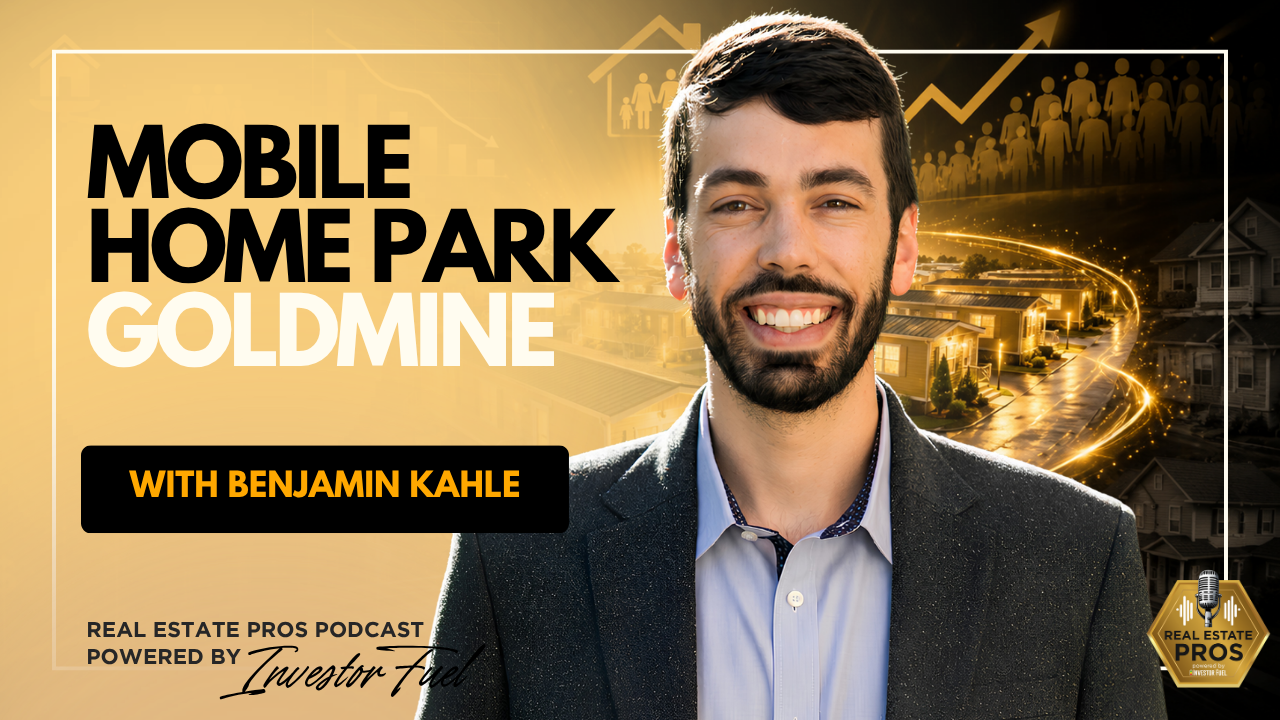
In this episode, Benjamin Kahle, CEO of Wellings Capital, shares insights on real estate investment strategies, focusing on asset types resilient in downturns, geographic focus, and operational excellence. Learn how to navigate market opportunities and the importance of ethical decision-making in private equity real estate.
Resources and Links from this show:
Listen to the Audio Version of this Episode
Investor Fuel Show Transcript:
Benjamin Kahle (00:00)
We’d already raised the capital. We already had all the capital ready.
Michelle Tack (00:02)
Yep.
Benjamin Kahle (00:03)
Investors were excited about the deal. We were excited about the deal. There’s pressure in that moment to maybe overlook some of these things and be like, well, we can make that work. Let’s just get it done. But it would not have been the right thing to do for our investors.
Michelle Tack (00:08)
Mm-hmm. Mm-hmm. Mm-hmm. Mm-hmm. Mm-hmm.
Right.
Benjamin Kahle (00:23)
And for us for the long term, we’re always trying to think about the long term, real estate rewards the patient and the long-term thinkers. It’s not like a technology company.
Michelle Tack (00:30)
Hi, welcome to Real Estate Pros, a podcast. I am Michelle Tack. I will be leading the podcast today and we have a great subject matter expert, Benjamin Kahle who will be our guest today. Benjamin, why don’t you just give a shout out to the team?
Benjamin Kahle (02:25)
Hey, I’m happy to be here. Thanks for having me, Michelle.
Michelle Tack (02:27)
Absolutely. What I found really interesting about what you’re doing, Benjamin, when we had a preparation for the podcast today is how that you’re able to run your investment fund, you know, get capital for it, but also be very ⁓ strict about properties that you folks invest in and ⁓ how to get returns and then how to operate.
the company ⁓ to the specs that you’re doing and to the quality of people that you want to have working for you. So that was a lot to say, but if you can ⁓ tell us now for those that may not be from your world, may not be from the finance world, you know, the fun world, what exactly your main focus these days is and what markets do you operate in?
Benjamin Kahle (03:20)
Sure. So for context, I’m the managing partner, CEO of Wellings Capital, which is a real estate private equity firm. We’re based in Virginia, kind of in the Blue Ridge Mountains. And we are primarily investing in multifamily apartments, self storage, and mobile home parks. And we kind of have this thesis.
around investing in asset types that have historically done well in past recessions, past downturns. And there’s a lot of data out there around, especially those three asset types and how they did in 2008 and then the pandemic and the last couple of years ⁓ as well. And so we raise capital from primarily high net worth individuals, some RIAs.
Michelle Tack (03:54)
Mm-hmm.
Mm-hmm.
Benjamin Kahle (04:14)
some family offices and those folks come into our funds and we invest out of our funds. We’re not the operator. We’re kind of like a real estate or a private equity firm in the traditional sense would buy a stake in a company and they keep the management team in place and the private equity firm is not running that company, but they’re exercising a lot of oversight and they’ll step in if something’s going wrong. That’s kind what we do with the real estate we’re investing in.
Michelle Tack (04:22)
Mm-hmm. Mm-hmm. Mm-hmm. Mm-hmm.
Benjamin Kahle (04:43)
So we’re not running it. And that’s what enables us to be nimble and invest in multiple asset types.
Michelle Tack (05:39)
Yeah, that’s interesting. Are you only in the state of Virginia or do you go outside the state of Virginia?
Benjamin Kahle (05:45)
So we do have investments here in Virginia. We don’t have many. We have a handful. We’re primarily in the Midwest and I’d say the Southeast. So when I say the Midwest, I’m talking Wisconsin, Michigan, Indiana, Ohio, Minnesota, and then Southeast, I’d Carolinas, Georgia. ⁓
Michelle Tack (05:57)
you are. Okay.
Benjamin Kahle (06:13)
and then Texas.
Michelle Tack (06:14)
Can you tell me why is it because the numbers work out better or why you gravitated to those regions?
Benjamin Kahle (06:21)
Yeah, I think it hasn’t been a strategy necessarily. We’ve always said that we’re pretty geographically agnostic. We’re really focused on where our operating partners have a history of successful execution. So an example of this is we have a decent number of investments with one particular group in Chicago. All they do
Michelle Tack (06:30)
Mm-hmm.
Benjamin Kahle (06:45)
is Chicago multifamily or Chicago workforce housing. They have about 3000 units there and they’ve been doing it for well over a decade and they know everything there is to be known. They know all the little sub markets, all the little pockets, where to go, where not to go. And that’s the type of group that we like to partner with. They have the local knowledge and local expertise. Probably wouldn’t get too excited about investing in California.
Michelle Tack (06:49)
Awesome.
Mm-hmm.
Benjamin Kahle (07:12)
in housing right now. We would not do anything in New York City. So there’s some places we wouldn’t go, but there’s not a focus on like, it needs to be in this state.
Michelle Tack (07:24)
OK, got it. And that makes sense because you’re really getting to because you’re not an operational side of the business. You’re relying on those people within market that really understand who their consumers are, right? And so they’ve got a history of having a smooth operation as it were. So that headache for the most part I would imagine is taken care of. So that makes sense when we we talk about, you know.
It impressed me also that you are you’ve been. You know with the company since you know you’re in college or just outside of college and that that’s unusual these days. We don’t find many people doing that anymore, but more importantly than that, it sounds like you’re very methodical about running the business from an operational standpoint like a well run machine.
Can you give it? Can you talk to that a little bit? I think people would be interested in that because obviously that affects your returns. It reflects everything of having the organizational piece. Fundamentally sound and integrated.
Benjamin Kahle (08:31)
Yeah. So I started kind of like you mentioned as an intern in January 2015. So over 11 years ago now. I took over as the managing partner CEO in November of 2024. The founder is still involved. He’s 30 years older than me. I’ve had to learn the hard way with a lot of things learned by failure. I have learned a lot of things from my partner who was my mentor.
Michelle Tack (08:51)
Yep.
Benjamin Kahle (08:56)
or is, you know, still is a mentor in a lot of ways, but I’ve had to learn the hard way and then also through other people. I heard this quote that I love. It’s like in life, you can learn one of two ways. It’s your choice. You can learn through mistakes or you can learn through mentors. And I was like, man, I want to try to get around as many mentors as possible. And the thing that these people further ahead of me really focus on these other business owners is
Michelle Tack (09:10)
Mm-hmm. Mm-hmm.
Benjamin Kahle (09:23)
people, right people, right seats at the right time, the stage of the business.
And that’s been my kind of maniacal focus the last couple of years. And I’m not saying I’m amazing at hiring because I’m not. I don’t think anyone’s amazing at hiring. I think there’s skills you can learn. There’s resources. Like I really recommend there’s a book called The Who Method.
Michelle Tack (10:09)
Mm-hmm. Mm-hmm. Mm-hmm.
Who’s the author of that?
you remember the who method?
Benjamin Kahle (10:26)
Yeah,
it’s written by Jeff Smart and Randy Street. ⁓ was, it was a, it’s a little bit older, but it is timeless. So like, just for as an example, like Chick-fil-A, which I think they do a pretty good job of hiring their team members in their stores, as well as the operators. They use that method exclusively. But.
Michelle Tack (10:40)
Mm-hmm.
Interesting.
Benjamin Kahle (10:54)
I
have, I’ve really focused on the people and then retaining them once they’re in and then incentivizing them properly and, then trying to keep people around for a while. Um, over, over a long period of time. So that’s, that’s been my focus. And I think that drives everything else. So we were talking before Michelle about.
Michelle Tack (11:04)
Mm-hmm.
Benjamin Kahle (11:22)
You could have the best strategy, the best goals, know, the best product even. But if you don’t have the right team, it’s
Michelle Tack (11:27)
Right.
Benjamin Kahle (11:33)
basically meaningless. I think that there’s a concept from an author named Jim Collins that I think a lot of people know where it’s like, you just, you just want to get the right people on the bus.
Michelle Tack (11:34)
Right. Mm-hmm.
Yep.
Benjamin Kahle (11:52)
And then,
you know, it’s, it, you’re going to figure out the direction as you go. And so I think that’s, that’s been, that’s been the focus and it’s, it’s different from investing in a lot of ways. So you kind of have to have both, you have to have your brain in both places ⁓ and be good at both things almost. And I’m not saying I am, but you have to be to be successful in this space. And.
Michelle Tack (11:56)
Mm-hmm. Mm-hmm. Yep.
Yep.
Yeah, right.
Benjamin Kahle (12:20)
because you have the business building side, the systems, and then you have like, okay, like how do we evaluate a good investment and what is a good structure and et cetera.
Michelle Tack (12:23)
Mm-hmm.
Right.
Yeah, and you gotta wear multiple hats right while you’re doing that. You know, for those that, ⁓ you know. Have maybe experienced some of this, but you know we always like to talk a little bit about some of the challenges you may have found in your business that have occurred recently. And as you said, you know, a mentor is great if you really listen. If you if you put your ego aside and you go gosh, this person has something to teach me.
Your exponential success level can go up if you try to replicate and take some of that that on. So can you give an example where you’re in a deal? Maybe it’s a deal. Maybe it’s not a deal, but a situation in your business where you know something didn’t go the way you had anticipated. Things were lined up. Maybe you did the right thing and you had to pivot quickly. Can you talk about that for a minute please?
Benjamin Kahle (13:22)
sure. So we put deals under term sheet and then we’ll go through due diligence process and then as long as that goes well, we’ll invest. That’s the typical process and it’s usually a, I don’t know, 60 day-ish process, maybe a little bit longer if the lender slows things down. We never want to go under term sheet on a deal and then have something happen in the middle.
where we have to reinvested time, money, energy, and then the deal doesn’t go through. That happened in the fourth quarter of last year with the deal. And, you know, I had done the site visit. We’d met the operating partner there. We had been on many legal calls, many due diligence calls. We were getting near the end and
Michelle Tack (13:55)
Hope work.
Mm-hmm.
Benjamin Kahle (14:12)
the operating partner
Michelle Tack (14:13)
Mm-hmm.
Benjamin Kahle (14:57)
basically said they weren’t going to accept certain things that were in the letter of intent that they signed on the legal side of things in relation to our structure. And it was a little bit surprising. And it basically left us at a point where we were very close to closing. And we had a choice.
Michelle Tack (15:04)
Mm-hmm.
Mm-hmm.
Benjamin Kahle (15:20)
We’d already raised the capital. We already had all the capital ready.
Michelle Tack (15:22)
Yep. Yep.
Benjamin Kahle (15:26)
Investors were excited about the deal. We were excited about the deal. There’s pressure in that moment to maybe overlook some of these things and be like, well, we can make that work. Let’s just get it done. But it would not have been the right thing to do for our investors.
Michelle Tack (15:31)
Mm-hmm. Mm-hmm. Mm-hmm. Mm-hmm. Mm-hmm.
Right.
Benjamin Kahle (15:46)
And for us for the long term, we’re always trying to think about the long term, real estate rewards the patient and the long-term thinkers. It’s not like a technology company.
Michelle Tack (15:52)
Yep.
Yep.
Benjamin Kahle (16:01)
And so we ended up pulling out of that deal and we had to go back to our investors, literally wire money back to our investors because people had already funded for the closing. some people were a little upset because they were like excited.
Michelle Tack (16:00)
Yep.
gosh. Yep.
Benjamin Kahle (16:15)
⁓ But we explained it to them and I think most people, most of our investors understood why we did that.
Michelle Tack (16:15)
Yep.
You know, that’s a that’s a great ⁓ example because your reputation is somewhat. You know, you can take a hit from that depending on how you handle it, right? But the ethics and morals that you were able to demonstrate and do the right thing is always like what’s what’s the next right thing to do in business? What’s the right next thing to do? And sometimes it’s losing money for a short period of time to get more money later on.
not say that you lost it. don’t know if you did in that deal, but it’s not just everything doesn’t work the way we think it’s going to. And I think that’s a good instrument to think about for all of us on a daily basis. ⁓ We talked a little bit about this before, but again, before we close,
What’s on your wish list of big items for opportunities? Like when you put your head down, they go, geez, this would be wonderful if this happened.
Benjamin Kahle (17:20)
So interestingly, we have a lot of investor demand for more mobile home park investments. And for those who don’t know, when you hear mobile home parks, you might get nervous or concerned or whatever. there’s actually over 40,000 mobile home parks in the US. There’s a lot of them. A lot of them are small, like under 100
Michelle Tack (17:28)
Mm.
Wow, that’s a lot. I didn’t know that.
Benjamin Kahle (17:46)
pads or 100 lots, 100 spaces, whatever you want to call that. And they ⁓ historically have done very well in past downturns. It’s essential housing. There’s an affordable housing shortage in the United States. And it is a very real solution to that. We say it’s the only asset type that we know of out there that every year
Michelle Tack (18:04)
Mm-hmm.
Benjamin Kahle (18:14)
there’s an increasing demand and there’s a decreasing supply. More mobile home parks are torn down than are being built. Very few are being built each year. So we have a lot of demand from our investors for this asset type and we’ve never done like a fund that’s exclusively focused on mobile home parks. ⁓ But we think that we know a lot of
Michelle Tack (18:18)
Mm-hmm. Mm-hmm.
Mm-hmm.
Benjamin Kahle (18:39)
Operating partners in space and we are planning tentatively to have a mobile home park only fund that would sit alongside our income fund and our growth fund. ⁓ So that’s something we’re looking at, no guarantees, ⁓ but we like the space, we understand it, we’ve invested.
Michelle Tack (18:52)
Yeah, sure. Mm-hmm.
Benjamin Kahle (19:05)
Gosh, probably over 50 million bucks the last number of years in that space. And we don’t see that space getting touched by AI or
other larger macro trends in the near future.
Michelle Tack (19:23)
Yeah, well that’s that’s. That is brilliant. I think ⁓ and you know you and I both live in in Virginia, but there are some and I told you I played tennis. You know that tennis thing is right next to a mobile house home. They the mobile homes and and move the tennis thing into another commercial development. So there they are. ⁓ So that’s super interesting. ⁓ Benjamin, before we let you go for today.
Could you provide how people can reach you, your contact information please?
Benjamin Kahle (19:53)
Sure. So first I’ll throw out a link and it’s if you want to learn more about mobile home parks and self storage and multifamily. It’s on our website. So it’s wellingscapital.com/resources and it’s just free resources. So that’s W E L L I N G S capital C A P I T A L .com/resources.
Michelle Tack (20:03)
Mm-hmm.
Benjamin Kahle (20:21)
That’s if you want those. If you just want to reach out to me, my email is [email protected]. Same spelling W E L L I N G S C A P I T A L dot com.
Michelle Tack (20:35)
That’s awesome. Benjamin, thank you very much for being here. You’ve been a great guest and provided a lot of specific information, which is really the heart of making business decisions in real estate. So thank you for those that are on the podcast today. We encourage you if you’ve gotten value out of the session today. If you haven’t subscribed, please do and we’ll see you on the next podcast. Thanks again, Benjamin.