Subscribe via:



Show Summary
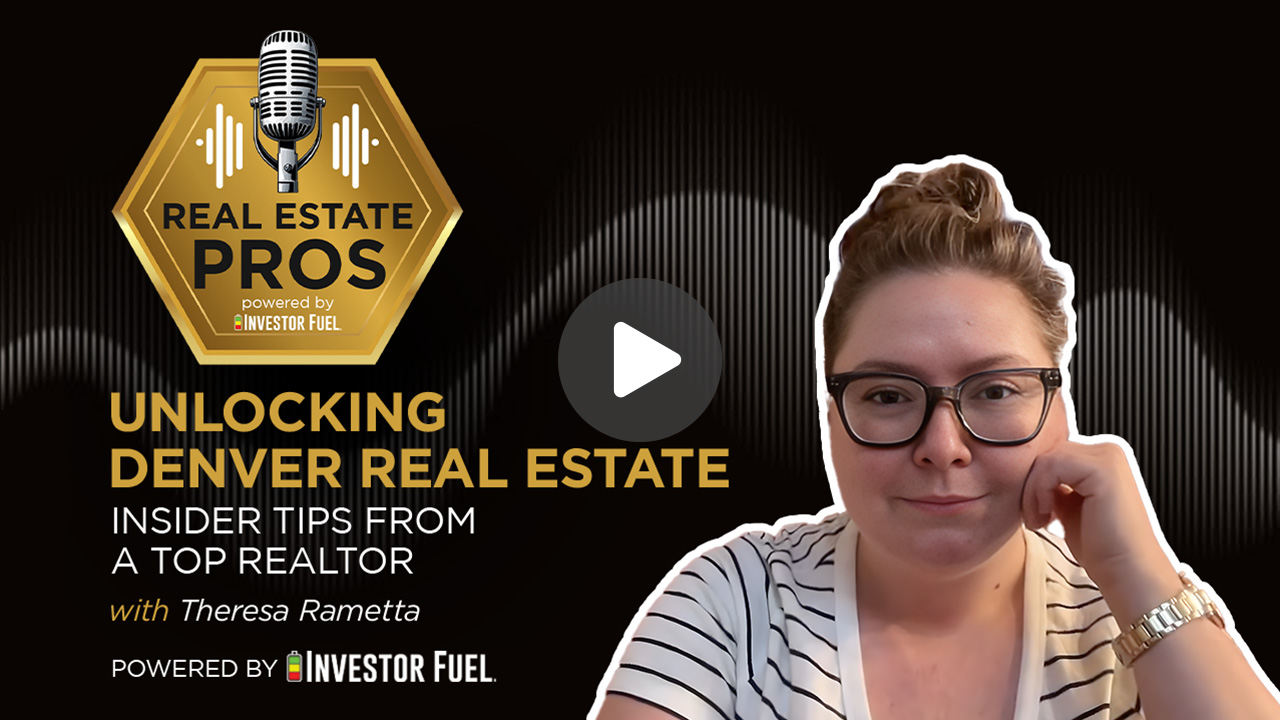
In this episode of the Real Estate Pros podcast, host Kristen Knapp interviews Theresa Rametta, a realtor based in Denver, Colorado. Theresa shares her journey into real estate, discussing her transition from selling fine wine to becoming a licensed realtor. She highlights the importance of networking, understanding the Denver market, and common misconceptions that first-time buyers have about purchasing a home. Theresa emphasizes the value of having a knowledgeable realtor and shares lessons learned in her first year of business, including the significance of choosing the right brokerage. The conversation concludes with Theresa providing her contact information for potential clients.

Resources and Links from this show:
Listen to the Audio Version of this Episode
Investor Fuel Show Transcript:
Kristen Knapp (01:31)
Welcome back to the Real Estate Pros podcast. I’m Kristen Knapp and I’m here with Teresa Rametta, real estate agent in Denver, Colorado. So thank you so much for being here.
Theresa Rametta (01:40)
Thanks for having me.
Kristen Knapp (01:41)
This is awesome. ⁓ so let’s just get into your background. How did you get into real estate?
Theresa Rametta (01:50)
I got into real estate probably summer of 2023. Prior to that I had sold fine wine to restaurants for over a decade. So I do have a sales background and it was just time. So I started off with apartment locating for my first six months to a year and then got licensed in April of 2024. And so I’ve officially been a licensed agent for a little over a year now.
Kristen Knapp (02:19)
Wow, so you’ve done a lot in a year. So how have you been able to kind of get that together from switching careers?
Theresa Rametta (02:26)
It’s definitely hard. ⁓ Lots of savings, reliance, ⁓ and cutting corners in the beginning just because it takes a while to ramp up and get going. And it’s a little tough when you’re not making a salary or any kind of hourly pay. So it’s definitely challenging in the beginning. But was your question around getting going or was it my business or?
Kristen Knapp (02:48)
Both, well yeah, how have you been able to scale? I know that you’re doing quite a few deals just in your first year, so how have you been able to scale up to that?
Theresa Rametta (02:56)
Yeah, I mean, my first deal closed August of 2024 and so far I’ve done 12. I think having a sales background certainly helps. I’m not from Colorado originally, I’m from New England and I’ve been here for seven years. So while I have a sphere of influence and I have a network here, it’s not as big as, you know, someone who’s lived here their whole life. So really I had to hustle a lot and network quite a bit and tap into just who I know.
Kristen Knapp (03:25)
Yeah, about building your client base is, it’s challenging when you’re getting going. What are some tips you have for networking and building that client base?
Theresa Rametta (03:35)
I mean, just put yourself out there and be open to talking to anybody. I’ve met clients. I got a referral yesterday from somebody I randomly met at a bar in February that live in California. ⁓ I’ve met clients in airports. I’ve met them at networking events. I’ve met them randomly. I met one on a retreat in the Catskills, New York in June who lives here. So you just never know. think being active in your community and also tapping into the things you already enjoy.
in love, like I’m still very much into wine and so I have several wine groups I’m a part of and I’ve met quite a lot of clients that way.
Kristen Knapp (04:12)
That’s awesome. What kind of wine do you like? What’s your favorite?
Theresa Rametta (04:16)
god, that’s like picking a favorite child. I don’t know that I could pick one, but it’s definitely European in some form. French, Italian, Spanish.
Kristen Knapp (04:18)
You
Nice, awesome. And then tell us a little bit about the Denver market, how like what makes it special and what are you excited about with it?
Theresa Rametta (04:32)
Well, I I only have my frame of reference from the last year. ⁓ Denver is still a growing city. ⁓
Kristen Knapp (04:36)
Yeah.
Theresa Rametta (04:40)
You know, and we’re kind of in that approaching the top tier for pricing. We’re still, think, like 11th for cost, but we’re getting up there. think the most exciting thing that’s been fun for me has been that it’s been a really heavy buyers market, a favorable buyers market for the last year here, just with a lot of inventory to choose from.
So it gives first time buyers a better opportunity. So even though interest rates are still in the sixes and sevens for the last year, I have more opportunity to negotiate.
interest rate buy downs, get all their inspection objections addressed, ⁓ and get good competitive pricing because traditionally Denver has not been a buyer’s favorable market for the last decade so it’s been really exciting.
Kristen Knapp (06:11)
and why it’s
happy to be here.
Theresa Rametta (06:14)
Just not enough inventory and 2020 to 2022, know, prices just skyrocketed like they did everywhere. So even though interest rates were low, it was extremely competitive. So you would be shopping around and have to put 30 offers in for different homes before you’d finally land one. And now it’s, you know, I have like a one offer type track record per client before getting them under contract. So.
Kristen Knapp (06:42)
That’s awesome. And just for everyone listening, how many deals have you done in this first year? You said it was quite a few. Yeah, that’s so amazing. And just from networking wherever you can, that’s really impressive.
Theresa Rametta (06:49)
12.
Yeah, one or two have been friends, but otherwise it’s all been networking and sphere. I really don’t take company leads ⁓ or Zillow leads. I tried that for a while. It just was not my jam. ⁓ And so yeah, it’s all just been sphere and networking.
Kristen Knapp (07:11)
Yeah, that’s awesome.
what would, like if someone’s looking to buy a home, what are some maybe things that you always see that pop up, maybe red flags or misconceptions or just tips for somebody trying to buy right now?
Theresa Rametta (07:26)
I think.
One of the biggest misconceptions is that it’s impossible. And a lot of, especially for younger people, my age and younger, they feel like it’s just out of their reach. The reality is it’s not. Pricing here is certainly high. And so your income does have to reflect that. ⁓ But you don’t need 20 % down. That’s a huge misconception. 20 % down can actually sometimes hurt you in your interest rate. We can talk more about that. Most of my buyers have had between 3 and 5 % to put down. So you don’t need a huge wad of cash.
to buy a home. I think another big misconception is that
Everybody that’s a first time buyer starts with their dream home. It’s just not the case like it was in 1970. A lot of us, especially millennials and Gen Z have to start with a condo or a town home. And that is still a better investment than giving your rent to a landlord at the end of the day. That’s a property that in five to seven years, you can turn around and sell for profit and then get your dream home or rent it out and have passive income. I mean, it’s just better opportunity.
I that’s another one. And that interest rates, you know, they are, you
understandably higher and the perception is that they’re really high after, you know, the experience of 2020 and 2021 being two and three percent. The reality is that we just don’t see that very often at all. And so, you know, the average interest rate over the last 40 years is actually over seven percent. And so now that we’re under seven, we’re under that market ⁓ average.
I can also very easily, or at least for the last year, been able to negotiate interest rate buy downs. And we can talk more about that if you’re interested in how that works. yeah, I’ve negotiated that for basically every first time buyer ⁓ in the last year.
Kristen Knapp (09:13)
Yeah, I would love for you to go into that.
Theresa Rametta (09:22)
It’s essentially you’re asking the seller for a concession. So you’re asking them to essentially lose money on the sale. There’s ways to combat that. Sometimes we bump the purchase price to offset that, right?
And it’s, you know, taking that chunk of cash, whether it’s 10, 12, 15 grand, it’s put into a separate account. ⁓ And so for the first two years, it kind of helps artificially buy down your rate. So for the first year, it’ll feel like you’re paying 4.5%. And the second year, it’ll feel like you’re paying 5.5. And then the third year, would go back to the normal market rate, but the hopes that somewhere in there, you have the opportunity to refinance. It doesn’t always happen with timing. I can’t predict the future. If I could, I’d be a billionaire. But,
It’s a really, really helpful tool and it just helps make ⁓ those first couple years of payments more comfortable for first time buyers especially.
Kristen Knapp (10:48)
Right, and then are there any risks or downsides for doing the rate by down?
Theresa Rametta (10:54)
Yeah, I mean, I think every situation is different in the way that I approach it with negotiations. If a home’s been on the market for more than 60 days, I usually have a little bit more wiggle room and the seller tends to be a little bit more.
accommodating. it’s a home that’s been on the market for like a week but my buyers are obsessed and it’s like the one, oftentimes like I said I’ll bump the purchase price to offset that concession so the seller doesn’t feel it. And for the buyer, you know for every 10 grand or so in purchase price, let’s say your you know the average single-family home here is $575,000. So for every 10 grand at that
price point, you’re looking at maybe $75 a month in a payment. So you’re trading another $75 in a payment per month for a $700 a month savings with the interest rate buy down, if that makes sense. So it makes the seller happy, it gets the buyer what they want, and it’s a win-win for everybody.
Kristen Knapp (11:53)
That’s awesome. That’s a really great way to kind of like help your buyers out. And I think it’s also a good example of why realtors are so important. I think a lot of people might see things online and be like, well, I can just do this myself. But it’s so important to have someone who’s knowledgeable about what’s out there and how to get the best rates and how to negotiate effectively.
Theresa Rametta (12:07)
you
Yeah, and certainly having good lender partners is a huge part of being successful, right? ⁓ But yeah, I mean, there’s a lot of stuff out there. I think even if you’re an attorney, if you’re not specialized in real estate, you’re going to struggle buying by yourself. ⁓ Not only do we help with legal documents that have real consequences and impact on you, but we protect you. A buyer’s agent is key, especially if it’s your first time, ⁓ because we’re advocating for you and your best interests.
buyer. The listing agent, if you go to an open house and you chat with them
Their allegiance is with the seller. Their job is to get the seller the best price and sell it as quickly as possible, right? That’s their goal. They’re not really looking out for you. And so unfortunately, a lot of people who try to go out on their own and buy without an agent end up getting burned. I think a stat I saw was 90 to 95 % of buyers use an agent. And there’s a reason for that. It’s because we’re specialized and trained in this. mean, essentially in Colorado, it’s the limited practice of law and the real estate.
world. So it’s a serious thing. You should have representation for sure.
Kristen Knapp (13:25)
Definitely, I agree. And then in this first year, you’ve kind of gone through some of the challenges and struggles. What’s been a big thing you’ve learned in this first year of business and scaling your business moving forward?
Theresa Rametta (13:29)
Okay.
⁓ Lots of lessons. think everybody, even if you’re 20 years into this, I think you still learn lessons every day. ⁓ I would say not all agents and lenders are the same. Quality is a thing and I think properly vetting whatever agent you work with is important. ⁓
Just because somebody doesn’t have reviews online doesn’t necessarily mean they’re bad agent. And just because somebody’s been doing it for 20 years doesn’t mean they’re good agent. I recently had deal with somebody who’s been licensed since 2004. It was probably the worst experience I’ve had so far in my career with real estate. So you just really don’t know. I think the other big lesson for me is even last week I had to walk away from a listing opportunity.
And you know, I hope that she comes back, but sometimes, and I learned this the hard way, if you know, a client isn’t really gonna take your advice or really hear you out when you’re trying to advise them, which is what they’ve hired you for, probably good to walk away and let somebody else who’s promising them the world fail and then maybe they’ll come back. So that’s definitely a big lesson.
Kristen Knapp (14:49)
Absolutely, yeah. And what would be some tips that you would give, you know, buyers when they’re looking for a realtor? What are, like, what should they be looking for?
Theresa Rametta (15:40)
Somebody who’s consultative, ⁓ somebody who, especially if you’re a first time buyer, ⁓ they should be reviewing the process with you thoroughly so you understand all the various steps because there’s just, it’s a lot. It’s overwhelming. They should also be going over paperwork with you. If you have an agent who isn’t going over their buyer agency agreement with you and the contract to buy and sell, which is what you’re gonna be completing when you submit an offer, it’s the heart and soul of a real estate transaction, that’s not a good agent. mean, you should understand.
what you’re signing because they are really you important consequential legal documents and so it’s important to me that my clients understand what they’re signing and that they feel comfortable from beginning to end so I think that’s really important I think also having an agent that’s trying to help you find the right home and not selling you on a home is really important ⁓
At the end of the day, the difference in commission from a $700,000 house to an $800,000 house is not super consequential to me, and it shouldn’t be to any good agent. What matters is that I’m getting you a good deal and I’m getting you into the right home. Because at the end of the day, that’s going to hopefully refer business back to me in the future. ⁓ And people who are honest and transparent, I mean, I’ve heard of agents who…
specifically hide inspection reports from their buyers, which is so unethical. And so just somebody who’s transparent, honest, and really is thorough and cares about educating you, especially as a first time buyer, I think is really important.
Kristen Knapp (17:13)
Yeah, I agree with all that and it seems like you possess all of those qualities. It seems like you would be great to work with with those bullet points. So what’s next for you? I mean, you’ve done so many deals in your first year. Where do you see this going from here?
Theresa Rametta (17:20)
thank you.
You know it’s funny you ask that because I’m in a bit of a transition period right now. So ⁓ right after my one year anniversary with the first brokerage I started my career with I jumped to porch light. It was very calculated move. I interviewed probably eight different brokerages before I made that decision and I was told last week that they’re being absorbed by compass. So a little bit of instability for me but ⁓ putting a positive spin on it where I can. I have a lot of things to consider.
and I have a lot of interviews this week and next week. I just want to make sure I make the right educated decision for myself. That might be going independent with a different brokerage, it might be staying where I am, or it might be partnering with somebody who’s more seasoned so I can kind of get some mentorship and learn from them. ⁓ That’s yet to be seen, but hopefully in the next week or so I’ll know.
Kristen Knapp (18:22)
And when you’re choosing a brokerage, what makes a good brokerage? What’s the difference between someone you want to work with and someone you might not want to?
Theresa Rametta (18:32)
You know, if I’ve learned anything in my first year, I think the name behind a brokerage does not mean anything. It’s the agents that you’re working with and the kind of agent that you are. At the end of the day, they all provide similar things to agents, marketing support, ⁓ technology, and that comes in various forms. ⁓
transaction coordination, listing coordination, ⁓ and it’s all about what commission splits work best for you, what kind of fees they have, what kind of model works best for you as an agent. Everybody’s unique, everybody has different circumstances. I’m not a super listing heavy agent yet, I hope to be soon. ⁓ And so those things don’t mean as much to me as splits and mentorship. So being with a brokerage for me, what’s important is having people that are there for random.
complicated contract questions, strategy questions, ⁓ seasoned agents who can help me navigate difficult buyers or sellers, ⁓ all of that stuff. That’s what’s most important to me at this point in my career. I think it’s really different depending on what kind of agent you are and where you are in your business.
Kristen Knapp (19:46)
Yeah, I think that’s great and I think that you’re setting yourself up for lot of success. I I am excited to see where it goes. Well, how can people find you?
Theresa Rametta (19:54)
Sure, ⁓ it’s Rametta Realty on Instagram and Facebook. ⁓ I’m not super active on TikTok, I’ll be honest, I should be, but I’m just not. Yeah, I mean, and that’s the primary way. I couldn’t tell you what website I’ll be on here in the next week. Currently it’s with Porchlight Real Estate in Denver, but I live in Lakewood and I’ve helped people buy and sell all over the state of Colorado. So happy to help anybody if they wanna work with me.
Kristen Knapp (20:05)
Yeah.
Yeah.
Awesome, everybody please check that out. Go to Instagram and yeah, thank you so much for coming on. This has been great.
Theresa Rametta (20:29)
No problem, thanks for having me.