Subscribe via:



Show Summary
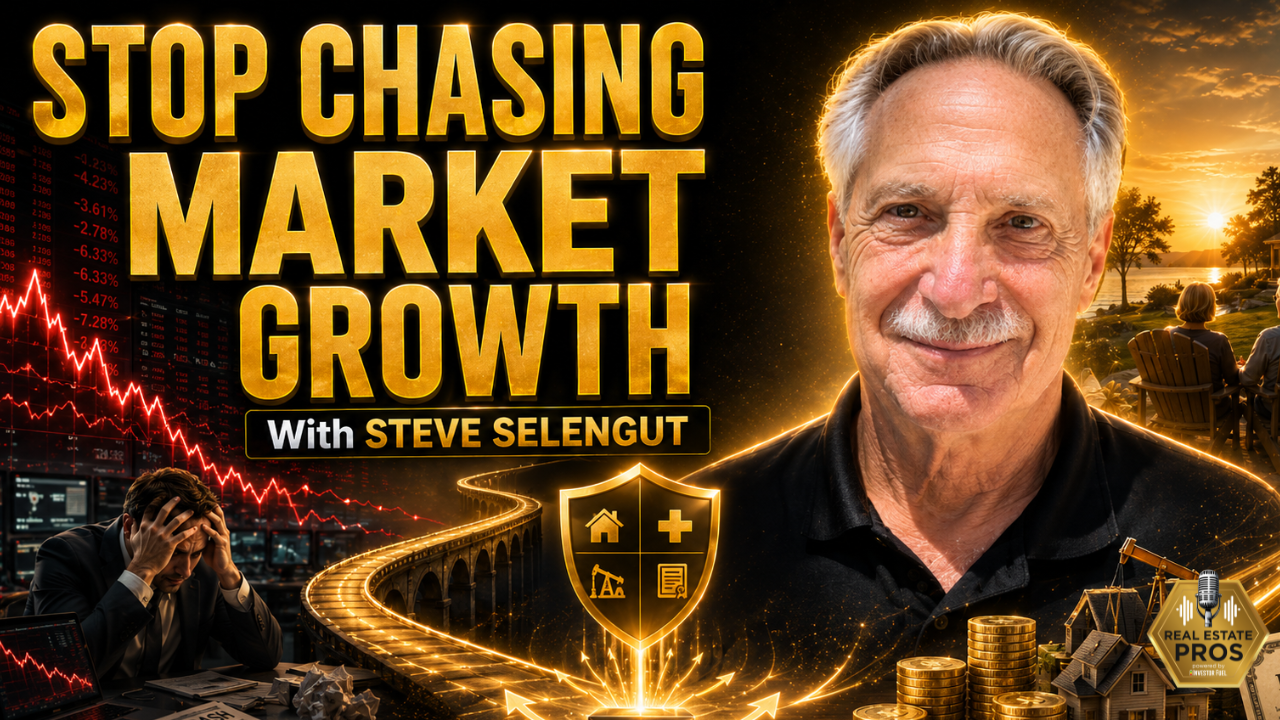
In this episode, Steve Selengut shares his expertise on income-focused investing, emphasizing the importance of generating consistent income from assets rather than relying solely on market value appreciation. He discusses practical strategies, common obstacles, and how financial advisors can better serve clients seeking income independence.

Resources and Links from this show:
Listen to the Audio Version of this Episode
Investor Fuel Show Transcript:
Steve Selengut (00:00)
You don’t just buy stuff and hope it’ll go up in market value and then make you feel feel comfortable with your wealth, but without producing any income for you to spend. That’s the big distinction. most people love it when the market goes up, they’re probably, you know, cry and when it goes down. I frankly don’t care. ‘Cause my portfolios are gonna generate the same amount of income regardless of which way the stock market goes, regardless of which way interest rates travel, I’m still getting that income generated in my portfolio so I can still do whatever I want,
Michelle Kesil (02:12)
Hey everybody, welcome to the Real Estate Pros Podcast. I’m your host, Michelle Kesil. Today I’m joined by someone I’m looking forward to chatting with, Steve Selengut, who is a portfolio investment manager, author, and educator. So excited to have you here today, Steve.
Steve Selengut (02:29)
Pleasure. Good to be with you.
Michelle Kesil (02:30)
Great, so let’s dive in. For those new to your— can you share what your main focus is?
Steve Selengut (02:37)
My main focus, I would say, is quite a bit different from that of most investment professionals. My focus is to teach people how to earn more money with their assets so that they become what I call income independent. Most people focus more on the market value of their holdings instead of the income that it produces for them. I think it relates a lot to the real estate investment area. when my dad was in real estate, he had rental and other things that were always generating income. So it didn’t matter which way the real estate market went, actually. he would collect— he was collecting mortgages from people who he sold homes to. He had a insurance department in his business that would provide insurance and so on. So multiple streams of income, which I know real estate type people, investors, focus on, is— you can do the same with stock market and bond market investing. In fact, I invest in multiple different types of real estate investing, you know, within the closed-end fund environment that I use.
Michelle Kesil (03:59)
Great. And can you share a little bit about what the first steps you would recommend for someone wanting to get started?
Steve Selengut (04:06)
First steps are pretty much to read this book that’s hanging out here on my chest because it’s— it is a— a primer in learning about the income side of investing and how— the importance of the quality of what you invest in, how to diversify your portfolio properly so that you have— you have your fingers in all the different pies that are out there, all the different varieties of investments there are from— from real estate to, you know, healthcare to oil, energy, so forth. and you always focus on making sure that there is income being produced to you, the share owner or the bond owner, for everything you invest in. You don’t just buy stuff and hope it’ll go up in market value and then make you feel feel comfortable with your wealth, but without producing any income for you to spend. That’s the big distinction. most people love it when the market goes up, they’re probably, you know, cry— crying when it goes down. I frankly don’t care. ‘Cause my portfolios are gonna generate the same amount of income regardless of which way the stock market goes, regardless of which way interest rates travel, I’m still getting that income generated in my portfolio so I can still do whatever I want, move move at my age down here to Florida to start a whole new house. I mean, it’s— it’s just one of those things. I focus on income so I don’t have to worry about that other stuff that keeps people awake at nights. And again, that’s similar to real estate. Real estate investors don’t really care about the w— about the selling price of the properties they own. If it goes up or down, they’re still getting the same income from it. So it’s— it’s very similar.
Michelle Kesil (06:53)
Yeah, and what are these specific investing methods that you utilize?
Steve Selengut (06:57)
the specific investing methods. I— I use what’s called closed-end fund vehicle. It’s actually the oldest form of fund out there. It was— it was a— an investment source thirty years before mutual funds were invented and over a hundred years before ETFs came a— came onto the scene. It’s a trust vehicle. It’s a pass-through trust, so the— it’s professionally managed. The manager creates a portfolio of let’s say preferred stocks or New York State Stock Exchange dividend-paying stocks, and he manages them. And then all the income he gets from taking profits or from dividends that they produce or selling options, whatever he does in his strategies, 90% of that money, 90 to 95% of that money is passed right through to the shareholders of the fund. So they get all the money. And so consequently, since— just like if you had a business like a Walmart and you you gave ninety-five percent of the income to your shareholders, you’re not gonna grow that Walmart chain as quickly as if you put it all back into the business. So these are specifically designed to produce income for the— for investors. the other— a month or two ago when I was selling my home, my— my real estate agent and I were talking about— I had given her a copy of the book and she was talking about a portfolio and asked me to take a look at it. So— and she’s she’s a seventy-year-old woman. seventy-year-old woman and she’s still working as a real estate n— person, but she— and she had roughly a million-dollar portfolio. That million dollars was invested seventy to eighty percent of it was in the stock market at seventy. And I think anybody you talk to would say, “No, the stock market’s not where you want to be at age seventy. You don’t wanna have that kind of the volatility, the kind of anxiety by just being in the stock market.” It— it was generating less than two percent in income. And this was for a rep— a reputable bank management company that was taking care of it. So my feeling was that they had totally fallen down on their fiduciary job and they weren’t providing her any income and I showed her that and how with my methodology using a different type of security and literally owning the same exact companies, the same stocks, the same bonds that you would own if you bought individually, are in these managed funds. But instead of making two percent a year, you’re making ten percent a year. So her million dollars could be given her a hundred grand a year, and that’s without any profit-taking going on if she chose to, instead of twenty thousand. That’s the difference between night and day. That’s the difference between taking vacations and sitting there wondering who’s gonna pay the bills, even though you have a million dollars in the bank. So this— this is the whole crux of the what I teach in my school community. You know, the RMS income investing community is what it’s called. And we teach people how to, hey, get your financial advisors to produce you some income. Here’s how. Show him this. Give him this book. Tell him if you don’t make more income for me that I can spend and enjoy myself, I’m gonna go somebody who will. That’s— that’s— that’s the story.
Michelle Kesil (11:20)
Where do people have like the most obstacles or challenges in this process?
Steve Selengut (11:24)
Their challenges are there are— there are existing advisors whose focus is on AUM, amount under management, assets under management. And the reason their focus is on assets assets under management is because they get paid a percentage of the assets under management. So they’re not interested in the securities like the ones I’m talking about, where they don’t grow that AUM. They just produce income. Okay? They’re not interested in telling their wealthy clients, “Hey, buddy, I can get you 7% tax-free income.” They’re not interested in giving that guy 7% tax-free income. They’d rather give him Nvidia, which doesn’t pay any income nearly at all, because that looks prettier and gets them more growth in net aspect. That’s the big dilemma that we have in the financial community is when we changed— when when it changed from a commission-based system to an an AUM system, a fee-based system. They thought they were doing everybody a favor by keeping people from churning to generate more commissions, but in fact what they did was lessen the ability or lessen the— the need for investment managers to really do their job and say, “Hey, you’re sixty-five years old. You shouldn’t be in the stock market anymore. Let’s get you somewhere that produces more income for you.” They don’t do that anymore. They just don’t— they just don’t do it anymore.
Michelle Kesil (13:07)
And where do you recommend people get educated to do things in a different way?
Steve Selengut (13:13)
Well again, read the book, join the— the RMS income investing community. and— and— and go there and start. Learn about it. I mean, there are— we have a course that covers all the bases. We have a community that got six hundred people that are there to help you get started. You— you read the book, you’d get in there, you say, “How do I deal with these w— how— which ones should I buy first? How much should I put in this one or that one? how do I know which ones are better than others?” All those questions will be answered for you right there in the course material that we provide. And then if you still— if you’re willing to do it yourself, you c— you can do that. We have a mentorship program where we’ll help you get started. If you can’t do it yourself, you just tell your advisor, “Hey, here’s a book. Read it, start doing it this way, or I’m gonna find somebody else who will.” And we now have a community of professional investors who are learning how to do this for their clients. And you can, you know. So if your investor says no, tell them, go to this school. And and they’ll teach you how to do it. But, you know, it’s— it’s new. It’s— it’s old in the fact it’s all I’ve been doing. I— I started investing for income as soon as I got my— my first portfolio when I was twenty-five years old because it was a lot of money. I— I was back in nineteen seventy. In nineteen seventy, you know, a hundred thousand dollars was worth probably two or three million, and about to save as two or three million is today. So I said, “Hell, no way I’m gonna lose this. I’m gonna learn about the markets before I invest,” and I did that, and I studied cycles, and I studied the impact of interest rates and all that stuff. And I learned about trading. And I said, “You know, these things go— you know, you get stocks and they go up and down. You know, they continue to go higher, but they go up and down in the process. You buy here and sell there and just keep doing the same thing with the same companies, you’re gonna create a lot of value, a lot of AUM, but you’re also, if you only use dividend-paying securities, you’re gonna create a lot of income in the process.” So from nineteen seventy to nineteen seventy— by nineteen seventy-nine, I had— I was making about four— four times my salary in New York City. So I s— kissed them goodbye and I started my own business of teaching other people how to make more money in either in stocks— stocks and bonds. The whole market.
Michelle Kesil (16:37)
Yeah, amazing. And what are you most focusing now on now? Like what are you focusing on scaling or solving now?
Steve Selengut (16:44)
Now on my actual— my main focus right now is getting investment advisors interested in making more income for their clients. That sounds like it should be a normal thing, doesn’t it? If— if you went to your advisor and you said to him, “I want to set up a portfolio that generates six percent,” he’d tell ya, “Well, I don’t think he c— I can do that for you. It’ll go up in value six percent most of the time, but income, I don’t think so.” When that’s just a piece of cake to do if he— if he applied himself. That’s my goal. My— my objective is to get financial advisors to do their job for old people like me. And even— even for a young person like you, if you think about it, if you can put your savings away and earn ten percent or more a year and not touch it, every seven and a half years, that’s gonna be— that’s gonna double your money. That’s without any— doing any trading, without doing any real management, without paying anybody. double your money every seven and a half years. And then if you do my style, where you’re taking profits when they go up and adding to them when they go down, you’re gonna— you’re gonna increase the speed with which that occurs.
Michelle Kesil (18:07)
Yeah, that’s great. Well, thank you so much for sharing all of that. And before we wrap up here, if someone wants to reach out, connect, and learn more, where can people connect with you?
Steve Selengut (18:20)
My— my website is called theincomecoach.net and all the links to pretty much everything we’ve been speaking about are there. And they can— they can join the community from there and from that community they can talk to people and learn about the other communities that are available to them. There’s even a community involved where they can sit there and they— a lot of people like to talk about individual stocks and things like that. And they can do that. Talk about the individual securities with one another and try to figure out, you know, why— why or why not they should invest in whatever however they want to talk about. So that would be the place to go. theincomecoach.net. Pick up this book. Go for it.
Michelle Kesil (19:05)
Perfect. Well, appreciate your time and your story. Thank you for being here.
Steve Selengut (19:09)
Thank you. Pleasure to talk to you.
Michelle Kesil (19:10)
Likewise, and for the listeners tuning into the show, if you got value, make sure you’ve subscribed. We have more conversations with operators like Steve, who are building real businesses. And we’ll see you on the next episode.