Subscribe via:



Show Summary
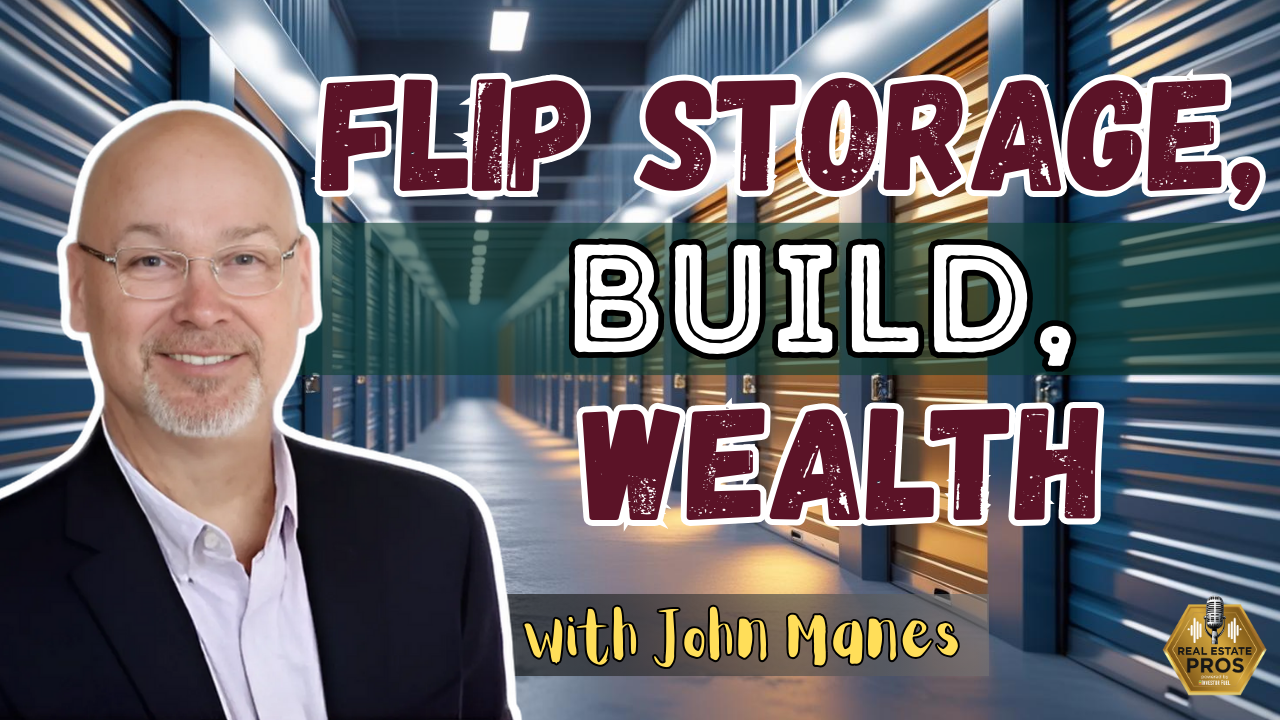
In this episode, John Manes shares his extensive journey in real estate, starting from his early days influenced by infomercials to his current success in the storage facility sector. He discusses the appeal of storage facilities, the different classifications of storage properties, and the regional markets he prefers for investment. John emphasizes the simplicity of the storage business model and the importance of understanding supply and demand dynamics. He also provides insights into the challenges of tenant laws in various states and how they impact investment decisions.

Resources and Links from this show:
-
-
- Investor Fuel Real Estate Mastermind
- Investor Machine Real Estate Lead Generation
- Mike on Facebook
- Mike on Instagram
- Mike on LinkedIn
- John Manes’ Website
- John Manes on Facebook
- John Manes on Instagram
- John Manes on Twitter
- John Manes on LinkedIn
- John Manes on Youtube
- John Manes’ Podcast
- John Manes’ Email: [email protected]
- John Manes’ Phone Number: 210-808-1496
-
Listen to the Audio Version of this Episode
Investor Fuel Show Transcript:
John Manes (00:00)
In storage, it’s one of the most simple supply and demand business models that you could possibly have.
I don’t fix toilets. I don’t have to deal with the single mother with three kids that I can’t evict or anything. Most of the tenant laws favor the
you don’t pay me, I sell your shit. And it’s that simple.
If I can do it, anybody can do it.
Dylan Silver (01:55)
folks, welcome back to the show. Today’s guest is based in Katy, Texas and specializes in storage facilities. Please welcome John Manes. John, welcome to the show.
John Manes (02:07)
Thanks for having me, Dylan.
Dylan Silver (02:08)
It’s great to have you on, great to meet you. I’m a Texas licensed realtor and so I always like having guests in Texas. Also, my sponsor with EXP was a guest on this show and so Houston area realtor, have a connection down there. I’m always curious to get folks history in the real estate space. How did you get started in real estate?
John Manes (02:28)
I started in real estate.
40 years ago. So I lived in New Jersey. I was sitting on a sofa. I watched an infomercial from Carlton Sheets on how to buy real estate with no money. I looked at my brother and I said, hey, let’s split that. It was 160 bucks. And he said, I’ve got $80. I said, well, I don’t have 160 bucks. So I went and bought a book on how to buy real estate with no money. And that was, was in 19…
Something like that. I bought three single family homes and two small multi-family, fourplex and a sixplex. And it was horrible. I hated being a landlady. So at the same time I was in retail, I always say like the Walmarts and K-Marts of the world, but I worked for a lot of the regional players.
Through that portion of my career, I worked my way up to district and regional manager in retail and quit doing the real estate thing for like 25 years. And I got burned out on retail, ended up out of retail and into applying for this job that had like a real estate thing to it. I started to apply to things like regional manager, multi-family.
General Manager of Warehousing of three warehouses. And I applied to this job with the fourth largest self-storage company in United States by accident. ended up getting the job as a district manager for Uncle Bob’s. Became number one in the company as district manager, promoted me regional vice president, regional vice president, got fired. Ended up with a regional player here in Houston.
There’s the COO for five years. Got fired. And I don’t know if you see a theme there or not, but I have a hard time keeping a job. So. March 15th of 2016, May and Robbie Dunn created Pinnacle Storage Properties. And bought a whole bunch of self storage properties, had a big exit.
Dylan Silver (04:17)
Yeah.
John Manes (05:17)
At the same time created a property and casualty insurance company had a big exit on that. year and a half ago rebranded under all of the businesses that we owned marketing, tenant protection, third party management and tech. And we rebranded that under a brand called StoreSuite. And here we are trying to create a quarter of a billion dollar company. I started by accident.
Dylan Silver (05:40)
I want
I want to mention to you, I didn’t mention this to you before we’re up and on the podcast here. I’m actually a New Jersey guy. So I was born and raised in Northern New Jersey, a town called Caldwell, West Caldwell. We’re really about 28 miles from New York City, from Manhattan. And so it was interesting because I’ve really lived all over now, ⁓ Texas, Massachusetts, New Jersey. I’ve lived outside of the country. I’m outside of the country now in Santo Domingo in the Dominican Republic.
John Manes (05:42)
Thanks.
Dylan Silver (06:07)
But everywhere has its own flavor. And I’ll tell ya, it’s a way different real estate game out there. You don’t see as many, I would say, single family home investors like you do see in Texas. And that’s one of the reasons why I got licensed in Texas and not in New Jersey, because I really like working with investors. You mentioned that you got started in 91 with the Carlton Sheets. It didn’t necessarily go as you thought had planned, but.
So many people got introduced, I think, to real estate in the same way. I’ve had many guests refer to that course and a lot of the material that he put out as what was really the catalyst for their real estate career. Do you think that if you hadn’t done that, do you think you’d still be in real estate today? Or do you think that was the catalyst in a lot of ways for you?
John Manes (06:57)
I probably would have got there. So my stepfather, when I was younger, he moved out after I got out of the house and moved in with my dad. He sold a single family home and bought a duplex, lived in one side of it, rehabbed the other side of it, moved into the rehab side, rehabbed the other side of it, got it rented out.
Use the equity out of that to go buy another single family home to move into and ended up renting the second side out for positive cashflow. I watched that happen. He didn’t teach me how to do it, but I watched it happen. And I was very intrigued by that. But when you’re 22, 23 years old and broke, you’re like, all right, how do I do that when I ain’t got no money? So.
think I would have gotten there because as a person, I have a genuine curiosity and I have been in my life very financially motivated. So I would have got there. The only disappointing thing for me is like I did the single family multifamily thing for like five years and I should have just kept going and I didn’t. I quit for like 20 years. So I should have just kept and I didn’t.
But I would have got there just in different way, probably.
Dylan Silver (08:04)
I think it’s…
I a lot of people can relate to that. I mean, I’d say the biggest, if there is a regret that investors have, the biggest one that I see with some regularity is I shouldn’t have sold those first investment properties. I wish I would have held on to them. But at the time, it seemed like the right thing to do and so on and so forth. And I think, you know, I mentioned this to you, John, before hopping on the show here, I’m really passionate about land deals. And I consider storage facilities to be
an asset class of land deals. But also, I just love real estate. mean, I tell people that sometimes folks look at real estate just through the lens of, you know, logistics or cash flow, and it’s very numerical. I really like what real estate can do. And I have also seen the flip side of kind of the limitation of it. Again, I’m a New Jersey guy. Most, I’d say almost all of the people that I grew up with cannot afford a home in the town that I grew up in.
And it’s also very hard, whether they could afford it or not, they probably wouldn’t get qualified for one. And so, what can we do to kind of solve and reduce the burden on people? Again, that’s why I love some of these land deals. You mentioned that you got started almost by happenstance, luck in a way, right? In the storage space. But then once you got a footing in there, it really took off.
What about the storage facility space really appealed to you?
John Manes (10:03)
Coming out of retail, what I’ll call general merchandise retail, it’s all supply and demand game. You probably remember Furby and Cabbage Patch Dolls and all that stuff is the reason that they were so expensive and everything is because the demand was so high for them at the time. But then in retail, if
If something wasn’t selling, you marked it down, you clearanced it out and you got rid of it, right? So based on supply and demand, I was always fascinated by that. And
storage, it’s one of the most simple supply and demand business models that you could possibly have.
And that is you have too many 10 by 10s, not enough demand. What do you do? You mark them down, put a more aggressive special on them, a move in special, or you…
lower your price to be more competitive in the market to steal the demand that’s there. Or if you sell out of all of them, what do you do? You raise your price, you raise everybody else’s price, and then you rent them at a higher price and you create value that way. the thing that really fascinated me about it is I was an operations guy in retail and the supply and demand model that goes in behind it.
The single-family, multi-family environment,
I don’t fix toilets. I don’t have to deal with the single mother with three kids that I can’t evict or anything. Most of the tenant laws favor the
in storage. So
you don’t pay me, I sell your shit. And it’s that simple.
So all of that to say, it’s an easy business model.
Dylan Silver (11:31)
That’s it.
John Manes (11:33)
If I can do it, anybody can do it.
What fascinated me about it is I said with Uncle Bob’s, I learned how to run them with the regional player here in Houston. I learned how to buy them and fix them up. And now I do all of that for myself. I’ve always been fascinated by fixing flips in single family. I’ve done a bunch that I’ve lived in myself like my stepfather did in order to.
add value for my own personal balance sheet. But the reality is I just do it on a much bigger scale in storage. I buy under managed, under enhanced, under expanded self storage property. I, or what I say is I flip this storage is what I do. Go and clean it up, fix it up, raise everybody’s rents, add value to it, make money for my investors, sell it and move on. Get another one.
Dylan Silver (12:18)
That’s right.
There’s, I’d say asset classes within the storage facility space. I’ve seen, you know, everything from multi-story air conditioned storage facilities to then what looks like a mom and pop run storage facility. looks like a bunch of garages on the ground kind of strung together. You might not even notice it. Have you bought and sold all different types of storage facilities or is there one kind of aesthetic that you have tended to stick to?
John Manes (12:50)
So again, it goes to supply and demand. And if you look at supply and demand from an entry price to an exit of what the demand is for the exit, there’s more of a demand for an institutional quality exit. So there’s more people willing to buy the institutional grade ones than there is the rundown mom and pop or the guy that has
20 units of a building sitting out in the middle of nowhere. Like there’s less of a demand for that and more of a demand for the institutional grade. What I’ve targeted is I’ve targeted C level properties. So there’s A, B and C level. I’ve targeted C level properties that I fix up to be a B and raise the value that way. Or I target B level properties that I fix up to be an A.
then you’re not only getting the increased value that you’ve added for revenue, but you’re increasing the demand proposition from the institutional buyer all at the same time. So you kind of get a double lift on it. So I’ve targeted the Cs and Bs to make them Bs and As.
Dylan Silver (14:41)
I want to get a little granular here, John. Maybe give away some of the gold, but not all of the gold. You mentioned three different tiers of storage facilities, A, B, and C. Is there a grading criteria for each of those, or is it more of a general type of, not a certification, but grading?
John Manes (14:57)
I think it’s a general, you know, some people walk in and go, this is a B grade property. I go, no, it’s not. so I’ll simplify it by saying your A properties are the three, four story ones on the corner of Main and 42nd Street. That’s kind of your A quality. Or your single story stuff in suburbia USA that’s
spotless, has climate control and non-climate, a little bit of boat and RV, that would be your A, quality properties. Your B, quality properties will be the single story stuff that might need painted, might need an office remodel, might be what I call the bruised banana, which is tan with the brown doors.
That would be your B grade quality properties. A lot of them are non-climate by themselves and a little bit of boat and RV, not much climate control. Then your C grade properties are the ones with no fence, no gate, gravel drives, 10, 15,000 square foot smaller properties in somebody’s backyard, things like that. That’s your typical C grade properties or
a non-climate property that’s been run down that was supposed to be a B or A property that they just…
Can you still hear me?
Dylan Silver (16:14)
Generally speaking, are folks when they’re making offers on the Bs and Cs at, let’s say, making more aggressive offers in favor of themselves as the investor versus the folks that are making offers on A’s? When you’re an offer on an A, there’s gonna be less margin for the investor than there is in B and C. Is that generally correct?
John Manes (16:34)
Yeah, so unless you get a really naive seller, so if you get a really naive seller that’s trying to sell it on Loopnet or Crexie or something like that and uses a, no offense, uses a realtor instead of a commercial real estate broker. ⁓ So if that exists for people on your podcast, call me because I’d love to buy your property.
Dylan Silver (16:51)
Yeah.
John Manes (16:58)
because I’m going to get a better price on it because you don’t have as much demand as the commercial grade broker does. So does it happen? Sure. Is it few and far between? Sure. But, you know, if if your audience is out there finding something on Craxi or on Loopnet or something, it’s it’s probably been picked over, shopped over so many times that they’re trying to look for a different demand person to buy it.
Having those connections in the brokerage industry is really, really, really helpful. Really helpful. Because then, like, in June, the brokerage as well.
Dylan Silver (17:30)
You mentioned… You mentioned…
You mentioned being out of New Jersey and then you’re in Katy, Texas now. I’m curious to get your perspective on the regionality of storage facilities. mean, of course, huge, I think pretty much wherever you go, because people don’t have space, especially when they’re moving and in so many different circumstances. But is there a market that you’re preferential towards or a market that you really like to buy in? And is it maybe a little bit more challenging in certain other areas of the country?
John Manes (17:57)
So I’ll let your audience figure this out. And that is, I won’t own in California. I won’t own in Seattle. I won’t own in New York. I won’t own in Chicago. I won’t own in New Jersey. I’ll let you guys figure it out. I will own in Texas. I will own in New Mexico. I will own in Florida.
South Carolina, North Carolina. So, and I’ll tell you why. I’ll let your audience figure it out. It’s not political, but it is. And that is that most of the laws in the more conservative states are in favor of the asset owner versus just the tenant. They’re balanced.
But I owned rentals. So I’ll give you an example. When I owned a single or multifamily rental in New Jersey, took me nine months to evict a guy. A single guy that was 25, 26 years old took me nine months to evict him. And in Texas, you can have them evicted in 60 days in single family stuff. yeah, most.
Dylan Silver (18:57)
Yeah.
60 days. That’s right.
John Manes (19:11)
It took me nine months to evict him. When I evicted him at the time, he owed me like $5,000 or something, and I had a mortgage to pay. So because the tenant laws favored the tenant in New Jersey, didn’t favor the landlord. So I’ve tended to stay away from those other states and cities based on tenant laws and things. So there’s one. Two, everything is relative.
Dylan Silver (19:19)
Yeah.
John Manes (19:32)
when it comes to pricing of the unit itself, what they rent it for. In Jersey, taxes are extremely high, insurance is high, everything’s high, right? So are the rental rates. So everything’s relative. But based on the same type of dynamics in the local or state political arena, those states also tend to be taxed a lot heavier.
So I’ll give you an example. During COVID, as you know, in the state of Texas, we didn’t get shut down. were considered a, I forget what they titled it, but a necessary business. So we didn’t get shut down except for
Dylan Silver (20:16)
Yeah.
John Manes (20:18)
in Travis County in Austin, Texas. So I’ll let you figure that out to the difference of Austin versus the rest of Texas. So we got shut down there where we weren’t allowed to do business. We weren’t allowed to do evictions or anything. We didn’t do evictions even though we were allowed to. But from doing a business standpoint,
I tend to go to the markets that favor the landlord versus just favor the tenant. ⁓ And I tend to, and stuff like that aren’t extremely.
Dylan Silver (20:47)
Sure. That checks out.
even
Even in the storage facility space, I could see that being ⁓ pertinent and significant and important. So many so many different ways where, you know, I think we eliminate a lot of that when you’re not dealing with tenants and toilets in the same regard, but still good to know that you can lessen eviction in a timely manner should you need to. John, we are coming up on time here, though. Where can folks go if maybe they have a storage facility deal that they’d like you to look at or would like some feedback on?
or if they’d like to reach out to you or get in contact with
John Manes (21:23)
You can go to storsuite.com, S-T-O-R-S-U-I-T-E dot com, fill out the contact page. That’ll get you to me. You can follow me all over social media. So I’m on LinkedIn, TikTok, Facebook, Instagram. I also do a podcast. And if you go to YouTube, Apple or Spotify,
and look up store chats, S T O R C H A T S. I do a podcast called bourbon and bullshit where I open a bottle of bourbon. We enjoy it. We talk about it and then we talk a whole bunch of bullshit. After that, we talk about business and you and like I get to know who Dylan is and all that kind of stuff. So you can follow me there. My email is J C.
manes @ storsuite.com, S-T-O-R-S-U-I-T-E, 210-818-1496. And as I end all of my stuff, I say come join the fun, because we’re having a blast.
Dylan Silver (22:26)
Well, John, thank you so much for coming on the show here today.
John Manes (22:30)
Thanks for having me. I appreciate