Subscribe via:



Show Summary
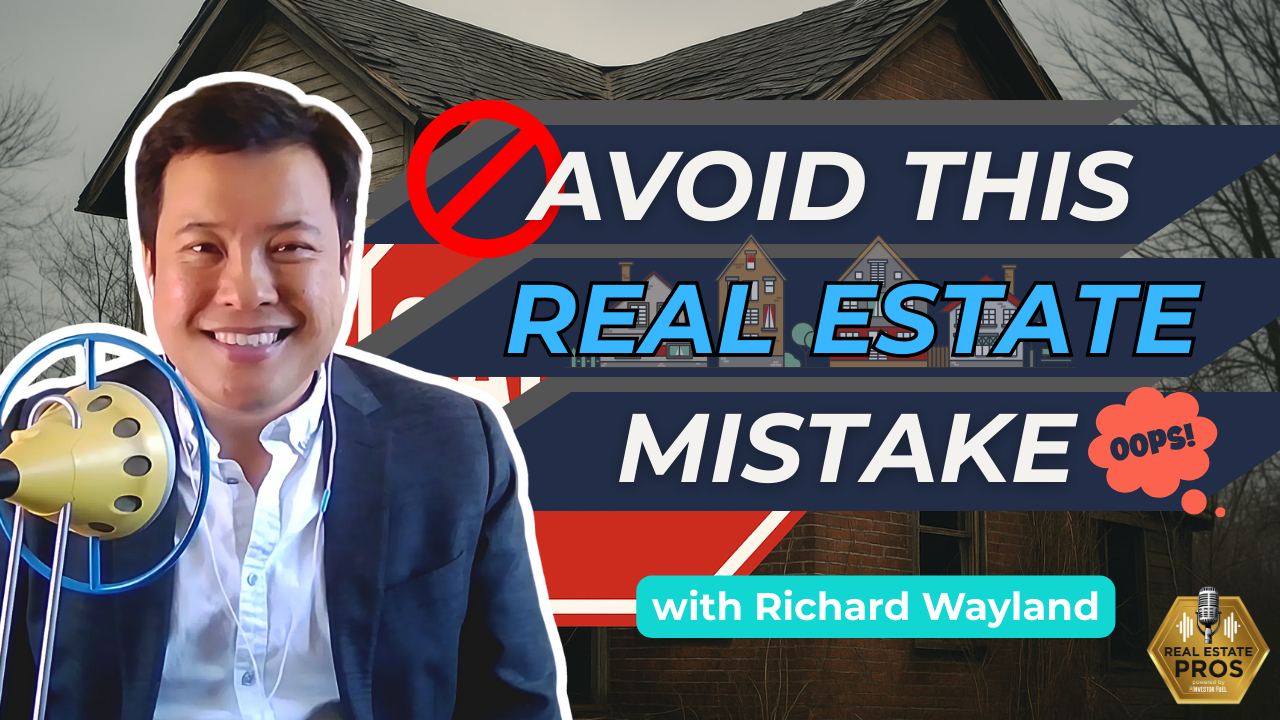
In this episode of the Real Estate Pro Show, host Erika interviews Richard Wayland, a seasoned real estate professional and founder of the Imagination Brokerage. Richard shares his journey from the restaurant industry to real estate, his investment strategies in the Ohio market, and the unique approach of his brokerage. He discusses the importance of understanding market trends, common misconceptions about real estate agents, and the significance of building strong relationships in the industry. Richard also reflects on lessons learned from past mistakes and shares exciting future projects aimed at community revitalization and affordable housing.

Resources and Links from this show:
-
-
- Investor Fuel Real Estate Mastermind
- Investor Machine Real Estate Lead Generation
- Mike on Facebook
- Mike on Instagram
- Mike on LinkedIn
- Richard Wayland’s Website
- Richard Wayland on Facebook
- Imagination Broker on Facebook
- Richard Wayland on LinkedIn
- Richard Wayland on Youtube
- Richard Wayland on Instagram
- Richard Wayland on Tiktok
-
Listen to the Audio Version of this Episode
Investor Fuel Show Transcript:
Richard Wayland (00:00)
got the chance to really participate meaningfully in the discussions about the future of an entire city.
we’re creating these affordable housing projects where the investor wins, ⁓ the tenants win.
And the city wins
and the whole community is going to be able to continue to grow on the building blocks of
really safe, comfortable,
for small families, low income families
more we can do this, the more we can create a safer, more beautiful community of
Erika (02:12)
Hey everyone, welcome to the Real Estate Pro Show. I’m your host, Erika, and today I’m thrilled to be joined by Richard Wayland, who’s been making waves in the real estate space with the Imagination Brokerage and also has lots of his own investing experience. Richard, it’s so great to have you on the show.
Richard Wayland (02:33)
thank you so much for having me Erika, I really appreciate it.
Erika (02:36)
Yeah, yeah, we’re glad to have you. So let’s jump right in. For those who aren’t familiar with your world, Richard, tell us more. How did you get started in real estate?
Richard Wayland (02:46)
Sure. Well, I actually, my background was I majored in entrepreneurship in college and ⁓ really was fascinated with the bar and restaurant industry first. So I spent most of my 20s ⁓ developing restaurants, nightclubs, bars, stuff like that. ⁓ Eventually
realized I had really fallen in love with the real estate aspect of it, negotiating leases, planning and developing spaces, working with architects and contractors and things like that. And so as I got into my thirties and realized, man,
the schedule of working in restaurants and the kind of all the demands of working in restaurants had really worn on me. thought, you know, all right, time to get a grown up career and work in real estate. So I’ve been in real estate now for about 11 years. In that time, I’ve touched a lot of different aspects of the industry from, you know, commercial restaurant retail development to industrial office, you know, and now I focus mostly in residential. And I about
During the pandemic, I sold my house in Los Angeles and thought, gosh, mean, nobody knew what was going to happen next, right? Nobody knew what the economic situation would be after 2020. So I thought, you know what, I’m going to start getting into investing and took all my gains from that sale and started a real estate portfolio in Ohio. And it’s just been…
an absolute thrill and a joy. And over the course of last four years, I have tried a few different things out there. Last year started, met up with a, ⁓ an amazing woman also from California who she just like me kind of came to a similar place in 2020, except she decided to move to ⁓ Ohio while I stayed here and opened up a real estate brokerage. And so now we kind of have this great sort of yin and yang vibe where I stayed here, opened up a business and I have.
I guess connections to all the people who have a bunch of money saved up that they’d like to invest. And she is out there ⁓ trying out new different business models, buying up a bunch of like weird little fixers and actually getting really amazing leads for some of the best investment opportunities that I’ve
honestly seen anywhere in over a decade of experience. So it’s been really, really awesome. We opened up a syndication together and have been investing together for about the past year, year and a half now.
Erika (06:01)
That’s a really cool partnership, Richard. I want to talk to you a bit more about the Ohio market. What drew you to there and how do you decide which properties fit your strategy?
Richard Wayland (06:04)
Thank you.
Yes.
Sure, sure, sure. Well, I mean, I, so again, starting in about 2020, I started just listening to all the real estate podcasts, downloading all the lists, all the things that people had on the internet at the time. You I looked at all the, I guess, top 10 cities that everyone talks about from, you know, Vegas and Atlanta to Baltimore, Detroit. I mean, there’s just…
You name it and I looked at least looked at it ⁓ and you know found that a lot of those places like Las Vegas has just been completely burnt out like even five years ago was burnt out and now it’s even more burnt out in terms of investment opportunities ⁓ and you know, I Once I had it kind of narrowed down I was looking at like maybe Central Texas and looking at Chandler, Arizona looking at Cleveland Ohio was was I guess on like a short list of about
five to 10 cities I had narrowed down to, I basically just started pulling up social media and thought, okay, who do I know here? Who do I know there? How do I, you know, how do I get more personal insights about these areas? And so I just started calling friends that I knew that were in those areas. And totally coincidentally, one of my good friends from Los Angeles moved to Cleveland, moved back to Cleveland to be with his family during the pandemic and ⁓ decided to settle down there long-term. And his brother,
was already actively investing in duplexes out there. And both of them ended up becoming essentially my first business partners out there back in 2021. so, you know, and I’ve just been, I’ve been out there ever since and we’re all still very close and still keep in touch.
Erika (07:55)
It’s awesome with your experience in the game. I’m sure you’ve seen markets shift and evolve. What’s one trend that you’re seeing right now that you think investors need the notice?
Richard Wayland (08:07)
Sure, guess the first thing that comes to mind is one negative trend and then we’ll talk about a positive one. The negative one being that you gotta really watch out for, ⁓ I guess what you would call tertiary markets right now. So ⁓ one of the things that I saw over the last five years was people who would get priced out of an area that everyone was talking about but that just ended up getting too expensive.
they would think, all right, well, maybe it’s good enough to buy something 15 minutes over this way or 30 minutes that way or 45 minutes that way. And they don’t realize that outside of California or New York or some of the other places where a lot of the investors are coming from, ⁓ a 45 minute drive is super long for a ⁓ lot of cities in America. And like the amount of… ⁓
I guess job creation and value loss that you get as you go inside. Think about like a bunch of concentric rings going outward from like the downtowns of a major city. ⁓ Every 10 minutes out you go causes huge problems for being able to sustain the value of an investment property. ⁓ long story short, I’ve seen now a lot of these tertiary markets, like small towns, like distant suburbs.
are just crashing in value right now. Like we’re talking losing 50 % of their value going back down to 2019 prices, because essentially what’s going on is all the people that, all the investors, out of state investors that artificially jumped up the values of those towns. Now it’s the, the correction is hit. Like there was nothing really sustaining that aside from other out of state investors bidding it up. And now it’s going back down to pre-pandemic prices.
So I’d say that’s one thing to really, really watch out for and to just make sure if you’re investing in an area, it is, I’m not gonna say a primary market. So primary, just to take a step back, that’d be like, you know, like your 10 biggest cities in the country, like the cities everybody knows and talks about, right? ⁓ And then, you know, there’s sort of like a group of, would almost kind of call them like prime secondary cities, you know, cities that,
You know, maybe they’re not the biggest, but they are still ones that, you know, everybody kind of talks about. So I’d say that like, you know, Cleveland is probably, I mean, it’s a recognizable name of a city. I wouldn’t say it’s, it’s in like the, top league of, of, of cities. only, but, but you know, it’s a solid secondary market, right? But then tertiary would be, ⁓ like, so, you know, my brother spent many years living in Terre Haute, Indiana. ⁓ and, that’s just like a.
unfortunately kind of a no-name suburb that doesn’t have a whole lot of long-term employment drivers really kind of going for it. And I saw prices again, like literally double there and then drop back down over the course of two or three years. And I can see, I can imagine the same thing happening in a lot of the other places where I’m seeing people invest right now.
Erika (11:51)
Yeah, yeah, totally. Richard, let’s talk a little bit about your brokerage, the Imagination Brokerage. What made you form your own company and what sets you apart from other brokerages?
Richard Wayland (12:03)
Sure, well, you know, there’s two big things. ⁓ One is the diversity of the things that we do. mean, you’re going to be hard pressed to find another real estate brokerage in Southern California that does our kind of particular mix of investing and also commercial work and residential work as well. We do truly just a little bit of everything. And that’s just a reflection of my career, probably my severe adult ADHD.
And, you know, just the fact that I’ve, you know, done a little bit of everything. And ⁓ I, so I knew I needed a place where I could do that and have that all be supported by, you know, like the proper insurance and the proper, you know, no, bosses telling me not to. And then also I wanted to really get much more into the digital space. I wanted to.
have my own film studio where could do podcasts and do live webinars and film interviews and all that stuff. just nobody else was doing it. Nobody else. And this was, again, this was about like 2021 that I started thinking about this. And everyone was saying, you got to get on camera, you got to get online. But nobody was giving the tools or knowledge on how to do that. And so it was really important to me that I create a place.
where both for myself and for my agents, could ⁓ fully express all the things we’re interested in and do so in a very public way that helps to inform and educate the full audience out there.
Erika (13:43)
Yeah, yeah, absolutely. Richard, I’m sure you have some unique insight with you having, you know, both feed in with the brokerage and investing. What would you say is a common misconception that people have when working with a brokerage?
Richard Wayland (13:59)
Hmm. That’s very interesting. I mean, I’d say that the misconceptions can kind of come in two different directions, right? There’s either people who kind of, I think, overestimate what a real estate agent is and what they can do. I’d say that, you know, especially in California, the barriers to entry for being a real estate agent are very, very low. You literally spend two or $300 and a few months of time and you can pass the state exam and boom, you’re a real estate agent, right?
⁓ And you know the people who rise to the top are the ones who are able to kind of sustain a sort of friendliness of ⁓ You know going as I my daughter’s in the background there, you know people who ⁓ are you know, very friendly and very charismatic and you know love to sell themselves love to market themselves, but ⁓ they you know might not really have a lot of
knowledge about finances and knowledge about investing and things like that. And so a lot of people think, okay, I want to invest,
you know, wherever, ⁓ let me call, you know, my cousin Joe, who just got his real estate license. I’m sure he knows about this stuff, right? Like that sort of thing. You can’t really do that. Now, because of all the cousin Joe’s out there, and I apologize if your name is Joe, I, ⁓ you know, because of all that,
real estate agents also develop a really negative ⁓ impression. And so there’s a lot of very sophisticated buyers, investors out there who are like, ugh, I never work with real estate agents because they’re all morons. know? so, you know, so yeah, so we get kind of like the both sides. And I would say that, yeah, it’s just a matter of you need to learn enough about
what the real estate profession is and what it’s like to be able to discern the difference between somebody that knows what they’re talking about versus someone that really doesn’t. And part of that is listening to them speak in a format like this. mean, the reason why I’m doing this podcast is ⁓ to just make sure that people out there know what it sounds like when someone actually knows what they’re talking about in investing in real estate, because trust the wrong person in this industry and you can lose a
lot of money. And at the end of the day, it’s all about trust. It’s all about people. You know, just kind of like a little subset, just kind of going off on a tiny tangent here. ⁓ You know, it is so easy to lose money when all the black and white, all the stuff on paper looks good, but you don’t actually have a feet on the ground there that you know, and that you trust. And so that’s just, you know, something where
⁓ you know, even I had a lot of experience in this industry and I still lost like 10 grand on one of my first transactions because I, ⁓ you know, trusted the wrong general contractor and he demoed my kitchen and then just disappeared. And so, you know, I, so, yeah, so even I can, can, you know, fall victim to that. But now that I’ve been through it and have now developed a larger, ⁓ Rolodex of.
talent in my kind of chosen area to specialize in. Now I know that if other people were to come and invest alongside me, I can protect them from a lot of those initial hurdles.
Erika (18:13)
Yeah, it’s interesting that you just shared that story because I was going to ask you if you’ve ever had a story that things got hairy. maybe it’s not investing, maybe it’s more from the brokerage. But what would you say throughout your journey was the most, the biggest moment that really tested you?
Richard Wayland (18:23)
Hahaha
Oh, that’s an interesting one. mean, thankfully, I have not had any one really big catastrophic thing that’s happened to me. I like to spread them out. I like to spread them out to lots of little things that I wasn’t paying attention to or that I didn’t do right the first time. So our first…
One of my first purchases out there, we happened to be doing inspections and all that right when my wife went into labor with the little girl that was just running around right here. she’s four now. So this was about four, a little over four years ago. And, you know, I, yeah, I was very distracted that month. And I, you know, if it, if it had been a deal here, so there’s a number of inspections. I always recommend that, people do whenever they’re buying.
any house. you know, so you got to do your general inspection. have to do a sewer line inspection. ⁓ And you know, for whatever reason, I let somebody tell me, ⁓ you know what, all the sewer line people are busy or like, you know, or it’s going to be really expensive or this guy’s, know, whatever. Like something happened and they’re like, you know what, don’t worry about it. There’s no big trees. There’s no big plants on this, on this lot. don’t just, you know, like whatever, like I’m sure it’ll be fine.
And that ended up being a $20,000 mistake because there was a major plumbing backup. It’s actually two houses on a lot. And so they actually had two separate drain lines that each had the same problem. I guess there was like a big bush or big tree in the front yard that clogged both lines. And so that required two separate excavations and repairs of a sewer line system. Now, even then, know, like, again, like $20,000 is a, you know, it’s a hit.
big hit to the wallet, ⁓ but I’m still very lucky. mean, there’s lots of people out there who’ve lost hundreds of thousands of dollars in the real estate investment world because they bought something that was being misrepresented on where it is and what it’s like and all that stuff, or even just outright been defrauded for hundreds of thousands of dollars. thankfully nothing like that’s ever happened to me. again, that’s because I already had almost a decade of experience going into it.
Erika (21:00)
Yeah, yeah, totally. For our listeners who are either starting out or looking the level up, relationships are key, as I’m sure you know, Richard. What’s your go-to strategy for building strong connections with other investors and other people on real estate?
Richard Wayland (21:20)
That’s a very interesting question. would say that ⁓ I look at that the other way around, which is that at this point in my life, I’ve made a lot of friends. I’ve got a lot of clients that have money. And so now it’s like, how do I convert someone I already know into an investor, if that makes sense, right? Now that maybe that’s just kind of a fortunate position I’m in because of the…
where I live and where I went to school and stuff like that. ⁓ But if I was starting from scratch, scratch, and didn’t have the relationships or the ability to kind of pitch to people, I I would say that it still comes down to networking maybe one or two notches above where you’re at right now.
Right? Like if you’re here and you just can’t break into that next social group up, then you just kind of get as close as you can. You talk to your old friend who has a membership to that one, you know, little private club or that one, you know, athletic place or whatever. you can work your way through with hobbies and with shared interests or shared community service type situations, know, shared politics.
you know, supporting a local candidate. You one of the tips that has served me well that I got a few years ago was, you know, even when you invest $25 into a local politician, they will actually know your name and appreciate it. You know, that like this, if you’re, from a small town, like you’re a city council person, doesn’t have that many donors and that many people they can rely on. So, know, so like stuff like that, you know, whether it, again, like, you know, through college or through any social group that you belong to.
You try to kind of scrape into the very top part of that group and then use that to kind of leap into the next group and so on. And so finally you have just sort of a pool of people who are really smart and understand money really well. And you just try to just humbly approach them and learn as much as you can from them. you know, because that’s the other thing. You don’t need to go in sounding like an expert. I think there’s a certain… ⁓
in the back of your head that says that, you know, if you’re talking to someone who’s an investor, you need to behave like you know things that they don’t know and stuff like that. As opposed to if you come in with humility and grace and just like a desire to learn and, you know, show that person a lot of appreciation, you know, that’ll take you a lot further. And then later, once you really have done it and you’ve learned some things,
that person will remember you and will feel this invested interest in you. Like they gave you some of your advice that you needed to start out. And now that you’ve become, you’ve got your first deal in hand, they’re that much more likely to invest in you because they’re already emotionally invested in you.
Erika (24:28)
Yeah, yeah, that’s a really good point. Richard, tell us what’s next on the horizon for you. What are you most excited about achieving?
Richard Wayland (24:38)
Well, so I just got back from Cleveland a couple of weeks ago. I got the chance to sit down and interview the mayor of East Cleveland. It was just this incredible kind of out of the blue situation where my business partner, you know, ran into them and then, you know, schedule some things. There was a whole bunch of like wild left turns there. I can talk about that more on separately because it’s just a long story. But at the end of the day, we got to interview some of the top.
community leaders in East Cleveland, all on camera. It’s already up on my YouTube and my Facebook now. And
got the chance to really participate meaningfully in the discussions about the future of an entire city. Not just fixing and flipping a single house, or even just a single neighborhood, but an entire city that’s been in decline for the last five decades.
you know, what are we going to do to try to save the city? And, you know, there’s so many people there with big hearts and big hopes, and ⁓ we want to be a part of that. And, ⁓ you know, with the help of certain, like all these different, you know, interested parties and, you know, government subsidies and things like that, we’re creating these affordable housing projects where the investor wins, ⁓ the tenants win.
And the city wins and the whole community is going to be able to continue to grow on the building blocks of these really safe, comfortable, frankly overly luxurious houses for small families, low income families all throughout the area. so that’s just something where I didn’t initially, I never would have imagined getting into this ⁓ part of the industry.
but ⁓ just happened to come across it thanks to my incredible business partner, Dulce Lopez, ⁓ who is just, mean, she is just such an absolute hustler. And as a strong, independent, ⁓ single mother, like, single moms know how to get things done.
You know, how to get things done. know how to get out there and put their feet down and make things happen. And I’m very pleased just as a side note that our first tenant on our first affordable housing project, she is a single mom and with three and now four kids, three and a half kids. And she is paying $50 a month.
to live in a beautiful five bedroom house that we fully renovated. you $50 a month and then the rest of the income is coming in from like section eight funding. And so the bank’s happy, we’re happy, tenants happy, just everybody’s happy. And the more we can do this, the more we can create a safer, more beautiful community of families to completely revitalize regions
East Cleveland and all the other little areas all around there.
Erika (27:56)
Yeah, and how rewarding is that to play a part in that, Richard?
Richard Wayland (28:00)
⁓ It’s been incredible. Again, I never would have imagined. I thought that I would just be ⁓ making cool stuff for snobby hipsters for most of my career. ⁓ the fact that I’ve gotten even just the opportunity to participate in something like this has been a big deal, much less be able to now I’m able to present the business model to a wider audience and thus encourage.
hopefully millions more dollars to come into this region and completely change it.
Erika (28:35)
Yeah, yeah, absolutely. It sounds ⁓ like Cleveland’s the place to be that’s very exciting. Richard, if someone wants to reach out with you, learn more about your brokerage or maybe learn more about what you’re doing in Cleveland. What’s the best way for them to reach you?
Richard Wayland (28:51)
Sure, well the one stop shop is going to be ImaginationBroker.com. ⁓ I also, I am very active on Facebook. You just looked me up Richard Wayland, that’s W-A-Y-L-A-N-D. You can find the Imagination Brokerage on pretty much every platform. We’re on Facebook, Instagram, TikTok, LinkedIn, and YouTube.
And so, you know, whatever your platform is of choice, you’ll be able to find educational shorts, ⁓ know, links to some of the long format stuff that if you’re still interested and want to really get in depth and see how the numbers work and see how the percentages are, you know, understand really all the minute details of the strategy. I try to be as transparent as possible about absolutely everything. And we are actively looking for investors for kind of our next round.
of affordable housing developments. you know, anyone can reach out to me directly to find out more about that. That’s going to be a private placement. So I can’t, there are certain ways that I can and can’t talk about that in a podcast format. But if someone, you know, reaches out to me and we build up a relationship, I can talk more about the actual tangible investment opportunities that we have right
Erika (30:06)
Richard and thank you so much for sharing all your knowledge, your journey and really just being an inspiration within real estate.
Richard Wayland (30:15)
my gosh, thank you so much. I really appreciate it and I appreciate the opportunity to speak to your audience. ⁓ know, this is, I frankly, I saw a little Facebook ad for you guys and I’ve kind of seen you around for a while and wasn’t really sure, ⁓ you know, what to expect and it’s been an absolute pleasure. Thank you so much, Erika.
Erika (30:35)
Awesome. Same here. for our listeners, if you got value from this episode, make sure that you’re subscribed to the Real Estate Pro Show. We’ve got more episodes coming up with operators like Richard who are out there building fantastic real estate empires and inspiring others. We’ll see you on the next episode.
Richard Wayland (30:54)
Thank you.