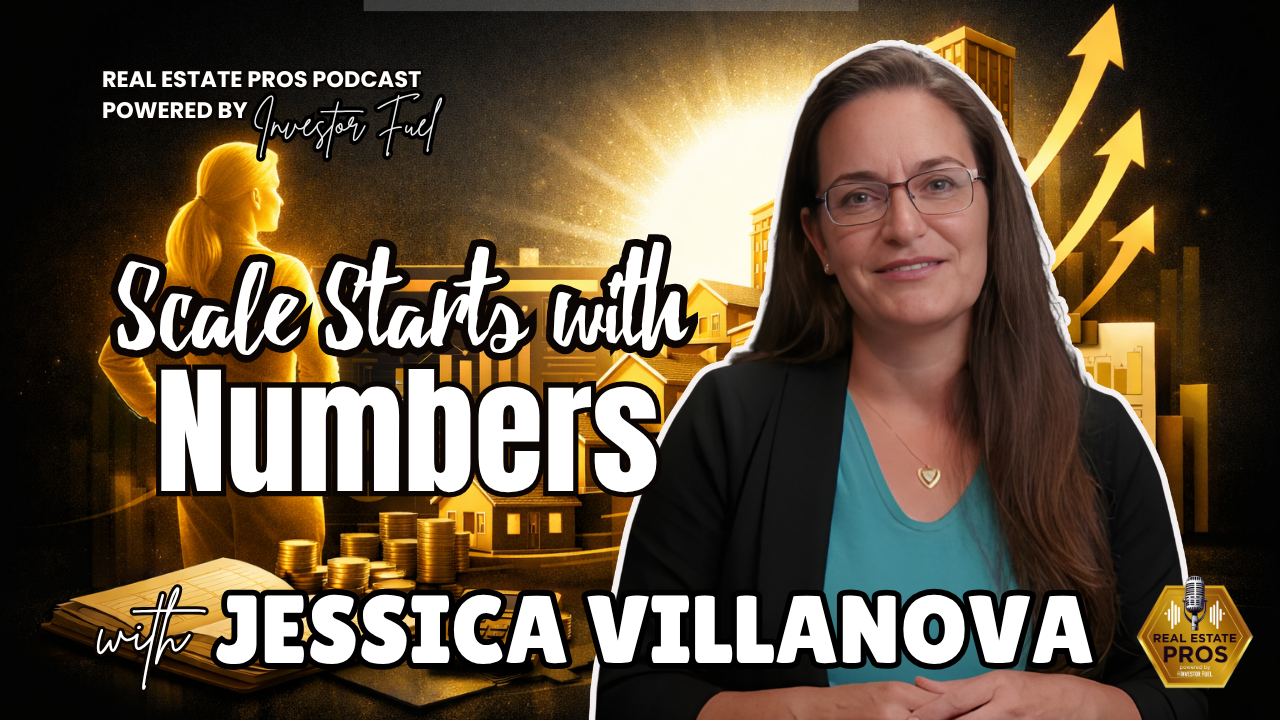
Protect Capital, Grow Wealth: Bruce Porter’s DFW Multifamily Syndication Strategy
Show summary
Bruce Porter shares his journey into multifamily syndication, market insights on Dallas Fort Worth, and strategies for building investor trust. Learn about market cycles, financing preferences, and how to evaluate multifamily deals effectively.
Key takeaways
- Bruce Porter prefers fixed-rate debt for 15 years with a 30-year amortization and avoids variable rate loans and bridge loans entirely, regardless of market cycle.
- The current DFW opportunity is driven by 2021-era bridge loans reaching maturity; operators who loaded up during that frothy period now face deal economics that don't pencil, forcing refinance, sale, or foreclosure.
- Porter Legacy targets C-class and B-class workforce housing rather than A-class, which provides some insulation from new construction competition; new construction permit applications are slowing significantly.
- Current DFW C-class rents run roughly $850 to $1,250-$1,400 a month depending on unit size and location.
- Typical strategy is to buy under-rented properties, raise rents to boost NOI, and exit in 3-7 years (targeted around 5 years); but on a recent contract where occupancy had dropped to 70% under an absentee owner, Porter Legacy plans to lower rents first to fill the property, then invest 17-20% of the acquisition price in capex to reposition it from C-class to B-class before raising rents.
- Porter Legacy's current deal targets a 24-25% return on investment, 10-11% cash-on-cash quarterly distributions, and a 2.25x equity multiple at exit.
- Porter Legacy's operating partner has 19 years of experience with 17 acquisitions and 13 exits, which Bruce cites as key to navigating deal challenges.
In this episode
- 00:00Wall Street protects capital, real estate grows it
- 02:39How Bruce got into multifamily syndication with his son Ryan
- 06:03Why DFW is attractive right now: the bridge loan maturity cycle
- 07:12Why Bruce avoids variable rate debt and bridge loans
- 10:42Building trust and raising capital as an operator
- 12:28Who's investing passively: from teachers to tech workers
- 14:45Hedging against new development: focusing on B/C class workforce housing
- 17:04Current DFW C-class rent ranges
- 17:45Rent strategy: raising rents vs. lowering rents to fill vacancy
- 19:40Current deal metrics and how to reach Porter Legacy
About the guest
Bruce Porter is a multifamily syndicator and founder of Porter Legacy, focused on acquiring and operating multifamily assets in the Dallas-Fort Worth market. He spent 15 years in high-end recreational real estate and 35 years on Wall Street focused on capital and risk before moving into multifamily syndication alongside his son, Ryan. His current partner on acquisitions has been operating for 19 years with 17 acquisitions and 13 exits.
Listen to the audio
“Wall Street taught me how to protect capital and real estate taught me how to grow it.”
Bruce Porter
“I would avoid variable rate like the plague. I mean, it's just my opinion.”
Bruce Porter
“Multi-family is, and building a company like this, it's not a 50 yard dash, it's a marathon.”
Bruce Porter
Questions answered in this episode
Why does Bruce Porter avoid variable rate debt and bridge loans in multifamily deals?
Bruce says he would avoid variable rate debt at any cycle and any time. He prefers fixed rate financing for 15 years with a 30-year amortization. He notes that a lot of the 2021-2022 multifamily exuberance was funded by bridge loans and variable rate debt, which he compares to the frothiness seen in the 2006-2007 residential market, and those loans are now maturing with economics that no longer pencil, forcing operators to refinance, sell, or face foreclosure.
What makes Dallas Fort Worth attractive for multifamily investing right now?
Bruce frames it as entirely about the market cycle. In 2021, operators loaded up on properties using short-term bridge loans with helpful bank lending. Those bridge loans are now reaching maturity, and the deal economics no longer work, so operators are being forced to refinance, sell, or let properties go to foreclosure, creating opportunity for buyers like Porter Legacy.
What rent ranges is Porter Legacy seeing for C-class multifamily assets in DFW as of early 2026?
Bruce estimates a range of roughly $850 to $1,250–$1,400 a month depending on unit size and location, though he notes he doesn't have the exact unit-mix rents memorized.
Does Porter Legacy always raise rents after acquiring a property?
Not always. Their typical strategy is to buy properties where the previous manager underpriced rents relative to comps, then raise rents to increase NOI and value at exit (targeted around 3-7 years, typically 5). But on a property they just contracted, the prior owner was absentee and occupancy had fallen to 70%, so they plan to lower rents initially to fill occupancy, put about 17-20% of the acquisition price into capex to move it from C-class to B-class, and raise rents later as the asset improves.
How does Porter Legacy build trust with limited partner investors?
Bruce says it comes down to integrity and trust, since there are many operators in DFW competing for capital. Beyond deal metrics, LPs have to seriously evaluate the operator, so Porter Legacy focuses on instilling confidence over time, describing the business as a marathon, not a 50-yard dash.
What returns is Porter Legacy targeting on its current deal?
Bruce cites a 24-25% return on investment, about 10-11% cash-on-cash quarterly distributions, and a target 2.25x equity multiple (two times investors' money) at exit.
Resources and links
Full transcript
Bruce Porter (00:00)
And he effectively said, no, you’re not going to do that for a third party. You’re going to do it for me.
And, you know.
Wall Street taught me how to protect capital and real estate taught me how to grow it. and multifamily is really cool. I mean, it sits right at the intersection of necessity and scalability. People always need housing. And if it’s done right, it produces durable cash flow, capital appreciation, you know, pretty significant tax advantages.
Dylan Silver (00:22)
That’s right.
Hey, folks, welcome back to the show. Today, we’re joined by Bruce Porter, a multifamily syndicator and founder of Porter Legacy, focusing on investing in the DFW market. Bruce specializes in acquiring and operating multifamily assets, working with investors to create scalable opportunities through syndication. His approach centers on strong market selection, strategic partnerships and building long term value in one of the fastest growing regions in the country. Bruce, welcome to the show.
Bruce Porter (02:36)
Thank you. Happy to be here.
Dylan Silver (02:39)
Now, when we talk about the multifamily space and syndication specifically, this seems to be an area of ever increasing competition and more so over the last five to seven years. How did you get into the multifamily syndication space?
Bruce Porter (02:58)
⁓ Well, that’s an interesting story, but ⁓ my son, Ryan, ⁓ finally got the bug to be get a little involved in real estate. I mean, my family’s been in real estate since I was a kid. We were talking about cap rates at the dinner table when I was eight years old. And ⁓ he started doing a little bit of homework at the advice of an economist that he knows where he in an area where he lives.
And ⁓ so he started just checking it out for about a year and going to multifamily networking events and conferences, et cetera. So that’s kind of where we landed. And ⁓ my background is at 15 years in high end recreational real estate ⁓ back when, and then 35 years on Wall Street, ⁓ basically focusing on capital and risk.
⁓ for me, when Ryan invited me to join, when we were on the ski slopes in Tahoe and he said, you’re two years into retirement, you look antsy, what are you going to do? And I said, well, I’m going to go find a small firm in New York and do a hundred percent private equity and raise capital at my own pace from my home.
And he effectively said, no, you’re not going to do that for a third party. You’re going to do it for me.
And, you know.
Wall Street taught me how to protect capital and real estate taught me how to grow it. and multifamily is really cool. I mean, it sits right at the intersection of necessity and scalability. People always need housing. And if it’s done right, it produces durable cash flow, capital appreciation, you know, pretty significant tax advantages.
Dylan Silver (04:42)
That’s right.
What makes Dallas Fort Worth right now specifically such an attractive market right now for multifamily investors?
Bruce Porter (06:03)
Cycle, it’s all about cycle. 2021 ⁓ operators were loading up and banks were lending a very, you know, being very, very helpful for them to load up. ⁓ most of it was financed with short-term bridge loans. And now those bridge loans are, you know, coming to maturity or actually they’re at the end of
the maturity for bridge loans. ⁓ the economics are not the same and the deals that they have and were kind of okay when they by bottom because of the frothiness in the market ⁓ are now not penciling. So they either have to refinance, sell or often let it go to foreclosure.
Dylan Silver (06:51)
Yeah.
Speaking of, ⁓ what’s your outlook on variable rate debt for multifamily syndicators?
Bruce Porter (07:12)
⁓ I don’t really have an outlook on variable rate for ⁓ multifamily. I don’t even like bridge loans. I like fixed for 15 years with a 30 year amortization. So ⁓ personally, I would avoid variable rate at any cycle and at any time. ⁓ so that’s my answer to that.
Dylan Silver (07:41)
It seems like there was potentially a lot of newer syndicators who got into multifamily specifically around 2020 and they had seen all of the success over the previous years where you could even buy a deal wrong and just bank on the appreciation and hit your pro forma and half the time. And there was a lot of variable rate that it seems like.
going on and that was just kind of industry norm. It was the easiest access to capital. But then rates doubled, you know, there was a lot of development in all of this on belt and definitely in Texas materials went up and you also had vacancies increase in places like ⁓ Austin, Texas, right? Specifically. And so I do think now people are being maybe more cautious both in their underwriting and then also just what they’re willing to offer on in general.
Bruce Porter (08:40)
You know, I’ve been investing in real estate for a long time and I’ve done many types of financing, but I would avoid a variable rate like the plague. I mean, it’s just my opinion. And yes, there was that in 20, more like 21 and 22, and you could liken it to the…
⁓ 2006 and seven frothiness in the residential real estate market. So the banks were offering all kinds of tools and yeah, I would, you know, I’m a year into this business with my son. So I don’t know what percentage of ⁓ that exuberance in the market with the operators was funded by variable rate, but ⁓
Like I said, I don’t like it, so I don’t use it.
Dylan Silver (09:39)
Now, as someone who’s worked with investors, worked on Wall Street, investing in DFW, how do you go about building trust with investors and raising capital consistently? And I know that’s a broad open-ended question, but so many people, especially folks in real estate, are looking to raise capital, but just not sure how to start.
Bruce Porter (10:42)
⁓ well, it’s all about integrity and it is an about trust. And, ⁓ there are, there’s a lot of operators in Dallas Fort Worth right now. So a limited partner, ⁓ in addition to the metrics on the actual deal, ⁓ they have to give us a very serious consideration, ⁓ to the opera operator. And we’re, we’re just trying to do everything, ⁓ you know, possible to, ⁓
to instill that confidence. ⁓ Multi-family is, ⁓ and building a company like this, it’s not a 50 yard dash, it’s a marathon. So during that, would you have that in your mind, the process of instilling confidence and building trust, isn’t that challenging?
Dylan Silver (11:36)
Now, I’m seeing a lot of interest from folks from a number of different segments and ⁓ lifestyles, know, everybody from, you know, government workers and police officers, teachers to ⁓ doctors, attorneys, and so forth, looking at getting passively into real estate investing. And so I think this is also a big reason why syndications are so popular right now, because if someone
has the ability to be an accredited investor and effectively get involved in real estate without dealing with the hassle of managing tenants and ⁓ value add rehab and so forth, it’s a win-win opportunity. Are you as well on your end seeing that more people than ever are interested in investing in real estate?
Bruce Porter (12:28)
Well, you know, no question about it. ⁓
Multifamily in the past up until the last four five years was pretty much only accessible to the institutional ⁓ investor. And now through the syndication process and perhaps some changes in the SEC laws, et cetera, ⁓ it is available to the mom and pops and to anybody that has an interest ⁓ in real estate. And a lot of our prospects that we’re looking at now are ⁓
You know, they’re tech tech people, they’re tech oriented and ⁓ they want a piece of real estate, but they don’t want the nuances. They don’t want to get a call about broken plumbing or they don’t want to get a call about the driveway being blocked or whatever. So for anybody that wants to be in real estate to align themselves with ⁓ an operator such as, you know, we’re building.
who’s going to handle all that, a professional team, is the way to go. mean, our partner on our first deal and now on our second deal has been doing it for 19 years. They’ve got 17 acquisitions and 13 exits. So, they’ve seen all the challenges and all the problems. But if you think about it and you can…
For me, the first place I go to is to compare it to the asset classes that I’ve been investing in on behalf of my clients and placing my clients’ money in for 35 years. It has income, it has capital appreciation, it has significant tax advantages, and it has little to no volatility if the deal is structured properly. So that’s the why. That’s the interest.
Dylan Silver (14:24)
Now, of course, there are some challenges in multifamily. And one of the big ones is it seems like in a lot of markets, there’s a lot of new development. How are you ⁓ hedging against that? Or how are you underwriting deals where there are a lot of other development ⁓ going on?
Bruce Porter (14:45)
Well, number one, we focus on with C class and B class. So ⁓ it’s not really ⁓ in competition with an A class that has all the bells and whistles and all the amenities and what have you. And number two is you’re talking about, you know, the new construction supply
and it was massive and is still, you know, significant, but
It is slowing down and new construction starts ⁓ as evidenced by, you know, new permit applications is going way, way, way down. ⁓ So the asset class that we’re pointing our acquisitions at is not really in direct competition with that. I mean, we’re work, workforce housing and it’s a necessary, what we’d.
The housing that we’re buying and improving and ⁓ perhaps adding an amenity or two and making sure that it’s in with proximity to the places these people work at, in any cycle, it’s necessary. So there’s some insulation from competition ⁓ in the higher end stuff and the new stuff as well.
Dylan Silver (16:47)
Now for C class assets in DFW, ⁓ do you know by any chance like what the rent range currently we’re talking end of March, 2026, what those are typically renting for right now?
Bruce Porter (17:04)
Well, it depends on the location, but I would say you could use a range of 850 to 1250 a month, depending on the size of the units. I don’t know, you know, specifically what the rent is for the unit mix off the top of my head, but a good range would be, you know, $850 a month to maybe 1350 or $1400 a month.
Dylan Silver (17:29)
Now, when you’re acquiring a property like that, is the intent to immediately raise rents ⁓ or staircase rents year to year? ⁓ How does rent increases play into the deal there?
Bruce Porter (17:45)
⁓ From a mile high view, yeah, we want to buy a property where maybe the previous manager didn’t maximize the amount of rent they were getting in comparison to their comps and the market. ⁓ But it’s not always ⁓ the case, but the more you increase the rents, the more you increase the netting.
operating income or known as an NOI and then eventually the more you improve your position when you’re ⁓ at exit in anywhere between let’s say three and seven years typically targeted at five years. But there are exceptions like the property that we and our partners ⁓ signed contracts for last week, we’re actually gonna lower the rents. ⁓
Mostly we’re going to lower the rents because the previous operator was an ⁓ absentee owner and tried to manage it himself. the occupancy is down to ⁓ 70 % and we’re going to lower them to kind of get them filled up. And we’re taking about 17 to 20 % on top of the acquisition price, which was an amazing price, and doing capex. We’re improving it. So as we re-,
build them and we take it from a C class to a B class, naturally the rents will go up. And if I can just add quickly, if I can add quickly for our LP investor, I mean, that’s a good thing. So now we got, we went from a C to a B and we raised the rents and we’re ready for an exit if that’s what we’re.
Dylan Silver (19:16)
Now.
We are coming up on time here, Bruce. Any new projects that you’re working on and then as well, what’s the best way for folks to reach out to your team?
Bruce Porter (19:40)
Well, I just said we just acquired one and the metrics are real simple. There’s a 25, 24 % return on investment and a, about a little around 10 % to 11 % cash on cash quarterly distribution. We’re looking to get people out at a 2.25 % equity multiple. In other words, two times their money. We’re at porterlegacy.com.
And ⁓ you know, for your new people, the new people that you’ve been referencing and new LP investors, we have a thing on there called a white paper. And it really is really, really cool. It just gives the whole ⁓ scenario of what this product is about and ⁓ why people should look at it or, you know, who we are, what we do and why we do it.
Dylan Silver (20:37)
Bruce, thank you so much for your time today. Thanks for joining us.
Bruce Porter (20:40)
Cheers. Thank you so much.