Subscribe via:



Show Summary
In this episode of the Investor Fuel podcast, host Michelle Kesil interviews Byron Posadas, a seasoned real estate investor focusing on short-term and long-term rentals. Byron shares his journey from being a general contractor to becoming a successful real estate investor, highlighting the importance of learning from mistakes, understanding market values, and maintaining quality in rental properties. He emphasizes the significance of tenant relations and offers valuable advice for new investors looking to thrive in the real estate market.

Professional Real Estate Investors – How we can help you:
Investor Fuel Mastermind:
Learn more about the Investor Fuel Mastermind, including 100% deal financing, massive discounts from vendors and sponsors you’re already using, our world class community of over 150 members, and SO much more here: http://www.investorfuel.com/apply
Investor Machine Marketing Partnership:
Are you looking for consistent, high quality lead generation? Investor Machine is America’s #1 lead generation service professional investors. Investor Machine provides true ‘white glove’ support to help you build the perfect marketing plan, then we’ll execute it for you…talking and working together on an ongoing basis to help you hit YOUR goals! Learn more here: http://www.investormachine.com
Coaching with Mike Hambright:
Interested in 1 on 1 coaching with Mike Hambright? Mike coaches entrepreneurs looking to level up, build coaching or service based businesses (Mike runs multiple 7 and 8 figure a year businesses), building a coaching program and more. Learn more here: https://investorfuel.com/coachingwithmike
Attend a Vacation/Mastermind Retreat with Mike Hambright:
Interested in joining a “mini-mastermind” with Mike and his private clients on an upcoming “Retreat”, either at locations like Cabo San Lucas, Napa, Park City ski trip, Yellowstone, or even at Mike’s East Texas “Big H Ranch”? Learn more here: http://www.investorfuel.com/retreat
Property Insurance:
Join the largest and most investor friendly property insurance provider in 2 minutes. Free to join, and insure all your flips and rentals within minutes! There is NO easier insurance provider on the planet (turn insurance on or off in 1 minute without talking to anyone!), and there’s no 15-30% agent mark up through this platform! Register here: https://myinvestorinsurance.com/
New Real Estate Investors – How we can work together:
Investor Fuel Club (Coaching and Deal Partner Community):
Looking to kickstart your real estate investing career? Join our one of a kind Coaching Community, Investor Fuel Club, where you’ll get trained by some of the best real estate investors in America, and partner with them on deals! You don’t need $ for deals…we’ll partner with you and hold your hand along the way! Learn More here: http://www.investorfuel.com/club
———————–
🎧 Subscribe to the Podcast
Apple → https://podcasts.apple.com/us/podcast/investor-fuel-real-estate-investing-show/id943707421
https://open.spotify.com/show/0yjlEMMn52BRrrlhfxCn4S?si=48f4b577276246e6
YouTube →
https://www.youtube.com/@investorfuel
🤝 Stay Connected with Mike
Follow on Facebook → https://www.facebook.com/realmikehambright
Follow on Instagram → https://www.instagram.com/realmikehambright/
Follow on Linkedin →
https://www.linkedin.com/in/mikehambright
📈Free Training and Resources for Professional Real Estate Investors
Acquisitions Manager Hiring Guide → https://my.investorfuel.com/if-lm-optin-acquisitions-guide
COO Hiring Guide → https://my.investorfuel.com/mm-lm-coo-hiring-guide
Executive Assistant Hiring Guide → https://my.investorfuel.com/mm-lm-ea-hiring-guide
Fuel 5 → https://my.investorfuel.com/mm-lm-fuel5
Triple Your Profits Masterclass → https://go.investorfuel.com/triple-your-profits
🏠Free Training and Resources for New Real Estate Investors
Rehab Live → https://my.investorfuel.com/rehab
Find Your First Deal in 5 Days challenge → https://go.investorfuel.com/find-your-first-deal-5-day-challenge
Join My next 4 Day Live Training Event (Virtual)
https://investorlaunchpad.com/
Resources and Links from this show:
Listen to the Audio Version of this Episode
Investor Fuel Show Transcript:
Byron Posadas (00:00)
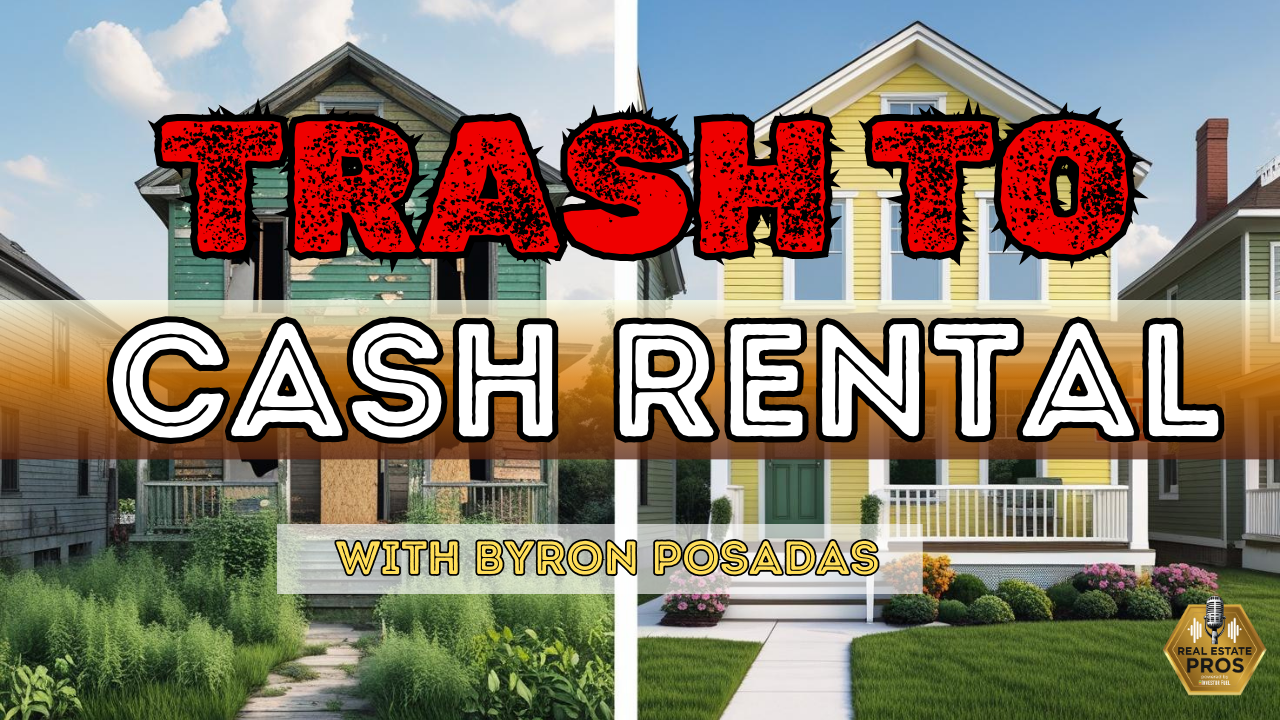
As a contractor, I kind of have an eye for design. So one of the things that I do that’s probably different from most investors is that I buy properties that are already trashed out. I mean, in other words, I buy this stuff and nobody wants. One of the benefits to that is that you can remodel it for what I call tenant proof properties. In other words, you
you do the rehab, you put in the flooring and the painting and the lighting that will last for more than a cycle. And in a sense, what I mean by cycle is a year lease. One of the things I learned that if you have a property that is nice, clean, and in good condition, most of the time you’re going to attract a better quality renter. And the beauty of it is that
those renters will always pay you on time. And then on top of that, they’ll stay there for five, 10 years. I’ve had tenants in my properties that, you know, I had one property that I had for 10 years and I had the same tenant, all because when they moved in, it was in pristine condition.
Michelle Kesil (02:45)
everyone, welcome to the Investor Fuel podcast. I’m your host, Michelle Kesil. Today I’m joined by someone I’ve been looking forward to chatting with, Byron Posadas, who’s been making serious moves in the real estate rental space. So really excited to have you on the show today, Byron. I think the listeners are really going to take something away from how you’re approaching making.
money as an entrepreneur in real estate with your rentals. So let’s dive into all of that.
Byron Posadas (03:19)
Okay, thank you for having me.
Michelle Kesil (03:21)
Absolutely. First off, for those who may not be familiar with you and your world, can you just give the short version of what your main focus is these days?
Byron Posadas (03:32)
⁓ I am focusing on short-term and long-term rental. Primarily single-family dwellings, ⁓ duplexes, multi-family, but no more than four units.
Michelle Kesil (03:46)
and what markets are you operating in?
Byron Posadas (03:49)
⁓ in the Dallas, Texas DFW Merc.
Michelle Kesil (03:54)
Amazing. Yeah, can you share how you got started on this journey?
Byron Posadas (03:59)
Well, I am originally a general contractor. So I’ve been in the construction really most of my life. My father was in it and I kind of grew up in it. you know, as I got older, I ended up starting my construction business about 20 years ago. And, you know, for the longest time, I just did mainly residential repair work. And as time came by, I
I guess I bumped into people that were in the world of real estate and I came across a investor out of Australia that was wanting to invest in the market when the crash happened back in 2008. And we kind of hooked up in the sense that he needed some eyes on the ground here to identify properties and
You know, so he basically hired me as a consultant in the sense that, ⁓ he would give me a, let’s just say, gave me a million dollars and he says, Byron, I want you to turn this million dollars into rentals. So I started off by finding, you know, good deals, primarily houses that needed a lot of work. And obviously we were able to buy them at a huge discount. ⁓ we would rehab them and then we would put them on the market as rentals.
And eventually the portfolio performed the way they hoped to, and they ended up giving me more money. ended up expecting it and expanding into other states. ⁓ And that’s basically where my lessons in real estate open. And I was very fortunate that I was able to learn and make mistakes on someone else’s dime. So in a way, it was kind of like a blessing in disguise.
Michelle Kesil (05:47)
You
Absolutely, sounds like it. Can you expand on some of those mistakes that you made and those lessons that you learned from them?
Byron Posadas (06:04)
Well, I think that one of the most important lessons is don’t ever trust the information that you get in the sense that, for example, one of the things that is very important when you buy an investment property is A, you got to know what it’s really worth. you know,
if for some reason you’re dealing with, you know, most of the time you have to deal with local real estate agents. Well,
One thing that I’ve learned is that not all real estate agents are the same. Some of them may give you, you know, estimates of what they think it’s worth, but, some of them don’t understand the market. Some of them are have all other ulterior motives. I mean, if they think that if they can tell you that this house is worth this and because they’re trying to sell it for X amount and you believe them, well, guess what?
their seller one and the agent one, but at the end of the day, you may be holding something that you thought was worth something and it really wasn’t. So I would say the biggest lessons that I’ve learned in this business is, A, don’t trust all the information that you get and always confirm that information with other sources that are independent of each other.
Michelle Kesil (08:11)
Yeah, that’s some important advice. So what has been the key to keeping like your rental business running smoothly?
Byron Posadas (08:23)
As a contractor, I kind of have an eye for design. So one of the things that I do that’s probably different from most investors is that I buy properties that are already trashed out. I mean, in other words, I buy this stuff and nobody wants. One of the benefits to that is that you can remodel it for what I call tenant proof properties. In other words, you
you do the rehab, you put in the flooring and the painting and the lighting that will last for more than a cycle. And in a sense, what I mean by cycle is a year lease. One of the things I learned that if you have a property that is nice, clean, and in good condition, most of the time you’re going to attract a better quality renter. And the beauty of it is that
those renters will always pay you on time. And then on top of that, they’ll stay there for five, 10 years. I’ve had tenants in my properties that, you know, I had one property that I had for 10 years and I had the same tenant, all because when they moved in, it was in pristine condition.
So, you know, there’s this kind of a term called slumlords. Well,
The slumlord business works for the type of clientele that you look for. Me personally, I want someone who’s going pay the rent. I want someone who’s going to take care of the property. Most of the time, if you provide a high quality product, you will get a better quality client. And I think that’s kind of the key to everything. ⁓ The other thing is that when something goes wrong, if a tenant needs something fixed, fix it.
You know, don’t play games with them. Don’t give them the run around. You know, don’t lie to them. Just be straight up business. That’s just kind of the best way that I can describe it.
Michelle Kesil (10:23)
Yeah, that is so important. A lot of the people listening to this maybe are earlier on in their investing journey or they’re looking for some tips to level up. So is there any sort of advice you would give to someone that’s just starting out?
Michelle Kesil (00:01)
So a lot of the listeners are earlier on in their investing journey, maybe they’re new or they’re looking for some advice to level up. Is there any sort of tips that you can offer for people that are just starting out on their journey?
Byron Posadas (00:23)
I would say first of all is real estate investment is risky. I mean, I don’t care what anybody says. I know that you see on TV, they make it sound like it’s so easy to invest, but the reality is that it isn’t. You need money. ⁓ I don’t know very many places out there that will finance a property for you and provide you with all the rehab expenses that you need without you putting in some skin in the game.
So I would say that for people out there that are getting into this business, you’re going to see a lot of people that say, hey, you can buy this, no money, blah, blah, blah, blah, blah, will finance everything. they’ll, they’ll, they’ll, they’ll promise you the moon and the stars. But the reality is, is that all that will come at a cost. So for example, most first time investors are going to go through a hard money lender.
Hard money lender doesn’t care who you are as an individual. All they care about is the property. And a lot of hard money lenders are set up for you to fail because it’s in their best interest for you to, to them to lend you the money and put you in terms that are going to cause you to fail because at the end of the day, they’re going to take it from you and they’re going to resell it and all the work you’ve done is gone. I mean, that’s the reality. ⁓ so I would say,
Do your research, number one. Also, pay attention to the cost of the money. I mean, you know, look at it like this. If you’re paying 10 to 12 % interest rate and they charge you two points and they charge you, you know, $2,500 in processing fees, at the end of the day, you’re not gonna be able to cash flow, number one. Number two,
you’re going to be in a situation where you’re going to be putting money in your out of your pocket. You know, every month the service the debt. So what I’m saying is that for the people out there that want to do this game and don’t have money to put into it, know, buyer beware because you’ll be surprised how many phone calls I get from hard money lenders. They, Byron,
This guy didn’t perform, we foreclosed on the property, why don’t you go finish it up for us? And you’ll be surprised how many calls I get like that. And you go in there and you see what they’ve done. They had no idea what they were doing. They went the cheap way, they didn’t address the major issues, and that’s a recipe for disaster.
So the second lesson is know what you’re looking at, know what you’re fixing. If you’re gonna rent a property, it has to be habitable, period and the story. So if you have plumbing leaks, water leaks, roof leaks, that’s gonna cause you problems. You gotta fix them. And if you don’t have the money to fix it, don’t buy it, simple.
Michelle Kesil (03:30)
Yeah, that is some good advice. I know that you are really into long-term and short-term rentals versus other forms of investing. Can you expand on why you chose those routes?
Byron Posadas (03:46)
Well, mean, long term rentals for me as a an independent business owner are great tax shelters in the sense that, you know, you buy a property for one hundred thousand dollars, you put twenty thousand dollars in it and then you put it for rent. Well, you have a lot of deductions that you can take that will reduce a lot of your
⁓ taxes in the sense that the income that’s taxed, if you have ways of ⁓ showing those as expenses at the end of the day, most rentals are not something that you’re gonna make money from every month. They don’t, because if you do it smartly, you’re gonna show a loss because that’s where all of your tax incentives comes from. So, ⁓
The key to rental is to not show on a tax return on cash flow. There’s a big difference between what goes on a tax return and what goes on a P and L sheet. They’re completely different. At the end of the day, you want to manage your investments to have a little bit of a loss or a big loss, however you want to take it. There are some people that take their rehab money and they take it all the same year and
There are considerable ⁓ tax liability reductions, but sometimes it’s best not to take it all. Maybe you can spread it out over a few years. mean, there’s so many ways that you can use the rentals as a way to reduce your taxable income and not necessarily for you to make a monthly
check because at end of the day you want to reduce that to nothing where you’re going to make the money is in the long-term hold. Like for example, I bought a property in 2019, paid $130,000 for it, put $30,000 in it, rented it for a number of years and sold it earlier this year for $300,000. So what I’m saying is at the end of the day, you’re not going to make the money immediately.
That’s reason why they call it a long-term investment. The goal for a long-term incentive is to get a tenant in there that’s gonna service the debt, period. That’s the goal. If you can get a little money in your pocket, great. Just take that money and you apply it toward your principal balance. Don’t put it in your pocket. Any money you keep becomes taxable. So my strategy has always been
Whatever the property produces, I’m going to put it back on the property, put it back on expenses, putting it back on something that takes it out of my hands. And then at the end of the day, when I decide to purge, which is usually my strategy is about five to seven years, depending on the market. ⁓ Then you, you, you, sell it. And ⁓ if you don’t want to pay tax on capital gains, so you can do a 10 31 exchange and you can take that money. You can buy another property and do the same thing.
At the end of the day, you want to push down the tax bill further down the road as much as you can. That’s my strategy.
Michelle Kesil (07:16)
Yeah, that’s so smart. Thank you for sharing that strategy with everyone. So let me ask you this, what are you most focused on solving or scaling next?
Byron Posadas (07:29)
I mean at the end of the day, I would love to you know scale my rental business I mean when I did it with the investors we got up to hundred properties, but obviously I don’t have that kind of Money to do it, but my goal is to scale it as much as I can right now. I’m 53 years old and Based on my long-term plan if I do everything the right way
When I qualify for retirement at 62, I’m going to take it and I’m going to live off of the rewards of my rentals. I basically look at it like this. I want to create as many revenue streams as possible so that as I get older, I can live off of my revenue streams and not have to work as much. Because I mean, let’s face it, my mother worked until she was 70 years old. I don’t want to be that way. I want to enjoy my life.
And I think the best way to do it is through real estate. That’s just my personal opinion.
Michelle Kesil (08:29)
Yeah, I think that’s quite valid, absolutely. So what is like the biggest goal that you say you have for your business?
Byron Posadas (08:44)
You know, at the end of the day, I’m not trying to be a billionaire. I just want to be able to create enough wealth so that, I can enjoy my life as best I can, but at the same time, have a legacy to pass down to my
Michelle Kesil (08:59)
beautiful. love that. So when it comes to growing your business and your network, what has made the biggest difference for you?
Byron Posadas (09:13)
⁓ I would say at the end of the day, partners that you, associate yourself with, like, for example, I buy and sell real estate really on a monthly basis. ⁓ so I align myself with real estate agents that understand what I do for a living. That understand what my criteria is. And at the same time.
I expect the realtors that I work with to go out and look at the property before I do and tell me what they see and based on what they see, what they think they can either rent it for or sell it for or whatever information I need. So what I’m saying is that if a real estate agent is just going to tell you, here’s the address, you to look at it, you don’t need that. Make the real estate agents work for their money because they’re going to get paid regardless. So make them earn it.
And I think I do that. And ⁓ same thing with property managers, know, property managers and all. don’t, I don’t ever advise anyone to manage their own rental property because, know, there’s a lot of, I don’t know how it is in other states, but in Texas there’s risks. So you have to have someone who knows what they’re doing. So again, the alliances that you build, the people that you ⁓ work with are, are very important. And at the same time, it needs to be kind of like a
a mutual beneficial relationship. Not just, hey, I wrote a contract for you, I’m going to get a commission. No, they got to do more than that. And because there’s thousands of agents that are like that, you got to find those ones that are willing to work. In my experience, what I’ve learned most of the time, if you find a hungry new agent, those are the ones you want because they’re trying to establish themselves. And then you’re going to go through a whole lot of them, but eventually
You’ll find them, you know, I probably in as far as the new agent pool. Heck, you know, I might speak to four or five of them a week, but it doesn’t mean that they ever produce anything. They do every now and then, but it’s not consistent. But at least you have a constant flow of information. And that’s what I’m saying is the more people you work with, the better. ⁓ have a rule with every agent that if you find me the property and I buy it, when I sell it, I’ll let you list it.
or I’ll let you do the least part of it. In other words, they have something to gain from it. So I don’t have any favorite agents. philosophy is you bring me the deal and then I’ll pay you back by A, you’re gonna earn a commission when I buy it, but you’ll also earn a commission when I sell it or when I rent it. So it is a mutually beneficial relationship. And that’s basically what I’m talking
Michelle Kesil (12:06)
Yeah, that’s so important. Relationships are everything in this space, absolutely. All right, so before we wrap up here, if someone wants to reach out, connect, collaborate with you, where is the best place for them to find you?
Byron Posadas (12:11)
Yes.
You can reach out to me by email Byron @ fresh home repair dot com
Michelle Kesil (12:30)
Perfect. Well, listen, I really appreciate your time, story, and perspective. We need more people in this space doing things in this right way. So thank you for being here. Yes. And for those of you that are tuning in.
Byron Posadas (12:40)
Thank you.