Subscribe via:



Show Summary
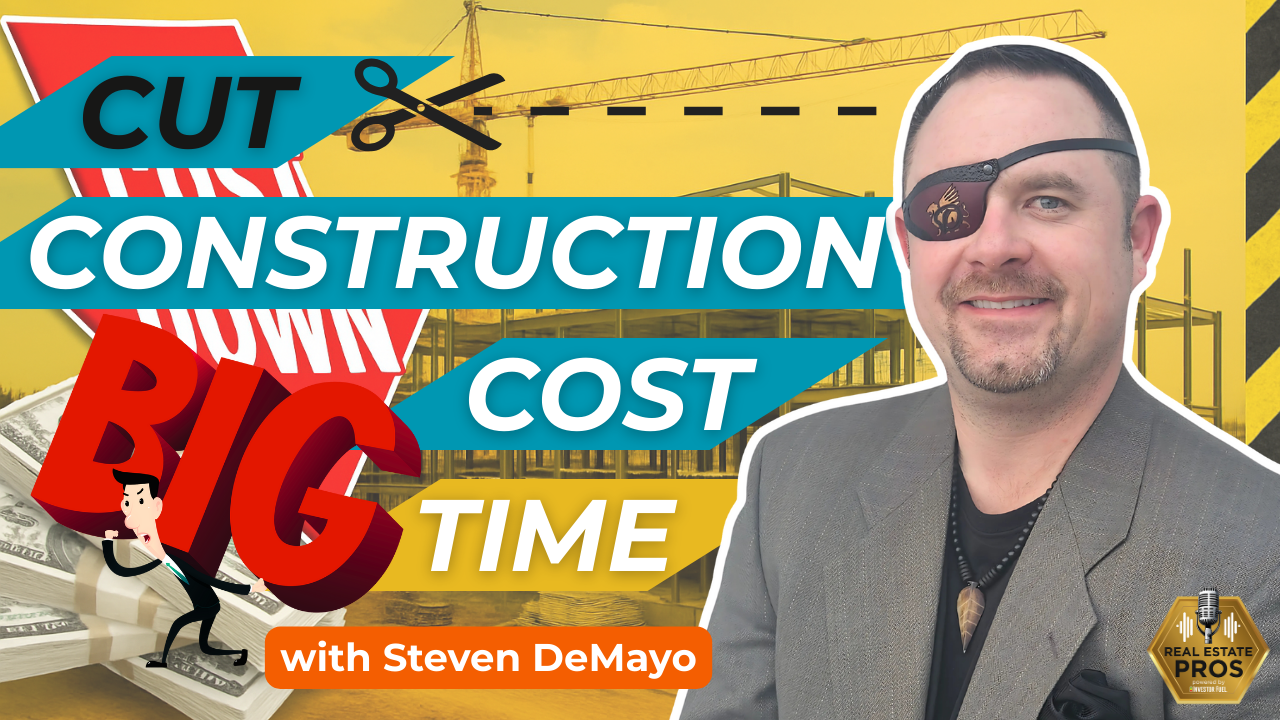
In this episode of the Real Estate Pro Show, host Erika interviews Steven DeMayo, a construction expert and founder of Dynasty Construction Imports. Steven shares his journey from starting in construction at a young age to establishing his own company during the upheaval caused by COVID-19. The conversation delves into the importance of building relationships with manufacturers, common misconceptions investors have about construction, current trends in materials, challenges faced in projects, and advice for networking in the industry. Steven also discusses the future plans for his company and the unique approach he takes in the construction field.

Resources and Links from this show:
Listen to the Audio Version of this Episode
Investor Fuel Show Transcript:
Steven DeMayo (00:00)
If they approved that piece of flooring for $7 a square foot, then there’s also a 20 to 30 % markup that the subcontractors do for their procurement, of course, because that’s industry standard, right? So now this $7 square foot flooring just became $9, $10 a square foot, right? And so what we’re doing is we’re basically eliminating the supply chain going directly to the manufacturers so that we can dictate the specifications and also get our clients better quality for a better price.
And drop shift exactly when they need it instead of allowing the fragmentation of each individual subcontractor and their supply chain to affect their job
Erika Proctor (02:21)
I’m your host Erika and today I’m so excited to be joined by Steven DeMayo, a powerhouse in construction with dynasty construction imports. Steven, it’s great to have you here.
Steven DeMayo (02:34)
It’s great to be here. Thank you, Erika.
Erika Proctor (02:36)
So let’s jump on in Steven, for those who don’t know your story, walk us through how you got started in construction.
Steven DeMayo (02:44)
⁓ well, I mean, I started out swinging hammers when I was 18 and then, moved my way up to being a, ⁓ a project manager, got my, ⁓ bachelors in interior design and interior architecture. And then, I ended up getting a general contractor’s license, ⁓ when I moved from Florida to, ⁓ to Utah and then, COVID hit. And because I had, ⁓
I was a construction materials broker for almost a decade as well. In between that, ⁓ I had a lot of people in my Rolodex that I was keeping in touch with just because they were friends in the industry internationally. And when COVID hit, ended up, Dynasty was born because all of ⁓ the whole industry was just kind of up in an up-rival. And ⁓ then we ended up ⁓
You know, reaching out to those guys, which, know, top level manufacturers that all have their UL certifications and stuff like that. Don’t really normally deal with one offs because they want, ⁓ you know, long-term contracts, five-year contracts with like large name brands like, ⁓ the, you know, LG and, you know, Shaw and stuff like that, that they’re building, they’re making their stuff and bringing it in, at a five, you know, 40.
20 foot containers every single month.
we ended up reaching out to these top level manufacturers during COVID and locking them down. And now we have 7,000, over 7,000 manufacturers worldwide in over 40 different countries that we source from.
And so our process is that basically we are going to larger projects that are ⁓ developments and also ⁓ sky rises and schools and stadiums, stuff like that, ⁓ that people need a lot of materials at their job sites so we can drop ship exactly what they need throughout their Gantt chart exactly when they need it.
Erika Proctor (05:47)
That’s so interesting and Steven what I’m kind of fascinated with is like how did you begin to build the relationship with those manufacturers? Like what was that like?
Steven DeMayo (05:58)
Well, I mean, I was working for another company flying around the world. Like I was in flight, fight club didn’t know where, you know, what time zone I was in. And, and I’m not even sure I am who I am now, you know, but, yeah, no, I, I, met a lot of people through trade shows and, you know, going to their manufacturing plants and things over 10, 12 year period of time.
Erika Proctor (06:26)
Yeah, wow, ⁓ that’s amazing. And with your experience in construction, what do you think is the most common misconception that investors have when it comes to the construction aspect of investing? ⁓
Steven DeMayo (06:43)
So initially the ⁓ process that investors have to do is they of course gather up all the money, get the loan or whatever they need to and then they go to an architect and then the architect is basically their lead at that point. And the architect of course draws up all the plans and etc. and then goes all to the ⁓ designers, engineers, etc. And basically they put all the skin on the skeleton.
per se. ⁓ And the thing at that point in the pre-construction phase is that, ⁓ you know, where most of these architects and designers are sourcing their products from is either from past buildings and past inspirations or they’re getting their information off of the internet. And
most of the stuff on the internet, they’re just looking for name brands so they can put a dial-out number in the line of the takeoff so that they know exactly what their budget is and what that particular product is. Like if it’s a ⁓ specific Mohawk flooring or something like that, they’ll put it into that line so that when that is all approved by the investor, it’s given down to the general contractor. ⁓
the general contractor slash builder will then give it to all of the different subcontractors that he has contracted, right? And then those subcontractors then go out and procure throughout their wholesaler accounts throughout the supply chain.
if they approved that piece of flooring for $7 a square foot, then there’s also a 20 to 30 % markup
that the subcontractors do for their procurement, of course, because that’s industry standard, right? So now this $7 square foot flooring just became $9, $10 a square foot, right? And so what we’re doing is we’re basically eliminating the supply chain going directly to the manufacturers so that we can dictate the specifications and also get our clients better quality for a better price.
and drop shift exactly when they need it instead of allowing the fragmentation of each individual subcontractor and their supply chain to affect their
site because if one guy out of a hundred can’t get his flooring for that period of the construction because they don’t order it all at one time then it really does ⁓ inhibit
and slow down the production of that project.
Erika Proctor (09:38)
Yeah, absolutely. Steven, when it comes to those materials and those manufacturers that you work with, how do you decide who to work with? What is that process like?
Steven DeMayo (09:49)
So it just, it depends. So what we do is we have a five tier classification.
We do a level A, B, C, D and E, right? And level A, B and C level manufacturers are the only ones that we deal with because they’re the ones that actually have their certifications internationally have been tested, can actually provide us with the proper documentation instead of, you know,
just ordering something off of Alibaba from China and you’re getting, you don’t even know what you’re getting. I’ve heard so many horror stories where like, you know, contractors have tried to procure their own stuff across seas to save money. And then like they order 5,000 of those, ⁓ you know, little pancake lights that, you know, ⁓ the inserts that go into the ceiling.
and half of them don’t work but they all have UL stickers on them. So it doesn’t matter if they have a UL sticker if they’re not actually UL certified.
Erika Proctor (11:31)
Yeah.
Steven DeMayo (11:32)
So we
do a pretty deep vetting process. And from my experience throughout the years, me and my team are pretty good at it.
Erika Proctor (11:45)
Yeah, yeah, absolutely. Let’s talk a little bit about trends with what you’re looking at, know, deciding which products or manufacturers to work with. What kind of trends are you noticing?
Steven DeMayo (11:59)
So trends come and go because new products come out into the market, right? And then sometimes a little bit too fast, I think, sometimes, right? Because then we figure out, that has a problem or that’s not working correctly and now everybody has a problem.
So ⁓ what we try to do with trends is that we identify new things that are on the market. And if it makes sense, then yes. Right. But if there could be different ⁓ things that possibly could go wrong because of the history of different technologies, then it doesn’t make sense to even put them into our repertoire. But we’ve actually been seeing
⁓ A lot of composites come into the market, which is actually, I think, a good thing. ⁓ Just because I like, me personally, like bulletproof products. You know, it looks real, it isn’t real, and it lasts for a long time. it’s, in the design phase of things, it’s more of the blue jeans, right?
where we had that real trend of the gray beige era, right? Where everybody was gray beige in it, right? I mean, there was even a paint that was grayish and that was like the most popular paint. ⁓ But yeah, I mean, think things like glass, stone, wood look, right? Will never go out of fashion because
That is ⁓ something that will just be the staple for the test of time.
Erika Proctor (13:56)
Yeah, yeah, absolutely. Steven, I’m sure with all your experience of construction, you have a story or two, maybe a project that went off the rails, maybe a supply chain issue or a site challenge. Could you share one of those moments in the history of your career?
Steven DeMayo (14:14)
Oh, yeah. So I owned a construction company, right, that was called The General Contractors, right? And unfortunately, because of COVID, we had to shut it down and change gears. That’s why Dynasty’s born.
But we had 36 employees and we had a couple of box trucks wrapped with our logo on them. And the the wrap people ended up putting ⁓ conracters.
they didn’t spell contractors correctly. And we were driving around with our trucks with contractors on them for at least six months.
none of my employees or myself noticed. And then we had ⁓ one of somebody from another job site come over and he looks at our truck and he’s like, what’s a contractor? And we’re like, yeah, yeah, that’s it. We tried to play it off. It was actually like, that’s our actual name.
You
Erika Proctor (16:04)
my gosh. I don’t know how much you see in the era of social media, but that’s the thing people do now to get attention is do something wrong. Right. see it for the algorithm. So you were just ahead of the time.
Steven DeMayo (16:18)
I
think so. We just stumbled across it. Yeah. But yeah, so that was fun. That was fun.
Erika Proctor (16:26)
Yeah, wow. Well, I haven’t heard that one that one yet. Relationships are huge in the construction and real estate industry. As you know, what kind of advice would you have for someone like what what kind of like networking or what type of groups should someone join if they’re looking to level up?
Steven DeMayo (16:45)
⁓ well, I would, I would say join something that applies to you. You know, there’s all kinds of different, ⁓ social events and, ⁓ and groups, but, ⁓ years and years and years ago, when I, when I was really like getting into the whole social events thing that, and, and going to these different groups, they didn’t realize that, ⁓ I was just, you know,
spinning my wheels most of the time because it wasn’t that that group wasn’t right for me. Right. So what I would what I would highly suggest is is date a little bit, you know, ⁓ don’t get married until ⁓ you know until you kiss, you know, on the on the second date, you know, so, you know, go around and and and and swim through those different pools and see which one actually fits for you.
Erika Proctor (17:43)
Yeah, absolutely. Steven, what would you say is next on the horizon for dynasty construction imports? What are you looking to do? What’s the next big move?
Steven DeMayo (17:54)
Well, our next big move is our ⁓ next gen AI system that will actually monitor the ⁓ buildings and properties that ⁓ we ⁓ help build. And so what it is, is it’ll have sensors of all kinds of different types and also it’ll send out
work orders, purchase orders, if there’s a roof leak, it’ll identify the water way before anybody could even determine that there’s a water leak. And it’ll send out work orders for ⁓ the…
⁓ vents for the AC systems to be cleaned every six months, et cetera, et cetera, et cetera. So it’s it’s a fully integrated system that monitors itself almost like a living, breathing property.
Erika Proctor (18:51)
that’s really, really exciting is that, ⁓ are you currently using it or like what stage are you at with that?
Steven DeMayo (18:59)
We are out of stage 10, we’re probably in stage two or three right now. So we’re getting all of our pieces together before we build the Lego model.
Erika Proctor (19:15)
That’s awesome. Steven, before we wrap up, if someone wants to connect, learn more about what you’re doing at Dynasty, what’s the best way for them to reach you?
Steven DeMayo (19:24)
⁓ Go onto our website dynastyconstruction imports.com and go on to our ⁓ contact link page and then fill out whatever applies to you.
Erika Proctor (19:38)
Awesome. Steven, thank you for sharing your expertise today. Your approach with construction is really unique and exciting. I’m sure our listeners love the information today.
Steven DeMayo (19:50)
Well, I appreciate it. Thank you for having me.
Erika Proctor (19:52)
Yeah, absolutely. And for our listeners, if you got value from this episode, make sure that you’re subscribed to the Real Estate Pro Show. We’ve got more conversations coming up with operators like Steven who are out there building fantastic businesses. We’ll see you on the next episode. Bye.