Subscribe via:



Show Summary
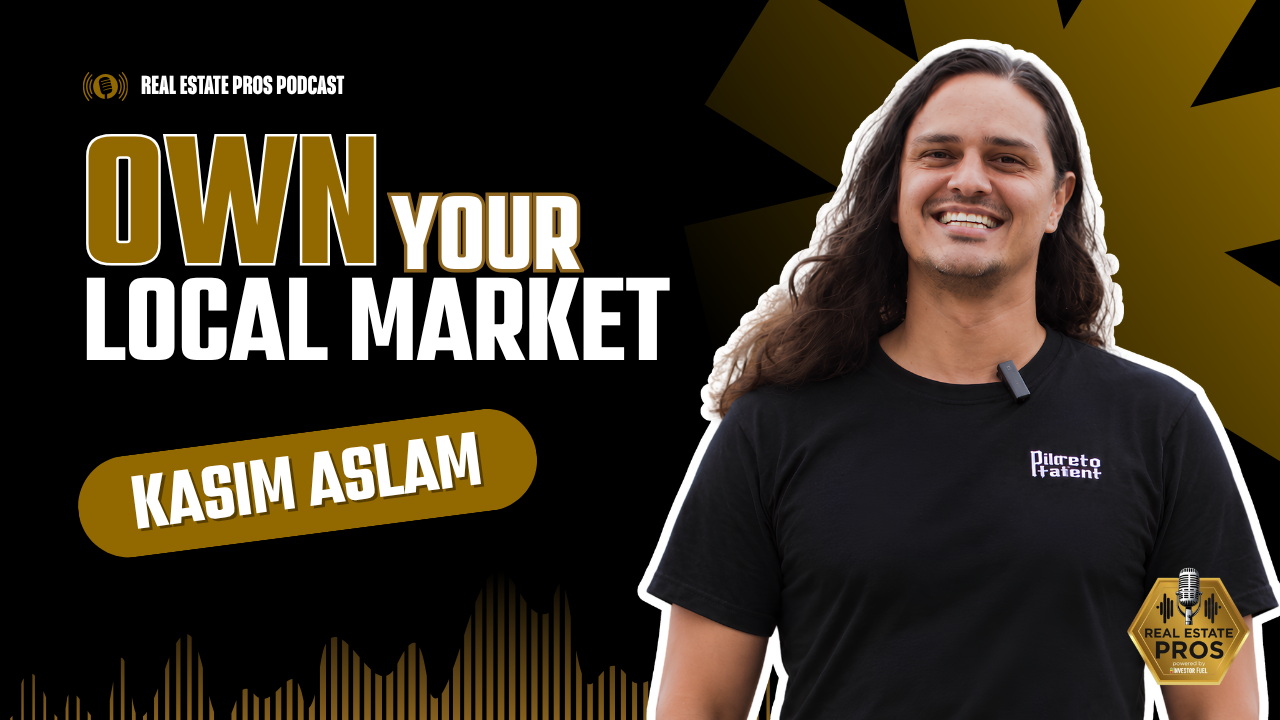
In this episode, Kasim Aslam shares his journey from humble beginnings to building multi-million dollar businesses, emphasizing the importance of niching, testing, and organic growth strategies in real estate and digital marketing.

Resources and Links from this show:
Listen to the Audio Version of this Episode
Investor Fuel Show Transcript:
Kasim Aslam (00:00)
In every industry, there was a moment where, the market, the geography, a big competitor, somebody gets VC funding, whatever, and all of a sudden the cost of your traffic goes up and it’s no longer viable. And then they start like just beating down our door, like, what can you guys do? And I’m like, dude, it’s an auction. it’s like talking to your broker about the stocks going up or down. He can’t do anything outside of, a little in the way of like predictive indexing. so I don’t believe in paid traffic. I believe in like,
what you’re doing, Issa, having a podcast, creating organic content, getting your name and face out there, long term slow burn, brand building. That’s where I think businesses need to go. But nobody wants to hear that. Everybody wants, Google Ads is just heroin, man. It’s like hit me again, hit me again, hit me again. And you start to have to pay for that pretty dearly after a while.
Issa Hanna (02:14)
Welcome back to another episode of the Real Estate Pro Show. I’m your host, Issa Hanna and today we have Kasim Aslam here to share his vast knowledge with us. Kasim, welcome to the show.
Kasim Aslam (02:23)
Thanks for having me, so appreciate
Issa Hanna (02:25)
Man, I’m super excited to have you, man. you are a serial entrepreneur, a master entrepreneur, master at building and exiting. so let’s start out with your background in ads. can you tell my viewers a little bit about, the Google ad agency and what you had going and how you exited that, how you built it?
Kasim Aslam (02:42)
Yeah, I started as a full funnel agency, which all that means is we were trying to do everything for everybody. So the name was Solutions 8 and it was called Solutions 8 because I had eight core service offerings because I’m an idiot. And I thought I could be good at, a bunch of things. And so I was doing web and software and social and paid and video and blah, blah, blah. and it was horrible, man. And the thing that was most horrible about it was the more money I made, the more stressful the business got.
self-contained business because all the services were different and custom and bespoke. And I started to just out of desperation kill service lines. And what I learned was, and this was really counterintuitive, the more things I stopped doing, the more productive and profitable the business got. which led to a thesis I have, which I call the hourglass of niching. I think that, everybody says, you got a niche down, you a niche down, you a niche down.
Alex Hormozi calls it a niche slap. I think it’s bad advice for young entrepreneurs. I think for a young entrepreneur, telling somebody to niche down is like telling somebody to drill for oil anywhere. It’s an arbitrary decision. And if you niche down without data and context, you don’t know, you’re it’s like committing too soon. It’s committing without dating. So I think that the dating in the entrepreneurial world is starting broad. So go out there and do everything, be everything for everybody.
Knowing it’s a stupid model. Like it’s not a smart way to make money, but what it is a smart way to do is to test different lines of service, test different industries, different locations. And I think that’s especially true in real estate. every investor and operator is going to have things they’re good at and things that they’re not good at, and they’re going to be hyper specific to them. And the only way to figure that out is to go do it yourself. you might find like, dude, my jam is just buy and hold. I’m so good at it, or I’m better at the flip, or I’m better at creatively structured deals, or I’m actually better at the lead gen.
than anything, or I only like the rehab, whatever it is. You don’t know until you’ve iterated. And so I tell people start broad. And then once you’ve started broad and you start to make money, now you get to see of all the frogs I’ve kissed, which one has turned into something that I’d actually I’d like to replicate that process. And then you narrow down. And that’s how you niche down. And when you niche down to the what I call the apex of profitability, you have the opportunity expand back out.
which is really fun. And you see a lot of businesses do this really, well. Amazon built their entire business this way. originally just selling books, which was brilliant. They weren’t a bookseller, they were a logistics company that was using books in order to crack the code on logistics, and you can do the same thing in your business. So that’s what I did. I had Solutions 8, which is just this, gobbledygook agency, and I would do anything for money effectively. And as I started killing service lines, I got more profitable.
And it was an employee who ended up becoming a business partner who actually identified that Google Ads was the least stressful line of service we had. And it was the least stressful because I outsourced all of it. I didn’t even do Google Ads, which is a fun open-air conspiracy. I built the number one ranked Google Ads agency in the world and I’ve never run a Google ad campaign myself and in my life. I had an agency out of Texas that I was outsourcing everything to.
And so we kind just became a sales engine. And for a couple of years, that’s all we did. We sold Google and then we white labeled this agency. And that worked pretty well. And then that relationship blew up. the agency kind of went rogue on us, to be honest with you. They stole some accounts and just got weird about, there was a values misalignment there to say the least. And we had a 30-day notice of cancellation clause in the agreement with them. And so I had 30 days to build a Google Ads agency from the ground up.
Like an in-house team. And that was so stressful. But what was cool about it is in 30 days my margins tripled because I went from paying this ultra expensive onshore team to building a team in India offshore. And then the company was extraordinarily profitable. And then we exploded. we grew it to $100 million in ad spend. We had 200 active clients at the end, thousands of clients that went through our shop for various things.
And I sold it. I had 65 unsolicited offers. so for a moment there we were the belle of the ball. I sold it to a SoftBank-backed MarTech company. and the worst thing to do to poor people is give us money because we become investors. So since then run around just, building shit and having fun. And I fancy myself a business builder now. I like building I’ve never reached eight figures in revenue. I’ve done an eight figure exit, but
I like the seven figure business. I’m really good at that. And then as soon as it starts to approach eight figures, I notice that for me the wheels start to shake and things fall apart and then I sell the business. And so I’ve sold three of so far. I’m still getting good at, growing and scaling beyond that. We’ll see how well I do.
Issa Hanna (07:38)
Definitely, man. I mean, you’ve done well so far with the three. So I don’t doubt you’re gonna achieve the eighth figure soon and figure it out. But it is. It’s all about processes, systems, the business world, the real estate world, real estate is business. Crosses over so well. and you’re speaking from literally one of the top people in the world we could speak to as far as like advertising campaigns for real estate, because for seven years straight, you ran the top.
real estate advertising campaign in the nation. Can you tell us more about that?
Kasim Aslam (08:07)
Yeah, we were in every major MSA or DMA, depending on the term you use. and we made a pretty, I think, bold decision. We were selling leads and selling leads to investors is horrible. Because investors, they don’t want to pay for leads, they to pay for closed deals. and they don’t even necessarily realize that, right? Like if you’re selling a lead to somebody, if it doesn’t close, in their mind it’s a bad lead. In my mind, anybody with motivation and equity is a good lead. and so
And this was my business partner’s choice, actually. Now I really respect and value what he did because I didn’t see the vision in the beginning. I was just the ad guy. I was just the, nerd behind the scenes, getting up the leads. He was the one that had to interface with all the real estate investors. And our leads were so much better than everybody else’s. in the beginning, we weren’t even selling leads, we were working the deals. So that’s how it started. It was really funny, man. He was a client of mine. I’m running this ad agency.
his name was Greg Bilbro, really brilliant, real estate guy. He’s still in the game. and he was a client, and we start getting up these leads. And he was the one that told me he’s like, dude, these are so much better than anything else I’ve ever been able to do. he’s doing all the everything that, door knockers, bandit signs, the callers, driving for dollars, mailers, just the tried and true in the real estate world. And we started running Google Ads and
The thing at the time where Google, I think, really proved a lot of merit was all of the, HomeVestors money, We Buy Ugly Houses, radio, television, newspaper, all of that funding generated awareness and it created a market. But what people had yet to really understand, and they understand it really well now, but I mean, this was years ago. I sold the business in 2019 and we were in business for seven years.
So, flashback to 2011 when he was a client. HomeVestors were spending a half million dollars per market per month at a minimum. And they were putting it all into traditional media. And so you have all this radio, all of this television, all this newspaper, all these ads. And what do people do when they hear an ad? They go Google it.
nobody calls the number. Nobody goes to the website. They just Google it. And so if they just kept saying, We buy ugly houses, We Buy Ugly Houses. And so people were going and they were Googling, We Buy Ugly Houses. And what HomeVestors didn’t realize for years was I was sneaking in there and I was paying for their name and their phrase. or phrase is, depending on all I would do is listen to the ads and anything that they would say that a homeowner would Google, I would I would buy that traffic. And our cost per lead.
in Phoenix is an example, the average cost per lead was, four to five hundred dollars for a viable lead. I was getting them for 70. And so me and Greg, is a client, starts getting up these leads. He’s like, dude, this is amazing. He and I become business partners and we start actually fixing and flipping ourselves. We did, fix and flips and a lot of wholesale. and then we had more leads than we could work. And he kept telling me, He’s like, dude, we gotta shut it off. Like, I can’t handle all this. I’m like, bro, you can’t shut it off, you’re gonna kill the algorithm.
And so he found a couple of partners in Phoenix. And then one of the partners had, business in Tucson and Flag. And so we started running ads there, and then just the word got out like these guys know how to do this shit. And so we started trying to sell the leads. And that was horrible because it puts you in conflict. and what Greg decided to do that I thought was really brilliant was he sold the markets. So we only had one investor in every market. And the agreement was you have to, you have to eat everything we can cook.
So every single market, we’re going to spend the maximum amount of money that can be spent. And they paid us per market. So the ad spend was theirs. So we weren’t like a traditional agency where charging a percentage of ad spend. they paid us per market. And the thing that was really genius, and this was Greg’s idea too, the first year we sold the market at whatever they were willing to pay. So somebody would come in and there’d be a couple of folks in Portland, and we’d kind of have like a little unofficial.
exclusivity auction, like, hey, we’re only going take one of you. And whoever offered us the most, that was our investor that year. And it was usually not a lot of money. it was a couple grand a month. It was nothing that moved the needle. But what it did was it gave us the opportunity to prove the market, prove the model, create the ad, like create the analytics. And then at the end of the year, we could prove for every dollar that somebody put into the Portland market, they made seven. And then when we went back out to the investors,
Now the incumbent obviously is like, whoa, you guys can’t go anywhere. And we’re like, dude, you’re the one that lowballed us in the beginning. This is what we think the market is worth. And we were pretty cool about that. if the incumbent wanted to at least raise it to what we thought the fair market value was, we’d keep them. But we had people bid out markets. We had people that would offer us an amount of money that was in excess of what anybody else would pay to keep us from advertising. Because they didn’t want us to go in there and do exactly what I was doing to HomeVestors.
And dude, it blew up. That was my first real taste of like real money. was just selling these markets. And we were we were everywhere. And I was watching as much money as we were making, I was watching our investors mint money. we our guy in Atlanta, dude, I Greg called it the golden ratio. He was a numbers genius. And he mapped out everything, every dollar spent and every and every dollar yield, and he called it the golden ratio. And it was like for every dollar you put in, you’re getting nine dollars out, net, And we ran that business for
the better part of a decade. And then right around 2019, the market started to turn. And the problem with what I do or what I did with Google Ads is Google only works in a in a buyer’s market. It works when the, balance, the scales are tipped in the buyer’s favor. As soon as you’re in a seller’s market, even if somebody’s going to Google saying sell my house fast for cash, there’s no real motivation there because they have all these options and opportunities. I mean, you can put
Now you can put a POS house on the MLS and sell it for damn near close to retail. And we were trying to sell, we were trying to buy everything at 70% of our less repair values. So, that was possible for a while until it wasn’t. And since I’ve sold my agency, the irony there, man, is I don’t recommend paid traffic to anybody as a long term solution. I think paid traffic is where you go to test and you can test a business model. I’ve got seven active business units at the moment.
most of them in the seven figure gross revenue range. And I won’t go into a business if I don’t know where the traffic’s gonna come from. So I have to, have the strategic partner or have the audience or, like already have identified where the customers are coming from. Because if you if you’re in that horrible position of having to every single day wake up and pound the pavement or dial for dollars or, pour into paid ad spend, it’s just it’s a miserable place to be. And on a long enough timeline.
It’s an absolute impossibility that you don’t find a chasm in that bridge. and I’ve only I only saw it every time. I spent a hundred million dollars of other people’s money every year for 15 years. I guess we’ve worked up to a hundred million, but on the way, I’ve spent a ton of other people’s money. I’ve spent billions literally in other people’s money on ads. And, it always worked until it didn’t. And
In every industry, there was a moment where, the market, the geography, a big competitor, somebody gets VC funding, whatever, and all of a sudden the cost of your traffic goes up and it’s no longer viable. And then they start like just beating down our door, like, what can you guys do? And I’m like, dude, it’s an auction. it’s like talking to your broker about the stocks going up or down. He can’t do anything outside of, a little in the way of like predictive indexing. so I don’t believe in paid traffic. I believe in like,
what you’re doing, Issa, having a podcast, creating organic content, getting your name and face out there, long term slow burn, brand building. That’s where I think businesses need to go. But nobody wants to hear that. Everybody wants, Google Ads is just heroin, man. It’s like hit me again, hit me again, hit me again. And you start to have to pay for that pretty dearly after a while.
Issa Hanna (15:40)
Hundred percent, you become dependent on them as somebody who’s closed hundreds of transactions and never spent a dollar on advertising. That old school word of mouth, and that brand building and that network that you grow them in the real estate world is priceless. Now paying for ads and doing all that for the to the guys at home doing all that, I would listen to Kasim. This guy this guy, like I said, is one of the top experts in the country.
he’s gonna give you the top guidance. So take notes, take notes, because we’re gonna dive deep into this right now. Because while I got you on the hook right now, man, I’m gonna pick your brain a little bit for all my real estate people out there and my real estate businesses. but first I want to rewind the clock. I’ve seen that you came from humbler beginnings. You’re not a trust fund kid, nothing like that. So
How’d you get into this business? How’d you just fall into the ad business? we all fall into our specific niches, our specific business in life. kind of like we realize we can make some money, a light bulb goes off and we’re like, okay, let me keep pursuing this. So let me get your story, Kasim. How’d you how’d you start?
Kasim Aslam (16:42)
Yeah, I’m a welfare baby. my mom was blind, she’s a blind single mother on Social Security. So Social Security isn’t technically welfare, but it’s a she went blind, the government paid us. That to me sounds a lot like welfare. I got a little brother, he and I grew up in Albuquerque, New Mexico, which is the armpit of America. Never go. he did six years on a four yard, which I only say to say, we had our
brushes with just bad decision making. I blame myself to a pretty significant degree with where he ended up because he was he was trying to copy me and I was trying to copy a bunch of people I shouldn’t have been copying. And the thing that I have found about people raised in that environment is they tend to be pretty industrious and entrepreneurial. It’s all problem solving.
maybe we’re problem solving in ways that we shouldn’t be problem solving, but as a young man I was a I was a thief. I was a car thief. And that’s nothing I’m proud of, obviously. but you want to talk about a crash course and running a business, stakes are high. And when I was given an opportunity to, escape, let’s say, I didn’t know my dad very well, but he and I, you know.
He lived in Scottsdale when I lived in Albuquerque and he ended up opening a business that started to actually make some money. And so he moved me out there to work for him. He had a rug and furniture store. So I just unloading furniture containers and flipping rugs. But what was cool about it, man, was coming from and that’s the thing about like Albuquerque. Since then I’ve traveled and I’ve, lived an interesting life and I’ve seen like I’ve been to Egypt and I’ve been to third world countries, and Albuquerque ain’t shit compared to that.
But for me it felt like that. like the disparity just visually in terms of what you saw and what you experienced was pretty significant. and food insecurity and those types of things. That’ll prey on your mind in a way that’s
It creates some strength and then it also creates some vulnerabilities. And so you take that and then you suddenly just like 19 years old, I moved to Scottsdale, Arizona, and I’m surrounded. My dad’s selling, these hand-knotted rugs just the they’re just the richest people I’d ever encountered in my life. I’ve never seen anything like it. You go into these homes and they’re bigger than hotels, just insane levels of opulence and wealth. And it was just this ins it was just this really significant reframe and reset.
And I lucked out because I escaped. My little brother wasn’t as lucky. He’s great now. he’s been out of prison for almost a decade and he owns two businesses, both of them very successful. But it took him a minute, he took the long way. And it was cool to just be exposed to that. And so I just started trying I knew I wanted to build businesses. I just started trying to build businesses and dude, I’m the world’s greatest failure. I’ve got a hundred, failed
businesses in the graveyard. I I’ve tried everything. I tried web development, medical and legal transcription. I sold purified mercury. I tried retail at, a moving company. and everything that failed always left me with a kernel of, ability. Just I learned one new thing. It’s like, well shit, that didn’t work, but at least now I know how to build websites. And then you move on to the next thing. It’s like, well, that didn’t work, but at now I know how to cold call. And then over time you just kinda
And I feel like most entrepreneurs are this way. It’s just this broken road. And one day you’re like, wow, I’m actually feeding myself doing this. and that’s a big deal, man. To like, if nothing else. I remember I went to I went to Target. I lived in behind a Target, basically. Just this I went to this Target and I applied. I was desperate. Like my businesses weren’t working, nothing was working. This was right after the collapse. my
house had been foreclosed and my car was repossessed. I had nothing. It was just screwed, I had a roof over my head, thank God. So I go to Target and I apply to be a dock worker to unload the trucks at four a.m. And I wasn’t qualified to work at Target. like the Target wouldn’t hire me. I couldn’t like put on khakis and a red shirt and unload trucks. They were like, Yeah, we don’t trust that you can do this. And that was such an eye-opener for me, dude. It was just like, all right, this is like I have no other option. I just gotta make something
here work and yeah little wins led to bigger wins and i’m the luckiest guy in the world man there’s just so many things that just tipped my way so like the Google Ad agency I fell backwards into that I didn’t want to do Google Ads. I thought it was stupid. It was too easy. and when I say too easy I don’t mean like it was the fact that I could just sell something and outsource it to somebody else. I was like there’s no way a business could work that way.
You know what I mean? Like there’s no way somebody’s gonna pay me to just and but they did. And yeah, and learning the professional services space, it’s a dumb way to make your money. I wish I was smart enough to figure out like SaaS or e-comm. And I’m not, I’ve every business I I’ve built so far is has been some type of professional services or community. And yeah, just you know I believe business is an iterative process. You’re in a batting cage and you just gotta swing and swing and swing and swing and swing.
And someday you kinda start connecting and I guess that’s what happened.
Issa Hanna (20:55)
I was just gonna make that point, man. You cast that wide net and over time you start sharpening your tools. you start narrowing, like you were saying, narrowing what you’re good at. And then next thing yeah, you start hitting those balls. Like you said, you fell backwards into the Google Ads. but you kind of realize look, man, I can make some money here. The light bulb went off and here you are now, man, from humble beginnings, tough. Tried every type of job, work, blue collar.
with your own hands built it to now sitting before us a multi millionaire. I mean, a truly inspiring story and that’s why I wanted to get the story on air with you because man, I mean if like people sitting at home, no never feel sorry for yourself. you can build it from nothing if you if you’re willing to try everything and get good at stuff. cast an amazing, story. I wanna look now to the future.
Right. most guys like you, guys that are brilliant, guys that are, analytical and stuff, you guys have plans for everything, processes. So five years from now, where am I gonna see you at? What kind of businesses am I gonna see you involved in?
Kasim Aslam (21:57)
I own Syndications.com, which is that’s my big swing. And I’m working towards tokenizing real estate. I’m talking actually right now, we’ve worked with a an attorney who has some, connections with the government entities that would play whack a mole with that type of business. And so we’re trying to do it the right way and get this y you don’t get a sign off, but what you can get is a no action letter.
So I’m about a half million dollars into it right now between the development and legal, just making sure that I don’t get, sued or thrown in jail because a lot of folks that have tried this have done that. they’ve gone the wrong way and they end up on the on the wrong side of a three-letter agency. So if I can hurdle those, or if I can jump those hurdles, and I think I can, say what you want about I don’t have a super strong opinion to be honest with you, but the current administration has been really
friendly as it pertains to progressive technology. So what wasn’t possible, four years ago is actually like is opening up in really big ways. So I’d like to own real estate tokenization. I have two patents, provisional patents. I’ve got, I think the best brand in the space, and I think we’re gonna be able to turnkey syndications and then create one of the largest secondary markets in the world.
And if we can do that, you’ll see me riding off into the sunset, dude. I don’t I don’t need I don’t know. I don’t need to be a billionaire. I think I could be if I really wanted to, eighty hours a week it and grind. Like my I feel like my trajectory, I hit a deck a million. I lost, I got divorced, which I don’t recommend. So I got a haircut, but I still have the liquidity that would be necessary in order to take some bigger swings.
But I feel like once I get to 30, like if I can get to 30 million, I talked to my buddy Justin Donald about this. He runs the Lifestyle Investor Mastermind and he has, 250 ultra high net worth individuals in his group that he helps teach them how to make money, save money, whatever. And I was like, dude, what’s what is the line where it doesn’t matter anymore? like what’s the line where the quality of your life really doesn’t increase? And his answer is fast. He’s like $30 million. And that, you’re listening to this right now in 2026. So adjust this for inflation.
But he’s like at 30 after 30 million, he’s like, there’s not really much, it’s like, do you own the plane or are you leasing the plane? it’s like you can stay in all the places you need to stay, you can eat all the food you need to eat, you can do all the things you need. And past that, it’s all it’s all kind of academic. so I like training that a lot. So my goal for myself is a hundred million dollars net to me after taxes. But that’s assuming I spend a disproportionate amount of time with my children.
And I don’t want to do anything I don’t want to do. I’m hypersensitive to my calendar. I don’t, like I honestly I just don’t schedule most things. And if I can get a hundred million dollars and maintain that lifestyle, I’ll do that. and if I can’t, I’ll settle at 30, which feels kind of viable. And at that point, dude, I’m gonna buy a farm. I want a hundred acres somewhere, and I wanna just like the latter half of my life, I wouldn’t mind just being in the dirt, to be honest.
I know it sounds weird, but that just for whatever reason really appeals to me. get some livestock, grow something, hang out with my kiddos, just be super simple in a little town. yeah, I think I think in five years, if I haven’t hit 30 mil and I haven’t built syndications, I’d be pretty surprised at that.
Issa Hanna (24:47)
Yeah man. I would be surprised just because like I said before, man, a visionary. You are a visionary. tokenization. I’ve hosted hundreds of shows. I’ve only had one guy come on recently and talk about tokenization. He’s not anywhere near as far you are as in the space. So you’ve already seen the next opportunity.
You’ve already identified it and you’re in on it and you’re in hard. you’ve got the patents. so I can see this working out super, well for you, Kasim. Another thing, the farm, the chilling out, that is really a lot of people and you can talk to them. Once they reach a certain level, that’s all they want. They just want peace, quiet, time with their family. And that’s what we all work for. That’s what we all try to make the money for. It’s time.
And then finally, we finally, it’s like the what is it? how many licks does it take to get to the Tootsie Roll? Yeah. We finally got the number, guys, thirty million. So once you hit thirty million, you can back off and be okay, Hundred million would be nice, but with thankfully we got the number thirty million. And it doesn’t seem that far off on doesn’t seem super, unattainable.
and you can’t think that it is or else you’ll never attain that. I love that. I love the answers already. And now I want to get your advice for my real estate people, right? for my loan people, for my professionals in the space. You are an expert. If you had to give them one piece of advice on what way to start their ad campaign. They’re just a guy at home sitting down and they wanna they wanna do an ad campaign, where should they start?
Kasim Aslam (26:19)
I wouldn’t spend a dime on ads. I think it’s an inefficient spend. I think we you run ads when you have more money than time. So if you and I started something right now and let’s say we got the brand new mousetrap and we really need to go to market and we’re cash flush or we have, an investor or VC or whatever, ads are a great way to get the word out, begin to, attempt to identify what your CAC is, what your LTV is. But if you’re bootstrapping and you have more time than money, I think they should do what you’re doing.
It’s funny to me, and I’m gonna slander our collective environment because I know real estate fairly well because I’ve worked in it for so long. The number of realtors, loan officers, home inspectors insert your category here that don’t know anything about their market. And I mean, dude, it blows my mind, and it’s most of them. So forgive me if you’re listening to this and I’m pissing you off because you know it is what it is. But if you’re in a market, man, you should know everything about every
school zone, who the home builder was in this neighborhood, what roofing they were using at the time, why the studs weren’t 18 inches apart, where the flood zones are, where the government’s gonna put in the new freeway, where the farmers market is, which library has a used bookstore in it, where you know what I mean? Like all that. And then what you should do is you should become and I actually think realtors are uniquely suited for this. loan officers might be a kissing cousin to that. You should become a community center.
So you should be doing what Issa is doing right now. You should have a podcast. I make it in person. You should get people together. You should be a part of your local, Vistage or BNI or whatever the hell. and I think the real key is deep niche specialized expertise. Because a loan officer is a loan officer, man. It’s like the rate set by the Fed. What value proposition do you really have for me other than speed?
it’s like the same damn cost to across the board with some variations, and then some dudes are faster than others, dudes and dudets. Unless all of a sudden I’m talking to you and you know a bunch of shit I don’t know. You know all the best people in the space, you know all the best stuff, and now it’s like, man, this and what’s really interesting about that is the savvy home buyers, they find the loan officer before they find the realtor. So now you become the hub to all the spokes. And you’re like, dude, this is who I think is and now you’re a resource beyond just
push and paper that I don’t understand and overwhelms me and I’m never going to read, you became the trusted authority. It’s a relationship building opportunity. And what’s really interesting is nobody’s going to do it. I live 85258. I live in a little housing community called Scottsdale Ranch. There’s 5,000 homes. It’s built around this lake, which in Phoenix is the biggest deal in the world because there’s no water out here. So everybody thinks it’s, if somebody wanted to right now today just start the Scottsdale Ranch podcast.
There’s now, think about it, dude. Nobody’s gonna do this because like now it’s too niche. There’s only 5,000 homes. But you would instantly become the authority for both buyers, sellers, and then every vendor associated with like you’d lift yourself out of being a service provider to being a true authority. and now it’s like every roofer, landscaper, and house painter needs to go through you if they want to get that visibility. You have the opportunity to interview anybody in the space, you end up with very, deep niche expertise as it pertains to.
basically every door. And I don’t think anybody’d ever be able to catch up with you. And then once you did that, talking about the hourglass of niching, how hard it would be to expand out a little bit and be like, all right, Scottsdale Ranch and McDowell Mountain Ranch. Scottsdale Ranch and McDowell Mountain Ranch and DC Ranch. And now it’s like, you’re eating communities as you go. And, it’s not long to see how that snowball rolls. And some folks have done this really well. If you look at
Anybody with a big media presence from Oprah Winfrey to Joe Rogan, they started with little teeny tiny niches, man. like just yapping about whatever it is that they were passionate about and then it grew and it expanded from there.
Issa Hanna (29:50)
percent man and truly golden knowledge you guys i mean nothing to add you guys need to rewind that if you didn’t catch you know a word or two of what Kasim said take it back take some notes because that is exactly how you build your brand that is exactly how you pull some clients amazing Kasim i mean truly amazing knowledge you’re sharing with us
and now I wanna give you the floor. I want you to plug anything you wanna plug. I know you got a bunch of stuff cooking up, so you take the floor and you tell the people what you want to check out that’s coming from your end.
Kasim Aslam (30:24)
Yeah. well the thing I’m most passionate about right now, I own a business. it’s called Pareto Talent. It’s based out of Latin America. we find, train, and place the greatest, we call them right hands. They’re not assistants. Because an assistant gets your mail, right, or brings you coffee. These are right hands. They have operator DNA and they help you run your business from the ground up. they’re pre-trained with AI, battle ready. And if you my opinion
Very strong opinion is entrepreneurs shouldn’t be out there learning AI or any new technology. You should have somebody in your company that knows how to inject that. And if you don’t have that, I’d like to place them with you. Go to paretotalent.com. it’s twenty bucks an hour to hire what I think is going to be the best hire of your entire life. And we have a guarantee as it relates to that. So would love to find you somebody that really helps move the needle.
Issa Hanna (31:09)
Hundred percent guys. my investors at home watching this, paretotalent.com. You’re getting one of the best in the country, one of the best in the world at knowing how things move, and getting traffic in the door, which is at the end of the day what we all want. Kasim thank you so much for coming on the show. It was a true honor, brother.
Kasim Aslam (31:26)
Thanks for having me, sir. Appreciate you.
Issa Hanna (31:27)
Appreciate you and to my viewers at home. If you enjoyed my conversation and want to see more, make sure to hit like and subscribe. I talk to people every day that can bring us different knowledge on every aspect of the real estate industry. Until next time. The pros are out.