Subscribe via:



Show Summary
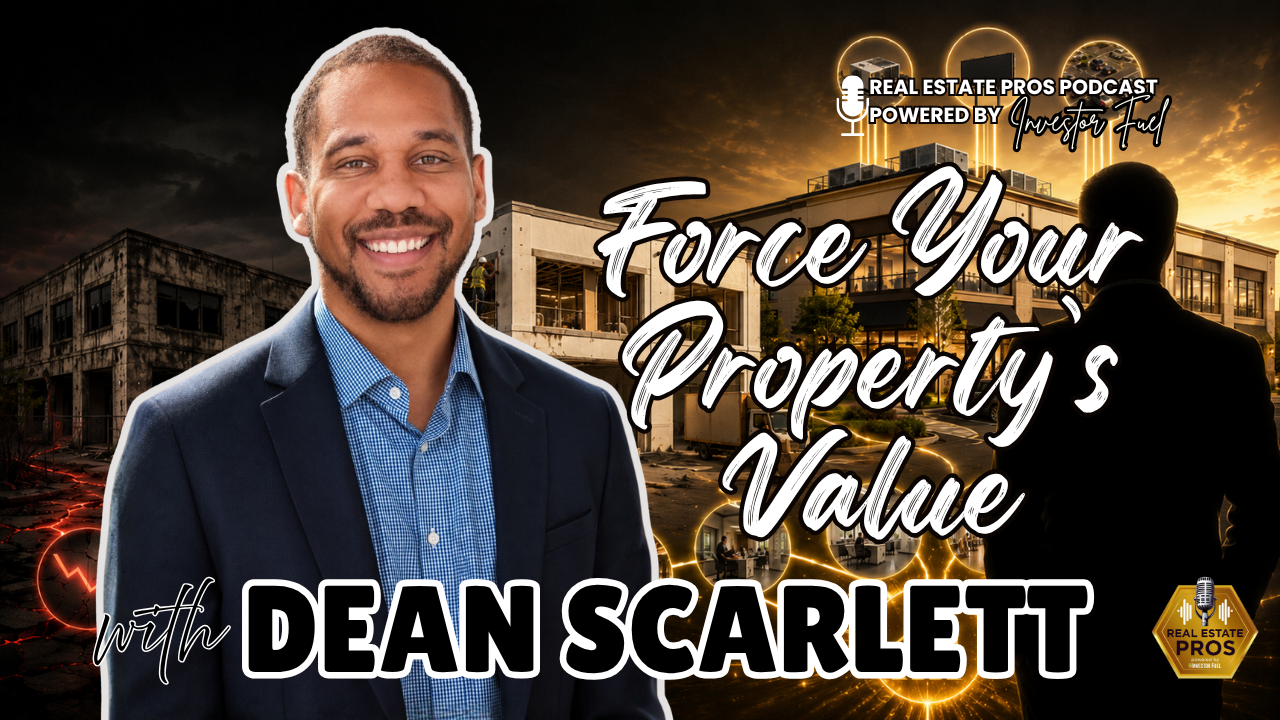
In this episode, Dean shares his journey from residential to commercial real estate, the lessons learned along the way, and how he’s leveraging AI tools to scale his investments and mentorship programs. Discover practical insights on commercial real estate opportunities, cost management, and building a strong network.

Resources and Links from this show:
-
-
- Investor Fuel Real Estate Mastermind
- Investor Machine Real Estate Lead Generation
- Mike on Facebook
- Mike on Instagram
- Mike on LinkedIn
- Driven Life Academy’s Website
- DLAnalyzer’s Website
- Driven Life Academy on Instagram
- Driven Life Entrepreneur on Spotify
- Driven Life Entrepreneur on Amazon
- Driven Life Entrepreneur on Apple Podcast
- Driven Life Academy on Youtube
- Driven Life Academy on LinkedIn
- Driven Life Academy on Twitter(X)
- Driven Life Academy on Facebook
-
Listen to the Audio Version of this Episode
Investor Fuel Show Transcript:
Dean Scarlett (00:00)
Yeah, so ⁓ triple net basically means that all of the expenses, not just the ⁓ every expense that the property generates, pretty much, is actually the responsibility of the tenant in a prorated form. So the taxes, if you got three tenants in your property, those three tenants are paying the taxes. ⁓ insurance, ⁓ and then maintenance of the property as well. ⁓ there might you know, usually in the lease it’ll stipulate what is the landlord’s responsibility, but in a true triple net it’s very, very little. So once you get the the business in, effectively they’re not just paying you rent, they’re also taking care of all of the other expenses related to the property.
Joseph Crooms (02:11)
Hey everybody, welcome to The podcast that’s called Investor Fuel Real Estate Pros Podcast. I am your host. My name is Joseph Crooms Today I’m going to be joined by someone I’ve been looking forward to chatting with. His name is Dean. I’m gonna let him tell you his first and last name and all that good information. ⁓ who’s been making some serious moves in the industry, ⁓ a real estate space. So, Dean, glad to have you here. Say hello.
Dean Scarlett (02:42)
Hey Joseph, thanks. Glad to be here.
Joseph Crooms (02:44)
Thank you guys. So I think our listeners are going to get going to take away something away from how you’ve been approaching business. ⁓ can you sh share with us as we dive into this? So first of all, for people who may not be familiar with you, give us the short version. What’s your main focus these days and what markets are you operating in, Dean?
Dean Scarlett (03:06)
great question. So ⁓ my name is Dean Scarlett. I am a broker and real estate investor. I primarily am focused on Florida right now. I operate out of Tampa, though I have a decent amount of exposure to a number of other states. ⁓ I have done a lot of residential ⁓ investing, single family homes as well as ⁓ small multifamily. And then ⁓
Fairly recently, within the past year, year and a half or so, I made the very ⁓ intentional pivot to commercial. So we are now investing pretty heavily in office buildings and ⁓ retail spaces. ⁓ but yeah, does that answer your question?
Joseph Crooms (03:48)
Yeah, so so ⁓ I love that. L let’s talk about how you made that transition to commercial and how you know and what have you learned from the past that’s sort of making that that that transition a little smoother.
Dean Scarlett (04:04)
Yeah, okay. So the reason I did it, ⁓ how how it happened is I’ve always wanted to get into commercial because ⁓ I grew up in a family that did ⁓ a little bit of of of investing ⁓ in residential spaces and I watched that process and there’s positives and negatives to being a landlord or to to fixing and flipping single family homes or ⁓ residential properties. but what really did it for me was the fact that in commercial space you have so much more upside.
I mean it just it’s it up to 10x. You know, you can buy a a house and put a tenant in it, and you know, you’re gonna be able to easily calculate the cash flow and the return on investment and all that. but in commercial space, you have so many more levers you could pull to force appreciation in that asset. So you can if I acquire a if I have two commercial opportunities, ⁓ both operating as a coffee shop.
Coffee shops. One of them is just a mom and pop coffee shop, and the other has a Starbucks in it. Even if they’re generating the exact same amount of revenue, the Starbucks will be worth more money just because it’s considered less risky. So ⁓ you’re not gonna be able to do that, most likely, in residential, right? The the quality of the tenant doesn’t immediately add value simply by their name, like it can in commercial among a number of other things, and so.
it was pretty clear to me like that that was really where I wanted my investments to go, my business to go. And it’s been very successful so far.
Joseph Crooms (05:34)
Let’s continue to talk about that a little more. What skills did you develop in the ⁓ residential area that sort of translate and have helped you do some lifting in the commercial area?
Dean Scarlett (06:34)
Yeah. I I consider myself very hands-on. I like actually, you know, getting in there and and and and modifying things. I’m pretty handy. So ⁓ that was very beneficial. So the property actually ⁓ that I’m in right now, this is our our office building. We acquired this, it was a complete gut job. We had to take it down to the dirt and the studs practically and rebuild most of it. They’ve been vacant for almost half a decade after COVID. ⁓
And so it needed a lot of work, but that presented a lot of opportunity for me. So two things that help me do that. One is that I’m not afraid of ⁓ ugly properties. You know, doing that operating in residential help, you actually learn to see the opportunities there. ⁓ and second is the fact that I can do a lot of little things myself and I’ve interacted with a lot of different trades to the point where I understand ⁓ the order when things need to be done. ⁓
As well as where, you know, you can cut cut some costs and where you really definitely don’t want to to do that. ⁓ and so yeah, I would say it translated very, very well ⁓ into resident, into commercial.
Joseph Crooms (07:43)
You talking about cutting costs. What have you learned ⁓ of some costs that is is is just really not necessary and if you’re if you have a keen eye and a clean ear and also a good mouth, how do you how did you handle that? If I hope I worded that question well.
Dean Scarlett (08:00)
Yeah, yeah, yeah. No, you did. ⁓ costs that aren’t necessary. ⁓ so one this okay, this is ⁓ it depends on what your plan for the asset is, right? ⁓ a lesson that I learned, for example, ⁓ with a property that we ended up taking as a long term rental, ⁓ is one of one of my first residential properties that we did.
⁓ is I spent quite a lot of money on the landscaping because it was in bad shape, it needed a lot of work. I resawed the entire property. It looked beautiful. Put the first tenant in it. They lived there for two years, came back, ⁓ and when they vacated, the grass was completely dead, and that was just thousands of dollars down the drain. ⁓ because you know it wasn’t it it wasn’t necessary to do. ⁓
There are a lot but but on the flip side, like if that property instead was something I was looking to fix and flip, then yeah, doing the landscaping would have been a good idea ⁓ in order to help it move in a slow market. So it kind of depends on what your plan is for the asset and what the market is valuing at the time. Like there are certain things ⁓ that might make sense for one property that just don’t for another, all based on what your potential buyer or ⁓ is gonna actually
Joseph Crooms (09:15)
And what is the difference in the relationships it when you want to say put value on it for say a buy it in the ⁓ residential market and you know, if you may want to rent some space in a commercial, what what things sort of ⁓ tantomile to each other or or or totally different?
Dean Scarlett (09:35)
⁓ yeah. Okay. Okay, so that’s a okay. ⁓ in the residential space, ⁓ emotions really rule the day. You want it to look good, feel good. You know, when somebody walks in, then you want them to feel instant like pride of ownership. It needs to be something that they they’re excited to to own. something that I I now make a point to do in every property that that we consider is I need to be able to add to it.
at least one feature that is Instagram worthy, something that would look really, really good as a as a in a picture online, because that’s the kind of buyer for residential spaces. commercial spaces are a little different. You still want to look good. ⁓ then then and a commercial tenant is still looking for you know pride of ownership. They want to be proud of where they work. But what matters more than anything is the location and the numbers. Who the the next door neighbor tenants are.
Who what neighborhood you’re in. but more than anything is the numbers for the whole thing. How much per price per square foot, you know, how much TI are they getting, if any, ⁓ how many cars are driving by on the road right out right outside, like what’s their their ⁓ like immediate ad advertisability out on the street, ⁓ things like that matter a lot more.
Because you I mean it makes and it makes sense. You know, these are people who are not looking at this as a place to live. They’re looking at it this needs to earn them money. It needs to be beneficial for their business. So they take a much harder look at the numbers. In fact, actually one of the the best things you can do ⁓ for a ⁓ commercial space, especially in retail, is you just gut the whole building and white box the whole thing. So brand new, you know, brand new paint.
No no decor, no nothing inside. And sure when people come to Torah, you just say, Look, we’ll build it to however you want it built. ⁓ rather than, you know, you would that that wouldn’t work super well in residential. It needs to have some character. Commercial, it’s almost better not to.
Joseph Crooms (11:30)
Okay. So ⁓ let me ask you this question. What’s been the key to keeping your machine running smoothly?
Dean Scarlett (12:11)
yeah. ⁓ so okay, there are a a number of things. So I I I’ve I kind of water down what we do a little bit, but we have multiple businesses that all work hand in hand. So the first ⁓ is we I am a ⁓ a mentor and a coach and I teach real estate investing to people who are coming out of, you know, high income W twos ⁓ and actively want to begin investing their their capital in real estate. So we we teach them how to do that, particularly on the commercial space, because that’s not something
Most people intuitively know how to get involved and it’s a little nuanced. So we teach that. Once they’re capable and ready ⁓ to invest, ⁓ we are also the brokerage that will help them with that investment. So we can ⁓ help them acquire the right property and then ⁓ because I am also an investor, I can help them manage the remodel, the rehab, the lease up, and then the property management. So the key really is that first piece.
is getting people in the pipeline who are interested in investing, ⁓ who are either new to the journey or haven’t begun yet and would like to begin. ⁓ and then show showing them the value of how it can be life changing. You know, ⁓ they say real estate investing is not a get rich quick scheme, and that’s true. I’d like to say though it’s not get rich quick, but it’s get rich almost certainly, ⁓ eventually. You know you just keep
You just keep going, ⁓ and eventually things will all work out. commercial moves faster than residential and then then the the scale’s bigger. So I show people how how the numbers work and then help them ⁓ make the first million through commercial real estate. So that’s really the the key.
Joseph Crooms (13:51)
And that’s and that’s sh got your business. What are the the the the the five most important things that I need to know about commercial business and versus residential? Flipping you what what are some key things? Share with us.
Dean Scarlett (14:06)
Five. Okay. Let’s see here.
Joseph Crooms (14:09)
Be more, but you know Yeah, we got time. Just we just tell us ’cause sometimes our listeners are like, I I never thought about that you know, and they may skip it.
Dean Scarlett (14:18)
Yeah. Okay. So ⁓ five key things to know. First, ⁓ everything that you can do in a residential property that would be valuable and increase the value of it as an investment, you can do in a commercial. But not everything you can do to commercial property you can do to residential. You have more opportunities. So residential, you can you know beautify the property, you can fix it up, you can ⁓ you know add amenities, things like that. You can do all that to commercial as well. But
You can also change out the tenants in commercial. You can increase leases and and your your your your ability to to to change that lease value is dramatically higher. ⁓ those are just some examples. You can you can parse up the property a lot easier in a lot more ⁓ parcels, rentable parcels, than in residential. ⁓ you can get ⁓ rental from a lot of different things, like for example, you can rent out part of the parking lot.
in a commercial space to, you know, a a food truck or a car wash or whatever, a mobile mechanic, whatever. ⁓ you can rent out parts of the roof to cell towers and cell companies examples. You can rent out part of the land for billboards. There are all different kinds of way you can generate revenue that you can’t in residential. ⁓ it’s also less risk than residential, in my opinion, ⁓ for a number of reasons. One of the main ones being ⁓ we’ve all heard ⁓ if you’ve
Paying attention to investments at all, you you eventually will run across ⁓ people with horror stories of bad tenants who destroy their property or tear stuff up. that can happen, sure, in commercial, but it’s a lot less likely because this is their livelihood, right? This is how this company, this individual, this entrepreneur is earning their entire income. They’re not gonna trash the space. so they usually will p take a lot more care of it. They’re a lot less likely to miss payments because once again
If they start missing payments on this, it’s effectively the equivalent of getting fired from their job if you evict them. ⁓ also a lot fewer expenses fall on you as the owner of a commercial property if you structure the leases right. You can’t really do triple net leases, for example, in residential. That’s an opportunity in commercial. So you
Joseph Crooms (16:28)
Can you explain
that Dean what you mean by triple leaf you know, for and later?
Dean Scarlett (17:14)
Yeah, so ⁓ triple net basically means that all of the expenses, not just the ⁓ every expense that the property generates, pretty much, is actually the responsibility of the tenant in a prorated form. So the taxes, if you got three tenants in your property, those three tenants are paying the taxes. ⁓ insurance, ⁓ and then maintenance of the property as well. ⁓ there might
you know, usually in the lease it’ll stipulate what is the landlord’s responsibility, but in a true triple net it’s very, very little. So once you get the the business in, effectively they’re not just paying you rent, they’re also taking care of all of the other expenses related to the property.
Wow. Taxes, insurance, everything. So ⁓ I truly I mean I tell this the the the commercial real estate is the single greatest asset class in America, maybe in every country, I don’t know, but definitely in America.
⁓ most real estate investors don’t go there because it’s outside the norm. Most people know houses. They live in one. ⁓ they’ve grown up around them. They don’t stop and think about, well, maybe I can buy a strip mall or ⁓ instead invest in an office building. ⁓ and so they don’t know the numbers, but it’s dramatically better returns and lower risk.
Joseph Crooms (18:28)
Now every operator I know has a moment when things get real. Maybe there’s a deal that went sideways or a time and you had to pivot fast. Do you mind sharing one of those moments that you can think of?
Dean Scarlett (18:40)
yeah, okay. ⁓ just one, huh? ⁓ I I might I might give you two, we’ll see. So
All right, all right. so the first one is ⁓ I mentioned that property that I did the landscaping on and it was a mistake. ⁓ there was a bunch of mistakes I made on that property and in including ⁓ we held it too long. I’m I I actively chose to prioritize saving a little bit of money on it on a renovation versus saving a little bit of time. And I should have saved the time because what ultimately ended happening is that
missed window, snowballed a bunch of other things and we ended up the property sat vacant too long, got rodents. The rodents chew through all the electrical. ⁓ it added another like almost two months to the to renovation, which then we missed the market window. We’re selling it to a down market. It erased like 30,000 in value right off the top of ⁓ what would have been profit. And ⁓ we ended up ⁓ taking a loss on that property. That was
⁓ a painful lesson ⁓ for a number of reasons. But it was it it didn’t it didn’t make me question doing real estate. It made me question the method and and the way that I was doing it. And I completely changed from really focusing on fixing flips in the residential space to going, okay, maybe maybe there’s something may may maybe there are other opportunities that are bigger and and little little safer. And it was a a smart move.
⁓ when I did make that pivot to commercial though, ⁓ I had one moment actually in this this office building that I’m in, where my GC, my general contractor, who I hired to do the renovation, ⁓ ended up being fraudulent and he tried to double charge me for the windows. I replaced thirteen windows in the property. He tried to charge me for twenty-six or twenty-five. ⁓ and then when I
⁓ you know, addressed it. He attempted to take me to court and tried to put a lien on the property and sue me for all kinds of things. A num along with a number of things. It was a long, drawn out process, and it ended with him sending some threatening packages to my house as an example. So it ended up being a whole thing. it got worked out and everything was resolved and fine, and he eventually
relented and and you know, admitted that he was actively trying to take advantage of me. but that was that was that was trying as well.
Joseph Crooms (21:05)
You know, that’s the kind of stuff that people talk don’t talk enough about. And honestly, is this what separates the folks who’s just dabbling to the ones who stay in for the long term? Let me ask you this, Dean. What is the what are you focused on s ⁓ solving or scaling next? What’s your next real goal?
Dean Scarlett (21:25)
Next real goal. So ⁓ my my mentorship program, I really I truly want every single person who joins to have a a as solid an opportunity towards getting to a million dollars in net worth through commercial property as possible. And so one of the things that ⁓ and I I put a lot of effort and energy into making sure that that happens for them. one of the things we just released actually, we just launched this last ⁓
week is a deal analyzer tool ⁓ that any anybody can input the specifics of a deal. Well, so let me back up. First, when they sign up, it’ll ask them a series of questions. It’ll create a profile of them in the back end. So it’s going to ask about your experience, how much time you have realistically, your capital, how much risk you’re really after, what you prioritize.
It’ll create a profile of you and then from then on, any investment opportunity that you’re even considering, you can input that literally to drop a PDF into it or input the numbers manually. It’ll extract all that and then tell you whether or not that how how well that deal matches you as an investor. Is it I mean it might be a good deal for somebody else, is it good deal for you? ⁓ given your time, given your experience, given how much risk you’re willing to take on, etc. ⁓ I
You I I told you I truly believe commercial real estate is the number one greatest asset class. ⁓ I think this tool, and I’m biased obviously ’cause it’s ours, but might be one of the number one greatest tools for any real estate investor to use. And so I’m really focusing hard on scaling that and adding as many features as possible, ⁓ getting it ⁓ as as accessible as possible to people ’cause I
Not only will it save hours and hours and hours of time, ⁓ it will prevent you from taking bad deals and potentially losing your life savings on something you never should have invested in the first place. Just because somebody else told you it was good might not might not be for you, might be for them.
Joseph Crooms (23:25)
So you s you’re saying this is this this is a preemptive move that you’re doing?
Dean Scarlett (23:29)
Yes. Yeah. And and ⁓ something that I’m it’s it’s beneficial for me, but it’s also beneficial for all of my clients who come in and and are paying me for my ⁓ guidance for them through their their ⁓ assessments of various opportunities and giving them kind of my consultations. And so this is ⁓ an extension of that.
Yes, there Yep. Yep. So ⁓ I looked at it and I said, Okay, you know AI is the future. How can we craft something that utilizes that in a manner that ⁓ offers everyone, the ev every client the absolute best possible risk adjusted return, reducing their risk, increasing their you know, you mentioned longevity, people people
start investing and then they stop often because they hit pain points early on. And there are pain points, but well how many maybe we can avoid a lot of those. And so I created a tool to help do that.
Joseph Crooms (24:24)
Sounds great. That’s big, especially when you’ve already got the mindset. How can I I like the question that you asked. How can AI instead of just say, ⁓ AI, I’m gonna resist it, you formulated a way, hey, I can it’s going to my market and it can help business and help the consumer as well. that next move can either compound things or create chaos depending on how you play it. Now, I know a lot of people listening.
are either early in the journey or looking to level up and I think their benefit from here is when it comes to building relationship and growing your network, what’s made the difference for you, Dee?
Dean Scarlett (25:04)
Getting out there. So I had a mentor ⁓ years ago, very successful in real estate. He at one point owned something like eight hundred plus apartment buildings all across multiple states. And I took him out for lunch one day and I like, Can you just teach me? His you know, he’d been in in real i an investor for thirty, forty years and I was like, What if you were to go back in time my age, what would you what would you
Tell yourself. And the one thing he told himself was to network more. And so I took that to heart. And so I’ve made a a very intentional push ⁓ to get out there more. I’m naturally very introverted. but I’m I was like, you know what? If ⁓ if that’s what he’s saying, I’m gonna I’m gonna I’m gonna listen to it, I’m gonna take that. And so I’ve started joining investor groups. ⁓ I am in ⁓ a number of
networking groups. One thing that I found to be a really good way to do this is to find something you love that overlaps a little bit with the business side of where you also want to go and then get involved in that. perfect example is I really love cars. So I joined a car group because a lot of investors happen to also love cars. And so it’s been a great way to interact with people about a shared love of cars. And then lo and behold, you’re an investor and next thing you know we’re doing business together. And so that’s been very
Beneficial.
Joseph Crooms (26:24)
You can’t fake that. Relationships are everything in this space in in this our general space. All right, before we wrap this up, if someone wanted to reach out to you, connect with you, maybe collaborate or learn more about what you do, what’s the best way to reach you?
Dean Scarlett (26:41)
Yeah, ⁓ so a couple ways you can get in touch with me. ⁓ you can look me up on ⁓ any social media platform ⁓ at Driven Life Academy. ⁓ you can also use that same as the URL, www.drivenlifeacademy.com ⁓ or you can ⁓ if you would like to just get into the tool itself, you can go to www.dlanalyzer.ai and explore it. 14 day ⁓ free trial, create an account just go in there and and see what it’s all about. ⁓ or like I said, you can just message me directly on any social media platform at Driven Life Academy or online at www.drivenlifeacademy.com
Joseph Crooms (27:25)
Guys, you just heard Dean. I’m gonna ask them to repeat it one more time. I’m sorry to do this to Dean, but I think ⁓ this is valuable information. So Dean, ⁓ run into it one more time, please.
Dean Scarlett (27:35)
Yeah, no, you’re good. ⁓ you can look me up online, ⁓ at any social media platform. That’s Instagram, ⁓ Facebook, Twitter, LinkedIn, at Driven Life Academy. you can also ⁓ reach out on the web at www.drivenlifeacademy.com or you can take a look at ⁓ that investing tool I just mentioned and get in touch with me there at www.dl that’s the letter D, the letter L analyzer dot AI. Any one of those ⁓ is a great way to connect with me.
Joseph Crooms (28:13)
Perfect. Well listen, I appreciate your time, Dean, and your story and your perspective. We need more people in in this space who are doing the right thing and I want to thank you for being one of those persons. As for those tuning in, ⁓ if you got value from this, make sure you subscribe. We got more conversations coming with operators such as Light Dean, who are out there building real businesses.
telling their real stories and sharing with you. So we’ll see you on our next app episode. Dean, say goodbye in your own way.
Dean Scarlett (28:46)
Yeah. No. It was great being on here. Thanks everyone. ⁓ and hope to hear from some of you. ⁓ reach out. Love to connect.