Subscribe via:



Show Summary
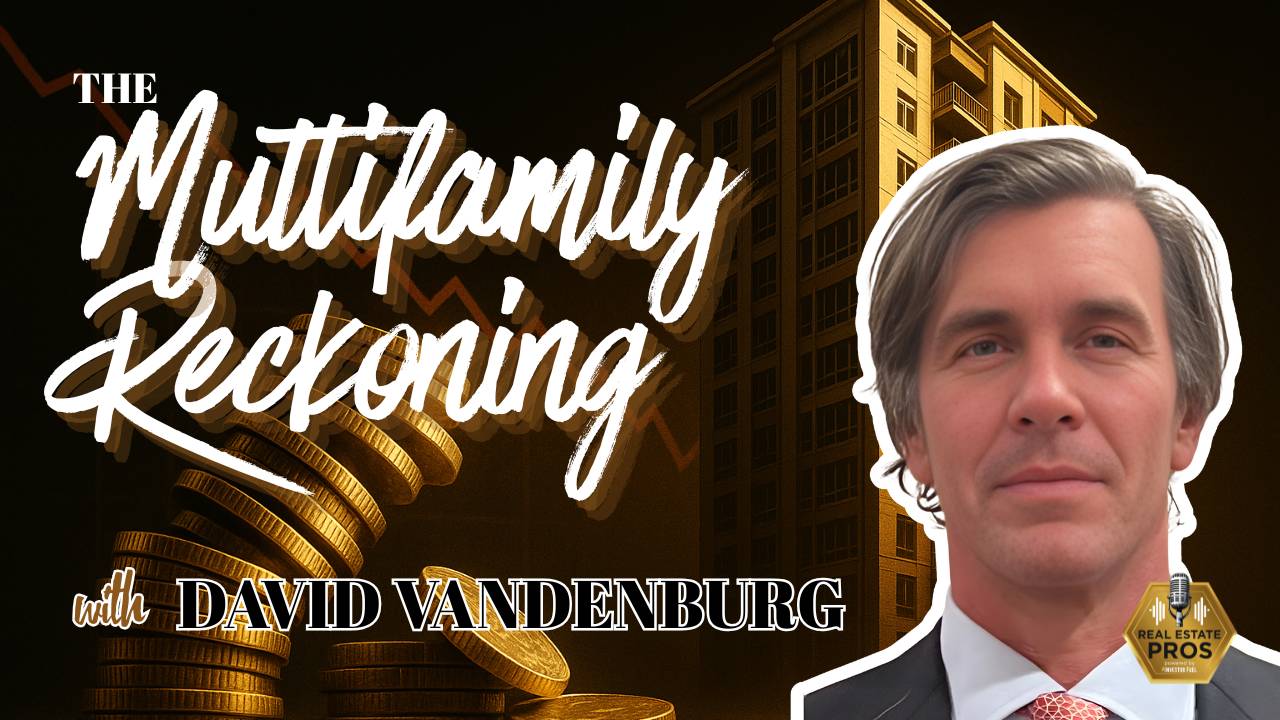
In this conversation, David Vandenburg shares his extensive experience in the multifamily real estate sector, discussing his journey from a family background in real estate to his current focus on acquisitions and partnerships. He emphasizes the importance of multifamily investments due to the constant demand for housing and explores the challenges faced in the current market, including financing issues and the impact of construction trends. David also delves into strategies for identifying distressed properties and the implications of partnership dynamics in real estate investments.

Resources and Links from this show:
-
Listen to the Audio Version of this Episode
Investor Fuel Show Transcript:
David Vandenburg (00:00)
So when a partnership is faced with at the end of a five-year period of having to put a new loan on with a higher rateDylan Silver (00:01)
Thank you. ⁓David Vandenburg (00:08)
it’s sort of a forced sale.And in most cases, the debt really drives the life cycle of the ownership of the asset. When it’s due, you’ve got to sell it.
Dylan Silver (00:14)
I want to ask you one morefolks, welcome back to the show. Today’s guest, David Vandenberg is in the value add multifamily space, partnerships with family offices, institutions and real estate funds. David, welcome to the show.
David Vandenburg (02:09)
Thanks for having me. Glad to be here.Dylan Silver (02:12)
Great to have you on here, David. We were talking before hopping on here about really all that’s entailed in the strategic relationships that you have with these family offices and institutions. But before we hop into that, I do want to ask you about your background. How did you get into real estate?David Vandenburg (02:34)
It’s kind of interesting. My father had been in the business since the, he started as a broker in the late seventies and then became a principal in the early eighties. They believe the first transaction, the principal was in 1983. And I attended college at SMU in Dallas and graduated with abachelor’s degree in business ⁓ with majors in finance, real estate. prior to going to college, I had had summer jobs that I worked on department. So it, had been around the business for a long time before I got serious about it and was studying ⁓ real estate and finance. And then when I finished,
Dylan Silver (03:05)
it.Thank ⁓
David Vandenburg (03:29)
I moved up to Chicago and just dove into it immediately. ⁓ In doing, ⁓ know, really on the deal side and working on acquisitions. ⁓Dylan Silver (03:33)
Thank you.Thank you.
Okay.
David Vandenburg (03:45)
really right from the get go. ⁓Dylan Silver (03:46)
I want to ask you specificallyabout ⁓ if I was to meet you, you’re at SMU, were you thinking at that point in time you wanted to get into commercial? Were you thinking at that point in time maybe you were going to go and be a real estate agent and then broker? Did you have an idea where you wanted to be at when you were leaving SMU? ⁓
David Vandenburg (04:11)
No, I mean, it really didn’t. was, was, ⁓ you know, I, I completed my studies and I was, I was really interested in just getting out, out in, in, the world and beginning to work. ⁓ I had the opportunity to, to join, ⁓ my father and his side of the business up in Chicago. And I spent some time up here, but I, I had never lived in the city other than I’d spent a summer. ⁓in the city before I graduated, working with him, so still getting my feet wet in the business. And I found it to be, you know, fairly exciting. I knew it would be rewarding, financially rewarding. And I like the pace of it, fast-paced. You were able to sort of make your own path. Even
Dylan Silver (04:52)
Yeah.David Vandenburg (05:07)
the days each day could be completely different from one to the other. It was not mundane and redundant. ⁓ And I always learning new stuff. And really a lot of the things that I had learned in school at that time, ⁓ ironically, things ⁓ when I was ⁓ a senior, we were studying securitizations, which was something that was really new to the real estate business at that time.Dylan Silver (05:13)
huh. ⁓ huh.David Vandenburg (05:36)
And when I finished and came up to Chicago and started working ⁓ with my father and the others that were in office, ⁓ we were part of one of the first multi-borrowers, ⁓ multi-asset, non-cross-collateralized ⁓ securitization pools that were assembled and sold to the market. And that was on behalf ofDylan Silver (05:51)
Thanks, everyone.Yeah.
David Vandenburg (06:04)
DLJ, Donaldson-Lufkin-Generette, that was one of the pioneers in the space. ⁓ That business later ⁓ sort of merged with Credit Suisse versus Boston, but that was the first of a number of transactions that we did with them. Eventually we sponsored our own ⁓ bond offering where we had, it was secured with, I think it was 19 or 21 properties that we owned with aDylan Silver (06:10)
Thanks.Thank ⁓
Thank
David Vandenburg (06:34)
a ⁓ couple different pension funds that were administered by an advisor. Their real estate portfolio was administered by an advisor at Philadelphia, we ⁓ got into partnership with.Dylan Silver (06:48)
Now,these publicly available? Did people have to go through their financial advisory for access to them?
David Vandenburg (06:58)
You know, so that pool of that securitization pool, there were several different tranches, you know, that it was divided up into one of those tranches, depending on where it is in the priority of payment for the capital stack, earned different rates of return, depending on whether it was sold at a premium or a discount, know, the face amount of the note.⁓ So the talk of interest rates, the interest rate on that single asset bar pool that we sponsored ourselves, ⁓ that had a coupon rate of 9.23 % and a 25 year amputation schedule. So a debt constant that well over like 10 and a half percent. And we have like 21 properties that not only supported that,
Dylan Silver (07:38)
Yeah.Hmm.
David Vandenburg (07:57)
that debt structure, those debt payments, but it returned like 12, 13 % to the equity while that debt piece, that securitization financing was in place. That was a real.Dylan Silver (08:12)
I wantto pivot a bit here David, ⁓ ask you about those early days. ⁓ When I hear your story and we’re talking now about you know complex
ways that deals are being structured, right? So you’re talking about tranches and pools of money, and then also ⁓ there’s so much that goes into this. The acquisition side, when you’re looking for the deals, there’s so many people that are on our podcast who are sourcing deals from single family all the way up to flex use commercial. Was your experience in those early days at all on the acquisition side?
David Vandenburg (08:50)
Sure.Almost 100%. That was really where almost all my focus was. We were very active in Texas. I grew up there. I went to school there. Most of our properties that we acquired have been in Texas. we own more than 75 properties in the state.
20,000 units, 15,000 units in all the major cities, lot of the secondary and tertiary cities. So I was learning the business from the ground up, but really I had had some of that experience previously with some summer jobs and whether
Dylan Silver (10:16)
Okay.Thanks.
Thank
Thanks.
Thank
David Vandenburg (10:40)
was leasing apartments, I’d done some maintenance work.And then as we got into the acquisition business, had my education and real estate that really enabled me to ⁓ how to finance the property, how to underwrite the numbers. ⁓ And so I learned really just by getting my, by being in it. I wasn’t really taught as much as I learned on the go.
Dylan Silver (10:59)
ThankOkay. ⁓
Thank you.
David Vandenburg (11:13)
So I was immediately in the acquisitions business and that has really beenmy strong suit and where I have most of my attention over the years has been focused has been on the acquisition side. I’ve always said that. Go ahead.
Dylan Silver (11:22)
When we were talking about Texasacquisitions, ⁓ you mentioned 70 plus properties, you thousands and thousands of doors. Was this
commercial residential? Was
multiple asset classes?
David Vandenburg (11:40)
No, it was all apartments, larger apartment properties. Generally, our focus was always to try to, it were almost always properties that were at least 100 units and really trying to focus on properties that were between 200 units and let’s say 400 units. But we had a handful of properties that were over 800 units. Each of the properties werehad over 800 units. There were a few properties that we had, some that we bought in portfolios that were over 100 units, but not over 250, 120 units. I don’t know that we had, we did have, we had, think maybe two properties that were smaller than 100 units. had one in Atlanta, I think was 85 units.
Dylan Silver (12:11)
Yeah.that after.
Okay.
Thanks.
David Vandenburg (12:39)
and another one in Orlando that was maybe 90 units. But most of those properties were sort of really good deals that were too good to pass up, but we had existing property market place that gave some synergies to operations and helped make sense to spend time to do the acquisition. We generally like to look at working larger deals for a myriad of reasons.Dylan Silver (12:51)
Thank you.Was there was there any point in time where you were looking at other asset classes I’ve spoken with people who are in the space and I’ve heard a mix of things but I find that interesting that you
⁓ zoned in on commercial residential those apartment complexes right now people are talking about flex use commercial self storage ⁓ retail ⁓ What was there something specific that? ⁓ Drew you heavily towards the commercial residential side?
David Vandenburg (13:27)
Sure.So sort of twofold. We had had some experience more so ⁓ before I was with the company, before I was actually working with the company. We owned some office buildings ⁓ and some shopping centers. The key or the attractiveness of the multifamily space was that housing is something that
you that everyone needs. You don’t necessarily need a retail center or an office building. And those those those have only become more ⁓ exacerbated over time. As we know today, really two of the softer sectors in the business because of online shopping and Amazon and work from home, you know, particular right. ⁓ But people still need places to live.
Dylan Silver (14:14)
Thanks.Yeah.
David Vandenburg (14:40)
And we still have a real serious shortage of housing, both rental ⁓ and single family housing, whether that’s rental or owned. ⁓ it was always the fact that there’s a need for it. People are always going to need a place to live. And then there were attractive ⁓ financing programs for multifamily, where the financing thatDylan Silver (14:45)
Absolutely.David Vandenburg (15:10)
you could obtain for retail and office wasn’t as attractive. The rates weren’t as attractive. The ability to get as much financing as you could ⁓ was more problematic with retail and office. we were never really in the industrial space. We did manage ⁓ a couple million square feet of industrial space, most of that ⁓ in Texas in just a couple of markets.Dylan Silver (15:31)
youThank you.
David Vandenburg (15:40)
⁓ It wasn’t as intensive as, you know, the apartment business is really one of the more intensive on the management side. ⁓ So we felt like there were some things that we could really add to the managementDylan Silver (15:44)
Yeah.Yeah.
David Vandenburg (15:59)
and our business that would giveDylan Silver (15:59)
Thank you.David Vandenburg (16:04)
investors and partnersadditional comfort and additional reasons to invest with us because there were things that we were doing that maybe other organizations necessarily weren’t doing.
Dylan Silver (16:16)
I’m curious whenfolks are coming to you today, ⁓ I have had investors on this show who will tell me, I’ll look at deals anywhere in the country, even the world, and I’ll have investors who will tell me the exact opposite, right? Unless I have experience there, unless I have a strategic relationship there, I’m not looking at these deals.
Long history in Texas, you’re in Chicago. I heard that you did a deal in Atlanta. What has been your approach when folks are bringing you deals in maybe markets that you have not done deals with previously or not had such an extensive traffic?
David Vandenburg (16:58)
Sure. So we were pretty fortunate. were pretty… We were in a lot of markets. I think we operated, owned and operated in over 40 different markets. I mentioned we were all over the state of Texas.We were in several cities, ⁓ markets in the Southeast. were in ⁓ most of the markets, the larger markets in Florida, or in Atlanta.
We’ve owned and operated in Birmingham, Jackson, Mississippi, ⁓ several markets in Louisiana, Little Rock, Oklahoma, St. Louis, Kansas City. had, I think we had 15 properties in Kansas City, ⁓ Chicago, Ohio, ⁓ that was Columbus.
Dylan Silver (17:56)
Yeah, all over.David Vandenburg (17:56)
Michigan,Kalamazoo, Michigan, Madison, Wisconsin, in New Mexico, in Albuquerque, New Mexico, we were in partnership with the Hunt companies and we redeveloped the housing on Cripplin Airfield Base, ⁓ Hunt developed new housing and we renovated the existing housing, the existing base ⁓ housing. ⁓
Been in Colorado, Denver, we had a couple properties. We did a condominium conversion in Littleton, Colorado with a large developer here that we’ve known for a long time in Chicago called Gollib. So we converted a newer built garden style apartment community. was like, I think it was 317 units that we converted the condos and sold.
Dylan Silver (18:52)
Okay.David Vandenburg (19:30)
⁓ We were in ⁓ the DC Metro in Maryland, in Southern Virginia, in Newport News. So we’ve been in a lot of different markets. would say what you learn sometimes is what you don’t want to do again, Whether they’re mistakes or they’re properties that didn’t do as wellDylan Silver (19:50)
Yeah.David Vandenburg (19:57)
different reasons and a lot ⁓ of times you’re able to overlay that or use that experience and correlate it with other markets where there are opportunities or that you want to, you know, you don’t want to venture into for different reasons.Today it’s a little different because there’s different things that have been going on politically
at the local level that have made it more challenging for apartment operators. Texas is a real landlord-friendly market. The eviction process is easier. It’s more challenging in Chicago on the eviction process, but the market itself, for being a big, really big urban city,
Dylan Silver (20:37)
Yep.David Vandenburg (20:55)
the amount of rent that’s required that goes towards rent is one of the lower ⁓ ratios in terms of rent payments to the take-home pay as compared to some of its comparable markets like New York and ⁓ Washington DC, Boston, San Francisco, that percentage of your rentDylan Silver (21:04)
because it’s not just X.Okay.
Thank you. ⁓
David Vandenburg (21:22)
ofyour income, your percentage of your income that goes to rent is significantly higher. So I guess my point is that while there’s the eviction process is more difficult in Chicago, you’re not faced with having to evict people nearly as often as you are in of the other markets. So ⁓ go ahead.
Dylan Silver (21:37)
Thank you. ⁓I do want to ask you about,
on the acquisition side, pivoting back to that.
I’m sure there’s many different strategies over the years which you’ve looked at ⁓ and used on so many different properties, but do you generally look for distress or ⁓ whether that’s financial from the seller or whether that’s ⁓ management or high vacancy rate ⁓ mismanagement, something along those lines or…
Is that something, once you identify distress, that you then avoid the deal because it’s now going to be less turnkey?
David Vandenburg (22:17)
Sure.Yeah, you know, so it has changed over time. And when I, in the
for example, there wasn’t nearly as much new construction. There was very little construction because of what had happened through the late eighties and the RTC days. When I first joined the business, we were bidding on portfolios of properties that were owned and being auctioned or sold by the RTC that went on for two or three years. And those were.
Those were deals where ⁓ individuals and companies made huge amounts of money because properties were being sold at huge discounts to replacement costs. In a lot of cases, were really in the properties were in good shape and the operating fundamentals were really pretty good. ⁓ As you got into the later latter part of the 90s, construction started to happen again, but
Dylan Silver (23:07)
Thank you.Thank
David Vandenburg (23:25)
There was a need for better housing, but there wasn’t a lot of newer housing. So we were renovating housing. We were doing a lot of renovation of older properties, not necessarily, you know, 30 year old properties. Some of them were 10 years old. Some of them were 20 years old. ⁓ and, you could do renovations and have newer, you know, style kitchens and, andDylan Silver (23:28)
Okay.it. ⁓
Yeah.
David Vandenburg (23:50)
a lot of times it was fixing deferred maintenance and things like that. But.All of it
to higher income, higher occupancies, better tenants. And so that was a way to value engineer properties at the property level. And sometimes there was distress at the ownership level. ⁓ And sometimes there was distress at the property level. ⁓ One of the first properties that we bought in Kansas City was a property we bought from Prudential.
Dylan Silver (23:58)
Thank you.Thanks
David Vandenburg (24:23)
We paid $6,000 a unit for a 455 unit property that they, then spent about $27,000 a unit in the property to, to renovate it. And we, wasn’t just renovation like doing, um, interior work. really did a lot of work to the exterior of the property. We pitched the roofs. They were flat. We, we ran the utility lines for the, know, AC units, put those on the ground instead of on the roofs.Dylan Silver (24:25)
Mm. ⁓Thank
David Vandenburg (24:53)
new windows, things like that. Cost for materials was much more affordable than it is now. So it’s hard to translate whatDylan Silver (24:56)
Thank ⁓David Vandenburg (25:08)
or $27,000 a unit would be today, but we did substantial work there and those properties, that was almost like a ground development, from the ground up sort of project.Dylan Silver (25:15)
ThankDavid Vandenburg (25:22)
⁓ as you got into the two thousands, ⁓ there, there was more construction happening. And soDylan Silver (25:24)
It’s all right.David Vandenburg (25:31)
what we found ourselves doing was, was trying to buy better properties at good discounts to replacement costs that were in good locations. That were not necessarily brand new, but were really nice properties in good shape. And then we could do things to them either initially if we felt that there was.Dylan Silver (25:45)
and I’ll see you.David Vandenburg (25:52)
upside that could be attained ⁓ from doing some renovations or we might do it two or three years into the ownership of the asset where we felt that the market was poised for some renovation and it would be accepted and ⁓ new tenants would pay the upcharge.Dylan Silver (25:55)
it is.Okay.
Thank
David Vandenburg (26:14)
And then what we’ve been doing the last really since the pandemic and I’ll sayRight around March and April of 22 when there was a seismic shift in financing rates really led by the bond market and bond yields really increasing substantially suddenly. And that was really as a result of the money that was being spent and what had happened with inflation. It was late to respond, but
Dylan Silver (26:37)
Okay.David Vandenburg (26:52)
when it did, it was pretty substantial. mean, it bankrupted a lot of ⁓ different groups. And ⁓ it’s been tough for those. If I can put it this way, of all the deals that we have ⁓ reviewed, toured, analyzed, bid, put offers out on the past three years,Dylan Silver (26:53)
Yeah.Thank you.
Thanks.
Thank
David Vandenburg (27:19)
maybe 5 % ofthose properties, and these are all basically A properties that have been constructed in the last 10 years ⁓ or newer. ⁓ Almost all of those partnerships or those properties are underwater. There’s very few, unless the owners acquired the properties prior to 2017 or 18.
Dylan Silver (27:24)
ThankMm.
Thank
Thank
me.
David Vandenburg (27:48)
Most of those partnerships,⁓ there’s stress at the partnership level. The properties are in good shape, but the partnerships are underwater. Yeah, most of the equity, ⁓ a substantial portion of the equity has been lost. ⁓ Sometimes you’re at or near with the debt balances. So there’s a lot of stress on the partnership level, but the properties, most of the markets,
Dylan Silver (27:54)
Yeah.Yeah.
Okay.
David Vandenburg (28:17)
are really operating pretty well, other than the markets that have received too much construction. The last three years, we’ve had the most construction in the apartment business in the history of it. It’s been in a little over 500,000 units delivered each this year, last year, and the year before. So it’s softened up some of the markets. The markets that have really justifiably received a lot of that construction becauseDylan Silver (28:31)
ThankDavid Vandenburg (28:43)
That’s where most of the job growth has been and population growth in Texas and Florida in particular, but Nashville, the Carolinas, Atlanta, Phoenix.Dylan Silver (28:46)
Now, when there is stress at the partnershiplevel, like you talked about, how are people able to identify that? mean, it’s mainly partners reaching out to buyers, I would imagine, because if the property itself is ⁓ in good condition, it may be hard to ascertain that the partnership itself isn’t doing well.
David Vandenburg (29:56)
Yeah, you know, most of it is really driven by the debt market. most of the most of these partnerships place debt that had a five year term on the loan. And so properties that were bought in 2018 or 19, you know, they came on the market in 2023, 2024 when their financing was coming due and they either had toDylan Silver (30:04)
ThankThank you.
it
David Vandenburg (30:26)
refinance the property and in most cases with the bond rates having risen and spreads in many cases having ⁓ widened that the financing that they could obtain to refinance the existing financing that they have didn’t make any sense. They were going to have to come out of pocket to put additional equity in in order to putDylan Silver (30:44)
Thank you.David Vandenburg (30:55)
new financing on because the new financing, the property operations and income would only support financing that was basically below the financing that they currently had on the property, the existing financing.Dylan Silver (31:07)
Okay.David Vandenburg (31:08)
So when a partnership is faced with at the end of a five-year period of having to put a new loan on with a higher rate and having to come out of pocket to pay off the old loan,Dylan Silver (31:10)
Thank you. ⁓day.
David Vandenburg (31:23)
four or five, maybe 10, 15 million dollars, depending on how big the property is and how badly it’s underwriting under today’s debt standards, that they’re sort of forced to sell. And in those cases, they’re selling the property and most of their equity is gone. And the only other choice that they have, the only other option is to put lessDylan Silver (31:24)
Thank you.Yeah. ⁓
All right. ⁓
Thank you.
David Vandenburg (31:51)
attractive financing on it and then come out of pocket with their partnersto fund the difference between the existing financing they’re paying off and the new financing they’re putting on.
Dylan Silver (31:57)
Yeah.David Vandenburg (32:02)
So it’s sort of a forced sale.And in most cases, the debt really drives the life cycle of the ownership of the asset. When it’s due, you’ve got to sell
Dylan Silver (32:09)
I want to ask you one moreabout that. When
David Vandenburg (32:18)
Sure.Dylan Silver (32:18)
talkingabout the apartment complexes, new construction, these people will have syndications, funds, investors, people pooling money together. In a situation like this, when maybe they don’t have the equity that they predicted, I’m imagining they’re going back to their original investors and saying, hey, this is a situation that’s come
came up, can we hold on to this a little bit longer? And investors are saying, well, no, you this was the original plan. We’re exiting at the five year mark. Is that generally the conversation that happens?
David Vandenburg (32:46)
Yeah.Yeah, it is generally the conversation that happens. And I think the investors, rightfully so, look at it as good money after bad money. The initial money became bad money when there was a seismic shift in financing and cap rates. then it’s sort of a perfect storm in a lot of those markets where, for instance, if you were, let’s say if you’re in Austin today,
where the market has really, really received too much construction and the fundamentals have really deteriorated the last three years. It’s just continued to deteriorate and there’s still a lot of construction going on. So not only have you had a seismic shift in cap rates and financing rates, but then you’ve had a deterioration in the fundamentals at the operating level.
Dylan Silver (33:34)
Thank you.Thank
Thank
David Vandenburg (33:48)
So you’re giving away concessions, your rentsDylan Silver (33:49)
you.David Vandenburg (33:51)
are lower than they were two years ago, and ⁓ you’ve got ⁓ loss to lease and delinquencies and other factors like that that just add to the underwriting, which really puts the asset well below where the initial capitalization was.Dylan Silver (33:56)
Okay.David Vandenburg (34:16)
It’s a really difficult position to be in, in particular, I think with the syndicators and sort of the smaller operators versus the fund. The funds have issues, but it’s not as difficult for them to accept losses and just move on where the sponsors and other properties that don’t haveDylan Silver (34:17)
Thank you.Yeah
David Vandenburg (34:45)
you know, large sort of fund that as the capital partner are forced to make, you know, tougher decisions and the ramifications from the deterioration in the investment, you know, they can be really difficult, especially on the debt side with guarantees and shortfalls and things like that.Dylan Silver (34:52)
ThankThank ⁓
you.
Hey.
David, we are coming up on time here. Thank you for coming on the podcast here today. Where can folks go to reach out to you, whether they’re in the Chicago area or maybe they have ⁓ questions maybe on their own journey or a deal that they may be looking at? How can folks reach out to you?
David Vandenburg (35:15)
Sure. Yeah, thanks for having me.You know, probably through LinkedIn. I know when I set up my information for the call today, there was a link for my LinkedIn page, and that would be a good place to reach out to me.
Dylan Silver (35:50)
All right, David, thank you so much for coming on the show here today.David Vandenburg (35:56)
Yeah, thanks for having me, Dyllan, I enjoyed it. Thanks for having me. Have a great Halloween.Dylan Silver (36:02)
Thank you.