Subscribe via:



Show Summary
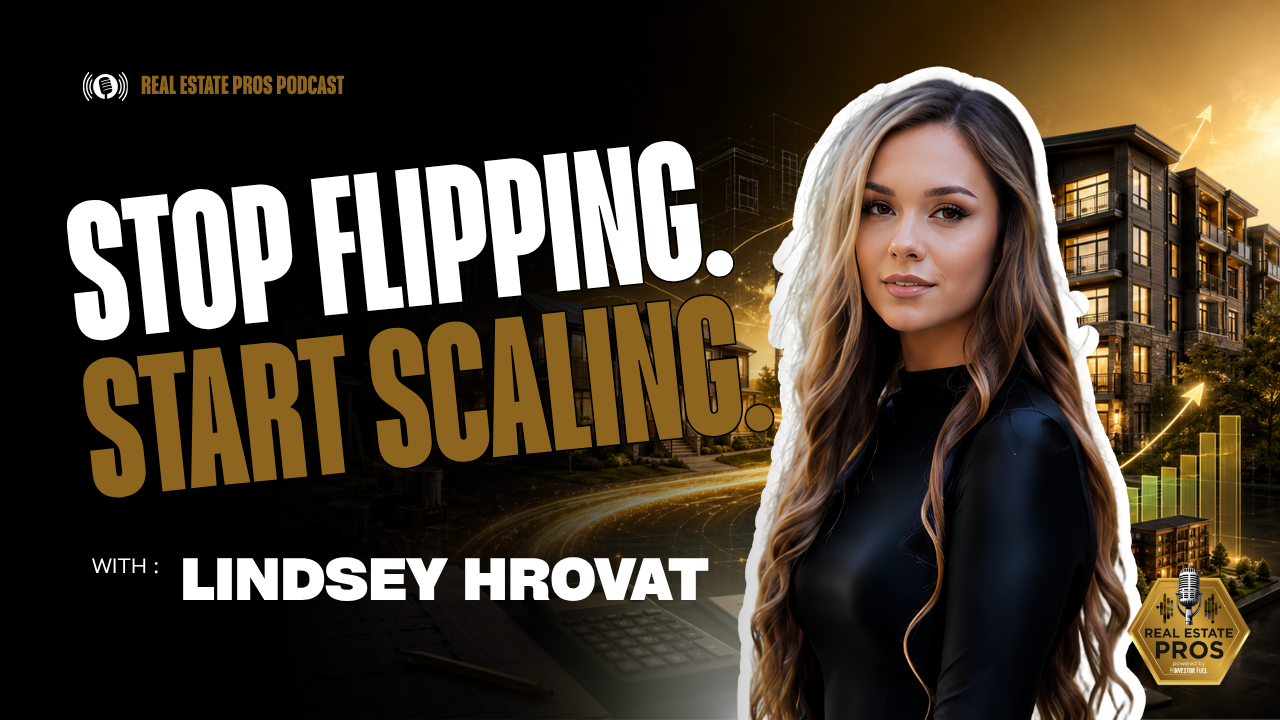
Lindsey Hrovat shares her journey from single-family flips to managing a real estate fund, highlighting strategies for scaling, market insights, and building a successful investment operation.

Resources and Links from this show:
Listen to the Audio Version of this Episode
Investor Fuel Show Transcript:
Lindsey Hrovat (00:00)
I think it’s perseverance to keep going. you’ll hear a lot of no’s from people or a lot of maybes. And I think, it’s just about finding what works for them, finding ways to make the project work or get the deal done.
I think, multifamily is a great way to scale. because unlike, single family homes, you typically need like six or seven of them to really be profitable and see a good income versus, just keeping your nine to five. That the fund model can be better and more beneficial, in that aspect.
Scott Bursey (02:08)
Welcome back to the Real Estate Pros Podcast, powered by Investor Fuel. I’m your host, Scott Bursey. Glad you’re with us. And today we’re sitting down with Lindsey Hrovat, a California based real estate pro, fund founder, and finance graduate. She brings over ten years of heavy duty experience in accounting and finance to the table. And she’s spent
A lot of time evolving from single family fix and flips to mastering multifamily acquisition and asset repositioning. She also founded Atlas Equity Ventures. Listeners, you can expect to get the blueprint on navigating the California market, the Midwest market, managing off-market deal pipelines, and scaling from individual flips to fund-level investing.
Lindsey, welcome to the show.
Lindsey Hrovat (02:56)
Hi, thank you for having me.
Scott Bursey (02:58)
It is awesome to have you here, Lindsey, and to help our listeners get up to speed. Please give us the ninety second highlight reel of how your career ignited and where you’re pouring your fuel now.
Lindsey Hrovat (03:10)
Okay. So I guess 90 second overview. like I wanna start off by saying when I first got my first job in life, in work, like when you first start working, I was kind of really bummed out because everybody says like, you get a job, you make this amount of money, and like you just
buy a house and like that’s the American dream. And I just felt like I was working full time. I did everything. I was taking college classes. I’ve worked in, multiple restaurants. and I would just felt really bummed out because I was like, I’m working as hard as I can, but it’s still not enough. Like I still can’t afford a house. Like I can’t afford really anything that I want. And so I was like
Honestly felt really discouraged. and then I think it was after like I had my son that I had like some time to reflect and he totally like changed my whole world and my whole outlook on life and really made me think about like the future and what I want his future to look like too. I think that was so important for me. so and then I stumbled across like a mentor online.
And they really talked about all real estate investing. And from there, like as soon as I saw that video, like a light bulb just went off in my head. And I was like, wow, this is actually like how you build wealth. Like everything that I was doing before, like I understood accounting and balance sheet, but it didn’t really make sense to me until I was like, okay, real estate is how you build generational wealth.
And I think from that point, like it just sparked my whole interest in real estate.
Scott Bursey (04:52)
That’s an incredible journey, Lindsey. Thank you for walking us through that evolution. And you know what really caught my attention about you was the way you’ve been able to marry strict accounting discipline with the high-stakes creative world of property repositioning. That’s a rare combination. And building off that, curious to know.
With your ten plus years of finance, how does that specific background help you spot value in a multifamily deal that the average investor might completely overlook?
Lindsey Hrovat (05:24)
Yeah, so I think the finance background really does help spot these opportunities because it’s one thing to look at a home and you look at your all in purchase price, you look at the renovation costs, and you look at the ARV and you’re like, wow, this is a home run, like I’m gonna make at least, twenty, fifty K or whatever.
and then you’re actually in the day-to-day and you’re dealing with delays, like you have to pay the mortgage, the utilities keep coming, and it’s like you still have more delays. It’s almost like you’re a project manager, essentially. Like it’s almost like a second job, really, to keep track of all these expenses, especially if you’re still working like on top of that. so I think having the finance background.
does help because I’m starting to evaluate more of like the time value of money and making sure things stay on track and on progress. And I think having that degree really brings like a high level overview to real estate investing that I didn’t really have when I first started investing. so I think that helps having that perspective.
Scott Bursey (06:30)
I love that. And thank you for highlighting that. Interested to hear, looking back at your transition from single family flips to multifamily, what was the biggest hurdle or mindset shift that almost tripped you up?
Lindsey Hrovat (07:32)
I think when I first started looking at multifamily, I’m like, wow, this looks great. It’s gonna make so much money, it’s gonna be so profitable. but I think you just need to like break everything down into smaller, actionable timeline and steps. And I think, I heard all these things from other real estate agents like
tenant issues, timeline issues, contractor issues, like don’t even get involved. It’s gonna be a huge legal nightmare. And then like actually looking at what it takes, and there’s like different things that you can do to, have the timeline move faster. for example, like when you’re looking at permits, everybody’s like, permits are gonna take like one or two years just to get the permits done.
But when you’re looking at just keeping the existing square feet and not adding square feet or changing bathrooms or changing walls, you can get a permit much faster. So I think, having like firsthand experience, it’s like you learn things like that and it’s like, okay, it’s not as long or as hard as people make it seem.
Scott Bursey (08:40)
And what geographical markets are you investing in?
Lindsey Hrovat (08:43)
well that’s a long question. I guess when I first started investing, I started in the Midwest. it’s like more affordable than other markets, such as like New York, California, or Florida. and so I just really wanted to get experience and have my own like first hand experience. So I started doing the BRRRR method. So you buy rent or buy rehab.
rent and then refinance. And that’s kind of how I started learning about the appraisal process. contractor timelines and everything like that. so that was good experience. But I’m like, okay, you need at least 10 to 20 doors to really scale in the Midwest and to see like substantial income. And I was like more worried about time. So then I kind of changed my
Investing thesis to short-term projects. So projects less than a year are considered active income, not passive income. so that’s what I did. And then I started doing that in the Sacramento area here in California. And even then, like having one or two projects is good, but I think you still like to see substantial income, you need to also have.
other avenues. so it’s great that I’m a real estate agent because I have that and I help investors find properties off market. but if you’re just looking at investing in general, I think you want to have at least multiple projects going on or like a bigger project like above a million dollars where you can really see like income to justify the work that you’re doing.
If that makes sense.
Scott Bursey (10:21)
And thinking about the current market, how do you approach the hunt for off market gems in a landscape as saturated as California?
Lindsey Hrovat (10:29)
yeah, that’s really hard to find off market properties. I feel like that’s what everyone is looking for. Like so many investors and agents and everybody is just looking for off-market gems. I think it’s a mix of both like connections, finding people that run across these deals, looking at the MLS. maybe you could find something that works if you
are ready and ready to move fast and you’re one of the first people to approach them versus when you look off market sometimes those properties go really fast like within 24 hours so it’s just a timing issue and everybody’s always looking for off market deals. I think a lot of agents do their own outreach and so it’s good to have
relationships with people that do find off market properties. So when you’re ready to move forward, you can find one.
Scott Bursey (11:22)
Is building that direct to seller relationship a daily habit, or is it more about the system that you’ve built?
Lindsey Hrovat (11:30)
I think it is a habit. I think every single day. when I first got started in investing, I was really passive about it. And I just would reach out to like the same, seven or thirty people constantly. And when I wouldn’t get responses, I would be like kind of disappointed. I would get like some positive responses, but then if something stalls, I would just kind of
get bummed out about it. And I think now my mindset’s really changed. So every single day I want to do like a different task. whether that’s like cold calling for two hours, door knocking, I’ve been doing like texting campaigns, email campaigns. I like to not stick to one thing too long. I like to do multiple things. So like open houses. I like to stick to different criteria. And I feel like if you
Are you doing one thing every single day or multiple things? Like, you’re never gonna get you’re never gonna run out of business, you’ll never be bored, and it’s kind of like a muscle, I think. So you really have to train yourself to get in that mindset and
Keep going because a lot of people, if they’re newer, they get really discouraged and they don’t want to put in the work. They’re like, everyone online makes it seem easy and like you can just, call a few people for 30 minutes and then you make, 20K a month and you’re good. But I think it does involve more follow up and more of a hands on approach to see success if you’re not seeing that right away.
Scott Bursey (13:43)
That makes total sense. And Lindsey, we love to get your take on balancing the hats of a licensed broker versus a principal investor. Does that ever get complicated when you’re in the trenches?
Lindsey Hrovat (13:56)
not so much. I feel like I’m very good at like wearing different hats and sticking to one goal. It depends who I’m talking to and what their goals are. So I like to really have a long like introduction call to really see what their actual goals are.
and then once I know what they are, I can just stick to what they’re looking for. Like if somebody’s like not interested in a long time horizon, I’m not gonna bore them about my fund. I’m gonna find something that works for them.
Scott Bursey (14:24)
That is really a smart way to look at dual hatting right there. And Lindsey, digging a bit deeper into asset repositioning, what is the biggest value add you focus on first when you take over a new property?
Lindsey Hrovat (14:38)
what do you mean by takeover, like as far as an investing standpoint?
Scott Bursey (14:42)
Yes, When you invest in a new property.
Lindsey Hrovat (14:46)
for a single family home or multifamily?
Scott Bursey (14:48)
Either way you’d like to expand on that.
Lindsey Hrovat (14:51)
Okay. I guess for single family homes, it’s pretty straightforward. Once you close on the loan, you wanna, decide what you’re gonna do, what work you’re gonna do. for the project that we did recently, we added
So the property already had square feet that was built on by a previous owner, but they didn’t get permits. So we decided to get permits for that to legally add the extra square feet. And we also added another bathroom. There is no master bathroom. So when you walk into it, there’s about four rooms all sharing one bathroom. So that’s kind of weird. So I’m like, let’s just add a bathroom if we’re already getting the permits and already taking out the floors and doing new bathrooms and kitchens.
So we did that. and the contractor was really good with a process. So he does all the demo first, and then they do they dig the trench for the plumbing, they do the plumbing electrical, and then they’ll do like the doors, the painting lasts, and then the cabinets and the countertops. So he has like an order of how he would do things.
Scott Bursey (15:54)
Excellent points. Thank you for dropping that knowledge for the listeners. And Lindsey, I’ve got to ask, what does your professional network look like right now?
Lindsey Hrovat (16:03)
my professional network looks like I I’m hanging my license under a brokerage. So we’re about like one of three hundred agents in California. I think they’re in a few other states too, but I have just kind of formed like a kind of like an impromptu.
meet up with the people in my area. So we’ve been helping each other out with like off market properties or like showings if we need somebody to cover for us one day and we something comes up. So that’s been a great resource for me is having those people around and just having other real estate agents that you can bounce ideas off of, I think also really helps too.
Scott Bursey (16:41)
That sounds like an incredible group of people to be surrounding yourself with. And Lindsey, this is the question that I know our listeners are gonna want to hear from you. If you had to drop one piece of advice for someone trying to successfully move from small residential flips to a full blown syndication or fund model, what is the fuel they need most?
Lindsey Hrovat (17:02)
I think it’s perseverance to keep going. you’ll hear a lot of no’s from people or a lot of maybes. And I think, it’s just about finding like what works for them, finding ways to make the project work or get the deal done.
I think, multifamily is a great way to scale. because unlike, single family homes, you typically need like six or seven of them to really be profitable and see a good income versus, just keeping your nine to five. That the fund model can be better and more beneficial, in that aspect. But I think
it’s still a sales business at the end of the day. So if you don’t have any sales business or sales experience, you might have a harder time like seeing it take off. And I think that having additional streams of income and getting into sales really helped me also. so I’m not just relying on one thing. I’m also a real estate agent. So I’m working with a lot of different sellers, property owners, landlords, and I think that’s helped me as well.
Scott Bursey (18:07)
Thank you so much for that advice and you have given us a lot of really good advice here today, Lindsey. But is there any other additional words of wisdom or advice that you could leave with our listeners?
Lindsey Hrovat (18:21)
Yeah, I guess even if you’re like in a nine to five and you’re just thinking about real estate investing or maybe you don’t have a lot of experience. I think, just learning like one new thing a day and like something that you can implement in your own life, I think that really helps because a lot of people are like so overwhelmed with everything happening in the news and they’re like, I don’t like this country, everything’s a mess, like
There’s so many things going on at the war. And I think, just focusing on like one positive thing kind of like helps you get a like create like a bigger meaning, Like if you’re setting aside like, $500 a month and that’s all you can afford, and you’re just putting that into like a high yield savings account, or maybe you’re investing that, like I would just focus on like small things like that. And everybody talks about financial independence, but
Nobody really talks about like cutting down expenses and being more of a minimalist and focus on like intentional spending. So you’re not just, buying things just because it’s cheap, but you’re only buying it because you really need it and you see a value in it. And I think a lot of the financial freedom advice and community has a lot of discipline. And I think like that’s really important skill that people can learn.
Scott Bursey (19:37)
The power of discipline and positivity. I love it. Lindsey, for those of our listeners that want to keep this conversation moving, stay in your lane or collaborate with you, what is the best way for them to reach you?
Lindsey Hrovat (19:49)
I’m on Instagram. You can follow me there. I also have a newsletter for investors. they can, find my page and sign up and get more updates from me and what I’m working on.
Scott Bursey (20:02)
Lindsey, thank you so much for joining us today on the Real Estate Pros Podcast.
Lindsey Hrovat (20:07)
Thank you so much for having me.
Scott Bursey (20:08)
It was a true pleasure. And to our listeners, we appreciate you. If you receive value from today’s episode, please subscribe. We’ll be fueling your tanks with a lineup of elite guests just like Lindsey, who are accelerating and setting the pace for the rest of the industry. Until next time, keep your standards high and your vision clear. We’ll see you in the next episode, everyone.