Subscribe via:



Show Summary
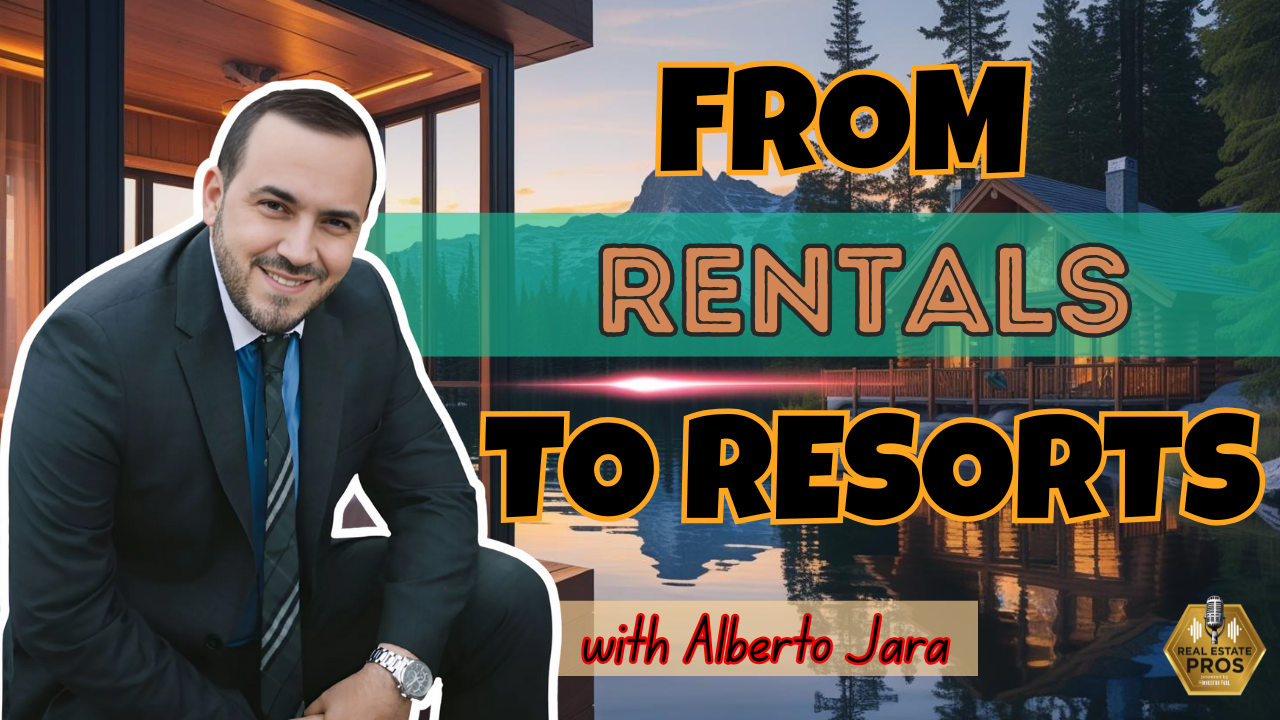
In this episode of the Investor Fuel Podcast, host Michelle Kesil speaks with Alberto Jara, a successful real estate investor specializing in fix and flips, Airbnb rentals, and transitioning into the hotel industry. Alberto shares his journey from being a real estate agent to exploring rental arbitrage and the challenges he faced during the COVID-19 pandemic. He emphasizes the importance of a reliable cleaning crew and maintenance team in managing properties effectively. Alberto also discusses his future plans to invest in hotels and the significance of networking in the real estate space. He offers valuable tips for new investors, particularly those interested in Airbnb, highlighting the importance of research and competitive pricing to attract guests.

Resources and Links from this show:
Listen to the Audio Version of this Episode
Investor Fuel Show Transcript:
Alberto Jara (00:00)
Make sure you get with you doing all research for due diligence for there’s a website called airDNA.com. That’s a really good website to get a subscription for a few months so you can have an idea of numbers what’s being done on the area that you want to open your Airbnb, you know, and then you I will reach the town.
The city and see what the rules are from them, hear from them what the rules are for short term rental. And finally, make sure that whatever you offer is way above and beyond what everyone else is offering. That’s the way to stay afloat. Then there’s an array of things to say, from how to start to how to keep yourself doing well.
But basically one great tip, that’s a pro tip for sure. It’s even if your rate is $500 a day, you want to start super cheap so you can get quick reviews. Let’s say if you offer for $100 a day and you’re losing money, but the problem is you want people to feel like they’re getting a lot more than they’re supposed to, but they don’t know you charge a lot less than you will in the future.
Michelle Kesil (01:01)
Thank you!
Alberto Jara (01:17)
So the reviews will come great and that way everyone else that’s paying $500 will look at you and say, oh, this is really worth that much and they get your business going.
Michelle Kesil (02:59)
everyone, welcome to the Investor Fuel Podcast. I’m your host, Michelle Kesil Today I’m joined by someone I’ve been looking forward to chatting with, Alberto Jara, who’s been making serious moves in the real estate space. Really glad to have you on the show, Alberto. I think, yes. ⁓
Alberto Jara (03:18)
Thank you, thank you, Michelle.
Thank you, everyone. It was nice to be here.
Michelle Kesil (03:22)
Good, glad to have you. I think the listeners are really going to take something away from how you’re approaching fix and flips and Airbnb rentals and all of the knowledge that you have. So let’s dive into that.
Alberto Jara (03:24)
appreciate the opportunity.
Okay, great. Yeah. So, you know, mainly I was, you know, started doing real estate as an agent, a real estate agent. And, you know, soon I realized that I could have, you know, I started buying homes and get them fixed and flip them.
And I just, you know, real estate market in the Boston greater area is so strong. You know, we have a huge deficit of homes here. So, you know, the inflow of people coming to this area is huge. it’s a good place to be and good opportunities. There’s always they always present themselves in all different neighborhoods, honestly. So, yeah, but.
In 2018, I started doing, 2019, I did the rental arbitrage. So I rented a house to actually two family and started renting Airbnb, booking.com, Verbo and all the other platforms. And I realized pretty soon that it was a good business opportunity to be in.
in our area especially because realistically we have a peak season that starts in March goes all the way to November. know, so December, January, February is a slow month, all the other nine months are pretty good. And especially now in the summer is, you know, it’s huge. So we will decide to…
to start, you know, we started rental arbitrage and eventually started buying homes and fixed them. But instead of selling them, we put them in Airbnb, you know, and this business opportunity I started just doing after I realized that we could do, instead of selling the house right away, we could create a LLC for each home and now we build its own business.
So we’ll rent them on a platform for short term rental and keep the house for two years. That way we have a track record of revenue, which usually goes from anywhere from 100 to 200,000 a year in each home, depending on how much of a, where it’s located and all this type of revenue, type of home we have, who we’re trying to reach for hospitality, for guests.
And so, but it’s been worked great. And so we can sell the home not only for the real estate value, but also for the business value. So this has been worked very well for me. We can usually sell a home for about 10 to 20 % higher than the selling price. Just based on the income brought. So that’s pretty much a summary of what we do.
Michelle Kesil (07:01)
Yeah, that’s great. So what has been like the key to keeping your business running smoothly?
Alberto Jara (07:06)
I think your cleaning crew is your main. It’s just because they’re your eyes. don’t wanna be in every property all the time. So you wanna make sure that your cleaning crew really understand the complexity of hosting people.
It’s just not make sure the house is clean, but also make sure that everything is working, that I test the TVs all the time, you know, the connection is good, you know, that the curb appeal is still pretty good. There’s no trash on outside, you know, it’s just, you know what I’m saying? So everything’s up to par. The way it’s supposed, like when you travel somewhere, you know, especially come to Boston being such an expensive city, you wanted to, you know, you wanted to present yourself well. So we’ve been doing quite well in that sense.
Michelle Kesil (07:49)
Yeah.
Alberto Jara (07:50)
You know, so that’s super important. I mean, for me is number one because your clinic, where is your eyes, you know, so, and also secondly, have a good maintenance team because you want to be able to, because if you have a good, a good eyes, but you don’t have good arms and legs, then it doesn’t help you because you want to have these people, your maintenance team to be at the house. If you have a problem, super fast, you know, because we don’t want to waste one or two nights because you want to fix, you know, a licking toilet.
You know what saying? having a good maintenance team, it’s super crucial. So I usually have a bunch of people there, so I can probably five or six plumbers, five or six electricians. So one of them will be available to go to one of the homes to fix the problem.
Michelle Kesil (08:33)
Yeah, that’s important. So how did you like get started with this? Like how did your first rental property like journey begin?
Alberto Jara (08:45)
Yeah, was doing, like I said, was doing real estate as an agent. you know, Airbnb became as some sort of like opportunity that my brother-in-law pitched to me, you know, that he was doing in Europe. And I, you know, I look into it and I figured a good, not so risky way to start would have been by doing
as a rental instead of buying it. But I soon realized the amount of the money was there, you know, to be made, you know, of good service. So that’s basically how I started. And I actually I already had four homes going to COVID. So that was tough because all our reservations got canceled. No refunds were made. And we ended up having to
⁓ rent the homes through by bedroom to people that needed to have locals, they need to live in transition and such. And that was a nightmare to manage. People that don’t know each other, roommates type of situation. So was tough, because obviously it was monthly payments, so not so good of a payment. But we resist that. then once that was done, the tourism
became rebound strongly as you remember probably in 2022 I believe. So we enjoyed that phase for a year. And now I feel like just the strong will survive. You have to offer a lot now. Gone is the day where you could just put a mattress somewhere, rent your bedroom. That’s no longer an option. They expect Hilton service in a home. So four seasons,
Michelle Kesil (10:50)
Yeah. Yeah.
Alberto Jara (10:53)
batting and such, So there’s so many things that we adapt throughout the years and I like the high end though, the high end luxury. It’s better. It’s a better niche to be.
Michelle Kesil (11:06)
Yeah, that makes sense, absolutely. So what are you most focused on scaling next?
Alberto Jara (11:12)
So now I wanna, we bought a landing in Japan, know, and has a rundown hotel there. So we’re gonna go into hotels in rural America, you know, so we also bought a piece of land in Texas and we wanna do some kind of like cabin, modern, Nordic style, you know, mini resort, if you will.
Also 10 units, spread them land with some, you know, a little lake. Just some to people enjoy, you know, there’s a few rules they have to abide by when you do something like that, because obviously we’re not doing a resort on itself, you know. But so we have to have some sort of like a satellite city within 15 to 20 minutes. So they have access to great dining and great, you know, some activities, you know, bars.
restaurants and such, movie theater, but you still want to be in rural side of America. land is cheaper, especially in Florida, Maine, New Hampshire. Those are a few options we’re looking to do it too.
Michelle Kesil (12:13)
That’s exciting, amazing.
Alberto Jara (12:14)
Yeah, it’s pretty busy.
Michelle Kesil (12:15)
Yeah, a lot of the listeners are maybe newer into the investing space or looking to level up. And so is there any educational tips or advice that you could offer people who are starting out?
Alberto Jara (12:29)
I’m going to talk about myself. I think for me, the biggest hurdle was, you know, the money to do down payment in the finance part of things. You know, I always kept my credit super good, but the problem is it gets to a point where, you know, this larger projects, it’s beyond their credit. You know, so I guess, you know, investors, investment is a good, getting investors on board. It’s a good thing.
I’m getting some investors on board some of these projects, just you can do it all on your own. So I think ⁓ that the biggest hurdle is probably you can get with friends and family, that’s probably a good idea. And make sure everybody’s on par with what you’re doing, just be transparent about everything, it should work well.
Michelle Kesil (13:14)
Yeah, absolutely. So everyone has a moment in business where things maybe got more real. Maybe you had a deal go sideways or you had to pivot fast. Would you mind sharing one of those moments for you?
Alberto Jara (13:28)
I think the biggest one I already mentioned to you, the one that I can come to my mind, you know, is COVID, that was awful. You know, I mean, I literally had $75,000 in reservations canceled overnight. So, I mean, what are you gonna, you know, we work with a lot of future residents to give an idea. I have probably now $175,000 in reservations from tomorrow until October 15th, you know.
So imagine all that money going away, you know, in 90 days, 60 days. So I had to think fast. in order to stay afloat while this whole thing was going on, we had to make sure we keep the properties afloat by having people in them, you know? So I rented each room for $1,500. Because think about it, they were nice properties. He in Boston, you know…
a one-bedroom apartment, it’s easy, $25,000, $3,000 a month. So a bedroom of $1,500 at that time, it was still a good deal. $1,250, $1,500 depends on the property and size. didn’t make any money, had to deal with a lot of aggravation, but it worked for a little while. So that’s what happened during that period.
Michelle Kesil (14:37)
Yeah.
Yeah, that’s
the stuff people don’t talk about enough.
Alberto Jara (14:45)
Yeah, you want to forget about that. I don’t blame them.
Michelle Kesil (14:48)
Absolutely.
So, what is the next big goal for you?
Alberto Jara (14:55)
I think we’ll be moving out of the Airbnb space, going to hotels. That’s what we’re doing now, but there’s nothing running yet, but we’re looking to doing that. That’s in Japan will be a challenge, but in Japan everything is much cheaper. And I find there to have the opportunity to do more of the boutique hotel type of situation.
is right by the Mount Fuji, so has a beautiful view, know, an expensive land, inexpensive, what do you call, labor, you know, so I think everything’s gonna work pretty smooth there. I’m hoping. Mm-hmm, to be in Japan. Yeah, Japan is awesome. Yeah.
Michelle Kesil (15:31)
Yeah, that’s exciting. What? Like, I have not now. Amazing. Yeah,
so what makes you want to transition into the hotel space?
Alberto Jara (15:44)
think it’s just the there’s more opportunity for revenue and less aggravation with regulation. Because I’m sure you’ve heard about it, but a lot of cities around the world are banning Airbnb altogether, Barcelona, New York City and others. And it’s just ⁓ the ones that you still be able to work on is just the it’s being a little.
becoming harder and harder to fulfill the regulations. think whoever is in that space and can stay within the regulations is gonna make money. It’s our case now, but I just feel that’s the time for us to move to just bigger and greater things. Hotels will be just a natural upgrade.
Michelle Kesil (16:25)
Yeah.
Yeah, and what did you have to like learn in order to be able to have a successful business in this industry?
Alberto Jara (16:41)
⁓ I think, I’m super practical. I’m not the kind of person that likes to be, you know, going around the subject for too long, you know, to, but, you know, so in hospitality, people, you know, expect you to be, you know, be able to answer them quick and just really tend to their problems. So their desires and requests and expectations even, you know, so, ⁓
That was one thing that I learned, to be just more patient, more participative when there are the requests.
going to hotels will be last regulation. You know, you’re going to be in a hotel zone, you know. So I think it makes more sense for the next steps. You know, at this point.
Michelle Kesil (18:08)
Yeah, that’s exciting and big. So I know a lot of people are earlier on in this journey and it could be supportive for them to hear this. When it comes to building relationships and growing your network, what do you feel has made the biggest difference for you?
Alberto Jara (18:26)
I think for growing my network, I think it is participating in events, you know, for real estate owners and real estate investors and such. I’ve been in an array of different groups and, know, investment groups and events and such all over the place, you know, from Airbnb to multifamily.
to large apartment complexes, to hotels. And I think hotels so far is the best ones, opportunity-wise, just because I already do that kind of stuff, number one. And number two, I think is the highest square feet you can get.
Michelle Kesil (19:10)
Yeah, absolutely.
Alberto Jara (19:10)
So ⁓
hotels happen to be a reliable business.
Michelle Kesil (19:14)
Amazing. Yeah, networking is such an important aspect of this space. Yeah. So is there any sort of advice that you could offer to someone that has investments but maybe has never done Airbnb and is curious?
Alberto Jara (19:21)
Mm-hmm.
Yeah,
make sure you get with you doing all research for due diligence for there’s a website called airDNA.com. That’s a really good website to get a subscription for a few months so you can have an idea of numbers what’s being done on the area that you want to open your Airbnb, you know, and then you I will reach the town.
the city and see what the rules are from them, hear from them what the rules are for short term rental. And finally, make sure that whatever you offer is way above and beyond what everyone else is offering. That’s the way to stay afloat. Then there’s an array of things to say, from how to start to how to keep yourself doing well.
But basically one great tip, that’s a pro tip for sure. It’s even if your rate is $500 a day, you want to start super cheap so you can get quick reviews. Let’s say if you offer for $100 a day and you’re losing money, but the problem is you want people to feel like they’re getting a lot more than they’re supposed to, but they don’t know you charge a lot less than you will in the future.
Michelle Kesil (20:38)
Thank
Alberto Jara (20:53)
So the reviews will come great and that way everyone else that’s paying $500 will look at you and say, oh, this is really worth that much and they get your business going.
Michelle Kesil (21:03)
Thank you, that’s valuable.
Alberto Jara (21:03)
So yeah,
yeah. So maybe one or two months charge a lot less than you’re supposed to. That’s a really pro tip. Very few people know about this, but I think it’ll be a good way to start.
Michelle Kesil (21:15)
Thank you for sharing.
So before we wrap up, if someone wants to connect with you, collaborate, learn more, where can they find you?
Alberto Jara (21:24)
Yeah, can, they can find me on Instagram at Alberto Jara, A-L-B-E-R-T-O-J-A-R-A, underline, you know, or they can also look at us on a website, havenhomeshost.com. So yeah, it’s a good way to connect.
Michelle Kesil (21:40)
Perfect. Well, listen, I appreciate your time, your story and perspective. We need more people in this space who are doing things in this right way. So thank you again for being here. Absolutely. And for those of you that are watching this, make sure you’ve subscribed. We have more conversations coming with operators just like Alberto who are out here building real businesses. And we’ll see you on the next episode.
Alberto Jara (21:50)
Thank you, Michelle. Thanks for having me. Have a good one.