Subscribe via:



Show Summary
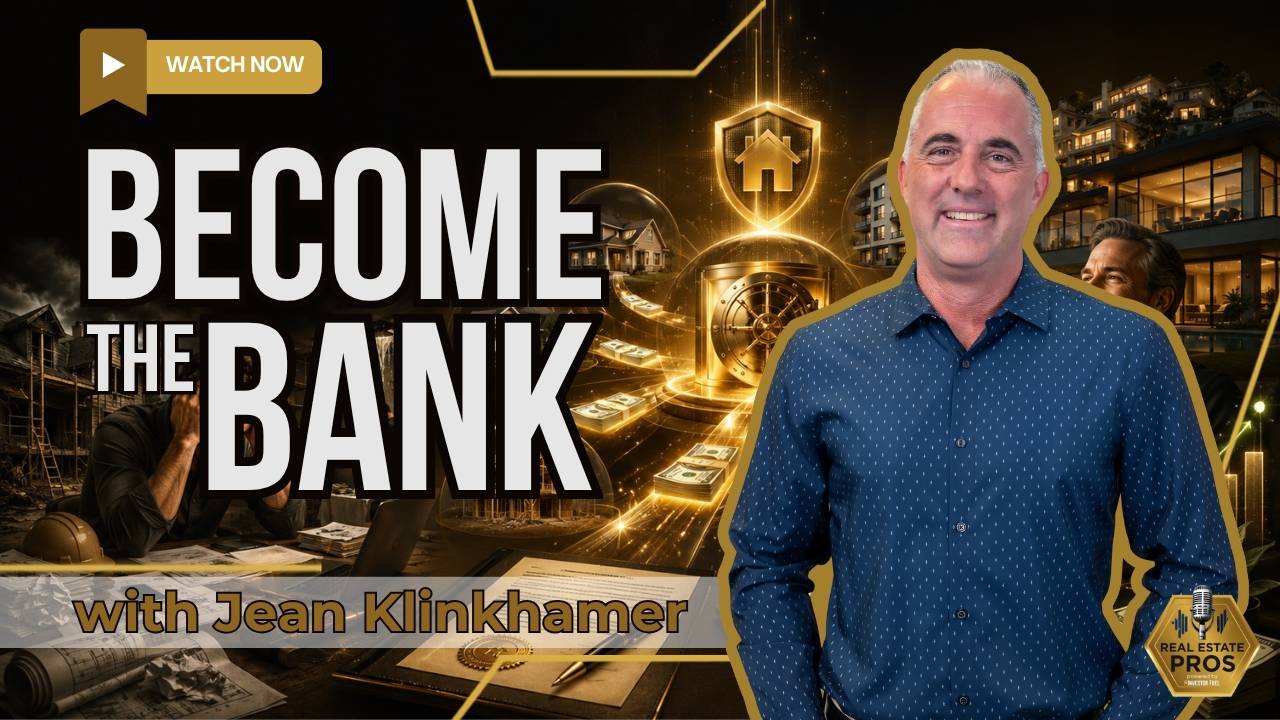
In this episode, Jean Klinkhamer shares insights into his real estate investment and lending business, emphasizing trust, strategic growth, and leveraging technology like AI to enhance operations. Discover how he navigates challenges, scales his business nationally, and maintains core values.

Resources and Links from this show:
Listen to the Audio Version of this Episode
Investor Fuel Show Transcript:
Jean Klinkhamer (00:00)
More investors realize that you can be invested in the debt position. So be a lender, which is safe and secure and has a high yield, and you can do it very passively. I just know that there’s trillions of dollars that’s just looking for that type of yield. And so we really see an opportunity to scale, but we want to scale in a healthy way. So we know that we could grow too fast and kind of be in an unhealthy way. We really have no interest in that. So we want to scale in a healthy way, a sustainable way, a long-term way.
Michelle Tack (02:00)
Welcome everyone. I’m Michelle Tack. I am the lead podcast for today’s session with Real Estate Pros. I’ve got a great person here with us, a great operator, Jean Klinkhamer who is based in Arizona, in the Phoenix area. And what I loved about what Jean brings to the table is something that’s sort of unique. It’s both the capability to lend hard money, but also has a
Fund for investors that makes up investing, whether it be commercial and residential. Jean again, welcome. welcome. We appreciate you being here. Thanks, Michelle. For those that may not come from the hard money side or the investment side, can you give an overview of what you do and what markets you serve, please?
Jean Klinkhamer (02:53)
Yeah, you bet. KlinkLoans Fund, our mission is to increase the joy of real estate investing. So we serve all kinds of real estate investors and we want to increase their joy, which might sound like a unique or funny thing, but we believe it and we do it. And there’s two ways we do that. for investors who are I would call them active or direct, they actually want to own properties. So this might be fix-and-flippers. This might be investors buying rental properties, apartments, commercial buildings. we fund them.
So we do a type of financing called hard money that closes very quickly. So a lot of borrowers, if you’re not familiar with hard money, you might know you can get a conventional mortgage, might take 30 days for residential or 60-90 for commercial. We close most of our loans in about a month. So we close very quickly. We also offer construction financing and cash out and various types of creative loan programs, cross-collateral with different properties to create lines of credit, basically all kinds of creative funding that allow a real estate investor
To do more properties, to do it faster, to renovate them, to scale their business if they want to own the properties. So that’s hard money lending. Mm-hmm. Do you go ahead.
Michelle Tack (04:01)
just to interrupt, do you do that across the United States or you focus more in Arizona or what is it?
Jean Klinkhamer (04:05)
Currently
We mainly—currently, we mainly lend in Arizona, but we’re preparing to lend all across the country. So we are really looking forward to that and welcome inquiries from all across the country. It might take us a little bit to we’re licensed in your state, but we’re coming quickly.
Michelle Tack (04:18)
Okay. Talk to us about the other piece of the business that you Yeah. Fun piece, please.
Jean Klinkhamer (05:10)
Yeah, yeah. So the other type of investor that we serve and increase their joy is a passive investor. This investor that already has cash and just says, Hey, I want this cash working for me. I want it to make me and to grow and make as much money as quickly as possible. Our minimum is $50,000 on this side. Our average investor has a couple hundred thousand with us. And so to that investor, we say, Hey, you can invest in our fund. You’re going to be diversified across 200 properties and you’re going to make money every single day.
In the safest form of investing there is, which is being the lender. So the investors are actually pooled together as the lender to our borrowers. it’s just it’s one business, it’s just money’s coming in here and going out this way. And to the investor who wants to be passive, they’re earning about nine to ten percent annually, and they can compound it, tax, very tax advantage. So that gets a lot of them up closer to eleven percent post-tax earnings, or they can take a monthly direct deposit. So it’s very consistent income.
And because we’re in that lending position, it’s one of the safest places to be. If the property drops in value, the equity position, the other borrower is the one really at risk there. The investor, our lenders, are in a very secure position. So it’s quite a peaceful, joyful way to just see your money be in real estate. But to our investors, it’s very passive. Once they kind of complete the paperwork and onboard into the fund, they just get their emails, their direct deposits, their statements every month. So it’s, it’s very passive and quite.
peaceful and joyful experience to just see your money secured by real properties. You get the addresses every month, but to see that money growing.
Michelle Tack (06:43)
That’s interesting. And you know, they are under one umbrella as it were. I mean, they’re, they’re two entities they have to by law be, but at the end of the right, I mean, you’ve got a fund or is it
Jean Klinkhamer (06:53)
It’s actually one entity. So the fund investors invest in the fund and that fund is the lender towards borrowers. Okay, got it. So it’s actually one company. Yep.
Michelle Tack (07:02)
Doing two different things, but how do you leverage efficiency from one area to the other? Is there overlap that helps you in keeping this run smoothly? Talk to us about that, about how that works.
Jean Klinkhamer (07:16)
Yeah. So kind of the question is like how do you do that efficiently and leverage what’s happening, these two different pieces?
Michelle Tack (07:22)
Yes, correct. Maybe one benefits the other, you get the idea.
Jean Klinkhamer (07:26)
Yeah,
You bet. Well, they they really go together. Like I said, you’ve got an active investor that wants to own property and kind of, you know, fix it, rent it, do that. You’ve got another kind of investor that really wants to be passive. They have some money and they know about real estate. They’re comfortable with it. They might have done the fixing, flipping in the rental, but they’re just going, Hey, I just really want to be passive. I want to do my other thing and I just want to see my money grow. What our
Company, what we’re really doing, the leverage or the efficiency, I think you’re asking about, is we’re really the hub in the middle that’s matching that. So we’re taking the money and we’re able to secure it with deeds of trust, which is one of the most secure investments in the world. It’s recorded, insured, protected, and collateralized by the property. So we’re able to basically take that money and put it into these very secure forms across all these properties. So it’s kind of we’re standing in the middle between these two types of investors and making it work for them.
On the borrower side, our borrowers wanna know that if they commit to close a property next week because they’re getting a really good deal, we’re gonna close on time and that we can fund the construction and that the loans gonna be available, those funds are gonna be ready exactly when they need it, because to that active flipper or rental investor, closing on time, that’s their integrity in the market. That’s really important. So really stand in the middle and we serve both of those parties and kind of connect and manage the money, the processes, the documentation, the systems around that.
And I find it just endlessly fascinating to kind of have this machine that has this input and this output. And it’s really serving these two groups of customers to—I just, I’m just amazed by it. I find it really fascinating. Obviously, great software and technology, keeping all the data organized is critical. I think to your question of efficiency and how does this all work. Also using good title companies, having proper title insurance and the right systems around that that securitizes and makes that reliable for both parties, both the investor putting the money in.
And also the borrower who’s come to us to access that money for their investment. and the software and tech today is so amazing. We actually have a portal that both parties can log in and see, here’s all my loans, or if I’m an investor, here’s all my investments and my K-1 forms. And so with today, the internet and great technology and AI, the ability to see the information and access it and understand what’s going on is so great. And I think that’s probably another way to answer your question of like efficiency and tying all that together is
Good clear portal access to what’s happening with my money, whether I’m a borrower or an investor putting money in, being able to see that is really valuable.
Michelle Tack (09:55)
Me with what I hear is a recurring theme is that we’re you know folks are going to AI for solutions. you and I talked about trust very specifically in preparing for this podcast. Can you tell me your thoughts on AI, where it can help, and where maybe it is a little bit different in your your world
Jean Klinkhamer (10:55)
Yeah. Yeah. I think AI is a really powerful tool. And I think its best use, I’ll try and apply it to the in the real estate world is is really in the middle of the process. So let me describe like a hundred-yard process, like a football field. And norm before AI, before we had powerful tools, as humans, we’re doing a hundred yards of those tasks, right? My what I believe is AI stands in the middle eighty, so the middle 80 yards.
And does a lot of the plug and chug and the work and the collation and maybe analysis, research, putting things together, software tech. It’s that middle piece. And on either side of that 80, you got 10 yards in the beginning and 10 yards at the end. And I think this is how humans and AI, or in terms of trust, this is I think where you’re going with this question, Michelle. We want humans who have a heart and a soul and a mind and compassion and empathy and can understand our customer.
What is it you’re trying to achieve? What are you afraid of? What are you excited about? What are you trying achieve? And that first 10 yards is the human input, right? We want humans to give the input to AI. What are we trying to accomplish? What’s the ground rules? What’s the boundaries? What are you not allowed to do? Right. What’s the law book you’re working with? What state? What country? What values we give the inputs? Then we let AI do the plug and chug. So much work that can be done so quickly and powerfully. And then that last 10 yards before touchdown, if you will.
That’s also the human element. We want to come in and we want to check the work because we know AI can hallucinate. We know it can make mistakes. We know it can sometimes even make stuff up. So we want to come in and check that and say, does that make sense? Is that consistent with my goals, with the morals, with what my customer wants and needs, and the overall objective? And just logically cross-check it. So that I think is where AI becomes the most powerful, which is amplify humans who have a judgment, a heart, a mind, a soul.
And just say, let me take some of the heavy lifting through the middle of this task and make it efficient. So I think it amplifies what humans are doing. And in terms of trust, it’s gonna amplify that trust if we’re using it well with the human mind at the beginning and the end.
Michelle Tack (13:08)
I think that’s a very astute and well-answered question. let’s talk about every operator that I know that, you know, is successful at, you know, and has volume of business. And in your case, you yes, it’s one business, but it’s two distinct, you know, things that you’re doing. Have you ever had a deal or a situation that has occurred, you know, I don’t know, in the last year or recently or what have you, that
had to pivot really quickly. It was going south, right? We’ve all had these south. And you’re like, And you, you had to pivot quickly and either you were able to salvage the situation. And if not, it became critical to your development as an executive of your company and things that you incorporate. Can you talk to that a little bit? I know that’s a that’s a full question, but I’d love to hear about your thoughts on that.
Jean Klinkhamer (14:05)
Yeah, so a time we had to make a quick decision, something critical to save something that was happening and kind of tell you about that. Yep. Okay. Yeah.
Michelle Tack (14:14)
Something was happening that did not you was not going your way at the time. It was not going to form.
Jean Klinkhamer (15:00)
Yeah. Yeah. Yep. So we do a lot of construction loans. So we’re helping our borrowers actually fund some of the construction. And in Phoenix we have a lot of luxury homes. There’s a lot of high-end homes, a couple million dollars, a huge demand for them, people moving in and so a lot of our customers have been very successful in that higher-end fix-and-flip market, making really high returns by fixing up these beautiful estate properties and big land. And one of the parameters in our loan agreement is
about loan-to-value, which is talking about what percentage of the loan against the property, which is our big risk factor we look as a lender and we’re trying to protect for our investors. We also don’t want to see our borrowers get over leveraged because that’s also dangerous for them. So one of the most important things we’re managing is what’s the loan-to-value of an individual loan and therefore our portfolio. So the situation I would describe that I think answers your question is
Because of what was happening with the property and the neighborhood and their construction costs, a lot of construction costs and material and labor has gone up dramatically in the last few years. Inflation’s been tough in that department. Their loan-to-value was getting out of whack. It was outside of basically the covenant of our loan agreement. And so we had to have the hard conversation with the borrower. Hey, this loan-to-value’s out of whack. And so basically that gives us about two options. Well, really.
First one we just saw is, hey, can you just pay us off? You know, you ready to sell the property or can you refinance it? The borrower’s not in a good shape to do that at that particular time, or at least said, What other options do you have? And we were coming up against this maturity date. So to your kind of question of urgency, it’s like we need to make a decision pretty quickly. and so what we came up with is we said, Hey, is there any other properties that you have that you can collateralize here? And thankfully they had a couple of other good fix-and-flips.
That had equity had a lower loan-to-value. And we said, hey, if you’ll just cross-collateralize, if you’ll take that other property and attach it with this loan, now the value of that property, the equity of that, brings this in compliance, which is better and safer for you, that you know you’re going to get everything paid off. And then for our fund and our fiduciary to our investors is protecting that principal amount and keeping that risk factor in line. And so that was a pretty quick decision that worked really well. The borrower was very excited to do that because it didn’t mean they had to rush to pay it off.
try to find a refinance, they were just able to kind of reshuffle. And and so that worked really well for our team and we’re really happy. And that’s something that our originators really keep quick in mind, to be creative, both for new loans and loans that are going, hey, sometimes cross-collateral is a way to really give you more options and time or breathing room, sometimes even access more capital within those particular properties.
Michelle Tack (17:40)
I appreciate that. Can you talk about, you know, we talked about your network before, that it was selective, it had some core values that you believe in. Can you talk about how that what the network is? You don’t have to say it by name, what have you, but just how it’s keeping you moving forward.
Jean Klinkhamer (17:59)
Yeah, you bet. Yeah, the particular network that I we were describing earlier is is one that I’m in in Arizona, so it’s kind of a local and it’s business owners and entrepreneurs and we’re gathering on a core set of values and, and, and particular faith. and we really enjoy meeting regularly and sharing our lives, both personal lives and our work lives. We really believe that that’s we’re holistic. So yeah, we have personal lives and families and way of work and
In some ways it’s helpful to think about those as separate, but we really believe thinking about that integrated, my whole life, my whole person is a much more helpful and healthy way to think about it. another core value that really unites us is abundance. So the idea that there’s lots of business out there, there’s lots of opportunity, because as business owners, entrepreneurs, often we by default, we can feel very secretive and very competitive and very guarded about what we’re doing and what’s working or what isn’t.
Either for pride, but also just from a I think a false view of scarcity that there’s only so many deals out there and I gotta protect my deal flow or my share of the market. And the interesting thing about abundance is it actually frees you up to think bigger. And instead of just thinking about this, we think even bigger. So we help even companies that do similar things to me, I’m friends with them and we share information and ideas and connections. And we just believe that if there ever is a quote a cost from that, the benefit is going to be far more worth that.
far, far more valuable to us. And so, that’s a network that’s really been powerful and rewarding and just enjoyable for me.
Michelle Tack (19:36)
appreciate you saying that. Last question before we wrap up for today, can you talk about, you know, what’s next for you? you’re doing well. things are going, you know, forward. there’s always problems or we wouldn’t have businesses. but can you tell me in twelve months or twenty-four months what you would like the business to look like, your vision going forward?
Jean Klinkhamer (19:58)
Yeah. Yeah. I’m we’re really dreaming about being a sustainable. We’ve been in business for 15 years doing this type of work, but we’re really starting to think generationally, decades down the road, what does this look like? And real estate investment and real estate debt, I believe those aren’t going anywhere. It’s not gonna change. People need homes and places to live and places to work. So the physical world, obviously it’s changing and reshuffling different things in that, but we just believe there’s
Decades, lifetimes, generations of opportunity there. And so we’re working on building our company into an ESOP, an employee-owned company, so that we can really have a long long-term sustainability, serve our customers. And we’re really scaling from a large lender in Arizona to becoming a national lender and lending across the country. And within the investment world, I just really believe once
More investors realize that you can be invested in the debt position. So be a lender, which is safe and secure and has a high yield, and you can do it very passively. I just know that there’s trillions of dollars that’s just looking for that type of yield. And so we really see an opportunity to scale, but we want to scale in a healthy way. So we know that we could grow too fast and kind of be in an unhealthy way. We really have no interest in that. So we want to scale in a healthy way, a sustainable way, a long-term way.
And
That’s really what gets what gets me excited and I think our team is looking forward to over the not just the years, but I think the decades to come.
Michelle Tack (21:29)
Appreciate that. you’ve been wonderful guest and great content in terms of looking at things from two perspectives the investment acquisition and then monies to have as a passive investor I’m sure there’s a lot of folks that may want to Jean contact you for investing with you or have questions. Do you mind providing your contact information for our listeners today?
Jean Klinkhamer (21:57)
You bet. Absolutely. The best way to connect with us is through our website, which is klinkinvestors.com. And I’ll spell that. Klink is K-L-I-N-K. And then the word investors, plural, klinkinvestors.com. So that’s our main website. It’s got our phone number, some information on our funds, some videos. we’d love to connect with you there. if you’re a borrower and you happen to be in Arizona, you could look at klinkloans.com. That’s K-L-I-N-K loans dot com.
And that’ll be scaling national for right now. Those loans are as of June 2026. That’s Arizona only, but we’ll be scaling shortly. And one last thing I think your listeners might be really interested in the in the real estate world is something called a Deferred Sales Trust. And if you go to our investors website, klinkinvestors.com and do slash DST, that’s D as in deferred, S as in sales, T as in trust, DST.
That’s a strategy a lot of real estate investors are familiar with 1031 exchange, which is a way to defer taxes when you’re selling an appreciated property. What a DST does is the same thing but better, both for real estate. And if your listeners are selling a business or appreciated assets like crypto or stocks, all those types of appreciated sales can go into a Deferred Sales Trust. You defer the sales tax and you create passive income. It’s a really powerful tool. And
Too many people don’t know about it. So Deferred Sales Trust at our website DST. If you are preparing or thinking about selling a building, a business, any appreciated asset, I think it’s something that investors or in real estate pros are really gonna want to take a look at.
Michelle Tack (23:34)
I appreciate that. Thank you very much for your attendance, Jean, today. For our subscribers, we value you. If you value this content, please continue to check in for other operators. and for those that may not have subscribed as of yet and find value in this content, please continue to check in with us. Thanks so much, Jean. Continued success in the future.
Jean Klinkhamer (23:57)
Thanks a lot, Michelle. Take care.