Subscribe via:



Show Summary
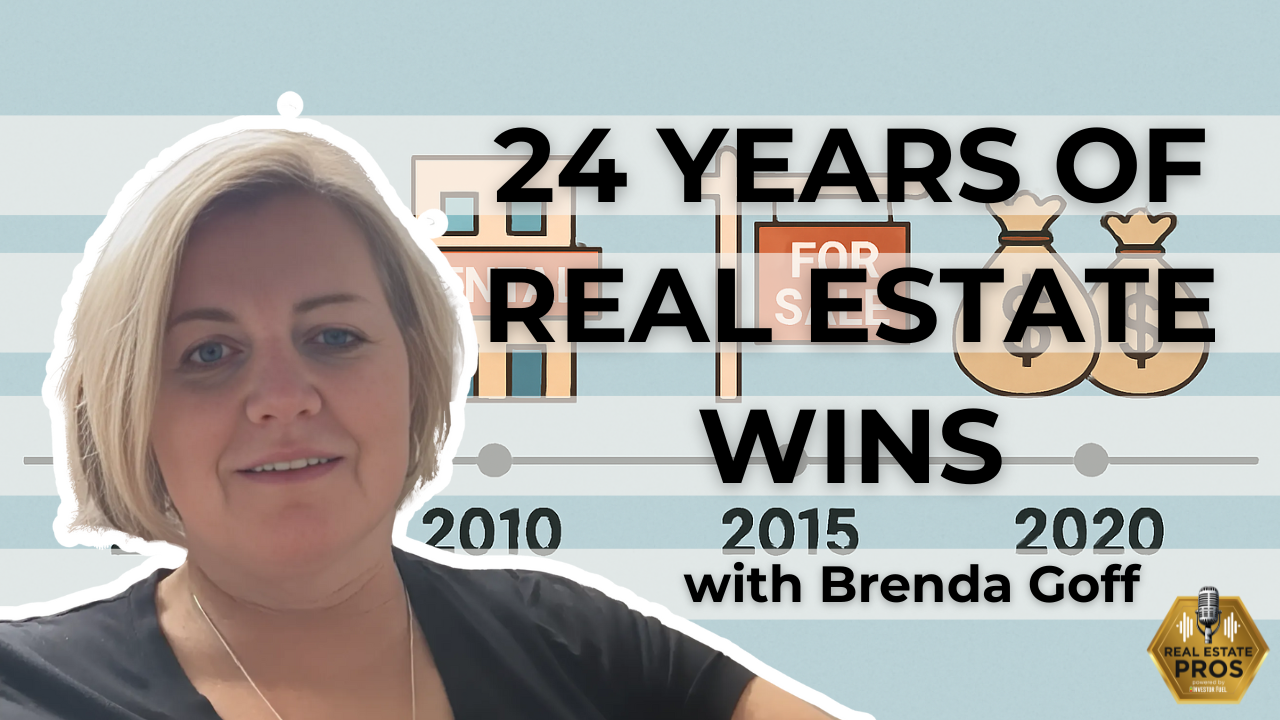
In this episode of the Investor Fuel podcast, host Michelle Kesil speaks with Brenda Goff, a seasoned real estate agent specializing in working with investors. Brenda shares her insights on various types of real estate investments, the importance of education and mentorship for first-time buyers, and the creative financing solutions that can help navigate challenges in real estate transactions. She emphasizes the significance of building relationships and being a resource for clients, as well as the lessons learned from her own investment journey.

Resources and Links from this show:
-
-
- Investor Fuel Real Estate Mastermind
- Investor Machine Real Estate Lead Generation
- Mike on Facebook
- Mike on Instagram
- Mike on LinkedIn
- Brenda Goff on Instagram
- Brenda Goff on Facebook
- Brenda Goff’s Phone Number: 919-576-7164
- Brenda Goff’s Email Address: [email protected]
-
Listen to the Audio Version of this Episode
Investor Fuel Show Transcript:
Brenda Goff (00:01)
guide the buyer or the seller through that process to reach their end goal might be one particular way of doing that is where I’ve had $20,000 worth of repairs for a buyer.
that they weren’t going to be able to do when they moved in. The seller was not going to be able to do out of pocket, but we were able to negotiate through that and save the deal because of the creative finance we were able to pull
Michelle Kesil (02:01)
Hey everyone, welcome to the Investor Fuel podcast. I’m your host, Michelle Kesil, and today I’m joined by someone I’ve been looking forward to chatting with, Brenda Goff, who’s been making serious moves in the real estate space. So Brenda, really glad to have you here today. I think our listeners are really going to take something away from how you’re approaching.
selling real estate to different investors and all of the knowledge you have surrounding that. So yeah, let’s dive in.
Brenda Goff (02:36)
Thank you for having me join you today.
Michelle Kesil (02:38)
Yeah, of course. So first off, for people who may not be familiar with you and your world, just give us the short version of what your main focus is these days.
Brenda Goff (02:52)
I am an agent with Cold Banker Advantage and working with buyers and sellers. I do work with lot of investors and I enjoy working from the various aspects of which they’re what to find out what their main goal is and help make whatever their goal is the easiest process as possible.
Michelle Kesil (03:12)
Yeah, and what markets do you operate in?
Brenda Goff (03:16)
So I work in the triangle area of North Carolina, which is Raleigh Durham, Chapel Hill, general areas.
Michelle Kesil (03:24)
Okay, great. Yeah, what really caught my attention about you is the way that you’ve been able to help different investors with all sorts of type of investment portfolios, whether that be multifamily, Airbnb and all that. So can you just expand on all of the ways that you are able to support and assist?
Brenda Goff (03:49)
Sure, so I’ve had several different types of clients in regards to investors. Everything from those that flip. We have flippers that buy, sell, and then I have Airbnb, as you mentioned. Various types of Verbo, Airbnb, whatever their short-term rental. Then you have your typical single-family home rental where maybe somebody just didn’t sell their house or they just wanted to turn it into
that one personal rental and then multifamily, whether it’s several homes or it’s a multifamily in the sense of townhomes, condos. So there’s a lot of different avenues investors can get into. I’ve worked with corporate investors that are national investors represented on a larger scale with a lot of single family homes.
Michelle Kesil (04:39)
That’s great. And what are like some pros and cons of each type of investment that people make?
Brenda Goff (04:48)
So a lot of times that comes from the audience that it’s going to reach. So for like an Airbnb, that might be great for those people that are vacationing, might be a short term thing where they’re coming in for say a graduation, a concert, whatever.
But they’re also going to be able to help people in the sense of maybe they’re building a property and that they just need a short term rental and they don’t want to go into an apartment. So I’m able to help people see those markets.
Whereas a maybe multi-family, that’s different streams of income because they have different properties there. Different, they have more than one stream of income because maybe one unit’s rented out and one’s not, depending on the day. So it’s just really learning how to make the most out of each property in each place that it’s at because not all of them are gonna have the same goals in mind.
Michelle Kesil (06:34)
And what would you say has been like the key to keeping that business running smoothly for you like managing working with first-time buyers and investors?
Brenda Goff (06:48)
So a lot of that, you do have first time buyers who learn more about you’re able to work with them and educate them on the process of real estate. And then they become investors because they see the benefit of the investing and how it works and what they need to do to keep up. And of course, come back asking questions in regards to the different avenues of investment, whether that be Airbnb, multifamily, whatever. So. ⁓
Being able to just be a resource and being able to provide other resources to all homeowners, whether they’re investors or their primary, that’s their primary home, being able to be an advocate and a resource for everyone in that regard is very important in keeping your business going.
Michelle Kesil (07:36)
Yeah, and what would you say are maybe some misconceptions that people stumble across when it comes to like first time investors or people earlier in that journey?
Brenda Goff (07:50)
So being able to know a little bit better about the cost that’s involved in the start of it is a very big part of your success. Having someone to educate you through that process, knowing how to plan for, whether it’s repairs or it’s knowing that there’s gonna be times when that property’s not gonna be run it out or the time it’s gonna take to get a flip sold.
Just depending on again, what that goal is for that particular investor, it’s important to know what the pros and cons for them could be or what the risks involved are.
Michelle Kesil (08:30)
Yeah, that’s really important. So every operator I know had a moment where maybe things got more real in their business. Maybe a deal went sideways or you had to make a fast pivot. Could you share one of those experiences for you?
Brenda Goff (08:51)
So in regards to whether it’s an investor or it’s a homeowner, if we are in the transaction process of buying and getting it closed, a lot of times there is a lot of negotiation that has to take place there in regards to how we have creative financing or potentially navigating the repair as far as.
how much repairs have to be done, what that seller’s willing to do if you’re the buyer, or how much you’re willing to do as a seller if I’m listing for you. So again, it does depend what role you’re playing, but being able
guide the buyer or the seller through that process to reach their end goal might be one particular way of doing that is where I’ve had $20,000 worth of repairs for a buyer.
that they weren’t going to be able to do when they moved in. The seller was not going to be able to do out of pocket, but we were able to negotiate through that and save the deal because of the creative finance we were able to pull
for that particular buyer in that situation.
Michelle Kesil (10:40)
Yeah, can you expand upon that creative financing solution?
Brenda Goff (10:45)
So in that particular situation we had to divide it up in sum and may come off of how much is off the sales price. It may be the seller contributes sum towards closing cost. And in some ways too, in other situations, we’ve even gone to the place where we’ve had to get a renovation loan versus a regular standard conventional loan. So there are loan options out there. Not one size fits all because everybody’s got a different situation.
But in that case, the seller, because of the loan, could not contribute up to a certain amount of dollars on the closing cost because the loan will only allow a certain amount. However, if you split that amount to maybe part of it going to the sales price, part of it going to the closing cost, or the seller paying for it outside of closing as far as being invoiced, there’s just different ways around how we can
make that happen. We just have to make sure that the lender agrees with us.
Michelle Kesil (11:46)
Yeah, of course, that’s so important for people to hear of how, yeah, there’s always a solution.
Brenda Goff (11:55)
Right, that’s the main goal and that’s where my skill set comes in is because we are problem solvers. We try to work it around to make it work for both sides, you know, because it does have to work for both sides to make everybody come to an agreement.
Michelle Kesil (12:10)
Absolutely. So let me ask you this. What are you most focused on solving or scaling next?
Brenda Goff (12:20)
So I do enjoy helping people build their portfolios. I want to get the word out that I do enjoy working with investors and I love first time home buyers and helping them grow to that place. So it’s all about education and I guess my goal was to educate the community in regards to their options as becoming investors or maintaining their portfolios and building their portfolios.
Michelle Kesil (12:47)
Yeah, what is like something that you think most people aren’t educated on that maybe they’re missing information or would be beneficial for them to hear?
Brenda Goff (13:01)
So I do think that the initial.
either people are really scared or they’re really overly excited one or the other in regards to starting the journey of investing. And so the people that are really scared, sometimes they hear all the horror stories about how people have had bad tenants, they just lose a lot of money in regards to repairs. Well, while there is some truth to that, there’s usually a way out. There’s usually tax benefits that come with it, people don’t understand.
the 1031 exchange so once you bought a property you can roll that tax benefit over. I’m not a tax expert but I could definitely put you in touch with someone to educate you on those benefits for your particular situation. But there’s people that are also over eager in the sense of they just want to jump in there and do it without counting the cost. Those risks involved, I think that education is a huge piece either way.
Michelle Kesil (14:03)
Yeah, absolutely. So what is the next real big goal for you?
Brenda Goff (14:12)
My goal is always to continue buying and selling property, helping others buy and sell property, and to grow the community of whether it’s investors or property owners, just continue to push towards helping as many people as I can. I’ve been doing this for about 24 years and every year the same goal is to reach as many as I can to educate the community and grow a bigger audience. Not for me, but for them to be able to
help each other, make a community, reach the community and give back.
Michelle Kesil (14:48)
Yeah, that’s so important to lead with your service. Yeah, so what are you doing to grow your community?
Brenda Goff (15:42)
So I’m being invited on particular ⁓ podcasts or events like this as one way to step out and get in front of the community. I also have collected a group of vendors, trusted vendors for the Triangle so that I can help others in their investor journey, their homeowner journey, have trusted people to do projects for them such as.
if it’s heating and air, if it’s the roof, if it’s flooring, whatever it is, I’ve got people that I trust and have created a directory of vendors and I am pulling that group of vendors together to do events to help everyone come together to make our home ownership journey a little less stressful.
Michelle Kesil (16:31)
Yeah, absolutely. And so what advice would you give to maybe someone that has never invested before but is curious to get started?
Brenda Goff (16:44)
Reach out whether it’s to me or some other real estate professional reach out to someone that can help guide you through the process Because it’s not something that you want to tackle alone You know I had a mentor and I think mentorship is very important in this process because you’re dealing with a lot of money and There’s a lot of risks. There’s a lot location location location. We’ve heard it all the time knowing
where to purchase, when to purchase. All of that plays a part into how it affects the buying and selling process. So just don’t do it alone would be my biggest piece of advice and whether that’s me or someone else, reach out.
Michelle Kesil (17:28)
Yeah, I believe that mentorship and relationship building is so important. So what has made the biggest difference for you in your path to building relationships?
Brenda Goff (17:33)
It is.
Being real, being authentic, being able to ⁓ know that I’m there for people. I’m here to help them through their process. I want to see them grow their business because in the end, once we are an advocate and we encourage and help people to reach their goals, it all comes full circle. We’re all in this together. So it does continue to help.
me as a professional grow when I can learn from other people while I’m trying to help them grow as well.
Michelle Kesil (18:16)
Yeah, absolutely. So what is like a common challenge that maybe either first time buyers or people that are adding to their investment portfolio ⁓ face that you see come up quite often and how do you overcome it?
Brenda Goff (18:38)
So I do see that people get a little nervous about, know, they think that it’s a lot of money they have to put down. Well, while we do need to have money to work with and a little bit money to make money, so they say. So but there are ways to learn to save, possibly even take your current home if you wanted to turn it into a rental and do things without necessarily having a large chunk of money up front.
There are ways to get around that. We might have to find a particular property that doesn’t require as much down payment to get started. But ⁓ I do think that that scares people. And just talk to people who have had successes. Because generally speaking, you’re going to believe what you hear. And if all you hear is horror stories about investment property, that’s what you’re going to believe.
But if you can talk to people who have had successes and have made money from it, then maybe they’ve got a better way.
Michelle Kesil (19:46)
Yeah, absolutely. I think that what we listen to and what we consume and the beliefs that we take on can absolutely make the biggest difference.
Brenda Goff (19:57)
for sure.
Michelle Kesil (19:59)
Yeah, so what would you say like as far as new beliefs that you’ve had to adopt, like what has been some like beliefs or attitudes that have supported your journey of growth?
Brenda Goff (20:16)
that I think it’s very important to understand that.
Even though things don’t always necessarily go smoothly, there’s usually a lesson to be learned in it and you take that opportunity and grow from it. I personally as an investor have had those times where I just wanted to throw my hand, throw the towel in and be done with it. And then I’ve had times where I’m like, I’m really glad I didn’t. Because at the end of the day, everything is, you’re going to have your challenges, but for the challenges are what you grow from.
And whether that’s real estate investing or that’s life in general, just being able to work through the obstacles and overcome, and then you can learn from it and grow beyond that.
Michelle Kesil (21:04)
Yeah, that’s so important to see how we can learn from the challenges that we face. Yeah, so you mentioned that you also invest. What does that look like for you?
Brenda Goff (21:12)
Absolutely.
So I’ve run all properties over the years, ⁓ single families. I did not get into the multi-families, but I did have the single families. I managed properties myself and then I’ve had property managers manage them for me, just depending on what was going on in life at the time that I was working with them and buy and sell the properties. And it was at times a very daunting task. And then at times it was…
you know, very pleasant. again, they were all single families. I did not get into the Airbnb world. I just did the single family rentals. But overall, it was, I learned a lot. I learned a lot. also worked as the sales agent for corporate investors, as I had mentioned before, a very different experience altogether. So it’s just the area you get into is the area that, you know, you’re gonna grow and you’re gonna learn from it.
Michelle Kesil (22:18)
Yeah, absolutely. Is investing like something that you’re still continuing to do or like how is that journey like escalating for you?
Brenda Goff (22:27)
So I am not
currently ⁓ as far as multi-properties. I ⁓ had a change in my life that I decided to go a different direction and currently I am putting more of my focus on helping others in regards to their investment properties. ⁓ But I did have rental properties for 20 years and I just decided it was time for a change.
Michelle Kesil (22:54)
Yeah, absolutely. It’s important to know what season we are in.
Brenda Goff (22:59)
That’s
right.
Michelle Kesil (23:01)
Alright, so before we wrap up, if someone wants to reach out, connect with you, maybe collaborate or just learn more about what you’re doing, what’s the best way for them to reach you?
Brenda Goff (23:15)
I am available by email, text, or by phone. My email is BrendaGoff, G-O-F-F, Realtor, R-E-A-L-T-O-R, at gmail.com. And you can also reach me by text, 919-576-7164, or I’m ⁓ online as well on Instagram and Facebook, BrendaGoffRiltor.
Michelle Kesil (23:41)
Perfect. Well, listen, I appreciate your time, story and perspective. We need more people in this space who are doing things in this right way. So thank you again for being here.
Brenda Goff (23:54)
Thank you so much for having me. It was a pleasure.
Michelle Kesil (23:57)
Absolutely. And for those of you tuning in, if you got value from this, make sure you’re subscribed. We’ve got more conversations coming with operators just like Brenda, who are out here building real businesses. And we’ll see you all on the next episode.