Subscribe via:



Show Summary
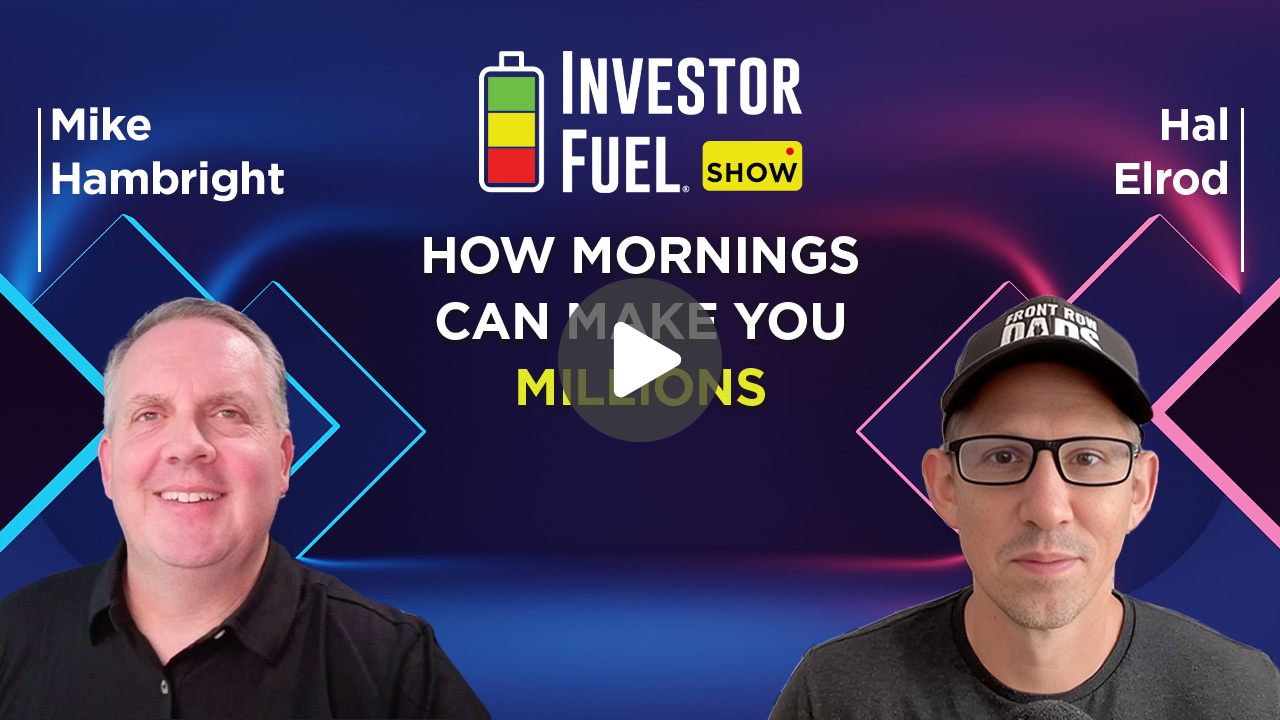
In this conversation, Hal Elrod shares his insights on the importance of morning routines and how they can transform lives. He discusses his personal journey through adversity, including the loss of his sister and a near-fatal car accident, and how these experiences shaped his perspective on resilience and purpose. Hal emphasizes the significance of focusing on what one can control, serving others, and maintaining a positive mindset. He introduces the Miracle Morning framework, which includes practices like silence, affirmations, visualization, exercise, reading, and scribing, to help individuals achieve their goals and improve their lives. The discussion also touches on the importance of adjusting goals and playing the long game in personal and professional development.
Professional Real Estate Investors – How we can help you:
Investor Fuel Mastermind:
Learn more about the Investor Fuel Mastermind, including 100% deal financing, massive discounts from vendors and sponsors you’re already using, our world class community of over 150 members, and SO much more here: http://www.investorfuel.com/apply
Investor Machine Marketing Partnership:
Are you looking for consistent, high quality lead generation? Investor Machine is America’s #1 lead generation service professional investors. Investor Machine provides true ‘white glove’ support to help you build the perfect marketing plan, then we’ll execute it for you…talking and working together on an ongoing basis to help you hit YOUR goals! Learn more here: http://www.investormachine.com
Coaching with Mike Hambright:
Interested in 1 on 1 coaching with Mike Hambright? Mike coaches entrepreneurs looking to level up, build coaching or service based businesses (Mike runs multiple 7 and 8 figure a year businesses), building a coaching program and more. Learn more here: https://investorfuel.com/coachingwithmike
Attend a Vacation/Mastermind Retreat with Mike Hambright:
Interested in joining a “mini-mastermind” with Mike and his private clients on an upcoming “Retreat”, either at locations like Cabo San Lucas, Napa, Park City ski trip, Yellowstone, or even at Mike’s East Texas “Big H Ranch”? Learn more here: http://www.investorfuel.com/retreat
Property Insurance:
Join the largest and most investor friendly property insurance provider in 2 minutes. Free to join, and insure all your flips and rentals within minutes! There is NO easier insurance provider on the planet (turn insurance on or off in 1 minute without talking to anyone!), and there’s no 15-30% agent mark up through this platform! Register here: https://myinvestorinsurance.com/
New Real Estate Investors – How we can work together:
Investor Fuel Club (Coaching and Deal Partner Community):
Looking to kickstart your real estate investing career? Join our one of a kind Coaching Community, Investor Fuel Club, where you’ll get trained by some of the best real estate investors in America, and partner with them on deals! You don’t need $ for deals…we’ll partner with you and hold your hand along the way! Learn More here: http://www.investorfuel.com/club
———————–
🎧 Subscribe to the Podcast
Apple → https://podcasts.apple.com/us/podcast/investor-fuel-real-estate-investing-show/id943707421
https://open.spotify.com/show/0yjlEMMn52BRrrlhfxCn4S?si=48f4b577276246e6
YouTube →
https://www.youtube.com/@investorfuel
🤝 Stay Connected with Mike
Follow on Facebook → https://www.facebook.com/realmikehambright
Follow on Instagram → https://www.instagram.com/realmikehambright/
Follow on Linkedin →
https://www.linkedin.com/in/mikehambright
📈Free Training and Resources for Professional Real Estate Investors
Acquisitions Manager Hiring Guide → https://my.investorfuel.com/if-lm-optin-acquisitions-guide
COO Hiring Guide → https://my.investorfuel.com/mm-lm-coo-hiring-guide
Executive Assistant Hiring Guide → https://my.investorfuel.com/mm-lm-ea-hiring-guide
Fuel 5 → https://my.investorfuel.com/mm-lm-fuel5
Triple Your Profits Masterclass → https://go.investorfuel.com/triple-your-profits
🏠Free Training and Resources for New Real Estate Investors
Rehab Live → https://my.investorfuel.com/rehab
Find Your First Deal in 5 Days challenge → https://go.investorfuel.com/find-your-first-deal-5-day-challenge
Join My next 4 Day Live Training Event (Virtual)
https://investorlaunchpad.com/
Resources and Links from this show:
Listen to the Audio Version of this Episode
Investor Fuel Show Transcript:
Mike Hambright (00:33)
Hey everybody, welcome back to the show. Really excited to have Hal Elrod with me here today. At the end of the day, I think as an entrepreneur, we all know that our success is determined by our habits.
Like what are the things that we do every single day that allows us to stay on track? An amazing life is made up of a bunch of amazing days put together and those all start with with great habits and so I think for a lot of folks that get off track they know that they’re slipping somewhere in their life to where they’re you know, they’re either not eating right They’re not sleeping right. They’re not focused on the right things They’re getting distracted by a lot of other things out there and we’re gonna be talking about that in a lot more today So how welcome to the show?
Hal Elrod (01:07)
Mike, thank you for having me and I want to echo something you said that a great life is, you know, strung together by or made by stringing together a lot of great days. And and what I want to say is that every one of those great days begins with that morning, right? Like, how do you start your morning in a way that sets the tone, the context and the direction for the rest of your day? So if you win the morning, you’re on track to win the rest of the day. So just just just that caveat that I know we’re going to get to anyway.
Mike Hambright (01:34)
Yeah, yeah, and for those of you that don’t know, Hal, let me see if I can pull this up here. The lighting might screw me up, but Hal’s the author of Miracle Morning. I’ve got it on my iPad versus a hard copy. That’s the original one. Yeah, I’m old school, Hal. I’ve literally had this book, I mean, I don’t know when, when did this book come out again?
Hal Elrod (01:43)
Ooh, that’s the original. That’s the old school. Yeah. Yeah, I love it. I love it.
12-12-12, so December 12, 2012.
Mike Hambright (01:56)
Okay, I’ve probably had it for 10 years. So yeah, it’s fantastic. And it’s honestly it’s become a reference guide. I do not have that but I’ll definitely get it. Yeah. I know we have.
Hal Elrod (01:59)
Wow. And so this is the, do you have the new edition yet or no?
Yeah, well, no, I’ll, I’ll shoot, make sure you shoot
me your address. I’ll send you a copy of that.
Mike Hambright (02:11)
Yeah, yeah, and I know you’re gonna be speaking at our mastermind here soon and we’ve got some copies for that coming as well. But it’s been inspiring and I think books like yours are a great reference. They’re a great reference to return to. Sometimes people get off the beaten path and it’s a great way to kind of say, how do I get back to basics, right?
Hal Elrod (02:17)
that’s true. I can sign one for you in person. Sorry, go ahead.
Yeah, yeah, yeah. Again, it goes like for me, you know, I’m often like I’ll be asked last question, how in the interview, ⁓ you know, if you had to share one thing that’s been most impactful in your life, and I’m like, we just talked about it for the last 45 minutes. It is the miracle morning. Like that’s my anchor where when I’m going through difficult times, like I go back to okay, let’s I got to dial in my meditation and my prayer and my affirmations and my visualization, my exercise, my reading my journaling. Like if I can dial in that morning.
I can get on track for the rest of the day.
Mike Hambright (03:05)
Yeah.
⁓ How for those that don’t know you I think you know one of the things that entrepreneurs tend to learn a lot from is Especially in a mastermind like my one of the benefits of a mastermind or surrounding yourself with amazing people is you get to learn from other people’s mistakes and their stories and you don’t have to learn those hard lessons yourself and quite frankly the hard lessons you’ve learned you get to share with other people to help to allow them to prevent that and so For those that that maybe don’t know you or those that have read the book But it’s been a little while like kind of just refresh us on your backstory a little bit like how you got to the point to where
you had this message that you could share with other people and I know obviously that was through a lot of adversity but maybe you could share your story a little bit.
Hal Elrod (03:42)
Yeah, ⁓ I’ll start somewhere that I’ve only been starting recently. I used to not share this part of my story at all because I wasn’t even present to the relevance. And it’s that when I was eight years old, ⁓ I woke up to my mother screaming from her bedroom, not don’t take my baby, don’t take my baby. And I ran across the hall and my 18 month old baby sister, my mother was performing CPR, mouth to mouth resuscitation on her.
And she died that morning of heart failure. And my mom, within six months, obviously was, you devastated and crying uncontrollably for many days and weeks and months. But within six months, she started a support group to help other parents who had lost young children. It was called Compassionate Friends, and she ran that for over a decade. But
What I didn’t realize at the time, it was only in looking back that, that really planted the seed for me that when you go through difficult times, if you can find purpose, right, if you can find a way to and the universal purpose for all of us is like when you go through difficult times, if you can take it head on and get through it and get over it and learn from it and become out come out better the other side. Well, now you can turn around and reach your hand back and like you can help the people that are behind you on that same that same journey and going through their own stuff.
And so you fast forward 12 years and my car, I was driving my brand new Ford Mustang I had just bought. I was a sales rep for Cutco Cutlery and driving home from a speech one night, I was hit head on by a drunk driver. My car was hit head on by a drunk driver at 70 miles per hour. And my drunk driver or my car spun off the drunk driver and was hit by the car behind me at 70 miles an hour and instantaneously my body was crushed and I broke 11 bones. My femur, my leg broke in two pieces, my pelvis broke in three places.
My arm broke in half, my elbow was shattered, my eye socket was shattered and a lot more. And I was clinically dead for six minutes. And when I came out of the coma six days later, ⁓ after being resuscitated multiple times, ⁓ I was faced with this unimaginable reality. And that’s where I really learned, ⁓ I remembered my mom and dad and what they did. And I thought, maybe that’s why I’m going through this horrific
you know, tragedy, if you will, because I’m supposed to learn and grow and evolve and become a better version of myself. And to be fair, in the hospital bed, I probably didn’t articulate it nearly as well. But that was the mindset I said, I actually told my dad, said, Dad, I know the doctors are concerned with me, they think I’m in denial, because I’m not upset about this. But I believe that this happened for a reason. And I’m supposed to learn from this and help others.
Mike Hambright (06:13)
Sure.
Hal Elrod (06:27)
And that’s when my you the speaking career like all of that began with like me taking this experience and going, how can I get through this and help other people? And I took my first step three weeks after the crash and you know, kind of the rest is history. And then yeah, those were the main early adversities. And then the biggest one that led to the miracle morning was 2008 that I think is more relevant to everyone listening. I think not everyone lost a child, you know, or a child or a sibling. Not everyone was, you know, in a
horrific car crash. But most people can relate to 2008 when the United States economy crashed. I went from being overly optimistic to losing everything. My house was taken away. My credit score went from 800 to 500. I ⁓ lost over half of my income. I lived in debt and ⁓ out of necessity, out of desperation, ⁓ this morning routine was born and then that
turn my life around so fast, it felt like a miracle. And I called it my miracle warning and you know, the rest is kind of history, as they say, but yeah, happy to unpack or dive in. But that’s kind of like what the trajectory of what got us here.
Mike Hambright (07:32)
Yeah.
Yeah, there’s a lot of entrepreneurs, Hal, I mean, obviously you’re surrounded by entrepreneurs as well, right? think a lot of entrepreneurs ⁓ probably gravitate towards you just because ⁓ it’s a lonely world sometimes, it’s a feast or famine world. You need support to like pick yourself up from the…
the cycles of business and the cycles of the economy and things like that. And what I guess what what advice would you give to people that there are also people that get hit with adversity and they just you know not to take this lightly but they just kind of crumble like they’re just that’s it they’re out right. And I think one of the things that we talk a lot about as entrepreneurs is like you got to live to really not just entrepreneurship life you got to it’s it’s kind of like not how hard you get hit it’s that did you get up right. And you have to be able to get up and get hit with adversity.
Hal Elrod (08:08)
Yeah. Yep.
Mike Hambright (08:25)
and be able to get up over and over again. So what kind of words of wisdom would you share to people? And truthfully, it’s been a difficult time in the market for a lot of entrepreneurs and a lot of just non-entrepreneurs as well. But ⁓ what advice would you give to people to not allow any of these things to kind of stop you, to just get up and fight another day?
Hal Elrod (08:44)
Yeah, I mean, there’s so many different ways to look at this in terms of what advice you might give. But I think the first one is to focus on what you can control. Like that’s got to be a discipline within all of us to focus to, most of us are focused on what we can’t control. The economy, I’m stressed out over the economy, I’m afraid of the future. Like none of those things are in our control. What can you control? You can control your perspective, your priorities and your practices.
Right? Your perspective, meaning I’m going to accept the things I can’t change because there’s no point in wishing I had control over things I have no control over. That’s just delusional and it causes me pain and frustration and fear. That doesn’t serve me. So my perspective is going to be one of accepting what I can’t change and focusing on the things that I can. And then in terms of priorities, it’s getting really clear on making sure you are taking care of your mental and emotional health because going back to your
what you can control, it’s you. How do you show up every day? So that’s the thing when life’s crumbling, when life’s falling apart, when adversity is overwhelming, that’s when you are called to show up at your best every single day. And that’s what you can control. You can control. That’s what I realized in 2020, right? 2020 when like things are falling apart and I’m like, oh my gosh, what’s going on in the world and we can’t leave our homes and on and on and on. I went, oh.
Most people are focused on what they can’t control. And when you focus on the things out of your control, you feel fear, stress, overwhelm, and even depression, or it all leads to depression, right? So that doesn’t serve us. So that’s it is the first the perspectives focus in what you can control, the priorities really investing in your daily personal growth, self care.
And then the practices that allow you to do that. And of course, for me, it’s a miracle morning, but it could be any practices that allow you every day to focus on optimizing your mental, physical, emotional, and spiritual capacities and overall well-being so that you can be the parent that your kids need and the spouse that your spouse needs and the leader that humanity needs and just the version of you that the future you is gonna look back and be like, wow.
When you were going through it and you were tempted to just give up and throw in the towel, you didn’t. You focused on what you could control. You woke up every day and dedicated the morning to becoming a better version of who you were when you went to bed the night before and you continued to move forward. And eventually, like the economy changed, the changed and you carved your own path. And so I know that was a mouthful that’s a lot of advice, but
Mike Hambright (11:32)
Yeah.
Hal Elrod (11:32)
But that’s
what I would tell somebody that was struggling right now.
Mike Hambright (11:35)
Yeah, that’s great. And what role would you say in your experience, because you obviously are a servant leader, is realizing that this is bigger than you. I think there’s a lot of entrepreneurs early in their career, and I was the same way, where it was all about me. Like, I’m trying to make money for my family, we’re trying to pay the bills. Like, there was a struggle, right? And all entrepreneurs go through that. ⁓ But I think when I got to the point to where I realized, like,
my life will be better and more, gives it more meaning if I’m serving other people. If I’m trying to help others, I, whether it was coaching or even buying houses from people, helping them out of difficult situations, like just kind of tying your worthiness, your goals to serving others gives you more, it gives you a little bit more, I guess, push in your life because others need you. It’s not just about you anymore, right?
Hal Elrod (12:27)
You’re absolutely right.
In fact, I’m taking a note you said something that just inspired me. ⁓ And what you’re sharing right now is ⁓ sorry, I’m jotting this note down, Mike, you this doesn’t normally happen in the middle of podcasts where ⁓
Mike Hambright (12:40)
We can co-write a book
together, Hal. The next book we can write together, buddy.
Hal Elrod (12:44)
Dude, let’s go.
what I love about what you just shared is it fits in the framework that I’ve recently realized. feel like it’s like God gave me this Miracle Morning to me came to me in a moment of inspiration in meditation, right? Like I don’t take credit for it. I feel like I am the messenger delivering this message that was given to me. And that idea of just the simple perspectives, priorities and practices came to me when I was just talking on stage recently. And I was like,
That’s the framework for my next book. I don’t even know what the book’s about, but that’s the framework. And what you just shared is a perspective that when you focus on serving others, it allows you to get off of yourself. When we focus on ourselves, I believe we are being driven by ego, right? And I don’t mean ego in the context of like, I’m an arrogant egomaniac. No, our ego is our identity. Neither good nor bad is what it is. But if we’re not aware of it, then our ego drives our behavior and it’s often fear-based.
Or it is air, it’s trying to, it’s not necessarily what’s serving us at the highest level, the highest version of ourselves, I believe, and at the risk of getting spiritual here, right? But the highest version of ourselves, I believe we are pure consciousness. And you could say, I like to think of it as if God were the ocean or spirit were the ocean or highest intelligence, whatever, or even the universe for someone that’s not
spiritual at all. Right? However we want to call it. let’s but I use the word God. If God were the ocean, I believe that we’re all drops of water in that ocean. And so my meaning is that when my mom went from pain focused on herself and what she lost her baby dying, it wasn’t fair, she didn’t deserve it. All of that was ego. And all of that caused her to suffer. When probably through prayer, divine intervention, or whatever it was,
She got the message, wait a minute, you can use your experience, your pain and turn it into purpose and help others with it. Now all of a sudden, think about the shift in her focusing on herself and what she lost, it caused her to suffer. When she shifted it to what you’re talking about, Mike, which is it now it’s outward. Now it’s like, no, the focus is going from me and what I lost to others and what they can gain.
by me serving them. Now she’s lit up. Now she feels inspired. Now she feels empowered. And so I think that if you’re going through difficulties, say thank you God for this adversity because it is helping me become the person that I need to be to not only be a better version of myself, but to go out and help other people, my loved ones, setting an example for my kids. Hey, when times are tough, this is how our family, this is, know, whatever your family name is. For me, it’s the Elrods.
This is how the L-rods show up. We’re at peace with the things we can’t change. We don’t allow outside forces to dictate our inner well-being and we show up every day with positive perspectives. We’re clear on our priorities and we maintain practices, exercise, visualization, all the things that enable us to show up and keep moving forward. So that’s a long answer again to your question, but I love the way that you said that, which is the power
Mike Hambright (16:05)
Yeah, that’s great.
Hal Elrod (16:07)
of turning your pain into purpose and knowing that while you might not know how now, eventually you’re going to serve others with what you’re going through.
Mike Hambright (16:16)
Yeah, and I think that message is a variant of that too is for the successful entrepreneur or person, like I found that a lot of entrepreneurs get stuck at some level and it’s a comfort level.
Hal Elrod (16:29)
Mmm
Mike Hambright (16:29)
Like
not necessarily adversity, certainly not losing a loved one, any of that, but ⁓ for people that achieve a certain level of success and then get stuck there, like they’re just comfortable. But a lot of times it’s because they’re only looking at themselves and sometimes tying your goals. Like, how do I get to the next level? It’s like, need to serve people at a higher level. I need to serve others and not just myself. And I’ve kind of found for a lot of entrepreneurs that get up to a certain point and they’re just, they subconsciously are just comfortable there. They don’t get out of their comfort zone. And I’ve kind of found for myself.
is that I, like, I don’t, I get comfortable, I’m okay letting myself down, but I’ll like never let anybody else down. So if I have these big goals that are tied to helping other people, like, I will not sleep at night if I’m not serving them. And so sometimes it helps push people to another level.
Hal Elrod (17:12)
100%.
Two things I want to say on that. One is, you know, I had when I realized what you just said, my mantra became, it’s not about me. Meaning, I don’t feel like it. Well, yeah, but it’s not about me. It’s about the people I’m serving. It’s about the example I’m setting for my kids. It’s about fulfilling my limitless potential so that I can help others fulfill theirs. well, it doesn’t matter if I feel like it. It’s bigger than that. That’s the first thing. And the second thing is
Mike Hambright (17:28)
Yeah.
That’s right.
Hal Elrod (17:41)
Because to your point, right, like we’ll let ourselves down all day, but we’re not going to let others down either because we want to save face or because we have integrity or all of the above. But the other thing is I want to mention like the importance of a mastermind. I know that’s a big part of your world is leading your mastermind. That is being in the presence of other people who are thinking bigger who are holding each other accountable, like it’s infinitely valuable. I just heard a quote the other day. Let me see if I don’t butcher it if I can remember it.
⁓ It was something about the idea that you rise, I forget the exact quote, but it was like you rise to the level of your peers. And it reminds me of the Jim Rohn quote, right? We are the average of the five people that we spend the most time with. And the number five is arbitrary. might be the number, if you spend all your time with one person, you are going to average each other out. If you join a mastermind with 30 or 40 or 50 people, you’re going to rise your thinking, your expectations.
Mike Hambright (18:28)
Sure.
Hal Elrod (18:38)
your perspectives, your priorities, your practices, right? Just going back to that framework, it’s going to rise and be influenced by your peers.
Mike Hambright (18:46)
Yeah, absolutely. So Hal, the Miracle Morning has helped.
untold numbers of people, right, get to the next level or kind of ⁓ focus on things that they can control, as you said. So let’s talk about this. A lot of entrepreneurs, you got the people that are in the ⁓ 5 a.m. club and you got the people that are like, I’m my own boss, I can sleep in today, right? And so if you sleep in, and by the way, I don’t mind, the truth is, is I often say I’m gonna sleep in and I get up earlier than I would have if I didn’t say it. But ⁓ for those that are not morning people, like how do they adjust to ⁓ have a miracle
Hal Elrod (19:07)
Yep.
Mike Hambright (19:22)
mourning if they are self-professed, not mourning people.
Hal Elrod (19:26)
Totally. So ⁓ first thing I’ll say is this, I’ll start with like a meta answer. And the meta answer is ⁓ we regularly survey the Miracle Morning community, which is hundreds of thousands of people in our email list and in our Facebook group. And we ask them, one of the questions that’s usually on almost every survey, just to keep a pulse on it, is before you read the Miracle Morning, were you a morning person or not a morning person?
You know, and sometimes we’ll have like extremes like, you know, I was not a morning person. I was a morning person. I thought I could never become one and I hated the mornings, right? And it’s roughly 72 % give or take a percentage point of people identify as they had never in their life been a morning person before they read the Miracle Morning. And the reason for that, by the way, is I think that when I wrote the book, that was my biggest insecurity as an author is how am going to convince people
to overcome a lifetime of a limiting belief that they have reinforced not just with their thinking, but with their behavior. Yeah, I don’t get up in the morning. When the alarm goes off, I hit the snooze button three or four times. Like I am not a morning person. Like they have so much evidence. And so because that was like my constant insecurity, the entire book holds someone’s hand mentally and emotionally and even logistically around like overcoming the snooze button.
from I am not a morning person, I hate the morning to like, well, this miracle morning idea, like, I mean, guess that would probably improve my life to, wow, I’m going to commit for 30 days to, this is a lifelong habit. And so the other thing that I want to help people identify is why most of us are not morning people is not our fault. It is ingrained from when we are children. So think about this. And Mike, you can let me know if you differ. I think that for most people,
We got out of bed every morning growing up because we had to, not because we wanted to. We got out of bed because mom and dad were like, hey kids, get up. It’s time to get ready for school. And if given the choice, we would have kept sleeping. And that’s what we did on the weekends and during holidays, we slept as long as we could. So think about that. During our formative years, while our brain is developing from age six to 18,
We only woke up against our will and we resisted it, resented it and avoided it whenever we didn’t have to do it. So then what happens is you turn 18, maybe you leave home. And I know this was true for me. I’m going to college and I’m staying up till three in the morning playing video games. Specifically, my first class started at 11. I literally engineered my life to like, I don’t have any parents around anymore. I get to stay up late and wake up late.
And so it’s you think about that, but what happens is for most people that doesn’t serve them, starting the day in an ineffective, lethargic, lazy way where you literally are procrastinating on getting out of bed for as long as you possibly can, you are not becoming a disciplined, focused, you know, non procrastinating person. You’re developing an arsenal of bad habits that then bleed over into
every area of life. If it’s hard to get out of bed in the morning, it’s going to be hard to go to the gym in the afternoon. It’s going to be hard to work on that book that you wanted to write. It’s going to write like all of it affects each other. And so with that, it’s the realization that, ⁓ if I want to become the best version of myself and I want to create an extraordinary, you know, successful, happy life. And this is as true for someone that’s struggling as it is for a CEO or a high achiever.
Right? I’ve got to put the habits in place that lend themselves to optimal mental, emotional, physical and spiritual well-being and performance. And so that’s where the morning routine comes in. And again, the whole book holds someone’s hand through that process.
Mike Hambright (23:28)
That’s fantastic. ⁓ another question is, I help people a lot as entrepreneurs with setting up very clear visualization of what it is they want to accomplish in their life, very clear goals. Then we kind of back into KPIs. This is more on the business side, It’s like having very specific things they do every single day that are kind of upstream ⁓ activities that lead to results. So generate enough leads and you’ll get enough sales type thing, right?
But those things, it’s kind of funny because as an entrepreneur, I’ve realized at points in my life, I’m like, my business is all KPI’d out. Like I have, we have meetings to talk about how we’re performing. And then in our personal life, there’s like nothing, right? And so just talk about the importance of like kind of having a clear vision for where you want your life to go, goals, very specific goals and things like that with the Miracle Morning.
Hal Elrod (24:21)
Yeah, so the the miracle morning there’s there’s two ways that I like to think about the the practice. One is a general personal development practice, right? For example, you might let me actually give people a framework what the actual miracle morning is made up of, which is an acronym. These are called the lifesavers. Savers is the acronym, S-A-V-E-R-S. So the first S is for silence.
So rather than grabbing for your smartphone for something in the morning, it’s starting your day with silence, with solitude, with prayer, with meditation, ⁓ with breath work, right? Just a period of peaceful, purposeful silence to get centered for the day. The A in savers is for affirmations. And that word is a trigger word because I think people kind of roll their eyes like affirmations are silly. Like you’re just pumping yourself up. These are not your grandpa’s affirmations, right? Like these are not just
I’m amazing and I am wealthy and I am, you’re not affirming things that are A, untrue or B, some flowery passive language that promises a magical result such as like, I am a money magnet. Okay, that’s not, to me that’s not an effective affirmation. So there are three steps in the way that I encourage people to structure their affirmations. Step one, affirm what you’re committed to. Step two, affirm why it is a must for you.
So what are the reasons that are so important and meaningful to you? Why are you doing the thing? Why are you committing to that? And then step three, which actions will you take and when? So this affirmations formula is totally aligned with your goals. And I have this, I follow that formula for each area of my life and each goal. So I’ve got a financial affirmation on what am I committed to in my finances, right? How much money am I committed to making and saving and investing and donating?
And then number two, why are each of those things important to me? And then number three, which actions will I take and when will I take them to ensure that I follow through? And that same formula I have as a husband. What am I committed to? Why is it a must for me? What will I do as a father? Right? Like every area, every goal and every role of my life, that affirmations formula supports my goals and roles to keep me on track for what I have decided when the year started and for the next 10 years and beyond.
is the most important outcomes and activities in my life. So I’m affirming it every day to keep it top of mind. The V in savers is for visualization. And just like the world-class athletes visualize their performance for the day so that they are mentally rehearsing how they’re going to show up, it works for the best athletes in the world and it works for every human being. The E in savers is for exercise. And you don’t have to go in the gym in the morning, but
moving your body for even 60 seconds of jumping jacks or five minutes of stretching or some push-ups and sit-ups, right? First thing in the morning, it gets the blood flowing to your brain as well as the oxygen. So you have more energy, more mental clarity, and it releases dopamine and serotonin. Like you actually feel better when you exercise. So you don’t want to delay that. Now I do both. I do a short, you know, five minute miracle morning exercise, and then I go to the gym for 30 minutes later in the day.
The R in savers is for reading and the S in savers is for scribing, which is a fancy word for writing. with that framework, I’ll wrap this up with these two frames. General personal development practice and a very specific outcome driven practice. The 2008 economic crash, all I cared about was doubling my income. I needed to double my income because I had lost over half of my income and I needed to get back to where could afford to pay the bills instead of
drowning in debt. So I focused all six of my savers on doubling my income. Let’s go to the R. I bought a book called Book Yourself Solid. That was the first book that I immediately bought and that taught me how to book more clients by Michael Port, right? Then as I’m reading that book, many of us read a book and we don’t implement it because we, that’s a great idea. I’ll dog your that I’ll come back to that and we never do. But because I always had my affirmations open on my computer, every
quote every strategy, every action step that I read in the book. If it needed to be implemented and remembered, I typed it in my affirmation so that I would keep it top of mind and read it every day. Then I would visualize myself doing the things. I would journal my top priorities. So I dedicated all six of my savers to doubling my income and that happened in two months. Years later, it was to beating cancer. So it was then to running an ultra marathon. Like there’s all these outcomes where all six savers
are focused on these highest priorities in my life and then it accelerates your ability to achieve them.
Mike Hambright (29:16)
That’s great. Yeah, I think that’s one thing that a lot people struggle with is they set goals and they beat themselves up if they don’t hit it and they don’t really leave room to adjust. Like it’s okay to change your goals. Like you’re go through different seasons in life, could be different, you know, economic cycles, health challenges. Like it’s okay to just say, hey, I’m gonna change everything now because this is important. And I think a lot of folks just end up abandoning everything instead of saying it’s okay to adjust, right?
Hal Elrod (29:42)
Well, I agree. And one of my favorite examples of that was when the Miracle Morning published, was 2000, again, end of 2012, December 12th. And I, know, the response from people, all of the advanced readers was like, oh my gosh, this book’s changing my life. And I just felt like I had a mission to get this out into the world. And so as I was setting my goals for 2013, I was like, all right, what’s my goal around the book? And I was meditating about it and praying about it. And I just went,
It’s to change 1 million lives one morning at a time. And that was a mission driven way of saying, I have to figure out how to sell a million copies of the Miracle Morning. Now keep in mind, I was coming off of a career as a life coach. Like I had no platform, no audience, no podcast. I wasn’t a well known author, like none of that. So I’m starting pretty much not scratch but close to it. ⁓ I had just like any author that was like I had my relationships, my colleagues and friends, but that was it.
So I gave it everything I had to sell a million books. And that was my, it was in my affirmations. I used the Miracle Morning to stay focused on it. That year I gave 152 podcast interviews, or was on 152 podcasts. I gave 36 speeches around the countries at high schools and colleges. ⁓ Not the prospects that I wanted. ⁓ For a college kid, 20 bucks is a lot of money to spend on a book. So rethinking that later, but.
And then I gave 52 of my own podcasts. So I did everything in my power. And I really want to I want people please listen to this. At the end of the year after I gave it literally everything I had, mean, there was nothing left on the table. I worked day and night seven days a week to reach a million people. And I fell short of my goal. And I fell short of my goal by 987,000 copies. Right? So hear that.
I was, that’d be like if your goal was to make a million dollars and you were $987,000 short, right? So I sold 13,000 copies of the book. And now if I didn’t have a goal, that would have been probably cool. Like, my gosh, that’s amazing. But in relation to what I was aiming for and I was genuinely committed to and trying to do, it was an abysmal failure. And at the end of the year, I kind of dusted myself off. I was discouraged.
I realized that it was going to take me 76 years at 13,000 copies a year to reach my goal. And at which time I would have been 110 years old. But I went, you know what? Sometimes the time frame’s off. I know that. I obviously couldn’t have done it in a year. You know, not that I, what could I do differently? I’m going to try again. I tried again in year two. I sold 23,000 more copies. So still 98 % away from where I needed to be. And I tried again year three, year four, year five.
Finally, in year six, we surpassed a million copies sold. And here’s the lesson I wanna leave everybody with. When you finally get to the point in your life where you’re working so hard for, so right now, everyone listening that’s like, I’m not where I wanna be, I’m not moving as fast as I want, maybe I’m even moving backwards, right? Like the economy is not where needs to be. And there’s all these things and you’re feeling…
anxious and nervous and like you want to be further ahead. Here’s the lesson that I learned in that experience that when you finally get to that point that you’ve been working so hard for, for so long, you look back and you go, ⁓ it wasn’t supposed to happen any sooner. It had to take six years. I had to meet that person in year one that led to that opportunity in year two that led to that relationship in year three that led to another opportunity. All of that happened in
you know, perfect, synchronistic timing. And I wasted so much energy living in stress every day. And so the moral is every day, yes, maintain a healthy sense of urgency to move forward to where you want to go, but be completely at peace with where you are and enjoy this one life that we’ve all been blessed to live.
Mike Hambright (33:57)
That’s amazing, that’s amazing. And I think the other lesson there is, I like to say play the long game. Like it’s so easy in this immediate gratification society to want immediate results and if we don’t get it, we quit. I think for those that, know, it’s kind of, there’s always this joke about, you know, overnight success, 10 years in the making, right?
Hal Elrod (34:05)
Yeah, totally.
Yeah, 10 years. right.
That’s right. I love that quote.
Mike Hambright (34:19)
Yeah, awesome, Hal.
Hey, super excited to have you speak at the upcoming Investor Fuel and super excited to have spent some time with you today. So if folks want to connect with you, Hal, learn more about the Miracle Morning, there’s a lot of places they could go. Where’s the best place for them to go?
Hal Elrod (34:33)
Yeah, I would go to miraclemorning.com. That is the hub for everything. So the Miracle Morning has a nice ecosystem. There’s the Miracle Morning updated and expanded edition, which is the new book. It has 70 pages of new content. came out just a year and a half ago. Of course, you can go straight to Amazon or buy the audio book on Audible. I read it, by the way. It’s the first time I ever read the audio book for the Miracle Morning. So that was a pretty cool experience. But miraclemorning.com, there’s also an app.
In the Miracle Morning app, a lot of people use that to keep them on track for their daily Miracle Morning. It’s like their little accountability buddy, if you will. And then there’s the Miracle Morning movie. You can watch the documentary. It’s totally free. Go to miraclemorning.com and you can watch the movie. It’s a 90-minute feature-length film with me, Mel Robbins, Robin Sharma, Brendon Burchard, Robert Kiyosaki, Lewis Howes, you name it.
And it’s a really inspiring film about how they start their day. ⁓ And then I’m fighting for my life for after being diagnosed with cancer halfway through the filming and an unexpected turn of events. So you’ll get to watch that. yeah, MiracleMorning.com is the hub where you can find the app and the books and the movie and all the things.
Mike Hambright (35:46)
Well, everybody check that out. We’ll put it down in the show notes as well if you can’t remember that simple website. But Hal, thanks for spending some time with us today.
Hal Elrod (35:52)
Haha
Mike, I’m so excited to see you and your mastermind members in person, man. Thank you for having me.
Mike Hambright (35:57)
Yeah,
yeah. And everybody, hope you got some good value from today. You definitely have to be following Hal. Make sure you’re keeping an eye on everything he’s doing. Make sure you buy Miracle Morning if you haven’t yet. And you know, at the end of the day, no matter what you’re going through right now, like there are better times ahead. You have to stay focused. You have to play the long game. You have to follow a systematic approach to improving your life every single day, which is through the Miracle Morning. So hope you guys enjoyed the show today. See you next time.