Subscribe via:



Show Summary
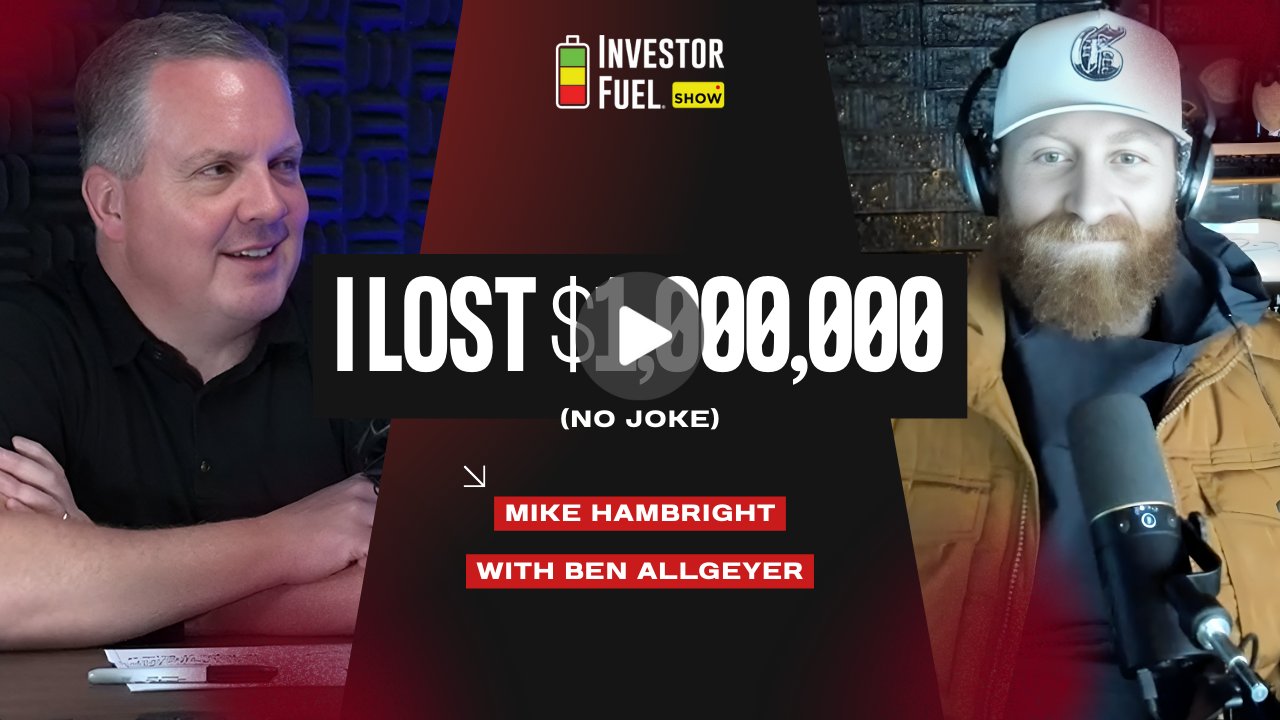
In this conversation, Mike Hambright and Ben Allgeyer discuss the critical mistakes made while scaling a business, particularly in the real estate sector. Ben shares his personal experiences of losing a significant amount of money due to poor partnerships, lack of clear expectations, and legal issues. The discussion emphasizes the importance of having solid agreements, understanding the motivations behind scaling, and the necessity of accountability in business relationships. The conversation serves as a cautionary tale for entrepreneurs looking to grow their businesses while avoiding common pitfalls.

Professional Real Estate Investors – How we can help you:
Investor Fuel Mastermind:
Learn more about the Investor Fuel Mastermind, including 100% deal financing, massive discounts from vendors and sponsors you’re already using, our world class community of over 150 members, and SO much more here: http://www.investorfuel.com/apply
Investor Machine Marketing Partnership:
Are you looking for consistent, high quality lead generation? Investor Machine is America’s #1 lead generation service professional investors. Investor Machine provides true ‘white glove’ support to help you build the perfect marketing plan, then we’ll execute it for you…talking and working together on an ongoing basis to help you hit YOUR goals! Learn more here: http://www.investormachine.com
Coaching with Mike Hambright:
Interested in 1 on 1 coaching with Mike Hambright? Mike coaches entrepreneurs looking to level up, build coaching or service based businesses (Mike runs multiple 7 and 8 figure a year businesses), building a coaching program and more. Learn more here: https://investorfuel.com/coachingwithmike
Attend a Vacation/Mastermind Retreat with Mike Hambright:
Interested in joining a “mini-mastermind” with Mike and his private clients on an upcoming “Retreat”, either at locations like Cabo San Lucas, Napa, Park City ski trip, Yellowstone, or even at Mike’s East Texas “Big H Ranch”? Learn more here: http://www.investorfuel.com/retreat
Property Insurance:
Join the largest and most investor friendly property insurance provider in 2 minutes. Free to join, and insure all your flips and rentals within minutes! There is NO easier insurance provider on the planet (turn insurance on or off in 1 minute without talking to anyone!), and there’s no 15-30% agent mark up through this platform! Register here: https://myinvestorinsurance.com/
New Real Estate Investors – How we can work together:
Investor Fuel Club (Coaching and Deal Partner Community):
Looking to kickstart your real estate investing career? Join our one of a kind Coaching Community, Investor Fuel Club, where you’ll get trained by some of the best real estate investors in America, and partner with them on deals! You don’t need $ for deals…we’ll partner with you and hold your hand along the way! Learn More here: http://www.investorfuel.com/club
———————–
🎧 Subscribe to the Podcast
Apple → https://podcasts.apple.com/us/podcast/investor-fuel-real-estate-investing-show/id943707421
https://open.spotify.com/show/0yjlEMMn52BRrrlhfxCn4S?si=48f4b577276246e6
YouTube →
https://www.youtube.com/@investorfuel
🤝 Stay Connected with Mike
Follow on Facebook → https://www.facebook.com/realmikehambright
Follow on Instagram → https://www.instagram.com/realmikehambright/
Follow on Linkedin →
https://www.linkedin.com/in/mikehambright
📈Free Training and Resources for Professional Real Estate Investors
Acquisitions Manager Hiring Guide → https://my.investorfuel.com/if-lm-optin-acquisitions-guide
COO Hiring Guide → https://my.investorfuel.com/mm-lm-coo-hiring-guide
Executive Assistant Hiring Guide → https://my.investorfuel.com/mm-lm-ea-hiring-guide
Fuel 5 → https://my.investorfuel.com/mm-lm-fuel5
Triple Your Profits Masterclass → https://go.investorfuel.com/triple-your-profits
🏠Free Training and Resources for New Real Estate Investors
Rehab Live → https://my.investorfuel.com/rehab
Find Your First Deal in 5 Days challenge → https://go.investorfuel.com/find-your-first-deal-5-day-challenge
Join My next 4 Day Live Training Event (Virtual)
https://investorlaunchpad.com/
Resources and Links from this show:
Listen to the Audio Version of this Episode
Investor Fuel Show Transcript:
Mike Hambright (00:00.44)
Hey everybody, welcome back to the show. Today I’m here with my good friend, Ben Allgeyer. We’re gonna be talking about how to lose a million dollars, like mistakes from scaling. And these are, this is unfortunately is a real case study for Ben. Lessons learned and the truth is if you’ve been in this business for a long time, you’ve made some painful mistakes, hopefully not a million bucks, but we’re gonna learn some tips today on mostly what not to do. So Ben, welcome to the show. Yeah, good to see you buddy. It’s been a little while. So.
Ben Allgeyer (00:23.394)
Thank you, thanks for having me.
has.
Mike Hambright (00:28.184)
So first, before we jump into this, why don’t you tell us a little bit about your background and what you do up there in KC.
Ben Allgeyer (00:34.168)
Yeah, so all the way back to the early days, med school dropout decided not to go that route. Did then jumped into sales pretty quickly after that, realized that I’m a terrible employee, just the worst employee. So went and started working for a guy in Kansas City, built his acquisitions side of things like the off market deals. He was doing a lot at the, at the auction and then realized, you know, I can do this myself. Why am I building somebody else’s business? So
went and built a business with a business partner and we’re what, eight years, about the same time that you guys started Investor Fuel, we’re about eight years in now and doing deals all over the country.
Mike Hambright (01:14.486)
Yeah. Yeah. And you and you’ve added some other businesses and stuff, some bolt on stuff to you, right?
Ben Allgeyer (01:21.484)
Yep, yep. We added a painting company, residential and commercial painting company, and then we added a security company, which is kind of a fun business.
Mike Hambright (01:30.166)
Yeah, yeah, that’s cool. So when we jump into this, let’s let’s talk about, we could jump right into like how to lose a million bucks, right? So I mean, why don’t you preface it with talking a little bit about because these things what happens, and I think this is your story too, is what happens is when you start to scale your business, you inevitably have to give up control.
Ben Allgeyer (01:39.822)
Yeah.
Mike Hambright (01:53.156)
you just things get a little loose or you trust somebody or you trust that somebody did something they said they would do. mean, that’s where it all kind of starts. Now, there’s also a lot of real estate investors that are like, I’m just going to stay small and keep it really simple, but they limit their ability to grow because they have their own capacity issues. Right. So I just want to start it off by saying, you know, the moral of the story isn’t to stay small and keep it all and like don’t have partners and you know, don’t take any risks. Right. It’s just to be smarter about it. Am I, would you agree with that?
that.
Ben Allgeyer (02:23.648)
Absolutely. Yeah, I mean the the premise of my entire story is You can do this extremely fast if you want to the problem is there’s gonna be a lot of holes and If you try to do it that way and you try to implement 900 things at the same time Then you’re gonna look up and go. Okay. Well piece one broke I fixed piece one piece three now broke like you have this entire infrastructure that falls in on itself if you don’t do it
systematically.
Mike Hambright (02:54.507)
Yep, yep. So let’s dive in. How do you want to start this story? Your story.
Ben Allgeyer (02:59.054)
Well, we can start with the first part, which was bringing on a business partner way, way, way too soon. So we had a company in the early days called Upsell. And basically what we would do is we would go into houses with homeowners and say, if we did X, Y, and Z to the house, we could get double that back on the market. So we would do the construction form, a little bang for your buck remodel. And then we would list and sell the house form and make our profit. It was great. Problem is…
the market flipped and grandma’s house, you could stick it on the market and sell it today. So there was no need for upsell anymore, which oddly enough, it’s kind of turning back to where we could use upsell again. But when it hit that time, we’re like, well, crap, now we have to go figure out how to do deals another way. So we’re like, all right, let’s go direct to seller. There was a guy that we had ran across that loud talker. was, you know, big.
chest thumper and we were energized by this guy. He’s like, I got deals. I know all the wholesalers. I know how to get deals. We’re like, hell yeah, let’s do this. So we brought him on, gave him a third of the company. We were doing great. I think we had a couple of months where we were at, you know, over $200,000 of net profit. And then he got comfortable and he started to not show up. He started to get lazy and
these deals that were coming in for month after month after month just stopped. And so the problem is when you give up equity, it’s really difficult to get it back. It’s like a marriage, right? You marry somebody in seconds, it takes you years to get divorced. So that’s kind of where we found ourselves was how do we get rid of this guy? And the only clean way to do it because we didn’t have a really good operating agreement that outlined exactly what happens, which
Mike Hambright (04:32.843)
Yeah.
Ben Allgeyer (04:49.806)
That’s point number one, have a really freaking good operating agreement. But we could have easily just given him profit share versus giving him equity. If we would have given him profit share, it would have been a heck of a lot easier to get rid of him. So it turned into this massive legal battle. $250,000 later, we were finally separated.
Mike Hambright (05:06.22)
Yep.
And one thing I want to clarify here is you keep saying we, so you do have a partnership you brought on a third partner, right? And so let’s talk about like, and I’ve seen, you know, just in my role and everything I’ve done, kind of coaching, advising, counseling, like thousands of real estate investors over the years, I’ve seen a lot of partnerships and badly, I’ve seen marriages and right. mean, it’s sad, but from the business, like tearing people apart, but I think it is very much like a marriage. you, what I, this is my belief at this point is a lot of it comes back to,
Ben Allgeyer (05:11.544)
Correct, yeah.
Mike Hambright (05:36.746)
to expectations and communication. Right? And so what happens, probably the same thing in a marriage, I have a great marriage, so I’m blessed there, is that, but it’s work, right? I mean, it’s not, it’s nothing like comes easy or I stick my foot in my mouth a lot. So you have to like figure out, okay, what do I do when this happens? But it’s, it’s almost just the expectations of what a partner will do. In my experience, people start off and they’re like, Hey, we’re 50 50 partners. And the rub usually happens when somebody feels like they’re doing
Ben Allgeyer (05:53.547)
Yeah.
Mike Hambright (06:06.769)
more than 50 % of the work for only 50 % of the profit or whatever the percentage is based on you know how many partners you have and then what happens is lack of communication as to like hey I don’t really like where this is going and people don’t like they don’t nip things in the bud they wait until it festers and it’s so bad that there’s you can’t put the genie back in the bottle right I mean in my experience is that is that fair to say
Ben Allgeyer (06:08.718)
Exactly.
Ben Allgeyer (06:29.95)
It is, yeah. And with this guy, we were broke because Upsell was going so well that we’re like, my God, we’re on top of the world. We’re making so much money. And then when that tapered and we had three, four months of damn near nothing, we’re like, we got to move fast. So we brought this guy in and we just kind of thought, you know, he’s one of us. We’ll figure this out as we go. And as soon as that ended, what Todd and I did, my current partner, the guy that’s been with me for
this entire journey of entrepreneurship was we got very clear on expectations of one another and put that in a document. So he knows what to expect of me. He holds me accountable and I hold him accountable. And it’s very clearly outlined what happens if X, Y or Z were to happen.
Mike Hambright (07:17.921)
Yeah, that’s great. So what advice would you give? I mean, there’s some lessons learned there, obviously, but if people are thinking about bringing on a partner, what are some tips or some guidance that you would share to kind of do it right and also to do it in a way to where you maybe ease into it instead of getting slammed together, you know?
Ben Allgeyer (07:39.383)
Yeah, and that’s that’s kind of what Todd and I did, right? I mean, we had a whole year and a half of just working together before we actually signed LLC documents. So if there’s a way that you can do that and ease into it and, you know, split profits on deals and have just a standard LLC that’s like, all right, we’re to buy properties in this LLC and we’re going to flip in this LLC. And, you know, when we buy properties to hold, each one of us is just going to take one. The other one’s going to take the next one.
Mike Hambright (08:07.521)
Yeah.
Ben Allgeyer (08:07.778)
and you don’t tie your businesses together in the beginning, if after a year, two years, you’re like, okay, this is going well, let’s join this together. Just have those clearly defined expectations of one another and what were to happen if hit by the bus theory number one, and then what happens if one guy’s like, I don’t wanna do this anymore. What does that dismantlement look like?
Mike Hambright (08:29.003)
Yeah, so basically it’s okay to start off as deal partners instead of business partners, like partner on deals, but don’t necessarily get legal entities together necessarily.
Ben Allgeyer (08:34.254)
Correct. Yeah.
Ben Allgeyer (08:41.74)
Yeah, don’t get married until you date.
Mike Hambright (08:43.679)
Yeah. It sounds so simple. But I’m sure you’ve seen it because you do a lot of coaching too. There’s a lot of brand new real estate investors that form a partnership with somebody and neither one of them have even done a deal yet. It’s almost like getting married. I’m not here to knock anybody, but it’s like two teenagers getting married in high school. It’s like you have no idea what life is like in the real world until you’ve been out there and experienced it a little bit. Yeah.
Ben Allgeyer (08:47.298)
I know.
Ben Allgeyer (08:56.11)
Exactly.
Ben Allgeyer (09:07.054)
It’s exactly right. Yep, it’s a good point
Mike Hambright (09:11.905)
Cool. So what are some other, what’s the next mistake that you want to talk about?
Ben Allgeyer (09:17.536)
Ooh, the next one was probably the worst one personally. So Todd had a friend of 45 years, like long, long, long time friend. And we were growing our businesses. We had just acquired this painting company. We were in the early stages of acquiring the security company and we needed an operations guy. This guy hated his W2 and we needed some help and he was an operations guy at his W2. It seemed like a perfect fit, right?
So we bring him on and our mistake was, know, this is Todd’s really good buddy. And I’d known him for like three years at this point. This is Todd’s really good buddy. It’s going to feel awkward if we have him sign an agreement or do like a background check or do, you know, put some paperwork in place. It’s going to feel like we’re, we’re devaluing the friendship of Todd and this guy. So we didn’t do any of that. And what ended up happening was the guy had some life things that happened in
We kind of overlooked it for way too long. And then one day it turned into this giant eruption. The guy stormed in, screamed at Todd, told him off, laughed. And we’re like, all right, he’s going to cool down and come back. Two weeks go by. Haven’t heard from him. A month goes by. Haven’t heard from him. This is a guy that Todd had talked to every single day since he was a little kid. Hadn’t heard from him for two weeks. So we had to adjust a whole lot of things on our business. And then we’re playing in a golf tournament one day.
And this is a big, big golf tournament, three day tournament. We’d finally got the painting company stabilized. We get a text from the manager of the painting company that says, hey guys, thanks for everything. We’re actually gonna go start on our own. We’ve dropped off the trucks. The keys are on the front desk. Good luck.
Ben Allgeyer (11:06.348)
So when we went and figured all of this out from the leads that they had stolen to the equity that we lost in the business, because these guys were at a rate that was really good rate for painters, right? But they had plenty of work. So when we figured out that, you know, we’re to have to hire painters and train them and do all of this work to get them on boarded. Plus, there’s going to be a loss of deals that we’re able to do paint jobs that we’re able to do because, you know,
There’s a ton of re-up time to get these guys back to the level that the other guys were on. We’d figured out that we’d lost $479,000 in lost equity, lost jobs, lost revenue, overpaying for contractors on that business, which was a freaking nightmare. Come to find out the guy that was Todd’s best buddy had, you know, he was our operations guy. So he was with the paint crew every single day.
took the paint crew, because he had all of our contracts from when we purchased the company, found a loophole in the contract, used it against us, took the company and went and started his own company.
Mike Hambright (12:16.428)
Yeah.
That’s crazy.
Ben Allgeyer (12:21.294)
It’s not fun.
Mike Hambright (12:24.011)
You know, we’ve…
I can say this because I know that she’s not going to watch it. I’ve said it before. We hired and fired one of my wife’s sisters twice over the years. you know, even my son, who’s 18 now, just went to school. We’ve kind of said in the past, people are like, is he going to work for you? I was like, there’s no way he could work for us. He needs to go out and work for somebody else for a while, and maybe there’ll be something down the road. working with family members is kind of a no-no, generally. But good friends, it’s kind of in the same bucket. I quite frankly.
Ben Allgeyer (12:33.134)
you
Mike Hambright (12:56.343)
a lot of us, some of our very best friends, we’re closer to than family members, right? how do you learn going forward? You’re just like, no friends and family, like period, or here’s how we would do it differently. What are your thoughts?
Ben Allgeyer (13:10.368)
Yeah, if we were to go back and do that all over again, we would definitely have everything outlined. Like here are your KPIs, here are your daily objectives, here is everything that outlines what happens if we decide that we want to move on from you. Here are your expectations and here are your expectations of us. It’s the same thing with a business partner. It’s just more awkward, right? To have those conversations with a really good friend. Cause I mean, I have a lot of friends that…
have reached out and said, I want to do deals with you and let’s start an LLC. And I’m like, let’s push that off because of how recent this whole painful situation was. But if we were going to go do it over again, we would just have everything clearly defined in an agreement.
Mike Hambright (13:52.778)
Mm-hmm. Yeah, and probably tie it back to the thing we talked about in the first lesson is maybe just start with profit sharing versus being an equity owner, I mean, there could be, you could have a earn out plan. It’s like, for every milestone, you earn equity, you gotta, usually when that starts to happen, if you set it up right, by that point, the person’s proven themselves and it’s clear what their responsibilities are,
Ben Allgeyer (14:03.778)
Yeah, and he never had like…
Ben Allgeyer (14:19.342)
Correct, yeah, and we had plans like that in place. It just, you know, we were open book with him with everything. Every single piece of our business, he saw everything, which I’m not saying don’t do that. I’m saying you have to have bumpers in place before you go and do something like that to protect you and protect your family and protect your business.
Mike Hambright (14:26.465)
Yeah.
Mike Hambright (14:41.215)
Yeah, yeah. Well, I’m sorry you went through that, but I’m glad you’re sharing with people that might be able to avoid some of those mistakes. So what’s the next example of something to avoid?
Ben Allgeyer (14:53.794)
Yeah, so the next one was a lawsuit. We were working with a homeowner that was in foreclosure and we went and knocked on his door, just like we do with every deal that’s in foreclosure. Started talking to him and his wife. He was an old military vet. His wife was dying of cancer and we put this deal together for him that nobody else was able to do. So the deal was we’re going to buy the house. We’re going to let you live there for two years and we’re going to take the rent out of the equity.
And then we’re going to allow you to buy the house back after your credit’s back in order after you know, you get through some of these hospital bills that you’re still paying off. You can buy the house back in two years. And it was, it was a great deal. He was on board. His wife was on board. Everybody was on board. So we did exactly what we do with every deal. Send it to a title company. The title company is looking through it and we get a message on. the, the foreclosure date was the next Tuesday. So the Monday prior,
We get a message from the title company. All right, we’re gonna close on Wednesday. Perfect. Wednesday comes and goes, sorry, won’t have the docs ready till Friday. Friday comes around, we sign docs, we think we’re done. Todd goes on vacation and gets a message at 4.57 p.m. on Friday night that says, hey, I messed up the documents. This is from the title company. I messed up the documents, I need you to sign them again. Okay, so Todd doesn’t see that. Obviously there’s three minutes until the end of the day.
He sees it Saturday, sign Saturday, we get to Monday. We’re like, okay, everything’s perfect, we’re good. Monday rolls around and we get a notice from the title company that says, okay, deal’s closed, you’re the new owners of this property, congratulations, da da da da da. So we call the homeowner, say, all right, everything’s done, we’re good to go, congratulations, you kept your house. Foreclosure comes on Tuesday. We get a call from the homeowner at one o’clock.
says, hey, somebody just knocked on my door, said they bought my house at auction.
Ben Allgeyer (16:53.538)
We start freaking out. We’re like, crap, what the hell happened? Four months of dealing with this, our lender’s money’s tied up in escrow, he can’t get it back. We’re reaching out to every news station to try to see if there’s anything that we can do to get the buyer that bought it at auction to sell us the house so that we could just buy it back and give this guy’s house back. Nothing. It turned into a massive ordeal. Then…
The title company we found out created a fake wire receipt because he forgot to wire the funds. So now we’re looking at, what the hell do we do? It’s a mess. So then about six months in, service, what do they call those? Process servers knocks on our door and hands us papers for the lawsuit.
this guy thought that we were colluding with the title company to screw him and that we were colluding with the buyer that bought it at auction to screw him, which we obviously were not. And that turned into, you know, we’re in month 22 of that lawsuit.
Mike Hambright (18:05.447)
it’s still going on. Wow. That’s crazy. You know, a of people think like, well, somebody could just sue somebody. It’s like, nobody wants to go that route. Like everybody loses it. You just lay in bed at night thinking about stuff like that. mean, I’ve been in a couple of lawsuits that were like, it hurts my soul because I’m like, I don’t do anything wrong. Like I don’t, I, know, the things that I’ve been blamed of and it was always around selling a house and like.
Ben Allgeyer (18:14.094)
Mm-hmm.
Mike Hambright (18:29.015)
there was an inspection and something didn’t get caught and we knew it and we hid it from them, which we didn’t, but they just say that, right? And they’re like, oh, you hid this or that.
Ben Allgeyer (18:33.582)
Yeah. Yep.
Mike Hambright (18:40.111)
Of course, one instance, I got, by the way, just a little tangent here. I got sued by a guy because his dishwasher leaked five years after we sold a house and he was suing us for the amount that he purchased the house for. Like he wanted, and he’s like, well, you installed it faulty five years ago. It caused some water damage in my kitchen and now I should just get a free house. And so, and then he ended up lying about a bunch of stuff and the judge actually made him pay all of our attorney fees, canceled the lawsuit. He sued his own realtor in the process. you know, but it’s like,
That took a year to unwind and you’re laying in bed thinking about it and you’re stressed about it and hence the hence the gray hair, you know, I mean, I’ve got some arrow wounds in my back. Yeah. you’re too young for that. But I guess I guess what we’re talking about here will give you some gray hair. So let’s talk a little bit about that. So like I don’t not that anybody wants to sue anybody. We just talked about that. How is the title company not taking responsibility for that?
Ben Allgeyer (19:12.366)
for sure. Yeah.
Ben Allgeyer (19:17.042)
Yeah, I’ve got him. I’ve got him coming in too My wife sees him she pulls him out of my face
Ben Allgeyer (19:39.225)
They are, but the title company shut down their title company and just reopened a different title company. So now it’s this entire game of trying to chase LLCs and I mean, what are gonna do? So the point of the story, the moral of the story is you can think that you did everything right, but those deals are still your deals. You have to make sure that they get to closing. You have to hold everybody accountable. You’ve gotta make sure that when they text you on Wednesday and say, it’s not, we don’t have the documents.
ready, you’re on the phone going, what do mean the documents aren’t ready? They need to be ready. And we just let it go.
Mike Hambright (20:13.675)
Yeah. Yeah. Back to when we first started this conversation, it’s like, it happens in when you’re scaling. There’s just so many things that are going on. And, you know, what happens is a lot of times stuff is like, this is how it always works. It’s easy. It’s a smooth process, but there’s always a bump in the road that happens. And you’re like, you just like, it’s easy to just assume everybody did what they were supposed to do. Right. But that, that one sounds like almost fraudulent from the title company standpoint.
Ben Allgeyer (20:38.958)
You’re hired.
Ben Allgeyer (20:42.382)
It is, but again, we’re still, we still have to pay attorneys to fight it.
Mike Hambright (20:45.023)
Yeah. And I’m guessing, you know, if they fraudulently posted a wire document, then was there even a title policy in place or even though I’m sure you’ve been it.
Ben Allgeyer (20:57.602)
That’s the thing. We tried to go to the title policy holder and they said, as long as there’s an open lawsuit, we can’t do anything.
Mike Hambright (21:04.439)
Yeah, we have a note. have I don’t even know you. You probably don’t know this, but you and I have a very good similar friend that’s in a lawsuit. Different situation, but similar. He bought it.
started rehabbing it, has a hard money loan on it, $50,000 out in rehab. And then somebody comes along and says, well, we had a contract to buy that house. so, you know, they are going, they’re kind of using their title policies to basically, I mean, not, he wouldn’t have a title policy. They’re, suing them to basically say, we should have gotten this house and you should have bought it. And it’s like, well, our friend will win this, but it’s like, how long is it going to take? How much money that he has out in hard money? Is that going to accrue that he’s never going to get back? And it’s just a bunch
of expense and a bunch of grief right in the process so and they had a contract to buy it but it wasn’t recorded and people on Facebook will tell you well yeah they have no right then it’s like okay but anybody can sue anybody and pee in your pool and it causes you a bunch of heartache right yeah
Ben Allgeyer (22:00.536)
Exactly. So trying to avoid those lawsuits at all costs is, it’s just making sure you have those checks and balances in place, right? I mean, when you’re doing even five deals a month, there’s a lot of moving parts. And if you’re not on top of every single part of that, I mean, it’s easy to delegate some of those tasks, but the important things, you have to hold ownership of those.
Mike Hambright (22:22.175)
Yeah, absolutely. So anything else you want to talk about and if not, let’s summarize for folks that are listening here. How to not be scared to scale, because everybody wants to scale and everybody deserves that. Otherwise you just have a job. But how to kind of do it right.
Ben Allgeyer (22:29.198)
Yeah.
Ben Allgeyer (22:38.924)
Yeah, one of the things that Todd and I have really taken a look at over the past year is why do we even want to scale? Like, what’s our why for wanting to grow the business? Is it to make a million dollars a year? I mean, maybe. But we really sat down and had this long conversation of what do you want your life to look like? What do I want my life to look like? And we outlined all of that and realized, okay.
We have created jobs for ourselves that we don’t necessarily like anymore and this was about you know nine months ago and have started to and and I mean masterminds are amazing Don’t get me wrong. You guys were an amazing mastermind But the problem is if you go into these masterminds and you don’t have that why in place You’re gonna get caught up in all these guys that are doing 10 20 30 deals a month and you’re like I want to do that Why?
Do you want to live the exact same life as somebody else? Do you want to build this guy’s life? mean, what do you understand all of the things that are going on behind the scenes, the stuff that they have to deal with and all the responsibility that they have? Like, is that really the goal? And then when you come back from masterminds, you can have, you know, a list of 40 things that you want to implement in your business right now. And if you do that, like we were talking about, the whole system crumbles. You can’t implement…
Mike Hambright (24:00.171)
You can’t do it, yeah.
Ben Allgeyer (24:02.74)
even five things at the same time, because if something breaks, you have no idea what downstream effects fixing it will have. Is it gonna break the initial part? Is it gonna break the very last piece that you added? So understanding your why, and then systematically implementing things, testing them, making sure that they work, and then adjusting until it fits into your business, then moving on to the next thing. That’s what I wish that, you know, as soon as I joined any mastermind,
like when I was a 24 year old kid, I wish somebody would have had that conversation with me.
Mike Hambright (24:39.052)
Yeah.
To be fair, I usually tell people like, you’re to have a notebook full of stuff when you leave here and you need to prioritize like two or three things that you can go implement the fastest that are going to move the needle the farthest. But I get it. I’m a guy sitting here right now at a desk that has dozens of posts and notes on here of things that I want to do. The funny thing is every podcast I do every once in a while, I’ve kind of been down and start writing here and it’s like, oh yeah, I had an idea for something or just something that kind of came out. So anyway, I do it to myself.
Ben Allgeyer (24:44.43)
For sure you do.
Ben Allgeyer (24:51.319)
Yes.
Mike Hambright (25:09.933)
for sure. But yeah, I think I think it’s it’s OK to grow and it’s OK to grow fast, but it has to be kind of calculated. Right. It’s like and it’s another reason to have it’s one good reason to have a good partner or to have a really good team for sure. Like I think a lot of us as real estate investors, we want cheap houses. We want cheap material. We want cheap labor. Like we want everything on the cheap. But what I’ve kind of found is like some of that stuff comes at a cost. Like if you can save money on materials,
Ben Allgeyer (25:11.096)
think we all do, right? Because we’re all entrepreneurs.
Mike Hambright (25:39.816)
That’s fine, but don’t drive across town and spend a day saving 10 cents a square foot on tile because it’s not worth your time. Right. And, and, you know, from somebody that has across our businesses, probably 80 or a hundred virtual assistants, like there’s a place for less expensive labor. And I wouldn’t say that it’s lower quality. Like we have amazing people. Right. But, you also probably need really good quality people, physically with you, like locally with you.
Ben Allgeyer (25:46.35)
Correct. It’s not.
Mike Hambright (26:09.849)
that can do a lot of the things that inevitably you’re going to have to do if they don’t. Cool, man. Well, if folks want to connect with you, I know you do coaching, you’re a rising star on the social media scene. Tell us how folks can connect with you.
Ben Allgeyer (26:13.516)
I agree.
Ben Allgeyer (26:25.326)
Yeah, if you if you hop on Instagram at the Ben Allgeyer my handle and I’ve got if I’m not on there responding to DM sets, that’s the easiest way to get a hold of me is just shoot me a DM. If I’m not responding, I’ve got a team of guys that when I’m telling them, hey, listen, I’m I’m at dinner with my wife. Somebody else needs to respond to these. They’re they’re really quick to get back to you. So if you’ve got anything you need to reach out, you want help with a deal, you want to JV on a deal, you want to learn more about what we’re doing every day.
Mike Hambright (26:47.883)
Yeah.
Ben Allgeyer (26:55.534)
We’re always there.
Mike Hambright (26:56.631)
That’s great. Yeah, and to clarify, you help people do deals nationwide, right? So you guys operate in Kansas City, but you do JV deal partnering all over the country. Awesome. Well, thanks for joining me today. Good to see you, buddy. Yep, have a good day. Everybody, hope you got some good insights from today. At the end of the day, you can find more freedom in being an entrepreneur than probably…
Ben Allgeyer (27:05.112)
Yep, yep, that’s exactly right.
Ben Allgeyer (27:10.178)
You too. Thanks, Mike.
Mike Hambright (27:19.882)
anything else you could do. But it’s not as easy as it might look on social media or anywhere else, seeing people’s highlight reels. But if you kind of go at it from an approach you learn from people like Ben, you learn from people like Insight of Investor Fuel, you learn from people that have been there and done that, then your lessons learned are going to come faster and probably at a lower expense overall. So hopefully you don’t lose a million dollars. So appreciate you joining us. We’ll see you on the next show.