Subscribe via:



Show Summary
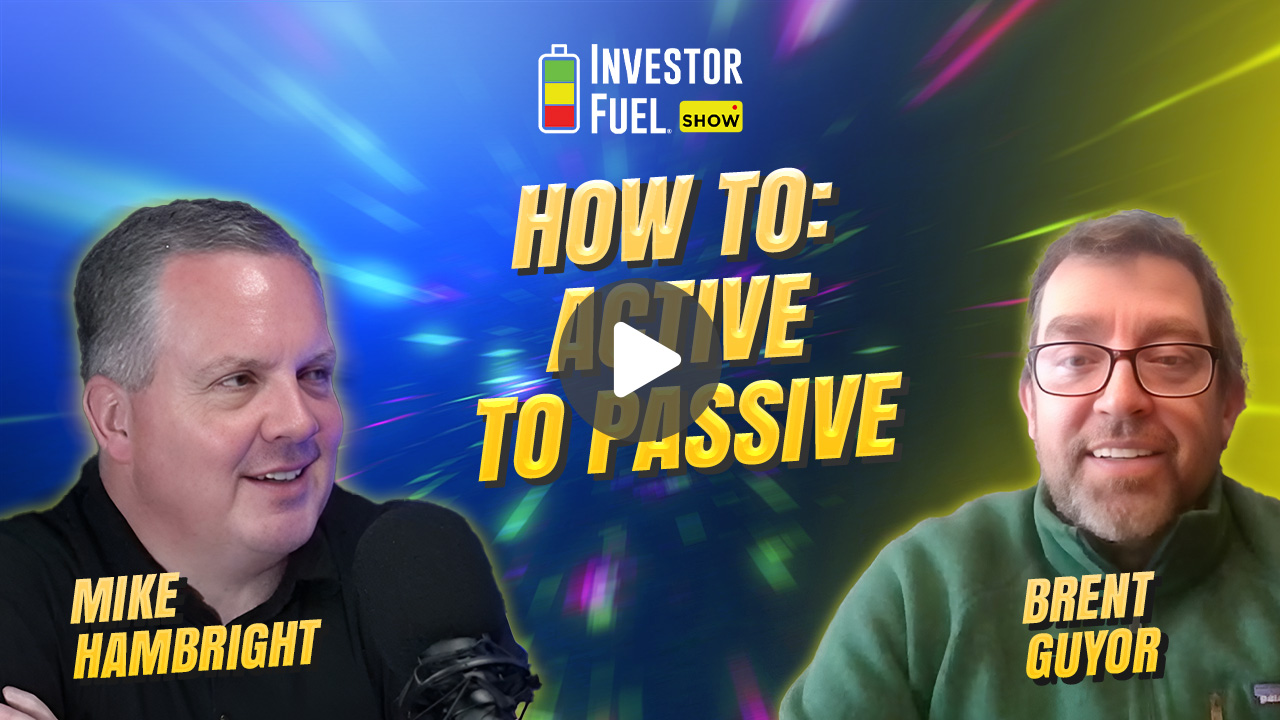
In this conversation, Mike Hambright and Brent Guyor discuss the journey towards achieving financial freedom through passive income. Brent shares his unique background in accounting and real estate, detailing how he transitioned from being an active landlord to focusing on passive investments. They explore the importance of timing, diversification, and the mindset needed to design a fulfilling life. Brent emphasizes the significance of lifelong learning and community support in navigating the real estate landscape, ultimately advocating for intentional living and breaking free from traditional financial constraints.

Professional Real Estate Investors – How we can help you:
Investor Fuel Mastermind:
Learn more about the Investor Fuel Mastermind, including 100% deal financing, massive discounts from vendors and sponsors you’re already using, our world class community of over 150 members, and SO much more here: http://www.investorfuel.com/apply
Investor Machine Marketing Partnership:
Are you looking for consistent, high quality lead generation? Investor Machine is America’s #1 lead generation service professional investors. Investor Machine provides true ‘white glove’ support to help you build the perfect marketing plan, then we’ll execute it for you…talking and working together on an ongoing basis to help you hit YOUR goals! Learn more here: http://www.investormachine.com
Coaching with Mike Hambright:
Interested in 1 on 1 coaching with Mike Hambright? Mike coaches entrepreneurs looking to level up, build coaching or service based businesses (Mike runs multiple 7 and 8 figure a year businesses), building a coaching program and more. Learn more here: https://investorfuel.com/coachingwithmike
Attend a Vacation/Mastermind Retreat with Mike Hambright:
Interested in joining a “mini-mastermind” with Mike and his private clients on an upcoming “Retreat”, either at locations like Cabo San Lucas, Napa, Park City ski trip, Yellowstone, or even at Mike’s East Texas “Big H Ranch”? Learn more here: http://www.investorfuel.com/retreat
Property Insurance:
Join the largest and most investor friendly property insurance provider in 2 minutes. Free to join, and insure all your flips and rentals within minutes! There is NO easier insurance provider on the planet (turn insurance on or off in 1 minute without talking to anyone!), and there’s no 15-30% agent mark up through this platform! Register here: https://myinvestorinsurance.com/
New Real Estate Investors – How we can work together:
Investor Fuel Club (Coaching and Deal Partner Community):
Looking to kickstart your real estate investing career? Join our one of a kind Coaching Community, Investor Fuel Club, where you’ll get trained by some of the best real estate investors in America, and partner with them on deals! You don’t need $ for deals…we’ll partner with you and hold your hand along the way! Learn More here: http://www.investorfuel.com/club
———————–
🎧 Subscribe to the Podcast
Apple → https://podcasts.apple.com/us/podcast/investor-fuel-real-estate-investing-show/id943707421
https://open.spotify.com/show/0yjlEMMn52BRrrlhfxCn4S?si=48f4b577276246e6
YouTube →
https://www.youtube.com/@investorfuel
🤝 Stay Connected with Mike
Follow on Facebook → https://www.facebook.com/realmikehambright
Follow on Instagram → https://www.instagram.com/realmikehambright/
Follow on Linkedin →
https://www.linkedin.com/in/mikehambright
📈Free Training and Resources for Professional Real Estate Investors
Acquisitions Manager Hiring Guide → https://my.investorfuel.com/if-lm-optin-acquisitions-guide
COO Hiring Guide → https://my.investorfuel.com/mm-lm-coo-hiring-guide
Executive Assistant Hiring Guide → https://my.investorfuel.com/mm-lm-ea-hiring-guide
Fuel 5 → https://my.investorfuel.com/mm-lm-fuel5
Triple Your Profits Masterclass → https://go.investorfuel.com/triple-your-profits
🏠Free Training and Resources for New Real Estate Investors
Rehab Live → https://my.investorfuel.com/rehab
Find Your First Deal in 5 Days challenge → https://go.investorfuel.com/find-your-first-deal-5-day-challenge
Join My next 4 Day Live Training Event (Virtual)
https://investorlaunchpad.com/
Resources and Links from this show:
-
-
- Investor Fuel Real Estate Mastermind
- Investor Machine Real Estate Lead Generation
- Mike on Facebook
- Mike on Instagram
- Mike on LinkedIn
- Checkout https://irontoncapital.com/ and get a Free “The Complete Guide to Passive Diversified Real Estate Investing” at https://irontoncapital.com/fuel
-
Listen to the Audio Version of this Episode
Investor Fuel Show Transcript:
Mike Hambright (00:33)
Hey everybody, welcome to the show. Excited to have Brent Guyor here today. We’re gonna be talking about a lot of things financial, really how to build a life that you love. Like how to have passive income, how to do all the things you want. It often doesn’t start that way and there’s a lot of lessons learned in the process, but that’s what we’re gonna talk about today. So Brent, welcome to the show.
Brent Guyor (00:50)
Hey, thanks for having me, Mike. Great to be here.
Mike Hambright (00:51)
Yeah, great.
Great to see you. So ⁓ you have an amazing kind of history that is unusual. I guess when you look at a lot of us, our histories are unusual. We all have a different story, but they all kind of connect somewhere, right? And a lot of it is around that dream of having passive income and having more control of our lives. And I know you’re not done, but you’ve been able to make a lot of those things happen. But I’m excited to talk about today and your lessons learned. Before we jump in,
Would you mind just sharing a little bit about your background?
Brent Guyor (01:25)
Sure, I got to admit, know, as a younger guy, passive income wasn’t the dream. The dream was skiing and the freedom to ski. And that you’re going to see that drives a lot through the history. So, you know, Michigan state grad and went to work for what was the big six at the time, Peat Marwick and specialized in banking and specifically mortgage banking. So I started to back into the real estate industry, actually through the accounting function and mortgage banking. ⁓ But again, here’s where skiing interjects.
Mike Hambright (01:31)
You
Brent Guyor (01:55)
Chicago is a beautiful city. I loved it. Had a beautiful time. There’s no ski hills. So I was, ⁓ had made a connection out here in Colorado where I now live and emailed that connection literally once a month for about nine months. And they happen to be an inch west of ski resort developers, actually ski and golf resort developer. and so I came out here as a project accountant and quickly moved up to the ranks into a financial analyst and eventually acquisitions. ⁓ but again,
⁓ always with the intent of, I should be able to ski more in my life. Following that career, the great recession hit and know, resort and a lot of the development took a hit for a few years. And I saw the switch to make that switch or I saw the opportunity to make that switch to passive income by becoming a landlord. And it was pretty simple math out here in Colorado at the time. We had a ton of work floor closures, about 32,000.
Houses on the market and nobody was leaving town. They were still moving into town at the time So to buy up those foreclosures term and rentals was easy peasy super. I mean It was the most obvious business plan. I think I’ve ever stumbled across at the time
Mike Hambright (03:07)
At the time, yeah, it’s interesting, but you had the foresight to know it was a good time to buy, because I know some investors that were in Denver that got hit really hard and they were trying to sell everything. Denver was one of those markets where prices went down quite a bit during the last downturn. And so they were scared to death, but you were going into it with a long-term vision. I mean, you had that in mind. Not everybody had that.
Brent Guyor (03:29)
No, they didn’t. And again, Denver at the time was the canary in the coal mine. If you go back, we started getting the foreclosure headlines in early 07 and early 08 before it hit the rest of the country, 8, 9, 10, 11. And so you’re 100 % right. My timing happened to be a little bit better coming from the land acquisition side. I didn’t have a lot of capital already trapped in the market. And I had some capital to deploy into the market, which played, again,
As with any strategy, timing and luck come together and you know, it’s a one plus one equals three situation.
Mike Hambright (04:05)
Yeah, I’m curious what your thoughts are on you have the accounting background. I don’t know you know this about me, but I have a financial background. My wife has a financial background. I just had Casey Quinn on the show here recently too, who runs an accounting firm and is a big investor. just having that.
Like, you know, Casey said it a while back when he spoke at Investor Fuel, was like, accounting is the language of business. But when you’re in big circles like Investor Fuel around a lot of real estate folks, not very many of them are accountants and finance people. They’re mostly salespeople and, you some marketers and stuff like that. Not that that’s wrong, but I just know that that financial foundation, that ability to think maybe longer term because of that background, plays a role. Would you say that’s played a role in your success, I guess?
Brent Guyor (04:51)
it’s played
a huge role in my success. And again, the things that I may need to go learn on marketing or other things that may not click on my side of the brain, so to speak, we all have that, right? To be honest with you, I think it’s a little bit easier to go learn about marketing, because again, I can start to break it down into financial terms of how much am I getting, pay per click, da da. You can still break it down into a financial kind of ⁓ model, as you will. So yes.
Mike Hambright (04:52)
Yeah.
Yeah.
Brent Guyor (05:20)
I go back to my accounting degree and my accounting knowledge on a daily basis. Not even weekly, it’s literally every single day. And again, it comes into 1031s, the mortgage background and stuff comes into refis and loans and how I can go get loans. And when I go talk to loan officers, exactly I know what buttons to push. I know exactly what they need in their file. ⁓ Yes, literally on a daily basis, I use it.
Mike Hambright (05:48)
Yeah.
Yep, yep. And I think real estate is a long-term gain. If you’re a true investor, you’re buying and holding, you’re doing some of the things you’re doing now, you’re not necessarily a wholesaler or a fix and flipper. I I’ve done plenty of that. We’re around a lot of people that have done that. But the long-term hold type stuff or that mindset is where the wealth is really built.
Brent Guyor (06:09)
100%, I happened that my house in Denver, I put it under contract in September of 2006. I closed on it in April of 07 when my first son was born. I had, April 07, the Denver market was like this. If I had to sell that in the next year or two, I would have lost money. We’ve had that house now for 18 years. It’s more than doubled in value. I finished the basement in a couple of things, but no major.
Outside of the basement finishing, no major investments to get that double in value and just, again, it’s a cycle. But more often than not, it has gone up over the last 50 years.
Mike Hambright (06:50)
Yeah, yeah.
Let’s talk about making that move from, you made the move from W2 to an investor, relatively active, but let’s talk about making the move from kind of active to passive. I everybody wants mailbox money. Everybody wants to be able to leave their job or take a month off or whatever. Everybody wants there to be money there, but not everybody has that. And so it takes some intentional behavior to kind of balance those scales out.
Brent Guyor (07:20)
100%.
And again, if you would have talked to me eight years ago, I was never gonna be anything else but a landlord. I loved it. I absolutely loved the landlord life. I still, as a business plan, I think it’s great. There’s two things that kinda happened. ⁓ One, I really enjoy being able to go on vacation and not have somebody call me and tell me their sink’s backed up, their water’s cold.
The calls always seem to happen literally as soon as the wheels go up into the plane. So, and I will not have heard that from that tenant since my last vacation. ⁓ The other one was just the regulatory market and the legal market or what’s changed in that here in Colorado. And again, they’ve gone, I don’t mind going tenant friendly, but they’ve really made it hard for the smaller landlords to be able to do the business.
⁓ and maintain all the regulations and stuff that they put in place. And for those reasons, mean, case in point, we now have to look at ⁓ whether or not I’m gonna extend a lease like six months in. So if you’ve got an annual lease, you’re there for like five, six months and I already have to figure out whether we’re gonna give you an extension for the next year or not. ⁓ And the other one that really got to me to be honest with you was ⁓ they celebrated the fact that they took
being able to sell a property as one of the reasons that you could not renew a lease. You basically have to renew leases here in Colorado now as long as people are paying. the way the law was originally written, even if you wanted to sell and the tenant wanted to stay, you would have to renew the lease. And I’ve never had a business where the government has forced me to keep going into that business, even if I wanted to retire. And so for those kinds of reasons, I’m actually the landlord.
Mike Hambright (09:07)
Yeah, that’s crazy, yeah. ⁓
Brent Guyor (09:13)
Now, the other part of your question is, how the move to passive and why the move to passive, ⁓ it became a somewhat obvious choice as you start to look. I mean, when real estate closes the door, it’s always open to window for me. So as this regulatory market was changing and the things were changing, I started to look for that open window. And I found it in passive equity investing. ⁓
The one thing I didn’t, there was a couple of things actually I didn’t like about it. and these are some of the things that we addressed to have, you know, at Ironton. One was, ⁓ in some cases you need to write a one to $5 million check just to get in the door. And you know, I’ve done well, but I haven’t done that well. And if I’m going to write that kind of check, that’s pretty much all my eggs back into one basket again. So I’m not diversified. ⁓ the other aspect of it that I didn’t totally care for was just, you know,
how many products were out there. And they just weren’t quite the right product. So we took a look at that and my move to passive investing really came with, I want to get into it, but I also want to change these kind of offerings and bring some new offerings to the market. Some stuff that really kind of works, kind of like an index fund for bonds or stocks.
these things exist in other markets that didn’t really exist in real estate. So if I wanted to take my 100,000 and put it into 10 different projects, good luck. And so being able to switch that switch to passive came with solving a couple of problems too, so that I could, again, it goes back to that accounting question you just asked me. I’m always looking at where the risk is, have I diversified enough risk and what might happen.
⁓ I know what’s going to happen if everything goes well because that’s what everyone sells you in every pro forma and every in every real estate pro forma you look at they’re all five years you’re all going to double your money at least and whatnot and you know those of us who’ve been around the real estate block enough time know that’s not what’s going to happen in every single case so how do we look at the you how do i mitigate this and you know if i’m going to buy stuff in florida which you know beautiful the coast love it but it gets hit by hurricanes
So do I need to then blend that stuff back with the Midwest, which doesn’t boom and stuff, but can bust? So those are the kind of things that I was really struggling with when I started the switch to passive. And those are the kinds of things that I’ve worked on having done a more passive investor for the last few years. I still own some rentals in full disclosure. I have not completely cut off my active, but I’ve definitely limited it.
quite a bit from where I used to be.
Mike Hambright (12:05)
Yeah, what kind of advice would you give people that have active income? I think one of the challenges is people are not scaled up enough to be able to do to make the transition. So they kind of need that active income. And so I think there’s a lot of I mean, I talk a lot about scaling. And if you if you’re on social media all the time, a lot of the point of scaling there is to have exotic cars and live some kind of crazy lifestyle that quite frankly, not everybody wants to live right. People just want the peace of mind. I talk about
from the standpoint of being able to buy back your time and have enough income to have a wider moat so that if the market changes or whatever, you might get punched in the gut, but you’re not knocked out. then during the good times, it allows you to start to diversify and put more money into more passive things so that you can start to make that transition from active to passive. So you have more options at some point in your life to stop doing active if you want to.
Brent Guyor (13:01)
I mean, you hit it nail on the head. When the Great Recession hit, I was a very successful land acquisition guy with exactly one source of income. And when that one source of income went away, I made a vow to myself that I would never be a one source income guy again. ⁓ But again, it takes that mindset. And I’m not gonna tell people not to initially put their money to scaling their business. You have to.
I mean, I would be a fool to come up here. I did the same thing. You have to put that initial to scale. The key point, the hard point that that is to recognize, it’s almost like being at a winning blackjack table. It’s hard to recognize when that scale has hit the tipping point and you can actually start to pull some of those chips back off the table and put them into another asset, another investment. And again, for some people, it’s going to be starting another business. But for a lot of us, it’s going to be
something more passive that I don’t have to actively work. Again, you know, the common one for a lot of real estate guys is to go to a hard money lending or something else next. And, you know, and again, if you’re if you’ve been used to walking into projects, running contractors, seeing things go from, you know, dust to diamond and then selling them and moving to the next one, you know, sitting at your computer and just doing underwriting.
Seems like it’s passive, but it’s not. It’s still active. You’re still doing the same things that you did as an active investor. You’re just doing them from here, but it requires you to do them to earn those income. True passive income is set it and forget it. I mean, it’s more what you would do in the stock markets and bond markets and stuff like that. But again,
Mike Hambright (14:47)
Mm-hmm.
Brent Guyor (14:55)
Everyone has those investments and we get sold them so many times through 401ks and everything else. The one thing where you probably are under supplied in as far as diversifying your portfolio is typically real estate, except for the real estate guys. And then we’re all real estate. And so and I’m guilty of it too. You know, before I went more into passive, I was 95 % real estate and 5 % 401k IRA.
And it worked well for me, but as soon as I hit the scale that I did, I started to pull chips off the table and put them into other places. And I gotta be honest with you, I’m glad I did. Like the last market, the last year for real estate, not the greatest market. We’re in one of those, you know, it went up for what, 10 years? And now we’re gonna be down for a couple of years, right? And is it gonna take off like a rocket again? Maybe, maybe not.
But it’s probably not gonna sit down in the bottom for more than about two or three years. That’s, I mean, that’s the way every blip seems to happen when you look back historic.
Mike Hambright (15:58)
Yeah. How do you have the vision? What tips did you give? it sounds like you didn’t always have it either. To design a life that you want, but be able to think. Most of us don’t think big enough. I mean, for the record, you told me you’re about to leave to go on a helicopter ski tour in Canada. And then, mean, probably at some point in your life, not that long ago, that wasn’t even on the radar for something that you would just do on a random.
kind of Tuesday or Wednesday, right? But you gotta think big, you’ve gotta dream big to kind of set goals to build a roadmap to get there. And so how do you, how do you, I mean, what tips would you give people? Because you’ve iterated and I’ve iterated, like there’s things I’m doing today that I never thought I would be doing, right? But how do you like think bigger to set big goals that are still realistic, I guess, and not think too small and just get stuck there?
Brent Guyor (16:56)
That’s a great question. It’s a bit of the secret sauce of how we drive ourselves as entrepreneurs. So we all have these within ourselves. You know, it is for me, it happens to be, you know, getting in a helicopter with seven people I just met and having them drop us off at the top of the nearest hill. And we’re going to find our way down with a guy and come pick us up at the bottom. So I do have to give some credit or a lot of credit actually to my parents who
Mike Hambright (16:58)
Right.
Brent Guyor (17:25)
owned a second home on Lake Michigan before owning a second home on Lake Michigan was cool. You know, they bought that land back in the sixties when, know, if you think about the evolution of the American family, like we all started with one car, we went to two cars, you know, and now for the evolution for upper middle classes, you have one house and then you went to two houses back in the eighties and nineties. My parents did it in the sixties. And so that kind of like, you live,
for the, you you live to get things out of the moment and whatnot and enjoy mother nature was just instilled in me from a very early age. So for me to set those goals comes from my upbringing, but we all have them within it. Again, for some guys, it may be the flashy car or something like that. The hard part is most of us will tell ourselves we don’t deserve it. And you know, and you’ll get to that point where, or you’ll find the success and you’ll find the secret sauce and you’ll be like,
Mike Hambright (18:11)
Right.
Mmm, good enough.
Brent Guyor (18:22)
And again, it’s just like not walking up from the blackjack table. I got a hot blackjack table. Let me just bet again. Let me bet again. Let me get, and you get into the same cycle. You have to recognize where you’re at in life and where you’re at in the cycle. And again, a lot of it is taking it from head down to head up. And it’s that one moment of just breathing and it can happen on a vacation. It can happen on a Sunday afternoon. It can happen on a drive home, but it’s just going back and checking in with yourself as to
Am I where I want? Because time passes every minute, right? I mean, while we’re on this conversation, it’s 30, 45 minutes, we’re never gonna get back again. I’m happy I’m spending them, but that’s the fact of the matter. So when I’m on my drive home, when I’m on vacation, when I’ve got that moment of solace, I always try to check in with myself, am I where I’m at? And again, some of us do these with annual goal setting, but if you never go back and look at the goals,
Mike Hambright (19:21)
You
Brent Guyor (19:22)
You
know, it doesn’t matter. So for some people are super organized. You know, they’re going to set their goals. They’re going to look back at them on April 1st, July 1st, October 1st, and then again, January 1st and reset for the next year. If you’re that disciplined, God bless you. And you’re, can already do this for me. I’m a little bit more of a free flow guy. I’m a negotiator. I’m used to kind of taking things in, you know, as they come. And so for me, the moments happen a little bit more ad hoc. And again, it can be,
It can be driving home after a great deal or just walking and touring a property and you know, it went well and all of a you start to see the sun set over the Colorado mountains and it’s just a reminder of hey, sunsets another day, you know, need to book a trip. Need to make sure that we’re, know, that my wife, you know, feels valued, sees me enough, has that time with me. Need to make sure that my kids, you know, because again, I only have them for so many days.
My oldest just went to start at DU as a freshman in college. So do I have any nuggets games or anything bucked on the schedule? If I don’t, let’s get a nuggets game on the schedule because he can catch the train up and meet me. Those things are important to me. They’re always going to be important to me. And it just kind of reaffirming those priorities in your life. And however you do it, find the system that works for you. ⁓ But absolutely check in with yourself.
Mike Hambright (20:49)
Yeah, that’s great. Some of it is it’s just living a very intentional life, the way you’re always looking for ways to, it’s different for everybody. It’s not all about being bigger. mean, better is better, not necessarily bigger, right? But for a lot of folks, it’s like, am I doing all I can? Am I stretched enough? Am I challenged? Like, are some, you know, do I feel fulfilled? And if not, like, what can I go do? But you’re intentionally thinking about that,
Brent Guyor (20:50)
100%.
100%. And again, you know, I’ve heard other people who’ve scaled super high and haven’t gotten any more return off the scale and they’re, and they’re doing a ton more work. ⁓ but no more return, no more happiness of life. made a very intentional decision. I was offered more money when I was building my rental portfolio to go do fix and flips and do some other businesses. And I made an intentional decision to not take that at the time. And could I have been, could I have run two or three successful businesses by now? Yes.
Mike Hambright (21:24)
Sure.
Brent Guyor (21:48)
Would I be any happier than I am? Not one iota. I mean, again, it’s really kind of recognizing what you need out of life and where your goals out of life are, and then being happy with it. And I tell my kids this all the time, there’s always gonna be people with more or less. If your goal is to always have more, you’re never gonna get that goal. There’s only one person who gets that goal.
Mike Hambright (22:11)
Yeah, you’ll never hit that, Yep.
I think one short, a little shameless plug here, one shortcut is being in Investor Fuel, a mastermind like Investor Fuel is, it’s not to covet what the person next to you has, but it’s to make you think bigger and just see what’s possible sometimes, right? Because there’s people, it doesn’t necessarily need to be bigger, it’s just, mean, I’ve been inspired by people that I have a bigger business than, but they’re like so much more, they give so much more of their time to their family.
to be frank, like I have regrets that I’ve focused too much on business. I probably most entrepreneurs have those threats at some point that they are those regrets that they’ve spent too much time focused on the business. I mean, I have some of those regrets. I’m and it’s just how I’m wired. It is what it is. Not like I’m neglecting my family. But, ⁓ you know, sometimes it doesn’t have to be somebody that has a bigger business or has a nicer car or anything. It’s just how they do a thing. But when you’re around a lot of people, it’s easy, easier to get inspired and see what’s possible.
Brent Guyor (23:17)
You know, I think a key is you have to be a lifelong learner. And that’s really what you’re touching on there. You know, it’s an investor fuel. It’s in, you know, investor feels a great vehicle for doing so, but there’s a lot of different ways that you can do that. But you have to be that lifelong learner. Again, that’s another thing that you just have to commit to do is as much as you may think you know it all, you know, you may have flipped 500 houses and have your program totally dialed in. I guarantee you the market’s going to change tomorrow.
There’s going to be something new that you can incorporate in your business. And if you’re a lifelong learner, you’ll pick it up. And if you’re kind of stuck in your ways, you may not. again, a strong wind to Turkey can fly. So it may not catch up to you until the next down market, but it’ll catch up to you eventually. So I’ve been through dot com, great recession, Y2K. When you get the gray beard,
Mike Hambright (23:52)
Yeah.
Yeah. ⁓
Brent Guyor (24:16)
You you’ve been through enough things to see a few, you know, how it rides out and how it plays out. And you kind of know where you need to be. ⁓ You don’t get too high in the up markets because if you don’t have your systems right and everything right, as soon as the down market hits, you’re going hit the ground.
Mike Hambright (24:33)
You mentioned, you said a phrase, I think before we started recording today about breaking the chains, just kind of breaking some of the chains, you can pass that along to your kids. Sounds like your parents passed some things along to you that they probably didn’t know early on, right? Just like talk about, I guess your responsibility to help yourself break those chains, but pass that knowledge on down to your friends and your family and your network and other relatives and things like that.
Brent Guyor (24:58)
Yeah, it became obvious early on at Pete Barwick. And then again, even when I was a higher paid executive ⁓ that I was doing well, but I was only going to do as well as someone allowed me to do. ⁓ And at the same time, I was watching an economic system that, and again, forgive me, but the Ford Escorts.
when I was growing up, they used to advertise them for I think, you know, $49.95 or $69.95. They would advertise them for what you could buy them for. And now, you know, the Ford advertisements is all about $2.39 a month or whatever the payment is. And they always want to sell you the payment. And it became real, again, going back to that accounting background, it became real obvious of if I’ve got so many, you know,
you know, and again, they go back to it 30 % for your house and 50 % for this and 20 % for your spend or to your savings. And, you know, they’ve almost like, like tried to justify to you how this payment system is a great life. And for a lot of people it is. But for those of us who want to break out of that system or don’t want to necessarily be tied to working for someone for the rest of our lives, you have to make a decision at some point.
how you’re gonna break that system and how you’re gonna step out of the system. And the easiest way by far that I’ve found to do it is to just not get sucked into that next payment. So don’t necessarily go buy that nicer car. Don’t go buy that bigger house. I mean, there was times when I was driving, you know, I bought a new Yukon. We drove it for 12 years until some lady pulled out in front of me and the, know, I had to like, it got taken from me. And at the time I was like,
great, now I have to go spend money. you you have to make that decision and it comes with a lot of both delayed gratitude and all those things that we aren’t necessarily wired to do. Like, no one ever goes and puts like, hey, I just put my new $100,000 investment, let me put it on Facebook. You know, no one ever posts that. They post pictures of their cars, their vacations and stuff like that. So it’s almost out of favor in the current.
⁓ in the current mentality and to do this, but if you don’t do it, you never break the system and you gotta break out of the system. And then once you do it, as long as you don’t take that capital and spend it, you can take the interest and spend it. Ideally, what you would do is take the capital, reinvest it, take half of the interest and reinvest it and watch that grow and then give yourself a little reward. Because if it’s never any fun, don’t, again, you didn’t hear me say,
I’m gonna take all my money and reinvest it this year. You heard me say, I’m taking some of my money and I’m going up in a helicopter next week. So you gotta find that blend. But once you make those initial few points, you do. It becomes so much easier. And now my helicopter trip’s quite frankly, they’re paid for every year. I don’t worry about it. I don’t have to think about like, if my bonus comes in at work, can I do it? I’ll be honest with you.
The first helicopter trip I was ever supposed to take was for a land sale in Vegas. And if I closed the land by the company deadline, they were gonna send me on the helicopter trip. The corporate attorneys, because it was a Fortune 200 company, thought it was crazy that the company would fund me jumping out of a helicopter. And if I killed myself, they didn’t wanna be liable. So they paid me in cash. When you gave the cash to, I think I was 29 or 30, I invested it.
Mike Hambright (28:34)
You
Brent Guyor (28:42)
Now that I’ve invested that cash and let it sit, I can go ski out of the helicopter every single year and I don’t have to worry about it. And so that’s what I mean by breaking the chains. If I would have taken that money the very first year and gone helicopter skiing, I would have had a great time. I probably should have done it, but that’s debatable. ⁓ By putting it into an investment, watching it grow, it’s easy now. I don’t even worry about it.
It’s just part of the cash flow. just budget for it right out of the same passive cash flow. And again, once you get to the point where you have passive income, the next way to break the chain is to get it so it doesn’t just fund your lifestyle, but it funds your lifestyle plus the next cycle of investment. Now you’ve got a perpetual machine.
Mike Hambright (29:33)
Yep, yep. That’s the key to have your passive income pay for all your activities. You’re paying for your lifestyle out of the sacrifices you made previously by forgoing something probably, right? You didn’t have immediate gratification to disco blow at all. You invested in the long term and now it’s a non-issue.
Brent Guyor (29:35)
And so…
I would have much rather driven a brand new Tahoe every two or three years instead of my old 12 year Tahoe that was taken from me. But doing those decisions and buying something that you’re happy with and then just staying, again, finding that contentment and knowing that the plan you’re working on is getting to you to the point where you can do whatever you want, it’s mentally free. I mean, I can’t.
I can’t, until you start to get there or until you start to experience it, it’s hard to explain to be honest with you. Cause people will talk about mentally being, know, being freeing mentally and stuff like that and freeing up some of your time to be able to think about other things. It’s huge. And again, time’s the one thing you cannot buy. So anytime I, any time that I get more time to be able to even just reflect on where I am as a person,
where I am as a husband, a father, as a community member, business person, it’s just monumental for me. getting to that, if I could help everybody do it, I would. Help me figure out how to get everyone there because we all deserve it.
Mike Hambright (30:58)
Yeah, that’s fantastic.
Yeah, I appreciate that. Well, we’ve got a community that you recently joined that you have been helpful in. I know you’re going to continue to be more, but I know it’s early on. You just joined Investor Fuel a few months back. Would you mind just kind of sharing your initial impressions of being a part of Investor Fuel?
Brent Guyor (31:25)
Yeah,
know, Investor Fuel has been great. And as I’ve told you privately, you know, for us as the, as a private equity guy and operating nationally, Investor Fuel is one of those few places where you can go into, walk into the room and be surrounded by people operating on a national scale. whether they’re operating nationally or they’re just operating in their market, but collectively you can get a real good feel and taste for what’s going on all across the country, just in one of the Investor Fuel rooms.
Mike Hambright (31:54)
Mm-hmm.
Brent Guyor (31:54)
And it makes a, for me, it again, it’s a condensed way to get a lot of information really fast. And I get it not from the media, not from a spin or what anybody else wants me tell me. I get it from boots on the ground people. So, know, again, I can go, out of respect for your time, I won’t delve into the many specific examples I could provide.
on specific conversations I’ve had that were enlightening for me, educational for me, and again, may have changed an investment or an idea or a focus. Hey, why don’t we go look at this? This market seems to be hot. This market is doing really well. This market is cooling down. I don’t want to touch it with a 10 foot pole for about 18 months. Any of that information is hugely beneficial. I found the participants in the group to be very selfless.
quick to share, happy to share, and it doesn’t come from ego. They’re not sharing because they want to brag to me about how cool they are. They’re sharing about what works and what doesn’t work. And again, I don’t need to learn every lesson the wrong way myself. Like, that’s a long life if I got to learn all the wrong ways myself. So I will just as soon take that advice and try to get onto the better ways or the more effective ways as fast as we can.
And in all those regards, it’s been a huge help.
Mike Hambright (33:25)
That’s great. that’s what it, you know, they say two heads are better than one and we’re like, well, hundreds of heads are better than two. So everybody putting their heads together to figure out how to get to the next level. So yeah, I appreciate that.
Brent Guyor (33:36)
Yeah, and if I may, you guys have a really nice social aspect to the group. So a lot of those conversations happen in a very natural format. They don’t feel forced at all.
Mike Hambright (33:48)
Thank you for that. Brent, you’ve got a lot of amazing stuff going on. We didn’t really talk a whole lot about it. You just mentioned private equity. You have a couple funds that you bring on investors for and do a lot of interesting things. If folks want to connect with you or learn more, where can they do that at?
Brent Guyor (34:02)
Sure, you know, when I’m not jumping out of helicopters or, you know, other things, I’m actually the CEO of Ironton Capital. We are a passive equity real estate firm. We have both real estate, non real estate investments. ⁓ Irontoncapital.com is the website for us. And I believe we have ⁓ a book download free that we’d like to hand out. That’s ⁓ irontoncapital.com slash fuel.
F-U-E-L. Yeah, so go ahead and go there and there’s a passive investing book that you can go ahead and download to get started on this topic if you are not familiar.
Mike Hambright (34:34)
So that’s convenient, that’s awesome.
Awesome, we’ll add some links down below for those of you that are maybe driving right now. So Brent, great to see you. Thanks so much for sharing your insights and your wisdom of ⁓ a career that’s done some amazing things and offered a lot of lessons along the way. ⁓ that’s how it works, right?
Brent Guyor (35:03)
It is, you know, again, if you haven’t learned from what you’ve gone through, you’re just going to make those same mistakes again. so, ⁓ Mike, always a pleasure to talk to you. Thank you so much for inviting me on. Happy to be here.
Mike Hambright (35:16)
Yep, thanks for joining me today. Guys, hope you got some good value from today. I think at the end of the day, you need to surround yourself with people that have some arrow wounds on their back, maybe have a little gray hair, have a couple scars on their face, whatever it might be. You need to learn from people that have been through some of the ups and downs before, and you need to be around people, as we talked about here, that can inspire you and help you think bigger to live a bigger life. So, appreciate you guys for joining us today. We’ll see you on the next show.