Subscribe via:



Show Summary
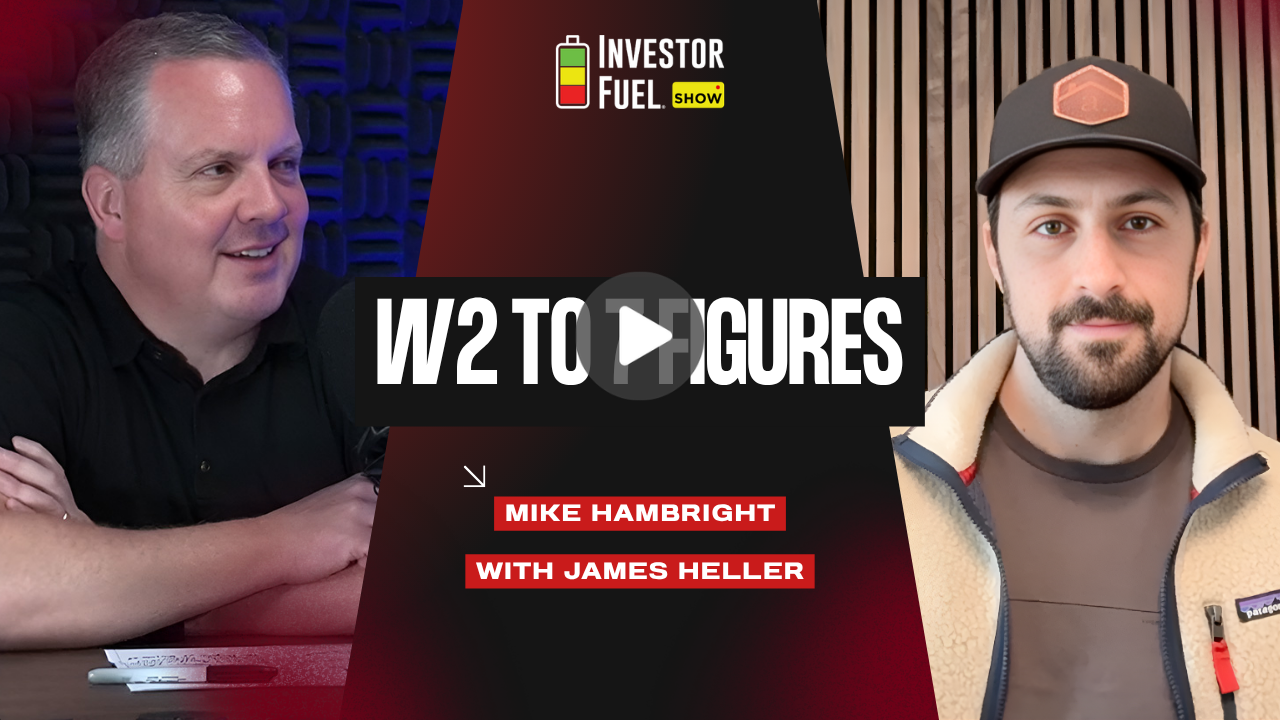
In this conversation, Mike Hambright interviews James Heller, who shares his journey from being an engineer to becoming a successful wholesaler in the real estate market. James discusses the importance of having a clear vision and intentionality in business, the challenges of transitioning from a W2 job, and the significance of building a scalable business model. He emphasizes the need for effective team building, creating a strong company culture, and the role of KPIs in motivating the team. James also highlights the value of community and networking in achieving success in the real estate industry.

Professional Real Estate Investors – How we can help you:
Investor Fuel Mastermind:
Learn more about the Investor Fuel Mastermind, including 100% deal financing, massive discounts from vendors and sponsors you’re already using, our world class community of over 150 members, and SO much more here: http://www.investorfuel.com/apply
Investor Machine Marketing Partnership:
Are you looking for consistent, high quality lead generation? Investor Machine is America’s #1 lead generation service professional investors. Investor Machine provides true ‘white glove’ support to help you build the perfect marketing plan, then we’ll execute it for you…talking and working together on an ongoing basis to help you hit YOUR goals! Learn more here: http://www.investormachine.com
Coaching with Mike Hambright:
Interested in 1 on 1 coaching with Mike Hambright? Mike coaches entrepreneurs looking to level up, build coaching or service based businesses (Mike runs multiple 7 and 8 figure a year businesses), building a coaching program and more. Learn more here: https://investorfuel.com/coachingwithmike
Attend a Vacation/Mastermind Retreat with Mike Hambright:
Interested in joining a “mini-mastermind” with Mike and his private clients on an upcoming “Retreat”, either at locations like Cabo San Lucas, Napa, Park City ski trip, Yellowstone, or even at Mike’s East Texas “Big H Ranch”? Learn more here: http://www.investorfuel.com/retreat
Property Insurance:
Join the largest and most investor friendly property insurance provider in 2 minutes. Free to join, and insure all your flips and rentals within minutes! There is NO easier insurance provider on the planet (turn insurance on or off in 1 minute without talking to anyone!), and there’s no 15-30% agent mark up through this platform! Register here: https://myinvestorinsurance.com/
New Real Estate Investors – How we can work together:
Investor Fuel Club (Coaching and Deal Partner Community):
Looking to kickstart your real estate investing career? Join our one of a kind Coaching Community, Investor Fuel Club, where you’ll get trained by some of the best real estate investors in America, and partner with them on deals! You don’t need $ for deals…we’ll partner with you and hold your hand along the way! Learn More here: http://www.investorfuel.com/club
———————–
🎧 Subscribe to the Podcast
Apple → https://podcasts.apple.com/us/podcast/investor-fuel-real-estate-investing-show/id943707421
https://open.spotify.com/show/0yjlEMMn52BRrrlhfxCn4S?si=48f4b577276246e6
YouTube →
https://www.youtube.com/@investorfuel
🤝 Stay Connected with Mike
Follow on Facebook → https://www.facebook.com/realmikehambright
Follow on Instagram → https://www.instagram.com/realmikehambright/
Follow on Linkedin →
https://www.linkedin.com/in/mikehambright
📈Free Training and Resources for Professional Real Estate Investors
Acquisitions Manager Hiring Guide → https://my.investorfuel.com/if-lm-optin-acquisitions-guide
COO Hiring Guide → https://my.investorfuel.com/mm-lm-coo-hiring-guide
Executive Assistant Hiring Guide → https://my.investorfuel.com/mm-lm-ea-hiring-guide
Fuel 5 → https://my.investorfuel.com/mm-lm-fuel5
Triple Your Profits Masterclass → https://go.investorfuel.com/triple-your-profits
🏠Free Training and Resources for New Real Estate Investors
Rehab Live → https://my.investorfuel.com/rehab
Find Your First Deal in 5 Days challenge → https://go.investorfuel.com/find-your-first-deal-5-day-challenge
Join My next 4 Day Live Training Event (Virtual)
https://investorlaunchpad.com/
Resources and Links from this show:
Listen to the Audio Version of this Episode
Investor Fuel Show Transcript:
Mike Hambright (00:00.99)
Hey everybody, welcome back to the show. Today I’m here with my good friend James Heller, operates out of the Denver market. And we’re gonna be talking about how he transitioned from a W2 business to a pretty decent volume wholesaler. He’s building something really special, very intentional about what he’s creating here. And that is definitely a key to success that we’ll talk about today is going into everything with a very clear open mind as to what it is you’re trying to accomplish. He’s gonna share some tips and some takeaways to make this a little bit more applicable.
than maybe our average show. So James, good to see you on the show, buddy. Yeah, yeah, proud of all you’ve accomplished, man. I’ve seen you kind of come a long way just in the few years that we’ve known each other. And so I’m excited to share your story with folks today. Yeah. Yeah. Well, but you’re just getting started. So the road’s not ending. Don’t think that you’re almost there, right? Yeah. Hey, before we get started, tell us your backstory. You have an interesting backstory and I wanna.
James (00:31.502)
Good to see you, Mike. Thanks for having me. Appreciate it.
James (00:42.552)
Yeah, for sure. Yeah, it’s been a long road.
Mike Hambright (00:58.26)
Share that with everybody.
James (00:59.874)
Yeah, for sure. I worked for a long time, as an engineer, I was trained as a optical physicist. So I worked on laser systems for semiconductor manufacturers for a long time. and now I buy houses. So, so like one has nothing to do with the other. but yeah, I did a lot of world traveling. Like I spent a lot of time in Taiwan, in Germany, in Korea, working in like clean room facilities.
And as COVID hit, we got into kind of like a work from home situation, like a lot of the tech companies. And I had some free time on my hands. And so I kind of use that to start growing a wholesaling business on the side. I was literally just cold calling people like in between meetings at lunch, like after work, whatever, until I started getting some deals.
And then I basically use that to like springboard myself out of the W2 job and into running this business.
Mike Hambright (02:02.984)
Yeah. The average engineer, would you consider yourself an introvert or a lot of engineers are introverted or?
Would you consider yourself an introvert really? Yeah, I wouldn’t have thought that about you, but I think about it differently now. You might be surprised to think that I definitely am more introverted than I used to be, even though you probably know me as, I obviously I’m on a podcast right now, but yeah, I think part of it is just a business maturity. And I kind of realized the more I talk, the more tasks I get. So it’s kind of forced me to not talk as much in some instances, but so it’s kind of an alien thing, right? To go from an engineer that’s a little bit more
James (02:11.491)
Let me first.
Mike Hambright (02:39.446)
self-professed as an introvert to a cold calling. So, truthfully, that keeps a lot of people from getting started because they’re so out of their comfort zone. What was driving you to kind of do that?
James (02:54.926)
I actually had a buddy at work who had done the same thing. So he was in the Boise market and he had some success with this and kind of springboarded his own business. So that kind of gave me like some of the proof, which was cool. But I swear, like the first time I tried to cold call somebody, like I stared at my phone for probably 10 minutes before I would just dial the number and I was terrified like that they would pick up. Like I was hoping that they would not pick up. So I didn’t have to say anything, but
Mike Hambright (03:00.711)
Okay.
Mike Hambright (03:06.546)
Yeah.
Mike Hambright (03:13.182)
Hahaha
Mike Hambright (03:19.837)
Right.
James (03:22.826)
after a few reps, like you just have these conversations and you feel silly and you feel like a dumb dumb in the beginning, but you build confidence over time and you’re like, okay. This is how this conversation goes. This is what I say when they talk about this. This is my goal of the conversation. And you start to kind of break it down and understand what you’re talking about. But honestly, I’m still not super extroverted. I think there’s certain topics where I could talk endlessly, but at like,
Mike Hambright (03:42.534)
Mm-hmm.
James (03:52.556)
party, like I might be the most boring guy in the room because no one wants to talk about real estate and KPIs and building a business, you know?
Mike Hambright (03:56.052)
Yeah
Mike Hambright (04:00.584)
Well, they’re more likely to want to talk about that than physics. Depends on what room you’re in, I guess.
James (04:03.872)
Yeah, I mean, that you can. Yeah, nobody wants to talk about laser engineering. But yeah, like there’s certain topics, like it’s very topical, right? Like the things that you’re comfortable just riffing about, like you could talk for hours. But then there’s other things that are just tough. Like you have no interest. Like I’m not really a sports guy, for instance. Like when people are talking about baseball, basketball, football, like I have nothing to add. So it’s very like different depending on the topic.
Mike Hambright (04:30.77)
Yeah, yeah. My guess is for, you I think there’s a lot of, you know, our avatar for this show is generally the pro level investor, but of course there’s probably some newer folks listening. if you’re an engineer out there, would you say, I guess part of it is like, you’re super uncomfortable with cold calling, for example, those initial kind of days, but you probably tied it back to a process. Like, I’m just gonna follow this process, right? And that kind of…
eliminated some of the fear of like talking to somebody because like, I’m just following this procedure. Would you agree with that? Yeah.
James (05:01.582)
Yeah, totally. I mean, I had like a very methodical conversation that I would have with people. And after the call, I would look at it be like, okay, where did this go off the rails? Like it didn’t go well. And then I could circle that exact point and be like, okay, next conversation, we’re going to do that better, right?
Mike Hambright (05:10.92)
Yeah.
Mike Hambright (05:17.679)
Yeah. Yeah, so like the most extroverted people would never do what you just said. There’s no after action review. There’s no like, how do I improve? It’s like, man, this is just what I do. I just pick up the phone and talk to people, but they’re not really methodical in their approach for how do I do this better next time generally. Yeah, that’s great. Yeah. And you build a pretty, tell us a little bit about your business today. You run a pretty good size wholesaling operation out of Denver. Tell us a little bit more about that.
James (05:33.784)
Yeah, totally. Totally agree.
James (05:42.86)
Yeah. So we have a 10 person operation right now. we’re growing quite a bit. So my big focus is hiring right now. but yeah, we’re running like a seven figure wholesaling business. I own a rental portfolio. do some fix and flips occasionally. just kind of depends, but yeah, really what we’re really, really good at is marketing and sales. And so I really try to focus on those two things rather than branching out too, too far outside of our core competence.
Mike Hambright (06:09.747)
Mm-hmm.
James (06:12.494)
but yeah, I mean, since I started roughly like five or six years ago, we’ve basically doubled our revenue each year, which has been really cool. Cause like you see this explosive growth and like, there’s so much opportunity in the beginning. So I think it’s really exciting. to me, like we’re reaching sort of a point where I feel more like a built out company at this point. Like we have people filling basically every role on the team.
Mike Hambright (06:21.479)
Mmm.
Mike Hambright (06:27.336)
Yep. Yeah.
James (06:39.842)
We have SOPs for every role on the team. Like we feel pretty confident in what we’re doing. And so now it’s just a matter of finding the right people to put on the bus. Because I think we have a model that works really, really well. We have marketing that works really, really well. And so it’s just getting the right people on our team to keep growing.
Mike Hambright (06:58.322)
Yeah, so you’ve come into this because we’ve had a bunch of conversations in fact even before we hit record today, but you’ve talked a lot about being very intentional with your goals of like not being enslaved to the business and I think there’s a lot of folks that you know have had less success than you even that have a decent business and they’re just hustling really hard but they’re not they don’t really spend a lot of time thinking about how do I get myself out of the way which you are a lot of people are just like man if I if I just like work all weekend I’m gonna make like another
or whatever, right? mean, there’s a lot of people that are just caught in that hustle. So maybe kind of share, you know, a little bit about the way you think about this and then maybe share some lessons learned about what it takes to truly build a business that is, I’m not saying, you don’t even say that it operates without you now, but that is your intention is like, how do you pull yourself out more and more? So just talk about some of the, you know, I guess some of the lessons learned on that journey.
James (07:55.086)
Yeah, for sure. I mean, the way I like to think about business is as a circle, basically that operates with a bunch of different pieces, right? So it’s not just real estate. Like every business operates in a number of different ways. And in the beginning, you’re doing every piece of that business, right? So in wholesaling, it’s probably lead generation.
sales, transaction coordination, then disposition, right? Those are kind of the four main components. then admin stuff is always there to me. Like that should always be a person’s first hire. Just get rid of those little tasks. And then you probably have like some operational needs once you have a bunch of people on your team. And so to me, like that’s a full circle business. And so as I was growing from just me, I would start to think, okay, like what’s my constraint that
me from doing more business today, right? And in the very beginning, like I was the one cold calling. So I thought, okay, like if I had a cold caller who would just call people and I could just do the sales calls, I’d probably do more business. So that was my first hire, right? And then I thought, man.
Mike Hambright (08:59.219)
Mm-hmm.
James (09:03.606)
Okay, I’m fine at sales, but I’m not like the best in the whole world. And so if I had someone doing the sales, I could probably do more business, right? And I’ll just go sell the deals. And so I think about things just in that way, like what is the one constraint that is stopping you from growing? And I think one struggle that a lot of people have is
Mike Hambright (09:15.849)
Mm-hmm.
James (09:24.652)
They think about a million different things that they could do that would increase their business. And the truth is like, there probably are a million different things that you could do, but a lot of times like there’s one thing that would really move the needle. And so like when I wake up every morning, I look at my one goal for the week. I only have one, right? And I tried to just focus down on that one thing as much as possible. So like right now, when I look, it’s hiring.
Mike Hambright (09:31.454)
Right.
James (09:49.826)
Right, like I wake up every single day, how can I hire another person to my team who will be a great team member, be part of our culture, do really, really well here. That’s like my only focus right now. So that’s kind of how I’ve thought about things as we’ve built from just me to like a 10 person operation now.
Mike Hambright (10:00.596)
I’m here.
Mike Hambright (10:05.746)
Yeah, for folks that are out there that are listening to this, like, how do you decide what that one thing is? Because it’s, you’re, if you don’t have, let’s just say if they don’t have the engineering mind, like that, right? It’s like a lot of people just get overwhelmed with all that they could do and they end up doing nothing often. I mean, and what ends up happening is just because I, you know.
maybe I have been this avatar in the past, is you fill it up with a lot of busy work and it makes you feel productive, it wasn’t, it was just busy work. It certainly wasn’t as productive or as intentional as it could be. So how do you narrow that down to like one thing?
James (10:42.114)
Yeah, for sure. mean, what was helpful for me was thinking about my business in segments, right? So like I just said, basically like lead generation sales, transaction coordination, and then disposition were like kind of the four chunks of the business. And so I would just try to think, like if I had more time or more of something, what would take me to the next level, right? Like if you’re on sales calls all day long,
Mike Hambright (10:56.756)
Mm-hmm.
James (11:10.328)
Do you need more leads? Like probably not, right? Like you have more leads than you can handle right now. So that’s not what you need. However, what do people go and do? Like they go spend more money on marketing a lot of the time, right? Cause it’s easy and it’s exciting to have more leads coming in, but it’s not their constraint. And likewise, if you’re locking up a lot of deals for instance, but you don’t have enough time to go sell all of these deals.
Mike Hambright (11:16.402)
Yeah.
James (11:35.542)
you don’t have a deal problem, right? You have a dispo problem. And so you always have to think like, what is limiting me from hitting a higher revenue this month? And just be really methodical about narrowing things down to just one simple thing. Like the answer is usually pretty simple. I bet if you even typed in like your situation into one of these like AI bots right now, like Claude or something like that, it would literally say, Hey James, here’s your issue.
Mike Hambright (11:51.529)
Yeah.
James (12:02.552)
you know, and here’s how I can help you solve it. But I think that is a problem that stops a lot of people from growing is just chasing too many things at once.
Mike Hambright (12:11.132)
Yeah, and it has like…
There’s unintended consequences to you. I would say what’s a pretty common scenario is, let’s just say the scenario you gave, people are spending all their time on sales, they’re getting contracts. You and I both know there’s a lot of wholesalers that lock up pretty much anything they can and then they can’t sell it. Which I don’t love that model for sure. I don’t love canceling contracts. I’ve almost never canceled a contract in all my time. They sold to me because I do what I said I was gonna do.
But anyway, we won’t debate that so much. then where a lot of people end up canceling it is they just…
you know, they hadn’t, they’ve been using the same Dispo list forever. They sent out a couple emails, nothing happened and they cancel it. But here’s the kicker. Not only did they not get that revenue, what they usually do, because we’re always looking for somebody to blame, is we say, the marketing doesn’t work. Like this wasn’t a good enough lead for me to get it deeper. And then they go cut marketing and that like only makes things worse. And they don’t feel it today, but they’re going to feel it in 60 days or 90 days when that marketing really starts to dry up. then they just basically, you know, a lot of times we’ll get
this mindset of like, I tried this and it didn’t work and therefore it does not work. And it’s like, well, the way you did it doesn’t work, but it doesn’t mean that it, you know, that doesn’t work as a whole, right?
James (13:31.01)
Yeah, yeah, it’s different, right? It’s I have the mindset like everything works like it all works, right? It’s like if you just do it until it works, everything will work. Any business will work. Any marketing channel will work. Like it will all work. But like you said, like where most people fall short is they just don’t put enough into that one thing and then they go run and they try something else. So yeah, I mean, that’s how maybe successful is really just focusing down on like one thing at a time.
Mike Hambright (13:51.966)
Yeah.
It’s.
Mike Hambright (13:59.209)
Yeah.
James (14:00.002)
But we know in this business, like there’s so many different paths that you can chase. Like even I think a very common one, like we’re at fuel and a lot of people talk about running like a wholesaling and a flipping business. For instance, I even think that’s a mistake personally. Like to me, a wholesaling business is marketing and sales and a flipping business is a construction company. And the two really have nothing to do with each other except you’re sourcing deals and you’re like, well, I might as well flip this.
Mike Hambright (14:11.123)
Mm-hmm.
Hmm.
Mike Hambright (14:20.979)
Mm-hmm.
James (14:29.75)
I’m not a good flipper, right? Like I just haven’t done super well there. And so personally, I think people should focus down on the one that makes that they’re really good at. Like if you’re a really good construction guy, go buy deals from wholesalers and agents and stuff, right? There’s nothing wrong with that. but it is difficult to build those two businesses at the same time. Like they look similar, but the truth is like they’re really not.
Mike Hambright (14:33.406)
Yeah.
Mike Hambright (14:37.789)
Yeah.
Mike Hambright (14:42.195)
Right.
Mike Hambright (14:51.804)
Yeah, that’s interesting that you say that. Yeah. I mean, there are some people that set up their wholesaling business as like you said, a marketing and sales operation. And then they might kind of quote, sell a deal to their construction company that does the fix and flip. But you know, just like we talked about upfront is like, well, that needs to be resourced with its own team. Like you don’t have people that are kind of crossing over so they can really focus. But yeah, I think most people probably tend, you know, most people in the circles that we run in probably tend to just say,
I’ll cherry pick some of the best rehabs and I’ll kind of wholesale the junk or whatever. quite frankly, there have also been plenty of people that I’ve known over the years that end up trying to rehab their junk because they couldn’t wholesale it. mean, that is a losing strategy for certain. If you couldn’t wholesale it and nobody else wanted it, like you shouldn’t rehab it either.
James (15:36.43)
Yeah.
James (15:39.906)
That’s such a good point too. And like I’ve fallen into that trap where I’m like, man, I know this is a good deal, but nobody wants it. And so I’ll just take it down because I know better than them. Right. And like, that’s a really good barometer on like whether or not a deal is solid or not. Like if nobody wants it, you should be a little bit skeptical.
Mike Hambright (15:59.891)
Yeah, yeah, nobody, Yep, let’s, can you share some, I know you’re in the process of building up your team right now and that’ll.
that’ll be an ongoing process, right? But maybe just share some of the lessons learned with how you can pull yourself out and kind of replace yourself with people that are stronger than you and are focused on that task. Like maybe just share some lessons learned because I think that’s, a lot of us started as individual contributors. Like we just had to wear, we had to wear a lot of hats, right? So it is kind of hard for investors often to give up some of those seats.
But in fact, it has to happen to be able to scale beyond yourself. Maybe just share some lessons learned.
James (16:42.998)
Totally. Yeah, that that for sure is a challenge and it’s tough because you’re trying to run the business while building it at the same time. So something like for me that was super helpful is I write everything down, right? Like I just had a conversation with one of my team members today. Like if it’s not written down.
As far as I’m concerned, it doesn’t exist, right? Like it’s very hard to hold people to standards that aren’t written down. And so I think people get overwhelmed writing things down because they’re like, well, where do I start? Like, what’s the structure? Like, what should this look like? I would just write down every single thing that you do. And when you hire somebody on, like there should be some basic instruction about what do you do and how do you do it? Right? Like, I think that’s really helpful.
I’m also a big proponent of loom. Do you use loom?
Mike Hambright (17:33.94)
I use some competing products, but yeah, same principle, yeah.
James (17:36.824)
similar thing. Like to me, like recording your voice or recording like a screen share is like the lowest bandwidth item that just helps so much. Like if you find that you’ve done something a number of times, recording yourself doing it and sending it to someone else, a lot of times we’ll get that off your plate forever, right? Which is really cool. so those have definitely been some lessons learned. another one is like, and this is a big one I’m learning right now.
Training new people takes a lot of bandwidth and so you just kind of have to accept that like when I hire somebody new I basically spend every day with them for the first week
cause I want to just, I want to set them up for success. want to transfer all my knowledge to them as quickly and easily as I can. And so it’s also helpful to hire multiple people at once because all of the sudden you’re cutting your bandwidth need in half or in thirds, right? If you hire two or three people, you can train all of them at once, which I think is really powerful. And there’s also sort of a camaraderie that people get by starting on the same day.
Mike Hambright (18:32.509)
Right.
Mike Hambright (18:41.286)
Mm-hmm. Yeah.
James (18:41.942)
Right? They’re kind of like, we’re in this together. We’re facing challenges together. They might work on things together. And I think that’s actually a really powerful strategy that not a lot of people think about. And you know, not everyone makes it in this business. Like that’s just the truth. And at 90 days, if somebody leaves your team, you’re going to be devastated if you invested all this time and money into that person. But if you hired three of them and two of them work out, you’re going to feel a lot better about the whole situation.
Mike Hambright (19:10.292)
Sure, yeah. Are you utilizing AI? So in terms of your, let’s just say, new employee onboarding training, you talked about Loom, are you using any AI tools to kind of improve your training process as you go along to make it more efficient for you? Yeah.
James (19:24.886)
I just started. I’m not like the biggest AI adopter in the whole world, to be honest, but I’m, starting to get there for certain things. And I think it’s actually super helpful for SOP building. Cause SOP building, like it can be tedious. And the problem is like, I’ve written five years of SOPs, right? So like they all look different and we’ve updated things and blah, blah, blah. And so I literally have just plugged things directly into like Claude is the one that I use.
Mike Hambright (19:30.878)
Okay.
Mike Hambright (19:36.892)
Right, exactly.
Mike Hambright (19:54.249)
Yep.
James (19:54.542)
and say, hey, rewrite this using our company branded colors, point it to my website, it’ll do that. Write these all in the same structure. And if it’s like a sales training, I could say, hey, write this in the style of Steve Trang and Jerry Green, right? And boom, like this whole thing that would have probably taken me a day, it’s done in like 10 minutes. It’s not perfect. Yeah.
Mike Hambright (20:08.83)
Mm-hmm.
Mike Hambright (20:12.978)
Yeah. Yeah. It’ll take most people way more than a day because their intention is to get to it and they just never do. Yeah.
James (20:20.258)
Yeah, and it’s just a to-do list item forever. So like it’s been very helpful for that. Just like those little ticky tacky things that you really don’t want to do that just stay on your to-do list forever. So yeah, it’s been very helpful for that.
Mike Hambright (20:33.704)
Yeah, and you can, know, you record your conversation, just thinking out loud here, if you record your conversations when you’re onboarding, somebody’s let me know what questions you have, and you just record that, and then you can take the transcript from that and just say, hey, this is my SOP, but they have these questions, like kind of go back and look and see, do we need to add this to the training to kind of clarify, or you just kind of start getting, a lot of the questions you get asked are FAQs, like they’re gonna get asked again, right?
James (20:56.248)
That’s a really good point.
Mike Hambright (20:56.724)
So yeah, yeah, that’s great. Yeah, because I think what happens with building out the team is I’ve seen many, many times over the years, and I’m guilty of these things too. Like lot of times when I’m talking about these things, I’m talking to myself too, because there are lessons I’ve either not followed or that I need to follow more or learn the hard way maybe.
is that we tend to hire fast and fire slow, right? And we hire people, I kind of use the analogy of like, if you ever go to the grocery store when you’re hungry, you end up like just filling your cart full of a of junk you don’t need just because you’re like hungry. And you’re like, man, I really need some Cheetos right now. But anyway, you just end up, you know, buying a bunch of stuff that you shouldn’t buy. And it’s the same problem when we hire. We like, we wait too long and then we just want some way they can fog a mirror.
James (21:31.736)
Yeah.
Mike Hambright (21:45.462)
we kind of take shortcuts. like, yeah, I don’t know. I see a couple of concerns, but I just need somebody right now. And you pay the price for those decisions in the long term, for sure.
James (21:56.12)
Yeah. And that’s a really great point too, is like there is no way to hire somebody and have them be ready today. Right? So you kind of have to anticipate the need in the future. Cause like for me, it probably takes me several weeks, if not months to find the right person to hire. Now I need to onboard that person. They probably take 60 to 90 days to really be trained. And so like you could be five or six months deep by the time this person is really like a fully functional member of your team.
Mike Hambright (22:17.524)
Mm-hmm.
James (22:24.33)
And so if you think, we’re good now, it’s like you have to somehow project your thinking six months down the road to say, okay, like we’re good now, but what can I do today that will make future me happy, right?
Mike Hambright (22:38.866)
Yeah. Hey, one thing I want to ask you is, you know, I know you just recently, rather than recently moved back to Denver. You were operating virtually before. What kind of lessons learned do you have being in your market, a little more physical and hands-on than a virtual? What are some lessons learned there?
James (22:58.038)
It is so difficult, I think, to build a company culture fully remotely is something that I’ve learned. We now do, we don’t have an office right now, but we do weekly team meetings that are face to face. And then we do like a lot of virtual meetings and things like that too. But since we’ve done actual like team building events, like we’re going to dinner tonight actually to celebrate our biggest week of all time last week, which is cool. But like you get to do these things.
Mike Hambright (23:21.812)
That’s great. Where are we meeting?
James (23:25.998)
Yeah, we’ll fly you in. But yeah, like all of these things make people happy to work with you. And they also make them stick around. Right. And I found this too, like when I was working at my tech job in the semiconductor industry, like the second we all went work from home,
Mike Hambright (23:28.87)
Hahaha
James (23:46.283)
It was like the wild west like everyone was willing to leave the company for literally anything like I don’t know if you remember this like people were getting raises from other tech companies and people were jumping ship like crazy because there was no personal connection anymore where before we’d all eat lunch together we’d go out for dinner together like the company would sponsor happy hours and things like that and nobody left like everyone was super happy so I kind of took that lesson into our personal business now
Mike Hambright (24:00.574)
Yeah, yeah, yeah.
James (24:14.574)
And the truth is like people want to work for a company where there’s culture and It makes them happy and it makes them passionate and they like the people that they work with Otherwise, it’s just a job right and they really have no personal connection to it
Mike Hambright (24:27.016)
Yeah. Yeah. And I think especially in our, in our industry, like you’re not doing deals every, I mean.
most of us, you included, not doing deals every day. Like, you know, might do a couple a week, right? And so it’s like, there’s a lot of downtime to think about like, well, are we even going to get another deal again? Like there’s just all this doubt. there’s lots of, you know, it’s like, there’s some big ups, but there’s lots of just kind of going sideways, right? And it introduces people to like think a lot about, are we in trouble or like whatever it might be. It’s not like we’re selling tacos here where you’re just selling them all day, every day. And right. And so it forces people’s
minds to wander on. Does this even make sense to be here? And if you’ve got a community of people that are, you know, talking about how to get another deal or like, you, you know, maybe even back to KPIs, like are we doing the activities to help us get more deals? I think if everybody’s off in their own foxhole, like wondering that, it’s not good for the business.
James (25:21.123)
Yeah.
James (25:27.15)
Totally agree.
Yeah. And it’s tough because we’re in like what I always call like a low volume, but a high margin business, right? Like I actually just interviewed somebody yesterday and he’s coming from a, like a cell phone retail store and he has a thousand customers walk in every day and they probably sell 50 of them, but their ticket is like a hundred bucks. Right. So I’m like, okay, that’s cool. But the thing there is like, you get these little hits of dopamine like all day, right? You’re like, another customer. Can I sell them? Maybe I do.
Mike Hambright (25:34.312)
Right.
Mike Hambright (25:44.679)
Right.
Mike Hambright (25:54.162)
Right. Yeah.
James (25:58.441)
Maybe I don’t like whatever with our business like
It’s not like that, right? Like you don’t get as many opportunities and you probably do less sales. But when you do, mean, like last year, our average deal size was 25 grand, right? So that to me, makes it especially hard to get people past the learning curve when they start. And I try to make it super clear. like, listen, it’s very unlikely that you will do very much business within the first 60 days here. And so I need you to bear with me. Here’s examples of all the people that have been successful on our team, but there’s a little bit of like,
like belief and trust that people need to have when you’re in a business like this.
Mike Hambright (26:35.816)
Yeah. Yeah. So what are some things that are moving the needle for you right now? I only have a few things that you might want to share here.
James (26:43.992)
So a huge one, like we’re very KPI focused and it goes with what we were just saying, like you need leading metrics in order to keep people engaged on big ticket, but like low volume sales, right? So like something that we’ll celebrate is how many appointments did we go on this week? How many people did we talk to? Right? Like those KPIs are really, really important.
And you can make it fun, right? Like you can gamify those things and say, Hey, whoever sets the most appointments this week gets a hundred dollar gift card to Amazon, right? Like little things like that sometimes will make people excited. And the way that we look at these is we do a daily huddle where we review all of our KPIs. And I can tell you like one massive change we made at the start of the year. our daily huddle used to be at 10 30.
And so I felt like I’d have time to go to the gym and make breakfast and kind of read my emails and blah, blah, blah. We’d do it at 10 30. It would end at 11 or 11 30 or whatever like that. And what I found is that a lot of people weren’t really getting started with their day until our huddle was done. All right. So we moved it to eight 30.
Mike Hambright (27:45.508)
yeah.
James (27:49.943)
And I can tell you like it has made a massive change in our business. Like everyone gets up at 6 a.m. They go to the gym. They worked out. They’re ready to go. They’re excited in the morning. And then when we finish at nine, they’re amped and they have the whole day. So like that was a small tactical change that has made a really, really big difference this year.
Mike Hambright (27:54.836)
Hmm.
Mike Hambright (28:05.652)
That’s great.
Mike Hambright (28:09.992)
Yeah, yeah, I think that’s one of the, you know, the lesson that I’ve kind of learned over the years is like, I want a lifestyle business. Like I want to have the lifestyle of an entrepreneur, but a lot of people on our team have that more of the employee mindset. I’m not trying to knock that. I’m just saying like,
you know, you probably don’t want to hire a bunch of entrepreneurs that work for you because they’re going to have other goals. So don’t treat them like that. treat them like, you know, I think I don’t if there’s any lessons that you learned in corporate America, but when I first started as an entrepreneur, I always thought, man, I have all this like formal education and I don’t need any of it. But the truth is, is like as time’s gone by, I realized the lessons learned there and how I can apply it to the business. so, you know, don’t, don’t, don’t let everybody get a late start like you just because you as the owner want that.
So that’s a good one.
James (28:58.722)
Yeah, yeah and also like I think that a lot of people do appreciate some structure, right? Like as entrepreneurs, we appreciate no structure. Like we want to build the structure and we want to come up with the ideas. But people that are like really, really good at their job, they want that structure, right? They’re like, listen, build me the lane and then just let me drive as fast as I can, which is awesome. But that has been.
Mike Hambright (29:14.526)
Yeah.
James (29:22.886)
Struggle for me like I really like working from home personally and like I have no problem with it like I get up I go to the gym I have a very regimented schedule But I’ve hired especially like some younger folks to my team that maybe haven’t worked from home before and that’s a challenge for them Because they’re used to maybe going to an office one guy even told me on my team He was like James. I don’t even know when I should go to lunch Because I don’t see other people going to lunch and I’m like, well, are you hungry? Like if you’re hungry go
Mike Hambright (29:38.9)
Yeah.
Mike Hambright (29:49.108)
Yeah. All right.
James (29:52.367)
But it was like such a foreign concept for him and he actually came from the military. So like he was very regimented. But that is a problem. Like when you think that everybody operates exactly the same way as you do. So you really have to find out like, and I asked people specifically now I’m like, do you prefer working from an office working from home? Like what’s your working style? Like how can I support you to do your best work? Right?
Mike Hambright (29:58.782)
Yeah, yeah.
Mike Hambright (30:16.99)
Yeah, yeah. Do you guys use, do you use Slack in your team? Okay, yeah, yeah.
James (30:22.434)
We use Google environment for everything that’s similar.
Mike Hambright (30:25.618)
So I know in Slack you can have like, we don’t, I don’t do this, but we use a lot of Slack huddles, which is basically, it’s like a zoom replacement for a meeting. But I know people that just literally sit in a Slack huddle all day long with their team and you know, they might have it muted out, but they’re just like, if they ever need to talk or interact, like the whole team’s like right there, they’re all kind of, you know, it’d be the equivalent of if they were all sitting in an office or a bunch of cubicles, like working together. So it’s a, it’s a way to feel like you’re,
James (30:51.15)
That’s interesting. Yeah.
Mike Hambright (30:55.542)
kind of there, you know, together without necessarily being physically together, I guess.
James (31:00.152)
That’s really interesting. Yeah. I never really thought about doing that, but that, yeah, that is kind of a, an idea. there are a couple other kind of like small tactical things that I felt made a big difference for us. one is I think that people’s followup is generally leaving a lot to be desired. I think people tend to say, we’re not getting very good leads.
or they just go spend more money on marketing. But I think the amount of follow up that it truly takes to get a good return on ad spend, a lot of people don’t understand. And so if you’re not doing a triple tap voicemail and text, it’s a huge mistake. Every time that you call somebody, you call three times, you leave a voicemail on the last one and you send a text on the last one. And I think a lot of the more experienced folks like, you know,
Everyone in platinum and fuel like we’ll probably say yeah, we know that we should triple tap voicemail and text I Wonder how many of their teams are actually doing it? Right. It’s just one of these things were like until you get into the weeds of your business You don’t always understand what’s going on and it can look on the surface like you have a lead problem but the truth is that you have a follow-up problem and you can end up chasing the wrong pony and spending more and more and more on marketing and All of a sudden your return goes down and down and down and down
And that’s a quick way to like build operational expenses without getting the maximum profit out of it. So that’s like my measure for stepping up marketing. I always want to make sure that we’re at least five X, maybe more, before I step up what we’re spending. but your team will always, always tell you that it’s a lead problem. don’t have enough leads. We don’t have good enough leads, but a lot of times it’s really a follow-up problem.
Mike Hambright (32:51.88)
Yeah, that’s a good one.
James (32:54.68)
So that and I think what goes with it too is.
Really having like healthy internal competition among your team, think pushes people to do their best work. which means a lot of times, like if you have one person in a role, it’s challenging to benchmark their performance, right? Because you don’t know, like should they be doing better, worse? Are they great? Are they terrible? Like it’s really hard to say where we’ve been really successful is when we have two or three really fantastic people in the same seat.
There’s a very like healthy competition among them and it shouldn’t be, it shouldn’t be like a negative energy, right? Like it should always be positive, but I’ve seen our top closer, we were down to just him at one point and his return actually went way down. He was doing less deals until we hired more people to sort of compete with him.
Mike Hambright (33:29.06)
Mm-hmm. Yeah.
Mike Hambright (33:34.642)
Yeah.
Mike Hambright (33:50.098)
Yeah.
James (33:50.863)
All of a sudden he’s crushing it. Like he was so concerned. He’s like, Oh, I’m going to have to split my leads with more people now. And I’m like, listen, dude, you’re going to be fine. He is like tripling and quadrupling what he was doing when it was just him. And he loves it. He loves training the other people. He likes to see who set the most appointments and all that stuff. So I think that makes a massive difference, especially in sales when you have somebody to benchmark yourself against.
Mike Hambright (34:04.542)
Yeah, that’s awesome.
Mike Hambright (34:18.238)
Yeah, for sure. Yeah, because people want that too. They want, everybody wants, especially salespeople, like they want to compete. They want to win at a higher level, right? So yeah, sometimes it just forces, forces having more people that they can, you know, measure up against, I guess. Or not. Yeah. Yeah. Cool.
James (34:27.192)
Yeah.
Mike Hambright (34:40.478)
Good stuff, James. Well, hey, before we jump here, you’ve been a part of Investor Fuel. Now, would you mind just sharing a quick testimonial on your experience as being a part of the Investor Fuel family?
James (34:50.19)
Totally. Yeah, I joined Fuel when I was actually still working at my tech job. So I was going through the problem that a lot of people wrestle with is like, should I quit? It’s a little bit scary. I was making a lot of money at my engineering job. It was very much like the golden handcuffs effect and that was challenging.
And it was tough even like to spend money on joining a group. Like when you have a fixed income, think spending money on like personal learning and growth is especially challenging. It’s been a huge return for me. Like I talked with people that were in the same boat. It really helped me kind of take it to the next level. I think I ended up quitting my job like six months later.
Cause I just felt like I had like a community. Like it wasn’t just me all of a sudden. Like I had all these people that were dealing with the same thing, which was really cool. And some of the folks there are even in my local market. So like I’m very close friends with some of these folks. I go out to breakfast with them. We can talk about challenges that we’re having. So that was definitely a cool thing. I probably wouldn’t have met them otherwise. and then beyond that, like I met my marketing manager at fuel.
He’s probably made us millions of dollars at this point. And so you just never really know like what the benefit is going to be. It’s kind of hard to think like.
Undirect ROI right like if I spend a thousand bucks I’m gonna make five thousand bucks like it doesn’t always work like that But you might make one relationship as I did that ends up generating you millions of dollars And I go skiing with him too like we’re great friends now So I think that’s kind of a neat thing that is sort of hard to quantify upfront But the relationships have been really really powerful for me
Mike Hambright (36:38.238)
Yeah, thanks man, I appreciate that. If folks want to connect with you, where can they go?
James (36:43.414)
Yeah. So you can find me on Facebook and Instagram on Instagram. It’s Hellerman Industries. on Facebook, it’s just my name, James Heller. if people have questions about anything, I love talking about real estate so they can always give me a call or just reach out directly on one of those platforms. and then also for, for people who are like getting into wholesaling and they’ve maybe done a deal here and there and it’s a little bit overwhelming and they just feel like they don’t want to do the whole business.
We’ve hired people to our team that have been in that situation and they join us and they’re super, super successful because now they can just go do sales, right? Like we have a proven marketing machine that works. We know how to sell these deals. So if there’s anybody looking for a job, we are hiring just locally in Colorado. but anyone looking like I’m more than happy to talk with them. We’re growing really, really fast. So I would love to connect and just see if we can add value to.
Mike Hambright (37:39.902)
Yeah, that’s great. That’s awesome. James, thanks for joining us on the show today.
James (37:44.376)
Great talking to you, Mike. I really appreciate it,
Mike Hambright (37:45.394)
Yeah.
Yeah, always good to see you and thanks for always being a big giver. those of you that are watching, hope you got some value from today’s show. I think at the end of the day, one of the big lessons from here is to be very intentional about what it is you’re trying to accomplish. you know, even if you’re not an engineer, to kind of have that engineering mindset of trying to isolate variables and say like, how do I do this thing? There’s a million things you can do, but pick one. And I know it’s hard because it’s hard for me. I totally get that it’s hard for a lot of folks. So, but at the end of the day, if you’re very intentional about what is you’re trying to accomplish,
you’re very methodical about your approach to how you attack everything, you can achieve whatever it is you want. So, appreciate you joining us on the show today. We’ll see you next time. Thanks, buddy.
James (38:26.254)
awesome.
Go deeper on this topic