Subscribe via:



Show Summary
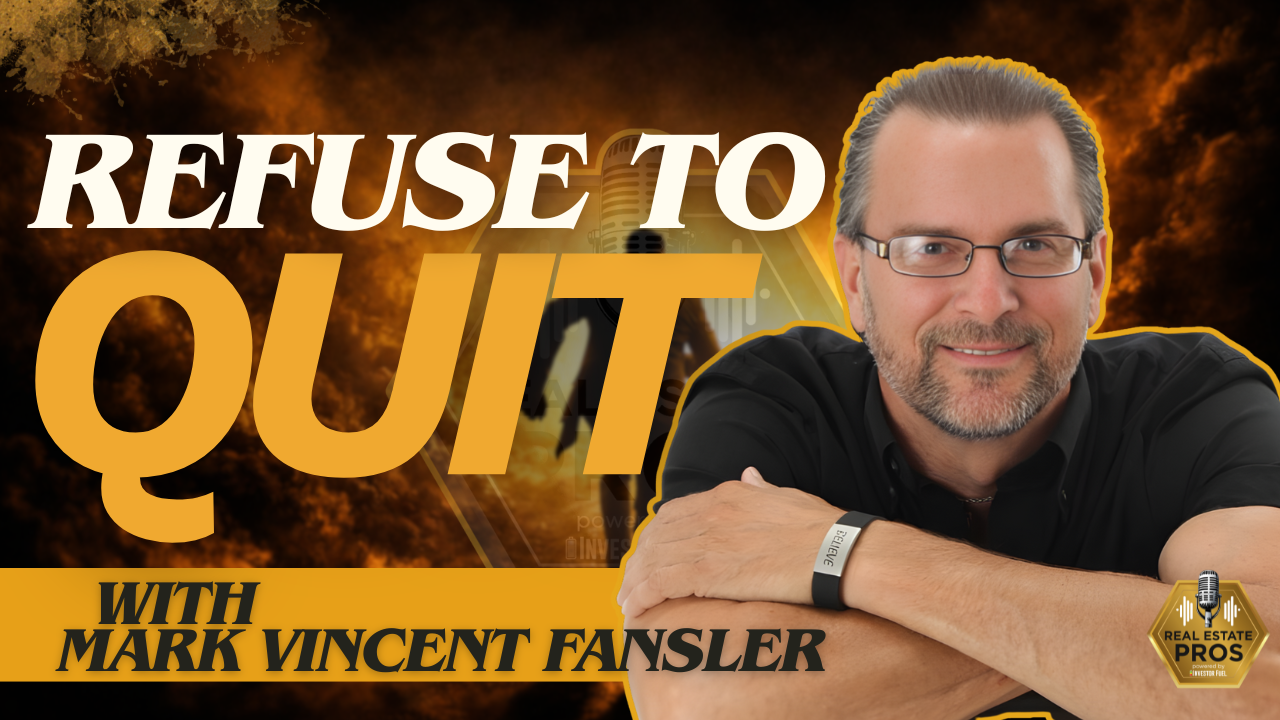
In this engaging conversation, Mark Vincent Fansler shares his journey from being abandoned at birth to becoming a successful entrepreneur in the commercial mixed-use real estate sector. He discusses the unique challenges he faces in raising capital for large projects, the evolution of his business ventures, and the exciting opportunities on the horizon. Mark emphasizes the importance of mentorship, personal growth, and the lessons learned from his past experiences, inspiring listeners to overcome their own adversities and pursue their dreams.

Resources and Links from this show:
-
Listen to the Audio Version of this Episode
Investor Fuel Show Transcript:
Mark Vincent Fansler (00:00)
My story is pretty simple. I didn’t come from a family of wealth or means at all. I was aabandoned at birth by my biological father. I spent the first few years of my life with my mother ⁓ struggling to make ends meet. I was adopted at age two by a guy I call Pop. I have nothing but respect for the guy. I can’t imagine what my life would be without him in it. ⁓ But his family ⁓ didn’t accept me as one of their own. They reminded me of it pretty regularly.
Quentin Edmonds (02:05)
Hello everyone. Welcome to the Real Estate Pros podcast. I am your host, Q Edmonds. Can you see this big smile on my face? This big smile on my face is because of this guy right here. Like I tell you all the time, people have a way of kind of giving me fired up right before we get started. And today is no different. Just listening to this gentleman tell his story, listen to what he’s involved in, listening to his energy and his infectious smile adds me.kind of motivated to do this conversation, to this conversation and do this podcast. And so I’m not going to take up too much time. I could give a grander introduction, but I’m not because you’re going to find out once he unpacked layers of different things that he involved in, you’re going to automatically get excited and see why I’m excited. And so I want to introduce you guys to Mr. Mark Vincent Fansler. Mr. Mark, how are doing today,
Mark Vincent Fansler (02:58)
I’m doing well, man. Thanks for having me on. I appreciate it.Quentin Edmonds (03:01)
⁓ man, thank you for being here. And like I said, I want to dive into it. I don’t want to take up a lot of time. I want, I want to hear from you. So listen, tell us what your main focus is these days. Tell us a little bit of the origin story of how you got to where you are now. We love the hero’s journey. And so origin story is perfect. And then also just tell us where you are in the world, what market you’re operating in. And so what you’re doing now, that origin story and where you are in the world.Mr. Mark, you got the floor,
Mark Vincent Fansler (03:32)
You got it. So I am in commercial mixed use real estate. And for those of the folks that are listening and don’t know what that is, it differs greatly from commercial real estate. Commercial real estate is a single lane. They’re either in retail or they’re in office or they’re in this or they’re in that. And that’s all they do. Commercial mixed use is not that. It is three or more occupancy types in the same project. And that can be any of them. ⁓And it depends on what market we’re in, which ones we pick, because they’ll need certain things. In some places, they’ll need different things. In other places, but the goal is to take those market, take those occupancy types, put a few people to get a few occupancy types together so that we can withstand any market cycle in any climate anywhere. Right.
My story is pretty simple. I didn’t come from a family of wealth or means at all. I was a
abandoned at birth by my biological father. I spent the first few years of my life with my mother ⁓ struggling to make ends meet. I was adopted at age two by a guy I call Pop. I have nothing but respect for the guy. I can’t imagine what my life would be without him in it. ⁓ But his family ⁓ didn’t accept me as one of their own. They reminded me of it pretty regularly.
between the things
you know, associated with being abandoned at birth and hearing from his family that I wasn’t blood
and hearing, you know, some of the comments that my pop would say to a child was received one way, even though it was intended to very different, right? So it scarred me in a way that until my late 40s, early 50s, it affected my self-worth in devastating matters, right?
I never felt I belonged anywhere. didn’t feel like I had earned my way into the rooms I was standing in or any of that stuff. What I do know is that around age 17, I had a vision that sort of came to me that I can see as clearly today as I did back then. And I saw myself getting out of a car at a job that I owned, people there working for me, for the company that I owned. And I just knew that that
meant something. And I didn’t know how I was going to get there. I just knew that I was. And all that pain that I had sort of bottled up from being abandoned at birth and hearing things like I didn’t belong and, you know, my pop saying things like, you know, he would he would be hard on me, right. And my mom would get on him and say, you know, let off of him, you know, the boys trying and he says, I’m just trying to make something of the
At the time, I would hear, he’s nothing now. He would say things like that. Now, as an adult now, I know that wasn’t what he meant. He taught me many incredible lessons. ⁓ But I used all that to fuel this ambition inside of me to prove everybody that I was worth something. I shouldn’t have been abandoned and I was worth more than they were giving me credit for. ⁓
and to prove to myself that they were wrong. They shouldn’t have left and this and that and the other, right? So over the course of my life, I graduated from high school and right into the military and after the military went right to work. Never went to college. The entire time, every step that I made, everything that I did was very intentional towards that vision I had when I was 17 years old.
Every course that I took, every study that I did, every seminar that I went to, every mentor I found myself in front of, everything that I did was to gain more knowledge to get me to that vision. And over the course of 30 plus years in a corporate life, I went from a carpenter for commercial mixed use companies to a senior vice president.
Quentin Edmonds (08:26)
andMark Vincent Fansler (08:40)
And when I got to a point where I felt like they could hand me a set of plans to anything and I can build it, I would leave operations, took a massive cut in pay and position to start over again in the other side of the business because real life was my university, right? So I left operations and went into business development, marketing, branding, contract negotiations. And 18 months later, I was a senior vice president again, only on the other side of the business.When I did that for a while and I got to a point where I felt like I already knew I could build it, now I knew how to create the relationships and negotiate and put it under contract and budget for it. Now I needed to know how the owners dealt with their side because I had always worked on the owner’s rep side. So I left construction, all commercial mix use construction completely and went into real estate development, did it again, took a massive cut in paying position.
went to work for a company and a year later, I was running their commercial mixed use efforts for the entire continental US. So I’ve seen this business from the ground up on all sides and found success in all of it. I don’t have a degree, but I am probably one of the most educated
people you’ll ever meet that does not have a degree because I never stopped studying.
Every day I’m reading something, I’m watching this or I’m part of this mastermind or I’m part of that just so that I can continue to refine my skills. And somewhere along the line I ended up ⁓
being keynote speakers around the country. Because people have started seeing the value in me. Because even coming up in a career, people would see me and I would challenge something that was happening because I knew from a practical perspective it wasn’t going to work. And I would get, where did you get your degree from? Until you get a degree, I don’t want you speaking to it. Months later, they would have to eat their words because I was right.
Quentin Edmonds (11:20)
Yeah.Mark Vincent Fansler (11:27)
At some point, they stopped asking me that question because they assumed that I had to degree because of the knowledge that I had. I just came at it a different way than most. So back in 2008 timeframe, I left my corporate life completely. I went into business for myself and found out very quickly that starting a business from scratch is very different than stepping into an established one and making it better. When I stepped into commercial,Construction as a commercial mixed use construction as an executive. joined a company that was making 30 million a year. Yeah, 30 million a year. And when I left them, they were making 130 million a year. I knew how to make them better, but they had all the systems and money and finances and everything in place. I could just push the buttons, right? Starting out from scratch is just so much different, right? You have to wear all the hats at once until you make enough money to start paying people to do the parts you shouldn’t. But ever.
The years from then till now, I ended up with seven companies. You know, I have a debt and equity fund. I have a commercial mixed use investment company that is a national brand, award winning, press about us all over the internet. I have a real estate company, a realty company that represents both commercial and residential clients with two completely dedicated teams in six states.
Yeah. Property management company, property maintenance company, steel building company, ⁓ direct to owner marketing company for people who own real estate that I want to acquire, right? Both commercial and residential. And we hit about a half million properties a month, you know, by way of direct dial and multimedia. And, ⁓ you know, we’re in this month, we’re launching an educational program for all things commercial mixed use real estate for anybody who’s interested in that.
Quentin Edmonds (13:25)
Ha!Mark Vincent Fansler (13:26)
So our market is national because all of my companies are a byproduct of my investments. would market, first two companies was Invincent Assets, which is the investment company, and Painted Words Properties, which was originally a wholesale business that now does nothing but market. And for years, I would abandonQuentin Edmonds (13:34)
youMark Vincent Fansler (13:53)
leads that didn’t fit in the investment wheelhouse. ⁓ Meaning I wanted to buy and own the real estate. And if the lead wasn’t too good a condition, I would abandon it. If somebody was an investor, we were in competition, I would abandon it. Well, I started tracking those dollars that I was letting go, there’s opportunities. And I got very quickly angry at myself for not recognizing sooner the opportunities that were around me.Because I prided myself as an entrepreneur and you hear all these things around me that I was missing. So it woke me up to a new life. And in that, all these other companies were born. But my national investments, that’s what fuels everything.
Quentin Edmonds (14:38)
Yeah. Mr. Mark, I often say this. I say thank you for the gift of your vulnerability, right? Because you shared things with us that you didn’t have to share, right? You know, this just could have been just a very surface level kind of, you know, conversation interview. But you shared some things that kind of actually hit close to home for me.So my parents, they adopted five kids at one time.
And I was kind of on the opposite end of you. My life was kind of disrupted when these five little ones kind of came in. Right. And so for years I had to deal with resentment for my parents doing the right thing. Right. Because selfishly how it affected me. Right. And of course as you get older as you grow
Mark Vincent Fansler (16:00)
Yeah, I have.Quentin Edmonds (16:17)
you as you mature, you understand, you know, some of the self-sufficiency of your wage, just all those different things. And so I was kind of on the opposite end of you. Like I had to battle with my work from just not under just from an immature kind of place. Yeah. Right. And I know you get nobody. This is not triggering to you, but I appreciate what you’re saying because it evenMark Vincent Fansler (16:36)
I get it.Quentin Edmonds (16:46)
further resolves in me that I’m glad to this day that they are my brothers and my sisters. I’m glad to this day that I did not wound them with my words, despite sometimes how I felt. And so I thank you for sharing your story and your testimony, because like I said, it impacts me on a very, very personal level. So I appreciate you.Mark Vincent Fansler (17:13)
Well, thanks. Well, that’s the hope when I share things like that is that people can see that, you know, we all come from similar places. You know, you and I were the same but not same in that regard, right? And, know, I could appreciate how you came up in a house where you were sort of the center of attention for a while. And then all of a sudden,You were having to share your parents with five other people and you didn’t really know how to deal with that. So I can do that. I can appreciate how that would have, it would mess with you for a while. But it’s good to see that you’re past that and you have a good relationship with everybody. And you can see, you can see what they were doing. They did something that most people would not do, right? Not just adopt one, but adopt five. My God, can you imagine? Yes. I appreciate that.
Quentin Edmonds (17:57)
Yeah, and I appreciate you for allowing me space to say that. But I want to put this right back on you because your story is so powerful. So I have another saying why I say destiny has no wasted moments, meaning there are things that we go through that once we look back, we can see how how it has shaped us. It shaped the way we think. It shaped our resolve. It shaped our discipline, whatever it may be. And so I would like to know from you.seeing that destiny has no wasted moments, are there personal strategies or beliefs that has fueled you to be the businessman that you are today? I know there are, are there, can you name them? Because I would love to know if you can name them because I just think what you’re doing is extraordinary. And I think this could really help some people if they really know and can name some of the.
things that you know, that’s going on in their life.
Mark Vincent Fansler (18:58)
Yeah,so here’s what I’ll say, and I don’t know that it’ll disappoint. I can’t put my finger on it in an instant. This happened at this moment, and that changed the trajectory, right? But what I can tell you is from a very young age,
All of that fear and pain in me fueled something inside of me that I really to this day can only say it came from someplace above me, right? ⁓ I have this inner drive that I can’t explain.
But it was fed my entire life by that pain and that fear that no matter what, I wasn’t going to let that define who I was going to be. Even though I didn’t know how it was going to happen, right? But over time, it was sort of a slow roll, like a locomotive with 300 cars behind it. It was very slow and very deliberate knowing
that it was gonna be an uphill climb, but nothing was going to stop me. And over time, I had more and more and more momentum, more and more and more ⁓ clarity on how that was going to happen. And it just was…
a life of refusing to give up.
Quentin Edmonds (20:40)
Yeah, absolutely.Mark Vincent Fansler (20:42)
And every little success fueled the next step. Everything, you know, and I could just as easily have been dissuade by every little failure, every little knockdown. I could have got to a point where I was too tired, too exhausted to not get back up. And it just something in me that just wouldn’t let that happen. You know, and like I said, you know, thatI like to think that I have a lot of tenacity, but let’s be real, when I was young, I didn’t know what the word was and I didn’t do anything to deserve it yet. So that came from someplace far above me. And there’s a plan, I can only say that there’s a plan for all of us. You have to stick with it long enough to discover it.
Quentin Edmonds (21:26)
I’m on.moment.
Absolutely. So I am I’m reading this book by Mark Patterson. It’s called Gradually Then Suddenly. Right. This is what I book. Right. And when I think about your life, two years old, I heard you say the age two years old. I heard you say the age 17. I heard you say the age 50. When I read this book, this book talks about how things, success happens two ways.
Gradually then suddenly there are gradual things that we go through that you said builds a tenacity Builds a certain characteristic and we can’t put our finger on it, but that’s the gradual growing And then before you know it Things happen suddenly you got eight seven eight businesses, you know You got these mega deals in place. And so when I think about you talk for me, you are a living embodiment of that book when things happen
Mark Vincent Fansler (22:16)
Right.Quentin Edmonds (22:31)
gradually, but also things happen suddenly. And so when I listen to you talk, that’s what I see. And I love how you said and invited everybody to partake in this because all of us, we have a plan for like this, there’s something in us that can motivate us and push us to the levels we want to be. Now for some people, it may take them longer to find it, but that’s the gradual part.Mark Vincent Fansler (22:58)
Right.Quentin Edmonds (23:00)
If you don’t stop, you don’t give up, it’s going to happen.Mark Vincent Fansler (23:02)
Yeah, and here’s the thing that how quickly that happens is a lot on you, but it’s also a lot of what you put yourself in the middle of, right? You could be an inner city kid. You could be like me. I grew up on a chicken farm for Christ’s sake. They had chicken houses that were five, 600 feet long that had 10, 12,000 chickens in it every every day. And we had to collect.thousands of eggs three times a day by hand before it was all automated. So my hands and feet literally were in chicken crap every day. Right. And I wasn’t surrounded by businessmen. wasn’t surrounded by people with college degrees and advanced degrees. was surrounded by farmers in the country who all they knew how to do was get dirty and work and get by. Right. So it doesn’t matter where you come from, whether you’re abandoned at birth, whether you
Quentin Edmonds (23:41)
Mm-hmm.Mm-hmm.
Mark Vincent Fansler (24:01)
work on a farm, whether you’re an inner city kid or whatever, you just have to decide for yourself that this isn’t for me and I deserve better. And it’s not going to be easy. It wasn’t, certainly wasn’t easy for me, right? Because everything that I accomplished didn’t come from my family’s money because they didn’t have any. It came from pure passion for the business that I’m in.and an unwillingness to give up. And there’s been a lot of blows in my life that should have taken me down and I just refused to let it happen.
Quentin Edmonds (24:33)
Yeah. Mr. Mark, I had no idea the conversation will go this route, but I’m glad it did. Listen, I said we would say at 20. So we just a little bit over that 20 minute mark. I do want to ask, is there anything that we haven’t said, haven’t touched that you want to say, um, you know, about your business, about motivate and any motivation, educational, inspirational. I just want to make space.If there’s anything we have not talked about yet that you want to talk about, want to put, I want, I’m going to allow you to say it for sure.
Mark Vincent Fansler (25:09)
Sure, I appreciate that. know, we can run along and you can edit it down to whatever time you need. That’s fine.I’ve got a few things that are happening right now that are pretty exciting. Some very large jobs that we’re raising capital for ⁓ and an educational platform that’s being launched this month. ⁓ One of the things that we didn’t get a chance to talk about is that I also have a documentary coming out about my life that’s a couple of weeks away from being released. And that was done in partnership
with Inside Success, Rudy Maurer, who’s the international marketeer for celebrities, and Kevin Harrington. ⁓ We just got the first cut on the production, and there’s a couple of edits to make, and then that’s going to be launched on all the major streaming services internationally. That’s going to tell the story of my life and some of the things of what I’ve had to overcome, and much like this, of my business.
So I’m kind of excited about that. we could talk for hours. Yeah, we could. I love the business. But the easiest thing to do for anybody who wants to
Quentin Edmonds (26:16)
Yeah.yes, we could.
Mark Vincent Fansler (26:29)
Reach out, be in touch with me, be part of what we have going on. You know, because I’m always looking for talent. I’m always looking for real estate. You know, if you have real estate and you don’t know what to do with it, reach out. If you have a big real estate that was willed to you or whatever, a big portfolio and you just don’t know how to deal with it, call me. I’ll help you figure it out. And ⁓ we’re always looking for capital partners. mean, large capital partners. We’ve got ventures that range from five millionto $60 to $70 million in first phase. And there’s 14 of them in that job, right? So we certainly have a need for people with all of that sort of stuff. And the easiest way to find me is just to Google me. My name is Mark with a K, Vincent Fansler, that’s spelled F-A-N-S-L-E-R. You will find me all over Google. I own like the first 20 pages. You can’t miss me.
Any one of the websites will lead to a phone number and email. Just send me something. It’ll come to me and we’ll get on the phone and start talking. I look forward to hearing from some folks. You know, obviously there’s a lot of opportunity out there and I think that, you know, there’s opportunity for me to do business with folks that are listening. There’s opportunities for me to put some of those people to work and there’s opportunities for me to do, you know, maybe some mentoring.
Quentin Edmonds (27:52)
Absolutely. Mr. Mark, I want to thank you, man. I want to thank you for a very boring, mundane episode. you I’m just, I’m not playing around. I’m playing. No, sincerely, sir. First, I want to thank you for your time because of course time is right, right valuable. We can charge a premium for our time. There are people who value our time and we could putI actually price tag on that and we know that, right? So one, I want to thank you for your time. Two, thank you for your story. Again, thank you for your gift of wrong ability to be able to share with us some things from a deep place. Definitely appreciate that. And I want to thank you for your perspective. Thank you for the way you think because you have given us, I believe within this episode, enough seeds, enough encouragement, enough nuggets.
that if people are stuck, can get unstuck. If people are, have stopped dreaming, they can dream again. If people have come from different places in their life, they can look and say, okay, maybe this is not as bad as it is. Now I’m not trying to, you know, discourage anybody’s, you know, process, but I know you have given enough for somebody, maybe reevaluating and say, you know what? I can do this.
Mark Vincent Fansler (29:19)
They don’t have to stay where they are, an emotionally or otherwise, right?Quentin Edmonds (29:24)
Exactly. And he leaned in when he said that, and I want y’all to really feel that, to take it from two grown ass men who have done some emotional work. You do not have to say stuff in your emotions. Again, this is not to downplay where you are. This is just to say it can be done. Promise you it can be done. And so Mr. Mark, I say all those things because I sincerely want to thank you for this episode today. I greatly and immensely appreciate you, sir.Mark Vincent Fansler (29:54)
Yeah, Quentin, really appreciate you giving me some of your time as well, because you could have interviewed anyone. I appreciate that it was me. And appreciate your group having me back. I know we talked earlier in the summer. For them to reach out, to have me on again, means a lot, because that meant that they found value in me to begin with, to come back and help share with your listeners again. I appreciate that.Quentin Edmonds (30:17)
Yes, So listen, y’all you cannot sell me you you y’all didn’t get out y’all didn’t get value from this episode You can’t tell me you didn’t so definitely connect with mr. Mark. I cannot wait this documentary I can’t wait. So definitely connect with him Google him. He got he owned the first 20 pages y’all Google him connect but definitely make sure you are subscribed here because I promise you and I say it every episode at the endWe’re going to continue to bring up fascinating, amazing people, like, maybe not just like Mr. Mark, but they’re going to be fascinating and they’re going to be very, very impactful. so Mr. Mark, sir, you got to say thank you again. And to everyone else, we will see you on the next time.