Subscribe via:



Show Summary
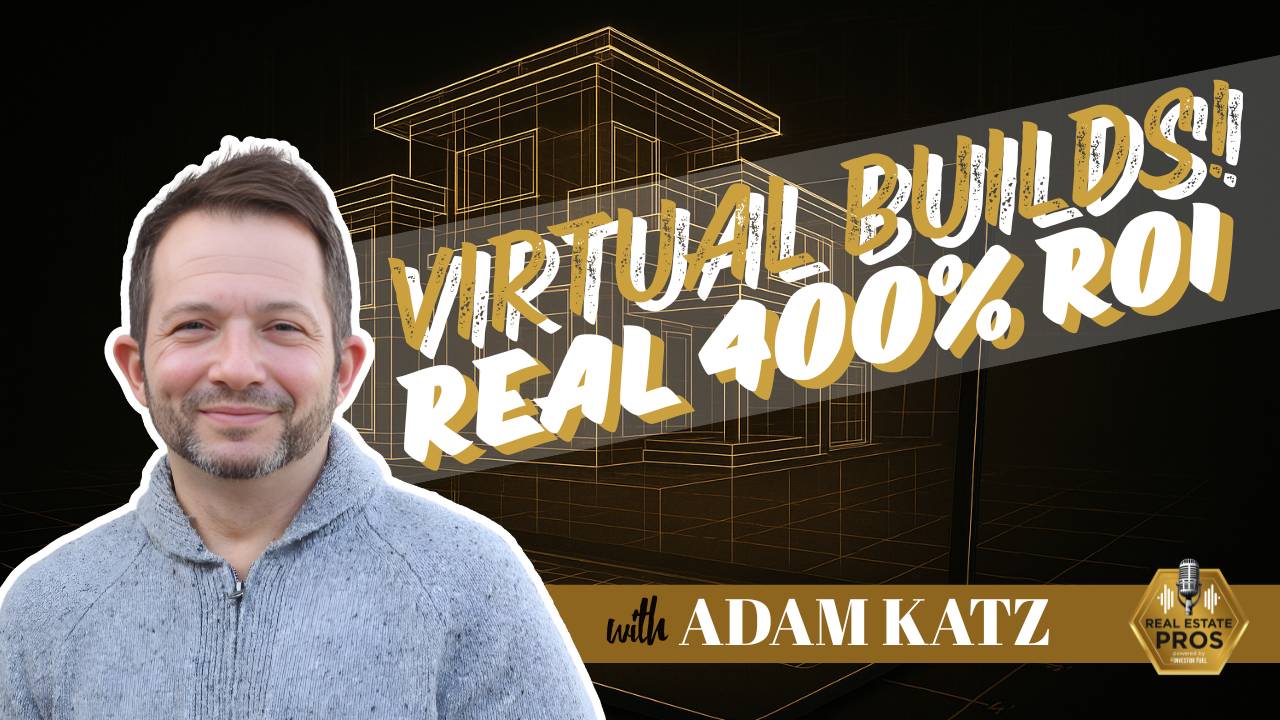
In this conversation, Adam Katz discusses the significant impact of rework in construction, emphasizing the importance of coordination and clear design intent. He highlights how Craydl aims to eliminate rework and maximize return on investment through effective design and budgeting tools. The discussion also touches on how homeowners can engage in the design process and the importance of realistic budgeting for construction projects.

Resources and Links from this show:
-
Listen to the Audio Version of this Episode
Investor Fuel Show Transcript:
Adam Katz (00:00)
Yeah, I mean, you know, I think the challenge is always people are unless you’ve experienced the pain, unless you’ve been the one writing the checks or fighting with clients about, know, I did have not have good information when I ordered my 36 inch wide cabinet boxes for your fridge. I was I did not know at that time that it was a 32 inch spec. That kind of stuff happens all the time. So.You know, but I think that unless you have the experience and the road rash of having to have dealt with that, ⁓ it makes it really hard to look in the crystal ball and say, this is something I’m willing to add some time and effort and monetary value to. Generally, in most of the projects that we are involved with, we normally put up a minimum of 400 % return on investment, which we look at as the value of things that we catch.
Dylan Silver (00:42)
I do.Hey folks, welcome back to the show. Today’s guest, Adam Katz, is the founder of Craydl, virtual construction designed for builders, homeowners,
developers, architects, and interior designers. Adam, welcome to the show.
Adam Katz (02:45)
Thanks for having me Dylan.Dylan Silver (02:47)
Great to have you. I always like to start off at the top of the show, Adam, by asking guests how they got into the real estate space.Adam Katz (02:56)
Great question. Yeah, I live in Scottsdale, Arizona today. I grew up in New York City and moved down here to go to school when I was 18 in the mid 90s.growing up in New York City, it was a very well established city. And here in Phoenix, you were really able to see a city emerging. And I’ve always loved architecture. It’s one of the things I went to school for. And I’ve always enjoyed seeing things.
get built and Arizona, least in those days, it was a lot less expensive to become an investor. It was a really fertile ground for you to just get involved and learn. ever since then, I guess I’ve always just had the bug.
Dylan Silver (03:41)
Did you get in on the investment side or did you get in as a service provider to this space?Adam Katz (03:47)
Both. Yeah. So I’ve been a long time investor in real estate entirely here in Arizona. And but I’ve also been a developer for groups. I have developed properties for individuals. Today, know, Craydl is certainly a service provider to the industry. And separately, I’m an investor. I haven’t seen a whole lot that I’ve enjoyed.that I thought was worth investing in the last three or four years, but historically I’ve been an active investor.
Dylan Silver (04:19)
Yeah.Before we hop into talking about Craydl, I want to ask you about ⁓ your journey as an investor out there. Is there been a specific asset class that you’ve primarily invested in, it single family or small multi-family or larger deals, or have you done a little bit of everything?
Adam Katz (04:42)
I’ve had exposure to a lot of different things, but my bread and butter personally has been in the single-family residential space. I got started by buying properties when I was still an undergrad at ASU and renting them out to other students. that, so I’ve really always enjoyed it. And now, you know, my favorite thing to do is to take really old cruddy houses and make them spectacular and modernized and when there’s a profitable spread to be made.Dylan Silver (06:00)
I want to ask you about that time period because I don’t want to gloss over that buying houses and renting them out to other students.did you have I mean you’re a young student at that point in time. Did you have mentors
who was helping you walk through this. Did you know someone who was already doing this.
Adam Katz (06:16)
I had a phenomenal mentor who was seven years older than me. I doubt he really regarded himself as being a mentor. He was more of a friend, but ⁓ seven years older than me and came from a very wealthy family and was already doing very, very large scale development work. know, ⁓ big partnerships with very well known developers. ⁓you know, taking down very, very large pieces of land around the valley and areas that are really now well established. But the thing that really resonated with me was that there were ways to buy things, improve them, and if you were lucky enough, keep them forever if you could get them to cash flow. And that they would be the gifts that just kept on giving and that turned out to be true. So my mentor actually co-signed for me on my first couple of loans.
Dylan Silver (07:07)
Wow.Adam Katz (07:09)
Again, it was a different time. I respect that it was a different time, but I was grateful to have somebody that believed in me because I didn’t come from the kind of background of ⁓ familial wealth that would be able to support that.Dylan Silver (07:13)
Yeah.I
want to ask you about the genesis of ⁓ Craydl. Where did you get the inspiration to create it? then second to that, we were talking, there is such a need
that kind of bridge between the client and the designer. It’s like two different languages. Was that the original intent of Craydl?
Adam Katz (07:49)
Yeah, the great question. The original intent of Craydl, our whole reasonbeing, our mission, if you will, is to eliminate rework. When I first started the company four years ago, ⁓ it was our intent to provide clients with a very, very high-end, white glove, end-to-end service if they were going to build a luxury home. ⁓
What occurred to me as I was starting to set up Craydl was that, at least here in Phoenix, we have excellent, excellent builders. We have excellent architects. We have a wonderfully deep design and engineering community. We have really, really strong talent ⁓ and great firms with great reputations that do landscape design and interior design. The problem that I was seeing was that there was no hub in the middle.
managing all of that disparate information. And that information, it has impacts, those information, those designs have impacts on one another. And they evolve over time. In fact, in a lot of cases, they’re continuing to evolve while whatever the project is, getting built. And so,
I also, I spent 10 years in the capital markets specifically in software and having an opportunity to deep dives from an analytical standpoint into software companies and seeing kind of what made them work or not work. And the thing that occurred to me is that in our industry, we don’t have a people problem so much as we have an information management problem. For whatever reason, we’re not getting the information correctly into the hands of the person that matters in the moment of truth.
Dylan Silver (09:31)
Yep.Adam Katz (09:37)
And that’s really what Craydl has been created to solve for, is becoming that hub in the middle of project so that the builder can maintain better control over all the information.Dylan Silver (09:49)
I have a couple of granular questions as someone who’s not at all involved in this space, know, maybe for the lay person, break this down for us. Sowhen we talk about rework, the first thing that comes into my mind is like, hey, the specs are off. We intended it to be like this wall is here and it’s three feet to the left. What’s the general scope of rework, let’s say in like a single family home?
Adam Katz (10:48)
Well, here’s what I can tell you. It’s kind of builder specific and it’s scope specific. We, you know, we work with builders who build from the ground up. We work with builders who do interior remodels and we do, and we work with everybody in between. So, but what we generally find is all builders have rework and to me, rework is a clear definition on a per builder basis. It’s their negative variance. If they thought they were going to build this thing for a million dollars and it cost a million one,They have a hundred thousand dollar negative variance, right? And to that end, there’s two different kinds of change orders. There’s the good kind. The customer says, Hey, I decided I want to upgrade this, put your fee on it. It’s fine. But that’s not the kind of rework that I’m talking about. I’m talking about the rework that, you know, where we find something unexpected that had happened in the field. And so generally what I find is all the rework really fits kind of neatly into three different categories. There are constructability issues.
And constructability issues can stem from systems not working together. Hey, we have a beam and no way of getting air conditioning ducting through that beam. And now we have to do some kind of gymnastics in the field and there’s going to be impacts to the design. ⁓ Sometimes to your point, it’s a lot of just getting the existing conditions right. We see a lot of plans where somebody goes out and measures with, you know, manually with a tape measure or
and a pad or they’re using an iPhone or they’re even using a Matterport but they don’t really know how to operate it correctly. so, you know, and we’ve seen situations where things are off by three inches or six inches. When we gather existing conditions for our clients, we use a $50,000 high density LiDAR scanner that allows us to within two millimeters of accuracy get every light switch, door knob, receptacle, register, riser, bush, tree, stone.
we get it all. And now I can build a complete with wall dimensions and interior cladding and exterior cladding and all the things that you see inside the house to say, here’s what we have today. Now what are we doing from here? And so now when there’s an architect involved, we start incorporating their design into it. Sometimes we’re performing the architectural design internally. But our objective is to have a singular version of the truth from which we’re creating all documentation for the field, for permitting.
Dylan Silver (13:02)
Right.Adam Katz (13:09)
and to have a 3D fully immersive model that the homeowner can go through and see the design, actually experience it so that they are not out in the field making changes because they didn’t understand how to read the plans or they didn’t understand the design intent.Dylan Silver (13:25)
When we’re talking about reading plans, I’m thinking of this like there’s some things that may traditionally get lost in translation. How common is that? Does that happen? Whether it’s client to architect, architect to builder. Is that a common issue?Adam Katz (13:41)
What I would say is ⁓ it’s common, typically facing the homeowner or the developer. So the kinds of things that we have, it might be helpful if I tell you some stories to help you understand how these things manifest. We’re working on a project now where we’ve incorporated all the landscape and hardscape design and all the interior design. And we had found a couple of things through the course of doing this. One, the interior designer had capturedDylan Silver (13:55)
Well.Adam Katz (14:10)
sort of reclaimed a mechanical closet to put a sauna in it. Well, that was going to be a bad blow up in the field. There was no place to put that mechanical closet. By putting the landscape design together, we were actually able to show where certain parts of the fencing weren’t connecting to the house and therefore it would have been a security issue. We were able to show that gates and fences hadn’t been specified yet. So those are the things that have a tendency to kind of creep up at the end of the project. And suddenly,at a bunch of time. And so it was really helpful to be able to express that. There are times where we take architecture work and we can see that the doors and windows on the elevations don’t match where they are on the floor plan, which don’t match what’s in the schedule. Well, if you’re a builder and you’re trying to order from that, or you’re a developer and you’re trying to go establish your window package accurately from that, those are mistakes you can’t afford to make. And so… ⁓
Dylan Silver (14:54)
Hmm.Adam Katz (15:08)
So I don’t know if that answers your question about, you know, about how much misalignment there can be between all the respective parties. But the way that I characterize it is that builders are given often, often they’re given enough information to create a prototype, but their customers are expecting them to build a perfect product. And by putting BIM and VDC in the middle of it, it allows them to productize all the information that they’re getting so that they can execute smoothly in the field.Dylan Silver (15:09)
yeah, it does.I want to ask you specifically about when we’re talking about scale, right? So if you’re talking about, you know, a large subdivision where you may have
multiple homes that are very similar in layout or several different designs but similar in layout. ⁓ Can these issues potentially compound if you have, you know, one ⁓ design that is being used in multiple places and then this gets kind of recycled and worsened as the issue goes undetected? Is that a thing?
Adam Katz (16:49)
Of course, yeah, I mean you start getting into multifamily development and we’ve seen things where, you know, the person doing the interior design specifications specified a 32 inch wide fridge. And, you know, that’s kind of a unique size fridge. Typically they’re 36 inches wide. So, you know, by being able to flush that out early, it was a 24 unit complex and by being able to flush that out early, I would say that that was an important catch early in the process. So,Dylan Silver (17:13)
Yeah.Adam Katz (17:18)
Yeah, I mean, you know, I think the challenge is always people are unless you’ve experienced the pain, unless you’ve been the one writing the checks or fighting with clients about, know, I did have not have good information when I ordered my 36 inch wide cabinet boxes for your fridge. I was I did not know at that time that it was a 32 inch spec. That kind of stuff happens all the time. So.You know, but I think that unless you have the experience and the road rash of having to have dealt with that, ⁓ it makes it really hard to look in the crystal ball and say, this is something I’m willing to add some time and effort and monetary value to. Generally, in most of the projects that we are involved with, we normally put up a minimum of 400 % return on investment, which we look at as the value of things that we catch.
Dylan Silver (18:00)
I do.Adam Katz (18:15)
divided by our total fees. It’s a very simple equation.Dylan Silver (18:15)
Yeah.Well, I want to ask you, pivoting a bit here, working with developers, working with architects, working with interior designers, it seems like a great fit. When I think about homeowners, I’m curious how, if homeowners are interested in Craydl, would they bring this up to their architect, to their builder? How could homeowners themselves benefit?
Adam Katz (18:41)
Yeah, we work directly with probably a half a dozen to a dozen homeowners a year that find us through networks. And often we have wonderful builder partners. So we have a lot of builders that will also bring us their clients and say, here’s a project where we need you to do more than just the BIM and VDC. We need you to do the design development and concept development and get us all the way through the permitting process.⁓ so, but we also, again, we have customers that come to us directly. so, ⁓ I think that, you know, often homeowners come to us looking for a set of plans. But we, start from a much higher altitude than that, which is what are you budgeting and how have you budgeted and who’s on your team and what does good look like? And, and, and we really put them through a full program, a full feasibility program.
before we bring them on and there are times where we’ve chosen not to work with clients because their budgets or expectations weren’t realistic.
Dylan Silver (19:46)
I know why. Yeah, I think that’s probably wherepeople run into issues too, right? Is when you tell them yes and then it can’t get to where it needs to be and then people start to end up taking shortcuts because they’re worried about spending too much money but they want the modern home. It’s not going to work.
Adam Katz (20:03)
Yeah, we have a tool that we’ve developed internally for that. We actually sell it as a subscription to our builders. It’s a hundred bucks a month, but it allows you to sit down in an under an hour. You can go through a 24 step questionnaire and it will spit out a line item budget, you know, based on the answers to the question. So how many feet are you building? How many feet of garage space? How tall the top plates? What’s the price quality mix? How big is the kitchen? Are we doing aAre we doing a fancy pantry? So you kind of go through these 24 steps and then it will tell you, we aggregate data from about 30 builders to provide averages on a monthly basis and say, this is what people are generally spending for nine foot top-lays when they’re building from the ground up for framing. This is what people are typically spending a foot for structural foundation. And so the whole idea is that you kind of get this realistic budget that’s actually based on something.
and allows them to go back and say, well, $2 million is more than we wanted to spend. Well, nobody can make concrete or wood or labor cost less. So we really have to go back and revisit how we answered the questions because it’s kind of like asking somebody how much does a bag of groceries cost? And the answer is it depends what’s in the bag, right? So we got to figure out what’s going on in your bag so that I can tell you about what it’s going to cost.
Dylan Silver (21:19)
Mm-hmm.how how much growth group you got.
Adam we are coming up on time here. Where can folks go maybe to reach out to you or to learn more about Craydl? How can folks get in contact with you?
Adam Katz (21:34)
Yeah, feel free to go to our website. We have a lot of great information on there about how we work with people and the services that we offer. ⁓ It’s www.craydl, spelled a little weird, C-R-A-Y-D-L dot com.Dylan Silver (21:50)
Adam, thank you so much for coming on the show here today.Adam Katz (21:53)
Thanks for having me, Dylan. I appreciate it.