Subscribe via:



Show Summary
In this episode of the Real Estate Pros podcast, Micah Johnson interviews Ian Ross, co-founder of Objection Proof AI, about the transformative role of AI in real estate investing. Ian discusses how AI is being used to automate sales training, manage leads, and even close deals with distressed homeowners. He emphasizes the importance of speed to lead, the challenges of teaching AI emotional intelligence, and the future potential of AI in the real estate industry. The conversation highlights the innovative tools being developed to enhance sales performance and improve the overall efficiency of real estate transactions.

Resources and Links from this show:
-
Listen to the Audio Version of this Episode
Investor Fuel Show Transcript:
Ian Ross (00:00)
What this means is an AI can close this sale.and do it in that same level of efficiency as we were able to do on the lead manager component and do it for the closing appointment changes the very nature of what it means to do real estate investing. It changes what sales means over the phone. And so that’s what we’re trying to do. And that’s what I’m focusing on right now.
Micah Johnson (00:13)
Right.Hey, everyone. Welcome to the Real Estate Pros podcast. I’m your host, Micah Johnson. And today I’m joined by Ian Ross, who has been making some serious moves in how you apply AI to real estate investing. And I am pumped for today’s call. Ian, welcome in, man. How you doing?
Ian Ross (02:07)
Good, Micah, thanks for having me.Micah Johnson (02:09)
Absolutely. I’m excited for today’s call. We were talking about a little pre-recording. Y’all have created something extremely special for the professional investor that just lets them, puts gas on the fire that they built. So I’m really excited to dig into your expertise, what y’all are working on. So to kick things off for us, for folks who aren’t familiar with you yet, tell us a more about yourself and what your main focus is right now.Ian Ross (02:31)
Yeah. So in the past, I would have identified myself as a sales trainer, ⁓ who had an expertise in the real estate investing space. I would say that’s still kind of my jam, but my focus has deviated a bit from spending time training and getting sales teams to perform, not just in terms of like onboarding and getting up to speed, but taking good acquisition agents and turning them great instead is taking the skillset.the knowledge, everything we’ve done on that side and putting it into technology, making it so that people can have an automation in terms of AI for their team and for the conversations that they have with homeowners who are in distress. So I’m the co-founder with Steve Trang of Objection Proof AI, and I operate as the chief innovation officer, which I spend a lot of my time working on the actual AI. It’s a very fun title, which I’m…
I probably update my LinkedIn. I should update my LinkedIn with a title like that, to be honest with you, because that’s a full on LinkedIn title right there, which no one in real estate respects, but it is what it is. ⁓ So, ⁓ our focus is on three main components for the AI side, for automating what serious investors do. And I only differentiate from serious and beautiful.
Micah Johnson (03:25)
Right, right.Thank you.
your back, man. It’s a good one.
Ian Ross (03:52)
people getting started, because there’s plenty of options out there for people who are just getting going. That’s not our demographic. Our demographic, our avatar, if you will, are people who are, who are spending a decent amount of money on marketing every month and also usually have at least one to two acquisition agents under their belt. That’s sort of like the baseline expectation. So it’s for business owners, not the like I’m hustling and working my butt off. For the most part, we have some options, butBut generally that’s avatar. And so the first component is in training these salespeople, training these acquisition agents. So scoring their sales calls, whether that’s on the phone or they bring a device with them to record in the home, whatever it is, and taking that through a whole bunch of metrics to give advice on different categories, regardless of how they talk to the homeowner or what the homeowner said. It’s like a breakdown of 10 main categories going through the entirety of the appointment.
So it’s not just, you close? Yes or no. Did you follow this generic process? It’s a really specific breakdown of categories like emotional certainty and opening and control and, you know, storytelling versus explaining all these nuances of ways we have seen with the data that gets you a higher likelihood of getting the deal from a homeowner rather than simply, Hey, here’s our offer. And here’s why I can’t pay you what you want. Cause your house is in terrible shape.
how a lot of people go through the process. So it scores them on that and gives them advice. It also has bots they can role play with, different homeowners in different levels of distress, in different circumstances, who will push back in different ways. And then those calls get scored in the same way. So you can actually get the reps in, get the practice in when money’s not on the line.
When you’re not at the risk of getting the contract or not, when you haven’t spent a bunch of money on marketing and you’re hoping your team performs, fundamentally it’s like, no, you can.
have them go through this to actually know not just are they ready to be given the most expensive leads, but also if you’re hiring new people or going having them go through the hiring process, you can actually make sure they know what they’re doing. It can sound confident and competent on the phone. And so that we have a whole process there. The other component is for the sales manager or business under themselves. So we’re trying to create a self managing sales team, the biggest head headache in the real estate space and pretty much every space.
Micah Johnson (06:49)
Right.Ian Ross (07:04)
is managing salespeople as much as I love them and identify with them is like herding cats. No one likes doing it. And so we can give all these tools and automations to automate their accountability, to set up, ⁓ metrics and requirements around helping them get better and get the feedback that frees up the sales manager’s time to not spend forever. Just listening to call reviews, trying to figure out what went wrong. You can actually see it.Micah Johnson (07:11)
ThankIan Ross (07:31)
before it becomes a problem. You see at the moment it happens and you can look at patterns from how they’ve performed over the last 30 days based on the categories that are scored and the notes you would see to start to determine what’s going wrong and why and then we’ll give you advice accordingly. So that’s that component of the manager side. And the last one that I’ll touch on is the really exciting one, which is we have a AI lead manager, which Steve is a little bit more,I would say he would probably say cautious in talking about this the way I want to talk about it, but it’s performing better than anyone else’s in the space. So I’m very pleased with that, especially with the amount of energy I’ve put into it. Right now for it varies depending on the lead type. And you’ll notice this if you talk to competitors that they can’t really give you real numbers on this. For like new leads, PPC depends where you get a PPL lead. But for new leads, it’s if it
Micah Johnson (08:06)
Heck yeah.Ian Ross (08:25)
has a conversation that goes over 30 seconds. It has about a 50 % chance of turning that into a set appointment on a calendar. So it’s a coin flip as to whether not that becomes something on your calendar. For follow up, that really varies because it depends where they’re getting it from and all that. But we’re still seeing about, across our, we have 200 plus clients at this point, about either like a 12 to 15 % on the low end.Micah Johnson (08:33)
Wow.Right.
Ian Ross (08:54)
up to like a 22, 25%, sometimes 30 depending on what they’re running it on percent chance of if it’s able to engage them, if that person answers the phone, turning it into a set appointment. So I’m real with it that I can speak confidently about those numbers and it like, qualifies them and validates their emotions and operates on all that. And that’s everything we’re doing right now.Micah Johnson (09:09)
Yeah.That’s powerful, man. mean, just in the last one to get a few extra appointments a month out of what you’re paying for is a huge deal over time. I mean, you’re talking about adding throughout a year, shoot, at least three to four deals to your bottom line just by getting those extras appointments because that’s it, man, because it is in those phases. It’s real estate is the call comes in or you’re making the call. You got to get through that part. And like you’re saying, not everybody’s good at that.
And training somebody to get good at that is it’s time consuming. And we were talking about this a little bit pre-call. It still varies on the person. We all wake up having bad days, right? We all, we all go through stuff and that has this just natural rhythm in life where you’re not performing as well, where you’re talking about plugging in consistency into a position that’s critical at a scaled in a scaled real estate investment company.
Ian Ross (10:47)
Yeah. mean, so right now the three main problems, at least the lead manager component is helping with, cause again, it’s a, it’s like a holistic system. I’m not even other people like, here’s our bot. Like we’ve got a AI infused sales performance dashboard. It’s an ecosystem that plugs in every part of your business. But lead manager component fixes three main problems that are rampant in the real estate investing space. So number one is speed to lead. It just handles that immediately. Every inbound call. Some people are using it at it.If it’s during working hours, if someone calls in, it rings all their people two or three times. And if no one answers it, then it goes to the AI to a certain appointment. Other people are using it for, so like, or they fill out a form. have one of our clients who had a two page form fill out and they were like, Hey, like your AI calls and said employment before they even finished the second form. Cause it calls it under 30 seconds. So in speed, the lead component, especially like you’re paying Google prices, the, the
Micah Johnson (11:44)
Right.Ian Ross (11:46)
Metrics for success are not in hours. They’re not minutes. They’re in seconds. And so ours calls it under a minute almost every single time, unless something went crazy wrong, which doesn’t really happen very much because it’s automated. And then the other component is follow-up. mean, the amount that companies have all this work on the first call, the first appointment, but they don’t have a standardized process for our follow-up. And they almost leave it at the discretion of the salesperson. they said, call me back in a week. And it’s like,Do they call back in 11 days? Like how motivated was the person? That problem goes away. Our AI can call up to 300 numbers a day. Depending on what people are to pay, we can pay them more. We’ve got some people who are just going hog wild with it. had someone who, he’s using it right so much now. He showed me. He’s got, I think it was, and he’s just hiring closers all the time. He still had like 1200 brand new leads that went through that his closers can’t even get to.
Micah Johnson (12:32)
Right.Ian Ross (12:45)
Cause it’s turning so now he’s running a nationwide campaign. It’s giving him so many appointments. He can’t get enough salespeople to handle the calls. So, and that’s because it’s just calling every number that he’d gotten for it. Like the game is changing for him instead of when you only have so many salespeople or so many lead managers, you want to pay for the highest quality leads to make sure people talk to the most motivated people. But I think that game is changing now instead to get the most amount of leads and the AI can figure out if they’re quality or not.Micah Johnson (12:45)
Wow.Right.
Ian Ross (13:13)
Like you cast a wider opening funnel and then the AI does the interactivity of talking to them, taking out their motivation, talking about their timeline, the condition of the property, and then it sets a claim and only when enough criteria is met. And then the third component is what you talked about, consistency. I blame myself in this as much as I blame anyone else. The best salespeople are kind of prima donnas. And so like you have a bad day, you’re just not feeling it or…Micah Johnson (13:14)
Right.Okay.
Ian Ross (13:40)
You’re just feeling like, you know what, I’m getting so good. Let me deviate from what the business owner told me to do. Let me deviate from what I even know is best today. Cause I just want to try something new because I like novelty, whatever it is, the consistency of getting great performers, which are already hard enough to find, manage and keep employed, but getting great performers to follow up process is difficult and getting mediocre performers is even harder. And so it fixes all three components at.Micah Johnson (13:50)
it.Ian Ross (14:05)
the most important part in real estate, which is top of funnel in terms of that first human conversation to give your sales team set appointments.Micah Johnson (14:14)
Right.And I like the idea of how you can cast that wider net because that’s one of the things that drives people crazy is the sales folks has just wasted time on calls, talking to people that you had no business talking to them and it just gets annoying and you get on a string of those and they’ll ruin your day. Like that consistency gets thrown out the window because it’s like that’s 12 in a row. All right, I’m going on a break. doing this. It just starts to mess with you. that that’s that other world that I used to do nationwide investing. And it is you talk to all kinds of people, especially
Ian Ross (14:25)
Yes.Micah Johnson (14:45)
whenyou’re casting that wide net and even more so less and less qualified, but that ability to just weed through and the fact that he had yet other client has so many appointments, he doesn’t have closers. What a great problem to have. Like what a great problem to have, especially in real estate, because I hear a lot right now, I’m struggling with leads, leads are my problem, leads are this leads or that. And that’s where they’re going to have to start asking themselves.
Ian Ross (14:59)
Truly.Micah Johnson (15:12)
Okay, what tools do we need to add into our business if what you’re doing is the case? Because at that level, like we’re talking about, they have a machine built. There is an engine that is running and you’re converting it from an F-350 to a sports car engine by placing the tools that you’re talking about onto it, which is how you get that next level of growth at that stage, right? That you’ve got a different level of problems at the high level of real estate.Ian Ross (16:21)
Yeah, that’s exactly, that’s exactly true. I mean, we, I, we wouldn’t find he’s getting, he’s now changed his marketing component to about $30 per lead for his, his setup. And on that’s for, no, sorry, it was about 15 per lead for like just casting this crazy wide net. So out of his leads, one out of every two is getting turned into a set appointment. And with how low quality those leads are about one and two is actually showing up at the scheduled time.for how much he’s doing it, which means, I mean, you could just ask yourselves this, you have a set appointment on your calendar, you spent $60, that’s the math on it, for a motivated homeowner. Who wouldn’t pay that in the real estate investing space with how much you can make per appointment? Like that’s the math for someone we have right now. This is not a future state in 20 years when AI changes things, that’s happening today.
Micah Johnson (17:01)
I hate it.No, it is man. That’s powerful. Cause again, cost of acquisition, right? That is a huge metric in especially high level investors. Cause that’s what you’re trying to drive down. Once you figure out how to do it really well, how can I do it really well for less? How do I make this machine really start churning out? And that’s what you’re talking about is just you’re adding octane into that thing, man. Like that it’s powerful.
Ian Ross (17:21)
Mm-hmm.Micah Johnson (17:37)
So that’s the lead manager side. Now you’re working on keep innovation officer. You’ve got this project you’re working on excited about where you made a big proclamation last year. Didn’t you from stage? Tell us a little bit about that and what you’re working on behind the scenes right now.Ian Ross (17:40)
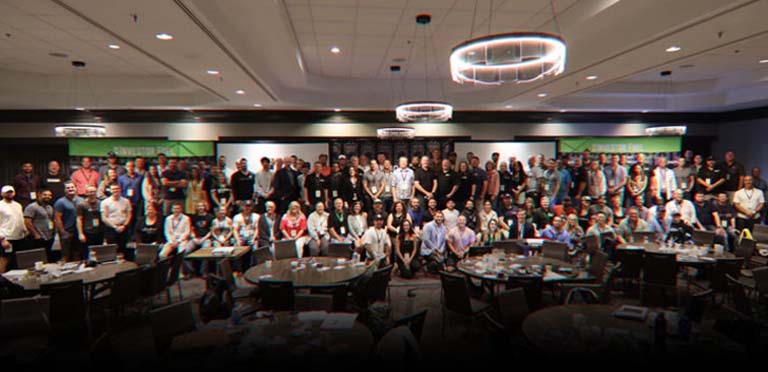
Yeah.I did. Yeah. I don’t know when this is going to come out. So we’ll see what that what that looks like when it comes out. But yeah, I it was September last year from Collective Genius premiere the stage in Dallas. I made a big role proclamation from stage, which was I declared that by this time next year, so I mean, September of 2026, there will have been a traditional
estate wholesaling transaction where the you know,
The lead came in, the homeowner was in some aspect of distress on some type of list or filled out some type of form. They talked to someone on the phone and then got transferred or maybe even on just that one call that went, you know, 45 minutes to an hour where it got all their pain points. A docu-sign was sent out for an appropriate price, whatever it would be for that market. 70 % minus ARV, whatever it is. And the homeowner signed it and sent it back and no human talked to that lead. It was done entirely with AI. And so.
When I presented that from stage, I have to be like, ⁓ someone’s going to do this. What I mean by it is we’re going to do it. That’s, what I’m focusing on right now is designing an AI closer that can close. What I think is actually the single hardest transactional sale in all of the Hills, which is the distressed homeowner, real estate transaction. Every now and again, you can get lucky with someone in such incredible distress. can sort of mess up and get the deal just by the nature of the distress, but that’s not what we’re building.
what I’m focusing on. What I’m focusing on is the incredibly emotional, like identity protection sale. It’s like, know, real estate investing, a lot of times, this is not these people’s first resort, right? This is not like, hey, I want to go on a trip. Like, what’s the cheapest option? That’s not what people go through to sell their house at a discount. These people are usually in debt. They have reached out to friends and family. It’s been a long time. They’re very distressed. Like this is a, this is an emotional sale.
And there’s almost like an ego death that lot of people have to go through to be able to be willing to accept a price point that makes sense for investors to do this and do it the right way. And so for the most part, to be able to do that is incredibly emotional, which is the one thing AI is not great at right now. AI can recap information. can regurgitate lines and do all that stuff, but it cannot do currently outside of the infrastructure for what I’m working on.
is actually go deep into emotion. It’s actually understand that someone might say one thing and mean something else and to know how to ask that question based on that. mean, if every homeowner told you the truth, 100 % of the time, sales would not be that hard. But they have all these aspects of like, trying to like play their cards close to their chest and be like, yeah, no, might, no, I got a realtor who’s thinking, and he told me I could sell it for this. Knowing how to filter all that stuff is not something AI does naturally well.
Micah Johnson (20:31)
It’s.Thanks.
Ian Ross (20:45)
And so what I am building right now is an AI that can have that conversation. I can go for 45 minutes that can talk to them about their pain. That can go deeper into their pain. They can talk about next steps that can negotiate price and talk about what they need to walk away with and how great things will be and pull back and like call out the uncertainty and ask what their, you know, their brother who wants to say on it, what he will say when they tell them that they got it locked up for that amount, right? Like,and do everything we would ever do at the top of our game on a real estate acquisitions appointment, a buying appointment, and do it at scale and do it consistently so we can apply that same level of success that we’re seeing on lead manager side. We’ve got clients who have fired, we have one who fired six full-time lead managers to replace with our AI.
Micah Johnson (21:21)
Mm.Ian Ross (21:38)
What this means is an AI can close this sale.and do it in that same level of efficiency as we were able to do on the lead manager component and do it for the closing appointment changes the very nature of what it means to do real estate investing. It changes what sales means over the phone. And so that’s what we’re trying to do. And that’s what I’m focusing on right now.
Micah Johnson (21:51)
Right.Love that, man. Now take us in deep for a second there. What’s been one of the things that you’ve noticed has been a difficult thing to overcome in that process of how to teach the AI to have that phone call.
Ian Ross (22:13)
One of the biggest challenges in teaching AI to have a real sales conversation is that AI can be influenced in terms of tonality, but you cannot dictate it. So in the same way, you might tell someone, Hey, like you need to convey curiosity, but you can’t, but you might be able to tell them, say this exact line this way. You can’t get AI to, have that level ofgranular effectiveness in how to talk and understand all of that. So what I’m dealing with is understanding that once you don’t have control over how you say, there’s an incredible amplification on the specificity of what you say and the structure of that and how so many people in, in fact, part of the reason I think that like ChatGPT and Claude and Grok and Gemini, all of these large language models,
are actually kind of pretty crap naturally at sales. could say that is because they’re not trained on tonality. They’re trained on transcripts to train on literally what someone said. And if you read a transcript of what the salesperson said, you lose a lot of the charm and the reality of how they actually sounded and how they connected to that prospect and how they helped call out.
Micah Johnson (23:31)
Right?Ian Ross (23:35)
the ridiculous objection or insert doubt about a competitor without saying it explicitly. Like it shows out all the things that great salespeople do. You don’t really get in the transcript. And by extension of that, you also can have great tonality and say stuff that’s wrong. Like you can sound, I can say something that’s ridiculous. I could mess up. could, I could just say the wrong thing entirely. But if I sound good and I’m looking you in the eye,and we’re having a connection, you’ll be like, that didn’t really make much sense, but yeah, it seems nice. And then your brain skips over it. And here’s the next thing I said. And AI doesn’t have the ability to understand any of that on the language it’s been trained on and on the data it’s been trained on. And so it often gives these really like generic, very script sounding advice. If you ask it like, what should the closing line be? And as I’m building ours, especially since I’m talking, we’re not talking about, you know,
signing up for a $60 a month car insurance policy. We’re talking about selling their last asset at a discount. Every little nuance around how they sound around how it takes a breath naturally, how human beings naturally take a breath. Like it’s got this challenge I called AI lungs. If it talks for more than three sentences, it’s not that it necessarily sounds like AI, like some of the best voices, but it sounds a little bit off. And that might not be enough to
lose the deal, but at times of tension, at times of resistance, at times of that’s way less than I want, you know, when the people are pushing back the little microseconds, little hesitations like that can add up to just create the sensation of, don’t know if I want to do this right now. And that can cost you a lot of money in the real estate investing context. So everything I am building is around understanding those constraints.
Micah Johnson (25:24)
Right.Ian Ross (25:29)
and designing the specifics of what to say based on the voices we do have access to, which still sound pretty good. It does not sound like Stephen Hawking on the phone.These things sound pretty good now. ⁓ But like
having to make sure, like I’ll give you an example that this one of my favorite examples to bring up of how the order of words of the exact same question can completely change the meaning in terms of the effectiveness of it.
So let’s just say I was trying to you to sign up for our AI or our program, anything, any program. And I stay, you know, if this has worked for other people, why don’t you feel like this will work for you? That is a line that only works if I’ve got good tonality. And I almost say it naturally with fairly decent tonality. The inverse of it is actually better when you don’t have control over tonality. Why don’t you feel like this will work for you if this works for other people?
Micah Johnson (26:17)
Yep.Ian Ross (26:28)
it’s actually more neutral and less triggering. Now my natural inclination is to end on the you, because it’s actually more direct, it’s more powerful, but that has to be softened with my approach to tonality. Like, well, if this is work for other people, why don’t you feel like this will work for you? They can relate with that, but I soften it with my tone. If I go, if this is work for other people, why don’t you feel like this will work for you? Like, oh my gosh, it feels insulting.But the inverse, yeah, yeah, exactly. But the inverse of why don’t you feel like this will work for you if it’s worked for other people? You can have less effective tone by reorganizing it in that way. And so this is an exact example of when you understand what you don’t have, what you lose, what the constraints are, control of tonality, how to structure what is said to give the best chance of success. It’s not that that line closes the sale. Sales does not.
Micah Johnson (26:58)
I don’t know! I’ll see her!Ian Ross (27:27)
doesn’t work like that. Like any one line can lose the sale, but not any one line wins it. And so the principle of making sure that if we have someone who’s motivated and they are in distress, that the AI can make sure it does everything in its power to not lose that sale in the way it moves someone through the process and the way it asks questions, the way it figures out what’s going on and executes on the sales process that we’ve trained now, thousands of salespeople specifically in the real estate investing space overthe last however many years we’ve been doing this, that principle applied to it does it the same way every time and can have that call. Like I think we’ll have an outsize impact on this industry. And I think we will become the gold standard once we’ve got that executed on. So that’s what I’m working on right now.
Micah Johnson (28:15)
And that’s powerful because you’re identifying all the, you call them constraints, all the areas that you have to identify to make sure it works. Cause you nailed it. Real estate investing is two different games. One of the rules, one’s the people. And you got to know both because it is they’re embarrassed. Life’s hurt them. You’re never talking to a distress seller. That’s typically happy about it. It is just not the way that that goes. So being able to crack that code.It’s everything. Cause it’s one of the hardest things to teach a salesperson in general. Like you said, it’s the, one of the hardest sales there is, is to tell somebody I’m going to pay you very little for your house. And you’re actually going to be happy about it when we’re done. Right? Like that is, it’s not easy. And when you do it, feels awesome because of how hard it actually is. So the fact that y’all are cracking that code, man, I’m, I’m excited for the future there. It’s going to be cool to see what’s coming out, but just to improve the industry. Cause that’s the goal.
better we can serve, the better we can improve, the better businesses we can make. And the whole thing goes around better, more and more, man. I appreciate you being here today. So for folks that are listening in that want to find out more about objection-proof AI, possibly the lead manager stuff, see what’s going on. What’s the best way for them to find you?
Ian Ross (29:30)
Well, the best way to find me is always on Instagram. It’s the one place I might, my assistant doesn’t filter through. So that’s a at vivid selling, which is a framework I’ve developed. That’s the vivid selling framework. So that’s the, that’s the best way to reach out to me. But for objection proof, like we give a free call scoring that anyone could see and have access to whether you’re uploading an actual audio file or transcripts entirely up to you. And you can look and see likeHow did you do? How were you score the mistakes? And that’s at objectionproof.ai and you can do that for free.
Micah Johnson (30:03)
Excellent. I appreciate you sharing that. Folks listening and watching in, check the show notes. I’ll make sure all of Ian’s links are there for you to follow him on Instagram and check out Objection Proof AI. Test yourself against it. See what’s going on, man. The best like to know where they can get better and that’s what these tools really allow you to do is just step your game up. So Ian again, man, appreciate you being here.Everybody, if you got value out of today’s episode, please like this episode, share it with someone else you think give value out of it as well. As always, please don’t forget to subscribe. We appreciate every single one of you that follows along with us out there. We’ve got more conversations coming up with operators just like Ian out there building a real business in the industry. Thanks for being with us. We’ll see you all in the next episode.