Subscribe via:



Show Summary
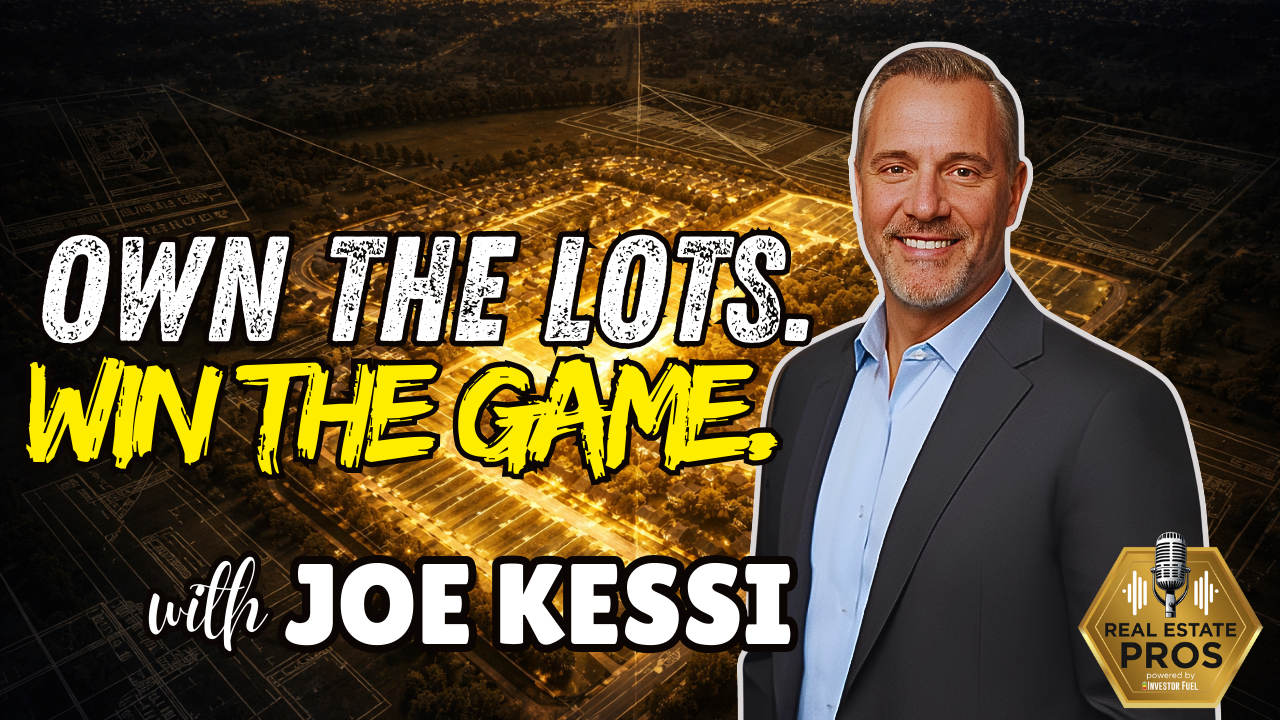
In this episode of the Real Estate Pros Podcast, host Michelle Kesil interviews Joe Kessi, a real estate investor and developer. Joe shares insights into his approach to real estate development, emphasizing the importance of market analysis, project targeting, and investor partnerships. He discusses the challenges faced in the industry and highlights the significance of people in driving business growth. Joe also shares his personal investment strategies and future focus on residential development.

Resources and Links from this show:
-
Listen to the Audio Version of this Episode
Investor Fuel Show Transcript:
Joe Kessi (00:00)
So we’re in this market and it’s 2000, I want to say 11 or 12. We’re not doing well. There’s a couple other people in the same market, bigger players than us, more, they have more money to spend on marketing, et cetera. We had this subdivision and ⁓ this mother called me and said, hi, Mr. Kessi, I’m so-and-so, I’m with the PTA. I’d like you to donate $500 to our PTA auction. And I said, that’s wonderful. We don’t give money.but I’ll donate something, how can I help you? She said, she said, I really want the 500 bucks. It was kind of funny. So we went back and forth and that’s just something we don’t do. We don’t give money, but we will give you something to auction or something to help improve.
Michelle Kesil (02:13)
Hey everybody, welcome to the Real Estate Pros Podcast. I’m your host, Michelle Kesil and today I’m joined by someone that I’m looking forward to chat with, Joe Kessi who is a real estate investor and developer. So excited to have you here today, Joe.Joe Kessi (02:31)
Thank you, I’m excited to be here. This is really neat, really, really cool. So ⁓ it’s one of the first times I’ve done this, so I’m super excited.Michelle Kesil (02:37)
Absolutely, think our listeners are going to take a lot away from how you’re approaching your development business and using the systems and processes you have to find the deals and get your projects going. So let’s dive in.Joe Kessi (02:52)
Great, great, what can we talk about? What would you like to know?Michelle Kesil (02:55)
Yeah, I think just first off for those who are not familiar with you and your work yet, can you share what your main focus is these days?Joe Kessi (03:04)
Sure. So we are a real estate development firm. We’re regional. So we’re West Coast. Right now we’re specializing in the residential side because we see a huge opportunity there. And ⁓ we are a market-based company. So we look at the market first before we look at the deal. everything comes down. We believe that everything comes down to the market first. So we’re market first, then project specific.And ⁓ it’s made a huge difference in how we approach and also in the outcome.
Michelle Kesil (03:31)
Yeah.Yeah, absolutely. And what type of specific attributes of the market ⁓ are you targeting in order to get those deals?
Joe Kessi (03:45)
Yeah, so…What we do is we’re looking at a thousand markets on the West Coast and we pull a thousand data points every month and we run them through an algorithm and then we chop up that data and we rank every market against each other. So you could have a sub market in Phoenix and a sub market in Southern California. And let’s say we have a five and a seven, you know, so we’re ranking those markets against each other. One of our biggest indicators is velocity. And we have something that we call
the wealth curve and what we’ve been able to figure out is that the wealth curve what we’re looking for is we’re looking year-over-year appreciation, positive appreciation. It usually starts around five to seven percent for us before we even look in a market and what we’ve seen is that when we see that year-over-year appreciation we’ve also noticed that there’s a high velocity in the market meaning lots of buyers and sellers and a lot of exchanging going on.
in real estate. And so if you can kind of tune into some of those indicators, you can actually pick a really good market that while you’re actually in the development phase of your project, your project just becomes more and more valuable. So you’re actually making money while you’re getting your entitlements.
Michelle Kesil (04:57)
Yeah, absolutely. And so are there specific types of projects that you’re targeting or case by case basis? Like what does it look like for you?Joe Kessi (05:08)
Yeah, yeah, so absolutely.what we are really good at is that once we’ve picked a market, out of all the markets we measure, we’re in four markets right now, only four. And we’re in the top four. And once we pick a market, then what we do is we rank all the asset classes of the real estate inside that market. So we’ll look at subdivision, apartments, ⁓ light industrial, storage.
RV, manufactured home park, et cetera, et cetera. And we’ll pull apart the market and we’ll say, okay, what is this market missing? And then where are there no big players? Where are the big guys not, what are they not doing in this market that we can do and we can actually control the market. And so in three of the markets, well, two, actually two of the markets that we’re in right now, we control every single residential lot.
So that’s what we shoot for is that we’ll go into a market and we won’t necessarily buy all the land or anything that is zoned that way, but we will control it through options and through tying it up and the entitlement process. And so by doing that,
Then we can turn around and we could say, okay, hey, this project is going to come to fruition. We should have our entitlements in 16 months. And we start reaching out to people who build those types of projects. So a lot of times we actually pre-sell the project before we even have the entitlements. We have markers in the stage of the project where we know, okay, this is probably what’s going to happen. This is where we’re at now. It’s probably going to come out around this time. So let’s start looking for the other players
that need a project in six to eight months or whenever that project comes due with entitlements.
That’s our focus.
Michelle Kesil (07:34)
Yeah, absolutely. And do you partner with investors as well or is it? Go ahead.Joe Kessi (07:40)
Absolutely. Yeah, absolutely. Soit’s us and our investors. So I have always invested. I always invest in every single project personally. So I am a limited partner as well as a general partner.
and we do bring investors along with us and we’ve had great returns. That really started the investor piece, really started organically for us because what was happening is that we would go in and we started doing this about 2010, ⁓ this process and started really honing our skills at this.
And ⁓ what was happening is that like the survey company or the engineering company or the dirt work company was seeing what we would do. And those guys would just ask me, they’d say, hey, can we invest in your next project? Or if you’re ever taking investors on calls. So organically, the people we did business with became some of our best investors and they’re still with us now. So that’s how the investment trip came. And then we bolted on things to that now. So now we’re actually registered and
We have a process and a system for that as well. And we have a third party administrator, et cetera, et cetera. So there’s a whole bunch of other things you have to do to do that right. And that’s something that we’ve just learned over time and done. So yes, we do have a lot of investors.
Michelle Kesil (08:57)
Awesome. And what do you feel are some of the main keys that have allowed your business to be able to grow and run smoothly?Joe Kessi (09:08)
Well,first off, ⁓ you know, I don’t know a business that runs smoothly.
I know a business that has lots of mini-fires and I know that if we’re aware and we’re conscious and we know what’s going to happen here and there, it’s really what you do with those that makes the difference. some of the times those become some great opportunities and things that we learn from. So I wouldn’t say we run smoothly. I would just say we try to expect the hiccup and every project has one or two really good ones. And sometimes they turn into opportunities where you end up doing something that is
so cool that nobody else does. Example of that is we had a project in a smaller market and we weren’t getting the traction that we wanted to get. I don’t, should I tell this? I’ll just tell the story real quick. I’ll try to make it fast.
Michelle Kesil (09:55)
Go ahead,go ahead.
Joe Kessi (09:56)
So we’re in this market and it’s 2000, I want to say 11 or 12. We’re not doing well. There’s a couple other people in the same market, bigger players than us, more, they have more money to spend on marketing, et cetera. We had this subdivision and ⁓ this mother called me and said, hi, Mr. Kessi, I’m so-and-so, I’m with the PTA. I’d like you to donate $500 to our PTA auction. And I said, that’s wonderful. We don’t give money.but I’ll donate something, how can I help you? She said, she said, I really want the 500 bucks. It was kind of funny. So we went back and forth and that’s just something we don’t do. We don’t give money, but we will give you something to auction or something to help improve. And I said, you know what, I’m not going to give you the money, but I will give you the opportunity to auction off naming the street in one of our subdivisions if you want it.
And she was really upset about it and kind of perturbed with me. And she said, okay, well, I guess if that’s the best I’m gonna do, I’ll get it. So I knew when the auction was, I sent them the information so that they could put it in. And some time goes by and I’m like, you I really haven’t heard anything about naming a street in there in anything. And I saw it and the print came out on the pamphlet and we were way in the back of the silent auction.
And so I called the person running the auction of the PTA and I said, I don’t think you really understand what you have here. You get the opportunity to auction off the right to name a street, you know, street that lasts forever. It’s now recorded forever in the history of this city. And ⁓ she didn’t really get in. She didn’t really care.
So we had a little more conversation and then I had someone else come in from our organization and we started to help them market this thing. And we started to help them talk about it. And so it got moved from the silent auction to the main auction. It turned out, so I actually flew in and went to the event and it turned out they had more people show up at this event than they’d ever had. They sold it for over $10,000 and this was quite over 12 years ago. This was a long time ago. It was a lot of money.
⁓ It was the number one thing that they’d ever sold to raise the most money. I mean it just blew everything out of water. Now here’s the great thing is that we looked like heroes. All we did was we have to name streets anyway. All we did is we allowed someone else to auction that off. So all of a sudden our project was very well known. Everyone knew it was there. Everyone knew we supported the system and ⁓ it worked out really really well for both of us. So that’s kind of one of the things that I would say
you know when you have hiccups like this lady was really pressuring me to give him 500 bucks I mean she was an attack dog and I look back I’m like wow I wish I could hire her but anyway she was really really good at it and it was kind of a it was a real thorn in my side for a while and I’m like gosh are we gonna get bad press because I’m not giving her 500 bucks but it turned out it turned out to be something that was really really awesome for the community
and for us. And so now when we look at projects that, and this is like the really great thing that’s come of it, is that we look at like the financial impact over here, which you have to have, right? In any business to stay alive and to do well and pay your employees well. And then we also have the human impact over here. And so we know that when we put these two together, we really, you know, it’s like jet fuel. And so now when we look at projects, we look at ways that we can do that or recreate that.
It’s come up with some creative ways to do things. And it’s actually been something that’s really cool. It’s kind of one of our more favorite things to do now. And now it’s spawned some other things where the people that work with us get to vote on how we do certain things. it goes down the line. But that’s just one of the things where something happened that I was really concerned about it for a while because she was an attack dog and she was really pushy about it.
And it was something that we didn’t want to have go sideways for. So we looked out there.
So we’re in this market and it’s 2000, I want to say 11 or 12. We’re not doing well. There’s a couple other people in the same market, bigger players than us, more, they have more money to spend on marketing, et cetera. We had this subdivision and ⁓ this mother called me and said, hi, Mr. Kessi, I’m so-and-so, I’m with the PTA. I’d like you to donate $500 to our PTA auction. And I said, that’s wonderful. We don’t give money.
but I’ll donate something, how can I help you? She said, she said, I really want the 500 bucks. It was kind of funny. So we went back and forth and that’s just something we don’t do. We don’t give money, but we will give you something to auction or something to help improve. And I said, you know what, I’m not going to give you the money, but I will give you the opportunity to auction off naming the street in one of our subdivisions if you want it.
And she was really upset about it and kind of perturbed with me. And she said, okay, well, I guess if that’s the best I’m gonna do, I’ll get it. So I knew when the auction was, I sent them the information so that they could put it in. And some time goes by and I’m like, you I really haven’t heard anything about naming a street in there in anything. And I saw it and the print came out on the pamphlet and we were way in the back of the silent auction.
And so I called the person running the auction of the PTA and I said, I don’t think you really understand what you have here. You get the opportunity to auction off the right to name a street, you know, street that lasts forever. It’s now recorded forever in the history of this city. And ⁓ she didn’t really get in. She didn’t really care.
So we had a little more conversation and then I had someone else come in from our organization and we started to help them market this thing. And we started to help them talk about it. And so it got moved from the silent auction to the main auction. It turned out, so I actually flew in and went to the event and it turned out they had more people show up at this event than they’d ever had. They sold it for over $10,000 and this was quite over 12 years ago. This was a long time ago. It was a lot of money.
⁓ It was the number one thing that they’d ever sold to raise the most money. I mean it just blew everything out of water. Now here’s the great thing is that we looked like heroes. All we did was we have to name streets anyway. All we did is we allowed someone else to auction that off. So all of a sudden our project was very well known. Everyone knew it was there. Everyone knew we supported the system and ⁓ it worked out really really well for both of us. So that’s kind of one of the things that I would say
you know when you have hiccups like this lady was really pressuring me to give him 500 bucks I mean she was an attack dog and I look back I’m like wow I wish I could hire her but anyway she was really really good at it and it was kind of a it was a real thorn in my side for a while and I’m like gosh are we gonna get bad press because I’m not giving her 500 bucks but it turned out it turned out to be something that was really really awesome for the community
and for us. And so now when we look at projects that, and this is like the really great thing that’s come of it, is that we look at like the financial impact over here, which you have to have, right? In any business to stay alive and to do well and pay your employees well. And then we also have the human impact over here. And so we know that when we put these two together, we really, you know, it’s like jet fuel. And so now when we look at projects, we look at ways that we can do that or recreate that.
It’s come up with some creative ways to do things. And it’s actually been something that’s really cool. It’s kind of one of our more favorite things to do now. And now it’s spawned some other things where the people that work with us get to vote on how we do certain things. it goes down the line. But that’s just one of the things where something happened that I was really concerned about it for a while because she was an attack dog and she was really pushy about it.
And it was something that we didn’t want to have go sideways for. So we looked out there.
Michelle Kesil (19:04)
Yeah, absolutely amazing when you’re able to have those situations and shift them in a way that ends with a positive result.Joe Kessi (19:15)
Yeah,yeah, absolutely, absolutely. we were talking about like, are the hiccups or what are the things? So that’s one of the things like, I’ve never had a project go really super smooth. It’s just what you do when it comes at you that makes a huge difference in that. And then I think, were you asking me opportunity or were you asking me what are the other issues that I’m seeing?
Michelle Kesil (19:37)
I was asking like what makes the biggest difference in allowing like your business to be able to grow. That was the other aspect of the question.Joe Kessi (19:46)
⁓ right. It’speople. It’s really people. It’s like me just letting go a little bit and letting people just really get into their job and become who they could become, right? And doing what they are really good at. yeah, like I said, I control things. I used to a lot. I think I’m much better. So I’m of myself as a recovering control person.
But it’s really like that’s the people really help the people. it’s not when you you kind of think about like when we talk about that and we work with that, we look at like our suppliers and we’re selling our suppliers on what we’re doing. We’re selling them on like why it’s good. You should supply us and why you should work with us and why you should follow our process. And then we’re also selling the people who were the end user and we’re selling the people who are going vertical with our projects and we’re selling the city and we’re selling. And so if you look at it like
We are a sales organization that does real estate development. And so everyone that talks to someone or touches someone, their job is to make sure that they explain what we’re doing the way we’re doing it. And I think if you do that, you can’t help but be in sales and the rest of it does what it’s supposed to do on its own.
Michelle Kesil (21:02)
Yeah, definitely those are important aspects.Joe Kessi (21:05)
It’s important to us.Michelle Kesil (21:07)
Sure. And what are you most focusing on solving or scaling to next for your business?Joe Kessi (21:15)
Well, so we really want to do, I’m really focused on the residential. So I’m actually really pushing the markets that way where we’re looking for the best opportunities for residential subdivisions. I want to make sure that we get in the realm of doing, you know, several thousand lots a year.And so for us to do that, means that we really need to think about and think through who our end user is and who we like selling to. Like who is really, who really melds with us, meaning they’re going to give us the data so that we can go into those markets and really make them look good because those are the types of markets they shine in. So it’s really kind of a partnership. And so I’d say like for the end users or for the builders, we’re looking at
We’re looking for those builders. We’re looking for those companies that want to, that do a specific thing, a very unique way, or really understand their market and we can kind of bolt on our process and system so that we can keep lots in front of them. I think that’s really a huge opportunity for us right now. And so…
It’s not always the biggest company. It’s not always the one that pays the most money. It’s not always… ⁓
the one that looks the best. ⁓ In my experience, it’s usually been the one that’s kind of on the side over here, a little bit quiet, but is really doing well, really has their operations side bolted on and doing extremely well. And it’s something where they’re not afraid to share information with us so that we can do our job and give them the types of projects they want.
So I think that’s really that’s that’s where I’m pushing things right now. And I that’s where I see a huge opportunity for us as a company to grow.
Michelle Kesil (22:59)
Yeah, definitely that’s important. And are you also investing in real estate ⁓ besides like your development company?Joe Kessi (23:10)
absolutely. So I always invest. I’m always an LP in every deal we do. But also, you I’ve owned a lot of rentals and I’ll tell you what, I’ve made some really massive mistakes in owning rentals. One was I amassed, for me anyway, a large stake in rentals units in states that were not landlord friendly. And since then, we’ve gotten out.Michelle Kesil (23:33)
Mm.Joe Kessi (23:35)
I think we have a small amount, I think we’re like, I got around 50 left in a couple areas that are not landlord friendly, but it took me some time to really learn that lesson. If I could go back and redo that side of what I was doing, I would say, you know what, we’re gonna look at the market first. We’re gonna make sure that this is a landlord friendly or at least, you know, a landlord fair state before we go into it because some of these other states, ⁓We got to be pretty large in that area and I an attorney on staff, had tools and trucks on staff and it was just driving me crazy. It was actually like draining me because it was out of control for a while. So I’m really glad that we’ve done that. So if I could go back and redo that, I would for sure.
But yes, you ask what we invest in, yes RV parks, manufactured home parks, storage, and then apartments and residential. And I’ve really cut down on the apartment residential side.
Michelle Kesil (24:36)
Yeah, and so are you only investing on the West Coast as well?Joe Kessi (24:42)
Yes, I am a West Coast investor. When I was younger, I used to not mind the two flights. ⁓ Cause it usually you have to get one to get almost all the way across the U S and then into the smaller market that you’re trying to get into. Now I can pretty much get into anywhere and it’s just one flight. And so I’ve really dialed that back. don’t like traveling overnight as much as I used to. ⁓Michelle Kesil (25:05)
Yeah.Joe Kessi (25:06)
So yeah, and it’s made it so that I feel that we’re better. I’m a little bit better because we’re not so scattered. So I’m like, okay, West Coast, I understand West Coast. ⁓ And I understand the markets. I’ve lived up and down the West Coast. So I have a better idea of ⁓ what I like. And I think if I invest and do what I like, we’re gonna make better projects.Michelle Kesil (25:26)
Yeah, absolutely. It’s important to have that love and passion for what it is that you’re choosing to invest in, move forward with.Joe Kessi (25:33)
Right. Right.Absolutely. So it’s done really well for us. I’ve been very lucky, very lucky, very fortunate.
Michelle Kesil (25:42)
Amazing. Well, before we wrap up here, if someone wants to reach out, connect, learn more about what you’re up to, where can people find you and connect with you?Joe Kessi (25:52)
Yeah, so I’m on LinkedIn, on LinkedIn and I’m Joe A. Kessi, K-E-S-S-I on LinkedIn. I also have a personal website, is joekessi.com, I’m sorry, joekessi.com. And then our company is Fidelis First. And we have a fidelisfirst.com as well. So we’re there if you’re interested or just want to talk about real estate and what we’re doing, what we’re seeing, we’re happy to share. We love real estate people.Michelle Kesil (26:21)
Perfect. Well, appreciate your time and your story. Thank you for being here.Joe Kessi (26:26)
Yeah, thank you. This has been really cool. Really, really cool. I’m surprised how much I like this. I appreciate the job you did. Thanks, Michelle.Michelle Kesil (26:31)
Great, ofcourse. And for the listeners that are tuning in, if you got value, make sure that you have subscribed. We have more conversations with operators like Joe who are building real businesses and we’ll see you on our next episode.