Subscribe via:



Show Summary
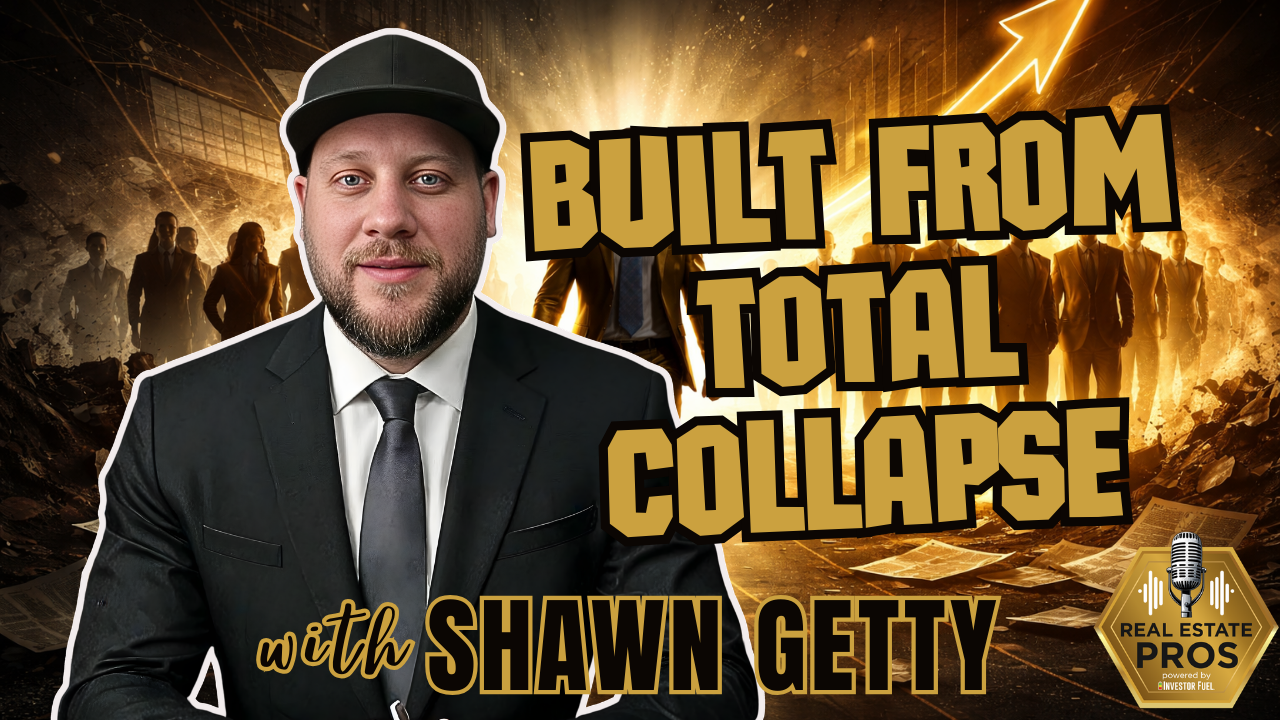
In this episode of the Real Estate Pros Podcast, host Scott Bursey sits down with real estate entrepreneur Shawn Getty, founder of the Getty Group. Shawn shares how he built one of the fastest-growing real estate teams in North America in just six years, closing over 520 deals and $300 million in production in 2025. Shawn explains that the foundation of the Getty Group’s success is not just recruiting agents but developing the people inside the team. His leadership philosophy focuses on personal growth, discipline, accountability, and building a strong life outside of business. The team operates under one collective brand while empowering each agent to build their own personal brand through social media and community engagement.

Resources and Links from this show:
-
Listen to the Audio Version of this Episode
Investor Fuel Show Transcript:
Shawn Getty (00:00)
So I haven’t done a deal specifically in a couple of years now because I just mainly run the team. But as far as business building and learning as an operator, the biggest team that I grew that fell apart was 27 agents. So I grew a team to 27 and 27 walked out on me pretty much the same day. So I went from 27 to zero really quick. And a lot of times, even myself, I felt pretty defeated at that time. honestly, just want to bury my head in the sand because again, we’re a pretty public team.Scott Bursey (01:58)
Hey everybody and welcome to the Real Estate Pros Podcast. I’m your host Scott Bursey and today I’m joined by someone I’ve really been looking forward to chatting with, Shawn Getty. Shawn’s the founder and owner of the Getty Group. He leads a team that did 520 deals in 2025 for 300 million in production. Starting in real estate only six years ago,Shawn is built one of the fastest growing teams in North America. They focus on all aspects of real estate from first time home buyers to seasoned investors. Shawn, welcome to the show.
Shawn Getty (02:33)
Thank you, brother. Appreciate it being here.Scott Bursey (02:34)
It’s excellentto have you here. I think our audience is really going to take something away from your unwavering discipline and the no excuses mindset that has fueled the Getty Group’s rapid expansion. Let’s dive in, shall we?
Shawn Getty (02:49)
Let’s do it.Scott Bursey (02:51)
So first off, for people who may not be familiar with your world, give us the short version of what you’ve been up to here recently.Shawn Getty (02:59)
So yeah, for us, it’s really just about ⁓ team building, but not just about team building, but about building the people inside the team. So for us, we work on a lot of personal growth. We make sure that our agents are growing with themselves, with their families, with their friends, as well as expanding their real estate career. And that’s really the foundation of what we do. Because what’s the point of having a bunch of money if you don’t have a good life to go with it, right?Scott Bursey (03:22)
and what markets are you operating in?Shawn Getty (03:26)
So primarily Calgary, Alberta, so in Canada. We just recently expanded out to Edmonton and Saskatoon and then we’re just opening in the next week or so. We’ll be opening in Toronto and Kelowna.Scott Bursey (03:40)
Interested to know what was the specific leading indicator that made you plant your flag there? Was it job growth, landlord friendly laws, or just where the best margins were?Shawn Getty (03:52)
for Calgary itself.Scott Bursey (03:53)
Yeah, Calgary and the expanding markets too.Shawn Getty (04:44)
Yeah, so ⁓ Calgary has always been kind of a boom and bust city. So it’s a fun place to be, but it’s where I live. So that’s where I started here. And then we had a bunch of people that kept wanting to join our team and we just weren’t open in those markets. I kind of held back for over a year to be honest, just said, just can’t do it. We’re just not really operational outside of the city. And then we just kept getting people pushing and pushing and pushing. So we finally just started expanding into different markets.Scott Bursey (05:11)
awesome. Love it. What caught my attention about you was the way you’ve been able to scale the Getty Group. I mean you aren’t just following the old-school playbook, you’re leveraging modern networking and branding in a way that feels ahead of the curve. That’s not easy, especially in this climate. What’s been the key to keeping that machine running smoothly?Shawn Getty (05:33)
Yeah, so one thing is we operate under one collective brand, the Getty Group, which because we have so many signs out everywhere, like people do know us, but the biggest thing is we’ve leaned heavy into social media and we’re really about about building the agents brand and allowing them to be the star of their own show instead of just an operator on a team. We find most teams just focus on lead generation and lead conversion and that’s not brand building. So for us, because we make quite a bit of noise out in the marketplace, that’s how we’ve been able to get so well known without havingto spend a bunch of capital on billboards and bus benches and stuff like that and we become super well known in every city we operate in.
Scott Bursey (06:10)
It’s impressive that you’ve been, that you’ve reached the level of autonomy that you have. Was there one specific moment or a particular deal where you realized, okay, this is actually working?Shawn Getty (06:22)
Yeah, for sure. So I’ve started to fail teams a few times until we landed on this one where we’re at.But in ⁓ 2024, we revamped the model, revamped the offering, the comp plans, and even the training structure and onboarding. So literally a full overhaul. And we started with four agents in January, 2024. And we finished with just under 80 agents in that first year. So that rapid growth was good, but we didn’t really lose anybody. And that was the big key. Like when we started to realize that we were growing without attrition, ⁓ we figured we really had that model nailed down.
Scott Bursey (06:59)
Absolutely. Yes. The moment the light bulb shines brightly. Now, Shawn, every operator I know has a moment where things, you know, don’t go necessarily the way that you planned them. Maybe a deal that went sideways or a time they, you had to pivot quickly. You mind sharing one of those moments with us?Shawn Getty (07:04)
Yeah.For sure. Yeah. So I don’t do too many deals anymore. I haven’t really done a deal in a couple of years now, but as far as like team growth and business building, yeah, I’ve, had the biggest team that I, the biggest team that I got that failed. Sorry to get a water here. One sec.
Scott Bursey (07:37)
Sure.Shawn Getty (07:37)
We’ll start that one all over again.Scott Bursey (07:40)
Okay, absolutely.Shawn Getty (07:42)
So I haven’t done a deal specifically in a couple of years now because I just mainly run the team. But as far as business building and learning as an operator, the biggest team that I grew that fell apart was 27 agents. So I grew a team to 27 and 27 walked out on me pretty much the same day. So I went from 27 to zero really quick. And a lot of times, even myself, I felt pretty defeated at that time. honestly, just want to bury my head in the sand because again, we’re a pretty public team. We do a lot of posting.it was pretty open and out there when that happened. And you gotta get to do two things when that happens, right? You can either tuck your head in the sand and just hope that it washes away over time, or I did. I’d like to say we, but in this particular case, there was no we, it was just me standing there by myself.
is I really did a self audit of why everybody left, of why the culture disappeared, of why everybody was so frustrated and upset. And then I literally reverse engineered that into a better business plan, better training, better culture, better systems. I spent a while rebuilding it before we did it again. And then really you learn from your failures the most as long as you audit them, see what failed and then adjust moving forward. If you don’t do that last step there where you audit and adjust, you’re doomed to live in that forever.
Scott Bursey (09:30)
I really tip my hat to you. That’s quite a feat. That’s fantastic to start all over and take something that didn’t go your way and turn it into what you have. So looking at your business today, what tripwire or system have you built specifically so that exact misfortune can never happen to you again, if I may ask?Shawn Getty (09:40)
yeah.Funny actually, it’s a very small…
small thing that I look for. And when people join the team, they’re usually really gung ho and excited and they always post, you know, get a group on their posts or have the get a group logo in their their posts and everything that they’re doing. As soon as I see that logo disappear or I see that branding disappear outside their captions, I know that we have a problem. And then it’s kind of like the the canary in the mine, right? Where, you know, when you start to smell gas, you start to look for fire and
Yeah, so when I see one person stop, then I start investigating to what I see as their closest people in the team. And then you just start going one by one and seeing where the problem is. And first you want to correct it. So see what I’m doing wrong, or if there’s some I could fix. But if it’s something internally where they just don’t mesh with the systems or they don’t mesh with our processes and procedures, then you have to cut the dead leg off, right? So first I look internally and then I look externally.
Scott Bursey (10:54)
What a great perspective. And that’s a winning recipe. That’s the kind of stuff, know, Shawn, people don’t talk about enough. And honestly, it’s what separates the folks who just dabble from the ones who stay in the game long term. Let me ask you this. What are you most focused on solving or scaling next?Shawn Getty (11:14)
Yeah.So we’re always trying to solve the same problem, is just how to get agents more deals with doing less time, right, is the biggest thing. So what we really focus on at the moment is making sure that agents are living in their schedules and they’re doing the things they’re supposed to do when they’re supposed to do it. And like a quick little thing that we’ve done with this is we’ve inserted buddy chats where we put two agents at a team lead inside a group chat and they just check on each other at night to make sure they did their schedules in the morning to make sure they’re up and running in the afternoon to make sure they’re doing what they’re supposed to do.
one and then another one is I bought the entire team kitchen timers just little $10 kitchen timers and we do two things with those one is we audit their current activity so every 15 minutes the timer goes off and they just write down what they did in those last 15 minutes and it’s amazing what you learn about what you think you’re doing as far as work versus what you’re really doing and then you advance after that one into time blocking and working blocks of time which is two totally different things so time blocking is obviously the things that need to happen at a certain hour
And then you fill your schedule with blocks of time where there are activities that could happen any time throughout the day. And you assign a block of time to it. Could be 50 minutes, could be 30 minutes, could be two hours, could be whatever. So you have your time block on one side of our sheets and then the blocks of time on the other. And anytime you have a gap in your schedule, you insert the block of time and then you actually set the timer for that thing and you do nothing but that. And people are amazed at how much productivity they can get when they have a hundred percent focus on one activity.
So that’s good.
Scott Bursey (12:44)
And thatall rolls back to accountability. What a building block, a great foundation to have. We see people chase doors of revenue all the time. For you, is that goal the destination or is it just the fuel that allows you to do something even bigger?
Shawn Getty (13:02)
So actually I never focus on the destination to be honest like of course you have to set a goal and that becomes your North Star But what I found is when you focus on the goal it gets really heavy at different parts of the year so for example the slow season right so summer and then dead of winter if you set a target ofsay 600 deals, right? So you wanna do 50 deals a month. And if you have a month where you only do 15 or 20, all of a sudden you’re like, oh shoot, I’m behind 30 deals or I’m behind 40 deals, right? And that gets really, really heavy when you start to be goal focused. So we’re actually much more process focused. So what happens is we take that goal at North Star, and then you reverse engineer it down into a schedule, into certain activities that need to happen every day. And we actually just focus on the activities, right? So like how many posts are you doing? How many calls are you doing? How many emails?
you send in and the journey is the goal and the goal is to make that journey accountable to your schedule.
Scott Bursey (14:36)
That is fantastic. Now I know a lot of our audiences either earlier in their journey are looking to level up, Shawn, and I think they benefit from hearing this. When it comes to building relationships and growing your network, what’s made the biggest difference for you?Shawn Getty (14:54)
Yeah, so this is actually super important in our business. So we’re big on community building and becoming the star of your community. So the biggest thing is actually, again, it’s just not so simple and so cheesy, but focusing on relationships. So for us, we’re big on building an online personality and building an online community.So when we’re posting, we’re actually posting in our stories, we call them the five emotional anchors. So food, fitness, inspiration, motivation, memes, pets, and kids. Those are the things that people relate to the most. It allows people to see your personality the most. And then they interact with that. You interact with them and you just stay focused on just building that relationship. And then when you’re making your posts, you’re posting value, uh, signaling content. So things that are actually relevant to the market today. So like if you’re looking for investors talking about
Different returns on different types of product whether it might be you know short-term rentals long-term flips builds Speaking of what the interest rates the immigration migration the federal policy the municipal policy How all of that stuff is coming to play with today’s market and signaling that to them? While you’re posting those emotional anchors to make sure you stay connected with them So it’s a big combo of emotional connection and then signaling value
Scott Bursey (16:02)
Everyone says provide value, but when you were starting out and didn’t have a huge bank account or a massive portfolio, what was your currency? How did you actually get the attention from the heavy hitters?Shawn Getty (16:16)
Yeah, giving first is really the way you want to do it. So I reach out to people and I would just ask them how we can help them in their life or help them in their business, not their business of real estate, but their actual work business. So whether they could have been like a manager at a different company, like could be car sales or furniture sales or whatever it might be or wherever they’re in their business. But if I could reach out to them and help them either with a business plan or a certain strategy or anything that I’ve learned along the way, and I would just pour into people and I would just help.And by just helping, all of a sudden the opportunities start to come around because you’re a good guy and everybody wants to help the good person,
Scott Bursey (16:52)
Relationships are everything. Really, really critical, and I’m pleased to hear your approach. All right, before we wrap, Shawn, if someone wanted to reach out and connect with you, maybe collaborate or learn more about what you’re doing, what’s the best way for them to contact you?Shawn Getty (17:10)
Yeah, any social media and just at Shawn Getty. I’m lucky enough to be old enough to have got my name on all this stuff. So if you just do at Shawn Getty, you’ll track me down anywhere.Scott Bursey (17:21)
Perfect. Well, listen, I appreciate your time, your story, and definitely your perspective. We need more people in this space who are doing it the right way. Thanks again for being here, Shawn.Shawn Getty (17:34)
Appreciate you brother.Scott Bursey (17:35)
And for those of you tuning in, if you got value from this, make sure you’re subscribed. We’ve got more conversations coming up with operators just like Shawn, who are out there building real businesses. We’ll see you on the next episode.