Subscribe via:



Show Summary
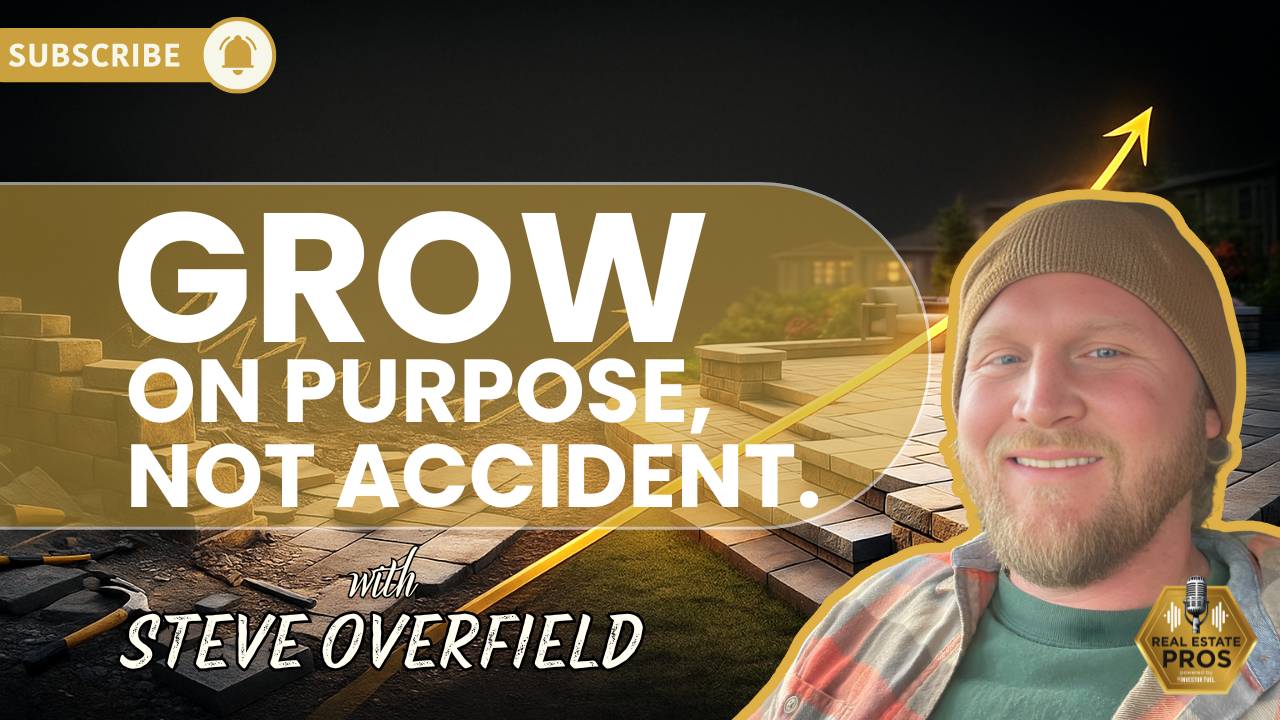
In this episode of the Real Estate Pros podcast, host Kristen interviews Steve Overfield, owner of Over the Field Landscape, who shares his journey from the restaurant industry to landscaping. He discusses the challenges he faced in the landscaping business, including cash flow, equipment reliability, and employee management. Steve emphasizes the importance of setting clear expectations with employees and building a strong team culture through humor and social media engagement. He also highlights the significance of designing functional outdoor spaces that foster community and connection. Finally, Steve advocates for leveraging AI tools to enhance decision-making and improve business operations.
Resources and Links from this show:
-
Listen to the Audio Version of this Episode
Investor Fuel Show Transcript:
Steve (00:00)
ChatGPT, if people are not using AI by now, they are falling behind. So difficult decisions are far easily made if you run it through ChatGPT because it takes emotion out of it. And again, it brings reality and clarity to it. ⁓ So like for instance, if there’s a issue going on with an employee, run it by ChatGPT.Word vomit, I always say, end of chat GPT It’ll organize your thoughts and it’ll allow you to create a response that is effective and not emotional.
Kristen (02:08)
Welcome back to the Real Estate Pros podcast. I’m Kristen and I’m here with Steve Overfield, who is the owner of Over the Field Landscape. They do block and brick work for outdoor living spaces out of Kansas City. Thanks so much for being here, Steve.Steve (02:20)
Yeah, absolutely.Kristen (02:20)
I think this is really interesting. This is a very interesting focus. I think it’s definitely focusing on spaces that bring people together. So how did you get into this industry to begin with?Steve (02:30)
I got into this industry, I used to own restaurants and that was a grueling task. No days off and then got tired of it, sold the restaurants and needed a job. Started working at a local landscape company, realized I loved it far more than the restaurant industry and did one side job on a Saturday and made my paycheck. And then after that, I just went all in and, and, ⁓Now we’re 10 years later and we found her a little niche here
Kristen (03:03)
Amazing. That’s awesome. And then when you kind of transferred over to this, you know, sector, what were some of the growing pains? What were some of the things you had to learn and, you the kinks to get out?Steve (03:15)
The growing thing in the beginning was cash flow and capital. ⁓ But then the second biggest thing would be reliable equipment, vehicles and trucks. And then the third one is getting better is ⁓ a revolving door of employees.Kristen (03:36)
Right. Yeah. And how do you, how do you kind of navigate that? How do you, how did you learn which equipment and everything were the best ones to choose? Was it trial and error?Steve (03:48)
Yeah, mainly ⁓ just basically being disciplined enough to save up for better equipment versus buying what I needed right that moment and then breaking costs and more money over the years than what I paid for it.Kristen (04:02)
Right.Yeah, I think that’s an important thing that people don’t really realize. And that goes for repairs in general. If you do it the quick way, it can end up being more money in the long term. ⁓ And then you talked about building out your team. I think that’s something that a lot of people struggle with. What are your best tips for hiring the right people that align with your values?
Steve (04:29)
I think that the person that you hire doesn’t necessarily matter. It’s the expectations that you set up front with them and also ⁓ how you have to not be afraid to hold those expectations whenever they’re not following them. think anybody with two feet and a heartbeat can potentially be a fantastic employee as long as their leader is maintaining focus onthe growth of the company and the growth of the individual.
Kristen (05:50)
Yeah. And what’s that balance that you strike? Cause I think a lot of people are maybe they’re scared to be looked at as too tough or too hard on somebody. What’s that balance you strike?Steve (06:01)
So the balance is, ⁓ I have a little saying, says, clarity is my power and reality is my tower. Meaning that as long as you are clear with your intentions and instructions, and if somebody doesn’t follow them, then you just stay emotionless and you just, you you handle it with, this is what was supposed to be done. This is what not supposed to be done. And this is what you did. So maintaining clarity.⁓ is a big focus right now on my end.
Kristen (06:38)
Yeah, absolutely. And when you lay it out like that, it’s hard to argue against or hard to make it seem like you’re nitpicking. And then how do you kind of build chemistry within the team?Steve (06:49)
⁓ Chemistry is just more or less I make funny videos like our day-to-day battles, I should say. I make funny videos like basically inflating them. Inflating like a small issue into a giant issue with comedic value. And what that does in my mindset is that makes it easy for them to remember what had happened and not to do it again because it created a laugh.Kristen (07:22)
Yeah, absolutely. Well, yeah, so talk about kind of using social media and kind of what that looked like, getting comfortable with it.Steve (07:31)
yeah, so the beginning years I was getting walked up to by random strangers. have an alter ego called Landscaper Steve that is on every video or anything I post and people were walking up to me, hey, Landscaper Steve. ⁓ I think social media is super important. ⁓ In our industry, our work is a lot easier to look at.Kristen (07:47)
Ha ha.Steve (07:58)
It’s it’s fun, it’s cool, so I wouldn’t have as much struggles as somebody trying to sell ⁓ software or something like that. So social media became easy for me and ⁓ it’s just consistent posting. You post your before and afters and ⁓ continue to do quality work and your spider web evolves.Kristen (08:23)
Yeah, letting people a part of the journey. Did you have any ⁓ trepidation being on camera? I know a lot of people want to build a personal brand, but really struggle with putting themselves out there.Steve (08:36)
No, I learned years ago to not care what other people think. As far as that realm goes, a lot of people will want something to be perfect before it’s even started. And you’re going to get perfection later as long as you keep after it because you’re not going to ever hit perfection. So you just got to keep doing it until it feels natural.Kristen (08:57)
Yeah, absolutely. And kind of going with that mindset, what were some of your tricks early on, kind of as you were building your business, how you could kind of, you know, make yourself confident enough to believe that you can do something like that.Steve (09:13)
I had a few good influences starting off. We all kind of started our businesses at the same time. the first few years we were kind of, we went to the gym together in the morning. So we’d kind of toss back ideas back and forth and talk about what we posted the day before. So I kind of got lucky in that, that retrospect. But ⁓ basically if you have somebody that’s trying like you’re trying in the beginning stages,⁓ It helps because then you can trade war stories and learn from each other.
Kristen (09:49)
Yeah.Yeah, absolutely. ⁓ That kind of having that group around you, camaraderie around you, mentorship. Can you talk a little bit more about that, how you were able to build your personal network?
Steve (10:36)
Yeah, so a lot of my best contacts came from the gym. mean, everybody there is trying to better themselves in one way or another. And, you know, there’s a saying says you walk into a perfume shop, you’re to come out smelling good. So that’s kind of how I look at that. You just put yourself around the right people and then naturally you’re going to get better just by a little bit of competition and then just also byhearing other people’s ideas and implementing them.
Kristen (11:08)
Definitely. And how do you kind of distinguish the good people from maybe the ones to stay away from? Are there any red flags you look for?Steve (11:17)
So red flags are definitely, ⁓ I mean you can feel it in your gut and then also, which a lot of people ignore that. And then people that are just not okay with being where they’re at in that moment. Like there’s people that are like okay with their life and they don’t want to do anything more than that. And you just find a group of people that want more in life and then you feed off of each other.Kristen (11:48)
Yeah, absolutely. And I know a big principle that you work off of is growing on purpose. Could you kind of elaborate on that?Steve (11:56)
Correct, yes. So I started saying that just after I grew, not on purpose. We grew so fast, so quick, and it kind of comes full circle to where I was buying trucks out of necessity and just buying what I had cash for at the time. We grew too fast, too quick, and then guess what? Quality control went down. My job became putting out fires and redoing stuff. if I were to do it again,I would have just grown on purpose and not ⁓ just took on all the work and I paid advertising companies that brought in so much work that I took it and I got too busy to the point where it affected my business and my personal life.
Kristen (12:44)
Yeah, absolutely. And how did you kind of ⁓ course correct that?Steve (12:51)
downsized. I downsized, everything that I owned outright, sold everything I didn’t, and kept the good people and then stopped trying to find work. I made sure that what we were doing and that we had on the books was being done perfect. I just took a back step to a couple years and what I did in the beginning.Kristen (13:19)
Yeah, that concept of going deep instead of wide.Steve (13:23)
Bye.Kristen (13:26)
Yeah, and switching gears a little bit over to, you know, your business. ⁓ Talk to me kind of about what makes you guys different and kind of the different projects you’ve worked on.Steve (13:38)
As far as ⁓ social media presence is, I post our work and then I post a funny video. So I make sure that my clients and potential clients are engaging and at least getting a laugh. I feel like a laugh is going to buy real estate in someone’s mind. So not only are you getting a laugh from the company, but they’re also seeing our work and whenever that decision comes up within the family toKristen (14:00)
Mm-hmm.Steve (14:08)
purchase a patio or a fire pit or fireplace, we’re going to be at the top of the list.Kristen (14:15)
Absolutely. And talk about… Yeah, keep going.Steve (14:20)
Now go ahead.Kristen (14:23)
I was just gonna, I would love for you to finish that thought, but I was just gonna ask more about kind of the different projects you work on.Steve (14:30)
Yes, our projects went from basic landscapes to, and this is also another point is you got to follow people in the industry that are doing far better work than you and that are doing the things you want to do because you see an idea or you see a patio that has a certain flair to it. Then you try new things out and you don’t tell the clients really, you just, you don’t charge them for it either. You’re kind of testing.a new design and you just kind of make sure it’s better than what you would have put out before. And ⁓ that alone right there just, you know, we want to evolve and get better at our craft. to in order to do that, you have to see people that are evolving and work that’s better than yours.
Kristen (16:01)
Yeah, think that’s an important note. And then as you guys are developing these outdoor spaces, talk about kind of the impact it has. know that outdoor spaces are a place where people relax and get together. How do you kind of fold that into the work?Steve (16:17)
So vision is one thing you can’t teach. You can teach it up to a certain degree, but ⁓ whenever I see a project I focus on is accessibility good? What’s going to happen whenever they have too many people? Is there secondary seating? Like you have to just understand the vision of the layout according to the house and what the purpose of the project is. it?a fire pit. Well, if someone wants to buy a fire pit and a patio around it, they’re planning on hosting parties or events. So you got to make sure that every aspect of the job has a focal point ⁓ and it flows. The biggest thing is flows. As I always often say is there’s, can do things by the book always and it’s going to be a good job, but does it look good? It has to look good.
Kristen (17:15)
Yeah, absolutely. And to kind of, you know, wrap this up a bit, how, what would be a piece of advice that you wish you learned earlier in your career that you can share with us today?Steve (17:28)
ChatGTP, if people are not using AI by now, they are falling behind. So difficult decisions are far easily made if you run it through ChatGTP because it takes emotion out of it. And again, it brings reality and clarity to it. ⁓ So like for instance, if there’s a issue going on with an employee, run it by ChatGTP.Word vomit, I always say, end of chat GPT It’ll organize your thoughts and it’ll allow you to create a response that is effective and not emotional.
Kristen (18:05)
Yeah, and are there different prompts that you like to use?Steve (18:10)
Yeah, so I often say, ⁓ this is how I’m feeling. And then I’ll tell you how, how I’m feeling. That’s the emotional side. This is what happened and this is who it’s about. And if there’s any history with that person, I’ll explain that to them. And then it’ll hear the emotion for lack of a better term and take it out at the same time. And then it’ll just give you a direct prompt to say to that person. And ever since I started doing that, therespect and the company energy has changed a lot in a very good way. Because we’re emotional creatures and emotions can cause destruction ⁓ but they’re good for personal not for business.
Kristen (18:50)
It’s amazing.Mm-hmm. Yeah, absolutely. I can totally see that. I think a lot of people are maybe intimidated or scared of AI, but as you said, it can really be a good supplement to what you’re already doing.
Steve (19:12)
It’s a tool and if you use it as a tool, then it can literally change every aspect of your life.I often look at it as a king’s roundtable. So a king in the medieval times never made a decision unless he talked to all of his associates at his roundtable. So AI to me is my roundtable.
Kristen (19:37)
I think that’s a good way to put it. ⁓ Well, that’s awesome. Thank you so much. I think you’ve given some great mindset tips and, you know, practical building tips. So thanks so much for being here. Tell everyone where to find you.Steve (19:50)
Absolutely. ⁓ Facebook.com slash over the field KC and basically that’s the tag for any social media.Kristen (20:01)
Awesome. Well, thank you so much for being here, Steve.Steve (20:03)
Yep, thanks for having me.Kristen (20:05)
And thank you everyone for listening. hope you learned a lot and got some inspiration for your own business and we will see you back next