Subscribe via:



Show Summary
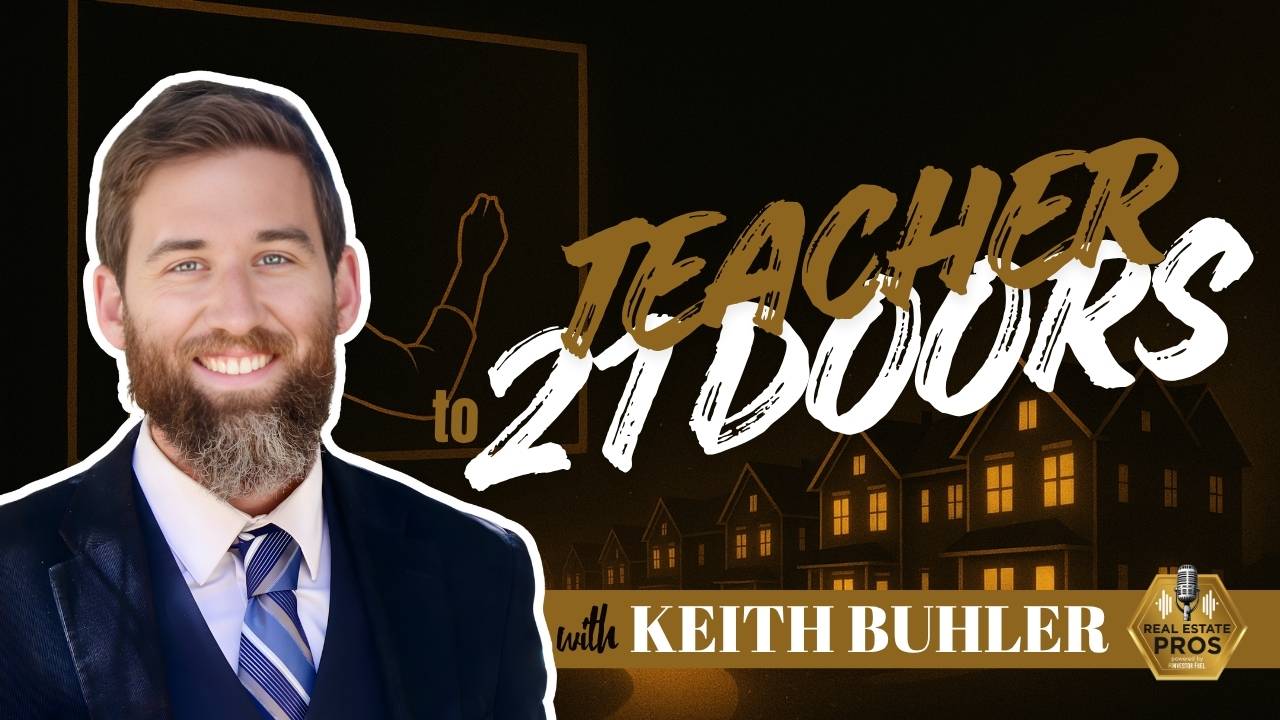
In this episode of the Real Estate Pros Podcast, Dr. Keith Buhler shares his journey from being a full-time teacher to a successful real estate investor. He discusses the importance of mindset, taking action, and the strategies he used to build his portfolio. Dr. Buhler emphasizes the value of partnerships and creative financing methods, as well as the lessons he learned along the way. His insights provide valuable guidance for anyone looking to start or grow their real estate investments.

Resources and Links from this show:
-
Listen to the Audio Version of this Episode
Investor Fuel Show Transcript:
Dr. Keith Buhler (00:00)
I tend to be more, yeah, biased in favor of action. know, that’s not necessarily natural. That’s from training myself to ⁓ time is going to heal a lot of mistakes that you make in real estate. if you have some mentorship, if you have some coaching, if you have some of a community to run your deals by, that’s probably going to prevent you from making any disastrous mistakes, right? And so you’re still going to have anxiety. tell people like real estate is,kind of about money, but it’s really about emotion.
Kristen (02:04)
Welcome back to the Real Estate Pros Podcast. I’m Kristen and I’m here with Dr. Keith Buhler. He is an investor and he’s going to tell us about how to start out, how to do something with a full-time job, and how to eventually transition into making it a full-time job, if that’s your goal. So thank you so much for being here. So let’s talk about how you got into the real estate market. I know that you were a full-time teacher and this was kind of a side thing, so tell us about that.Dr. Keith Buhler (02:21)
Thanks for having meYeah, so I’ve been in education for 17 years. And when my wife and I moved away to graduate school, realtor friend of ours said, you know, if you’re going to buy a house out in grad school where houses are affordable, because I’m originally from California, if you’re going to buy a house, then buy a duplex and you can rent out one side and live in the other side for almost free, which they now call house hacking. And
We were able to find a duplex just like that. This was back in 2012. And sure enough, the rent almost covered the mortgage. I think we were paying 200 bucks a month. ⁓ So I remember thinking, I’ve always wanted to do real estate, but I remember thinking, it actually works. This is crazy. And ⁓ we held onto that house for years. We still have that house. And that’s kind of how I got the bug.
Kristen (03:20)
amazing and talk about kind of starting out and how you actually made that jump. What was the preparation before you bought that duplex?Dr. Keith Buhler (03:29)
⁓ We did have to I was newly married we did have to move in with our folks for like I don’t know three or four months We saved up, you know our two little salaries ⁓ and we had enough for what we thought was a ⁓ significant down payment we had ten thousand dollars we got an FHA loan on this duplex we think we only put four thousand down and You know looking back now. I’m like that was a screaming good deal, but ⁓ it was justlittle bit of that mindset shift from my realtor friend saying You could put ten thousand down on a house that you’re gonna live in and then sell when you move away Or you can put four thousand into an investment property, which you’re never gonna be able to do again if unless you live there ⁓ And you can keep it and you can rent it out and sure enough, you know over time We were in grad school for five years once we moved out, you know, there’s there’s a regulation. You have to live there for a year once we moved out the
rent from two units more than covered the mortgage and almost paid for our rent at the new place. And it was like, wow, this is, this is amazing. So it was a mindset shift. was making some of those sacrifices to save up and then taking the action, the scary part.
Kristen (04:30)
Wow.Yeah, I agree with that because I think a lot of people, I mean there’s two sides of the coin. Some people jump in blind and get shocked with the reality of everything and other people can spend years in education learning things and not actually take the action. So what does that balance look like for you?
Dr. Keith Buhler (05:47)
I tend to be more, yeah, biased in favor of action. know, that’s not necessarily natural. That’s from training myself to ⁓ time is going to heal a lot of mistakes that you make in real estate. if you have some mentorship, if you have some coaching, if you have some of a community to run your deals by, that’s probably going to prevent you from making any disastrous mistakes, right? And so you’re still going to have anxiety. tell people like real estate is,kind of about money, but it’s really about emotion.
You’re gonna have some anxiety taking that first action, writing the first check, putting in the offer even. I remember them coming back with, know, my realtor saying, they accepted your offer and thinking, oh no, that means I have to do this. And so there’s that anxiety, as long as you know, as long as you can reflect back and say, you know what, my mentor thinks it’s a good deal or my community thinks it’s a good deal.
Kristen (06:32)
youI actually do it.
Dr. Keith Buhler (06:46)
then that can give you the guts to kind of go forward. And then on the other side, it’s like, ⁓ this isn’t that bad, even when there’s challenges with tenants. ⁓ I did manage it myself once we moved out. I managed it myself for a year just to get that experience. And it was hard and we had challenges. And you know what? None of them were that bad. So by the end of that experience, you kind of feel like, I think I could do this again.Kristen (07:03)
Yeah.Right, that resilience. And then in the beginning of your real estate career, you held that property for a long time and that was your single property, correct?
Dr. Keith Buhler (07:19)
That’s right. The cashflow just kept going up and up and up. You know, the property manager would say we raised the rent 40 bucks or something, but that was 40 bucks of pure profit per side. Right. So that’s $800 a year. And as a teacher, my salary has never been, you know, very big. Um, and so an extra maybe 500, 600 bucks a month by the end there was, that was real spending money. I know a lot of peoplesay, you know, keep the money from the property in the property, keep it in the savings account, build up a reserve, that kind of a thing. But I was like, I, I budgeted that money. mean, that was part of our monthly income and it made a huge difference. Um, and then getting a second duplex, even though, uh, the days of cheap money are sort of gone, second duplex cashflowed right away. And it was like, wow, why doesn’t everybody do this? Uh, but one of the things I advise my fellow teachers to do or people who really love their day job is
You don’t have to become a professional. You can just get one house that cashflow will inch up over time. Usually the equity goes up over time and you’re building this kind of nest egg of wealth without really doing anything about
Kristen (08:28)
Absolutely, and how passive was it for you?Dr. Keith Buhler (08:32)
Very passive. My joke was, you know, it’s not five hours a week, it’s five hours a year. You know, it’s call the property manager. Can we raise the rent? You know, do you approve this $500 water heater expense? Cause we had a, you know, if it’s over 500, ⁓ very, very passive collect the checks, check in on the tenants. Sometimes I would, I did like, once we moved away from that original location, I did like to go back every now and then, but essentiallyhire the professional and trust them to do it. You you manage the manager, but I was like, wow, I could do this for a lot more properties. Now I’m a bit more involved, but at the time it was very, very passive.
Kristen (09:11)
Yeah, I mean, it’s just as you said, maybe people looking for that passive extra income. It’s a really good, it’s a good option and you don’t have to be making tens of thousands of dollars a month. Just $500 a month can make a big impact.Dr. Keith Buhler (09:28)
huge. And if you look at the, ⁓ if you make a little spreadsheet, and I have this spreadsheet in my kind of like resources that I share with people, ⁓ equity growth over time, paying down your mortgage over time, cash flow over time, and know, depreciation over time. If you add those up, it ends up even with like a small property in the Midwest, ends up being thousands and thousands of dollars a year. And over 20 years, it could be hundreds of thousands of dollars that areaccumulated in that one property for almost no work. It’s a lot of work up front to get it, research and all these things. I don’t want to make it sound too easy. But if you can get past that first deal and let the property manager manage it, it can just grow over time and it’s an amazing feeling.
Kristen (10:49)
Yeah, amazing. And then from there, how did you start, talk about just how you started building your portfolio up and up and maybe transitioning to more on that side rather than teaching?Dr. Keith Buhler (11:04)
So the second deal that we did was in 2020, it was COVID and there was a government stimulus checks and my wife was working and we had some savings built up again. And we were kind of looking at our, it’s funny because we were looking at our budget and we’re like, we need a minivan for our kids. Our kids are getting older, we have a small car. And we did a spreadsheet when we could afford the minivan. And it basically told us we can afford the minivan when our oldest is 16 years old.We thought well, that’s not gonna work because we don’t need a minivan when I’m gonna teenagers anymore ⁓ and so again on a teacher salary, we thought we have to accelerate this somewhat and ⁓ Investing was the only other tool that I had to generate income and I do love teaching ⁓ So I didn’t risk necessarily want to go get another job so the second deal we did with a combination of cash and doing a
Kristen (11:39)
youDr. Keith Buhler (12:01)
refinance and like an interesting sort of portfolio loan where they put the new house on the mortgage of the first house. They essentially refinance the first house, put two houses on the one mortgage, and we had to bring something like 13,000 to close. So felt like a very cheap investment. And people can do this with their primary home. You know, they can use leverage some equity from their primary home. If they can do this, once they get their first one, they can leverage the first one to get the next one, even if you don’t have a lot of cash on hand.And from that moment, from 2020 to the present day, I’ve done like 21 deals. So I definitely caught the bug. ⁓ Since that one, I’ve used partnerships, right? So using other people’s money, OPM, ⁓ either bringing in a partner, bringing in just a ⁓ cash loan, private loan. So once I had the process down and it’s like, well, how do you just fuel this? You need capital. And so from that, it was actually trying to buy
Kristen (12:56)
Right.Dr. Keith Buhler (13:02)
Long-term properties that you know maybe needed some work, so we would fix them up and then rent them out From that is how I learned how to flip was managing contractors. You know working with a property manager maybe to use their crew ⁓ To get this house renovated and once it’s renovated sometimes the most obvious thing to do is to sell it because you’ve created all this value and If you can’t afford to buy you know 15 houses in a row you kind of recoup that capital from the flipreinvested in another house and create more value. So that’s how I’ve ended up in the flipping world the last couple of years.
Kristen (13:39)
Nice, that’s a really exciting trajectory through it. ⁓ And talk about as you started kind of building out a team and partnerships and raising capital, what are your tips for finding people who are aligned with you and who are a good fit?Dr. Keith Buhler (13:55)
It’s you know, it’s so cliche right it’s just Talking to people asking them what they want. I tend to get very excited about things, know, whatever I’m into at the moment I’ll be talking about it with everybody and Even if you don’t find it that interesting, you know, the the excitement can be contagious So I was talking to people about real estate and they would ask me, you know kind of what are you doing? Or I’ve always wanted to do that and some of these partnerships just developed naturally from thatasking them questions, know, what are your goals? What are your retirement goals? What are your income goals? What are your net worth goals? ⁓ People are in, if people are willing to talk about their financial situation, which can be sensitive, ⁓ they’re in such interesting positions, right? You have people who have so much money, they don’t know what to do with it, and they don’t know where to invest. They have a problem, maybe not a poverty problem, but they have a problem of what do I invest in? Then there’s people who are
really low income and they’re, they’re stuck in this like, I can’t invest because I don’t have any money. How do I get more money? Well, how do I generate income through real estate without needing to invest? You know, it’s probably going to be serving somebody who’s doing bigger investments. So just finding out the different needs of people and their different journeys and finding out ways to help them. So, um, it was just amazing. The first time that somebody was like, I read one of your posts online. I saw that you’re doing real estate. have $60,000 to invest.
Can you do something with it? And we’ve been together as partners for four years. got four properties together, ⁓ renovated them all, and just sold off the last one. And it was an amazing journey, and it came from an online post.
Kristen (16:19)
Yeah, I mean, I think a lot of people are nervous to put themselves out there like that, fear of rejection, especially on social media. think people are very shy to, you know, tell people what they’re up to and fear that people might judge them. But I mean exactly what you said, just one little, you know, share of your life can generate business for years. And then what are, yeah, keep going, please.Dr. Keith Buhler (16:43)
Yeah. I think,well, yeah, it’s just, it really is. ⁓ I’ve since learned that, that people, you know, they call it content marketing or, ⁓ some, some of these like lifestyle kind of social media things like that really wasn’t my goal. It really just use my social media for, for my life, you know, pictures of my kid. But, ⁓ I think that can be really powerful just to tell your story. If you’re learning, if you’re scared, if you’re excited, if you’re having fun, if you’re
going to meetups, you you’re just sharing your story and then that will kind of naturally bring people who are like-minded and you can start to form partnerships. One of the biggest limitations that I had and I see in other people now is this idea of like, I have to do it all myself and I don’t have the money or I don’t have the time or I don’t have the expertise. And the fact is that with just one or two people in partnership, if you trust each other, then you can make up for each other’s lacks. And so that’s not really a good excuse.
If you’re willing to know your limitations and find people who can supplement, you can do a lot. ⁓
Kristen (17:48)
Absolutely, I think it’s really important to kind of outsource in that way. And then, you you talked about flipping and you talked about how you do holds and all that. I know that there’s a method that you’re kind of playing with right now about lease back. Can you tell us a little bit about that?Dr. Keith Buhler (18:05)
Yeah, so ⁓ typically if I get a property and I fix it up, I’m looking to sell it or I’m looking to rent it out. I’m hoping, I’ve done my research on what that rental market is like. I’m hoping to get a really good top dollar rent for a nice place. But even when you have a nice place and you do get a top dollar lease, it takes time. takes ⁓ either ⁓ someone building a relationship, someone to do the tours, or you have to be, I’m all out of state, so I’m not local.⁓ So I’m having these, I’m having to shop in places where I already have the relationship with the property manager. So there’s definitely some limitations there. But there’s a company that will bring you off market deals ⁓ where the tenant is the former owner. They want to sell their house, they want to cash out their equity, but they don’t want to move. And it might be for any number of reasons. It actually makes sense that you might want to sell your house.
and use the cash to buy your next home, but you don’t want to do it on a timeline. You don’t want to have a gun to your head that says move out in 30 days or 60 days. I mean, that’s, that’s really tense. ⁓ so they might want to stay for a year or six months while they shop, or maybe they just need the cash. So this one lady, I’m hoping closing tomorrow, knock on wood, it’s been delayed, ⁓ that, know, she is in her retirement years. She wants to cash out her home, but she doesn’t want to move. She’s not, she’s not leveling up.
She just wants to have some cash on hand. She’s paying her rent essentially out of the cash that she’s getting. So she’s going to live for free for a few years. And then from there, who knows? But from a buyer’s perspective, I’m getting a good off-market deal with guaranteed rent and sometimes prepaid rent, which is the name of the game. You actually close with cash. ⁓ That’s crazy. So I’m exploring that because I think it might be a way to do a burr strategy kind of in a creative way.
properties with a tenant in place on short-term debt, fix it up, and maybe in six months or a year put a long-term loan on it, and you might get back 100 % of the capital that you put in, and then rinse and repeat. So I think that’s pretty exciting.
Kristen (20:16)
Yeah, that’s a really cool option. Yeah, I think you’ve given a lot of good, I mean, you’ve given good background to a lot of different methods within the industry. And to kind of wrap all this up, what would be a piece of advice that you wish you learned earlier in your career that you can share with us today?Dr. Keith Buhler (20:37)
it’s definitely, ⁓ the, the more you learn, the more you earn. That’s from Marco Santorelli. I don’t know where he got it. ⁓ I started listening to his podcast right there around there in 2020, every single day, you know, going on walks or going on runs. And I wasn’t taking action at that point, but I needed to fill in a lot of gaps in my knowledge base to be able to take action and not forever. Like you said, not don’t learn forever, but,If I had been, even though I said, I’m not ready, I don’t have enough money, I don’t have enough time, I don’t have enough connections, if I’d been learning sooner, then I would have had eyes to see those opportunities sooner. And now that I know a bit more, the opportunities I see are everywhere. There’s way more opportunities than I can handle, and it’s more about balancing and prioritizing those opportunities. ⁓ learning more, ⁓ whether you know how you’re going to use it or not,
is huge. And the other one is just how much capital there is. ⁓ Again, being a teacher, fairly low income, I just thought you have to save up your own money and spend your own money, invest your money. There are all kinds of different types of wealth out there and the wealth is looking for somebody who knows how to direct it. So whether you have the wealth or not, if you have the knowledge, then the wealth will find you to say, hey, can you put this into a flip? Can you put this into a long-term investment?
for me. Can you put this into finding a business or any sort of opportunities that are out there? If you’re an opportunity finder, then the capital actually will find you and that brings value to the market. So that was a big surprise. And of course, a lot of people know that sort of basic, but it was a big surprise to me.
Kristen (22:22)
No, I think that that’s really good advice. And I think that a lot of people kind of have those self-limiting beliefs that get in the way of taking the action and learning and all of that. So I think it’s important to do exactly what you say. Like learn and also be open to opportunity. Amazing.Dr. Keith Buhler (22:41)
Yeah,there’s one thing I’m good at. It’s learning. I’m a professional educator. I should be able to teach myself some of these things. ⁓ But whether you’re fast or slow, once you learn the lessons, then the market needs people that know what to do and then having the courage to take action or join a community of people who can support you and say, you’ve got a screaming good deal on your hands. Go, go, go. This is your first deal. And you go, really? It is? And take that action.
Kristen (23:10)
Well, I think that’s a great note to end on. Tell everyone where to find you and how to work with you.Dr. Keith Buhler (23:16)
So ⁓ my real estate ⁓ website is numinorhomes.com. And I have examples of flips that I’ve done. You can get in touch with me if you do want to invest capital or if you basically want to partner and help, you know, I can help people find homes and help them invest in their home. They own it completely. I take a fee and we part ways. ⁓ just whatever, however I can serve people, do a free consultation.And on social media, Keith Buhler or Keith E.D. Buhler for Edward. ⁓ Be happy to connect with some of your audience.
Kristen (23:55)
Amazing, well thank you so much for being here. Thank you everyone for listening, hope you learned a lot, got some inspiration for your business and we will see you back next time. Bye.Dr. Keith Buhler (23:58)
My pleasure.