Subscribe via:



Show Summary
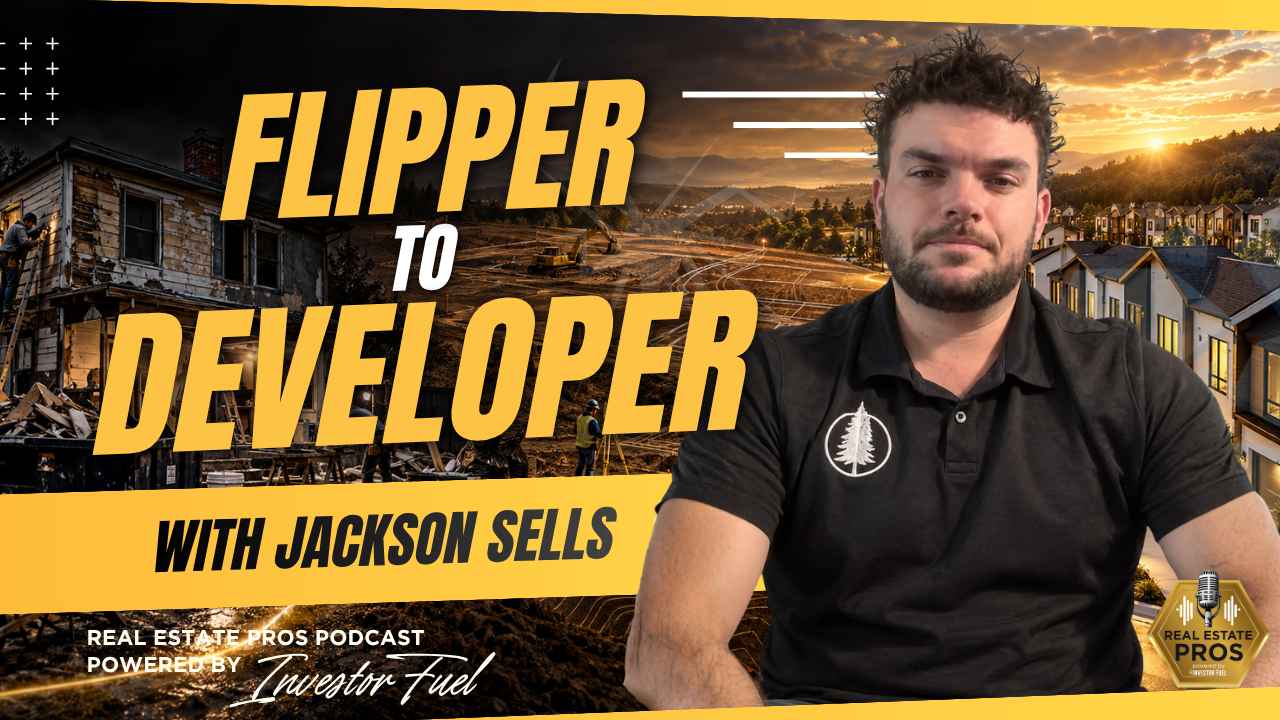
In this episode, Jackson Sells, a builder and founder of Black Timber, shares insights on ground-up construction, townhome development, and strategies for raising capital in real estate. Discover how innovative approaches are shaping the future of affordable housing and development in Metro Atlanta.

Resources and Links from this show:
Listen to the Audio Version of this Episode
Investor Fuel Show Transcript:
Jackson Sells (00:00)
I definitely think it is a fast-growing product. There’s a lot of different municipalities around Metro Atlanta that are all really gung-ho about it. They love it, they want it there, and they’re encouraging it. The product that we build allows me to double lots because we have a stacked townhouse floor plan concept that we’re running with to where we’re fitting two townhouses inside of everybody else’s single townhouse. We don’t change the size of it, but we get two units out of it.
Dylan Silver (02:03)
Hey folks, welcome back to the show. Today we’re joined by Jackson Sells, a builder based in Metro Atlanta and the founder of Black Timber. Jackson, thanks for joining us here today.
Jackson Sells (02:14)
Thanks for having me, sir.
Dylan Silver (02:15)
What types of deals are coming across your desk these days?
Jackson Sells (02:19)
My goodness. A lot of single-family stuff; the need for affordable housing is huge right now. We’re doing a lot of ADUs, and we’re doing a lot of investor-style new builds where people are looking to transition into the development space from house flips into ground-up construction. We’re also serving a lot of investors who want to move from build-to-rent into the single-family space as well, really focusing on how we can make it more affordable and bring prices down for consumers along with builders, and inevitably maximize profits for our investors.
Dylan Silver (02:58)
I’d like to ask you about how these deals come about. Will an investor come to you saying, “Hey, I’ve bought this land and I’m looking for someone who can do ground-up construction,” and ask for a quote? Or will you partner with them and share profits? What does a deal look like in your line of business?
Jackson Sells (03:18)
Yeah. We do a lot of equity partnerships with people who come to us with land and say, “Hey, we have this land and it’s not entitled or anything—there might be a house on it, or there might not.” We’ll entitle it for them, take it through that whole process, and work with our team of engineers to figure out the best thing to put there before entitling it. Once we get all that done, we handle the development ourselves. We put in the roads and infrastructure to establish a community, or the house pads if we’re just doing one house or a couple, and then we perform the construction from ground to finish. After we finish, we’re also there to help our investors sell or lease it—whatever we’re doing with our equity partner. A lot of times we’re getting the land, but I’d say it’s probably 50/50 whether they have land or if they’re just like, “Hey, we’ve got X amount of dollars and we don’t know what to do with it because we’ve been flipping houses and we’re really tired of it, but we can put this over here with you for now and you can start working.” We can do a lot right off that.
Dylan Silver (04:27)
One of the things that I’ve noticed is that flippers tend to be pretty good at acquisitions, especially if they’ve done volume flips. But as we were talking about in the green room, there’s a different skill set that comes with ground-up construction. There are some things that you want to make sure you get right. What are the biggest adjustments that flippers have to make when they start looking into ground-up construction?
Jackson Sells (05:44)
Not paying for the lowest price point. Flippers are just looking for the cheapest thing bought right, which is great, but a lot of times it’s really focused on what the municipality is going to let you put there. You can’t go and buy something that you’re planning on putting a build-to-rent townhouse community on if it’s zoned to be a farm. You’ve got to get used to being able to say no, and you’ve got to get used to being told no and being comfortable with both. It is more of a waiting game because there’s a lot of government municipality stuff. We have the cooldown meetings, and on several occasions we’ve been told no for no good reason and we’re going back and suing the town. It’s a little bit bigger of a commitment, but if you’re as engaged in the development as you are the flip, it’s very simple once you understand the nuances to it. It’s light years of difference, with a handful of tweaks, from being a house flipper to transitioning to a full-blown developer. If you find a good partner to walk you through it on one or two of your deals—or like we provide services where house flippers can bring us the land—we will do everything we can with it to get the highest and best use out of it. If the goal is to sell it before we start developing it, just let us know and we’ll partner to handle the land for you, and then we can sell it once we have our LDP in place. Obtaining the LDP is the most valuable piece to the whole entitlement process.
Dylan Silver (07:16)
What is LDP?
Jackson Sells (07:17)
It’s the land disturbance permit. It gets everything entitled and allows you to start work pretty much.
Dylan Silver (07:24)
When we talk about that process specifically for folks who have not done that before, that can seem like a barrier to entry and can seem confusing. That’s where partnering with someone like yourself is particularly helpful because then they don’t have to figure it out on their own. When we do see this go wrong regarding land acquisitions and developing on land that needs to be entitled specifically, are there some mistakes that you see happening more so than others?
Jackson Sells (07:55)
Yeah. I would say people just not taking their time to learn who good partners are going to be. They’re getting tied up in engineering processes that are going to take ungodly amounts of time. They’re trying to get things done that don’t belong there, or they’re putting stuff on land that fits, sure, but you really want to be at the highest and best use on these properties because that’s what’s going to make you the most return and what the county has planned for them to succeed. If the town allows you to put anywhere from 40 to 80 townhouses and you’ve only got 32 of them there, you’re missing half your money for no reason.
Dylan Silver (08:35)
I want to ask you about townhomes. As we’re talking here, I was thinking townhomes seem to be an asset class that we will see exponentially more of. A lot of people look at the development of single-family homes with their own yard and individual building, but if price points keep going up and interest rates recently increased, we have to look at solutions for affordable housing, and townhomes seem to be one of them. Do you think we’ll start to see even more townhome development, not just in Metro Atlanta, but in other markets as well?
Jackson Sells (09:11)
Yeah, I think townhouses are definitely here to stay. In talks with a lot of people, I know the build-to-rent stuff is kind of hazy with different laws they’re trying to pass and stuff like that. But inevitably, I don’t think it’s going anywhere either because prohibition didn’t stop alcohol, right? And build-to-rent makes some people a lot of money. Build-to-rent townhouses are definitely something that we specialize in. Black Timber has a product that allows us to be very uniquely structured in those townhomes. Townhomes in general I think are here to stay, but I’ve noticed a lot of people looking for other alternatives, like smaller cottage-style houses on small lots trying to get that density that you get with a townhouse, but maybe a little bit different. Townhomes are starting to be grouped with apartments to where they feel the same and kind of all look the same, and as a consumer, I think people get sick of it.
Dylan Silver (10:16)
I want to ask you about another side of this equation. You mentioned build-to-rent; on the build-to-sell side, I’ve seen an uptick in townhomes being built to sell, even by some of the national corporate builders where I’m licensed in Texas. That’s an interesting trend because if someone is looking to buy a home, especially in Sun Belt markets, you can find cost-effective homes around $200,000. But you also see townhomes where folks choose to live in them for proximity to a nicer community or what have you. Do you see build-to-sell townhomes as something that we may see more of, or will it remain heavier on build-to-rent?
Jackson Sells (10:58)
Yeah, I think it’ll grow in both areas, really. On the build-to-sell side, I think it will do well, grow, and succeed, but it’s going to take developers getting creative. We have a floor plan that we were able to get very creative with to maximize our density and create something completely different than any other townhouse. We’re buying small infill lots, and we don’t need these big estate-style development pieces because we just don’t need that much space. We’re able to get these 3, 5, 7, or 8-acre lots inside of town, whereas other people can’t make that pencil on their deal because they’re getting passed on the lots we’re getting. Turning out double the lots—anybody who can underwrite a deal knows if you double your lots in the deal, I bet it pencils a whole lot better.
Dylan Silver (11:53)
You mentioned being able to double the lots. I was talking to a gentleman yesterday in Arkansas, and he was talking about how with land, something that might not be a deal to someone could be an opportunity to someone else. He gave me an example of a landlocked property: it isn’t a good deal for someone else to buy, but if you can build a relationship with the neighbors who are looking to sell, now you’ve got the opportunity to buy that landlocked property at a steep discount and open it up for access. When you’re looking at land as opposed to something with an existing structure, does that creative mindset come into play more?
Jackson Sells (12:45)
Yeah, for sure, because essentially it’s a blank canvas. You’ve got certain guidelines of what you’re able to draw—it’s like being back in elementary school art class where they tell you what to draw, but hand you a blank sheet of paper, and it’s up to you to make it happen. You’re sitting there looking at the map and all these things, and you have a product in mind or instruction from the county on what you can put there, but it’s really up to you what this thing’s going to look like.
My wife and I were at an event last night with different developers and investors. A couple of the developers got up and shared projects they were actively working on and what they were looking for, mostly money. A guy stood up, and as I was looking at the piece of land he was talking about, I pulled my phone out and showed my wife: “I looked at this like three weeks ago, this is the exact piece we were looking at.” She laughed and asked, “Why did you say no?” He didn’t say no because he was putting townhouses where I was putting townhouses, and he was happy to have it and presenting it to the whole room.
The difference was that I had the property running one way with an entrance that snaked through, but at the bottom of mine, there was a lot of rock. The cost of development on the rock was going to be so much that it was ruining the rest of the deal just to get my road through there. But he talked with a neighbor above it on the north side, went through there, and put his amenity space on the rock. It worked for him—an incredibly smart play by him—whereas my brain just didn’t see it. There are similar situations where I see things that others don’t, and we’re able to make things work.
Dylan Silver (14:44)
I want to ask you about some other asset classes because when we look at land, there’s a lot that people can utilize it for. You’re focused on build-to-rent, build-to-sell, townhomes, and other types of homes. When folks look at land, there are so many use cases—we see a lot of people doing small-bay industrial on the outskirts of a city because it might be easier to get entitled than other asset classes, or self-storage. How did you decide to get into home building?
Jackson Sells (15:17)
Yeah. I actually started out as a builder with a national company—a very large national company based right in your backyard, actually—and learned a lot through them. When it was time to move on, with the market slowing down and being in a bonus-based spot, it wasn’t great. So I joined up with a small Atlanta-based guy who is extremely knowledgeable in what he does and a fantastic dude to learn from. I learned a lot from him, stepped out from that, and now I’m on my own.
My father was also a builder and developer. I learned the base of my knowledge in his passenger seat. On the weekends, we’d go visit dad and just ride around looking at property. He’d be on the phone the whole time and I’m just sitting there listening because I didn’t really have any other choice. I guess I woke up one day and was like, “Hey, I know about that, maybe I should try it.”
Dylan Silver (16:15)
You talk about getting this information through osmosis sitting in your father’s passenger seat. But for folks who don’t have that proximity and don’t come from a generational builder background, it is often harder. One of the things I hear people ask most frequently is how they can find the right contractor or builder, and how they can be sure things will run on time and on budget. What’s your feedback there?
Jackson Sells (16:50)
A lot of builders are definitely old school. When people think of a builder, they get this grungy-looking dude with a beer can in his hand, and that’s the image that comes to mind. But there’s a lot of us that are fairly open-minded, so I would encourage partnerships. For me, if I was to go hire a builder and my builder has an equity share in my project, why would he not be on time and why would he do things wrong when it’s hurting his own pocket? It’s a different approach. Sure, it takes out of your profit margins, but then you’re not paying builder fees out of pocket; they’re directly associated with your profit margins.
Dylan Silver (17:30)
That’s true. There’s skin in the game, right?
Jackson Sells (17:32)
It’s an accountability thing at that point. Some might walk because they know they’re not accountable, while some might stick around and say, “Hey, that’s not how we normally do business, but if I overperform what we’ve discussed, I know that I could benefit.” There’s reward in that—it rewards under-promising and overperforming, and it punishes over-promising and underperforming.
Dylan Silver (17:55)
I want to pivot here, Jackson, and ask you about wearing an investor hat. Sometimes we see realtors or builders who help a lot of other people as service providers, but may not capitalize on it themselves as an investor. For folks who are builders, do you see most of them being investors themselves, or do you see them in many cases building for others without owning a dozen or more properties themselves?
Jackson Sells (18:24)
Yeah, it’s pretty hit-or-miss in the Atlanta market. A lot of people are starting to make that shift to where they’re trying to not have as much skin in the game, to sum that up. They’re trying to find different approaches because I’m seeing a lot of different styles and builders. A lot of people are going back to pre-2008 ways of just the wild west, and then a lot of guys are still buying up everything and sitting on it. So it’s very broad in the Atlanta market, and crazy as a whole.
Dylan Silver (19:01)
I want to ask a question based on your experience working with a corporate builder in the past. As a realtor, we see these subdivisions go up with interest rates lower than where anyone else can get them, and price points that are pretty shocking—especially in the Sun Belt—because they’re more affordable than the general public is aware of. It’s been explained to me that they own lenders and buy down rates, and that they have certain sales quotas they need to meet so they can dispose of properties at the end of the year. But I haven’t worked for a builder—from your experience, how are builders able to offer lower interest rates and more cost-effective properties than anyone else?
Jackson Sells (20:02)
Right. Monopoly, right? If you buy up the whole board, you kind of control the board. It’s a wonderful business model if you think about it, because they own it from top to bottom. I started way back when with D.R. Horton, and they own the development, do all of the groundwork, own the construction as their own builder, own the onsite sales team agents, and own DHI Mortgage that underwrites all of your mortgages. You’re just paying D.R. Horton from start to finish.
The entire amount of money that you hand them is either going to building material or their pocket, because land acquisition and building material are the only two things they’re really paying for. The manpower and everything else is owned by them, and whatever interest you’re paying goes right back to them. They have so much capital that they’re not pulling from outside sources to fund your loan; all the money is going right to them. It’s genius.
Dylan Silver (21:09)
Now, my understanding is that those mortgages are then sold in the secondary market to Fannie and Freddie. Is that true?
Jackson Sells (21:18)
From what I understand, yes. But I’ve not directly been involved with DHI Mortgage or selling houses, so I didn’t get too far into that. On my side, we supply property management stuff, so I’m familiar with our side of things. But as far as DHI Mortgage, I am under the same impression as you, I just don’t know firsthand.
Dylan Silver (21:42)
When we look at some of these communities going up, like a community I saw a couple months back in the east part of San Antonio, Texas, you’re seeing two-story homes with a garage for around $140,000. It looks like a tiny rectangle, but it’s still a starter home for people with a yard and a garage—an answer to affordable housing. As someone doing this on your own with your team doing townhomes, do you think we’ll see more “tiny homes” or smaller homes to meet that demand, or is this something very niche that will only work in a couple of markets?
Jackson Sells (22:24)
No, I definitely think it is a fast-growing product. There’s a lot of different municipalities around Metro Atlanta that are all really gung-ho about it—they love it, want it there, and encourage it. The product that we build allows me to double lots because we have a stacked townhouse floor plan concept that we’re running with to where we’re fitting two townhouses inside of everybody else’s single townhouse. We don’t change the size of it, but we get two units out of it.
It’s effective and helps solve that affordability gap. We’re leasing a two-bedroom, three-story townhouse with a private garage for $2,300 a month, whereas a three-bedroom runs at $2,500 a month. You’re getting a three-story townhouse with a private garage in a newly constructed, beautiful community—in a lot of markets, you can’t find a one-bedroom apartment for that.
It’s certainly helping bridge that gap. We’re doing rentals at the moment, but we have entertained the idea of doing some for sale. There’s actually a builder in Atlanta doing basically the exact same floor plan for sale and performing exceptionally well with it. It’s encouraging to see, but it also has to do with the location of that community because he’s selling these townhouses for $600,000 and they’re flying off the shelf. I can’t wrap my head around that—that’s not affordable housing at all.
Dylan Silver (23:57)
We are coming up on time here, Jackson. Any new projects or activities that you’re working on? Also, anything you’d like to mention directly to our audience?
Jackson Sells (24:47)
Yeah. Visit our website and check us out online. Whether you’re a flipper, developer, or builder, if there’s some way that we can help you grow in your space, don’t hesitate to reach out. We’re always here to support and be a lending hand. Also, our investors are our lifeline. So if you’re an investor looking to do something with property of any variety, let us know and we will be there to help you.
Dylan Silver (25:12)
Jackson, thank you so much for joining us today. Thanks for your time.
Jackson Sells (25:16)
Yeah, thank you.