Subscribe via:



Show Summary
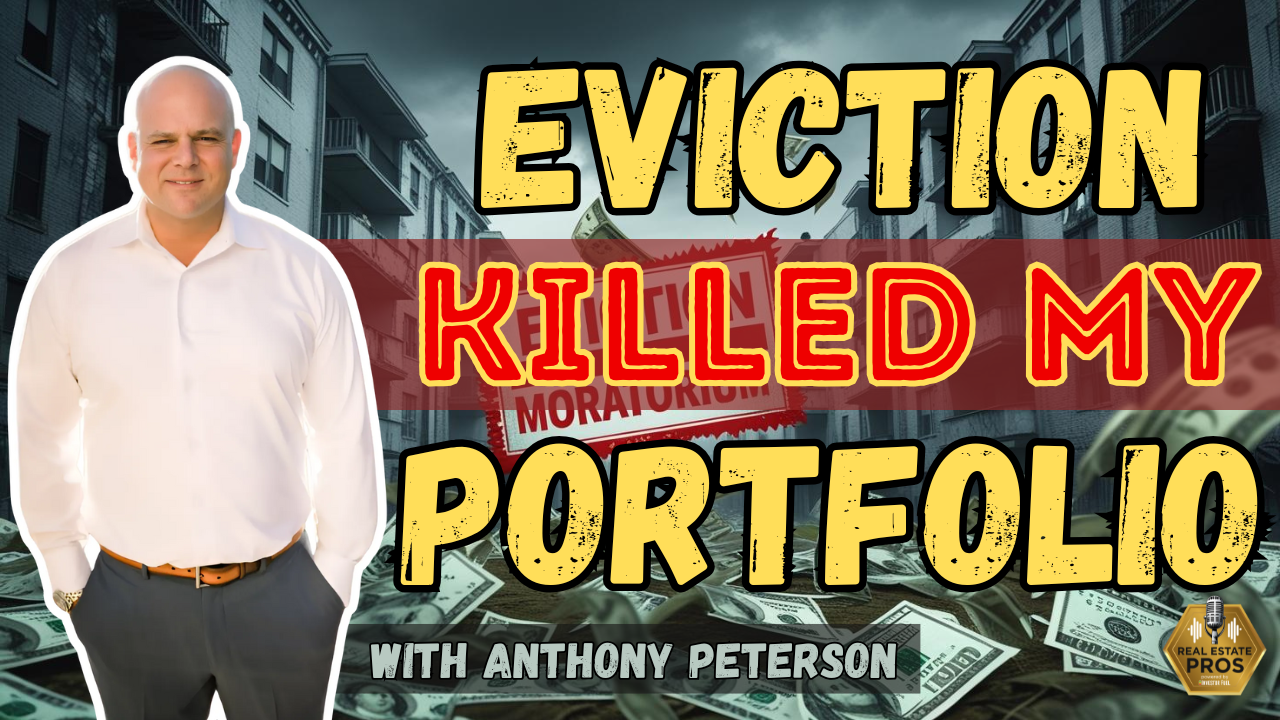
In this episode of the Real Estate Pros Podcast, Anthony Peterson shares his journey in real estate, detailing his early passion, the challenges he faced during the COVID-19 pandemic, and his resilient mindset that drives him to continue pursuing success. He discusses the launch of his new fund, the 8855 Fund, which aims to target distressed properties and leverage technology through tokenization. Anthony emphasizes the importance of adapting to change and the lessons learned throughout his career, including the realization that not everyone who appears friendly has your best interests at heart.
Resources and Links from this show:
-
-
- Investor Fuel Real Estate Mastermind
- Investor Machine Real Estate Lead Generation
- Mike on Facebook
- Mike on Instagram
- Mike on LinkedIn
- Anthony Peterson’s Website
- Anthony Peterson on LinkedIn
- Anthony Peterson on Facebook
- Anthony Peterson’s Phone Number: 951-365-9612
-
Listen to the Audio Version of this Episode
Investor Fuel Show Transcript:
Anthony Peterson (00:00)
You’re trying to go from survival to stable, okay? And then once you’re stable, you can go from stable to success. Then when you go from success, you can take success to significance. And after you have significance, you go from significance to legacy. And so that’s the trajectory as you go. Sometimes you get to certain stages faster than others, and then you have a setback and you got to go back down to survival. But then the process starts all over again.
Kristen Knapp (00:16)
Mm.
Yeah, absolutely.
Anthony Peterson (00:29)
And it’s a choice. You know, I realized in 2008, I had seven, six condos in Scottsdale, a bunch of fourplexes and I was over leveraged. Okay. And then the mortgage meltdown hit and we had to reposition everything. I had to move back into my little condo that we had saved my, my hide essentially at the time. but you learn from your mistakes and then you realize life goes on.
Kristen Knapp (00:31)
Mm-hmm.
Right.
back to the Real Estate Pros Podcast. I’m Kristen and I’m here with Anthony Peterson. He’s a real estate professional out of Southern California. He has a lot to share with us. He’s launching a fund right now. So thank you for being here, Anthony.
Anthony Peterson (02:38)
Thank
you, Kristen. Appreciate you having me.
Kristen Knapp (02:40)
And tell us just how you got into real estate in the first place.
Anthony Peterson (02:43)
Okay, that goes way back when I was like 23, 1998. I got into real estate. I started with Prudential California Realty in San Mateo when I was 23, just as a realtor, you know? And then in 2007, I got my broker’s license. And then was broker and realtor for about 24 years up through COVID.
Kristen Knapp (03:02)
Nice, right away you just found a passion for it.
Anthony Peterson (03:04)
Yeah, well it was easy because I fell in love with my wife at the time. So it kind of like made me stay in to pursue the woman of my dreams, which worked out. We married 24 years. But yeah, it was making a lot of money at an early part of my age and it got me in the professional swing right away, which was good. It was in Silicon Valley. It was a great time to be there during the dot, you know, calm bursts and all that.
Kristen Knapp (03:11)
There you go.
Anthony Peterson (03:30)
the internet explosion so that really helped my career.
Kristen Knapp (03:33)
actually grew up in San Carlos and that was right around that time where it was just crazy to see everybody just flood into that area.
Anthony Peterson (03:40)
Oh
yeah, I I lived in San Carlos and Redwood City my entire life before I moved to Temecula, so yeah, San Carlos.
Kristen Knapp (03:47)
Amazing.
Yeah, amazing. I know. And now when I, because I don’t live there anymore, whenever I go back, it’s just a totally different city than what I grew up in.
Anthony Peterson (03:55)
Yeah, Laurel Street’s still pretty cool. There’s a lot of shops on the sidewalks now. You know, they have a lot of sidewalk dining and whatnot. I love San Carlos.
Kristen Knapp (04:04)
It’s great. It’s so great. So tell us about your experience through COVID. You had kind of a hardship during that time.
Anthony Peterson (04:10)
Yeah, what happened to me was I used to syndicate private money and we would buy apartment buildings in distress, fix them up, reposition them, and then sell them for a profit. And I syndicated private money. were, ⁓ I guess you can call them investors, but I used them for debt only. So they were like my private banks, kind of like a rolodex of accredited investors who wanted a better return. They were okay with a little bit of a risk.
And so I created what’s called a multiple beneficiary deed of trust.
Okay. And we would use that as their instrument to secure their investment against the property. was basically like a mortgage document. Same as B of A or any of the big banks would use. Deed of trust, a promissory note, gets recorded on the property. It was a mortgage essentially. And that’s how their money was secured. The issue that we had was when COVID hit, they had what’s called an eviction moratorium.
Okay, and for hardships, people didn’t have to pay rent and as a landlord, I had to maintain the properties, pay all the utilities and bills, keep the units clean and healthy living and pay all the debt on it without collecting any rent. Okay, and unfortunately, a lot of the tenants took advantage of this and for three and a half years, almost four years, while they kept the eviction moratorium extending it and extending it in Oakland, California in particular,
I got wrapped up in a lot of litigations and we had to let go of all the buildings and it was a big mess. So, I was a personal guarantor of almost $100 million in loans at the time. And then when no one’s paying rent, your buildings are essentially worthless on paper. You can’t raise capital. No one was buying apartments in Oakland at the time. And you can’t sell or buy or raise capital or anything.
So eventually, you get squeezed. So I’ve had five years of litigation. It’s been kind of horrible.
Kristen Knapp (06:48)
and what your
Wow, and what percentage of your tenants weren’t paying?
Anthony Peterson (06:53)
Like 80 %?
Kristen Knapp (06:55)
So you were wrapped up in litigation after this.
Anthony Peterson (06:57)
Yeah, all the private investors and private lenders that we used, almost 100 of them, I think 10 of them rallied around each other and did a massive lawsuit against me and my business.
Kristen Knapp (07:08)
Ugh. And like during that time, what was your mindset? It must have been so crushing.
Anthony Peterson (07:13)
Honestly, the mindset was just to protect my family at all costs, make sure the roof was over our head and that my kids… At the time, my oldest daughter was graduating high school. She was going into college. I had to make sure that she was taken care of. And my youngest was still in the house and at home in high school. You know, we had to make sure my wife was okay and my kids were okay. That was really the main focus. So I took it all on my shoulders, you know, and you do what you have to do.
You know?
Kristen Knapp (07:40)
Yeah.
Yeah. And I didn’t even, I mean, to hear that that moratorium lasted four years is surprising to me. Yeah.
Anthony Peterson (07:46)
They kept extending it and extending it. It was supposed to be like six
months and then they kept extending it and extending it. Most of California didn’t keep extending it. It was like Alameda County, Los Angeles County, you know.
Kristen Knapp (07:58)
Got it. Yeah. So, you know, you’re involved in these lawsuits and you’re trying to protect yourself. How did you crawl your way out of that?
Anthony Peterson (08:05)
Well, eventually I ran out of money and I couldn’t pay my attorneys anymore. So they sued me too. My own attorney sued me because I couldn’t pay the dues or their fees. So what I ended up doing is we ended up representing ourselves and settling on our own. So we settled the lawsuits. So we ended up paying one point. Like there’s there’s some things that are confidential about the settlement, but I’ll just say it this way.
Kristen Knapp (08:10)
⁓ my gosh.
Wow.
Anthony Peterson (08:28)
It’s settled for over 10 years, there’s payments due over 10 years. And they equate to about what the folks who sued me, it equates to about their legal fees. So really, they did it all because they were pissed, it was emotional. They wanted to put me through the meat grinder. And then in end, they’re getting reimbursed their legal fees spread out over 10 years. So who really won? Nobody. The attorneys won. The attorney. And the lawyers have no financial incentive to settle.
Kristen Knapp (08:37)
Bye.
Yeah, right. Right.
Anthony Peterson (08:55)
because they want billable hours. So the more they can spin you in the wind and keep it going, the more secure their Porsche payments are. And so there’s no financial incentive for attorneys to settle unless they’re on a contingency and they’re going after some insurance company.
Kristen Knapp (08:55)
Mm-hmm. Totally.
Absolutely.
Anthony Peterson (09:45)
But otherwise, they do very little to try to settle. anyway, yeah. So I went up against, I’m not a lawyer, but we went up against
Kristen Knapp (09:45)
Right.
Wow.
Wow. yeah.
Anthony Peterson (09:54)
highest paying law firms in San Francisco and I think we did fairly decent. Consider it. Yeah. So anyway, that’s kind what we went through.
Kristen Knapp (10:00)
Well, you’re a lawyer now, yeah. That’s incredible.
Wow, that’s incredible. And like, it’s also amazing to hear that, you you still want to move forward and you still love this industry and you still want to, you know, build for yourself.
Anthony Peterson (10:15)
Well, the thing is, it’s like if you, I mean, I’m 50 years old, okay? I got a long way to go. And if I give up now, I’m sending a horrible precedent to my daughters, to my family. You can’t give up, you know? You just can’t give up. There’s too many things to live for. There’s too many opportunities out there to go for it. And to sell yourself short in this life, that’s a sin, you know? You gotta go for it, so.
Kristen Knapp (10:39)
Did you have maybe like peers or colleagues or friends that were kind of going through similar things with this moratorium?
Anthony Peterson (10:43)
I a few friends
that had a little bit of hard times, like some restaurant owners I knew that had a hard time during COVID. But no, no peers that went through what we did that I did because most people play it small. Most realtors aren’t going after syndicating tens of millions of dollars. They’re just trying to sell a house to their friend. So I was doing…
I did things a bit differently. I was out there trying to build something big, you know? So that’s what happened.
Kristen Knapp (11:13)
So then after that you got into construction.
Anthony Peterson (11:15)
I did. I was literally kind of so sour. I had such a sour taste in my mouth over everything and I wasn’t sure what to do with myself. And honestly, I went through a phase of like moping around and my wife’s like, dude, you better, you better do something with yourself. This is getting out of hand. And so a short story long, I have so much project management experience. We’ve gutted, you know, five story buildings down to the studs and rebuilt them.
We have so much, we built buildings new, we built houses new. I had a lot of construction experience dealing with permits, inspectors, building and planning, architects, all that stuff. So it’s kind of a natural fit like to say, well, let’s go renovate some houses for people. I know how to do it cheap, I can make a profit. So that was kind of the philosophy around it. But in reality, I hated it. Yeah, I hated it.
bidding bathroom remodels? mean, that’s just not for me. It’s just not for me, you know? I have big ideas in my mind. I’m used to dealing with tens of millions of dollars. I’m used to dealing with people that are talking about big investments and big ideas. And I just felt like I was playing too small and it wasn’t working for me.
Kristen Knapp (12:06)
Yeah. What did you hate about it?
Yeah.
Yeah, so what did you go into next?
Anthony Peterson (12:29)
What I decided to do was launch ⁓ a real estate hedge fund. It’s called the 8855 Fund. And what we’re going to do is we’re going to target underperforming or distressed departments in different markets. Nevada, Arizona, North and South Dakota, Texas, Florida, maybe California too, because it’s where I live. I am a little gun shy with all the regulations, but I do know that there’s still great opportunity.
So I’m not going to just discount it. I’ll underwrite the property and see if it makes sense. But that’s what we’re targeting. And the exit strategy is the tokenization of the assets. So when it’s big enough, when I figured I’m going to raise about $250 million in the next five years, I could leverage that up to $500 million in assets very safely. And then with the appreciation and the operations, we should have a billion dollar exit in 10 years, quite conservatively.
through the tokenization of the assets. So right now, that’s becoming a bit more mainstream. People understand what tokenization is. It’s basically like the digital issuance of shares. It’s like digital shares of your corporation or your assets instead of paper shares like on the stock market.
They’re digital shares or coins put on the blockchains. The blockchains are totally transparent. You can’t manipulate them. Once it’s uploaded, it’s there for
everyone to see. Investors are changing their, I guess, what they expect as far as returns, transparency, technology, user friendliness, and all that stuff they wanted on the up and up. Tokenization solves a lot of those problems. It also gets you into global liquidity pools.
Kristen Knapp (14:47)
Got it.
Anthony Peterson (14:51)
which is a big deal.
Kristen Knapp (14:52)
And what would you say to someone who thinks that blockchain is just kind of too volatile to even be associated with?
Anthony Peterson (14:59)
Well, I would say it’s a newer technology. It’s a newer industry. we’re, you know, the people that go out ahead of everyone kind of like they’re forging the paths. Those are the ones that kind of take the lumps the most and are looked at as more, you know, risk takers or whatever the pioneers of certain industries. Every industry goes up and down. I mean,
real estate in itself could be volatile. mean, 2008, everything crashed. The commercial markets and office markets have crashed completely. So things go up and down. if you look at, success doesn’t go on a straight line. It’s ups, downs, all arounds. And blockchains in and of itself is more of an industry. The assets within the blockchains are what?
really volatile, the values and the prices of coins go up and down. But the tokenization of rural world assets, those tokens value are based on the actual assets. And the technology that they use, they program the blockchains, it’s called smart contracts. They have smart contracts and these things called oracles. It’s like a technical term. They add it to the coin or the blockchain.
Kristen Knapp (15:59)
Thank
Anthony Peterson (16:12)
where the real world assets are held. And these oracles take information from third parties like public records or real time sales comparable data. And then the asset managers can also upload quarterly statements and the new rent rules and things like that. So then with AI and the smart contracts, it can constantly update the value of the actual assets. And so that’s how it works.
Kristen Knapp (16:35)
interesting.
Anthony Peterson (16:37)
in a nutshell. I’m not a tech guy, in a sense that’s how that works. So you can monitor the value quite easily. And then the coins that are associated with your assets will be listed on an exchange. And then you can trade that for a different cryptocurrency, which then you can exchange for fiat currency and cash out. I believe that’s how it works.
Kristen Knapp (16:38)
Yeah.
Amazing. mean,
that’s so interesting. Yeah, I didn’t know exactly how that worked actually. So it sounds like you’re very much an adopter of technology. We were talking about AI a little bit before this call and just how you have to get on board with these things before they crush you.
Anthony Peterson (17:05)
Yeah.
You do. You adapt or die. You know.
Kristen Knapp (17:19)
Yeah, absolutely. And so, you now you’re in this fund, it just sounds like you have such tenacity and you just don’t quit. And I would love for you to just talk more about that mindset.
Anthony Peterson (17:29)
Yeah, mean, honestly, you never know who’s watching you, you know? And people are counting on you, whether you know it or not, you know? And your life is an example, whether you want it to be or not. And it could be an example of what to do or what not to do. I’d rather have my life be an example of what to do, even though I’m not perfect, you know? So, honoring your mother and father, making sure your kids think you’re a hero.
making sure your wife thinks you’re a hero, you know, even though they see all your bumps and bruises, right? So I do it for them. I can sleep on a dirt floor, you know? It’s not really for me, you know? It’s about legacy building. I’m a man, so I look at things like this.
Kristen Knapp (17:55)
Yeah.
Yeah.
Yeah.
Yeah.
Anthony Peterson (18:10)
You’re trying to go from survival to stable, okay? And then once you’re stable, you can go from stable
to success. Then when you go from success, you can take success to significance. And after you have significance, you go from significance to legacy. And so that’s the trajectory as you go. Sometimes you get to certain stages faster than others, and then you have a setback and you got to go back down to survival. But then the process starts all over again.
Kristen Knapp (18:26)
Mm.
Yeah, absolutely.
Anthony Peterson (18:39)
And it’s a choice. You know, I realized in 2008, I had seven, six condos in Scottsdale, a bunch of fourplexes and I was over leveraged. Okay. And then the mortgage meltdown hit and we had to reposition everything. I had to move back into my little condo that we had saved my, my hide essentially at the time. but you learn from your mistakes and then you realize life goes on.
Kristen Knapp (18:41)
Mm-hmm.
Right.
Anthony Peterson (19:06)
You know, the sun comes up the next day. Are you going to be depressed today as you like yesterday? You know, the world just moves on with or without you. And so you have to choose to participate in that, you know. And you want, I have a family and so I choose to participate and I can’t do that if I’m feeling sorry for myself or if I quit or I give up and all that shit that comes with failure, you know. So you have to be able to shed all that.
Kristen Knapp (19:31)
Mm-hmm.
Anthony Peterson (19:33)
and keep going. So I chose to do it.
Kristen Knapp (19:34)
Yeah, it’s very inspiring.
Yeah, I mean it seems like you’ve definitely chosen to build your legacy. It’s very inspiring, especially through hardships.
Anthony Peterson (19:43)
I appreciate it. It’s the right way. It’s the right thing to do. You know, I’ve gone through months and weeks and months of, you know, capitulation and hardships and not knowing what to do. And, you know, I’m a human being. But in the end, it’s like, what are you going to do? You want to dig your grave today or not? So you can die or keep living.
So I choose to keep living, right?
Kristen Knapp (20:09)
And just to kind of wrap this up, what is a lesson that you wish you knew getting into the industry?
Anthony Peterson (20:15)
I think honestly, it’s a great question. I’ve learned so many lessons throughout, you know, my time in real estate. guess the one thing that I wish I knew before I got into it.
I guess what I wish I knew was not everyone that’s nice to you is your friend. not everyone is nice that’s nice to you or that smiles at you or is even interested in what you have to say is your friend or is looking out for you. So there’s a lot of wolves and sheep’s clothing. Yeah. So I guess that’s the best.
Kristen Knapp (20:34)
Mm, yeah.
Right.
mm-hmm. yeah.
Anthony Peterson (20:52)
I guess I wish I knew that. I was a little naive at first, right? Assuming everyone would want to see you succeed, yeah?
Kristen Knapp (20:56)
Right. Yeah.
Yeah, totally. There’s definitely that delusional optimism in the beginning of anyone’s career. And I think it’s also a life lesson, too. I think that that applies to most things in life as well.
Anthony Peterson (21:10)
You’re right, it does.
Kristen Knapp (21:11)
Yeah. Well, I mean, your story is so inspiring and I’m so, you know, happy to see this fund, you know, see you create this fund and I have no doubt that it’s going to be incredibly successful. So how can people find you and how can people work with you?
Anthony Peterson (21:23)
Yeah, so what you can do is you can call me directly on my cell phone. It’s 951-365-9612. I’m also on LinkedIn, Anthony Peterson. You can look me up. on LinkedIn, Anthony Peterson. I’m also on Facebook. You can look me up, Anthony Peterson. I’m there. I can also send you the pitch deck for the fund if you breaks it down on what we’re doing.
and how we’re going to do it. So you can have it just for your files. You can have a look.
Kristen Knapp (21:51)
Amazing. Yeah, okay, awesome. Well, thank you so much for being here and I encourage everyone to reach out to Anthony. Yeah, this has been great. Thank you so much.
Anthony Peterson (21:58)
Thank you,
Kristen, and I appreciate it. Anytime.
Kristen Knapp (22:00)
Wonderful, and thank you everybody for listening and we will see you back next time.