Subscribe via:



Show Summary
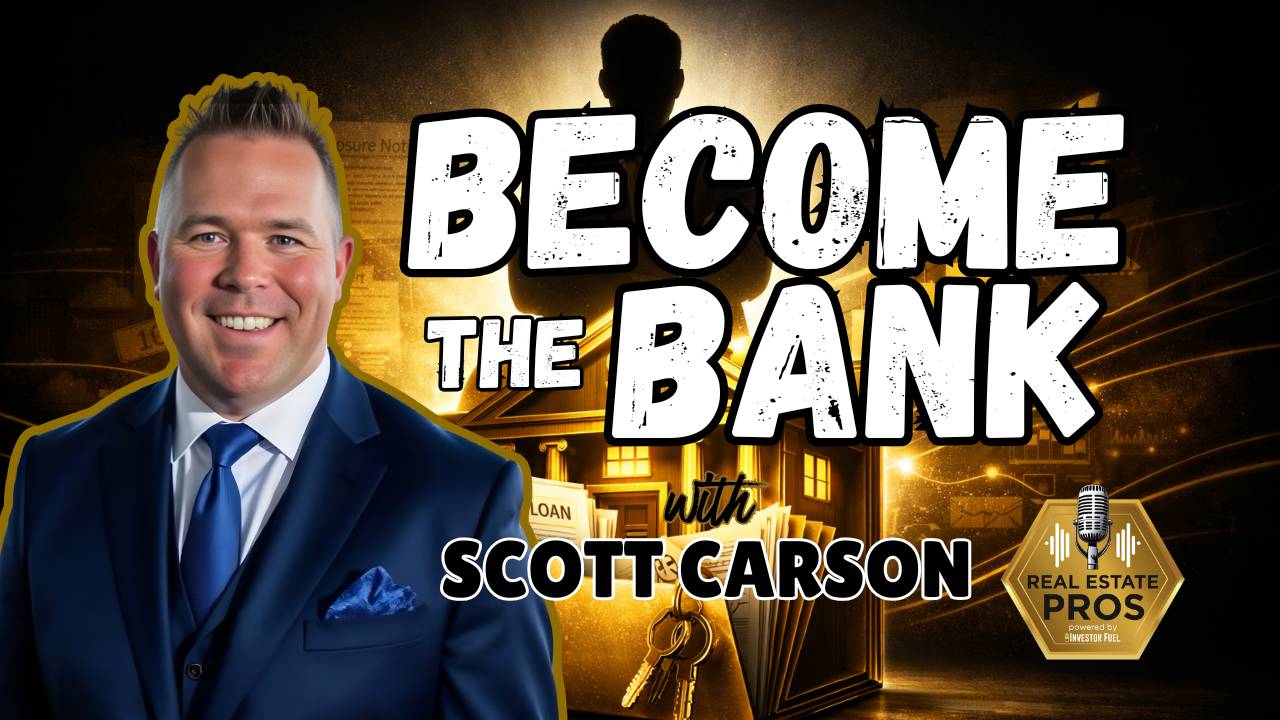
In this episode, Scott Carson, the note guy, shares insights on buying mortgage notes, distressed debt, and how investors can leverage note investing for passive income. Discover the process, misconceptions, and tips to start in the note business.

Resources and Links from this show:
-
Listen to the Audio Version of this Episode
Investor Fuel Show Transcript:
Scott Carson (00:00)
⁓ And so that gives us, the third thing that I love is since we’re buying at a bigger discount,It also gives us a higher return. If we buy a at 50 cents of the dollar, we’re gonna make a double digit return usually. they’re at a 6 % mortgage, we get them back on track, it’s a 12 % cash and cash return right there. If we get them bring some money to the table, higher return.
Michelle Kesil (01:53)
Hey everybody, welcome to the Real Estate Pros podcast. I’m your host, Michelle Kesil, and today I’m joined by someone I’m looking forward to chatting with, Scott Carson, who is the note guy, buying notes, distressed properties, and yeah, very excited to have you here today, Scott.Scott Carson (02:13)
Michelle, honored to be here. Just here to give to your audience for sure.Michelle Kesil (02:18)
Perfect, so let’s dive in. First off, for those not familiar with you and your work yet, can you share what your main focus is?Scott Carson (02:26)
Yeah, our main focus is buying mortgage notes. You know, we’re buying first liens, only first liens, and I’ve been doing this since 2007, so it’s hard to believe we’re coming up on 20 years of buying mortgage debt. And so we buy the debt actually from the bank, from lenders. We will buy some owner finance debt, but 99 % of what we buy is direct from banks and hedge funds that send us lists on a regular basis. And our game plan with that is that if somebody hasn’t paid in six months to six years,we can buy that debt at a big discount and then we make our profit by either A, working it out with the homeowner or the borrower for some sort of payment plan, loan modification. ⁓
cash for keys, reduce payoff to make money either. And I prefer making cash flow, that’s the biggest bang for the buck for us. But if the borrower can’t or won’t pay, then we as the lender have the right to foreclose and either A, sell the property at the auction or take the property back, fix it up and then turn around and sell it, rent it, whatever we want to do. So that’s the main focus that we do is buying distressed debt at a discount and then trying to, as I say, rehab the borrower instead of rehabbing the property if we can.
Michelle Kesil (03:37)
Awesome. And are you operating across the entire US or certain states?Scott Carson (03:43)
You know, I’m located in Austin, Texas, and we like buying in a Lone Star State, but we do buy in about 20 to 30 different states. Most of the major markets, Metroplexes, there are a few states that we avoid, like New York, which can take up to three years to foreclose, New Jersey, which is like two years. We kind of avoid the West Coast states of California, Oregon, and Washington that aren’t very lender friendly. And so we do buy in a variety of fast foreclosure states or even longer ones that are judicial foreclosures, like Ohio, which can take nine months.Michelle Kesil (04:05)
Mm-hmm.Scott Carson (04:13)
We have bought a bunch of the years in Florida, or as I call it, God’s waiting room. ⁓ And so, whether there’s a deal we’ll buy, usually if it’s a longer foreclosure process, we’ll get a bigger discount, but we definitely want to stay in basically lender-friendly states and markets.Michelle Kesil (04:28)
Makes sense? And so if people are confused about like what notes are and how they work, how would you kind of describe that?Scott Carson (04:38)
Yeah, so if you’re everybody’s already in the note business, that’s what.People don’t realize if you’ve got a mortgage, you’re in the note business. If you’ve got a car note, you’ve got student loan debt, credit cards, you own your Uncle Bubba down the street $500, you’re in the note space, but you’re on the wrong side of the payment stream. Or you’ve got money going out. Well, when you are in the note business, you’re basically either A, buying an IOU or originating an IOU if you’re gonna own or finance a property and sell on terms. So that you’re receiving payments. And that’s what we’re at is when we’re buying notes,
the debt which controls the property. When we buy that mortgage we don’t automatically own the real estate or even the equity. We just own really ⁓ just the debt, the legal balance on it. And obviously that’s why we like to buy first liens so that we can control that property. You know have to watch out for taxes because taxes have to be paid. If they don’t get paid a tax foreclosure will wipe you out. Gotta make sure there’s insurance on their property in case of an act of God, know, flood, hurricane, tornado, you know make
sure
that if something happens like that, that you’re covered and protected. But buying the debt, when we buy that mortgage, we literally are stepping into the lender’s shoes and become the bank on the deal. And it gives us all the rights to foreclose or work it out with the borrowers if we can. And that’s a great thing, is really helping people stay in their houses. And we’re able to do that roughly about 70 % of the time, is keep people in their houses.
Michelle Kesil (06:52)
Awesome. And so how does this correspond with investors? Like how does notes work with those?Scott Carson (07:00)
Yeah, great, great, great question. Well, like, if you’re a hard-bunny lender, you’re creating notes, you’re creating temporary notes. If you’re getting financing, you’re getting a note on your property. I’m just on the banking side of it. Now, most real estate investors, get into the further real estate side of things. They may not know that they actually can buy debt. So, three things that I love about note investing coming from the fix and flip and landlord side like I was previously to this was that A, there’s a lot less cost per lead because the way we find deals isn’tout letters or foreclosures or door knocking or drive by, we contact banks via LinkedIn and email campaigns so that banks now send us lists on a regular basis. Not just one-off deal here and there, but literally, this morning I got a list of 900 notes from one lender. I got another 200 from a second lender. I got a bunch of 1Z, 2Z from others. So we’ll see listing, like I said, from one note to all the way to like 4,000 notes that come to us on a regular basis. So that’s the first thing that I
is the marketing side of it just seemed a lot more ⁓ fruitful without having to spend a lot of money. The second thing, everybody’s worried about what they can buy a note at and our discounts to buy a non-performing note are usually well below what people are paying for an REO or a foreclosure.
⁓ And so that gives us, the third thing that I love is since we’re buying at a bigger discount,
It also gives us a higher return. If we buy a at 50 cents of the dollar, we’re gonna make a double digit return usually. they’re at a 6 % mortgage, we get them back on track, it’s a 12 % cash and cash return right there. If we get them bring some money to the table, higher return.
If we hold it for a little while at 12 months and then sell the note back to Wall Street, we’re gonna be at like a 20, 25 % cash and cash return. So that’s the great thing. I like it is actually being able to make a great return without having to rehab the property, dealing with toilets, tents and trash outs.
And that’s the fourth thing is that it’s really a vendor driven business. Yes, I find deals. Yes, I raise capital. But once we acquire that note, we park it with a servicing company whose license to collect debt. They’re doing the bar outreach. They’re doing the negotiations, the bar. So takes a lot of the drama out of it. And then also if they won’t pay, bars won’t come to the table and play ball with it by paying. We’ll put it with a real estate attorney who handles the foreclosure process. you know, everybody talks about toilets, tents and trestles.
Gosh, that’s what in a lot of the landlords don’t want to deal with phone calls on a weekend. Well, nobody calls the bank when little Timmy floods the toilet or the air conditioner breaks on a Sunday afternoon. They call the property owner. Well, I’m not the property owner, I’m the bank. I’m to get paid first and foremost. So those are the five biggest things that I love about notes compared to traditional real estate investing.
Michelle Kesil (09:44)
Awesome. So someone could invest in a note. Is that how it would work?Scott Carson (09:50)
Yeah, exactly. I mean, you don’t need millions of dollars out there to buy notes. There’s a lot of smaller balance notes. And they’re ideal if you have a self-directed IRA account or my money’s in the sidelines. I mean, actually, it’s a great vehicle if you’ve got a self-directed IRA. You can go buy a note in your IRA, buy a performing note that’s going to give you a double-digit return or lend on your money to note investors, and it becomes a passive return. ⁓And it’s great because there are servicers in place to do this. So yeah, we have ⁓ students and investors that are buying stuff at 20, 40, $50,000 to get the ball rock and rolling and making a great return on those small balances. And of course, if you’ve got a chunk of money, you can buy a bigger portfolio ⁓ and buy a book, but you don’t need to have thousands, know, hundreds if not millions of dollars out there to do it. becomes a really great tool. Even if you don’t have money, you can leverage IRA investors to help fund those deals and make it a win-win.
Michelle Kesil (11:23)
Awesome. What are some common misconceptions people have about notes?Scott Carson (11:28)
Great question there. First, the number one overwhelming thing is that do I own the property? Am I buying the property if I bought the note?That’s the first thing, it’s the biggest mistake. No, you’re buying the debt. So you have to evaluate the debt differently from the real estate. You gotta know what the value is, but you also gotta understand that hey, you don’t wanna pay what you would normally pay for a property. In real estate, if you’re doing fix and flips, you would have a maximum allowable offer and go off of after repair value. Well in notes, we’re not repairing the properties. We’re buying the debt, so buying the debt at a discount versus as is value. ARV does not exist as a note
investor because we’re not, I mean, that’s way down the line ⁓ to owning the property. I don’t want to the property in most cases. Another misconception is that, ⁓
I can buy this and foreclosure is going to be quick. Every state has a different foreclosure time frame. Every state has a different eviction time frame. So you have to understand what’s available out there. Now on the flip side of that, you have a lot of people that come in, they just want to buy in fast foreclosure states like Texas or Georgia or Missouri. And that’s great, but there are also really great deals in states that have judicial foreclosures like Indiana, Ohio, South Carolina. Those are anywhere from like nine to 12 months to foreclose. So oftentimes we can work on
agreement with the borrower so we’re getting cash flow within the first 90 days not having to go through a whole foreclosure process. we make more money buying the debt as I like to say the pen is mightier than the hammer in note investing.
Michelle Kesil (13:01)
Awesome. And so what type of process does someone need to go through in order to purchase a note?Scott Carson (13:12)
Great question. First thing and foremost, you’ve got to have an entity. You don’t want to go buy a note in your own name. You want to either have set up with a self-directed IRA and use that or set up an LLC.to go buy a note. then when you start looking, you start contacting banks, there’s a few online portals that you can take a look at. You can literally jump on LinkedIn and start contacting banks by looking for special asset managers, secondary marketing managers, whole loan traders, note investors. And you’ll see a lot of people that have paper or notes available for sale. And then it’s all about going through the due diligence process, evaluating the property values, evaluating the borrower, and then even looking at the collateral
file the loan documents and make sure it’s right. When you first start off, you’re going to want to have an attorney and or a servicing company, somebody help walk you through that and hold your hand through the process. But it’s not not a difficult process. It’s just something different than most people are used to.
Michelle Kesil (14:07)
Yeah, absolutely, that makes sense. Do you find that a lot of like your investors are real estate investors that also have a few notes and kind of have, you know, a mixed portfolio in that way?Scott Carson (14:21)
That’s a really good question, Michelle. Yeah, we see a lot of folks that come over to the note investing side, they have other real estate investments. Maybe they’ve got ⁓ rentals or they’ve been in multifamily or they’ve done a lot of fix and flips and they can’t find deals anymore or they’re just tired of…of dealing with the tenant side of rentals. And when they see that they can make more on a per month basis usually than what they’re getting in net cash flow off of their rehab or rental, they like the notes because it becomes more passive. It’s not 100 % passive because you still got to talk with your servicing companies and go find the deals. But it’s a lot less of labor intensive having to go out there and manage a property. We use vendors to do that. And that’s the biggest thing is once…
As we always say, investors are like the most involved investors. They’re tired of all the paint and carpet and tear downs. They want to do something a little more passive where they can make a double didgeridoo turn without all the headaches. So yeah, we do find that it’s an ideal spot. It’s also an ideal spot for new investors that don’t want to deal with that aspect of real estate investment. They’re in a market they can’t find deals. Well, guess what? With note investing, you can invest outside of your market relatively easy without having to jump on a plane and fly out and inspect it and do the rehab yourself.
Michelle Kesil (16:16)
Yeah, so when you say it’s like passive, what type of work needs to be done in order to hold the note?Scott Carson (16:23)
Great question. If you’re gonna be a passive investor, then you’d, like I said, wanna hire a servicing company. You wanna, you know, either A.purchase it with your self-directed IRA so it’s tax free or tax deferred or if you don’t have that you’re just using an LLC to do that or a trust you could even create a trust to buy a note in and that what it comes down to is identify the book you know the right type of note for you wherever it was it’s performing and the yield you’re getting off of that and then evaluating the property evaluating the payment stream making sure that the borrower is paid on time previously and then making sure ⁓ if you want to you can actually keep that note with the existing
servicing company or you can move it to your own servicing company and have them start collecting and doing the borrower outreach and then it’s as a borrower pays on by the fifth of the month you’re getting a wire or an ACH into your checking account on the fifth or the fifteenth and just holding that for a period of time you know you can hold it in
you know, they pay off in 30 years, but that usually doesn’t happen. A lot of borrowers will end up moving or refinancing after seven to 10 years. So the good thing is if you’re buying that note at a discount, you’re going to get a better return than just what the interest rate is. And then if something like that happens, you make even a higher yield and now it’s all about going out and rinsing and repeating and doing it all over again.
Michelle Kesil (17:39)
What would you say are like the downfalls of working with notes?Scott Carson (17:43)
Downfalls is some people like the nitty gritty, getting their hands dirty. I don’t. The other thing is some people will buy notes starting off with and they buy a skinny deal or they buy a note on a property outside of a market. I always tell folks like, stay in the bigger markets at first, cities that have 25, 50,000 or more. Don’t buy a deal just because you think it looks good.Michelle Kesil (17:49)
Yeah.Scott Carson (18:10)
Never buy a note on a property you don’t want to end up owning. they, you know, that’s the thing. They fall in love with the property because it’s a white picket fence. Like, numbers make sense on that. If the numbers don’t make sense, don’t buy it. Whereas a property in Detroit, I might not live in it myself, but it’s a nice property that somebody would. Those numbers often make sense. So taking the emotions out of it and letting the numbers in your due diligence tell you if it’s a deal or a dud. That’s one of the big things that people kind of struggle with. ⁓ I love the property. Well, you don’t own the property. You own thedebt? Is it a good debt investment, not a good property investment?
Michelle Kesil (18:45)
Right? And so how do you support people in the process of working with notes?Scott Carson (18:51)
Yeah, so we’ve been doing this for almost 20 years, so we help.answer questions, we help people understand, you know, we teach classes on this, we have coaching, but we also provide a lot of information free on our YouTube channel, on our podcast, the Note Closer Show, we’ve got over just under 1100 episodes on all sorts of facets of note investing, you know, what you need to watch out for, case studies, deal breakdowns, and that’s one of the things that we really pride ourselves is actually taking the time to show people what’s behind the curtain, how to evaluate a deal, how to break down
list of notes to find the great deals and then all the other things that go along with it. Why would you want to avoid buying a small balance note in Pennsylvania versus buying a small balance note in Missouri? Give people true apples to apples versus apples to oranges so they understand what they’re looking at. And then just being available for folks. They can pick up the phone and reach out to it, book a phone call, or they can go to my AI clone where they can ask questions of my clone 24 hours a day, seven days a week, because we took all of our content videos and podcasts and put it
there and it’s pretty damn good Michelle that that clone can answer some really good questions he’s sometimes even better than I can
Michelle Kesil (20:03)
Yeah, that’s awesome. So people can get educated and get started with your work.Scott Carson (20:12)
correct? Yes ma’am, we like to help. That’s why the company we create is We Close Notes. Not We Talk Notes, but We Close Notes. Showing people how to go out and find a bank or a lender that will send them notes so they can feed themselves for a lifetime versus just giving them one fish to feed on for the day. So we pride ourselves in really being in that no nonsense, no BS, no smoke. Here’s how you find them. Here’s how you fund them. Here’s how you flip them or get them to flow for you.Michelle Kesil (20:37)
Yeah, and so like what is a tip for someone to be able to start finding the notes?Scott Carson (20:43)
Very first thing is go over to LinkedIn and start, update your profile. Say you’re a note investor. People are searching for note buyers out there. You can go to Facebook groups and look for note investors, and those are okay. You’ll see a lot of people looking to buy notes there. But if you really want to get lists of notes, go look online for people that have those job titles that we mentioned. Whole loan traders, note investor, special assets manager, and start communicating. Hey, what do you have on your books? I think you’re the right person in the bank. What do you on your books that you’re looking to get rid of this quarter?And that’s the easy way to get started. Just start that process of marketing ⁓ and reaching out to people. It’s easier than sending postcards or letter campaigns or door knockers, but just have to do it and stay consistent in your marketing. That’s number one, no matter what type of niche of real estate investor, and stay consistent with it and develop a follow-up procedures.
Michelle Kesil (21:34)
Yeah, absolutely. That’s helpful information. Thank you for sharing all of that.Scott Carson (21:39)
No problem, my pleasure.Michelle Kesil (21:42)
So before we begin to wrap up here, if someone wants to reach out, connect, and learn more, where can people find you and connect with you?Scott Carson (21:51)
Sure, real easy, you can go to weclosenotes.com, that’s the main website. You can always book a phone call with me too by going to talkwithscottcarson.com. That’ll take you directly to my calendar. ⁓I love to talk with investors whether you’re seasoned or brand new to it and we’ve got all sorts of great training, free or paid training to help you take your business to the next level whether you’re brand new to real estate investing but if you’re new to notes then hey you gotta get educated and understand how it’s different. we’re here to help. Close Notes, not We Talk Notes, weclosenotes.com everybody.
Michelle Kesil (22:24)
Perfect, well really appreciate your time and your story and your perspective. Thank you for being here.Scott Carson (22:30)
Thank you, Michelle, for having me and everybody listening. Make sure you go and hit that subscribe button and leave Michelle a five star review. She’s doing such a great job with these podcast episodes and we as podcasters love to hear from our audience. So go make sure you do that first before you do anything else.Michelle Kesil (22:44)
Thank you, you beat me to it, I was just about to say. Yeah, that.Scott Carson (22:46)
Well, it’s always good when you get a thirdparty recommendation versus you having to do it,
Michelle Kesil (22:53)
Definitely, thank you so much. Yeah, if you got value, make sure you’ve subscribed. We have plenty of more conversations with operators like Scott who are building real businesses and we will see you all on our next episode.