Subscribe via:



Show Summary
In this episode, Stephanie Smith, a Texas-based investment property specialist and realtor educator, shares insights on managing single-family rental properties, market trends, tenant retention strategies, and growth plans for property management businesses.

Resources and Links from this show:
Listen to the Audio Version of this Episode
Investor Fuel Show Transcript:
Stephanie Smith (00:00)
My favorite piece of advice that I give ⁓ owners, investors, and realtors, and people that work in property management is just to educate yourself. Ask questions and ask those questions from a place that you’re willing to accept the answers because the answers may not always be what we want to hear. They may not always be the greatest. It may not always be the number that we want to hear, but you have to ask
to know and then once you know, you can make those educated choices.
Michelle Kesil (02:05)
Hey everybody, welcome to the Real Estate Pros podcast. I’m your host, Michelle Kesil and today I’m joined by someone I’m looking forward to chatting with, Stephanie Smith, who is an investment property specialist and a Texas realtor educator. So excited to have you here today, Stephanie.
Stephanie Smith (02:24)
Thank you. I’m super excited to be here and just kind of have these conversations.
Michelle Kesil (02:28)
Awesome, so let’s dive in. First off, for those not familiar with you and your work yet, can you share what your main focus is these days?
Stephanie Smith (02:37)
Primarily, we’re focusing on the main aspect of property management. We manage the daily operations of rental properties, single-family residential. We’re not in multifamily. So we’re in single-family. So we handle the daily maintenance issues that are incoming. We work really closely with our vendor network to address those and close those out as quickly as possible. ⁓ We work with our owners. We educate them on
what we’re seeing in the market, market trends, stats, comps, so we can get those renewals out to tenants. Right now we’re hyper-focused on tenant retention instead of unit turn. The market is pretty saturated here with supply. There’s about an over a two month supply currently on the Austin MLS. So we are wanting to keep those tenants in place and do what we can to keep them in place. But it is hard with
you know, the options that are being built on every corner. You have full blown rental communities now that are entire communities that, you know, are owned by certain organizations and it’s hard to compete with those when they have resort style amenities, you know, ⁓ trash pickup, valet trash pickup. have dog parks and coffee bars. So right now we are battling a lot of those things, but the biggest thing is keeping tenants in place because the expense to move.
is pretty great. ⁓ And also the unit turn, the cost for make ready is something we try to avoid and try to keep out of our, you know, our owners hands. So primarily focused on the daily operations, keeping everybody happy, keeping the tenant happy, collecting the funds, keeping the owners happy. Everybody’s just copathetic.
Michelle Kesil (04:26)
Yeah, and is this only in the Austin area that you’re collaborating with people?
Stephanie Smith (05:18)
No, we just had an event last week and we had owners and operators come in from all over Texas as far as Midland, Odessa area. So it’s a problem that they’re seeing out there. It’s a little bit different of an issue because their market is a little different. Their demographic is a little different. Here we are driven by the Tesla, the Dell, the Oracle, the Apple. And so while
the individuals that are driving the market in certain areas are different. We are seeing pretty much the same trend across all areas. ⁓ I spoke with somebody in San Antonio. They’re seeing things a little differently on their end because they are a heavy military community. So there’s always people moving in and moving out. So they don’t have the long vacancy term that we may see in other markets because there’s a constant influx of incoming and outgoing.
Michelle Kesil (06:13)
Yeah, absolutely. And are you typically working with investors through this process?
Stephanie Smith (06:19)
We are, we do work with investors and we work with some of the accidental landlords, the individuals who maybe took a job and they had to relocate. So they’ve put their property up ⁓ for rent for a few years thinking they were going to come back. And then, you know, they decide they’re going to stay where they were relocated to. So now they’ve become a permanent landlord ⁓ and they explore buying additional properties. So we help them build their portfolio.
A lot are just one-off owners. Some have one to three, and then there’s the owners that have five or more. And those are the investors with the little deeper pockets that we don’t tend to see as many issues with maintenance. Issues like that seem to not be as prevalent when their portfolio size is larger.
Michelle Kesil (07:07)
Yeah, absolutely. And are you typically just taking over the property management role for these investors or yeah, what does the process look like?
Stephanie Smith (07:19)
So a lot of times we take it over from owners who are moving out, relocating, and we’re taking them over from other property management companies. Maybe the owner in a previous management company kind of grew apart, things started to shift, there could have been increasing in fees over here. So there’s a lot of reasons that owners onboard, but we have a really good mix of owners that have vacated.
owners that were self-managing and owners that are coming from previous property management companies.
Michelle Kesil (07:51)
Awesome. And what do you see as a trend in the market right now in terms of where you see like the rental market heading?
Stephanie Smith (08:04)
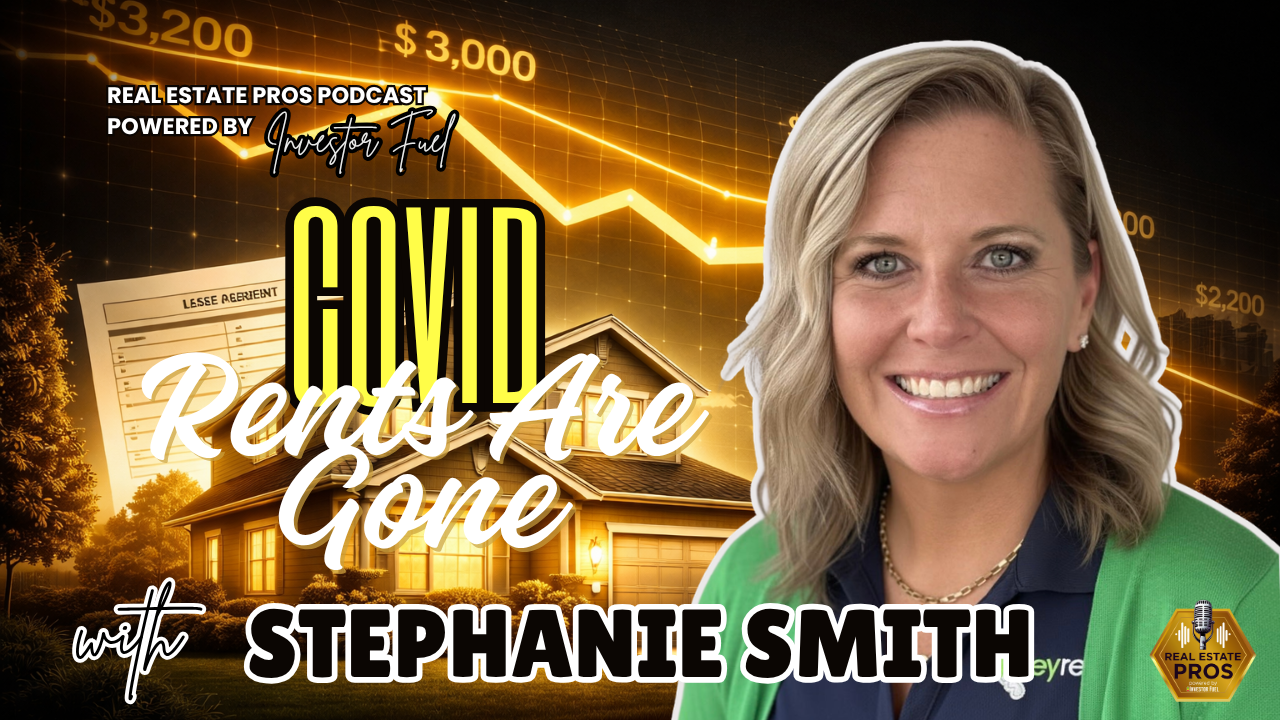
Right now, we’re seeing a little bit of a downturn in rental prices. The thing with that though is prices really skyrocketed during COVID. And so what some people are thinking is the norm isn’t the norm. It was like the COVID norm. So rental prices are actually coming back down to an average of what we saw prior to COVID.
So while the numbers that you see in different reports, you know, and all the graphs and the charts and everything that you hear are saying rental prices are coming down, they’re coming down from the extreme prices that we saw during COVID. You know, we have properties that are $2,800 a month at least during COVID. Well, now when you do a CMA and you run those same comps on that same house today, you’re 2100, 2200.
And so rates are dropping, it’s a little bit more of a they are leveling off. We are coming back to pre-COVID numbers. A lot of people have been called back into the office. So we’re seeing individuals move back to the Austin area. So, you know, we’re we’re definitely fighting a good fight with that, because, of course, owners want to collect twenty eight hundred dollars a month.
And management companies want to collect that higher rent because we’re collecting a percentage based on that higher rent, but they’re just not, they’re not accurate for the market right now. We can’t back it up. You know, we can’t make those comps work.
Michelle Kesil (09:39)
Right. And is that something that you think investors are also struggling with right now?
Stephanie Smith (10:21)
Yes, we have quite a few that, know, basically if they can’t get that higher rent, they can’t get that 2800. It’s not worth it for them to continue to rent the property. So if they’re not collecting that higher rent, a lot of times we’re seeing owners just decide to list the property for sale. I say list it for sale because not all of those properties are selling. Those properties are sitting, they’re sitting for a long time and some are coming back to us.
Some are sitting on the market ⁓ for six months. They’re not selling. They come back to us for management. So they think it’s an out, but it may not always work that way.
Michelle Kesil (11:02)
Yeah, absolutely. And what are some of the biggest obstacles or hurdles that you’re seeing or that you’ve recently overcome?
Stephanie Smith (11:12)
I think recently we have really had to overcome vendors. When the costs of things go up in the world, when there’s a shortage of parts or supplies, when fuel prices go up, we start to see our vendor prices go up. And while it makes complete sense for a landscape vendor to increase their prices a little bit when gas prices are up, they have to fuel a truck, they have to fuel a trailer, they have to fuel equipment.
It’s totally understandable. It’s a hard ask to pass a lot of those increases on to owners though. So we’re really working closely with our vendor network to do what we can to not increase ⁓ the prices of goods and services that they provide to us and for our owners. So we have vendors that we try to work with exclusively. So we’re giving them a higher volume of work if they can keep the pricing.
at more a moderate level so that it’s not such a sticker shock to owners, you know, that we’re paying $50 more for a mo. You know, so we’re doing a lot of in-house networking and collaborating and coming up with ideas and just talking with vendors, meeting with vendors, having them come into the office, you know, just a lot of open conversations about what can we do to continue this working relationship so that it works for all sides.
Michelle Kesil (12:38)
Right. And what are you most focused on solving or scaling to next?
Stephanie Smith (12:43)
I think we really want to continue to grow. We really want those owners that were DIY owners, were ⁓ managing, they were self-managing. We really want to continue to educate them on all of the benefits that you get from a property management company, that you get from a realtor, and continue that conversation.
keep putting information out on different platforms. Social media is great. Just putting short videos with just a little bit of education about if this one thing happened when you were self-managing, these are the results that may come from that. just a lot of education on the benefits of using a licensed realtor. And so we can continue to our portfolio, grow our door account.
and grow our property management company.
Michelle Kesil (13:39)
Yeah, and what does the growth phase of the property management company look like?
Stephanie Smith (13:44)
The growth phase is probably going to be, lose a lot of owners that were accidental landlords, ⁓ that were owners who couldn’t keep up with the cost of maintenance. And so I think we’re going to see a little bit of a decline there before we see that rise. And that’s okay, it’s something we’re prepared for. And those owners need to sell. They need to sell, maybe they can’t afford the taxes. There’s a lot of variables that come into play there.
So kind of supporting them in that, wishing them well, but then maybe they turn around and they refer their friends and family to us. And then we see that growth on the backside at the same time. So we’re sad to lose them here. We’re, you know, we’re parting ways, but if we do a good job and we treat everybody respectfully, then I feel like those are also going to turn into referrals and we’re going to see a spike in growth because of it.
One satisfied person who you do business with should send you, I think it’s three, I think that was what I read. They should send you three referrals. So if that’s how it ends up working out, it’s a win-win.
Michelle Kesil (14:53)
Definitely. And what does your team look like as far as property management?
Stephanie Smith (15:39)
So we have our core team of investment property specialists, and then we are supported by ⁓ staff that handles renewals. We are supported by staff that handles accounting requests. ⁓ They handle incoming leads. They may respond to those. They handle a lot of the back end. ⁓ They may initially troubleshoot with a tenant on maintenance issues if they’re not able to
resolve the issue, then they loop us in and we are able to say, okay, yes, we do need to send somebody out or the owner has a warranty on this HVAC system. So we have a huge support staff ⁓ in many different areas that do a lot of things. They are multifaceted. They support us in just every possible way ⁓ just to allow that time for us to
be more owner facing and they are more maybe tenant facing. And so they are keeping everything over here on a good steady basis. And we’re over here doing the same with the owners.
Michelle Kesil (16:51)
Yeah and how do you continue to grow your owner network?
Stephanie Smith (16:54)
I think we continue to grow right now. We’re just getting the leads organically. They are coming to us online. We are not out there actively really ⁓ pushing for new business. It’s all coming organically through ⁓ our different platforms and owner referrals. And a big part of that is realtor referrals. That’s why it’s super important we invest in our relationship with realtors.
So they turn around and they refer us the investor that they just sold that property to. So we rely heavily on our licensed realtors that are selling these properties to the investors. So we continue to do that, cultivate those relationships, create that online presence. Of course, everybody loves a good Google review, Yelp reviews, anything like that that really is just promoting you online as a quality.
⁓ and respectable business.
Michelle Kesil (17:55)
Yeah, absolutely. And is this nationwide as well or just within Austin?
Stephanie Smith (18:00)
I’m not sure nationwide. ⁓ I would think it is. can really just speak on Austin, but I mean, I think it’s a pretty central Texas thing.
Michelle Kesil (18:09)
awesome.
And so what advice would you give to investors right now from what you’re kind of seeing as you work in property management?
Stephanie Smith (18:19)
My favorite piece of advice that I give ⁓ owners, investors, and realtors, and people that work in property management is just to educate yourself. Ask questions and ask those questions from a place that you’re willing to accept the answers because the answers may not always be what we want to hear. They may not always be the greatest. It may not always be the number that we want to hear, but you have to ask
to know and then once you know, you can make those educated choices.
You can continue to rent the property. You can sell the property. You can move back into the property. So it’s just so much education and there is a lot of resources available online. We just have to make sure that we are getting our information from reliable sources, know, sources that are accurate.
so that when we make those decisions, we’re making, like I said, those educated decisions. But I think the biggest thing is just to keep having those conversations. And some of them are hard. Some of them are hard conversations. Just keep being truthful and honest. And I think at the end of the day, that is a sign of respect to just be very honest and open with an investor about something, very open and honest with an owner about something, an issue, a problem.
think it’s respectable to do that. I know I appreciate that. ⁓ Just shoot it to me straight, you know? And then I can make a decision a lot easier if I know I have all the information. It’s black and it’s white. You know, there’s not a lot of room for misunderstanding or misinformation because, you know, we have gone through this together. You’ve given me the facts. You’ve given me the stats. You’ve given me the data. That’s what I need. And I feel like that’s what
owners need to continue to make the best choices is for us to continue to pour that ⁓ education, those facts, those stats, that data right back into them.
Michelle Kesil (20:19)
Absolutely. And so what is the process to work with you and your company?
Stephanie Smith (20:25)
The process is, ⁓ of course, you would visit our website and you would click that you would like to know more, you’d like to have somebody contact you. And we have a great business development team ⁓ and they kind of handle that on the front end. They meet with you, come to your property, do a walkthrough, kind of go over everything ⁓ that’s in our PMA, our property management agreement. Make sure it’s a good fit. Make sure that what your expectations
maybe meet what we’re able to deliver. And so that’s the best way to get to us. And then owners that are currently working with different ⁓ investment property specialists or property managers, they can always then let them know, hi, I just bought another property down the street, or I’m closing on a property here and send it right in to you so that you can manage that within your portfolio.
Michelle Kesil (21:21)
Amazing. Well, before we wrap up here, if someone wants to reach out, connect and learn more, where can people find you?
Stephanie Smith (21:29)
They can find us at keyrenteraustin.com
Michelle Kesil (21:31)
Okay, perfect. Well, appreciate your time and your story. Thank you for being here.
Stephanie Smith (21:37)
Thank you so much.
Michelle Kesil (21:38)
Of course. And for the listeners tuning in, if you got value, make sure you’ve subscribed. We’ve got more conversations with operators like Stephanie who are building real businesses and we’ll see you on our next episode.