Subscribe via:



Show Summary
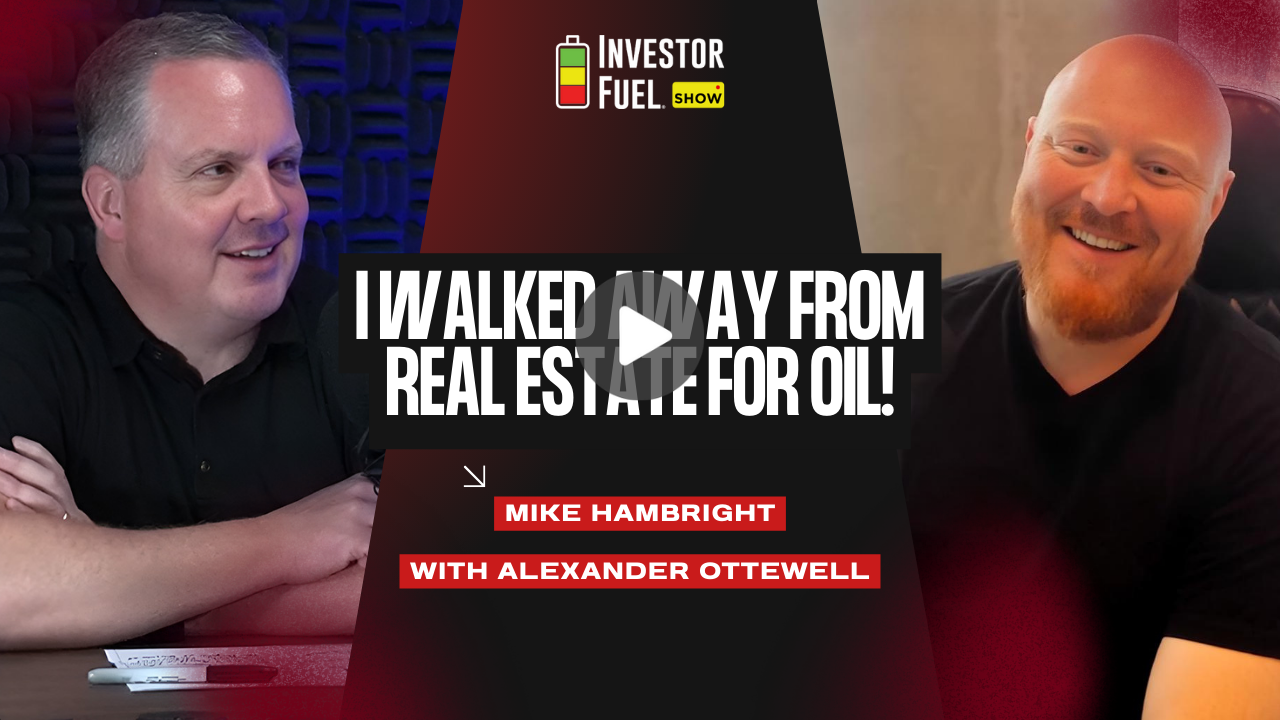
In this conversation, Mike Hambright interviews Alex Ottewell, who shares his journey from real estate investing to the oil and gas industry. Alex discusses the similarities between the two fields, the intricacies of oil production, and the importance of understanding mineral rights. He explains his business model in oil and gas, the challenges he faced, and the strategies he employed to find and evaluate deals. Alex also offers valuable advice for real estate investors looking to transition into the oil sector, emphasizing the importance of due diligence and understanding cash flow.

Professional Real Estate Investors – How we can help you:
Investor Fuel Mastermind:
Learn more about the Investor Fuel Mastermind, including 100% deal financing, massive discounts from vendors and sponsors you’re already using, our world class community of over 150 members, and SO much more here: http://www.investorfuel.com/apply
Investor Machine Marketing Partnership:
Are you looking for consistent, high quality lead generation? Investor Machine is America’s #1 lead generation service professional investors. Investor Machine provides true ‘white glove’ support to help you build the perfect marketing plan, then we’ll execute it for you…talking and working together on an ongoing basis to help you hit YOUR goals! Learn more here: http://www.investormachine.com
Coaching with Mike Hambright:
Interested in 1 on 1 coaching with Mike Hambright? Mike coaches entrepreneurs looking to level up, build coaching or service based businesses (Mike runs multiple 7 and 8 figure a year businesses), building a coaching program and more. Learn more here: https://investorfuel.com/coachingwithmike
Attend a Vacation/Mastermind Retreat with Mike Hambright:
Interested in joining a “mini-mastermind” with Mike and his private clients on an upcoming “Retreat”, either at locations like Cabo San Lucas, Napa, Park City ski trip, Yellowstone, or even at Mike’s East Texas “Big H Ranch”? Learn more here: http://www.investorfuel.com/retreat
Property Insurance:
Join the largest and most investor friendly property insurance provider in 2 minutes. Free to join, and insure all your flips and rentals within minutes! There is NO easier insurance provider on the planet (turn insurance on or off in 1 minute without talking to anyone!), and there’s no 15-30% agent mark up through this platform! Register here: https://myinvestorinsurance.com/
New Real Estate Investors – How we can work together:
Investor Fuel Club (Coaching and Deal Partner Community):
Looking to kickstart your real estate investing career? Join our one of a kind Coaching Community, Investor Fuel Club, where you’ll get trained by some of the best real estate investors in America, and partner with them on deals! You don’t need $ for deals…we’ll partner with you and hold your hand along the way! Learn More here: http://www.investorfuel.com/club
———————–
🎧 Subscribe to the Podcast
Apple → https://podcasts.apple.com/us/podcast/investor-fuel-real-estate-investing-show/id943707421
https://open.spotify.com/show/0yjlEMMn52BRrrlhfxCn4S?si=48f4b577276246e6
YouTube →
https://www.youtube.com/@investorfuel
🤝 Stay Connected with Mike
Follow on Facebook → https://www.facebook.com/realmikehambright
Follow on Instagram → https://www.instagram.com/realmikehambright/
Follow on Linkedin →
https://www.linkedin.com/in/mikehambright
📈Free Training and Resources for Professional Real Estate Investors
Acquisitions Manager Hiring Guide → https://my.investorfuel.com/if-lm-optin-acquisitions-guide
COO Hiring Guide → https://my.investorfuel.com/mm-lm-coo-hiring-guide
Executive Assistant Hiring Guide → https://my.investorfuel.com/mm-lm-ea-hiring-guide
Fuel 5 → https://my.investorfuel.com/mm-lm-fuel5
Triple Your Profits Masterclass → https://go.investorfuel.com/triple-your-profits
🏠Free Training and Resources for New Real Estate Investors
Rehab Live → https://my.investorfuel.com/rehab
Find Your First Deal in 5 Days challenge → https://go.investorfuel.com/find-your-first-deal-5-day-challenge
Join My next 4 Day Live Training Event (Virtual)
https://investorlaunchpad.com/
Resources and Links from this show:
Listen to the Audio Version of this Episode
Investor Fuel Show Transcript:
Mike Hambright (00:00.91)
Hey everybody, welcome back to the show. This is gonna be an interesting show today. I’m here with Alex Ottewell. We’re gonna be talking about his transition from real estate investing into oil and gas. There’s a lot of similarities. He’s an actual land man. So I don’t have a TV show for you yet, but man, I love that show. In fact, I just watched the most recent episode last night, but Alex, welcome to the show. Good to see you.
Alex Ottewell (00:12.503)
Thank you.
Alex Ottewell (00:19.831)
Thanks, appreciate it, Mike. Happy to be here.
Mike Hambright (00:21.388)
Yeah, yeah. So we talked for a little while ahead of this. We’ve been running in the same circles for many years here. And you made the transition from real estate into oil and gas. And I know there’s a lot of similarities, right? I don’t think people realize how many similarities they are, but we’re going to talk about your story and kind of that transition today. So before we jump in, why don’t you just kind of give us some background.
Alex Ottewell (00:42.925)
Yeah, so I got into the entrepreneurial life at 19 right out of high school. I started going to tax deed sales. So, um,
It was a case of my dad had started doing it. He had kind of reset during the crash. You know, he had some stuff, uh, you know, not go so well. he, um, he moved into taxis himself and he said, Hey Alex, why don’t you come to the auctions and, you know, help me clean them up, right? You clean up these horrible homes. Cause bear in mind, this was the time where, you know, it was much more, uh,
Far more people getting kicked out, but a lot more ugly houses. mean, truly ugly houses in that time. And so yeah, I went with them. And the first like six months, we worked well together, sort of, but like most fathers, some things. I got rebellious and I ventured out and got some capital, friends and family stuff and yeah, I went for it. So it was a case of going after…
I like to target the low income stuff. That was always my thing throughout my whole career. essentially it’s one of those things where you don’t always want to play in the big pond. You know, you don’t want to be a small fish, big pond. So I went after the sub sub markets throughout Florida. So I was in the Hernando County, the Putnam County, the,
hillbilly areas of town. with that being said, it turned into me buying a lot of mobile homes on land. So that’s where my nickname King of Trailers came in, because at the time this is before, you know, all the institutions wanted to come into mobile home parks. But with a double wide on an acre, nobody was really buying those things. So they were calling me up like, Alex, do you want that trailer? Do you want that trailer? And it became kind of my core business model for quite a few years. 2018 was around the
Alex Ottewell (02:39.719)
where the tax deed sales started getting a little difficult, redemptions were going up, you more the problem with tax deed sales, in my opinion, is they work when the prices are suppressed or the economy is suppressed. But when it hit that tipping point where, okay, I can redeem them for taxes, people started going directly to the people losing their homes and say, hey, I’ll pay that off for you. Just give me a deed. And that kind of ruined the whole business, in my opinion. But 2018 went into sell and direct marketing and I started learning
cold calling, you know, it was a whole new thing. I didn’t have a lead gen part of my business because when you go to the tax details, you get a list and you go look at them and that’s about it. So went into that cold calling, had eight people calling and I was doing 2000 leads a month, interested leads and everybody’s like, hey, how the heck did you do that?
I just had a good script. know, one of my secret sauces and I’m not real estate anymore, so I don’t care. but I used to tell, I used to make all my cold callers female and my acquisitions were male and I’d have them be married. So when they’re calling in, it wasn’t like, Hey, this is, you know, one, two, three home buyer. This was, Hey, me and my husband just bought a rental around the corner.
you’re interested in selling another one, you you simply sell your property. And that lowered, you know, that entry, and especially with females, I mean, in my opinion, any kind of cold outreach is always better with females, people don’t hang out with them as much. So 2020, COVID happened, I realized that my Filipino cold callers were stuck at home, and somebody had mentioned to me, hey, can you train up some cold callers for me? And I was like, yeah, I could probably do that, I’m not doing much.
Mike Hambright (03:55.757)
Mm.
Alex Ottewell (04:22.027)
and I ended up turning into a business. So I launched the business 60 days later. had within 90 days over 100 cold callers and then I got Kevin Harrington to endorse that business indirectly. That’s a funny story, but yeah, we did like a little infomercial thing and ran that and got it up to 220 cold callers within about a year or so.
That business obviously had had its own headaches as well because cold calling has always had a lot of fun with the FTC and stuff. yeah, that was that’s how I got into that. Middle of 22, I was in Houston, funny enough where I live now, but at the time I was in Tampa, Florida living and I woke up one day and I said, you know, I don’t want to flip houses anymore.
Mike Hambright (04:52.589)
Yeah.
Alex Ottewell (05:06.861)
So we had done over a thousand transactions at that time and between a fix and flip and wholesale, you know, I did some wholesale towards the end. had a GV wholesale company as well. Um, but yeah, we, woke up one day and I said, I don’t know if we’re pals anymore. had about 25 projects going at the time. And, um, my assistant texted me and she said, Hey, am I out of a job? And I said, no, we’re just going to find something new to do. So the rest of that year, I started advising for different companies and, essentially it was a mixture of plumbing, HVAC, electrical. was looking to.
to do an &A type business, like a roll up of sorts. then I discovered oil and gas and I was chatting with a couple of people. Didn’t really get along well with the guy that I met. So I decided to go out on my own and do it myself. So I brought on a reservoir engineer and yeah, about six weeks after I decided to do it, I had an oil company. So long journey, but that was how it started.
Mike Hambright (05:39.767)
Mm-hmm. Yep.
Mike Hambright (05:53.827)
Hmm
Mike Hambright (06:00.375)
Yeah.
Well, we were talking about this a little bit upfront. I’ve said this many times over the years that for real estate investors, like it’s easy for them to pivot into other business. Oil and gas is unique. We’re going to talk about that a little bit. But at the end of the day, all business is about building a team, having a very clear vision, having very clear goals, right? Putting the right people, processes and systems in place. And it’s always about hiring. It’s about, you know, not having a bunch of mind junk that you think you can’t do something and being able to fight through kind of the mental side of the business and having the
right relationships and you know just understanding the economics of how everybody wins or how you can create scenarios where everybody wins. I there’s a lot of similarities, the widgets are different. I’m sure that oil and gas has some unique components to it that you’ll tell us about. Just talk about though like maybe some of the differences and some of the things that are really honestly not that different.
Alex Ottewell (06:44.855)
Yeah.
Alex Ottewell (06:51.159)
I’ll start with the similarities. think that’ll kind of…
really help people. mean, there’s a land component there. So, know, where most real estate investors transact in surface land. You know, in Texas especially, it’s separated. So, you have your surface, which is your farmers and whatnot. And then you have your subsurface, which is your mineral rights. And essentially, those mineral rights can get divided up into hundreds of different or thousands of different pieces. You know, you can have so many different owners that you can imagine over the last 100 plus years
There’s been great grandpappy had a bunch of minerals and then he passed away and gave them to his grandkids or his kids. And it keeps going down. It’s almost like a family tree. So you can start off with whole ownership of X amount of acres. But then by the time it’s down here, it’s six, seven decimal points out.
So there’s definitely a land piece there. Legality wise, we use purchase and sale agreements, almost like a real estate contract, but they’re just a bit deeper. There’s a bit more variables in there and whatnot, but there is a purchase and sale agreement. We’re transacting when we buy leases or…
or buy wells in general, those are done on a PSA. I think a lot of it is, there’s regulatory there too, right? So you have a building department and certain HOAs and things like that. I you do have regulatory in oil. The biggest difference between the regulatory and oil, it’s more about just making sure that you’re reporting your production correctly every month, your sales.
Alex Ottewell (08:32.085)
And then also keeping up with the leases. know, don’t want to have any kind of dangerous materials out there. Gas leaks. If you’re on a natural gas well, oil spills, you know, you have to report that kind of stuff.
Mike Hambright (08:45.71)
Mm-hmm.
Alex Ottewell (08:46.461)
know, things happen. I I think people get a little bit agitated at the idea of oil and gas, but, you know, in general as an environmental piece. one of the things I think shocked me the most when I really got into it is how many products are made from petroleum. I mean, I never really thought about it myself.
Mike Hambright (09:04.854)
Yeah, it’s pretty much everything, right?
Alex Ottewell (09:06.157)
Yeah, I mean, you got 6,000 different product types, anywhere from makeup to the asphalt on the road. mean, there’s all sorts of things that are made. Plus natural gas makes up like a third of our electrical grid.
Mike Hambright (09:20.974)
Yeah, It’s interesting because I obviously a lot of people have been watching Landman so they think they all know the business a little bit now. You know what else is interesting for me is a few years back, that’s probably about four years ago now, my wife and I bought a ranch in East Texas. We bought 104 acres in East Texas, built a beautiful house on it. We have events and stuff out there now. It’s really, really pretty but somebody else owns the mineral rights so there’s actually some oil production stuff on our property which I don’t love it but it’s like it just it was part of the package like I couldn’t do anything about it.
Alex Ottewell (09:25.847)
Yeah.
Alex Ottewell (09:38.775)
Nice.
Alex Ottewell (09:46.476)
Yeah.
Alex Ottewell (09:50.273)
Yeah, yeah, and a lot of those surface agreements come in pretty early. So you’re kind of inheriting it on. And then what most people don’t realize is once, you know, there’s the initial lease period, right? So they’ll give you three years. Sometimes California has extended them now, like five year leases, but they’ll give you three years to go drill your first well. Once that well is drilled,
that lease runs in perpetuity because you’re essentially producing oil from that rock. Now what happens, what they wised up with, the mineral owners later on down the line, they put pew clauses in place, which is pretty neat. So essentially what that means is, let’s say I lease this thousand acres.
and I have this thousand acre plot and I’ve drilled a couple of wells and I’ve drilled them down to 10,000 feet right well my pew clause will say that after my three year period I I hold the rights to 500 feet above and 500 feet below where my wells are drilled to
But that means that that mineral owner now can go in and release to another operator to drill at 5,000 feet or another one to 15,000 feet. So they can have people hitting multiple formations. Essentially the way the earth works is it’s like layers of a cake, right? So different depths have different formations, different gas and oil deposits are in different.
depths. you know, me as an operator, I focus on wells under 5,000 feet. There’s operators that only focus on deep lateral wells 15,000 feet. everybody’s a little different. And this way one set of acreage, you know, a thousand acres can be utilized for multiple operators, multiple depths, and all those leases are run forever until production stops. So it’s pretty neat how the business has evolved when you look at it.
Mike Hambright (11:39.726)
Yeah, I had a guy I found, you it’s hard to find out who owns some of this stuff, right? And so I, the, there’s, far as I know, there’s two operators on our property. I would have almost never seen him except for we’ve got like one pump jack on an area of our property. We’ve got a couple of tanks on our property, but I did find out who one of the guys was and he, he agreed to come over. It’s like a talk to him. I was like, I just, you just want to know who you are, like whatever, cause they’re coming on our property too. So they usually come through some back gate. We never even see, honestly, I’ve never seen them other than the one time I asked him to
But it sounded to me like I was talking to a wholesaler. He’s like, yeah, I can’t remember the story, but he had like 30 wells around East Texas. And he’s like, I literally just let the oil seep in the well all month. Once a month, I go by, flip the well on for 24 hours. It pumps it to a tank. And then two times a year, I have a truck come and empty the tanks. There was something like that. And I was like, it sounds like I’m talking to just like literally a real estate guy, which it’s got a lot of similarities, right?
Alex Ottewell (12:24.47)
Yeah.
Alex Ottewell (12:30.561)
Yeah.
Alex Ottewell (12:35.477)
Yeah, I mean, that’s like, that’s a low end. So it’s called strip.
Mike Hambright (12:39.67)
Well, yeah, and it’s it I think in our county where I’m at in East Texas is like they used to have a lot of really high production. I don’t think it’s really high production anymore. And so that’s kind of his model or whatever.
Alex Ottewell (12:48.427)
Yeah. Yeah, they’re called stripper wells. they drop to a lower level of production, they’re called a stripper well. And it’s kind of interesting because guys will do that, right? You can go out and get a bunch of individual wells and whatnot. It’s hard to operate though. Like early on, I spent about the first year buying some test assets. And I’ll tell you, I learned a lot from them. For one, there’s a certain…
price point of asset you don’t want to go below because you can’t afford to maintain anything. If your cash flow isn’t strong enough across the portfolio, you really have no money to spend capex on it and then the wells just eventually deteriorate. So I learned that. And then another one is the deeper the well goes, the more maintenance costs you have in place. So it’s kind of like real estate where, you know, if I’m flipping high end houses, everything costs a lot more, even though it shouldn’t, you know, but you’re just paying a price because it’s a high end home.
Mike Hambright (13:26.636)
Mm-hmm.
Mike Hambright (13:43.405)
Right.
Alex Ottewell (13:44.109)
The same thing here, so if I have a shallow well, if I wanted to pull a pump on a 2,500 foot well, might cost me three grand. If I wanna pull a pump out on a 15,000 foot lateral.
you know, or do any kind of work around a 15,000 foot lateral, it might cost me 15 grand, you know? So it’s crazy how much more expensive it is, but the machinery is bigger, right? So you got bigger pulling units, you need heavier equipment, so it costs more. Same as drilling wells, the deeper they go, the more expensive it is.
Mike Hambright (14:14.828)
Yeah. So let’s talk about your transition. What are the things that attracted you to? Like lot of real estate investors are focused on, you know, they’re pretty commonly focused on scaling or leveling up because, you know, they want to take it from a job to a business or some people move from single family into multifamily. Like people are kind of moving. There’s like this ladder of like the value chain, I guess. Like what attracted you to oil and gas?
Alex Ottewell (14:29.986)
Yeah.
Alex Ottewell (14:38.347)
Yeah. Well, I knew I was done with real estate. I did a burned out point and I also didn’t like operating where I was like in the sense that I liked buying cheap stuff and you know, basically fitting that market where you couldn’t afford a single family. So you went down to a mobile home with some land. got some intrinsic value there.
It’s a real asset, real ownership. And I liked that because it was a turn and burn model. It was really quick to go find stuff, but it was also quick to sell it. So I kind of like always playing in a sandbox where nobody else wants to play. And with oil, when I first really understood it and learned about it, I saw quickly.
how many wells are out there. So there’s 5 million wells in the United States and there’s a million of them active, right? So we got 20 % of the country has active wells. Now don’t get me wrong, more than likely what’s an average lease is you might have like 150 wells, 75 of them work, 75 of them are offline. Now what I really understood with the industry and why I like this space was there’s money to be made with those almost in the same way that if I bought a subdivision that
that had a bunch of extra lots with it and I can go build some more houses, you know, that’s kinda how it is. So there’s two different ways you can make additional money beyond buying production.
One is going back in and fixing those wells. And if you can imagine, if you’ve got an operator that’s used to living off their money every month, they don’t always want to gamble on putting money back in. So when we raise money for a new deal, we’re grabbing additional funds to go do that upfront. Because the success rate there, if I put a well back on, even if it makes a barrel a day, let’s say $60 a day in the current oil environment, that’s $1,800 a month.
Alex Ottewell (16:29.615)
it adds up pretty quickly. it’s, you know, that’s where I like the opportunity. It doesn’t take too much.
It doesn’t take too much to see the fact that there’s a ton of oil operators that are retiring as well. I mean, if you think about the age bracket of the average oil guy, I mean, you probably don’t know them because I interact with them, but I do. you know, they’re in their seventies and eighties and they’re still killing that. I they’re, they’re what built America. I I had hats off to them. They’re seriously dedicated individuals in the oil and gas space, but there’s far few people coming back in to go after the smaller stuff because if you’re, if you’re a giant oil company,
You have no interest in playing around with these small production. It’s just a headache and and if you’re a small guy Most of these guys are bootstrapping everything. They don’t know how to raise capital. They don’t know how to structure deals They’re just going in and saying hey, I made 50 grand here Let me go buy another well or let me buy another lease. They’re not going after three five million dollar assets. So
Mike Hambright (17:22.531)
Yeah.
Mike Hambright (17:30.702)
Yeah, yeah. So to kind of compare it to like multifamily, mean, there’s, you know, institutional folks are only going after big properties, like say 30 million, 50 million plus. Then you’ve got a bunch of deals that I’m in that are like 10 to 40 million dollar properties that we’ve raised capital for. And then below that, you’ve got, you know, you can’t even afford to have on-site management because the property is not big enough. But there’s only people that will play, usually people play in one of those levels, right?
Alex Ottewell (17:57.259)
Yeah, yeah, I mean, so for me, we want to identify there’s multiple fields, in the area that we can bolt together, right? So I’ll give you an example. I just bought a field in East Kansas, paid a million 50 for it. million, 50,000. There’s two other fields nearby. We’re already about to go into contract with for about $2 million each. And then there’s another one for, like a million and half. By the time I’ve consolidated a ship about a $10 million purchase price.
know, position of these guys. Now, keep in mind, oil is suppressed right now, so we’re in a $55, $60 environment, that’s where it’s bouncing between. When I go buy deals, I’m buying based on cash flow, and when cash flow is down, because you have your fixed costs, regardless of where the oil price is. That’s what’s interesting about oil and gas, you’re playing on a couple of different metrics. One is commodity price, but also decline of the well. So a lot of people don’t understand that drilling a brand new well is great, but…
If your production doesn’t come online in the right environment, so meaning if oil prices are down and you’re drilling a brand new well, you may not recover your initial capital in time. And kind of like shaking up a soda bottle, it’s going to spray out, you have that initial carbonation. Wells are kind of the same way. Your first year of production is typically equal to another four years worth. So if you don’t recapture your money pretty quickly, know, sure you get some tax savings, but you could be ending up in pretty big trouble.
Mike Hambright (19:22.476)
Yeah, so they can make a few more comparisons to like real estate
Alex Ottewell (19:25.815)
Sure.
Mike Hambright (19:26.286)
You’ve done a lot. You’ve spent a lot of many years like finding distress sellers, finding good deals. Like it’s it’s kind of the same. You’re like, what are some properties that are adjacent to mine? I have some efficiencies where somebody might do that with rentals. Like, hey, I’ve got three houses in this neighborhood. Like, why not have 10? Right. And so and you also are, you know, like when somebody’s distressed, it could be they’re older and they just want to get rid of this thing or whatever. Like talk about like how you find deals.
Alex Ottewell (19:32.716)
Yeah.
Alex Ottewell (19:41.047)
Correct.
Yes.
Alex Ottewell (19:52.556)
Yeah.
Mike Hambright (19:56.212)
like maybe in comparison to real estate and make a couple of comparisons there.
Alex Ottewell (20:00.109)
I would say that’s probably the biggest difference. So when I first got into this space, I did the typical real estate investor thing. I called every operator in the United States. So we had about, it was like 14,000 people on the list and which isn’t crazy. I even, even Texas only has about 10,000 operators, which you would think like that’s 10,000 different companies doing the business. That’s not that many considering Texas produces more oil than anywhere else in the earth.
Mike Hambright (20:28.216)
Yeah.
Alex Ottewell (20:28.863)
So it’s pretty nuts. But yeah, we just cold called them all and most of them told us like, you know, go away, who are you, whatever. But then some of them would talk to us for a few minutes and you know, they had smaller production. Maybe they were a two, three, $4 million company and they talked to us. say, you know what? Look, son, you know, you sound like a nice guy, but I don’t know you. I don’t trust you. So I’m not taking your money. Have a great one. And they click and it was, it was an interesting,
This probably happened about four, three, four months into the business. first three months I just spent sitting on a couch. literally hired a reservoir engineer and he taught me on a whiteboard how to do the business. mean, not necessarily every step, but he basically helped me eliminate different strategies. Cause I didn’t know initially I was going to go in and buy existing oil wells. I was like, okay, maybe I’ll go drill. Maybe I’ll do this. So we went through every different kind of vertical in the space and said, okay, which ones do I like? Which ones don’t I?
By that point, month four, I bought an asset. And then that’s when I realized I was like, Hey, I need to talk to more people. Cause the one I got was just a coincidence. You we just happened to run into a guy, but, um, I needed more. We started reaching out. Nobody wanted to talk to me. So it became a credibility thing. That’s why we did that big sponsorship. I’m kind of spidering off in conversation here, but you know, we, we became the main sponsor, the largest oil event in the country because that created a lot of.
excitement and people were like who is this guy he wants to buy pdp why does he want to do that and what’s interesting is the whole industry back when i started was not talking about buying existing production everybody wanted to drill baby drill drill baby drill i’m not buying the old stuff we want to drill well now today three years later and a lot of marketing on my part i like to believe but there’s there’s billion dollar companies now with the business model that i have like they they’ve started to
Mike Hambright (22:05.763)
Yeah, yeah.
Alex Ottewell (22:20.665)
Now don’t get me wrong, they’re not buying million dollar fields, but to them a small field is like a $10 million deal, $15 million deal. And they’re trying to do a consolidation play on that stuff, which is interesting because nobody wanted to do it when I got into the space. Everybody just said drill, drill, drill. And now they’re talking about risk mitigation further. They’ve started talking about cash flow and how predictable these fields are, whereas nobody else wanted them before. So yeah, it’s…
Mike Hambright (22:45.388)
Yeah. Is that is that a is that a play like, you know, even in real estate, there’s certain tools during certain markets, right? In a down market, you do different things differently than an up market. Is that a play right now with oil prices down? Like, don’t take the risk for drilling because it’s exploratory. Like, just buy the stuff that’s already.
Alex Ottewell (23:04.717)
Some of them have to. So what’s another interesting piece, and you’ll see a lot of drilling projects still raising capital right now, even though oil is, like today it was 60, but yesterday it was like 59. For example, in the Permian Basin, West Texas, which is the most prolific basin for production.
There’s been lots of studies that say break even pricing on drilling out there is between $62 and $64 per barrel. Meaning if oil prices are below that, you’re not gonna actually make profit. Now people will ask like why would a company keep drilling if they aren’t gonna make profit? Well what happens is when you have tier one acreage, which is what it’s out there, you’re under a lease that initial three year period. You may have signed up for drilling 10, 12 wells a year, 20 wells a year if you have a good piece of acreage.
So they’re required to keep drilling in order to keep that lease active. So when the prices are up, prices are down. They got us to keep drilling. I’ve heard of horrible stories about COVID time when oil went down heavily and guys were still drilling brand new wells because they had to in order to keep the lease cut. So you’re like throwing away millions of dollars every month just because you have to keep your lease going. yeah, I mean, it’s, I would say the model.
is appealing to this price point of market. But before I would say that from my understanding and I’ve got guys on my team that have been in the game 25 years, PDP was never a big exciting topic like it is right now. You know, don’t get me wrong, I’m a minnow in the space, but I am very loud in the space in the sense that, you know, the…
Senior Vice President Conoco Phillips called my attorney and asked who the heck I was. know, like guys like that reached out and asked who I was when I first came on because I was so loud in the space thinking about like this, you know
Alex Ottewell (24:57.741)
very quiet, keeps himself old boys club. And then you got me buying a two story booth, giving away a $20,000 watch and having a bunch of hot girls at NAPE. you know, I, I, I mean, I, I brought some attention. I mean, I had a pinstripe suit with one world on it.
Mike Hambright (25:09.248)
Hahaha
Alex Ottewell (25:15.127)
You know, it just created a lot of buzz. so, know, even though the majors and I probably will never do business, but they still knew who I was and that gave me credibility. Now when I’m calling, so the whole point of the conversation was I wasn’t initially able to reach out to them and just make a call and lock it up. Now I have guys every day sending me deals. So people will call me up and say, I had a guy, you know, this morning, Alex, I got this production, you know, it’s, it’s 50 barrels a day. You know, it’s over here. I, I, you know,
I just want a commission on it. I introduce you to the owner? That’s the type of introductions that really make deals happen. Anytime I’ve done cold outreach in this business, it doesn’t really work. It’s kind of a warm, fuzzy, handshake type business. Everybody wants to know each other.
Mike Hambright (25:59.266)
Yeah. So unlike in real estate, we all know the value because you can look at the MLS specifically for single family. The value is kind of a market condition. Obviously, oil prices are set by the market. But in terms of somebody telling you, hey, this this well does 50 barrels a day or something like that. How is that verified? Like you just I mean, I guess that’s part of the process is is you kind of underwrite it. You’re like, well, let me let me see that for myself. Or how does that work?
Alex Ottewell (26:23.329)
Yeah.
So there’s a few components here. So for one, you can’t always just buy necessarily on a multiple of cash flow because when I go look at a deal, it may be making a thousand barrels a day right now, but, or a hundred barrels a day, but in a year it might make 90 barrels. It’s declining over time. So production does decline over time.
the natural formation is going to start depleting. Now what happens is the bigger wells, the bigger fields, they’re depleting faster. So if you’ve got a brand new well the first year, might deplete 40%. Production might deplete 40%. So you really need a reservoir engineer to evaluate these deals because not just the multiplier of production and expenses, you also have a decline component to take into effect. But yeah, when you’re looking at the deals,
I forgot your exact question.
Mike Hambright (27:20.738)
Well, it was just like, do you just trust somebody? How do you verify, right?
Alex Ottewell (27:25.113)
purify, purify. Yeah. Railroad commission. so in Texas, I mean, every state has their own regulatory body. They’re the people that keep track of making sure your wells aren’t doing anything silly. You don’t have any, you know, crazy violations, your signage is up. You’re, creating a safe environment with your wells.
So the rower commission is our regulatory body here in Texas and essentially every single month you’re required to go online and report the volume of production that you made and also your sales. So if you think about it like this, oil is an easy example.
I have tank batteries on each field. When these wells pump, they flow the oil into the tank battery. Once the tank battery hits a certain barrel amount, normally 140 barrels, depending on the gatherer, they’ll come out and they’ll pick up that oil for me. They’ll give me a, like a sales ticket and say, Hey, we picked up 140, 150 barrels. And then they write us a check, right? Well, the rower commission or whatever regulatory body will verify with these gatherers that, you know, they’re, they’re, they’re being sold.
production being sold and we’re taxed and everything else on these these volumes like it’s a it’s a big I’m pretty sure it’s a felony to actually incorrectly report your production so you have to every single month report what’s going on because there’s a bond in place too so in order to be an operator like in Texas you got to put up a bond and then you’re a they give your operator number and all the documentation behind that and then now you can you can legally operate your wells so that production is being reported so what we
Mike Hambright (28:38.161)
wow.
Alex Ottewell (28:58.657)
typically do because we don’t trust operators still even though like I’ve caught some guys in some multi-million dollar a year lies so we’ll want to see the actual tickets so we’ll look at the tickets compared to the Railroad Commission and then also with their expenses you know I oftentimes reach out to their vendors so I don’t it’s got to the point where I had a field it’s about a live million dollar deal we were trying to acquire and
I caught him in over a million dollars a year in hidden expenses. It happens though, and the problem with that is that deal is probably making about two and half, three million dollars a year. Million dollars in expenses, that really messes up your margins with your debt service and everything else.
Mike Hambright (29:43.843)
Yeah. Yeah. Yeah. Well, if in the instance we’re talking to somebody or somebody’s listening to the show and they’re like, hey, I’m a real estate investor and I think I want to get into oil and gas aside from reaching out to you possibly like what what’s the advice you would give people to get started?
Alex Ottewell (30:00.557)
I would go the mineral route. I’ll tell you why. So, I mean, I probably had a couple million dollars in mistakes in this business. Like actual cash out of pocket mistakes. And a lot of it was just understanding.
what kind of infrastructure I needed, the team behind it. mean, these aren’t, it’s not like in real estate where you have like an acquisition guy, you’re paying 36,000 a year base. Like, you know, my reservoir engineers range between 175 and $250,000 a year base. So you’ve got to pay some pretty serious salaries, geologists, you know, um, even though legal is very expensive too. Like on a million dollar deal, my legal is probably $30,000. Just, just being looking through the title, giving a title opinion on it. You know, it’s not like real estate. have title.
insurance you kind of have to create your own search that’s why you have a legal team that goes in examines all the mineral documents and stuff but but being a mineral buyer is a lot easier and also there’s a bigger palm deficient and the dollar amount smaller right so
Mike Hambright (31:03.763)
Explain what that is, like a mineral buyer. What does that mean?
Alex Ottewell (31:06.027)
Yeah, so you know, essentially the way the oil and gas business works is you’ve got your acreage, the subsurface underground stuff is owned by the mineral owners. Maybe there’s wine, maybe there’s tan, whatever. Whenever this oil operator goes and drills a well, they’re giving a royalty every single month to that mineral owner. So maybe it’s 15 % or maybe it’s 25%, depending on what that lease term says. So every single barrel, this oil operator is extracting from the ground. They’re giving a cut of whatever
that revenue is right off the top before expenses and everything. So they’re making a hundred barrels a day and you got 20 % royalty you’re getting 20 barrels of that a day right off the top. It’s almost like a franchise fee. So what’s neat there is it’s easy to go in and
Mike Hambright (31:51.022)
Mm-hmm.
Alex Ottewell (31:57.069)
evaluate their cash flow because you go look at their production volume online, you compare that to what the mineral ownership position is and you know immediately what the cash flow checks are coming in. So you can go in and buy these fractional mineral ownerships. You can buy a list of them. It’s like, yeah, you have the rights.
Mike Hambright (32:18.508)
It’s like the mineral right, you have the rights and the person, the person that’s paying you is the operator that’s in there actually extracting it. Yeah.
Alex Ottewell (32:25.335)
Correct. I would not, whatever you do, do not go by, unless you know what you’re doing of course, but don’t go by acreage that doesn’t have production on it. You know, there’s a lot of people, there’s even companies that have transitioned from real estate, I won’t name them, you know, they do the real estate seminar method and they pitch minerals, but they pitch non-producing minerals, meaning there’s no oil wells there, they’re just hoping one day somebody comes and drills it. Maybe they’ve got a hot tip, but then you’re speculating.
I mean, that’s a complete speculation to that point. If I’m going in and buying mineral ownership that already has cash flow in place, I can look at that cash flow and make an assumption on how much money I want to pay. Now, don’t get me wrong. You’ve got to really understand how wells decline over time because if it’s a brand new well, your checks might start off at a thousand bucks a month. And then by the end of the year, you might be at $300 a month. So you got to be careful here, but.
Really understanding how Wells declined and the engineering components is probably your first step in all this stuff. It’s not an easy business. not, said I wouldn’t have lost millions of dollars making mistakes initially for my first like 18 months or so, just because I’m a dumb guy. It’s just a very difficult business.
Mike Hambright (33:44.908)
Yeah, well, there’s this phase of learning before there’s the phase of earning sometimes,
Alex Ottewell (33:49.931)
Yeah, yeah, no, I had that, I had that. And it was a bit of a kick, you know, because I came from success on success, right? Like real estate investor, massive success, millions of dollars a year, yes. Then call center did well with that while I was doing both at the same time. I I lived a pretty, you know.
turnkey life. I I woke up every day, worked 20 hours a week and my business ran itself. was really nice. But that’s where I kind of pivoted to oil and gas because I was like, you know what, I’m being lazy. I was only 30 at the time or 31 I think. I was like, you know what, it’s time to do something exciting where I’m going to push myself because otherwise I’m just going to end up being a fix and flipper the rest of my life. I didn’t want to do that. yeah.
Mike Hambright (34:31.106)
Yeah, yeah. Awesome. Well, Alex, thanks for sharing your story. If folks want to connect with you somehow, I know you’ve got investment opportunities, you’ve got a lot of knowledge here. If they wanted to connect with you, where do they go?
Alex Ottewell (34:42.647)
Yeah, I mean, my Instagram is probably my main one. It’s just my name, alex.ottewell, but OWP Capital Group is our fund. And you can actually go to investinpetroleum.com. I own that domain, which is pretty crazy. So I’ll be surprised to buy that guy.
But yeah, it’s an interesting business. mean, it operates on cashflow, right? So cashflow and expenses and the neat part, actually, this is one big thing I would warn about. If you’re go into a drilling project, just look at their track history, you know, because what I’m doing doesn’t really require the same level of…
skill I would say. You know I’m buying cash flow right. I’m looking at I’m basically checking out P &Ls and just putting an operator in place on my team to run it. But when you’re drilling a well I mean it’s a big gamble. So just just be cautious when you’re investing in a lot of drilling projects because you know everybody wants to be super positive and don’t get me wrong I want them to be successful but if your best uh the best part about your return is the fact that you got a big tax break it’s probably not uh
Probably not a win, you know, at end of the day.
Mike Hambright (35:58.156)
Yeah, yeah, awesome. Well, thanks again for joining me today. Yeah, we’ll share the links that that you just mentioned down below for Instagram for your for your website. So cool, everybody. Thanks for joining us. The interesting show, right? I think at the end of the day, I’ve said this many times about real estate after, you know, when I first started real estate, I.
Alex Ottewell (36:01.399)
Cool, appreciate it.
Mike Hambright (36:19.98)
was in love with real estate. But after you do hundreds of deals, like you just, don’t care about the real estate anymore. You care about what it can do for you. And there’s a lot of other things that can do that for you that are not necessarily real estate. Oil and gas might be one of those. So, appreciate you joining us. We’ll see you on the next show.
Alex Ottewell (36:34.669)
Of course.