Subscribe via:



Show Summary
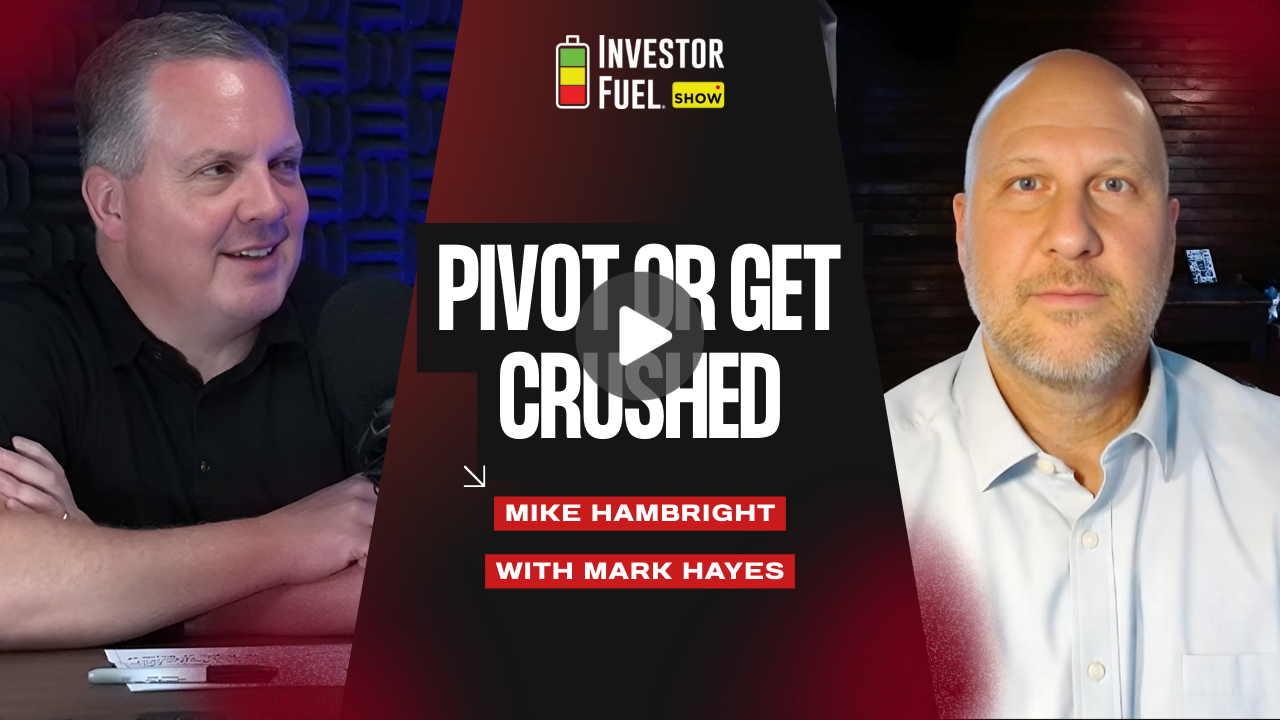
In this conversation, Mike Hambright interviews Mark Hayes, a seasoned real estate investor and lender. They discuss Mark’s journey in real estate, the importance of adapting to market conditions, and the transition from investing to lending. Mark emphasizes the need for continuous learning, understanding financial clarity, and recognizing personal interests in business. The discussion also touches on market predictions, opportunities in commercial real estate, and the role of lenders as partners in the investment process.

Professional Real Estate Investors – How we can help you:
Investor Fuel Mastermind:
Learn more about the Investor Fuel Mastermind, including 100% deal financing, massive discounts from vendors and sponsors you’re already using, our world class community of over 150 members, and SO much more here: http://www.investorfuel.com/apply
Investor Machine Marketing Partnership:
Are you looking for consistent, high quality lead generation? Investor Machine is America’s #1 lead generation service professional investors. Investor Machine provides true ‘white glove’ support to help you build the perfect marketing plan, then we’ll execute it for you…talking and working together on an ongoing basis to help you hit YOUR goals! Learn more here: http://www.investormachine.com
Coaching with Mike Hambright:
Interested in 1 on 1 coaching with Mike Hambright? Mike coaches entrepreneurs looking to level up, build coaching or service based businesses (Mike runs multiple 7 and 8 figure a year businesses), building a coaching program and more. Learn more here: https://investorfuel.com/coachingwithmike
Attend a Vacation/Mastermind Retreat with Mike Hambright:
Interested in joining a “mini-mastermind” with Mike and his private clients on an upcoming “Retreat”, either at locations like Cabo San Lucas, Napa, Park City ski trip, Yellowstone, or even at Mike’s East Texas “Big H Ranch”? Learn more here: http://www.investorfuel.com/retreat
Property Insurance:
Join the largest and most investor friendly property insurance provider in 2 minutes. Free to join, and insure all your flips and rentals within minutes! There is NO easier insurance provider on the planet (turn insurance on or off in 1 minute without talking to anyone!), and there’s no 15-30% agent mark up through this platform! Register here: https://myinvestorinsurance.com/
New Real Estate Investors – How we can work together:
Investor Fuel Club (Coaching and Deal Partner Community):
Looking to kickstart your real estate investing career? Join our one of a kind Coaching Community, Investor Fuel Club, where you’ll get trained by some of the best real estate investors in America, and partner with them on deals! You don’t need $ for deals…we’ll partner with you and hold your hand along the way! Learn More here: http://www.investorfuel.com/club
———————–
🎧 Subscribe to the Podcast
Apple → https://podcasts.apple.com/us/podcast/investor-fuel-real-estate-investing-show/id943707421
https://open.spotify.com/show/0yjlEMMn52BRrrlhfxCn4S?si=48f4b577276246e6
YouTube →
https://www.youtube.com/@investorfuel
🤝 Stay Connected with Mike
Follow on Facebook → https://www.facebook.com/realmikehambright
Follow on Instagram → https://www.instagram.com/realmikehambright/
Follow on Linkedin →
https://www.linkedin.com/in/mikehambright
📈Free Training and Resources for Professional Real Estate Investors
Acquisitions Manager Hiring Guide → https://my.investorfuel.com/if-lm-optin-acquisitions-guide
COO Hiring Guide → https://my.investorfuel.com/mm-lm-coo-hiring-guide
Executive Assistant Hiring Guide → https://my.investorfuel.com/mm-lm-ea-hiring-guide
Fuel 5 → https://my.investorfuel.com/mm-lm-fuel5
Triple Your Profits Masterclass → https://go.investorfuel.com/triple-your-profits
🏠Free Training and Resources for New Real Estate Investors
Rehab Live → https://my.investorfuel.com/rehab
Find Your First Deal in 5 Days challenge → https://go.investorfuel.com/find-your-first-deal-5-day-challenge
Join My next 4 Day Live Training Event (Virtual)
https://investorlaunchpad.com/
Resources and Links from this show:
Listen to the Audio Version of this Episode
Investor Fuel Show Transcript:
Mike Hambright (00:33)
Hey everybody, welcome back to the show. Today I’m here with Mark Hayes. We’re going to be talking about, well, we’re to learn about Mark and his background as a real estate investor and now a lender. And just talk a lot about the importance of adapting and pivoting. I think if you’ve been in the game, well, for any length of time, certainly over the past few years, those words don’t come as a surprise because everybody’s had to figure out how to, how to duck and dodge and, and adapt and pivot to their current situation. So that’s what we’re going talk about today. Mark, welcome to the show.
Mark Hayes (00:59)
Thanks Mike, thanks for having me. I’m excited to sit down and have a little chat with you.
Mike Hambright (01:04)
Yeah, yeah, so eager to get to know you better. I know you just recently joined Investor Fuel here, so we’re excited about that. And in fact, at the time this comes out, it’ll be passed, but we have Investor Fuel coming up here in New Orleans in just a couple days as of the time we’re recording this. So looking forward to seeing you there next week. Yep. So tell us a little bit about you and your background. I know you have a rich experience. Maybe just kind of share how you got up to this point and a little bit about what you’re doing today.
Mark Hayes (01:19)
Definitely, definitely looking forward to it.
Yeah, yeah. So I got started in real estate investing in the early 2000s. A friend of mine back home, he had bought a couple of properties and I just kind of asked him, Hey, how did you get into this? And he let me borrow an old Carleton Sheets course. don’t know if people on this call remember those. ⁓ But I listened to it on the way back from North Carolina to my home in Nashville at the time.
Mike Hambright (01:42)
Yeah.
Mark Hayes (01:50)
And ⁓ I was hooked, know, just everything he was talking about was just something that it just really interested me. So, and I’ve got an engineering background. And so, you know, after that, I just tried to kind of figure out what I wanted to do in real estate. So I was, I felt like I was kind of getting torn in a few different directions. I, you know, I talked to somebody in the business and say, you should do this. I go to a RIN.
RIA meeting and hear a speaker and that you know excited me. ⁓ So I ended up kind of ⁓ settling on doing fix and flips having that construction background from my engineering days and then I was keeping some as rentals and you know and then early 2010s you know I progressed into doing new construction and that’s kind of when you know here and then
Nashville area and a lot of other cities, there was kind of a boom of new construction with urban infill lot. you I was, you know, building one in two homes, kind of focused on one area of Nashville. And in that way, I knew the area really well. And, and I could also jump around to jobs, you know, and so as
Mike Hambright (02:57)
Mm-hmm.
Mark Hayes (03:04)
know, development just got more and more in the area, know, codes.
here started putting in more things in place, inspections taking longer, more cost. to go from like when we were building like a single family home in four to six months, like from when we bought it, the lot to selling it, it went after a few years to like nine to 12 months. So I went to scale and I really enjoyed the design aspect of that and building
Mike Hambright (03:28)
Yeah.
Mark Hayes (03:34)
different style homes and different size homes to meet affordability and things like that. Meanwhile, again, building a rental portfolio.
But in 2018, I started looking at my numbers and although I had scaled and was basically doing double, I really wasn’t making much more. I was just kind of getting bald and gray as you joke. So I started looking at, what is my pivot? And definitely during that process, I did adapt.
Mike Hambright (03:57)
Yeah.
Mark Hayes (04:05)
to the market conditions and with codes and different things to make it work. But I started looking at what do I want to do next? And so I got into lending in 2019 and so I started lending to other investors. so…
Mike Hambright (04:20)
Mm-hmm.
Mark Hayes (04:22)
really enjoy that because I know that side of the business. I’ve done it. I’ve built and renovated over 100 homes in my career. I’ve done numerous transactions, buying and selling and refinancing. With me obtaining all sorts of different loans from creative financing to the banks to hard money loans, I really knew the finance side of it as well.
Mike Hambright (04:47)
Mm-hmm.
Mark Hayes (04:47)
Yeah, so So that’s what I primarily do now and is help people With their lending solutions, you know, that’s gonna help them scale and grow their business
Mike Hambright (04:57)
Yeah, that’s a pretty natural
fit. I’ll say over the past few years, I know a lot of people that transitioned more into the lending side, whether it’s like all the way in or supplemental to what they’re doing, especially if you’ve been a, like for example, if you’ve been a large wholesaler, well, you know who all the buyers are, so you have a list of potential customers that you could just kind of go after, I’m sure, even in the…
Mark Hayes (05:17)
That’s right.
Mike Hambright (05:21)
fix and flip and new construction side, like you just know in your market like who all the players are that need lending services. And so it’s a natural fit and quite frankly, if they’re gonna work with somebody local, they wanna work with somebody that knows what they’re doing generally,
Mark Hayes (05:35)
Yeah, exactly, exactly.
And honestly, I started doing the lending, know, Nashville had gotten very, you know, expensive because the land costs had gone up. so, you know, I was working with, and a lot of other investors in Nashville had started to go to other markets. Some smaller markets like Knoxville and Chattanooga specifically, or some other cities, maybe like an hour outside of Nashville that
that we’re growing and seeing growth, we’re still, the point of entry was still a good entry point to buy some property and either keep, again, keep as rentals or to sell.
Mike Hambright (06:13)
Yep.
Yeah, but that type of stuff’s happened all over the country. just, I’m in the Dallas market and I just, my wife and I were just talking about it today. We were looking at some stuff and I remember when I first started and my numbers could be off a little bit, but they’re not too far off. So when I first started in 2008 or when we started in 2008, I think the median price point in the DFW market was like 180. And today we looked it up. It’s 485. I mean, it’s, it’s, it’s incredible. Now there’s been a massive influx of population here and in Nashville too, right? A lot of people move into.
Mark Hayes (06:18)
Yes.
Yep.
Mike Hambright (06:43)
more business friendly states or no income tax states or things like that. There’s lots of reasons why people move here. But I think part of it is just realizing you said we talked about kind of understanding the market conditions and ⁓ part of it is a combination of like, well, here’s the challenges, maybe the challenges I’m having, what I like about what it’s kind of like the market conditions and your own like personal conditions to like know what it is you want to do. Right. I I think the beauty of being an entrepreneur, real estate entrepreneur,
Mark Hayes (07:07)
Yes.
Mike Hambright (07:12)
is like, you can evolve. Like you don’t have to keep doing the same thing always. It’s not like you have one skill, one trade. You’re like a butcher and you don’t know anything else. I don’t want take away anything from butchers. Maybe they know more. But ⁓ you get what I’m saying is like, you can evolve.
Mark Hayes (07:16)
Right.
That’s right, that’s right. And I mean…
That’s not to say that you don’t stay with the one thing that you do the whole time. Because, know, when I was building homes, I, you know, when I got into the new construction and development, you know, I kind of had that mindset. I was like, okay, this is what I’m going to do. You know, for the rest of my career. but, know, again, you know, things change, you, you, you get more experience, market conditions change. So, you know, when I talk about adapt and
Mike Hambright (07:31)
Sure. Right.
Mm-hmm.
Mark Hayes (07:54)
pivot you know it’s really two different things so you know you can adapt within the confines of you know the investing that you’re doing to to keep up and grow but then you know but if you pivot you know you’re kind of pivoting into something else and sometimes people can think you know well he’s not doing you know
He’s not building homes anymore. He must have done bad. That’s not true. So it’s just, I was ready to do something else. And I actually, in 2022, I started writing a book and it came out in the summer of 2024.
Mike Hambright (08:18)
Right. Yeah.
Mark Hayes (08:31)
And I’ve always wanted to write a book because as I’ve experienced all my things in real estate and as I would be driving from site to site or whatever and something would happen that was a learning experience or something crazy with a contract or whatever it was, I was like, you know, that’d be a great thing to put in a book. you know, I went, was end of 2021. I went to this, this business mastermind.
Mike Hambright (08:52)
Yeah.
Mark Hayes (08:59)
⁓
weekend and the one the person leading it you know talked about writing a book and and so that was you know something that after that that weekend I came came back and I wrote out an outline and
of what I wanted to write about. And so that was an interesting journey, but basically the book is called, it’s called Dip Your Toe into Real Estate Investing. So it’s for, it’s for people who want to get into real estate investing, but they don’t know where to start. So it kind of covers, you know, all the basics, but then it also,
Mike Hambright (09:21)
Okay.
Mark Hayes (09:32)
⁓ help someone with their strengths and their interest and their experience kind of go into one of those areas of investing that might be a good fit first. And because like I said, when I was first starting, I was kind of getting torn in different directions for the first couple years till I settled in on what I wanted to do.
Mike Hambright (09:44)
Yeah.
Yeah.
Yeah, I’d say there’s a lot of people that when they get started, they are so overwhelmed with the things they could do. The most common scenario is they do nothing because you’re just overwhelmed. Like I tried this. And the truth is, is people will say I tried this and effectively they’ll say or believe it was hard. It’s like it’s all hard. Like it’s all hard. And the only way it gets it doesn’t get easier. You just get better and more tolerant about doing that thing. And you find yourself a little bit too. It like, OK, I, I don’t like this as much as I like that. So I’m going to lean into that.
Mark Hayes (10:02)
Right, right.
Mike Hambright (10:23)
part of the pivoting process whether it’s a difficult market or it’s just You having done enough reps to say you know what? don’t really I don’t enjoy that as much as I enjoyed this and Therefore that’s part of the pivoting process, right? Yeah
Mark Hayes (10:37)
Absolutely, absolutely.
Mike Hambright (10:39)
Yeah, so talk a little bit about just the importance of like always being a student. Because I think that is part of the process of learning about yourself, learning about where the market’s headed, learning from other people. One of the beauties of the mastermind is being around other people and just getting exposed to different techniques or different thoughts or whatever it might be. But I think it’s really critical for us as entrepreneurs to like always be learning.
Mark Hayes (11:03)
Absolutely, absolutely. I always put, and I talk about this in the book, is I put networking and education kind of combined together because you’re gonna learn from others and you’re gonna be able to share some things with others and you’re gonna make relationships that are gonna help with your business. so those two are definitely…
Mike Hambright (11:12)
Yeah.
Mark Hayes (11:25)
things that I always put together. And so the education part though is, can always learn more. So it doesn’t matter if you’ve built a hundred homes, you can learn more. And also the times change, especially with like technology, for example, AI that’s been coming on to the scene to help you with your business and how to use those tools. So you really kind of have to continue
Mike Hambright (11:42)
Yeah.
Yeah.
Mark Hayes (11:53)
to educate yourself and so that’s why I just think it’s really important in this business.
Mike Hambright (11:59)
Yeah. And I think for all
entrepreneurs, not just real estate investors or entrepreneurs or lenders, but really all entrepreneurs, probably all people is like we often, and I think the last couple of years has been obviously difficult for a lot of people. It’s one of those, it’s one of these learning opportunities where you’re not, you’re learning new things, but sometimes you’re just.
Reverting to old things like things that you kind of you got away from like we all pick up bad habits over time And there’s this there’s this it’s kind of like spring cleaning I and I’ve talked probably to my team a lot about I’ve talked probably on the show about it a few times about just the importance of getting back to basics because sometimes we you know, we just it’s easy for us to You know pick up bad habits I guess and start to do things that just don’t make sense and they seem to make sense and you just you get off this trajectory
and you just start going the wrong way. And I think it’s important for us as entrepreneurs to look back and say, why did I stop doing that? It made sense at the time. somehow, you can see this fork in the road that happened, and you went down a wrong path. But every once in a while, you have to turn around and say, am I on track here, or do I need to go back to a previous point?
Mark Hayes (13:02)
Yeah, I mean, it also kind of goes back to, you know, making mistakes. I mean, you know, I still make mistakes and I’ve been in the business a long time and I’ve made some things, some decisions that I, you know, I definitely regret, but you know, you got to learn from them and take what you…
Mike Hambright (13:18)
Yeah.
Mark Hayes (13:20)
what you learn and ⁓ again adapt and pivot to improve yourself and your business.
Mike Hambright (13:27)
Yeah, that’s
how evolution works. You touch a hot stove and you…
stick your arm in a crocodile’s mouth or whatever the current equivalent of that is in real estate investing and you’re like, don’t do that again. But you need to learn those lessons sometimes. maybe talk a little bit about as an entrepreneur, I sometimes, like I would say, I very much believe that our businesses are a tool to earn money. That’s dry powder for us to live our lives, live our lives the way we want to on our terms, have impact, like all those things, right? And so I think that sometimes people get caught up in doing
the thing that they’re doing and they lose sight of their their goals which truthfully are often fed financially. I’m not saying everybody’s goals are money but money is the tool to allow you to do what you want to do. So just talk about the importance like when you’re pivoting right some people feel like they’re so pigeon-holed into doing what they’re doing that financially they can’t make that leap so maybe just share some thoughts on the importance of financially having clarity as to where you are and where you need to be because if you can’t hit those goals nothing else matters.
Mark Hayes (14:26)
Yeah, absolutely. So like for example, when I pivoted from…
from doing mainly development, building homes to the lending, I had built up this rental portfolio and so the equity had gone up, cashflow had gone up, whereas in the first few years of building that portfolio, the cashflow wasn’t great and I was okay with that. But at that point, when I did decide to make that change,
flow of my rentals to be able to, you know, as kind of a safety net while I got the lending business up and going. So, so yeah, I mean, and, and, you know, when it comes to the finances, you know, I, basically had to teach myself the
bookkeeping and I struggled in first few years even like, know, getting things to my accountant and understanding these reports he was asking for and putting things in the right place because I was just trying to do it all myself. so, you know, learning.
the bookkeeping side and the financial side is just so crucial because otherwise you’re just gonna get yourself into that. A rat race, which you were trying to get out of mostly, what everybody usually does is they wanna get into real estate investing because they’re tired of the J-O-B, the W-2 and the rat race. But you can easily, a self-employed real estate investor, get into that same thing if you’re not
managing your money well.
Mike Hambright (15:53)
Yeah,
yeah, and your time too, right? mean, it’s easy to get, it’s so easy to get caught up in, for example, that scenario there of bookkeeping of like, it’s one of the, one of the reasons that I talk a lot about scale is like not to necessarily go get a Lambo or fly up on private jets or whatever. It’s like, no, get a bookkeeper, like get somebody to allow you to buy your time back. Cause that’s the one thing that we ultimately wish we had more of, you know?
Mark Hayes (15:55)
yeah.
Alright.
that’s absolutely right and you know as far as the time you know the two best decisions I made as I was you know you know just advancing in my in my business one was you know hiring an assistant and that freed up
And they were also helping with the property management at the time because I was self managing my rentals and managing renovations. I was doing it all. So that freed up my time as well to concentrate on new acquisitions, financing, you know, the important things. And then also hiring a third party property manager. I mean, that was huge. And a lot of people think, well,
Mike Hambright (16:48)
You
Mark Hayes (16:50)
I don’t want to do that because of the cost. They actually have paid for themselves because I was so busy.
I wasn’t charging enough rent, the true market rent on a lot of these properties when they came vacant. And so when they took over and new leases came up and new vacancies came up, my cashflow went up because that’s what they concentrate on. That’s what they’re good at.
Mike Hambright (17:17)
Yeah, yeah, for sure.
Can you talk a little about the importance of like understanding your interests? Like a lot of us have, you know, personal interests, but we also have business interests. Like what is it you like to do? What is it? Some people, for example, like, you know, part of the hard money process is you, gotta, you gotta like to talk to people cause you have to prospect, those relationships, right? And then also just, I think a lot of real estate investors forget that they have a lot of skills that are very transferable into other things. And I’m sure you went through that process when you were thinking of like, what else do I want to do? Like, where do I go from here?
But just talk about that kind of the process of discovering that or thinking about that in terms of when you’re going to make a pivot.
Mark Hayes (17:54)
Yeah, so when it comes to actually being the active investor, my favorite part was really digging into a deal and looking at the numbers, seeing if the numbers work, just that acquisition side of things.
And so with lending, it’s basically the same thing. You’re underwriting the loan and looking at that deal. So I’m actually looking at a lot more deals. It’s just someone else’s deal. And I kind of treat it more of like as a partnership type of.
versus just, you know, transaction based, you know, so, with my experience, you know, can be able to, help, help people with, with that when I’m looking at the underwriting. mean, I mean, I’ll, I’ll admit, I mean, I’ve actually talked some investors out of a deal, you know? ⁓ so because, you know, you’re looking at it and, know, maybe it’s just the location and the comps aren’t good or, you know, the renovation is just,
Mike Hambright (18:41)
Yeah.
Mark Hayes (18:50)
too big of a renovation, there’s all those sorts of things that you analyze. so that’s something that was very transferable on going from the development, the fix and flips, to lending.
Mike Hambright (19:03)
Yeah, I know I’ve talked about this before is like in my early years as a real estate investor, like I saw lenders as like something other than a partner. It was just like necessary evil or they’re just take, know, it’s like costing me too much.
When you come to realize that, certainly a lender, there’s even, I could go into contractors as well as about how they’re truly a partner. If you find the right people, they’re a partner. But like for example, if you’ve got somebody that wants to do a deal, you obviously want to make money. As a lender, if you’re not willing to lend on it, that should be a serious signal to the buyer that like, there’s some stink on this deal, right? And so I think obviously you’re trying to protect your money and your, maybe your…
Mark Hayes (19:28)
Mm-hmm.
Mike Hambright (19:45)
behind you if there is any. But it kind of goes hand in hand. Like if you’re not willing to fund a deal, they probably shouldn’t be willing to do it at least the way they were planning to do it. Yeah. Yeah.
Mark Hayes (19:54)
That’s right. That’s absolutely right.
Mike Hambright (19:57)
So I think that’s one of the benefits of the local lender, Is like, they know the market. you know, you’re probably more savvy than 99 % of the investors in your market just because you’ve done it for a long time. And, and now you can, get to talk with your wallet. And so people, you know, should value that experience because obviously if you’re not willing to do it, that’s a red flag for sure.
Mark Hayes (20:20)
Yeah, that’s right. That’s right. So yeah, I primarily focus in the southeast with our lending. know, Tennessee, northern Alabama, Georgia.
Carolinas and then in Florida as well. I started off just kind of Tennessee and then again, as I would study markets and get to know these other markets as I grew and as my client base grew as well.
Mike Hambright (20:50)
Yeah. Mark, as a lender, can you
share, ⁓ you know, here we are, February 2026. Where do you, what are your, if you had a crystal ball, what do you see in here on the horizon? I know it’s a noisy time for sure. And I know nobody knows, but everybody has opinions. So tell us where you think we’re going here.
Mark Hayes (21:06)
All right, all right.
Yeah,
I’m optimistic. the last last like I actually took a break from doing lending in 2023 through mid 2025 because of the market. Again, I adapted. But it was also a time where I saw some opportunity with redoing my portfolio because they were it was mainly smaller residential and kind of do some 1031 exchanges into some multifamily and
and some commercial properties, some larger properties. But in 2025, last year, I started to see the market settled, to a point where, hey, people are getting used to the new norm. And then,
And since, you know, there’s been a couple, the Fed has dropped interest rates a couple.
time. yeah, I’m optimistic with this year moving forward. But I always tell people, mean, it doesn’t matter what market you’re in. Again, if you adapt and pivot and make those adjustments, you can do well in any market. I I heard you say you got into the business in 2008. Well, some people will say, well, that’s the worst time. You should have never gotten into the business back then.
Mike Hambright (22:26)
Yeah.
At the time, everybody thought I was
crazy. I was just so naive that I didn’t know that I didn’t know. wasn’t crazy. I was just stupid. But it ended up being a great time to get in. I mean, I was just we just we were hungry. Right. And so that’s one of the things that I’ve always seen. I haven’t been in the business for quite a while now is people that come in at any point. And there are times when I thought, man, things are a lot harder than they used to be. And I see some young buck pop up next to me and just crush it. And I’m like, it’s it’s what’s happening between my ears. It’s my expectations. It’s like my this isn’t how it
Mark Hayes (22:35)
absolutely.
Mike Hambright (22:55)
used to be type mentality and I think we all get that we just need to realize that there’s opportunities in every market. Yeah, I mean we buy from you know
Mark Hayes (23:02)
That’s right, absolutely.
Mike Hambright (23:06)
Some of the mark, this is what I think has happened over the past few years. A lot of the people that are selling for convenience reasons that aren’t truly distressed to like, this is just an easier sale. Like they’re hanging on because, know, but the people, the people that are, the houses that are transacting from all the things that we don’t wish us on anybody, but death, divorce, inheritance, problem rentals, like all those things, you know, they don’t ride market cycles. Like there’s not less people dying today because the markets, you know, strong or weak or strong or whatever the situation
is and so that still creates opportunities for real estate investors which then trickles down to lenders and contractors and everybody else as well.
Mark Hayes (23:43)
Yeah, yeah. And, and, know, also, I guess back to your question about the crystal ball is, you know, I can kind of tell by the calls I receive and the leads I get on, on the market and how things are going. So, you know, like lately in, even in November and December, and then especially since January things, you know, have picked back up, but
on the commercial side of things, there’s definitely a lot more activity. Cause I also do lending, you know, in the commercial space and that’s a lot more custom, but you know, I’m typically in this smaller commercial loan size, like one to 10 million. And, and so, you know, I’ve definitely talked about some different deals with folks in that space as well. And that’s a good sign.
Mike Hambright (24:31)
What are you seeing from your perspective on the commercial side? Are there areas that like seem to be performing better? Like, you know, office space has been difficult for a few years. From my perspective, I could be wrong. You might see something different, like, you know, maybe retail space is doing well, but office space is not doing well. Are you seeing any kind of classes of commercial that are clearly laggards and some that are clearly outperforming?
Mark Hayes (24:40)
What?
Yeah, mean, you know, there’s always going to be some opportunity in the value add multifamily because, know, there’s, you know, there’s still kind of mom and pop landlords, ones that might not have kept.
updating the units or increasing rents. There’s definitely been fewer of those because of the market in last few years, but it’s picking back up because of, again, the buyers and sellers were just so far apart in their price. They’ve kind of got a little closer. So that space, I think in any market, there’s always opportunity. You might have to run through more transactions
or deals to get a transaction in the multifamily world when the market, like the last few years. But another space that I see that I think is really interesting in the commercial side is the medical office space. So there’s deals where the doctor group or groups,
Mike Hambright (25:43)
Mmm.
Mark Hayes (25:48)
You know, they own the real estate, they have the medical practice, and they don’t want to own the real estate. You know, they just, not always, you know, so, so you can do some investors, you know, specialize in that. And they do these, you know, triple net lease acquisitions. Yeah, exactly.
Mike Hambright (25:55)
Sure.
Like I sail at least back. They like sail it and at least back.
Mark Hayes (26:04)
And, and, and, know, it’s, it’s, you know, not this, you know, huge return, but it’s a good constant cashflow with, you know, a triple net with, you know, longterm leases and, know, you know, they’re not going anywhere. If you, you know, find the right group and, and they’re good at what they’re doing. So that’s.
Mike Hambright (26:23)
Yeah, yeah. Well, Mark, thanks for sharing
some time with us today and getting to know you little bit better and giving us some insights of what’s going on in the market. If folks want to connect with you, where can they go to either connect with you or learn more?
Mark Hayes (26:34)
Yeah, I mean the easiest is our website, bridgesouthinvestments.com. on there there’s a contact page with a way to contact me directly, but it also just has more information about what we do and our backstory and all.
Mike Hambright (26:50)
Okay, and tell us the name
of your book again so that we can try to find If you have it on Amazon, I can find a link for it.
Mark Hayes (26:56)
It is,
yeah, it is on Amazon and it’s called Dip Your Toe into Real Estate Investing.
Mike Hambright (27:02)
I’ll find a link for that and we’ll share that as well. thanks again for joining us today.
Mark Hayes (27:06)
All right, Mike, thank you.
Mike Hambright (27:07)
Yeah, looking
forward to seeing you in New Orleans in a couple days. everybody, thanks for joining us. I hope you got some good insights. Mark’s a valuable resource. should definitely reach out to him. We’ll put the links down below. Check out his book. I’m go check it out. And at the end of the day, no matter what’s going on in the market, you always need to be kind building up your skills, have your ear to the ground, not for your own business, but to see opportunities that come up that might create opportunities for you to pivot a little bit or take on something new that kind of makes sense and fits into your business.
Mark Hayes (27:10)
Yep, see you soon.
Mike Hambright (27:34)
Appreciate you a bunch. We’ll see you on the next show. Take care.
Mark Hayes (27:35)
All right.
Thank you.