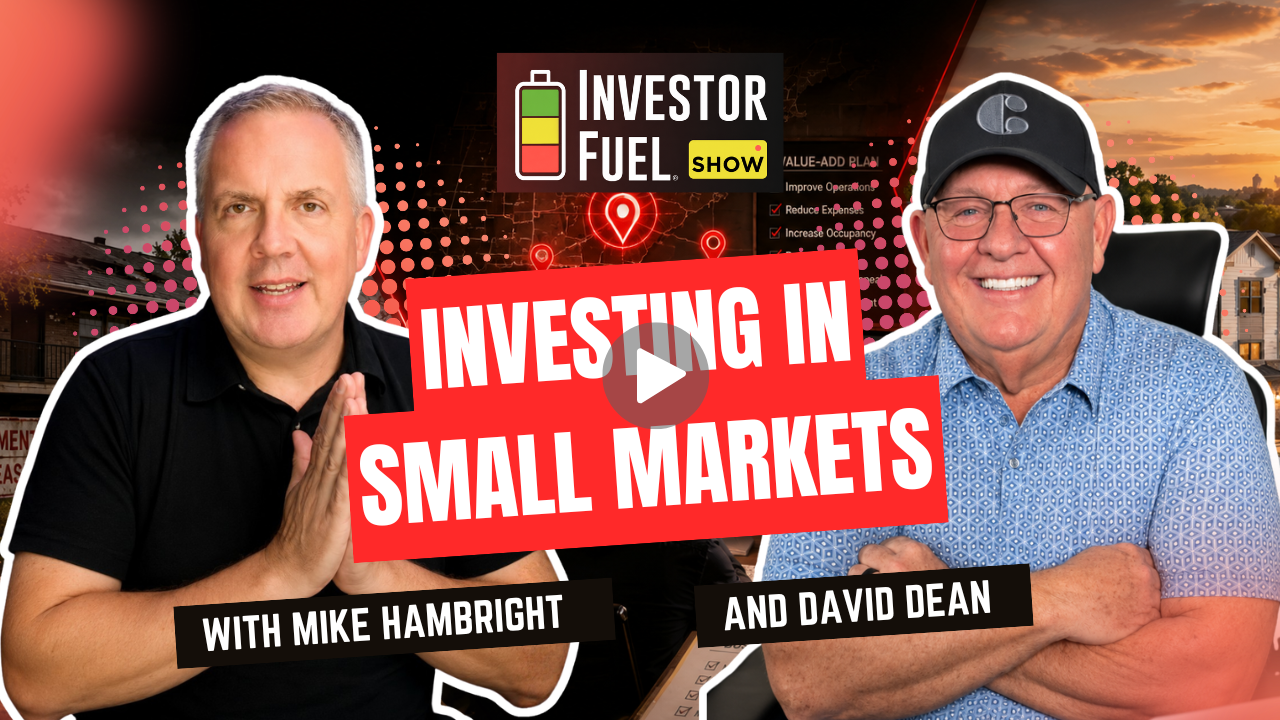
How to Build Powerful Relationships in Real Estate | Alex Pardo
Show summary
In this episode, Mike Hambright and Alex Pardo explore the transformative power of building genuine relationships in business and life. They share insights on long-term relationship strategies, authenticity, and practical tips for introverts and extroverts alike.
Key takeaways
- Think relationally, not transactionally: don't expect every connection to produce an immediate deal; plant many seeds and let relationships develop over years.
- Consistency compounds: Alex committed to two podcast episodes a week for six and a half years (now one per week), missing only one week in over a decade, after Mike advised him to treat podcasting as a real business, not a hobby.
- Prepare a 'hit list' before events: identify a handful of people you want to reconnect with and a few new people to meet, rather than trying to talk to everyone.
- Use curated small-group settings (breakout groups, speed networking) to make connecting easier for introverts, and ask a mutual connector to make introductions instead of cold-approaching strangers.
- Share struggles, not just wins, on social media; Alex found that most people who entered his world reached out after he posted about a challenge, not a big success.
- Be cautious about over-leveraging on one deal: Alex had to ask private lenders to extend a note on his third storage deal when a sale fell through near a seven-figure payoff deadline, and Mike has lost a couple of multifamily GP deals this year.
- Quality over quantity in relationships: focus on the right people rather than growing the biggest network, and let unexpected collaborations emerge naturally over time.
In this episode
- 00:33Intro: the power of relationships over social media and AI
- 01:19How Mike and Alex's friendship started and the idea of relational capital
- 02:32Playing the long game: seeds, patience, and avoiding transactional mindset
- 07:17The early podcasting days and Mike's advice on consistency
- 13:25Transactional vs. relational business: wholesaling, flipping, and communities
- 16:28Authenticity on social media in the age of AI clones
- 21:34Learning from failures: a storage deal that went sideways
- 24:42Advice for introverts on building relationships at events
- 28:10Using a hit list and pre-event research to connect intentionally
- 32:09Where to find Alex: Storage Wins podcast and cashflowmaps.com
About the guest
Alex Pardo got started in real estate in 2005 and has done a mix of wholesaling and other real estate business lines before moving into self-storage. He hosts the Storage Wins podcast, has released a weekly episode for over a decade (missing only one week), and runs a self-storage community called Storage Wins; he also built a free self-storage course and resource site at cashflowmaps.com.
Listen to the audio
“I think the conversation needs to flip to how do we raise more relational capital?”
Alex Pardo
“97% of people that start a podcast never do more than nine episodes. Because they quit, they quit early on.”
Mike Hambright
“If it's transactional, it's one and done. It's the new car smell... I think relational is having that constant new car smell forever.”
Alex Pardo
“It's hard to be fake.”
Mike Hambright
Questions answered in this episode
How do I build relationships at events without feeling transactional?
Alex Pardo suggests going in with the mindset of 'how can I be a resource for you' rather than immediately looking for a deal. Mike Hambright adds that it helps to make a 'hit list' before an event of people you already know but haven't talked to in a while, plus a couple of new relationships you want to start, so you leave with a few meaningful conversations instead of a flurry of shallow ones.
What should introverts do to network better at real estate events?
Alex recommends finding communities that intentionally curate small breakout groups or speed networking so you don't have to force cold approaches. He also suggests asking a connector you know to introduce you to someone rather than approaching strangers directly, and setting a small goal like connecting with just two or three people instead of trying to meet everyone.
How can I prepare for a mastermind or networking event to make the most of it?
Alex has his assistant go through the event's attendee database or directory ahead of time to identify 5-10 people who align with his goals, then he texts them before the event to establish the connection early. Mike does something similar, building a list of people he already knows but wants to reconnect with, plus people he sees an opportunity to work with.
Why do most real estate podcasts fail, and what does it take to keep one going?
Mike says roughly 97% of people who start a podcast never record more than nine episodes because they quit early. His advice to Alex when he started was to treat it with a business case and a long-term relationship-building mindset rather than as a hobby; Alex followed that advice and has released an episode almost every week for over a decade (starting at two per week for six and a half years).
Should I share wins or failures on social media to build real relationships?
Both hosts agree that sharing struggles and failures, not just highlight reels, is what actually draws people in and builds authentic connections. Alex noted that most of the people who've entered his world reached out after he shared something he was struggling with, not after a big win like closing a storage deal.
What happens when a real estate deal goes sideways, like a storage facility sale falling through?
Alex described his third storage deal, where he ran into hiccups trying to sell a facility and had to humbly ask private lenders to extend the note before a seven-figure payoff was due. He said the experience taught him how a single situation can flip everything and made him more cautious, and Mike shared that he's lost a couple of multifamily deals this year as a GP, calling it a humbling but valuable learning experience.
Resources and links
Full transcript
Mike Hambright (00:33)
Hey everybody, welcome back to the show. I’m really excited to have my buddy Alex Pardo on. He’s been on the show several times before. We’ve been friends for a long time. And we almost didn’t do a show. We just kept talking to each other. I’m like, we should probably hit
Alex Pardo (00:43)
Yeah.
Mike Hambright (00:43)
record here. But we’re gonna be talking about something that’s near and dear to our heart, which is the power of relationships. Like it’s an important part of everything that we do, and I think people crave real relationships more than ever right now. And there’s a lot of social media stuff, a lot of AI stuff going on. It’s really easy to
spend more time talking to Claude than humans, which I probably am a little bit guilty of that here lately. But there’s a lot of power in relationships, whether it’s just for personal satisfaction in your life or obviously, building your business. So that’s what we’re gonna talk about today. Alex, welcome to the show, buddy.
Alex Pardo (01:12)
Thank you, Mike. Yeah, dude, we you and I were going for almost half an hour and we kept saying we could just keep going here without doing a podcast. So it’s
Mike Hambright (01:17)
Yeah. Yeah.
Alex Pardo (01:19)
no man, you and I, you know, it’s interesting that you bring up the power of relationships. I think you and I is a perfect example of this, and maybe it’s a good jump off point. I don’t remember exactly how we met, but we met, and at least from my perspective, I can’t put words in your mouth. It’s like, you know, when you meet somebody and you’re like, I vibe with that person, there’s a core value match, we integrity match. You were, you know, you were doing
Some really cool things I remember with Flip Nerd back in the day and your podcast. And I always admired like your work ethic and how much content you were putting out. And then when I would plug in, it was good content. And then through community and other associations and groups we were a part of, we just started to build relationships. And that’s led to
us being on each other’s shows and talking about how do we grow together. And so, you know, for me, people talk about raising private capital all the time and and I think the conversation needs to flip to how do we raise more relational capital? But
I think unfortunately too many people are focused on the short-term win. They’re thinking transactionally. And instead of thinking, how do I just build meaningful relationship without the expectation of something in return? there’s a
Mike Hambright (02:27)
Yeah.
Alex Pardo (02:27)
lot of books behind me, but that little red one right there is the Go Giver by Bob Burg.
Mike Hambright (02:32)
Yeah, yeah.
Alex Pardo (02:32)
A book
I read many, many years ago and it’s just about giving and contributing and giving I think is the heart of building a relationship with people. And so I think if if people just shifted to thinking more about being relational versus transactional, I think over time, man, organically and naturally, just things start to change for them.
Mike Hambright (02:50)
Yeah, I use this phrase all the time about playing the long game. It’s kind of like being a farmer, right? You’re planting seeds that you’re gonna harvest down the line. And you don’t necessarily know if you’re gonna harvest or not. But I would say some of that is just business maturity. If you’ve been around a long time, you can look back and see like, wow, if you were good at building relationships, or if you weren’t, you feel it over the long period of time. I think early on for both of us, you probably agree. it’s hard to not be transactional early on because
Both
of us left corporate America, we jumped into real estate, and you just you had to make shit happen, right? You had to like hustle and figure stuff out and it felt very transactional, but you’re kind of going day to day and you get to a point where you’re like, I want to do this for a long period of time. you can learn on some level patience. Like I’m planting seeds now, and I don’t know if and when it’s gonna pay off, but I know if I plant enough seeds that the bounty will be good, right?
Alex Pardo (03:37)
Brother, you hit the nail
on the head. I think that’s the key right there. it’s how you put a bow on the last part of your sentence where you have to plant enough seeds. If you’re just planting one seed and like that’s it, now you’re you’re banking all your eggs in that basket. Like, okay, I have to make this work. And then it’s I think it’s a lot easier to switch to think transactionally because you’re putting so much pressure on one thing working. But like you and I have seen each other at events and we’re constantly talking to people. And yeah, look, it I think it’s okay to go to an event.
Yeah.
To have an agenda in the back of your mind, like, hey, I’m looking, you’re a part of a group or a community or whatever you want to call it. You’re there because you want to grow. You wanna expand your network, you wanna improve your business. There’s nothing wrong with that. But I think when you do it at the expense of that being in first place versus knowing that if you plant enough seeds with people, you pour into them, you become a resource for them, a contributor, inevitably it’s that classic Zig Ziglar quote that I think is.
you know, mentioned and tossed around in our circles all the time, but do enough for others and you’ll have everything you want or something along those lines. So
Mike Hambright (04:40)
Yeah. Yeah, absolutely.
Alex Pardo (04:42)
yeah, man, unfortunately I just think a lot of people, it’s maybe it’s because they’re starting out or maybe it’s because they’re they’re still in that grind mode that they never seem to flip the switch. And dude, it’s you can tell when you have a conversation with somebody and you’re like, okay, this person is just about them and what they’re trying to get out of this.
Mike Hambright (05:00)
Yeah, for sure. And those people will come and go like in the circles that we run in, you see and you know, you give them the benefit of the doubt. But after a couple of run-ins, you’re like, you know, you just turn them off a little bit and they they usually fizzle out or or disappear. But the people that have been around for a long time and and you know that they are trying to give more than they take. And people are in different seasons too, right? But I think those are like you and I talk all the time about potential ways to work together. Truthfully, you and I have never
found a way to work together, but every time we talk, we’re like, Yeah, I would love to collaborate, or what can I do for you? Or like we’re constantly and the truth is is I you know, you and guys like you and I have hundreds of relationships like that. And sometimes it’s really obvious for ways to work together with people and that’s great. But we’re kind of, you know, we have a a lot of lines in the water, if you will, right? Yeah.
Alex Pardo (05:42)
Right, right. That’s exactly right. And by
the way, I I think I think that’s okay. Like you I would encourage people not to have the mindset that every time you connect with somebody or you’re focused on building a relationship, that something has to come of it. I think when you start to put pressure on having to produce a result, a joint venture, a collaboration, it starts to muddy the waters and then you have to ask yourself, okay, what’s your real intention here? And if it’s purely transactional, then just be up front and say, Hey, how do we make money together? Right? Like how do we make one
plus one equal 11 and as long as i think both people are on the same page and i i don’t have any issues with that at all but i think
Mike Hambright (06:14)
Yeah.
Alex Pardo (06:15)
if you approach it with the mindset of like hey like how how can i be a resource for you naturally they’re probably gonna ask you the same thing and then you have conversations and if it’s a fit great and if it’s not you park it for the future and you just continue to pour into each other
Mike Hambright (07:17)
Yeah, absolutely. So Alex, I don’t remember when we first met, like you said. I I this is my suspicions. I started my podcast, the Flip Nerd Podcast, in twenty twelve, fourteen years ago, man. I was one of the first six or seven podcasters in the world
Alex Pardo (07:30)
Yeah.
Mike Hambright (07:30)
on real estate. It was me, Joe McCall, Matt Terrio,
Alex Pardo (07:33)
Sean Terry.
Mike Hambright (07:34)
Jason Hartman, I think at that time had like 12 podcasts or something. Yeah. he just spoke at my event last week and a few others. I’m sure I’m missing a couple.
Alex Pardo (07:40)
Sean Terry was one of them, yeah.
Mike Hambright (07:42)
Yeah. And so
but I think you in back in those days, like the good old days, right? social media was not what it is today. And so to find podcast guests, it was kind of hard. Like, you know, now it’s it’s easy. We get way more people that want to be on our shows than we have time for, quite frankly. but it we used to be like, well, who do you know? Well, I would ask people like if you were if you were on there, I’m like, who else do you know in your network that would be a good fit for this?
Back to that relationship, we’re all kind of finding ways to like introduce some of our good friends. Somebody probably introduced you to me. But it was a long time ago, right? And then I remember within a couple of years after you were on my show, you were starting a show, and we talked a lot about I remember, you know, you kind of asked for some guidance or some advice just because I had been doing it for a little while.
Alex Pardo (08:24)
Yeah. Yep.
Mike Hambright (08:26)
And I remember one of the things that I said to you. And I said,
Alex Pardo (08:28)
What’s that?
Mike Hambright (08:28)
Because a lot of people start a show and
Alex Pardo (08:31)
Yeah.
Mike Hambright (08:31)
I don’t know if you know this. I don’t remember the exact stat, but I’m not gonna be far off here. 97% of people that start a podcast never do more than nine episodes. Because they quit, they quit early on. And I just said to you, because I had been doing it for a while at that point, I was like, look, you have to have a business case. You have to be thinking, you know, not transactionally, which is what we’re talking about today. You have to be thinking bigger of like how do I build relationships over time? And how does it have a business case as well? Because otherwise it’s just a hobby. And when push comes to shove.
you’re gonna be like, I really need to focus on my business or I need to focus on something else. So I kinda was just about playing the long game, some of the same things we’ve already talked about here, right? And so and and now you’ve been doing I know you’ve just like me, you’ve changed the name of your show, you changed the format and stuff a little bit over time, but I think, you know, that’s where it started and you and I kinda have this thing, right? And a lot of other things in common as well.
Alex Pardo (09:20)
Yeah. And let me tell you something. I think it’s a fascinating use case of you ever had people, and I know the answer is yes, by the way. So it’s more of a hypothetical, but like people ask you, like, hey, Mike, let me pick your brain. Let me ask you about this, let me ask you about that. And I wonder when I asked you about podcasting, because I’m probably not the first person that asked you about that, how many people actually listen to you and take action? So, like when I reach out to somebody who’s operating at a different level or who maybe is a few steps ahead of me, or maybe many steps ahead of me.
And I seek their wisdom and counsel. I almost find it, what’s the word I’m looking for? Almost slightly disrespectful to not then follow through if I’m gonna take your valuable time and then and I remember you told me, hey, be consistent. And you were one of the people that inspired me, where I told myself, hey, I’m going to at least, at least give this one year.
Where I do two, where I publish two podcast episodes every single week. And that one year turned into six and a half years of doing two shows every single week. And then I scaled it down to one. But yeah, dude, in June I crossed the decade anniversary of releasing a show
Mike Hambright (10:21)
Yeah.
Alex Pardo (10:22)
every single week, except for one week in the beginning of January. I had a little bit of a mix-up with my podcast producer. So basically one week in the last decade, I haven’t released a show. So for whatever
Mike Hambright (10:33)
Yeah.
Alex Pardo (10:34)
it’s worth.
I didn’t waste your time. You gave me advice and I followed through.
Mike Hambright (10:37)
Yeah, no, I’ve never thought that.
Alex Pardo (10:39)
Yeah, no, no, I I know. I’m just I’m just messing with you. But dude, it meant everything. Like it was whenever you’re gonna commit to something, like it’s the whole shiny objects syndrome thing. Like people are just bouncing around, you know. They’re a jack of all trades, a master of none. And being consistent, Mike, as you know, the pot not only have I improved my communication skills.
I’m comfortable communicating with anybody. It’s opened up a lot of doors for guys like us that really value going back to relationship relationship capital. It almost gave you
Mike Hambright (11:07)
Right.
Alex Pardo (11:07)
like a hall pass to not connect with anybody. It’s not like I’ve, you know, had Tony Robbins on my show or anything, but like for the most part, at least the people in our
Mike Hambright (11:14)
yeah.
Alex Pardo (11:15)
space.
Yeah, maybe, right? But you you have a hall pass to connect with people. And then that turns into a relationship, which may or may not turn into something pretty cool. So I just think
Mike Hambright (11:24)
Yeah.
Alex Pardo (11:24)
it’s a great platform for people to develop a lot of really life important life and business skills.
Mike Hambright (11:30)
Yeah, it’s hard to quantify, but it’s obviously changed my life, just the relationships that I built early on. And it’s back to that kind of planting seeds. I did it for a long time when I started, I didn’t I didn’t have anybody to kinda ask questions to or whatever. And it was just like I don’t know exactly why. I mean, honestly, there’s probably a little bit of ego early on, but it was just like at some point it’s like, what is the purpose of this? And it’s like, man, I just know if I build relationships over a long period of time, which is exactly what we’re talking about today.
that this will pay off. And it’s paid off in I mean, if you kind of look back, is like, well, what would have happened if I had never done this? I think my life, you know, it would have taken a different path. I don’t know what that would look like, but it would be very different for sure. Yeah, there’s no doubt about it. Yeah. So let’s talk a little bit about kind
Alex Pardo (12:06)
Yeah. And Mike, let me tell you something and and
Mike Hambright (12:09)
of you know, I think we’re what we’re talking about here, and even in our businesses, like you started off doing a lot of wholesaling. I was doing a lot of fix and flips. we’ve done a lot of deals and that was kind of where our business was very transactional, right? Like
Every
deal I’m working with somebody different. And then it went on to where we have education platforms. I have my mastermind and other communities and stuff like that where it’s all about relationships and you’re doing all the self storage stuff now, which is all about, you know, pulling people together to do deals and finding ways to collaborate. And you’re not trying to do one deal with anybody. You’re trying to do lots of deals and build stuff over time, right? So let’s just about this idea of being, you know, transactional versus something kind of much better. Like share your thoughts on that.
Alex Pardo (13:25)
Yeah, look, I
if it’s transactional, it’s one and done. It’s the new car smell. You buy the new car, it smells good for a month or two or whatever, and then it just kind of goes away. It just becomes another car you’re driving, whether it’s a a Ferrari, a Rolls, or whether it’s a Toyota, right? And I I think relational is having that constant new car smell forever.
Like, and that’s an analogy that just came to me. But I think when people flip the switch and they just think, hey, how do I go deep and long with this person for an extended period of time? I’m not worried about what’s gonna come of it next month, next year. I’m just gonna pour into that relationship. Right. I think you mentioned the gardener. Another one of my favorite books back here is The Wealthy Gardener. And essentially that’s the principle. It’s if we start to think more like farmers.
And we start to think less like people that are just chasing the quick buck or the ch or the quick win. I think life starts to change pretty quickly. And it’s interesting because a lot of the books I’ve read kind of have that common denominator, whether it’s the wealthy gardener, the go-giver, it’s it’s whatever business you’re in, and real estate is no different.
it’s a people business. Yes, it’s a marketing business. I get that. But at the heart of it is people. And, you know, communities Mike.
And I don’t want to put words in your mouth, but I would imagine you would agree with me. Communities have changed my life in many ways. Some of my closest friends, some of the people, even though you and I, to your point, haven’t yet figured out a way to collaborate and work together, I know that if I sent you a text or called you, you’d be there. Like you you you you you have. And and
Mike Hambright (14:53)
Yep. I feel the same way. Yeah.
Alex Pardo (14:56)
and we haven’t
Transacted in any way per se, right? But like because I believe it’s a relationship built on a solid foundation, the way a farmer would, right? And so I just think it’s and it’s so simple, but people complicate it. it’s so hard for people to get out of their own way and stop thinking about what they need instead of flipping it and asking, what does that person need?
And and I
Mike Hambright (15:17)
Right.
Alex Pardo (15:17)
don’t know, man. Maybe it’s just the way I’m wired. Maybe it’s the way I I think it was never hard for me to make that transition. But I quickly realized early on that I needed to shift the focus off of me, which is inward, and just made it external. And I think both both of those can exist. You can still be ambitious and hungry and striving to grow and make a lot of money and grow an awesome business and be outward external focused on others that you’re looking to build a relationship with.
Mike Hambright (15:43)
Yeah,
I agree. And maybe it’s just you need to work that much harder to build even more relationships. Like build twice as many, build build three times as many, right? Let’s talk a little bit about just this idea of where we are in the world today is everybody’s friends on social media, but nobody really knows each other. And
Alex Pardo (15:58)
Okay.
Mike Hambright (15:58)
you know, we got this like a lot of stuff’s going on with AI and honestly, I will say this, I have not done it, but it’s been intriguing the idea of creating a a clone online to where I just like
I mean, I know I need to be created more content, but like we create so much content already, like how could I do more? It’s like, well, I create a clone and so but anyway, there’s a lot of stuff going on. And I wouldn’t say that I my it’s my goal to be inauthentic, but I think that people really crave real relationships more now than ever. My investor fuel master and mine, we’re about to have our nine year anniversary I was in.
Alex Pardo (16:28)
Amazing.
Mike Hambright (16:29)
I’ve been in other communities even before that. I’ve always valued community and pulling people together. As I like to say from
You know, when I was 16, I got a fake ID and I started throwing keggers. And I never
Alex Pardo (16:39)
Yeah.
Mike Hambright (16:39)
made money on it, but it was always a way for me to pull together a bunch of people and kind of be
Alex Pardo (16:42)
Yeah.
Mike Hambright (16:42)
the guy pulling it together. So that’s a whole nother that’s a whole nother story for any of my family that’s out there listening. You kind of probably already know that at this point, but they didn’t back then. But it my my point is, is I think it’s getting harder to build authentic relationships than in the past, even though we’re seemingly all connected, but we’re not connected, what I’ll say, kind of authentically. Like what do you think about that?
Alex Pardo (17:02)
Man, at the risk of sounding overly simplistic and risking somebody just tuning us out because it’s like, well, thanks, Captain Obvious. I’ll share, I’ll share it this way. I’ll share it this way, Mike. When I connect with people who are interested in getting into the self-storage business and they have some level of curiosity about our community, storage wins, one of the questions I always ask people is, why now and why me? Very basic, simple question.
One of the things I hear more times than not, let’s call it 80% of the time, is people tell me, and it’s very humbling. And so I’m gonna share this, but I’m not patting myself on the back. If you know me, you know that that’s not even my personality, right? So it’s gonna feel a little weird to say this. But people tell me you come across very genuine in your content, in your interactions, when we communicate. And I think the reason I’m proud of that.
Is because I’m just trying to be myself. I’m not trying to be somebody else. I’m not trying to mirror or or change the way I communicate. I’m not trying to put up a front. I think act as if personally, no offense if you feel different. That’s okay. We could debate another time. I think acting as if is horrible advice. I understand why people say that, but I think you just gotta like be yourself, act as you. Like it faith isn’t.
Mike Hambright (18:14)
It’s the easiest
thing to do. It’s hard to be fake.
Alex Pardo (18:16)
Dude, it really is, but yet for a lot of people, Mike, it’s
the hardest thing to do for a lot of people because they feel they have to put this front up. And look, by the way, I don’t I’m not gonna be a hypocrite. Sometimes I audit my social media and I ask myself, am I putting up too much? Look at me, here are the wins, here’s the cool stuff that I’m up to. Because God knows I got plenty of challenges and things that have gone wrong in South.
Mike Hambright (18:41)
Yeah,
yeah.
Alex Pardo (18:42)
like
significantly more of those than the winds and the cool things going on. Even sometimes I’m I’m very mindful and aware of, you know, sharing. I just got back from Europe. You know, we were talking about two weeks. And I’m I’m mindful that I’m putting out a lot of content of like look at the cool places I’m in. And right and maybe there’s a little bit of like look at me, although I’m super mindful that hey, like I busted my ass to get to this point.
Mike Hambright (19:05)
Right. Yeah.
Alex Pardo (19:05)
Right. Like
I have gone through so many challenges and I’ve gotten kicked in the face and knocked down. And I think I believe that if we share more of those stories, it’s real. Like because people know that humans are humans and we face challenges like anything else. Like I’m not at the mountaintop. I haven’t made it. Right. And I am certainly mindful not to come across that way, even though I’ve had some success and I’ve had some wins.
Man, I got a lot of stuff that I’m dealing with as well, and things that I’m that I’m navigating and and figuring out. and I think if we just be open about that and we share more of that and then tie it to a lesson. Hey, here’s what I’m going through, here’s what I’m learning, or here’s how this has shaped me. Right. So I’m dude, I don’t have it case in point, I don’t have it figured out. I probably share too much.
Mike Hambright (19:50)
Yeah. Well we’re all trying
to figure it out, right?
Alex Pardo (19:52)
Yeah, man. Yeah. Like if I audit my social media or if you did, I I it’s probably a little lopsided in terms of the the highlight reels versus like, dude, you just got like your teeth knocked out. Like what are you gonna do?
Mike Hambright (20:03)
Yeah.
Alex Pardo (20:04)
but I’m mindful of it and I’m just trying to be myself, man. I’m not trying to be somebody else.
Mike Hambright (20:08)
I think some of it is for you, and I haven’t audited myself. I have to I I am apprehensive to post I mean, I post a lot of stuff on social media, but I’m apprehensive to post stuff that feels too braggadocious, I guess.
Alex Pardo (20:18)
Yeah,
Mike Hambright (20:19)
and i it’s kind of funny that you think about it. Like I don’t wanna be I don’t wanna be a douchebag. Like I there’s plenty of those on on social media. But I will say, like from having a nineteen year old son, I kinda talked about my son a little bit ago, I think it’s tougher people these days because they grew up watching a lot of people
They’re highlight reels and never their low lights. And there’s a lot of, you know, kind of influencers out there that that’s it’s seemingly all highlights.
Alex Pardo (20:38)
Yeah.
Mike Hambright (20:39)
And we you and I both know that that’s not the real world, right? But I think for a lot of young people that see that on social media, they feel like they’re instant failures because
Alex Pardo (20:49)
Hmm.
Mike Hambright (20:49)
their life isn’t like that. It’s like you’re their life is not like that either, but all you’re seeing are the highlights, right?
Alex Pardo (20:54)
That’s right. And dude, you know what’s interesting? This conversation, I don’t know that I’ve had this realization prior to this moment. When I think about the people that God’s put in my path, the doors he’s opened, the ones he’s closed, the pe my clients, the people in our community, the people I’ve connected with more times than not, the common thread is something I’ve shared where I was going through something challenging that prompted them to reach out to me. And that’s what brought them into my world.
It’s not as often the ones it’s like, hey, I just closed this awesome storage deal. Like look at me. It’s it’s it’s more of the other stuff and less of
Mike Hambright (21:24)
Right. Yep.
Alex Pardo (21:27)
the the hey, here’s the big win. Here’s the trophy I just got. And that’s interesting. I don’t know that I’ve ever made that connection until this moment. So yeah.
Mike Hambright (21:34)
Yeah.
I’ve always said people, you learn a lot more from I mean, I learn a lot more from my failures and my successes. Cause a lot of times with successes, you think, Well, I’m just really good. You know. With your failures, you realize I’m not that good, right? So you don’t really learn
Alex Pardo (21:46)
Well, Mike, dude, my my thir
Mike Hambright (21:49)
from it because you’re just like, I’m naturally talented. Of course I have success in this thing or I did well with that. But when you lose, it’s like, I’m it’s like humbling always, right? There’s a lot of lessons to learn from failing.
Alex Pardo (21:58)
Yeah. Yeah,
well, man, my my third storage deal for the first time. So I I got started in real estate in 2005, and for the first time ever, I I had to tuck my tail between my legs and go back to a few private lenders that I have an amazing relationship with and humbly asked them if they could extend the note for a small period of time because I kept running into hiccups while I was trying to sell a facility.
And I was like, that clock was breathing down my neck of a pretty big payoff, a seven figure payoff I had to make. And and man, you learn a lot when when things get tight. And and so I quickly realized that like, yes, I figured a few things out, but like this one situation could have put me in a really, really bad spot. And I learned and I grew a lot from that. There’s a lot of things I would have done different now. But you be careful not to like
Not to get too big on yourself and and to be too big headed because j you’re just one bad decision away from having
Mike Hambright (22:56)
yeah.
Alex Pardo (22:57)
everything flip and change on you.
Mike Hambright (22:58)
Yeah. Yeah. And you’re not alone. I I’m a GP in a ton of multifamily deals and most I’ve lost a couple of deals this year. I mean, don’t really talk it’s kinda funny, I don’t really talk about it a lot, like on social media. It’s not that I don’t want to admit it. I just you know, I’ve got a lot of other deals that I don’t wanna want to go south. So I I feel like I’m just you know,
Alex Pardo (23:14)
Okay. I get it.
Mike Hambright (23:16)
I I don’t know. That’s but at one point I thought we were just crushing it at, you know, four or five years ago and now it’s like, gosh dang, man, these things suck. some of them do. But
Alex Pardo (23:24)
But Mike, man, think
think about like that experience on some of those deals that maybe went south. Dude, think about the lessons learned. Like that’s invaluable. Like
Mike Hambright (23:32)
yeah.
Alex Pardo (23:32)
the fact that, you know, we we we we talk about investor fuel, right? Like your mastermind, the the fact that you’ve had that experience and people can like be a part of your community and learn from that, those experiences, like how much how valuable is that to somebody?
to not step in and and make maybe that mistake or to learn from somebody else’s experience. I mean, that’s why community and the right groups is so important because y you get to learn from the path that other people have taken. And in some cases it’s the right path and in other cases you get to learn from it.
Mike Hambright (24:05)
Yeah. Yeah. Yeah. Yeah. It’s funny that you say that because it just at this event I had I mean, there’s a lot of I mean, honestly, in my mastermind, there’s a lot of people in there that are way more accomplished than me. And it’s not a coaching program. I mean, it’s a peer-to-peer community, but that we’ve got, you know, people in there that have done thousands and thousands of deals, and we’ve got people in there that do a thousand, a thousand wholesale deals a year. Like it’s pretty crazy, right? But
Alex Pardo (24:26)
Same.
Mike Hambright (24:27)
it just this event, a pretty accomplished investor said, he’s like, I really feel like I need to own some multifamily.
And I was like, it’s a lot sexier until you do it. It feels and so part of it is licking
Alex Pardo (24:38)
I get it.
Mike Hambright (24:38)
those wounds that I’ve had this year. But yeah. Well, let’s
Alex Pardo (24:40)
Yeah, yeah, I get it.
Mike Hambright (24:42)
talk about like how do you know, I think a lot of folks and it’s interesting because a lot of people that you and I know outward facing on social media or i on podcasts or whatever, you wouldn’t guess that people are introverted. But there’s a lot of people in our circles that I don’t have like a
tally, but I would say are more introverted than you think. When you kind of get to
Alex Pardo (25:01)
I would agree.
Mike Hambright (25:01)
know people, they’re like, they can, you know, it my wife is this my wife is an introvert. And most people don’t know that because she can turn it on during social settings. And then afterwards she’s like, I need some Lindsay time. Like she’s like, I I need to go recharge my batteries, right? And I’ve gotten more introverted over the years. It’s gonna sound probably crazy. But and part of it is I just realized look the more I talk the more tasks I get. So I need to like pull back a little bit and talk less. but
Let’s just kind of say, and not everybody that’s listened to this is an introvert, but let’s just talk about kind of the introverts, you know, guide for building relationships. Like we there’s naturally a lot of people, there’s a lot of people that love COVID because they could just hide, right? They didn’t have to go out and socialize. And I think there’s a lot of people that feel like they don’t need to go out and socialize these days because of like their social media and stuff like that. But just maybe share a couple lessons for the folks out there that
naturally are uncomfortable socializing, but they know they need to do it. How can they kind of do more of it?
Alex Pardo (25:55)
Yeah, yeah, no, it’s it’s a great question, man. And by the way, I’m I’m an extrovert. The older I get, and I’ve been I’ve had this awareness about myself the last couple, two, three years. I think I’m becoming an introverted extrovert or an extroverted introvert, right? Meaning like I can like Lindsay, I can turn it on. I’m good with people, I’m good communicating whatever. But like, man, the older I get, I realize like I don’t necessarily just crave having the deepest bench or the biggest network.
But having the right relationships with people. And maybe
Mike Hambright (26:25)
Yeah.
Alex Pardo (26:25)
that’s interesting to tie it back. So, in other words, quality of relationship over necessary quantity. And I think both have
Mike Hambright (26:32)
Absolutely.
Alex Pardo (26:33)
its place. but man, look, if you’re an introvert, be an introvert. Like nobody’s asking you to change. And I certainly wouldn’t tell you to change because that would be hypocritical and inauthentic. Like we’re here talking about like be yourself. the best authenticity as yourself. I do think there’s some practical things that you can do.
Like, for example, find groups and communities that and I think you do a great job with this, by the way. And this isn’t like to plug you, Mike, or what you do. I just think you do a good job of this. You’re intentional. But even though I have all right, fair, fair enough. But no, man, like look,
Mike Hambright (26:59)
Well go ahead and plug. You can go ahead and plug me, buddy. I’m kidding.
Alex Pardo (27:04)
I know enough people in in investor fuel and in your groups. In fact, you and I were talking about something else, where you’re very intentional about
Orchestrating the connections between people so that people don’t have to go out there and just like force themselves to do it or or want to, you know, crawl in the corner or stay to themselves. And so I think if you can find a leader, a community of of the right people that intentionally like does the heavy lifting for you, whether it’s like speed networking or any number of ways, small breakout groups, like that’s one of the things we do a lot in storage wins.
I realize that sometimes people don’t want to speak out in front of a crowd, but when you curate small breakout groups based around a particular challenge, a topic, or something, three, four, it’s a lot easier for people to come out of their show naturally. And when they do, it just and you start to build relationships, people just kind of ease into it. if you go to an event, find somebody you know and be humble and just say, hey, if you don’t mind, like this is.
This is not my thing to just approach people, but like when you know somebody, if you wouldn’t mind introducing them to me, right? And now
Mike Hambright (28:10)
Mm-hmm. Yeah.
Alex Pardo (28:11)
you’ve kind of delegated the process of somebody like bringing people into your world and then take the pressure off. Like maybe go to an event and say, Hey, today, if I can have, you know, if I can connect with two or three people, like that’s a win for me. Right. Again, it’s not
Mike Hambright (28:26)
Yeah.
Alex Pardo (28:26)
necessarily about quantity, but quality of the right people. And then the last thing I’ll share.
You know, we’re a part of a one particular group that has essentially like a database of people. And I think every strong organization has this. Try to get your hands on that list and before you get to the event, read through people’s bios and say, pick two, three, four, five people. This is something I still do today that I have my assistant do for me, and she’ll put on my calendar in a note section. She’ll say, Hey, I went through this database, a black book, whatever you want to call it.
These are the five to ten people I think you would align with based on what they do and based on your goals and how I think there could be some cross collaboration. And then now I’m just I’ll send them a text message before the event and I’ll say, Hey dude, this is super random. I I’m gonna be at this event. My gut tells me, you know, that there could be a way to collaborate, or I’d just love to meet you or connect. And now it becomes when you get there, you avoid that like, hey dude, I’m you know, it’s like
Okay, you’ve already established the connection. So
Mike Hambright (29:27)
Right, right. That’s good.
Yeah. I’ve done that. you and I are in another group together, like you said, and it’s big, hundreds of people and I’ve kind of found that I do that too. I make a hit list before I go of like who do I who do I want to talk to? And for me, it’s often somebody that I already know, but I just haven’t talked to in a while. And I have an idea, you know, it’s kind of a hit list of like I think there’s an opportunity here, so I want to try to get some one on one time to just talk about things. And then there’s a hit list of like who are some, you know, some old friends that I want to make sure that I see. Cause if you don’t go in with that intentionality.
I think a lot of times it’s just easy to feel like a flurry of activity. I was super busy, but I didn’t talk to any people that I wanted to talk to. Right. And so if you kind of go in with some intentionality, I tell people that when they when they first join my mastermind too, I usually say it in kind of the opening comments on the first day. Like, your goal isn’t to fill a notebook here. It’s to kind of write down one or two things that you can apply in your business that’s
Alex Pardo (30:12)
That’s it.
Mike Hambright (30:12)
going to move the needle the fastest and you’re going to be able to implement it the quickest because it’s easy in large social circles to
task yourself to death and you really just need a couple of couple of nuggets really right or a couple of key relationships, right?
Alex Pardo (30:25)
That’s it. And I think, Mike, just to kind of round this part of the conversation out, dude, I think it’s just about being intentional. Like you can gain so much by just saying, hey, here are two or three new relationships I wanna start to cultivate. And here are two or three people that I want to go deeper on. And and it might just be, hey, I’m just gonna focus on strengthening the relationships I already have. And if something comes about organically, fantastic. But but take the pressure off. At the end of the day, people are people, everybody’s got their own.
fears and insecurities and everything else. And so whatever you’re experiencing and feeling, whether you’re an introvert or extrovert, I guarantee you other people are feeling that or have felt that in some way, shape, or form.
Mike Hambright (31:01)
Yeah. Yeah. Yeah. And we won’t talk about it as long, but for the extroverts out there, if you’re at an event and somebody looks a little uncomfortable, like go say hi. That’s right. That’s right. Yeah.
Alex Pardo (31:08)
Grab dude. Grab Grab A hundred percent. Yeah, yeah. Yeah, a hundred percent, dude. Yeah.
Mike Hambright (31:14)
Guys like you and I are, you know, we’re natural connectors too. Like I’m always looking to connect people, like, hey, do you know this person? Or introduce them ’cause I know that that’s not easy. If you’ve been around for a long time, you feel like you know I don’t know everybody, but I feel like I know a lot of people. And so
Alex Pardo (31:25)
You know what’s funny
about that, Mike? I love connecting people. Like I get I get off on on connecting people. In fact, when I went through Dan Sullivan’s like genius zone, that was one of the things I learned about myself years ago is that everybody said like you’re a pretty good connector. You just tend to like even group texts, like I’m just constantly doing that stuff. what’s interesting is when I’m at events and I’m like, hey Mike, do you know Joe? Like it
I’m I’m the guy with the egg on my face because it’s like, of course I know Joe. Like we’ve known each other forever. And I’m like, dude, my bad, you know, like I just wanted to make the connection just in case. So that always happens to me. So
Mike Hambright (31:57)
Yeah, yeah. Yep.
Well, Alex, thanks for thanks for joining me today. Always good to see you, buddy. You and I could probably talk all day long. If folks want to connect with you in any way, kind of learn more about you’re doing a lot of stuff in in the self storage space.
Alex Pardo (32:09)
Yemen.
Mike Hambright (32:09)
you obviously got a podcast. Like where can folks go to learn more about you and connect?
Alex Pardo (32:13)
Yeah, a hundred percent. I have a podcast called Storage Wins. So if you look it up on any of the the social channels, Apple, Spotify, it’s called Storage Wins. and then if anybody wants, I created dude, this is a conversation for another day, but I I spent twenty thousand bucks between a copywriter and a bunch of other stuff creating a course on self-storage, with the intention to sell it. And then I got to the end of this course and realized going off and selling a course is probably a terrible idea in a world of AI. And it’s just
It’s gonna be a distraction. So I’m literally I’ve given away the whole thing, including all the tools and resources. So cashflowmaps.com. Cashflowmaps.com if you wanna check that out. It’s a hundred percent free. Just just in exchange for an email address.
Mike Hambright (32:51)
Yeah, awesome. we’ll add those links down below. So great to see you, my friend. Appreciate you.
Alex Pardo (32:55)
Yeah, man. Thank you so much, Mike. Love everything you’re doing, brother. And again, I just appreciate our relationship and the friendship.
Mike Hambright (33:01)
Absolutely, absolutely. Let’s keep let’s keep watering each other’s crops. I guess I don’t know what to say, but eventually. Yeah, yeah.
Alex Pardo (33:06)
So something will come of it, I’m sure of it.
Mike Hambright (33:08)
Yeah. and for those of you that join us today, like it’s all about relationships. So it’s real easy to hide behind, you know, social media and other things today. there’s a place for putting content out you know, not everything turns into a great relationship, right? But I think if you kinda play the long game and look to build relationships with people that might turn into something down the road you’ll be surprised at at the bounty that that creates over a long period of time. So I’d encourage you to do more of that. So appreciate y’all for joining us on the show today. Have a great day. We’ll see you on the next show.
Alex Pardo (33:33)
Take care.