Subscribe via:



Show Summary
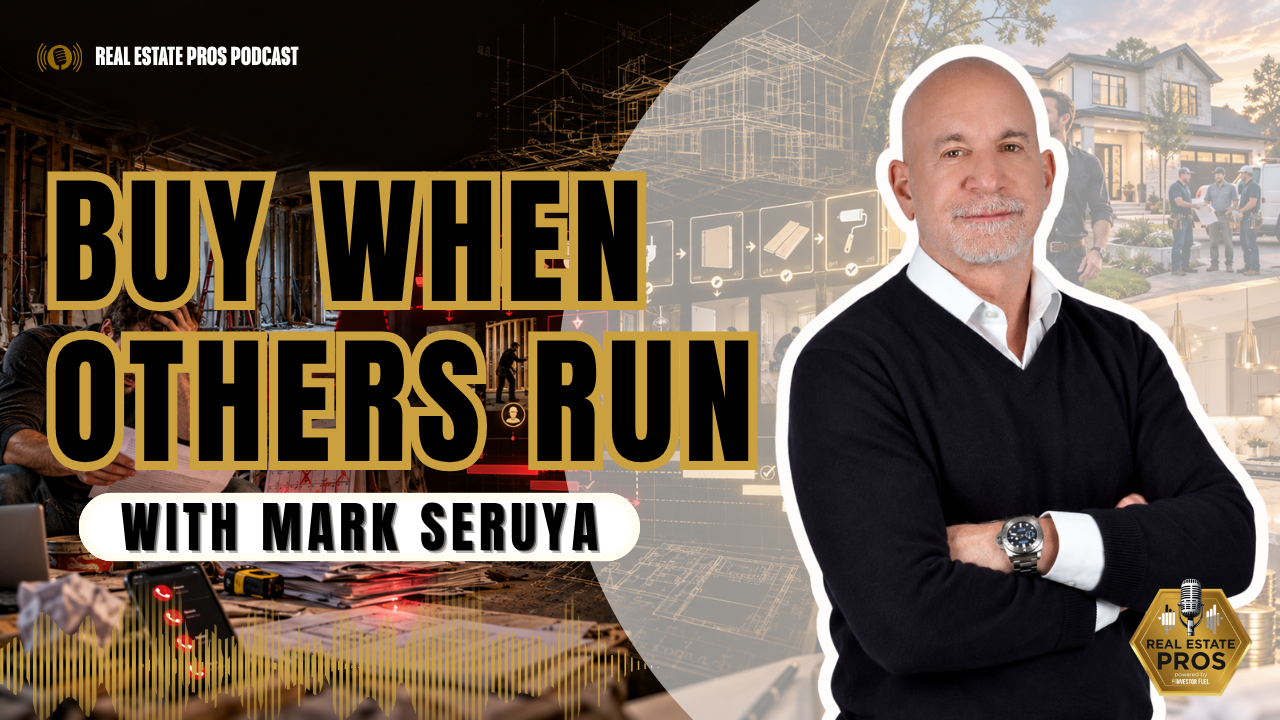
Mark Seruya shares his extensive experience in real estate investing, capital raising, and future trends like Ohio’s Silicon Valley. He discusses market dynamics, investment strategies, and personal resilience, offering valuable insights for investors and entrepreneurs.

Resources and Links from this show:
-
-
- Investor Fuel Real Estate Mastermind
- Investor Machine Real Estate Lead Generation
- Mike on Facebook
- Mike on Instagram
- Mike on LinkedIn
- KSR’s Website
- Mark Seruya on Instagram
- Mark Seruya’s Phone Number: 917-903-9275
- Mark Seruya’s Email Address: [email protected]
-
Listen to the Audio Version of this Episode
Investor Fuel Show Transcript:
Mark Seruya (00:00)
These Robotaxis are going to be in mostly in every city. And these Robotaxis are happening sooner rather than later. So I’ve already seen being tested in the boroughs of New York. And I was in Scottsdale two weeks ago and it’s all over Scottsdale. And I was in Vegas for a business about a month ago. They’re all over Vegas. And it’s small amounts of them. However, now there are fleets being ready to be sold.
And the owning a fleet is a very interesting business. However, but owning the infrastructure is a better business.
Issa Hanna (02:09)
Welcome back to another episode of the Real Estate Pros Show. I’m your host, Issa Hanna, and today we have Mark Seruya here to share his knowledge with us. Mark, welcome to the show.
Mark Seruya (02:18)
I’m really excited to be here. thank you so much for the invite and hope I could shed and enlightened, you know, my forty year background in investing with your audience.
Issa Hanna (02:28)
I’m super excited. On behalf of my audience, I want to thank you for coming on because like you said, forty years in the game, a lot of knowledge, multifamily, commercial, investing, capital raising. so for my viewers at home, can you kind of give us a rundown of what you’re focused on nowadays and then a day to the day in Mark’s world?
Mark Seruya (02:46)
So great question. I wear several different hats. my day-to-day real focus is my family business, which is KSR, Kassin Sabbagh Realty They’re based in New York City. It’s a 150-person boutique real estate firm. for the most part of the past 18 years, they’ve been involved in retail and office leasing. And about five years ago, they started to invest in their own account.
we saw a window of opportunity in the New York City office market where everyone was running away and being scared of office. So we started to invest in high-quality office buildings where the buildings are fine. It’s just the owners bought them at the wrong possible time. so we’ve accumulated several million of square feet over the past three or four years.
and so my role is to review investments that come in and approve or disapprove with my two partners. And once we approve something, I go out and raise capital for both limited partners and GP partners. That’s my main role. My second role is I’m a partner in a company called Windsor Properties.
where I’ve been involved with through the past twenty five years as an investor with me and my family. And there we are workforce housing developers in the state of Ohio. So a lot of things going on in Ohio, which I’m happy to share with you and your audience. But those are the two main things that I do.
Issa Hanna (04:18)
I love that. KSR. I just want to start with KSR. You crunch the numbers. So you’re doing the underwriting on the deals, making sure if it makes dollars, it makes sense. And if it does make dollars and makes sense, then you’re actually going out and and sourcing the capital from investors. what a beautiful thing to do because you’re the one crunching the numbers. You can sell them. here’s the numbers, give it to a capital raiser. The capital raiser has to go justify it.
The guy that crunches the numbers is the guy that is justifying the investment. which definitely can rocket fuel you guys to the top. that’s the type of setup I’d want.
Mark Seruya (04:53)
Issa, it’s even more than that. one thing is understanding of the investment. It’s more important than understanding the investor because anyone you could show deals to everybody, but each investor has its own risk tolerance. Each investor has their own opinion where they want to invest, whether it be multifamily, retail, industrial office, what have you. So really it’s knowing your investor first and
Then going out and looking for properties that will fit your investors. So what we do, we have a sort of a balanced approach. So the office properties are more total rate of returns, where you’re buying office properties, especially in New York, that are prices that we haven’t seen in 15 to 20 years. So the basis is very, very low. and
So that’s a total rate of return, a little higher risk. And then to balance it out for our investors, we buy East Coast shopping centers. the top retailers in the country. our partners and I and us, we own seven million square feet of shopping centers. The name of them, our partners is called the Wharton Group. and between KSR and Wharton Group,
And we have very good insight to what retailers are looking for, both on the East Coast and the West Coast. mostly, like I said, we predominantly on the as an East Coast investor.
Issa Hanna (07:07)
Definitely. And that’s actually a great, great point that you brought up as a former agent in Chicagoland who sold well over two hundred and fifty just first time home buyers. I was a a heavy buyer’s agent, knowing your client, knowing your investor, knowing their buyer’s net and what they want, what they’re looking for goes such a long way. so I’m glad you brought that point up because a valuable piece of knowledge to all you young guys out there.
coming up. You know, if you know that client and you know what they’re looking for, you know the deals to bring forth to them. And then I wanna I want to pivot to Windsor. You know, I’m an Ohio guy, from Ohio originally. Windsor, great reputation, huge name down you know in the Columbus area and all the areas I’ve been down in that middle middle part of Ohio. So I want you to give our viewers
The opportunity that’s up in Ohio because you called Ohio or you called that part of Ohio the Silicon Valley of the Midwest. So I just kinda want you to enlighten my viewers on
Mark Seruya (08:09)
Look, the Ohio is a very unique market. It’s very business friendly. and it’s a low cost of living compared to the East Coast or the West Coast. And you know, the current administration is really talking about bringing manufacturing back home. Ohio is one of the biggest beneficiary states in the country to receive that. And over the past three or four years.
You’ve had this corridor between Columbus and Dayton, Ohio, if you make a big circle, where you have Meta, Facebook, Google, Amazon, all look building data centers and manufacturing facilities in that area. And you right now it’s about fifty to sixty billion dollars worth of centers and manufacturing facilities going up.
Crane, hundreds of cranes are there. And in those areas, there is a severe shortage of workforce housing. at Windsor, we’re a fully vertical company, which means we do all our acquisitions, we do all our underwriting, and we do all our management, but most importantly, we do all our own construction, to the point where we make our own cabinets, we make our own
Roofs we make. We actually ac even own a tree farm down in the Carolinas because during COVID it was hard to get wood supplies. so we own a tree farm there and we actually get most of the material that we get from both China and Turkey. So we really provide low-cost development. the area that we’re looking to focus on is workforce housing.
And that’s what we love to do. And we’re at right now we have four shovel ready projects. All the deals that we’ve been doing for the past twenty five years that I’ve been with them has been my own capital and my partner Alex Dorsey’s capital and a few outside investors. Now we’re at the point where Ohio has a lots of opportunities and we’re looking to bring in both limited partners and general partners.
Issa Hanna (10:17)
I love that. And I can give you guys an example The projects Mark’s talking about, I’m here down in Austin, Texas. It’s a little town called Taylor, Texas, about thirty, forty minutes outside of Austin. One plant, Samsung, decided that they were coming there. And those property values shot through the roof because, like Mark said, there wasn’t enough housing.
the population’s almost gone up thirty percent in anticipation for Samsung to to open. So I love that you’ve identified it. You guys are probably one of the first on this this Ohio Silicon Valley trend.
Mark Seruya (10:53)
Yeah, what’s also interesting, which was just announced last week, especially for the Dayton area. Day Dayton is a sleepy town. It used to be, people don’t know this, the technology hub of the United States back in the early nineteen hundreds when you know the planes were invented. and Dayton has Wright Patterson Air Force Base, which is the technology hub for the entire Air Force base in the world.
So they just made an announcement that Dayton has made a three hundred million dollar bid to bring a a a military academy there, which would be a game changer for Dayton. so it’s interesting what’s going on down in Ohio. I just flew back from there yesterday. I was there for three or four days.
Issa Hanna (11:37)
Amazing. Yeah, Dayton was down on its luck a few years ago and it’s been making a huge, comeback. so definitely. I wanna kinda pivot a little bit because we’re investors. Everything can’t be peachy all the time. We all have it, that real estate nightmare. So I want you to share with our viewers a time where something happened, you had to pivot, you had to get through it, and you learn from it.
Mark Seruya (12:02)
I don’t think you have enough time on this podcast more. Any person who sits at my chair right now or in your chair who say they didn’t have any issues in the real estate business, there’s always gonna be peaks and valleys in every market. Real estate is not immune to it.
we definitely have had some and we have some issues right now. we bought property back about five or six years ago. And when we were underwriting it, this is a new development, you know, we had assumed certain types of interest rates. And guess what? rates have doubled, and now some of these properties up for refinancing. So we need to scramble a little bit on.
maybe just two of the deals just to raise some other equity or do some creative financing. And that happens all the time. Really the most important part when you’re doing your real estate investing, because obviously, you know, it’s always location, location, location, but really studying the dynamics of the market, really being very conservative in your underwriting. Don’t make, extreme assumptions that rates are going to drop in half or rents are going to go up 50%.
You really need to stress test what’s what could happen. And in forty years and being on Wall Street, we were managing over five billion dollars in my team, and they’re still there at Morgan Stanley. I’ve seen every single type of market, various crashes and
It’s always the best time for your people who are listening right now. We potentially may be going through one soon if things still continue the way they are in the Middle East and in Russia and where interest rates are going. I wouldn’t be surprised if we see type some type of pullback. But I will tell you the biggest investors that I’ve met in my life, and I manage a lot of money for very well known real estate people, where they make the money is when everyone is running for the hills.
or when there’s extreme stress. and right now in certain pocket pockets of the real estate market, there is that going on. and that’s the best time to be buying because right now where rates are not likely they’re gonna double from here, but it is likely over the next year, year and a half, two years, you’ll be able to refinance at lower rates. So now’s a good time to be buying as opposed to five years ago.
When rates are at two and three percent, you would have to make an assumption that those rates are gonna be there again. And those were not good assumptions.
Issa Hanna (15:12)
One hundred percent. this is the time to buy. If you have it to buy, this is the time. I see you guys go on the real estate websites and just look at it. On average, people are dropping their prices. You’re seeing price drops of ten thousand, twenty, fifty thousand. this is because of the interest rates. The minute the interest rates start to creep back down a little bit, next thing you know, those prices are shooting back up. There’s more buyers on the market.
and if you guys still don’t know what we’re talking about, a home buyer, one of the biggest differences in their monthly payment is that interest rate. So there’s a lot, there’s a huge difference between your monthly payment at a four percent as opposed to an eight or seven percent. once those payments go down, those prices will go right back up.
Mark Seruya (15:54)
Right. So right now prices haven’t really come down all that much for one reason and one reason only. And then another big equation that all your your listeners should always think about, which is supply and demand and a huge lack of supply out there because a lack of building. like in a New York market, it’s absolutely ridiculous. Issa, can you imagine in a one bedroom apartment in New York City, the average price is about sixty two hundred dollars a month.
One bedroom apartment. Maybe it’s eight hundred square feet. So and there is huge demand, not enough supply, and that’s in many different segments of the market. That’s why the office market reversed itself in New York City because everyone was scared because of COVID, back to office. Now everyone is back to office.
Building owners were forced to convert their office to residential. And that went over in a very big way. And then third and lastly, lack of new construction. So all that completely changed the supply-demand imbalance in New York to the point where even though you hear all this negative news about New York City, in certain pockets of New York City, they’re seeing record price per square foot for leases.
And now there are bidding wars in New York City for the first time in five years or seven years for office buildings. So markets change.
Issa Hanna (17:19)
definitely change right all the time. You gotta keep rolling with the punches. and you gotta stay on top of these changes so you can identify like you guys did with the office leasing. He said nobody was touching it during the COVID times. You guys were going all in on it and here you are reaping the benefits of it. Right. and yeah in those well built up cities, you know like I said I live in Texas where there’s tons of open space. They’re trying to grow, they’re trying to build sometimes there’ll be an abundance of new houses
But New York, Philly, Cleveland, all these old cities, there’s there’s nowhere to build. You gotta tear things down to rebuild. that shortage of housing is gonna be there and shortage of office space is gonna be there for a while before they they start building up more. So amazing you guys are able to identify all that.
And I predict this the Silicon Valley here in Ohio is gonna reap the same type of benefits in the near
Mark Seruya (18:11)
I believe so.
for your beginner or younger investors or even people who are seasoned investors, I have two things, two ideas that I’m starting to explore. One is pretty well known out there, and that is sober living homes.
The supply demand imbalance is gigantic, especially in Ohio, where I’ve been speaking to various state agencies, where it’s about a 30 to 40 to one supply demand imbalance. and sober living homes, interesting enough, I’m not interested in being in the sober living business but I am interested in owning the properties and leasing them out to
Corporations that focus in on sober living. there’s a huge opportunity there. And so you can not only make good money, but you’re also doing good for people who need it. They actually have three opportunities. The other is I’m sure many people on your podcast has been that word silver tsunami has been banded around. If it hasn’t, people don’t know what that is, is people who are born.
From like nineteen sixty to sixty-five. these senior housing is gigantic. The demand, there’s over ten thousand people a day retiring, and there’s not enough senior housing to go around. The supply demand for that is off the charts.
whether it be senior assisted housing or regular just senior housing when you’re providing really good services where you get top dollar for rent. That’s something that your investors or people you know your listeners should be looking at. And the third thing, which I just started to explore, is I don’t know how many people on your in your audience are following what’s going on with the robotaxis. Now
These Robotaxis are going to be in mostly in every city. And these Robotaxis are happening sooner rather than later. So I’ve already seen being tested in the boroughs of New York. And I was in Scottsdale two weeks ago and it’s all over Scottsdale. And I was in Vegas for a business about a month ago. They’re all over Vegas. And it’s small amounts of them. However, now there are fleets being ready to be sold.
And the owning a fleet is a very interesting business. However, but owning the infrastructure is a better business.
So what do I mean by that? your listeners should be out there listening to what’s going on with Tesla and these Robotaxis. And I am personally looking to buy land because they need what? They need parking. These fleets need parking.
These fleets need charging stations. These fleets need car washers, all three in one. and that’s going to happen rapidly. And so if you want to get ahead of the curve, all you listeners out there, I haven’t started to do anything yet. I just started I applied for a fleet license for New Jersey, where I live. but I’m more interested in the the infrastructure of it. So
Something for people of your audience to think about.
Issa Hanna (21:25)
Amazing. I mean, definitely great ideas. Young guys out there jump on that because in real time, as you were telling us this idea is I’m just like wow, you’re definitely a guy that looks so far into the future and can see these big things coming up. And like I said before, I’m down here in Austin, Texas. This is kind of the hub of the Robotaxis. And they just
Two weeks ago rolled out the cyber cab from Tesla and I hear that each unit of is like thirty thousand dollars. So I mean, a thirty thousand dollar car that can make you money all day long. All day long.
Mark Seruya (21:59)
Well guess what? if you own twenty of them, you need someplace to park.
Twenty
Issa Hanna (22:04)
Exactly.
Mark Seruya (22:04)
of them, you need some place to charge. If you own twenty of them, those things gotta look pretty, right?
Issa Hanna (22:09)
Exactly. A hundred percent. And you need that infrastructure for them. that’s just the point I was gonna make thought about buying a fleet. I’ve been thinking about it since two weeks ago when I saw the first cyber cat roll out. never did I think about the land though. So that’s how you guys know we’re talking to the real deal, somebody who just can foresee things and think like that. I mean, unbelievable, Mark.
Five years down the line, I’ll look you up, Mark. Are you are you still knee deep in the game? Are you are you pumping the brakes a little bit? Where am I gonna see you?
Mark Seruya (22:42)
and I’ll start pumping the brakes when you can’t see me anymore.
I don’t believe in retirement. I think I want enough passive income that I can retire? Yeah. Do I want to retire? No. I have too much fun doing this. I love speaking to people.
I love advising people. You know, one of the other businesses that I have, I’m a consultant forty years on Wall Street. not to brag or to pat myself on the back, I was both in Forbes and Barron’s top advisor, top one hundred advisors in the country, and top one hundred advisors in New York, top one hundred advisors in Florida.
I credit that to my team, even though I ran the team. I have an insatiable appetite to succeed. I come from very humble, background. but I also have an insatiable appetite to help people. So I enjoy that a lot. But I really enjoy that. So retiring? No, I don’t think so.
Issa Hanna (23:37)
Heck no. entrepreneurs, guys that are so good at their field. when you love what you do, you actually enjoy waking up and and going and doing that work. Right. I love that. And now I do want to give you the floor, right? if my people wanted to get a hold of you, whether it be financial consulting or KSR or the famous Windsor from Ohio, where could they reach you guys at?
Mark Seruya (23:58)
I think well for my cell phone number is nine one seven nine zero three nine two seven five. I answer all my texts, I answer all my phone calls within a day. Because it’s to me it’s very disrespectful if you don’t, even if it’s something which may or not be a fit. As far as KSR is concerned, if you have a
investors, whether it be limited partners or general partners out there who are interested in the space that I’m involved with, it’s Mark with a ks @ksrny.com. Also, I started my own Instagram page.
everyone could go on risewithmark I’m on there daily, almost daily, and I give financial and personal advice. if you need some career coaching and or mentorship, you could always, email me there, risewithmark.com and that’s who I am.
Issa Hanna (24:53)
I love it. And guys, Mark has a story. He’s not only a very successful entrepreneur investor in the real estate space, but he’s been beat down before. He’s been down in the dumps before. He knows what it is to have to get back up and fight. So make sure to go follow on Insta, risewithmark Make sure my investors out there that, their ears are peeking over here because they want to get involved with somebody so knowledgeable. Make sure you guys check him out.
Personable man who holds himself to the utmost integrity. it projects through the screen, and that’s the type of people you want to do business with.
I want to end with one more piece of advice if you’ll give it to us. And this is for our younger viewers. business relationships, depends on growing your network. if you don’t have a network, you don’t have relationships.
Not going nowhere in the professional world. So if you had to give them one piece of advice on where to start establishing these relationships, what would you tell them?
Mark Seruya (25:51)
Well, what you just said about networking is to me the most important thing you just mentioned as far as starting out. When I first started out, I was twenty-two years old. I didn’t have a chance to finish college ’cause my father got ill and I had to take over the family business. He was a jewelry store in Madison Avenue and then he got better and I didn’t enjoy working in retail behind a counter and
couple of friends of mine were working at Wall Street said, Come on, Mark, you know, let’s see, you you got it in you. And I’m a very competitive person. And so I cold-called for six days a week for seven years to build my client base. However, where I built my client base the best was networking. Now back then networking was a lot harder than it is now. There are networking events going on almost daily in your city that you live and you need to get out there.
And I would tell you the most important positive aspect you could have in your life that gives you the biggest advantage over most people who are out there is your ability to listen. A lot of people talk and talk and talk and talk, and they show you know flip charts and this thing and that thing, but they never really listen. They never watch a person’s.
bodied movements and you could direct the conversation to where you want to go to in a very subtle way. And if you show all you young people out there, men and women, if you show your potential investor that you care about them first without selling, you’re going to win more often than not. And you will develop long-term great relationships. I still have my clients, most of my clients, since I’m 23 years old.
I’m 66. So look the art the art of listening is a lot very, very quickly losing art out there. It’s vanishing. Because you know, unfortunately, this has been one of the greatest inventions of all time. The phone, it’s also been very damaging to way people communicate with each other. You go in a meeting.
You put your phone down. You don’t look at your phone ever. You don’t text on your phone while you’re in a meeting. I see many young people doing that. Bad news. How you dress. Don’t dress like a slob. Don’t dress with your shirt out. Look well. you need to make a good first presentation. Don’t wear jeans. Those type of things go a long way. people in the real estate industry.
it’s not we’re not a bunch of tech nerds. Some of us are, yeah. you may be a founder of a multi-million dollar, a hundred million dollar company. Great, and you could dress whatever you want, but if you’re looking for people as investors, they’re gonna look at you first and how you dress, how you speak, are you listening? Are you paying attention? Do you care about them? All that matters.
Issa Hanna (28:47)
Hundred percent. amazing advice and my viewers who watch the show all the time. All our big dogs, all our successful people who come on the show, very, very high level guys like Mark, they echo the same words, right? It’s not what they can do for you, it’s what you can do for them at first. You present yourself in the correct way, and then I love that you said listen, not a lot of people say that. Listening.
in our business, you guys, is one of the greatest gifts you can have because if you just know to shut your mouth, listen to what these people want, listen to what they’re telling you. You’ll know A, like you said, how to guide the conversation, B, exactly what their needs are You don’t have to spend time beating your chest and like you said, showing charts or whatnot. Just sit down and have a conversation and yeah, you young guys get off the phones at the meetings.
Mark Seruya (29:38)
One more thing I have to say, Issa, before we end this is that it’s not so important to get the sale on the first conversation. I know, don’t try to go for the close on the first obviously if you can, great. I’m not saying you shouldn’t. sometimes it’s better to say, you know something, I don’t think this investment is for you. Perhaps you should speak to Mrs. So and so or Mr. So and so.
That builds confidence because now that person, okay, like that guy or that gal is looking out for my best interest. They just don’t want to sell me or anything. That goes a long way.
three weeks ago we were about to buy a shopping center, a strip mall, outside of Richmond, Virginia. Great, great deal. My partners flew down to Richmond for third walkthrough. And one of my partners noticed behind the building was a small office building.
And behind that in the front of that office building, people were selling drugs. it’s a wall was a Walmart super neighborhood center. They spoke to management, and management said this is one of the best sales per square foot Walmart has in their entire portfolio. However, management said there’s an extreme amount of stealing going on in many of the stores in the center.
And we decided that we went back to the seller and tried to retrade it, meaning that we lowered our bid to take into the potential that Walmart might leave. They probably won’t, but they may not leave. so we lowered our bid by, three million dollars. they came back with a million dollar lower of their price.
and we passed because we didn’t want to take that risk for our investors. Every investor that I put into that deal thanked me.
They thank me because you know that means you wow, these guys really do look out for my best interest,
Issa Hanna (31:37)
You really have to care about your client. You have to look out for their best interests. Don’t chase that check. You’re sprinkling seeds when you’re doing that. Right. that one client, that one person will close eventually, but then they’ll refer you to so many different people because you’re not that car salesman just trying to get a deal done, right? Right. Mark, amazing advice, amazing knowledge you brought to the show. I’d like to invite you back on the show at a later date if you’d have us.
Mark Seruya (32:02)
Anytime. love to be on your show. It’s really a pleasure to meet you. I welcome anyone in your listening community to reach out to me. I’m always here to help people.
Issa Hanna (32:12)
Guys, make sure to go to Insta, risewithmark follow him. man can bring a lot of knowledge to your lives just by following him. Mark, it was so nice to have you on the show. Thank you so much for coming on.
Mark Seruya (32:24)
you’re welcome Issa my pleasure.
Issa Hanna (32:25)
And viewers at home, if you enjoyed my conversation with Mark and want to see more, make sure to hit like and subscribe. I talk to people every day that can bring us different knowledge on every aspect of the real estate industry. Until next time, the Real Estate Pros are out.