Subscribe via:



Show Summary
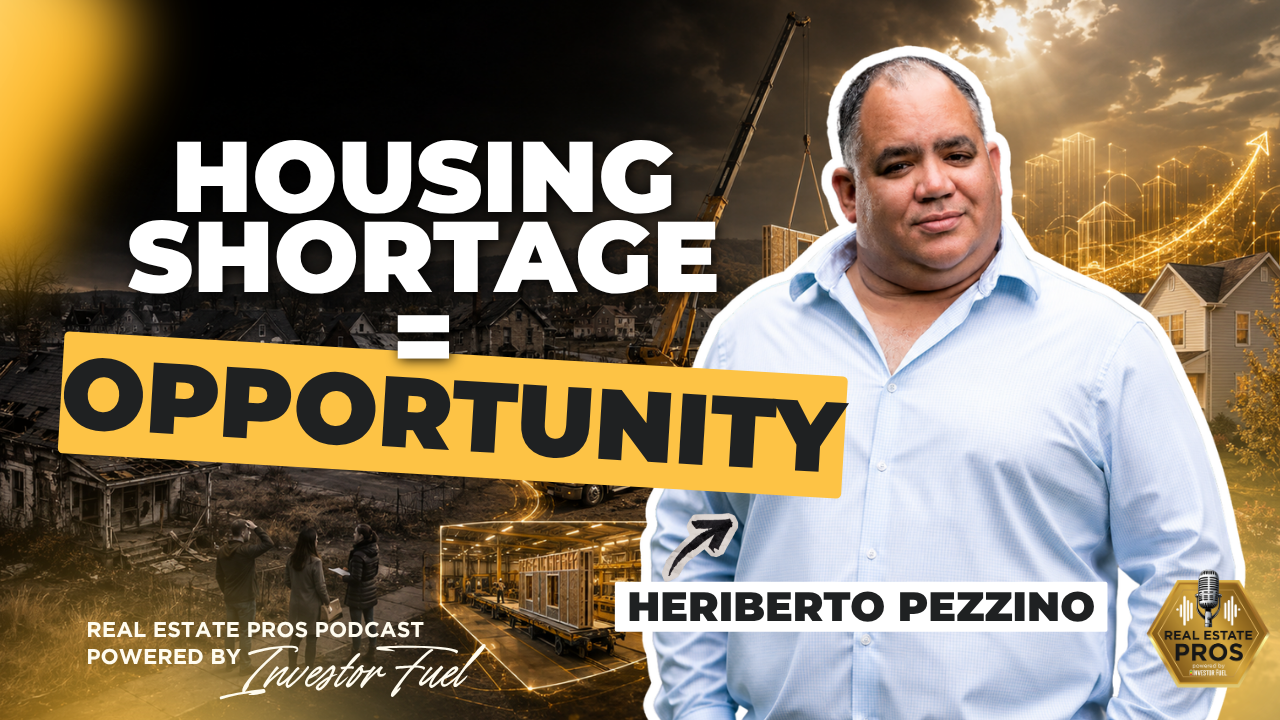
In this episode, Eddy Pezzino shares his journey from restaurant entrepreneur to real estate developer, highlighting innovative approaches to affordable housing and the importance of integrity in business. Discover how his vision is shaping upstate New York’s real estate landscape and the lessons he’s learned along the way. In this episode, Eddie shares his insights on real estate development, building strong networks, and balancing family life with entrepreneurship. Discover practical advice on scaling your business, fostering trust, and navigating industry challenges.
Resources and Links from this show:
-
-
- Investor Fuel Real Estate Mastermind
- Investor Machine Real Estate Lead Generation
- Mike on Facebook
- Mike on Instagram
- Mike on LinkedIn
- Yaman Real Estate’s Website
- Heriberto Pezzino on Facebook
- Yaman Real Estate on Facebook
- American Investment Opportunities on Facebookl
- Heriberto Pezzino’s Email Address: [email protected]
- Heriberto Pezzino’s Phone Number: (607) 372-3214
-
Listen to the Audio Version of this Episode
Investor Fuel Show Transcript:
Heriberto Pezzino (00:00)
I’m really excited about that. And I think I tackle every deal that same way. I think you’re always gonna have hurdles, right? But the biggest thing is not to give up on what you believe in, right? As long as you’re doing the right thing, I think we talked about that earlier, right? As long as you’re doing the right thing and you have good intentions, good things will come. And not everything’s gonna work out for us, right? But if you try your hardest and you persevere, most likely if you don’t give up, you can achieve things you never believed you could do, right. And I think my father always taught me that growing up is, “Hey, you—you can only lose if you give up. If you don’t give up, you don’t lose.”
Meghan Escobar (02:00)
Hello everyone. Welcome back to Real Estate Pros Podcast, hosted by Investor Fuel. I’m your host today, Meghan Escobar, and I have the honor and the privilege of sitting down with a fine gentleman who I’ve had an amazing conversation with. So excited to have him on the show. He is
a man that wears many hats. You know, he comes from the background of an entrepreneur at a very young age and has been in the real estate industry for over three decades now. And I truly believe that our audience is gonna walk away with some great insights that Eddy has to share with us here today. So welcome, Eddy Pezzino. I’ll let you kind of talk about the companies, because there’s quite a few, but your name in itself—I mean, I’m—I’m happy to have you here.
Heriberto Pezzino (02:45)
Yeah. I’m excited to be here today, Investor Fuel. I—I work for Yaman Real Estate out of Cortland, New York, a really great boutique real estate company I’ve had the honor to work for for the last three years. Recently, I built a company called American Investment Opportunities, where we work with investors and homeowners to build their dreams,
and I also have a development company called Tomajak, which is my development company. So really excited to share information with you guys here today. Looking forward to Investor Fuel’s podcast here. So thank you for welcoming me, and I appreciate this opportunity to share it.
Meghan Escobar (03:15)
Absolutely, absolutely. And I know that the passion and everything that you do comes from the heart, and I can tell that. But I think right now your main focus, like you were telling me, is with AIO—American Investment Opportunities. And so for folks that might not know that name or understand what it is that you’re doing with development there, can you give us a thirty-thousand-foot view of
what the focus is with that company today?
Heriberto Pezzino (03:42)
Our main focus is to provide affordable housing to the local community by using a system, a conscious system, for homeowners or home buyers. We noticed there was a deficit in our market of housing, and oftentimes we had qualified buyers that couldn’t find homes, right? So they got tired of looking, and—and they just gave up. I identified that problem, so I built this company based on that. And this company simply is—
we’re conscious of service. If a homeowner—can’t a home buyer can’t find a property they want to buy, we simply put together a package for them to buy a new home using a panelized system from Barden Homes. We partnered up with Barden Homes, so now we’re a registered dealer for Barden Homes, which is really exciting. So we’re able to afford—provide affordable homes at mid-two-hundreds to our clients, where before conventional housing builds would cost over three hundred dollars a square foot.
So we have that program. It’s called Homes for America through AIO. We’re reaching out to brokerages so agents can now have a new opportunity and they’ll still receive a commission of three-point-five percent on any sale they do through AIO—AIO Homes for America. So that’s really exciting. So we’re offering that, and then we have an investor package, too, called the Platinum Club, where investors can come to us, we’ll fully run the deal, we’ll run a new build, and—and we’ll make a good profit for them using our methodology. So we have a system in place where we build homes
at a more affordable cost than stick-built. And the reason why is because they’re all built in factories as a panelized home product, built with laser-guided precision, and we mitigate the workforce. So for AIO, that’s our game plan, is to—to provide investors and new homeowners with opportunities that they didn’t have before in our market. So that’s pretty much what we do—quick snippet of how we do it.
Meghan Escobar (06:05)
That’s a beautiful thing, and—and that’s amazing. And one thing that you said—well, you said quite a few things, but one thing that really stuck out to me in our discovery conversation, Eddy, was the way that you got into real estate. It’s not your typical story where maybe someone from the family got you into it or you just decided you wanted to build a career where you could create uncapped income. It was a little bit different for you. Would you mind kind of sharing what—
what brought you into the real estate world as an agent going back over thirty years ago?
Heriberto Pezzino (06:36)
Yeah. Growing up, my father was a really good entrepreneur. He—he built quite an empire here in Upstate New York, and the way he did it was just by hard work and persistence. And I—I watched him do that, and I think one of the things that resonated with me as a kid was like he always told me, “Eddy, if you want to separate yourself from—from being poor to being rich, make sure you buy a lot of real estate,” right? So that was the first thing that impacted me. I was like, “What does he mean?” Then I watched him compile a portfolio that took us from a really poor family to a middle-class family,
and I saw how he did it tactfully and really respected that. So I had that at an early age. When I was thirteen, I think I started helping my dad rehab restaurants and—and multifamily properties. So we did a lot of transactions from the age of thirteen till I was, like, three years ago, you know. And then three years ago I realized that a lot of the agents I worked with over the last several decades, a lot of them didn’t care about me. They didn’t care about me, they didn’t care about my family, but they cared about the commissions.
And I simply just didn’t want—I couldn’t trust no—there was a very few couple real estate agents in my market that were really good, and there’s a couple that I will say are really good. But a lot of people are just looking for the commissions, right? And that really bothered me, right? They were putting me in and they were offering me properties that were just not good choices for me. You’d run the numbers, you’d be like, “Why would they ask me to buy this property when the numbers just don’t make sense?” But come to find out, they didn’t care about me, they didn’t care about my family, they didn’t care about my future. They simply cared about the commissions. So I decided—
after being in the restaurant industry since I was twenty-one—I think I opened my first restaurant when I was twenty—twenty years old, actually. So up until I was forty, forty-two, forty-three. And I—I decided that that business didn’t allow me to be with my family. So the way I got into real estate is simply just wanting to spend more time with my family and then not having the opportunity to have an agent that was really looking out for my best interest. So I decided to get my real estate license, hammered into it,
and then I realized the biggest problem in the real estate market here was there was less inventory than was needed for the buyers. So that’s why I created AIO. And that’s how I got here today—that’s a quick snippet of how. But generally got into real estate because, A, I needed to find someone that looked out for my best interest. There’s no one that’s looked out better for your best interest than yourself. So I was like, “I—I’ve gotta do these deals myself, and I’ve gotta be allowed to.” Otherwise you’re leaving money on the table and then you’re not gonna get any good representation.
So I identified the problem in the housing market when I got here, like I said, and I’m excited for the future of AIO and excited for the career in my commercial real estate and residential real estate. Upstate New York is a really beautiful area. Lots of opportunity. I think it’s undersold, right? We don’t have the natural disasters that you—you guys have in other areas in the United States, right? We don’t hardly have any hurricanes, tornadoes, earthquakes. We don’t have any of that—no wildfires, right? So we sit here in an area that’s high in taxes, but
the benefits of living here are really good, when you think about it. So for me, it’s worth paying more taxes and having a—a life that I do up here. I’ve tried to live in a couple of different places over the last thirty years, and I always come back home. This is always gonna be home to me. I love the people here, I love the community here, and I’m just excited for the future of AIO. And then Yaman Real Estate’s grown significantly since I’ve been there. I think I brought an energy there that—that wasn’t there before, and it’s great to see
how the company’s flourished since I’ve been there. So we have great leadership over there with Jamie Yaman. Yeah, and I have great teams around me everywhere I go. So yeah, really excited.
Meghan Escobar (09:44)
I can attest to that. I mean, the energy that you—you’ve brought to—to this show and our conversation has been contagious, so I can—I can see why the energy follows you, because you’re—you’re quite the leader. And with that being said, I’m sure that there are some scenarios where as an operator you had to shift
or pivot really fast, or maybe a deal that had gone sideways. And I like to kind of talk about this because we live in such a highlight world right now where a lot of people are seeing the flashy success and the highlights of people’s success, and they don’t see the work that it takes behind the scenes to—to actually create certain levels of success. Is there a moment that you can think back on where
you had to as an operator shift or pivot or become a problem solver? I feel like you’re really good at that.
Heriberto Pezzino (10:37)
Yeah, so for me, I think when you look at real estate as an agent, right, you’re always a problem solver. I think that’s the first mindset that I had to get in—like, what is my role as an agent? It’s to be that problem solver. It’s to be that person that people come, “Well, I have money. I wanna—I wanna make this money work for me,” right? That’s a problem for them, right? So we’re identifying how we can help them make their money grow, right? But we also have the ability to change people’s lives.
So there’s been a lot of situations in—in real estate where I’ve had to second-guess what I’m doing in real estate, why I’m here. But I think persistence and perseverance is key, right? I’ve been—the first—one of the biggest first deals I did was a redevelopment of a college. When I re—when I started redeveloping it, nobody believed in my vision. I was like, “This is gonna be so hard.” But I wanted to prove a point. I was new in the industry; I wanted to tackle the biggest dog.
And I did it. I—I went to that property. Adam Weitsman, who’s a multi-billionaire up here in Upstate New York, owned the property. I called him up and I said, “Adam, what’s going on with that property?” He’s like, “Well, we had a buyer, but they didn’t—they’re not working out. I’m gonna put it back on the market.” I said, “Give me a couple of months; I’ll sell it for you.” And here’s a new guy who—who just became an agent, right, probably six to eight months beforehand, telling this multi-billionaire that he can sell the property and redevelop when he’s had big commercial companies trying to do it and they couldn’t do it, right?
So I was able to do it. I sat there on campus. I built a business plan. I believed in my business plan, and then I sold it to one of my investors that I had to find, right? So not only did I have to sit there for six months worrying, “Is this time worth it?” but I believed in what I was doing. I really did. I believed that that college could be a community within side of a community in Johnson City, New York. And I built out the business plan. I worked closely with the mayor of Johnson City at the time, Martin Meaney, who was a great friend—he still is a great friend. And I
created a lot of good relationships to get it done. Right. I don’t think any deal can get done without a good network. Right. Any big deal, anyway. You can do a lot of residential deals, right, easily, but when it comes to the bigger commercial deals, it’s a different—it’s a different game. It really is. You have to believe in yourself, but also have to believe in the team around you to get it done. There was a lot of days where I’m like, “I just spent five months, and I’m probably not going to get this deal done.” At some point, my mindset was changing, and I was like, “I can’t let this happen. I can’t—I can’t change my mindset. I’m going to sell this. I’m going to build it.” And I was able to do it.
Right now today, that project just finished up. It’s seventy-two units of market-rate rentals, just like I saw it in my head. It’s got a restaurant component on—on campus, it’s got a post office, and it’s got a beautiful office building. The person I sold to, he’s a very good businessman. I—I’m sure he will do great things with that asset. But there was a lot of times during that transaction where, “Is this gonna get done? Is—is my hundreds of hundreds of hours of work gonna be—be something that’s gonna come to fruition?”
And it did. I’m really excited about that. And I think I tackle every deal that same way. I think you’re always gonna have hurdles, right? But the biggest thing is not to give up on what you believe in, right? As long as you’re doing the right thing—I think we talked about that earlier, right? As long as you’re doing the right thing and you have good intentions, good things will come. And not everything’s gonna work out for us, right? But if you try your hardest and you persevere, most likely if you don’t give up, you can achieve things you never believed you could do, right. And I think my father always taught me that growing up is, “Hey, you—you can only lose if you give up. If you don’t give up, you don’t lose.”
Meghan Escobar (13:43)
That’s a—it’s a great piece of advice. I mean, the only—that’s the only way to lose is if you just stop, right? Like you throw the towel in. You’re—it’s—you’re never gonna get to the other side. So I—I really appreciate you sharing that. It’s the kind of stuff that people definitely don’t talk about enough, and most certainly is what separates folks who are in the game long term versus the ones who are here to just get a quick commission check, so speaks volumes.
And you—you told me a little bit about this, too, and I’m excited to share it with the audience: the next big goal or the next big move for AIO.
Heriberto Pezzino (14:19)
Yeah, the next big move for AIO is hopefully—we’re working on a twenty-four-unit subdivision, single-family home subdivision in Norwich, New York. We’re in the preliminary stages. You know, like any development project, there has to be checks and balances and everything has to be perfect. But we’re working on that. We’re hopeful that that project will come to fruition. We’re working closely with New York State. Omar Sanders, who works at New York State and works with the grant money, has been really helpful in trying to find infrastructure money for us. We have the mayor
over in Norwich, New York, and their team over there is just fabulous. So I’m excited to start working on that project. It looks like we might be able to support that—that area with twenty-four new homes over the next three years. Really excited for that. But our programs, the Homes for America program with AIO, and also the Platinum Club Investors Club for AIO with investors is gonna be really fun to watch grow. I think we have a model where we already know what these houses are worth before we build them. We know what the costs are,
right? So we’re getting—we’re mitigating a lot of the risk for our investors and our homeowners, right? We’re hopeful to leave new home buyers with some equity at—at inception of the property. We’re also excited to help investors move away from traditional investing in the—the smaller multifamilies, right? And—and then we’re—we’re—we’re excited to build housing for Upstate New York. There’s such a shortage for it and such a need for it that when I look at the future of AIO,
the future’s really bright, because there’s such a shortage, right? And we’re doing the right thing every day. We’re—we’re working with community leaders, we’re working with—with the right people. Our network sets us apart. When we—when you do things right and you do with the right people, success will follow. So we’re really excited about that, and we know we have a—a great partner in Barden Homes and Irgarde Development. Those two companies really are gonna allow AIO to flourish in the next decade, and just excited to bring that to the table here in New York because we have such a housing shortage.
And we want to fulfill the need for Upstate New York and housing by getting rid of some of those dilapidated properties that need to be replaced. So that’s our hope, is to work closely with communities to—to help them replace the properties they had to take down, right? There’s a lot of communities up here in Upstate New York that are demolishing homes that are no longer okay in the community, and we hope to have a program for them to fill those vacant lots with brand new homes that are affordable—whether it’s ranch, whether it’s a $190,000 home, or whether it’s a
four-hundred-thousand-dollar home. We—we’re just excited to offer what we can to the public at the prices we are. So, yeah. Stay tuned for that. That’s gonna be—that’s gonna be fun to watch.
Meghan Escobar (16:37)
Yeah, it is. And one thing, Eddy, that I—I can appreciate about you is that you have all these different projects and you’re wearing all these different hats, but what’s most important to you is being a father to your eight children. Can you, like, you know, just share how you’re able to kind of keep your machine running smoothly and—and keep your head on straight with everything?
Heriberto Pezzino (16:57)
Well, it starts with this girl right here. Let’s try and get another picture. You
Meghan Escobar (16:59)
Mm-hmm. So—
Heriberto Pezzino (17:01)
get a smile. But yeah, so she—she’s—her and my son, my—my eight-year-old kids here, they just allow me to get up every morning and be thankful for what I have. I think the biggest part for me is—is—is definitely being a father, but more overly, it’s about the opportunity to watch them grow. I think I shared with you earlier how successful my older boys are and—and how, you know, I—I didn’t know if I told you I’m a grandfather, too. I have a—
a young grandson who—who just lights up my world, right? So all my kids and my grandson just allow me to be really excited about the next day, because they fill my—myself, they fill me with so much love and compassion, and they’re so loving, right? So like I’m so thankful every day to be able to get up and just provide them with the life that they deserved, right? So just the best thing in my life is being a father. I—I can’t express that enough. Like if I had to pick one thing to be in life, it’s to be a father. I—I don’t think I can live without being a father. So I was lucky to have great parents, and
I just wanna—when you have great parents, you wanna be better than your parents. You always wanna be better than your parents. So even if you have great parents, you wanna be a better parent, and I try to be a better parent. I’m—I’m really compassionate, really understanding. I’ve been a baseball coach, too, for a Little League for a long time, and just I—I view my kids as I’m their coach. And our jobs as parents is to be their tour guide and help them, as they let us, and these kids are just great. They—I—I couldn’t be more thankful to—
to the greater powers for what I have. So yeah, my kids just allow me to wake up every morning and be thankful, more thankful. And then it’s more rewarding, right? As I see them—I—I think I shared with you my son graduated from Cornell, one of my sons did, and watching him go through that and now be in the Peace Corps and teach people in Nepal how to—how to grow plants and—and harvest honey, and he’s speaking Nepalese, it’s like, “Wow, you know, the hard work—the hard work is now realized.” The sacrifices I made as a business person, work—working eighty to ninety hours a week in the restaurant,
have paid off. At the time I was like, “What am I doing this for?” But now as I get older, I appreciate what’s—what’s become of what my hard work has—has produced. Yeah.
Meghan Escobar (18:48)
Absolutely, absolutely.
Heriberto Pezzino (18:50)
Yeah. That’s—that is definitely the big—I’m glad you brought that up, ’cause that is the biggest part of me. It definitely keeps my heart beating and fills me with—with everything that I need to live a good life, so yeah.
Meghan Escobar (18:58)
That’s beautiful. And I know we—we talked a little bit about networking, too, and the importance of that. And a lot of our audience, they’re very green coming into their entrepreneurship journey, their operator journey, and—or they have been in for a while and they’re—they’re always looking for the next level up. And so with that being said, we—we know and understand, like, you gotta be around the right people. You gotta be able to
work with honesty, integrity, transparency, trust. So for you, what has made the biggest difference with creating relationships and growing your network?
Heriberto Pezzino (19:33)
Aligning yourself where people have the like-mind mindset that you do, right? I think the biggest thing in business is mindset, right? The mindset has to be fine-tuned to—to where you almost know you can’t lose if you have the right people around you. So for me, it’s just by keeping the right people around me. I—I think that’s what I tell people: make sure you surround yourself with the people around you that are people like you want to be, right? They say that the peop—the five people you have around you the most around you are the people you’re going to be like, and I—that’s one of the truest statements that I’ve ever learned.
I just surround myself with good people. If I find out someone’s not good, guess what? They just don’t have a seat at my table. And sometimes that’s hard to do, because sometimes these people have a lot of money, right, and you have to turn them away. But you have to make sure you align yourself with people that have the same mindset you do and same qualities of life that you want, right? If you don’t, well, just like anything, you’ll—you’ll go on down the wrong road. So just making sure you’re aligned with people with values and—and with your mindset is really the biggest, important part. If you have your mindset and you have the people around you
to fulfill the needs, right, in—in terms of advice, right? ‘Cause those people you’re—you’re near are gonna give you the advice, right? And if they’re successful, most likely you’re gonna be successful. So, yeah, I can’t say overly more enough that if you’re right out the gate being an investor or a business person, surround yourself with those people. Keep your circle tight, because as I told you earlier, right, the—what’s gonna eat people alive is the people that are evil, right, people that are gonna lie to you and not care about anything but money.
So if you’re new to the game, just make sure you know who you’re dealing with, and make sure you keep the people close to you. And don’t forget where you come from, right? Don’t forget your roots, right? And just be good. Just be a good person, yeah. If you could be a good person, good things will come. But the minute you try to be a—a bad egg, well, you’re gonna spoil the whole bunch for yourself, too.
Meghan Escobar (21:06)
There—there it is. You put a piece of fruit next to a moldy piece of fruit, and it’s gonna grow, right? So, yeah, relationships are truly everything in this space. And before we wrap up, Eddy, if there’s someone that’s listening in and they wanna be able to connect with you and learn more from you and—and potentially collaborate, what would be the best way for them to reach you? Is there a social media, email, phone number, website?
Heriberto Pezzino (22:11)
Yeah, so we have multiple avenues to reach me. You can friend me on Facebook at Heriberto Pezzino. If you could drop the link for them, that’d be great. Yeah,
Meghan Escobar (22:19)
Yeah, yeah, we will, sure thing.
Heriberto Pezzino (22:21)
We have American Investment Opportunities on Facebook, Yaman Real Estate’s prominent on Facebook. But you can reach directly out to me at [email protected]. That’s where I intake a lot of my personal stuff real estate. Anyone can reach out to, or they can call me.
My phone number is always open at 607-372-3214. I’m always answering my phone. I love to deal with people. And if people have any questions on real estate or life, I’m just happy to help people. Whatever it is, even if it doesn’t have to do with real estate, call me. I’m happy to talk to you about anything: being a parent, being a coach, being a businessman, being a real estate agent. If I can help one person achieve their dreams, I’m a happy guy today, so.
Meghan Escobar (22:57)
Amazing stuff. Thank you, Eddy, so much for being here, sharing your perspective, your voice, and more—and more importantly, you know, taking the time out to be here with us today. So we will absolutely drop those links down below so you can just reach out to Eddy directly. You don’t have to go and Google; we’ll make it nice and easy for you. So
again, thank you, Eddy, for being here. I really appreciate it. And for those of you that are listening in, if you did get any value from this, please be sure to hit like and subscribe. We’ve got more conversations coming in with operators just like Eddy here, who are out here building real businesses in real time with real people. We’ll see you on the next episode.