Subscribe via:



Show Summary
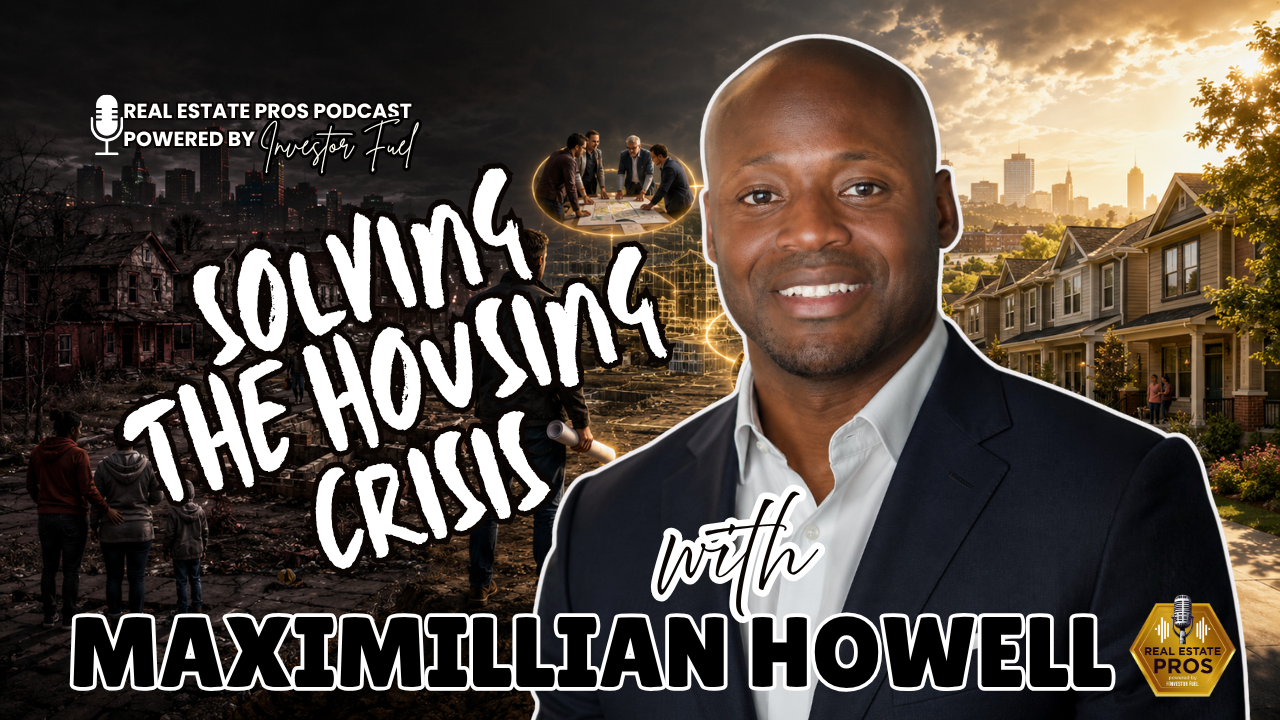
In this episode, Maximillian Howell shares insights on urban infill development, affordable housing solutions, and strategies for successful real estate projects in Kansas City. Discover practical tips, market dynamics, and how community involvement drives impactful development.

Resources and Links from this show:
Listen to the Audio Version of this Episode
Investor Fuel Show Transcript:
Maximillian Howell (00:00)
Yeah, 100%. I’ve seen, you know, a lot of, you know, developers and you know, and I want to say fly by night, but a lot of people that have, you know, great intentions and, you know, great skill set, but just don’t understand the dynamics and the hurdles associated with urban infill development. And, you know, they go by this, you know, kind of off on market lot and says, Hey, you look at you kind of do the you know, high level napkin.
Accounting and say, okay, if I do it for this and I can build it for this and you know, exit is this and I’ll make X amount of dollars. Well, it just never works out like works out that way.
Dylan Silver (02:10)
Hey folks, welcome back to the show. Today we’re joined by
Maximillian Howell, the founder of Entrepreneurs Enterprises, a real estate development, construction, and consulting company serving the Kansas City market. Maximillian, thanks for taking the time today.
Maximillian Howell (02:24)
Appreciate the invite.
Dylan Silver (02:25)
Affordable housing is a problem. We were talking about this in the green room a little bit. What are the solutions?
Maximillian Howell (02:33)
Think there’s just one tangible solution other than it’s a huge problem and identifying, acknowledging that it’s a huge problem that needs to be addressed. I think it’s one of the things that has plagued the United States and our region of the country, specifically Kansas City, for a long time now. And for a while, I feel like people have just thrown darts at the dart board.
And what what we’re trying to do is really trying to come up with a attainable solution that is realistic, that can garner a true impact and revitalization and a basically a a conclusive solution to the problem. but I think the first step is definitely acknowledging that there is a problem and then working with developer partners like myself to figure out what that solution is.
Dylan Silver (03:22)
Now, when we talk about affordable housing, there’s a large scope of what this encompasses. And sometimes people say, well, this isn’t affordable housing, that that is affordable housing. Terms that I’ve heard include, you know, lie tech, low income, tax credit. Of course, a lot of people are familiar with section eight. And then you have this affordable housing workforce housing segment, which isn’t government subsidized, but it is nonetheless affordable. Which of those are you active in?
Maximillian Howell (03:50)
You know, right now I’d like to say that we are in a market affordable housing. Right now we primarily focus in the urban core of Kansas City, Missouri, and we focus there for the last two decades, right? And I think that ⁓ affordable housing has developed this sort of stigmatism associated with it. But for the housing that we’ve developed in the urban core, this is market affordable housing, which is ⁓ basically housing that
meets the market demands of the community that’s affordable, right? It doesn’t create this gentrification deal. It actually produces housing that supports the current residents and current situents of the of the neighborhood and of the area that can afford these new construction homes, right? So it’s really
kind of understanding the dynamics of the market. So I really like to say market affordable. You might go to certain areas of the country where, you know, $3 million is the market affordability of that of that neighborhood in that area, right? And so we want to make sure that we make sure that the stigmatism isn’t really there associated with this affordable housing deal because this is affordable for, you know, the a a person that has a great job, a family that has two
working parents and adults. So this isn’t a type of housing that is, you know, the typical Section 8 housing, right? You know, matter of fact, I don’t I don’t believe really Section 8 housing really exists anymore. They got rid of that housing that, you know, decentifizes people or de incentivizes people to essentially not have jobs, right? So
Know even the Litech development that we have worked with for a couple of decades now as well that utilizes state and federal funds. ⁓ that is a low-income housing tax credit. That doesn’t that is not Section 42. ⁓ it is Section 40. It’s not Section 8. ⁓ so it it’s it’s really the first step, I think, is eliminating the stigma associated with affordable housing because ⁓ it is market affordable, it is affordable housing for the people that live in the areas.
⁓ that can afford to produce and live in the houses that we there that are there.
Dylan Silver (05:57)
You know, Litech is particularly interesting because
I’ve had some experience ⁓ having this explained to me. It breaks down, right? If it’s a certain percentage of the average income in the area, then you’ll pay a certain percentage of the rents. And even if you actually make, I think, a a hundred and twenty percent, possibly more of the average market income, you’re still able to live there. You just might pay a little bit more. So Litech seems to have multiple, you know, demographics and and income brackets that it’s able to help and support.
Maximillian Howell (07:15)
Yeah, it it definitely does. I mean, so Litech in particular, there’s there’s definitely ⁓ income restrictions, right? But those income restrictions are a lot of times fit inside of the traditional household, right? So you’re not really excluding a person that works every day eight to five, ⁓ and has a good job, good credit, those types of things. And those are the, you know, again, some of the NIMBYism and astigmatism associated with affordable housing. But what we’re really trying to
focus on is producing revitalization impact developments that can really go into the communities and really target some of just create some of the new construction housing that targets some of the urban infill, vacant lots and those types of areas that really kind of help solve some of the affordable housing issues because the the the number one kind of issue that’s underlies here is that there’s a lack of housing in general.
And so because just classic economics says that with a reduction of supply, there goes the cost, right? So there has to be a lot of partnerships and strategic initiatives that can go in and address the, you know, the urban lack of infill housing, which we’re working every day to try to solve.
Dylan Silver (08:30)
Now are you focused on the build to sell space or do you do build to rent as well?
Maximillian Howell (08:34)
You know, primarily in Kansas City, we we’re working on the we have worked with the build to sell space. So we primarily do new construction development and primarily it’s a build to sell, but we do have a build-to-rent aspect as well. And you know, it’s really just working primarily just to revitalize the areas that are been kind of abandoned and and looked, you know, looked away from for so many years to create.
some type of urban revitalization initiatives that can create some market affordable housing that the areas can s support without creating this gentrification. But the the creative and and most I guess beautiful thing about it is that a lot of the housing that is going to be created is, you know, not a traditional affordable, you know, what they would call affordable. It’s just affordable for the market, which, you know, can be
well above the, you know, the the mean income and all that kind of stuff. So
Dylan Silver (09:34)
And are are you focused specifically on town homes? I heard you mentioned townhomes. Is that a lot of what you do? Or do you use the single family standalone homes as well? What does it look like?
Maximillian Howell (09:42)
We we primarily focus on single family. We do have some townhomes that we’ve done before. You know, so it’s it’s really just identifying and we just talk I talk a lot about this in a book that I wrote, Let Me Fall on the sword, affordable ⁓ new construction. And so what what it really is is just really identifying what the market really needs in that area and then working backwards and re engineering, reverse engineering the the
the product that you develop to fit the market’s needs, right? So it’s really understanding and listening to what the market needs and requires and then developing to solve that problem and fill that need.
Dylan Silver (10:20)
Maybe putting you on the spot here a little bit. what does the price range for an affordable single family home in the the Kansas City market go for?
Maximillian Howell (10:28)
You know, it it it really kind of depends, but specifically for the urban core in Kansas City, Missouri, I mean, it can range from, you know, three hundred grand to six hundred grand. I mean, it just depends. We’ve got a you know a diverse buyer base in the urban core of Kansas City, Missouri that ⁓ really can support, you know, how home prices anywhere inside of that range. Like I say, the most
A critical thing that I think that we need to do is just increase the housing stock because there’s just just this just a s housing shortage of houses in general ⁓ across the board. Kansas City right now I think faces a shortage of about sixty-four thousand affordable housing homes. rents up seven seven percent since twenty twenty four and it’s growing among the fastest across the country.
Dylan Silver (11:04)
No well.
Now pivoting here, when we talk about ⁓ being a developer in general, right, there’s a lot of folks listening to this show who may be starting to get into development from another segment of the real estate space, whether that’s long-term buy and hold or fix and flip, for instance. But when you’re a ground up developer, there’s a whole new set of you know hurdles to overcome, right?
Maximillian Howell (12:15)
Yeah, 100%. And, you know, a lot of those hurdles I talk about in the recent book that I released. let me fall the sword. But I think that ⁓ a lot of the biggest hurdles is kind of understanding what the market supports, right? So doing that reverse engineering and figuring out what what is the price point, the exit that can support get be supported in this area and making sure that your costs or your construction costs and your development costs that you’re going to encounter.
⁓ all meet inside of that budget that will offer you a profitable exit at the end of the day because all of us are are really, you know, we we have some impact development. We want to do this for the right reason, but you have to make sure that the whether it’s a non-for-profit or a for profit entity, that all of the the bills get covered and the exit is successful with a takeout that covers all of the costs that it took to develop the project.
And so I think that understanding your costs and understanding your market are two of the the main priorities that you really need to focus on if you’re getting into real estate development. And then starting starting slow. I mean, I think that in this area, especially in Kansas City, there’s a lot of you know developers is kind of a buzzword that you know want to kind of get up to bat, so to speak, and hit a home run. I think that when we got into it, we started with a single, right? We just picked one house and
you know, decided we were gonna, you know, develop it and and start it there and then organically grew. I think that where we got into some trouble is where we kind of got ⁓ over our skis and, you know, got over leveraged. And so I think that it’s important to grow organically and really make sure that, you know, all the projects that you’re doing are are ⁓ high quality and really have all of the I’s dotted and T’s crossed from an accounting and budget perspective.
Dylan Silver (13:58)
How often are you looking at infill lots?
Maximillian Howell (14:01)
⁓ you know, primarily that is what we’ve cut our teeth on, and that’s my area of expertise and the area that I’ve really have a passion for is urban infill new construction development. And there’s a lot of different things that you have to look out for, but I believe that that is part of solving the global or national ⁓ housing crisis as well as the, you know, local affordable housing crisis is we gotta really go back to these urban markets that have, you know, been
antiquated in language for a lot of years now that have great infill lots and great, you know, I guess, you know, sites that would be able to provide the additional housing that we would need to kind of bridge that gap for the overall number of houses that we are lacking as well as the affordable housing that we’re lacking.
Dylan Silver (14:49)
let’s talk about acquisitions. When you’re purchasing these infolots, are you going through traditional brokerage, you know, a realtor, or are you going direct to seller in these situations?
Maximillian Howell (15:01)
You know, in most cases, I really don’t try to go with brokerages. I d I know that there’s a lot of brokerages and a lot of things that are listed, but I think in order to make these urban infill ⁓ projects successful, you really have to look at some strategic partners and look for blue ocean opportunities, stuff that’s off market, stuff that where whether it’s you’re knocking on a door, you’ve got some organic relationships with some of the community partners, neighborhood associations.
land banks, the city, I think that it’s gonna work, you know, you’re gonna get your best return with, you know, providing and acquiring sites that are off market that are under cost because the the development costs and construction costs for urban infill is typically higher than it would be in a sub just a suburban subdivision that has a lot that’s ready to go. That’s got the utilities that are, you know,
precisely at eight feet down and all of the water all kind of stubbed up at the beginning of the at the front of the house and everything’s kind of just in place. But in these urban infill, a lot of times the the demo wasn’t done properly. So you’ve got, you know, fill, ⁓ dirt that you have to deal with. You’ve got ⁓ p possible abatement that you have to deal with. So there’s certain certainly things that you have to take account for ⁓ developing in an urban infill area. But
⁓ I think that in order to do that into a account for those issues, you gotta make sure that you’re really buying on the on the on the right side of the the budget. And so, you know, a lot of times with these projects, you make the project by the price that you’re acquired by. So I I really I would I really recommend people to focus in on the blue ocean stuff, the the off market stuff and working with some community partners to really get the site acquisition piece.
Dylan Silver (17:26)
You make your money on the buy, you mentioned that. ⁓ have you seen ⁓ especially newer developers ⁓ maybe encounter significant hurdles or bottlenecks because they’re purchasing ⁓ for more than what will easily produce a return and that’s where they get caught up is in that buy portion.
Maximillian Howell (17:46)
Yeah, 100%. I’ve seen, you know, a lot of, you know, developers and you know, and I want to say fly by night, but a lot of people that have, you know, great intentions and, you know, great skill set, but just don’t understand the dynamics and the hurdles associated with urban infill development. And, you know, they go by this, you know, kind of off on market lot and says, Hey, you look at you kind of do the you know, high level napkin.
Accounting and say, okay, if I do it for this and I can build it for this and you know, exit is this and I’ll make X amount of dollars. Well, it just never works out like works out that way.
You know, you’ve got a, you know, in especially in Kansas City, you know, I think the city’s doing a great job of trying to streamline the development process from a permitting and planning perspective, but there’s a lot of permitting planning planning.
wall clock hours and days and months even that have to go into it. And then as well as like I say some of the abatement issues and ⁓ utility connection issues and a lot of things that people don’t really think about when they look at a urban infill site. And you know, it might be essentially as as simple as, you know, how can I energize this property, right? Is the, you know, is the
Is a power pole underground? Can we do can we do underground or do we have to go to overhead? Or am I gonna have to tear down trees to connect my power? Those are type of things that you know you don’t really look at. They’re not on your napkin budget that you do to before you buy the house or buy the lot. ⁓ so it’s it’s just certain things that only experience tells you that you have to look out for. And so, you know, I’m really at this point in my life trying to give back and trying to solve some of those.
hurdles and cover up some of those potholes that I stepped into and fell into. And so I’m literally trying to follow on the sword to help solve the affordable housing issue and the lack of affordable housing and the lack of housing in general by helping others learn from my mistakes and following the sword so that they can kind of stand on my shoulders and kind of we can all as a
community and ⁓ do some collaboration efforts to ⁓ solve this problem that we have.
Dylan Silver (19:57)
You mentioned community involvement. There’s so many ⁓ facets to this. What’s your approach to, you know, staying active in the community?
Maximillian Howell (20:05)
You know what, ⁓ for me, I think that in order to stay active in the community, you have to be a member of the community, right? So I’ve lived and developed in my community for the last two decades. I’m an active member of the neighborhood association. ⁓ you have to, you know, really reach out to your city council members to understand what’s going on in the area. And then, you know, of course, the, you know.
The mayor and the housing department, those are all organizations that you should have a pretty good pulse in terms of what’s going on in the area, what what plans they have for the area. You know, most cities are gonna have a ⁓ area development plan. And, you know, it’s it’s important for you to make sure that your strategy is aligned with the strategy of the cities. You know, you don’t wanna get caught sideways with, you know, having your own vision of doing this type of development here or the
Whether it be multifamily, single family townhomes or things like that, and the city have another vision. So I learned the hard way again, ⁓ that things are much easier when your vision is aligned with the vision of the city. So you want to make sure that you know that you get the that buy-in from all of your city council members, your neighborhood associations, and all that kind of stuff. It’s it’s nothing worse than trying to jam a square peg into a circular hole from a development perspective. So like
You know, you might have a great idea, but if the neighborhood doesn’t think it’s a great idea, then it’s just not a great idea, right? So you want to start at the neighborhood, start the grassroots and see, you know, what what the neighborhood feels about the development and what the what the neighborhood and the city and all the community ⁓ stakeholders say about the development and what you’re trying to do from a housing perspective, whether it’s you know, even if it is single family, hey, does do you guys like the design of this home? Do you this is kind of the potential budget?
What are your thoughts? And you know, I think that it always bodes the developer much better to have that buy-in early on than it is later on in the process. Cause no matter what, you’re gonna have to pivot later on in the process. And at that point it’s gonna cost you.
Dylan Silver (22:05)
We are coming up on ⁓ time here, Maximillian. Anything you’d like to mention directly to our audience?
Maximillian Howell (22:10)
⁓ no, I I just think that you know, I I welcome everybody to check out my book, Let Me Fall on the Sword. It’s available on Amazon, ⁓ Kindle. And I think that ⁓ at at a at a high level in order to solve the affordable housing issue and just the housing crisis that we have in America is gonna require a lot of us to partner together and streamline the development process and the building process. And it starts with, you know, collaboration.
like we’re doing now and people learning from the mistakes of others so that we don’t all make the same mistakes that you know ⁓ someone else has made. And so it’s literally gonna be proverbally falling on the sword and letting everybody kind of collaborate together and not make the same mistakes so we can learn from success and ⁓ alleviate the failures from others. And
if you if you have any questions about urban infill development and would like for to talk to me or, you know, understand some of the mistakes I made or some of the successes that I’ve have had in the industry, I’m a open book and would look forward to chatting with you then.
Dylan Silver (23:16)
Maximillian. Thank you so much for joining us today. Thanks for your time.
Maximillian Howell (23:19)
Absolutely. I appreciate the opportunity.