Subscribe via:



Show Summary
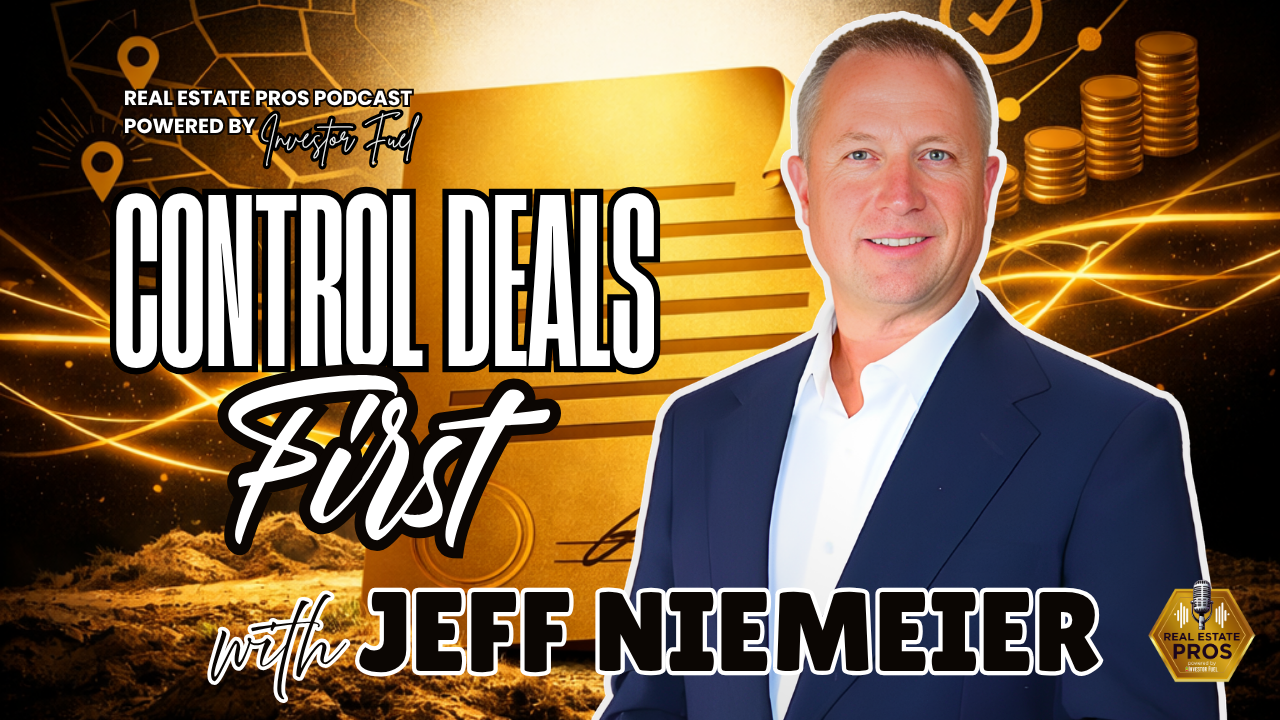
In this episode, Jeff Niemeier shares his journey from tech entrepreneur to real estate investor, highlighting innovative strategies such as 721 exchanges and ground-up development. He breaks down how creative financing, tax optimization, and strategic deal structuring can help investors scale and build long-term wealth. Jeff also emphasizes the importance of mindset shifts, controlling deals through smart negotiation, and leveraging opportunities in new construction like build-to-rent and student housing to maximize returns.

Resources and Links from this show:
Listen to the Audio Version of this Episode
Investor Fuel Show Transcript:
Jeff Niemeier (00:00)
I think right away, because the number one complaint that people hear is I don’t have any money. I don’t have any money to invest, right? It’s like, it’s not deal flow. I can find deals all the time. It’s that I need to find, you got to get creative to scale to where you can do this full time. And, and if you’re just using your own money or just your friends and family money, you’ve got to figure out how to scale beyond that. So 7 21 is just another tool in the tool chest.
Cody Crabb (01:59)
Welcome back to the Real Estate Pros podcast. I’m Cody Crabb with Investor Fuel. Today we’ve got Jeff Niemeier joining us out of Iowa. He’s the founder of JB Capital, where he focuses on ground up development and build to rent townhome communities. For over 20 years, he’s been investing and running a vertically integrated operation and specializes in 721 exchanges, a strategy a lot of investors have heard of maybe, but don’t really get the full power of many times. He’s also the host of the Student of Money podcast.
Jeff, thanks so much for joining us today.
Jeff Niemeier (02:29)
Hey, Cody, thanks for inviting me on. think this is going to be great. I love talking about real estate and investing. So let’s get into it.
Cody Crabb (02:36)
Absolutely. All right. So let’s let’s start here. Give me a little bit of your background. Like how did you get into real estate in the first place?
Jeff Niemeier (02:43)
Yeah. My origin story. It’s great. Uh, so a long time ago, I actually, everybody talks about the purple book, right? Robert Kiyosaki, rich dad, poor dad. Yeah. Yeah. Every single episode. actually back in 99 before he like really was popular. Uh, I was in that thing called Amway or, know, uh, network marketing period, know, um, direct selling business.
Cody Crabb (02:52)
almost every single episode.
wow, yeah.
Jeff Niemeier (03:09)
And so they’re really huge into Robert Kiyosaki actually got to start that way in the book through a lot of the network marketing companies that was promoting his, because they really focus on self-development and self-improvement and all the training. So I started reading Robert Kiyosaki and really loved cashflow quadrant more than Rich Dad Poor Dad. And I was working W2. I’m an electrical engineer by trade. And I got into IT.
So Emma manager of information systems. I was a kind of a sales engineer putting in Cisco networks and Microsoft servers and internet things of that sort. So when a friend of mine introduced me to Robert Kiyosaki and getting me into the whole amway training of all of the tapes and books and all of that fun stuff, it does fundamentally shift your mindset. So I’ll give it that, regardless of what you think of the industry of direct selling that whole mindset shift.
was phenomenal. And that really got me into, I got to start my own company. The only way, you know, I heard one person say a CFO wanted to, wanted to advance in the company and the owners told them that it’s a family owned business and I don’t have any daughters that you can marry. And that was kind of like, yeah, that’s true. It’s like the only way you’re going to advance or the only way I was going to have the word president on my door was to start my own company. So that’s what I did.
I went out and at that time I started a technology business. started a wireless ISP business and got into private cable and internet for apartment complexes in student housing. So, and then that, and then my cousin was a huge landlord and had about 95 million in rental property. And, and he actually helped me buy my first house. And I’m like, I need to be like my cousin, Bob. need to have a big portfolio of real estate.
And as I was installing cable television, internet and student housing, because it’s typically an amenity, one of the owners was like, when you sign a contract, you have to be able to renew it when, when we sell it there’s a new owner. And I’m like, that’s interesting. You want to sell. Do you mind if I put in an offer? And he says, sure, no problem. And he ended up selling me his 16 plaques student housing complex on contract because he was a real estate investor.
He was a house flipper. He did a lot of wholesaling in Des Moines. He was very comfortable with doing owner financing, seller financing. So I was able to go out to my friends and family network. Uh, I think I raised $65,000 from five friends and family, and I bought $880,000 in real estate. My first year, I bought a 16 plex and two houses. And that kind of got me into not only real estate investing, student housing.
Cody Crabb (05:40)
Wow.
Jeff Niemeier (05:47)
but it also got me into OPM using other people’s money and how to scale massively. And then 2011 or so I really started to get into syndications. So that’s a dense version.
Cody Crabb (06:00)
Wow, okay, yeah, that’s,
yeah, when people say get started in real estate, usually I’m sure they don’t picture quite as much of a jumping to the deep end as that in your first year. That’s pretty wild.
Jeff Niemeier (06:58)
Yeah. My, my first four, my first house, four bedroom house, I actually bought it from a developer. So technically that was my first ground up when I bought that land or signed the purchase agreement with him. It was an empty lot and he showed me the plans of the house. And then I went and got four students, had them sign a lease, give me a security deposit, promise them that the house would be built and finished by August 1st for them to move into. And then I went to the bank.
with a purchase agreement and signed leases and a security deposit, to get the loan. And back then in 2005, you could get a first position, 80 % loan. gave me a 10 % second position loan. I had the security deposits and the first month’s rent to put down as a down payment. And I think I put on a credit card, like $2,500. So that was my kind of my first, again, no money deal.
And, and then I raised that 65,000 from friends and family. within the first year, us bank that I was banking with at the time told me that I was growing too big, too fast. And at the time I thought that was funny. I’m like, that’s ridiculous. What do you mean? You want to buy massive amounts of real estate? And I didn’t find out until a few years later, what exactly that meant, because it was a lot of work and having to like jump into real estate, not really knowing property management.
Iowa landlord tenant law, student housing in particular, you know, it was, it was pretty rough the first few years, but I call it the kind of, ⁓ you know, burn the boats mentality. It’s like we hit the beach, you jump out, you burn the boats and you can only go forward. And, and at that point in time, I was running my small business, quit my W two. So I didn’t have steady income.
Cody Crabb (08:29)
Yeah.
Yeah.
Jeff Niemeier (08:40)
And, you know, my first, I don’t recommend it personally. There’s better ways to do it. That’s just the way I did it. And, you know, I, I survived it and came out on the other end and I’ll never go back.
Cody Crabb (08:52)
Yeah, so ⁓ I think a lot of people hearing that are either horrified or like super inspired, or maybe both. Because I feel like a lot of times though, I mean, it’s funny how many times I hear someone get a really rough start and then they go, but I wouldn’t change a thing. It’s like I loved it and it’s perfect and it’s got me to where I am. Like it says something that that’s the case, that people that find themselves like that.
they still wouldn’t change it because they learned so much from having such a rough go at it.
Jeff Niemeier (09:24)
Yeah, I had to learn accounting. I had to learn Iowa landlord tenant law, 562B and A, know, and all these things that you have to do. Luckily, I had a spouse that had a state government job that carried the insurance. And then of course I found out about checking the box to be a professional real estate investor so that all of this massive amounts of depreciation would offset my wife’s state income.
And, know, so once you really start diving into the nuances and all of this, it’s like, that’s what I really recommend is if you’re married and you have a spouse that has a safe, secure job and a good, and can cover like the healthcare and all of that, that you could really say, I’m going to go do this thing and I’m going to catch us on the backend, you know, and you’re, supporting us as I’m doing this thing that she thinks honestly is pretty crazy. But you know, now in our life.
She’s retiring, she’s going on to her pension and that we’re using our real estate to pay for our retirement years. know, so it works out, but it is, it’s scary. There’s, there’s many a time starting a technology business, investing in real estate that, you just sit there and cry, put my head in my hands and say, I just want to go back to a safe, secure job, even though that’s kind of laughable.
Cody Crabb (10:25)
Yeah.
Clock, do the clock
in and just do the job and then go home. Yeah, I know what you mean.
Jeff Niemeier (10:44)
And as a high pay consultant, you know, I was driving a brand new Corvette. was, you know, over mortgaged on the house that we’re still living in. you know, it was, I was living the life, you know, but I was just killing.
Cody Crabb (10:56)
Yeah, I’m sure
sometimes you look back on that and you’re like, wait, what was I so upset about again? Like, what was I, why did I leave that so quickly?
Jeff Niemeier (11:02)
I was,
and I was working, you know, 50 to 60 hours a week, because as a consultant where you’re doing billable hours, you’re only evaluated by your supervisor by how much money you’re bringing into them. And which, and that really upset me. And that’s one of the reasons why I said, I got to start my own thing because I am not valued at the place of employment. And I am just simply bringing them money in and
Cody Crabb (11:15)
Yeah.
Jeff Niemeier (11:26)
they’re never going to promote me. They don’t even know who I am. The person that would do my yearly review would see me maybe a half hour a year. And this is the guy that determines how much money I make and you know, and what
Cody Crabb (11:37)
You see your dentist
more than that. That’s wild.
Jeff Niemeier (11:39)
It is because every time I would go into the office, they would be like, what are you doing here? You’re supposed to be on site doing billable hours. You know, that’s, that’s wrong. They’re basically chastising me. And I’m like, well, if I wanted to be, spend that much time at the big fortune 500 company as a consultant, I would just go work for them as an employee instead of being a consultant. Because as a consultant in a big company,
You, you have to do better than them as the employees. So, you know, I was told when they go on break, you don’t go on break. You keep working. You have to be head and shoulders above those guys because they’re paying you more and hourly rate and you’re the outside consultant. So, you know, it’s, it’s notice to the grind wheel. So for people that are in that day in and day out, yeah, you make a lot of money and you’re living a good life. But the reality is, is I was still broke and I was time poor and I was family poor.
Cody Crabb (12:06)
Yeah.
Yeah.
Hmm.
Jeff Niemeier (13:06)
And I had to make a change. And when I saw how my cousin lived, I was like, I want that type of lifestyle that he has. I want that.
Cody Crabb (13:12)
Yeah, I want that. Yeah, all right,
so you did end up starting your own company. ⁓ Tell me about JB Capital, where that came from, why you started it, and what you do.
Jeff Niemeier (13:22)
So I got really big in student housing and 2018, 2019, I kind of semi retired. Um, and then COVID hit, um, and when COVID hit, I kind of said, I need like 2.0 cause, so I actually drew a line on my portfolio. I sold everything on the bottom half that wasn’t performing as well as I thought. And I said, I’m going to move away from doing individual syndications and I’m going to start a fund.
a, you know, a fund versus a one-on-one syndication for one property. And that required me to do a fundamental shift. I went out and took the series 65 investment advisor. I joined a bunch of masterminds to kind of get me off my butt. So during COVID, I basically was doing a bunch of masterminds and training and online training and studying for the series 65.
So then about, uh, 2022, I started the podcast. started implementing all of the things that my mastermind said I needed to do to kind of grow my, my group of investors. So I really started to get into like much heavier capital raising and doing bigger projects. The other decision that I made decided to do is since I was winding out of student housing, cause it was so labor intensive. Uh, and I’ve done some
distressed properties with forced equity. I really hated that. I really hate buying older properties and having to turn them around. Because the one thing you can’t do on flip like flipping an apartment complex is you can’t change the location. Right? You don’t get to pick that. So then I started following a couple of the other mentors and there’s one here in town that’s that’s done doing very well. And he does brand new construction basically build to rent before it was kind of known as the build to rent industry.
Cody Crabb (14:51)
It’s true. Yeah.
Jeff Niemeier (15:04)
And he’s been doing it for 30 years and has a huge empire. And I, and I said, I want to get into new construction. I need to get out of the class C stuff and get into the class A stuff. And the best way to do that and to really force equity is with new construction. And I think a lot of real estate syndicators and people that do real estate don’t do it because it’s another heavy lift. It’s another thing that you have to learn, you know, buying an existing property.
And rehabbing it and doing some forest equity is one thing. But then when you have to start to buy land acquisitions and title it, get an architect, civil engineer, do the lease ups, get the financing, you know, it’s a whole nother way to make money in real estate. But what I found out is it’s incredibly profitable ground up development. There is a huge, potential with, with making really good returns.
And then one of the things that I use is that 721 exchange to bring in the land. So I don’t go out and buy land that’s listed, with a realtor. I typically talk to the property owners and instead of doing a purchase agreement, I get them to partner with me and do a 721 exchange and bring the deed to the land into the partnership as a partner. And then, so that I can exit them out, because typically when I go talk to a farmer,
They all think their money or their properties worth a lot of money. And I’m like, well, I can give you that high value, but you’re going to have to partner with me and have it at the end. So, and that’s where the 721 comes into. So it’s something that I think is underutilized. Not a lot of people do it. There’s a lot of nuances with it, with the securities laws and taxes, but it’s a very powerful tool where I can buy development land.
Cody Crabb (16:33)
Hmm.
Jeff Niemeier (16:50)
And I just did a deal. Well, a lot of times I can get it for free, right? I don’t give them any money up front, but I typically can get it for 15, $16,000 an acre and turn around and sell that acre for like 200,000. And then, so the investor that puts the property into the deal gets it on the backend instead of on the front end, like with a sale, you know,
Cody Crabb (17:02)
Wow.
I see. Yeah, that
makes sense. Okay, give me a kind of profile of 721 exchange ideal situations. When would you want to start looking into this as a strategy?
Jeff Niemeier (18:01)
I think right away, because the number one complaint that people hear is I don’t have any money. I don’t have any money to invest, right? It’s like, it’s not deal flow. I can find deals all the time. It’s that I need to find, you got to get creative to scale to where you can do this full time. And, and if you’re just using your own money or just your friends and family money, you’ve got to figure out how to scale beyond that. So 7 21 is just another tool in the tool chest.
Because when you go to a realtor and put in an offer or a letter of intent to buy, it’s a very competitive nature. They’re just, you know, a realtor’s job is to get the highest price they possibly can for the seller. And then that they get their commissions on. So for example, this 20 acres that we’re developing, they, the guy actually, he was an investor and they got it on a, ⁓ for a property tax lien sale. So I knew that they were into this 20 acres, extremely inexpensive.
because they had gotten it very low. And then they turned around and listed it for, $38,000 an acre. So $760,000. And I thought, wow, that’s really cheap for development land until I walked it and saw what a mess it was and how much, how much of a heavy lift it was going to be to develop it. So I went to the realtor and said, Hey, I know these guys bought this on a property tax sale. it’s on the assessor’s website, right? It’s in the, right. It’s in the records. It’s in the deeds.
So I said that would they be interested in partnering with me? Cause I can’t buy this at $760,000. I can’t make any money. And all the other developers had penciled it out and it hadn’t worked. So they all walked away from it. So I said, here’s what we’ll do. You’re going to seven 21 this end. We’re going to give it a fair market value of 600,000. I’m going to pay you 300,000 upfront. So I only have to come up with 300,000, which is 16,000 an acre. I give them their 300,000.
They bring it into the partnership. It’s a fair market value of 600,000. So they’re guaranteed on exit another payment of 300,000 plus they’re a one third owner. So we get to do profit splits at the end. So that’s going to be another $180,000. So they’re still getting 760 to $780,000, which was their listed price. They’re just getting it on the backend after. So they’re riding along with me.
as a partner, because if I was just to purchase it outright from them, I would have to go raise from investors $760,000. And those investors are going to expect a return on their investment. It’s awfully hard to do when you overpay for the land.
Cody Crabb (20:16)
Yeah. Yeah.
Yeah.
Yeah, look at this terrible land we’re going to have to completely transform. Tell me that’s a good investment. Yeah, exactly.
Jeff Niemeier (20:35)
Yeah. Yeah.
It’s like, you know, so I said, you know, the reality is, is you’re a real estate investor. do property tax liens and you just happened to find a gold mine here and, and, you’re not, you’re not a developer though. You just want to sell it. So, you know, they’re, they were into it low enough that we were, that they agreed to it. So I saw the property online on Saturday. I walked it on Sunday.
I had a letter of intent on Monday and by Wednesday I was meeting with them and we had signed a deal and they still had to pay their realtor their fee. but it was, since it wasn’t technically a sale, it’s a, it’s a tax deferred event. That 300,000 I gave them was tax free. So they didn’t have to pay capital gains on it. Not until we developed the entire thing and start selling off the lots, will they be taxed. So, you know,
Cody Crabb (21:15)
Hmm.
Wow, and by
then you’re already starting to get, you know. And the fact that, the thing that calls out to me here is, so if I’m hearing you right, they get the price they originally wanted, and they, from there, are still a 1 third owner, is that right?
Jeff Niemeier (21:27)
Yeah
Yeah, we keep them in the deal. So, and I just found out, you know, we’re doing K ones and we’ve done a couple of these seven 21s now. And, uh, the CPA is like, you gotta be careful of something called a disguised sale. So when you do a seven 21, which is a tax free event, if you give them their entire fair market value within the first two years, your CPA is going to red flag that and say, that is basically a disguise sale that you’re just not.
Cody Crabb (22:04)
No.
Jeff Niemeier (22:05)
So, so that’s why we only gave them half and not the full 600,000. One, I didn’t want to raise all of that. They have to ride with us, but you got to be careful within the first two years. If you give them all of their money back and their capital account essentially goes from 300,000 or 600,000 down to zero, that’s going to be a red flag to the RS that you might get audited because that’s considered a disguised sale. So if you’re going to do a 721, you got to learn about some of this.
Cody Crabb (22:09)
Yeah, that makes sense.
Yeah.
Jeff Niemeier (22:32)
And AI, the way, is great. Just ask Gemini or chat GPT about 721 and it’ll do a dump load on. Yeah. Yeah. It’ll, it’ll, it’ll tell you everything that you need to do in all the gotchas.
Cody Crabb (22:38)
Yeah, and then maybe double check it. But yeah, fair enough. Yeah, that’s, wow, that’s.
Yeah, I think this is one of those situations where I love when we have episodes like this because of course one of the things I hear from people a lot is, you I don’t have money to invest, I don’t have time to do this and this, but really, mean, sometimes it just comes down to getting creative about you facilitate some things and you, you know, and really like people are dying to, this is a win-win for someone that, I mean, I’m thinking of that specific situation.
They still get to be a part owner, they get the price they wanted, and they don’t have to do as much work. I mean, I can’t see how they lose, really. So it’s pretty neat once you get into the details like this. What I’m hearing from you is start, but then make sure you do your homework once you’ve started. Like really dig in and find out all ⁓ the things you can benefit from. Yeah, yeah, that’s true.
Jeff Niemeier (23:34)
Oh, a letter of intent doesn’t cost you a dime, right? So to go
out and look at properties and to walk properties, doesn’t cost you anything to put in a letter of intent that you can again, go to AI and generate a template. A lot of people have templates out there. You can generate a letter of intent, which locks it up for a week, two weeks, maybe even 30 days where you can really then do your due diligence. So I think people get.
bogged down and that analysis paralysis and they start worrying about the details and they start worrying about do I need to go out and file for my legal entity that’s going to be the holding, you know, the holding company for it and things. And what do I do about this? What about, you know what? Non-binding letter of intent. It doesn’t cost you a dime to sign one of them and they’re, they’re non-binding. So you can walk away from the deal. So, but you control the deal. So it comes back to control.
How do you control a piece of property bigger than you, you know, that you can’t take down yet, maybe yourself, and maybe you’ve got to raise some money. Maybe you got to talk to some investors and you’re worried about taking down something that’s a little too big. Lock it up first. And once you lock it up, then start getting everything. I mean, you always want to be doing evergreen sales and out there, you know, promoting yourself and you always need to be in that capital raising mindset.
but never be afraid to go look and sign letters of intent and then start to, then once you get it locked up into a letter of intent, now the work really starts, you know, so.
Cody Crabb (25:06)
Jeff, this
has been super awesome and super helpful for our listeners. One last question I’d have for you is what’s next for JB Capital? Where do you see things heading?
Jeff Niemeier (25:15)
Yeah, our current fund, we’re building builder in town homes. So we actually have two projects. We’ve got the real estate development piece that we’re building. We’re building houses and we’re building residential developments and we’re selling lots. So what I’m doing with that is because that is so profitable and the people that are just like getting to know us and want short-term deals, we’ll put them into those syndications because they’re two year, three year turnarounds and they’re high income. And then what we recommend is then they…
then they take their profits from that deal and they plug it into our builder in town homes. And then we use that bonus depreciation and cost segregation to offset what I call the poor man’s 1031 is we now that bonus, now that bonus depreciation is codified permanently forever, and it’s not going to sunset. Uh, I use that as a poor man’s 1031. So if you’re going to go ahead and sell something and have a taxable event, you’ve got to have something lined up.
that you can do that massive amount of, ⁓ cause the reality is, is I never talk about how much money you make. What I talk about is how you can save on taxes and then roll that tax money over instead of paying the government, use that money to reinvest and get that to compound and snowball, you know, so this is really more of a tax game. So I don’t talk to people about IRRs or sometimes about cash on cash, but you know, the real thing and what I posted about today is ROT, return on your time.
Cody Crabb (26:30)
Sure.
Jeff Niemeier (26:40)
You know, let’s talk about what your return on time is, not what your return on your investment is. What you want to do is figure out how to get out of the rat race, how to return massive amounts of time passively to you and build an empire of real estate that’s going to support you and your family for decades and into the next generation. So, you know, one of the things that I’m looking at doing, not only as we expand the business, but we’re also doing a lot of at my age, I’m looking at,
A lot of legacy type stuff. We’re looking at family offices. We’re looking at how we’re going to do estate planning. I mean, I’m only 56, but we’re already starting to like take a look at, I’ve built this real estate portfolio and quite honestly, you know, the kids aren’t necessarily excited about, doing, doing what dad does. They want to do their own thing. And, ⁓ I got to figure out how they can be beneficiaries of it.
But the one thing I do not want happening is the day I pass, they just liquidate and sell everything and go on vacation and buy a bigger house. You know, so education is really important and estate planning is really important. And, ⁓ the other thing is I serve on a lot of board of directors. I serve on a credit union board. I do a lot of stuff with junior achievement. I spend a lot of stuff with nonprofits and, we’re taking all of these experiences with.
being on boards to like, how can we structure this and build this with institutional quality board of directors and transparency to the investors and how can we really scale? So there’s a lot going on and I’m pretty busy, but you know, I love it. It’s great. And really enjoy it.
Cody Crabb (28:17)
Yeah, it sounds like you’ve got a lot going on, but in a good way. It’s not the kind of busy that you’re unhappy about. Jeff, I can’t thank you enough for all the stuff you’ve given us today. ⁓ If people want to find you online, where can they do that? And also, tell us about your podcast a little bit.
Jeff Niemeier (28:20)
Yeah.
Yeah. Podcast student of money, student of money. The tag is, ⁓ we connect you with like-minded individuals to help you achieve your goals of financial freedom. And we talk about entrepreneurship, investing, real estate, and personal development. So you can find that podcast on all of the streaming platforms on student of money, or you can visit our website @studentofmoney.org.
Or if you’re an investor and you want to take a look at our decks and some of our deals that we’re doing, you would then go out to JB capital fund.com and you can learn a little a little bit more about me. And of course I’m on LinkedIn. ⁓ LinkedIn’s the main social media platform we use.
Cody Crabb (29:09)
So just to clarify for this, is there anywhere that you have to live in particular to kind of get involved in the fund or is this kind of nationwide?
Jeff Niemeier (29:17)
Nationwide, you just have to be a US citizen. We don’t accept money from outside the United States. But, you know, we mainly invest in Iowa and in the Midwest. So the two markets we watch is Cedar Rapids, Iowa City Corridor, and then Des Moines. Those are the two big markets. And we got a huge data center coming up. Well, QTS and Google are both building data centers here. And we have so much demand that they are restarting the Duane Arnold Nuclear Power Plant.
which they shut down seven years ago. So with all of the work that’s going on, the corridor, Go Hawkeyes, University of Iowa, it’s a great place to live. It’s a great place to invest. There’s a lot going on. It’s, you know, we don’t have the roller coasters and we don’t have the hurricanes of Florida and Texas and California, New York, Illinois. ⁓
Cody Crabb (30:04)
Yeah, if you’re gonna have a data
center, that seems like a pretty solid middle, literally middle ground place. yeah.
Jeff Niemeier (30:07)
It’s a solid place. Yeah, we’re
our MSA. We’re about a half a million in population. And that’s kind of the way we’re growing at about 13 % a year. And with the data centers, there’s billions of dollars that are coming into here. And then there’s a bunch of bunch of growth and activity that’s going on. So new casinos are ready to turn back on in Cedar Rapids. And so Cedar Rapids, yeah, not that you’re either for it or against it. But there is a
Cody Crabb (30:31)
wow.
Well, mean, you can’t
argue that that’s a, I mean, that’s a like money wise, that’s, that’s something’s going to happen there.
Jeff Niemeier (30:40)
Yeah. Brand new casino coming online that they’ve been fighting for, for over a decade, the mayor and city council. But, uh, you know, we stay in the Iowa city Cedar Rapids corridor because that’s where all the growth and where the population boom is. And that’s exactly where the Eastern Iowa airport is. The data centers, the nuclear power plant. There’s a lot of growth, a lot of things to talk about. So, of course, Caitlin Clark, Caitlin Clark in the WNBA had to bring that up as a hot guy.
Cody Crabb (31:01)
Okay, I, yeah, that’s right, yeah.
Of course, yeah. So if you’re interested at all, if that sounds good to you, definitely go ⁓ get in touch with Jeff on that website and learn about his podcast as well. And Jeff, one more time, thank you so much for joining us today. I really, really appreciate it.
Jeff Niemeier (31:21)
Yeah, no problem. I love it. I said, I always enjoy talking about real estate. So anytime. Thank you.
Cody Crabb (31:26)
And for you listeners, thanks so much for joining us as well. If you liked what you heard today, go ahead and give us a like, subscribe, all the things, and make sure you follow the podcast so you don’t miss more awesome conversations with people like Jeff. Well, we’ll see you next time then. Take care, Jeff. ⁓ Have a good one.
Jeff Niemeier (31:40)
All right, thank you. Bye bye.