Subscribe via:



Show Summary
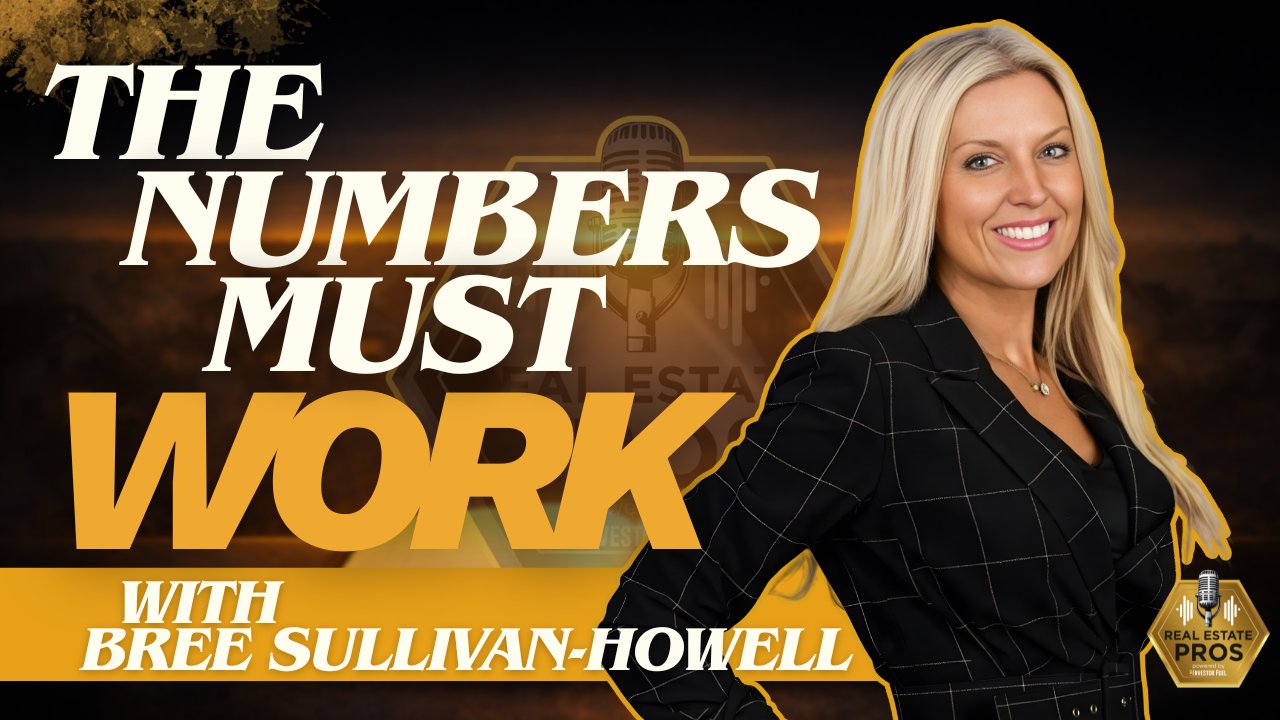
In this episode of the Real Estate Pros Podcast, host Michelle Kesil speaks with Bree Sullivan-Howell, a real estate investor and divorce attorney. Bree shares her journey into real estate investing, the importance of education, and the strategies she employs to manage her properties effectively. She discusses the challenges of navigating the current market, the significance of having a good property manager, and how real estate can serve as a pathway to financial independence, especially for those rebuilding after a divorce. Bree emphasizes the need for careful planning and emotional detachment when making investment decisions, and she expresses her aspirations for future growth in the real estate sector.

Resources and Links from this show:
-
-
- Investor Fuel Real Estate Mastermind
- Investor Machine Real Estate Lead Generation
- Mike on Facebook
- Mike on Instagram
- Mike on LinkedIn
- Sullivan Firm Family Law’s Website
- Crush Your Divorce’s Website
- Crush Your Divorce on Amazon
- Crush Your Comeback on Amazon
- Lawyer Bree on Instagram
- Bree Sullivan-Howell on Instagram
- Lawyer Bree on Tiktok
Listen to the Audio Version of this Episode
Investor Fuel Show Transcript:
Bree Sullivan-Howell (00:00)
If the numbers work, I would certainly consider it. I think that’s what people ⁓ do wrong. They get into trouble when they get emotional about real estate purchases. The numbers have to work on the front end before you get involved for it to work. That’s just been my experience. I think that’s the experience of a lot of people. They get emotional because they just really like whatever that property is or they fall in love with it or have to have it.something and if the numbers don’t work, you’re gonna regret it. So just don’t let those emotions take over.
Michelle Kesil (02:09)
Hey everybody, welcome to the Real Estate Pros Podcast. I’m your host, Michelle Kesil. Today I’m joined by someone I’m looking forward to chat with, Bree Sullivan Howell, who is a real estate investor as well as a divorce attorney, helping people manage their real estate assets through that as well. So, excited to have you here today, Bree.Bree Sullivan-Howell (02:32)
I was so glad to be here.Michelle Kesil (02:34)
Definitely, think our listeners are really going to take something away from how you’re approaching investing and your strengths in organization and marketing. So let’s dive in.Bree Sullivan-Howell (02:45)
Okay, sounds good.Michelle Kesil (02:47)
First off, for those not yet familiar with you and your work, can you share what your main focus is?Bree Sullivan-Howell (02:53)
Well, my day job is working as a family law practitioner here in South Georgia. I handle divorce, child custody, legitimation, parental rights, child support, adoption, that sort of thing primarily. ⁓ But I got into real estate investing back in 2020 when the rates got low, just as a way to diversify my investing plan. And I’ve just really loved it. So I advise my clients in that direction a lot of the time now.Michelle Kesil (03:25)
Awesome. And what markets do you operate in as an investor?Bree Sullivan-Howell (03:30)
Well, I’m mainly in my local market here in South Georgia. We have a pretty strong rental market here in my county. And so the vast majority of my properties are here. I’ve got two Airbnb properties locally and we have a good tourist ⁓ promotion. Our tourism development board locally does a great job of attracting tourism to our area. So our Airbnbs do really well locally. ⁓and I have one Airbnb down on Highway 30A in North Florida on the Panhandle. So that’s more of a short-term vacation market than my local area, but both of them stay rented, thankfully. They’ve both been good ideas.
Michelle Kesil (04:17)
Awesome. So you mentioned you got into real estate around 2020. Can you share what your journey looks like to get started?Bree Sullivan-Howell (04:25)
Well, I just realized when rates got literally to zero and a little above zero, it became an opportunity. When you look at it on paper, at that point, the prices were not high yet. I think our local market doubled or tripled since then in prices. But at 2020, our prices were still reasonable and the rates were super low and the rents could support the⁓ outlay of investment and the monthly mortgage that would be required. So I thought this just makes perfect sense. And so I just started investing like crazy at that point
with the help of my banker, of course, but it was a great idea looking back and has proven to do very well. You can’t do that as much now because the rates went up and the property prices went up and building costs went up. Everything’s increased since COVID of course, but.
At that point, it was a great time to get in.
Michelle Kesil (06:12)
Yeah, absolutely. And how did you get started? Like, did you work with mentors or take courses or just kind of trial and error on your own?Bree Sullivan-Howell (06:23)
Well, during COVID, you we all were at home. And so I had a little more time than I did when I was in the office all the time to listen to podcasts and read books about investing. And I got some really good materials that I dove into and just sort of got educated on it. I had never thought about investing in real estate before because I thought it was just gonna be this big headache and people, they say it so often.as being so difficult to manage practically, just like it’s a big headache. So I just never thought about it. But during COVID, I got into the podcasting world and there are so many great podcasts like yours and like Bigger Pockets, I got into that one. And David Green and I started following ⁓ the ⁓ Kathy Fettke’s podcast. I don’t know if you know her, but she’s excellent. And she gives the updates that are
easy to follow. There are like five minute updates on the latest real estate investing news. I follow all of those people still. ⁓ So I think the materials are out there for all your listeners. There are lots of opportunities to get educated.
Michelle Kesil (07:37)
Yeah, absolutely. So what do you feel are some of the main keys that made the biggest difference in allowing your business to be able to grow and to continue to run smoothly?Bree Sullivan-Howell (07:49)
Well, thankfully I’ve got a really good manager. ⁓ I work a lot in my nine to five, or actually it’s more hours than nine to five if I’m being honest. So I really needed a good property manager and without that I could not have done what I do. ⁓ My mom manages my long-term rentals. She’s a realtor and she’s managed property before. So she’s great with the tenants and stays on top of things like leases and repairs and issues.She does all the busy work for me. I just manage the financial part and my short term rentals are managed by other managers who are excellent. So I think the key is to have a great manager. Without that, you are strapped to the business and it has to be almost like a full time job. And I think that’s when people start getting fatigued with it and give up on it. So I’ve not had that experience. I’ve had a lot of help and that’s been a game changer.
and the marketing we’ve been able to do without really having to pay a lot for it has been very helpful. mean, once you have your properties online and have a presence there in a way that you can promote and share, it becomes a lot simpler. And we’ve been able to get online in a way that was affordable and effective.
Michelle Kesil (09:11)
Yeah, definitely. Can you expand on your online marketing strategy?Bree Sullivan-Howell (09:16)
Yeah, Ijust didn’t want to start a website and have to grow SEO and presence and Google ratings and all of that that I’ve had to do for my law firm. And it took years to build that. ⁓ So I wanted it to be affordable and I wanted it to be eye-catching and get attention. So what I’ve done is I’ve joined all of those like Facebook groups for people looking for rentals and ⁓ I post there and that doesn’t cost anything.
I also have an Instagram page now. It’s Tville4rent with the number four in the middle. My town is Thomasville, so I tried to do a little play on words with that to attract attention to all of my vacancies as they come up. So I post them there
and then I share them to the Facebook groups I mentioned and also to people on Instagram who appear to be looking or they’ll DM me and I connect them with my property manager. And that’s just been really effective.
The other thing I do when I have a vacancy that I really want to promote ⁓ on a broader scale is I do a listing on Zillow. I’m sure your listeners do this too or have seen those. It’s a great spot to list a property and you can do it free of charge if you don’t want to boost the listing and boosting it is only I think 30 bucks or something. It’s not crazy expensive. So what I normally do is just list it there the regular way first with all my pictures and
a great ⁓ chat GPT enhanced description of the property. Once you put that in, you can make a really good description that gets attention. ⁓ And then I boost it if I don’t get a tenant pretty quickly. But again, that’s affordable. And every time I’ve done it, I’ve had a tenant within 30 days. So I recommend that to your listeners as well.
Michelle Kesil (11:45)
Amazing. Yeah, I love how simple that is.Bree Sullivan-Howell (11:48)
Mm-hmm.Yeah, they make it easy. They really do make it easy.
Michelle Kesil (11:54)
Yeah, I think sometimes people want to over complicate because they don’t understand that there are simple ways.So what are you most focusing now when it comes to solving or scaling to the next thing in your business?
Bree Sullivan-Howell (12:12)
I’m back to education again because the market is always changing and right now I’m just bewildered by the interest rates and the cost of everything and the purchase prices. The numbers just are not working on the properties that I’m considering now. The things I like to buy, I can’t buy anymore just in this environment. So I’m back to education mode at the moment, just reading all I can, studying the market, studying what’s happening with the Fed and with rates and with.I’m Trump trying to get those rates lowered. I’m hoping that will happen. And then I’m waiting to see what happens as a result before I dive back in. I’m kind of, I’m nervous at the moment about what to do next. I don’t want to get it wrong, so I’m waiting. I want to get into commercial if I can figure it out. That’s a final frontier for me that I’ve never tried before. But I see other people succeeding with it, so I’m tempted to try it myself.
Michelle Kesil (13:13)
Yeah, amazing. So are you looking to continue to scale and expand and maybe get into these other markets if the numbers do work out in your favor?Bree Sullivan-Howell (13:24)
If the numbers work, I would certainly consider it. I think that’s what people ⁓ do wrong. They get into trouble when they get emotional about real estate purchases. The numbers have to work on the front end before you get involved for it to work. That’s just been my experience. I think that’s the experience of a lot of people. They get emotional because they just really like whatever that property is or they fall in love with it or have to have it.something and if the numbers don’t work, you’re gonna regret it. So just don’t let those emotions take over.
I think we have to just keep ourselves in check and make sure we’re making good business choices. ⁓ But that’s what I’m hoping to do is find something that’s working on paper that I can invest in next that’s gonna be a long-term investment. I’m not really a fix and flip kind of person. I’ve done one.
and I did not enjoy it. ⁓ Just the process of it isn’t fun. ⁓ I prefer to buy and hold and make sure my numbers work on the front end so that I don’t have to worry about it again.
Michelle Kesil (14:41)
Absolutely. Yeah, that makes sense that you found a way that works best for you and your lifestyle.Bree Sullivan-Howell (14:49)
Yeah, I think it’s different for every person. I think everybody has their threshold for tolerance of what they can deal with and tolerate. And some projects are just more trouble than they’re worth to me.But other people are equipped. Like if you’re a handyman kind of person, or you know how to fix things, or you have construction knowledge or licensing, or you’re a realtor, you have certain skill sets that a lawyer doesn’t have.
And you’re maybe more used to these hiccups that come up. I just don’t have patience for it. So I know myself well enough to know what I’m going to do well with and what I’m not.
Michelle Kesil (16:10)
Yeah, that’s important. What are some obstacles or challenges that you’ve experienced as an investor? And now looking back in hindsight, you can see the lesson that you learned.Bree Sullivan-Howell (16:23)
Well, back to that fix and flip I did. ⁓ You have to be on top of your contractors. You’ve got to watch the progress, you’ve got to make sure that work is being done, you’ve got to make sure the invoices are proper and that you’re not overpaying. And when you don’t have a lot of extra time, like if you’re focused on another field of employment you’re in, like I am, it’s hard to focus on all of those things. So either you need a contractor,that keeps impeccable records that you can sort of trust or hand off to another manager or you need to be present every single day, like checking on it to make sure you’re being efficient with your budget and with your time and with getting it back on the market as quickly as you can. I think that’s one thing if I could go back I would do differently with that rehab that I did.
⁓ I just prefer to rent houses. I think it’s just easy. Once you have your systems in place, stick with what you do well. I think that’s the main word of caution I would give to your listeners. Know your skills, know your limitations, and focus on the things you know you do better than the other things in the real estate world. Keep yourself out of real trouble that way.
Michelle Kesil (17:48)
Yeah, absolutely. I think that’s very wise. So as far as your career as a divorce attorney, I know you mentioned that you also guide people through assets and real estate in that process. Would you want to share a little bit on what that looks like?Bree Sullivan-Howell (18:07)
Well, yes,I’m also an author. I’ve written some books for divorcing people just because I saw such a need for literature on the topic. There’s not a whole lot for people going through divorce to read about the process and about how to start over and all of those things. ⁓ But real estate can be a real avenue for wealth creation and growth. And I wanted people to understand that that’s something that’s possible for them.
even if they don’t understand it, you can get educated on it and you can turn a little down payment into an asset worth a whole lot more with someone else’s money. know, rental property has the ability to grow your net worth considerably and sometimes quickly if you get in at the right numbers. So once I figured that out for myself, I wanted the world to know.
You know, really think about that. If you’re rebuilding after a divorce, real estate can be a great avenue for that, ⁓ for you to start over and have your life back on track faster.
Michelle Kesil (19:12)
Yeah, absolutely. So is the way that you kind of recommend it for maybe someone that was used to having like more assets with their partner and then they need to, you know, get a income that’s more stable or what does that kind of path look like when you coach people through it?Bree Sullivan-Howell (19:32)
Well, it’s kind of, yeah, it’s that kind of scenario often. ⁓ Someone who has relied on their partner’s income as well, like in every marriage you are a partnership, so it’s everyone’s income being pooled, and then you go from two incomes to one, and you’re trying to start over a loan. ⁓ Especially for the people getting closer to retirement age, real estate can be a great investment because it creates an income stream for your retirement years. ⁓And that’s another element of it, more than just asset building, it’s an income stream. So you’re not having to work as long or as much if you have an income stream that you’re not paying for. Your tenant is paying for your income stream. And all you’ve got is your investment that you put in upfront and the mortgage you’re paying with the tenant’s rent payments. So your numbers need to be right.
But if they are, it can be a great comfort to a person entering retirement as a single person.
Michelle Kesil (20:41)
Yeah, absolutely. That is helpful. Makes sense. So what are some maybe exciting things that you have in the hopes for your real estate investing journey?Bree Sullivan-Howell (21:01)
Well, I’m hoping the rates will come down and that the prices will stabilize and that numbers start working a little better soon. ⁓ I’d like to expand into some different markets. I’d like to consider multifamily housing as a next step if I can make the numbers work. ⁓ And also maybe the commercial space. I’ve got a vacant lot that I’m thinking about developing when the time is right. And once I figure out what I want to put there, it’s all just kind ofan unknown for me at the moment. I’m like I’m saying I’m just getting educated at the moment on what to do next and what’s the wisest step to take. ⁓ But there’s always hope and there’s always a plan for the next thing. You just have to make sure it’s the right thing before you make a decision. So it’s better I think to spend a lot of time thinking and planning and considering before you pull the trigger on something that’s gonna.
have long lasting implications for your financial portfolio.
Michelle Kesil (22:05)
Yeah, absolutely. Seems like it’s important for you to make sure that the numbers really align before making decisions.Bree Sullivan-Howell (22:14)
Right. I advise my clients that way often as well. Like you’ve got to be unemotional. And that’s a theme in divorce law as well. You’ve got to separate those emotions when you’re making the financial decisions on dividing property and making decisions for your financial future. It’s all the same analysis. You’ve got to separate the tendency to make emotional choices from what is wise from a business perspective and afinancial planning perspective.
I try to live what I preach to my clients and it’s worked well so far.
Michelle Kesil (22:47)
Yeah.Sure.
Yeah, that’s very important. Thank you. So before we wrap up here, if somebody wants to reach out, connect, learn more about what you’re up to, where can people find you and connect?
Bree Sullivan-Howell (23:05)
Well, I’m online at Sullivan-Firm.com and also CrushYourDivorce.com. My books are on Amazon, Crush Your Divorce and Keep Your Faith and Crush Your Comeback for people starting over after divorce. I talk about real estate in that second book called Good Bit. ⁓ I’m on Instagram, LawyerBree, and I’m on TikTok, LawyerBree, if anyone’s interested in those two.Michelle Kesil (23:32)
Perfect, well, appreciate your time and your story. Thank you for being here.Bree Sullivan-Howell (23:36)
thanks for the chance.I appreciate it so much. It’s been lovely.
Michelle Kesil (23:41)
And for the listeners tuning in, you got value, make sure that you have subscribed. We’ve got more conversations with operators like Bree who are building real businesses and we will see you on the next episode. -