Subscribe via:



Show Summary
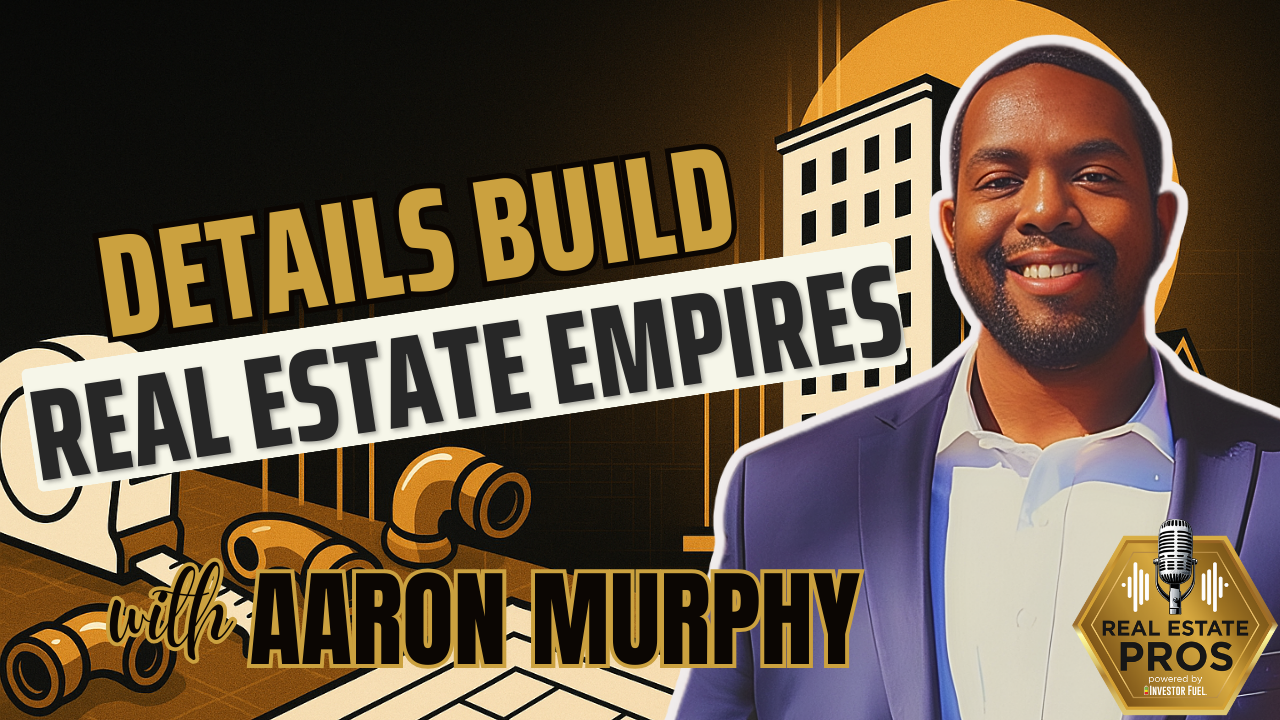
In this conversation, Aaron Murphy shares his journey in real estate, emphasizing the importance of mastering details, community networking, and the BRRRR strategy. He discusses the challenges of property management and the need for professional systems, while also highlighting the value of local meetups and mentorship in achieving success. Aaron’s insights into becoming an expert in the field and his commitment to consistent effort provide valuable lessons for aspiring real estate investors.

Resources and Links from this show:
-
Listen to the Audio Version of this Episode
Investor Fuel Show Transcript:
Aaron Murphy (00:00)
that whole, most of that 70 unit portfolio that I’ve built up at this point was all seeded with about $100,000. So a lot of people think you needed millions of dollars to do that. ⁓But actually it was just that $100,000, which you know, that wasn’t easy to save up, but I was able to save it. And so that’s the main strategy that we’re using. And what we found is, while that is the strategy, you really have to get into the weeds of all the different details along the way in order to make that successful.
Quentin Edmonds (02:01)
Hello everyone. Welcome to the Real Estate Pros podcast. I am your host Q Edmonds. You know what I’m gonna say? I’m super excited to be here. Always, always have amazing guests. But for me today, this one is special. And he’s special because he’s repping my city. He comes from where I’m from and he’s doing a fantastic job. And I love this gentleman because he is focused on the details.Now I know people say that right, but no, this gentleman goes deep. He knows the inner working of his company. You know, the inner workings of the people that’s working for the company, what they doing, he knows how to do. And he wants to make sure that he leads by example. He’s not asking anybody to do anything that he’s not willing to do and don’t already know how to do. And so I am super excited to introduce you guys to Mr. Aaron Murphy. Mr. Aaron, how you doing today, sir?
Aaron Murphy (02:54)
I’m doing great. I appreciate you having me on. It was good talking to you before this. I’m looking forward to the discussion.Quentin Edmonds (02:59)
Absolutely, man. This is gonna be great. Listen, Aaron. Listen, I don’t want to waste no time. I want to go right into it. So I want you to tell people what your main focus is these days. Also, listen, if you want to give us a little bit of an origin story of how you got started with doing what you do, we love origin stories. We love the hero’s journey, right? So we love the origin stories. And also, man, I kind of I said it already, but say it again, man, because I want them to know what what mark is your rep in whatWhat city you repping to? And so Mr. Ernst, the floor is yours,
Aaron Murphy (03:31)
Yes, sir. So I’m Aaron. I’m owner and operator of Redstone Development. We do buy and hold real estate. So we’re basically ⁓ using the burst strategies. So we’re buying properties, rehabbing them, and then renting them out to people and then operating those rentals. And I’m representing Charm City, the greatest city in America, Baltimore, for those that don’t know. And a lot of what we do is pick up properties that have fallen out of the housing supply.So they have lead paint, they might have asbestos, they have all types of problems where people can’t safely occupy the properties. We fix those properties, make them habitable, bring them up to modern standards, and then we put them back in the housing supply to help people get quality housing. So that’s what we do.
⁓ We’re doing construction, we’re rehabbing the properties when we get to the other side. ⁓ That’s what we’ve been doing now for the past, I would say, three or four years. I’ve been in real estate.
⁓ about nine years total, but over the years I used a lot of different strategies. I did house hacking, I bought properties using conventional loans as well. ⁓ I basically had a W-2 job doing software sales in the commercial real estate space. And then I started, I didn’t have enough money to get into the commercial real estate space. So I started buying in the single family space and slowly picked up properties along the way. ⁓ As I picked up those properties along the way, I learned more, I made a bunch of mistakes.
Learned even more met a lot of people that helped me grow and then the end product of all that is that today we’re up to about 70 units in the portfolio or growing each the last couple years we bought 18 18 or 20 properties we expect to continue that And it’s been an exciting journey. I’m excited to talk to you about it today
Quentin Edmonds (06:01)
Man ⁓ man. ⁓ man. I love it, bro I love it if your mommy asked you bro. Why real estate man? Like when did the bug for real estate really hit you man?Aaron Murphy (06:11)
Yeah, absolutely. So my story with regard to real estate is a little bit different from other people. I actually got exposed to real estate when I was really young. So when I started out, I was exposed to rich dad, poor dad, and some of those different concepts really as a kid. The first one of those books I actually read was, I think it was called like Rich Kid, Smart Kid or something like that. I think it was a kid version of the same book. So I was exposed to all that. But while I was exposed to real estate at a young age, what I actually saw in practicewas that it was always like we were trying to hit this home run deal or do some kind of flip and it never really panned out. So I remember working a whole summer on this one house, carrying shingles up on the roof and things like that, nothing came of it. ⁓ And so because of that, I was, the people who heard me say this before, I was pretty much set that real estate was basically a scam. I thought it was like, okay, 80 % scam, not going down that path. ⁓ But then when I got into working a job after school, ⁓ after undergrad,
I was kind of looking around and seeing on the one hand, people had a lot of things that I wanted. had, you know, these upper middle class lies. had boats, they had different things that I thought would be nice. On the other hand, they didn’t have any freedom. didn’t have any control of their time. We’re sort of, we’re sort of jumping at the beck and call of the guy that owned the company and you know, he paid us well. I was happy to be there, but I realized this isn’t what I want for my whole life. So from there, I’m a pretty analytical person.
I was thinking, how am going to get some freedom? How am I going to use some of these concepts that I heard about and set aside to get back to freedom? So I looked at different options. I looked at stocks. I needed about $2 million worth of stocks. didn’t see how I was going to save up $2 million. I was making like 50 grand a year at that time. So I was like, I don’t take forever. Then I looked at things like bonds. looked like I needed a bunch of bonds too, like maybe a million and a half dollars worth of bonds, you know, if I wanted to go that route. And finally, real estate looked like
something I could actually do. I didn’t quite know how to get 10 or 15 houses, but I felt like, I felt like, okay, regular people buy houses. I should be able to figure this out. And so I started my journey of trying to understand how to get control of these houses. So that was why real estate, I was really seeking freedom and it just seemed like a better option than, you know, working for 20 or 30 years, trying to save $2
Quentin Edmonds (08:22)
Man bro, thank you, man. Thank you that even gives me more perspective on when you say you’re a detail oriented guy Like when you say you’re analytic like you threw out the numbers. I need this amount this this these millions to do what I need to do. Okay, all right Brain working. Okay. I can’t quite get there after 50 thousand dollars a year. Okay. What’s the next step right? And so I love it man I love it how you naturally progress and that is it’s interesting because now I want to put you pick your brainsyour brain when it comes to strategies, right? Like I would love to know what are some of the business strategies you use and actually what some of the personal strategies you use. When I say personal strategies, you know, you got people that, you know, go to the gym, people do ice plunges, like people do meditation. Like there has to be a strategy, I believe, that centers us when we need to be centered, right? And so I would just love to know business strategies, personal strategies that you use to help you succeed.
Aaron Murphy (09:51)
Yeah, absolutely. So I guess I’ll start with the business strategies and then go over to the personal strategies. So in the business world, ⁓ the number one thing, the main strategy that we’re using is the first strategy that I mentioned initially. And that’s not anything that we’ve invented. We didn’t come up with that. There’s a lot of investors that are using that strategy. ⁓ But the core of it is that we’re taking money, we’re buying a house, fixing that house up.And then because we’ve fixed that, we’ve added enough value that we can get a new loan, recover our money. And then because we’ve recovered our money, we can keep using that money to buy the next property. So it’s a form of leverage where we can buy more and more properties over time utilizing the same amount of money.
that whole, most of that 70 unit portfolio that I’ve built up at this point was all seeded with about $100,000. So a lot of people think you needed millions of dollars to do that. ⁓
But actually it was just that $100,000, which you know, that wasn’t easy to save up, but I was able to save it. And so that’s the main strategy that we’re using. And what we found is, while that is the strategy, you really have to get into the weeds of all the different details along the way in order to make that successful.
Because there’s so many opportunities to fail. If you go into trying to rehab the property and you get your construction estimates wrong,
you can end up ⁓ losing money instead of making money and put yourself out of business. ⁓ I almost went out of business in my first year and I had to, that’s when I first really got into the weeds of construction all the way down to what type of droppier elbows I was gonna use for the shower, piping. I got all the way into the weeds so that I wouldn’t go out of business. ⁓ So as far as business strategy, it’s that burst strategy, but also going into the details of everything, of leasing, of construction.
of becoming an expert in every element of what you’re trying to do. ⁓ And I don’t mean an expert in the sense of like, like your CPA will know more about tax than you will, but I’m, but I’m not a fan of sitting at the level of I’ve got a tax guy, so I don’t worry about tax. I’m a guy that’s going to read two or three books about tax. I’m going to find out not just about the 1031 exchange, but who are the actual qualified intermediaries that you can use to execute a 1031 exchange.
I’m going to find out what are the actual percentages of what I can write off for business wheels. I’m going to learn as much as I can reasonably learn. And then I’m still going to work with an expert, but I’m not a person that just sort of gets someone that knows how to do that so you don’t even know how to do it. And that actually leads into the second part of what you asked me, which is about personal strategies, which is in the personal realm. A lot of my approach to personal development and self-development is directly tied to that idea of how do you become an expert.
But just in my personal life, could be applied to multiple different things, not just business. But the idea is there’s really two parts that are very important to it. One is that being an expert is not as… Being an expert relative to the people around you is not as far away as you think. If you were to go do one or two… Like I went and worked alongside some guys for five months doing a gut renovation. I’m not suggesting everybody to do that.
But having done that, I already have more tangible real estate construction experience than people that have been in the business 20, 30 years hiring other people to do it. Now there’s skills I still need to learn, like how do I manage a project and all of that. But if we start talking about construction, like do you want, you know, four by 12 or four by eight sheets of drywall going in Leroy House in Baltimore? I can tell you we want four by eight because if we don’t do four by eight based on the clearances as we’re trying to get up the staircase,
There’s a lot of layouts of Baltimore row house where we can’t even get the drywall up the stairs. So then we have to take a window and load it through the second floor of the property. I know these details because I’ve stood there with the 12 by four sheet that I wasn’t supposed to buy trying to try to get it up the stairwell. So, ⁓ so, so, so you, so my point is you don’t have to do it for 30 years to start becoming an expert. But the second thing is, ⁓ just incremental progress. ⁓ does inconsistency isn’t a flat line. Consistency is actually.
Some days you do 90 % effort, some days it’s 30 % effort, some days it’s 110 % effort. From the outside it looks like, oh, he’s always working, he’s always learning, but I’m not. I have one day’s off days. And so I would tell the audience that for yourself, that’s what you want to just create, a consistent line of effort that is, all that means is consistently putting effort. It doesn’t mean that the effort itself is consistent. The effort might move up, it might move down. But if you do that over a period of time,
most things if you focus on them for six months a year, you’re going to start to be already in that top five, top 10 percentile as far as education on that topic. And that’s what I’ve done with real estate, but for 10 years. And hopefully I’m hopefully I’m getting into that to.
Quentin Edmonds (14:34)
theAaron Murphy (14:36)
Yeah, so that’s the key from personal development perspective is focusing on that consistent effort and trying to really apply yourself towards things in a focused manner. And if you do that, I’ve chosen to that towards real estate and that specific business strategy. Those are the two things that helped me be successful.Quentin Edmonds (14:55)
man, brother, I love listening to you talk, man. Like, I love the way your brain works. There’s a study that says if you put 10,000 hours to anything, become an expert. And so that’s what you talking about, putting the time in, putting the hours in. Like sometimes, you yeah, you haven’t been technically trained with it, you know, it may not even come easy to you or innate to you, but if you put in those 10,000 hours,You want to become an expert at what you do. And I hear what you’re saying. It’s not saying I’m not saying I’m I’m lofty thinking. I’m not saying like I’m the best, but I’m saying if I put the work in eventually, I’m going to figure this thing out and I’m going to be a master at it. ⁓
Aaron Murphy (16:16)
No, you’re absolutely right. I would agree with you on that. And I would just add only one small thing to that. I totally buy into that idea of the 10,000 hours, like particularly when you start talking about like, you know, a Tom Brady level of mastery or these really like high levels of mastery. And you do have to know that that takes time and commitment over an extremely long period of time, but you will actually find that getting into the, let’s say that’s the 1 % of the 1 % level of mastery. You actually can get into the top 10 % level of mastery much.with much less, I don’t wanna say less effort, because that’s not the idea, but it doesn’t have to take you 10 years. ⁓ For example, less than 10 % of Americans, I forget the exact step, but it’s like less than 10 % of Americans own more than five properties, just as an example. But getting to five rental properties is not a crazy goal that no one could do, but you just clear that, you’re already in the 10%. And that doesn’t take you 10,000 hours, that might take you two hours.
⁓ per week for a year, right? And ⁓ so it’s like, it’s closer than you think, but you’re right. When you go into that, do I get to that true mastery of like, you know, start building a bigger business and all of this, then you’re talking more about a commitment over many years.
Quentin Edmonds (17:27)
And again, I love the way you talk. I love the way you synthesize things because you’re right. We don’t want people, we want people to shoot for the stars, but we want to let them know, like, if you just put the effort in, it’s actually closer than what you think it is. Like, you know, and we don’t have to be too lofty. Like when you talk about be consistent, I always say, Eva, I’m going be consistent or I’m going be constant. I’m going be one of the two. Sometimes consistency is doing the same thing the same way.all the time. Sometimes constant is I stopped, I had to take a different strategy, but I did not lose my effort. I didn’t keep doing the same thing, but I didn’t lose my effort. And so I hear you, man, you’re giving people the opportunity to say, hey, I can shoot for the stars. Or right now I can just shoot for these clouds. Or right now I need to shoot for the sky. I’m going throw it up in the sky. It’s going to hit the sky one way or another. I don’t know how high it’s going to go up, but it’s going to hit the sky because I’ve been throwing it up, right?
I think it really motivates people and put things in perspective to just put in effort. That’s just put in effort. And the more you put in effort, the more drive will come, the more routine will come, the more repetition will come. And so I hear you, man. Hey, you clear this up.
Aaron Murphy (18:40)
You’re hitting that exactly, and that’s the only other thing I would add is, you know, the next step will become clear as you learn more. And so that’s exactly what you were just saying is a lot of these things that people turn around and say, this person has so much drive or so much structure or whatever, it didn’t start that way. It’s this incremental progression towards that. you know, start small and it’ll build. Yeah.Quentin Edmonds (19:07)
⁓ I was just, I was talking to a great friend of mine, my childhood friend. I’ve literally watched this gentleman when we first became friends, he didn’t have a suitcase. He was carrying his, ⁓ overnight stuff in a trash bag. And, ⁓ and now, you know, just, you know, bought a, a, a beautiful home, very, very just doing great. And, and, and sometimes I get stuck in comparison. I’m gonna give you a transparent vision and transparency. Sometimes I get stuck in comparing my life to other people.And we’ve been friends, I mean, for now we’re talking about maybe almost 40 plus years, maybe, you know, 38 plus, something like that. And I told him, said, man, I said, you have mastered how to prioritize life. Like, you know, like how to balance life, you know, like, you know, and sometimes I don’t believe in multitasking. There’s a study that says multitasking is like driving and inebriated. Like you really just have to prioritize something.
And understand that once you finish that this thing may have to wait for right now because this is what you’re focused on. And so, he, you know, he hit me. He said, bro, he said, I appreciate that. He said, you want to know what my number one strategy is that has built momentum for me? He said, is that I get up early. He said, I attack the day before everybody else. He’s like, so if I got to go to the market, I’m going be the first in line. If I got to do something, I’m just going to be first in line. He was like, and for me, that strategy.
has just really helped me all my life just to be first. He was like, I’m not, it’s not that I’m better. Sometimes it’s not that I’m working harder. He said, this is the strategy is that I’m first. And he’s like, but that’s worked for me. And so man, everybody got to find their strategy that works for them. You know what I mean?
Aaron Murphy (20:49)
Absolutely, I can that for sure. Yeah, would say mine, if I had to distill it down to that simple of a term, would be just do a little bit each day. So there’s days when I do a lot, there’s days when I do more or less, but almost every day I do at least something. And so it’s always building forward.Quentin Edmonds (21:06)
Yeah, I love it, man. I’m loving talking to you, Aaron. Listen, man, what’s the next real goal for you and for Redstone, man, development? What’s the next real goal, bro?Aaron Murphy (21:15)
The next goal for us, we think that the most success is going to be if we’re vertically integrated. So that means basically all the steps of what we have to do are in-house. So many of the steps are already in-house. We do construction in-house. We find properties on our own. We do lot of leasing on our own. We do the property management. But that last up of the property management, we want to make that more professional. Instead of it being me sending texts and talking to my VA, we want to have it be a full management company where we have systems, processes.employees, know, withholding FICA taxes, all that fully operational stuff, where we go from being kind of mom and pop ish, even though we’re have a good sized business, all the way to being a real business where we’re, you know, to to banks, it’s the IRS and everyone were sort of fully structured the right way on the property management side. So that’s kind of what we’re working on working on hiring people right now and struggling a little bit with that, learning to delegate and
and work with people, ⁓ give them, ⁓ you know, not holding people to my standards of perfectionism, understanding, ⁓ you know, if they can hit it 80 % or they can do 90 % of what I want. That’s enough, and that’s how you build an actual business, not by burning everybody out, trying to make them be perfect. So that’s what we’re working on, and we’re excited about it. I’m taking a lot of strides right now. I’m actually managing the business right now. I’m currently in South Korea.
⁓ And I’m still operating what we’re doing over there just on a trip. So we’ve made good strides, but we’ve got farther to go.
Quentin Edmonds (22:45)
Absolutely, man. You said you travel that was one of the parallels I got to travel today go out of town you in South Korea I’m just going to Virginia and I’m about traveling I’m going to Virginia tonightAaron Murphy (22:57)
That’s cool man, I grew up in Virginia. Don’t speed, they’re really serious. Not so much in Northern Virginia, but the rest of Virginia, they’re really serious.Quentin Edmonds (23:08)
Thank you for that I will keep that in mind man, I’m I know we coming up on time But I had to ask I got to get your perspective when it comes to relationship building because it sounds like to me You know how to build really good relationships And so I just got a brief you talk about how has building relationships or has building relationships impacted you business?Aaron Murphy (23:32)
For me, it’s been huge. I see a lot of people, I know a lot of people that they’re ready to start investing in real estate. They’re right about to start just as soon as they find the right mentor. And they told me that 15 years ago or six years ago, seven years ago. So for me, it’s not that you don’t need mentorship, you don’t need people to help you. But what I’ve found is it’s less about hitting that home run, finding one person.Picking someone’s brain at coffee and it’s more about exactly what we’ve been talking about Where you sort of show up and do a little bit and do a little bit in a little bit And so what I as an example of that in our area We have a local meetup that I’ve gone to every single week for about five years I started there when I didn’t know almost anything about the local market about Baltimore ⁓ I didn’t even know like the zip codes and all that and then now I’ve come to the point where I’m able to help other people in the group and by showing Up there. I was able to ask questions
Those people helped me with everything from how do I install a threshold in a property all the way up to how do I set up master key skeletons, key systems for my rentals. They helped me with so many different things. I wouldn’t be able to be where I’m at at all without those people. And so think you’ve got to seek out communities where people can help you. And national platforms are great. They can be helpful as well, but definitely also seek out local platforms, particularly if you’re in one of these cities like I’m at that’s very unique.
You know, Baltimore and like the sort of Detroit’s, they call them post-industrial cities. They’re very unique. So find people in the local area. And if you want to go the whole paid mentorship route, okay. But ⁓ I think that you’re better off getting around people that are really doing what you’re wanting to do, asking them a bunch of questions and take action. People love to help people who are actually taking action. ⁓ And I know that from experience. I’ve been helped by more people than I can count.
Quentin Edmonds (25:16)
Absolutely. Man, Aaron brother, this has been so good, man. Listen, before we wrap, if someone wanted to reach out to you, connect with you, learn more about what you’re doing, how can they reach out to you,Aaron Murphy (25:28)
Yeah, I’m on I’m on social media. They could reach out to me on both Facebook or LinkedIn It’s just Aaron Murphy and you’ll see it’s redstone development ⁓ I love talking real estate and happy to help people Probably be of most help to you if you’re looking to invest in Maryland We’re mainly in the Baltimore area But I also we also have properties in Washington County Prince George’s County in a Rundle County, Hartford County so if someone is interested in ⁓ sort of talking shop about real estate orOr your landlord who’s kind of growing your business trying to professionalize like I am you just want to talk shop reach out to me I’m happy to talk with you and I’m helping you whether I can
Quentin Edmonds (26:03)
Absolutely. Well, listen, y’all heard him, Mr. Aaron. Thank you so much. Thank you for your time. Thank you for your story. Thank you for your perspective. I really mean it, man. I love the way you think. I love the way you synthesize things, put things into perspective. So man, thank you so much for being here. This was a pleasure.Aaron Murphy (26:18)
Appreciate it.Quentin Edmonds (26:19)
Absolutely. Well, listen y’all got the value. You can’t tell me you ain’t get the value for mr Aaron So go ahead and subscribe that way you can continue to come back and just see these amazing people just like mr Aaron that we continue to bring up and so Mr. Aaron, I thank you again. And so everyone else we will see you on the next time