Subscribe via:



Show Summary
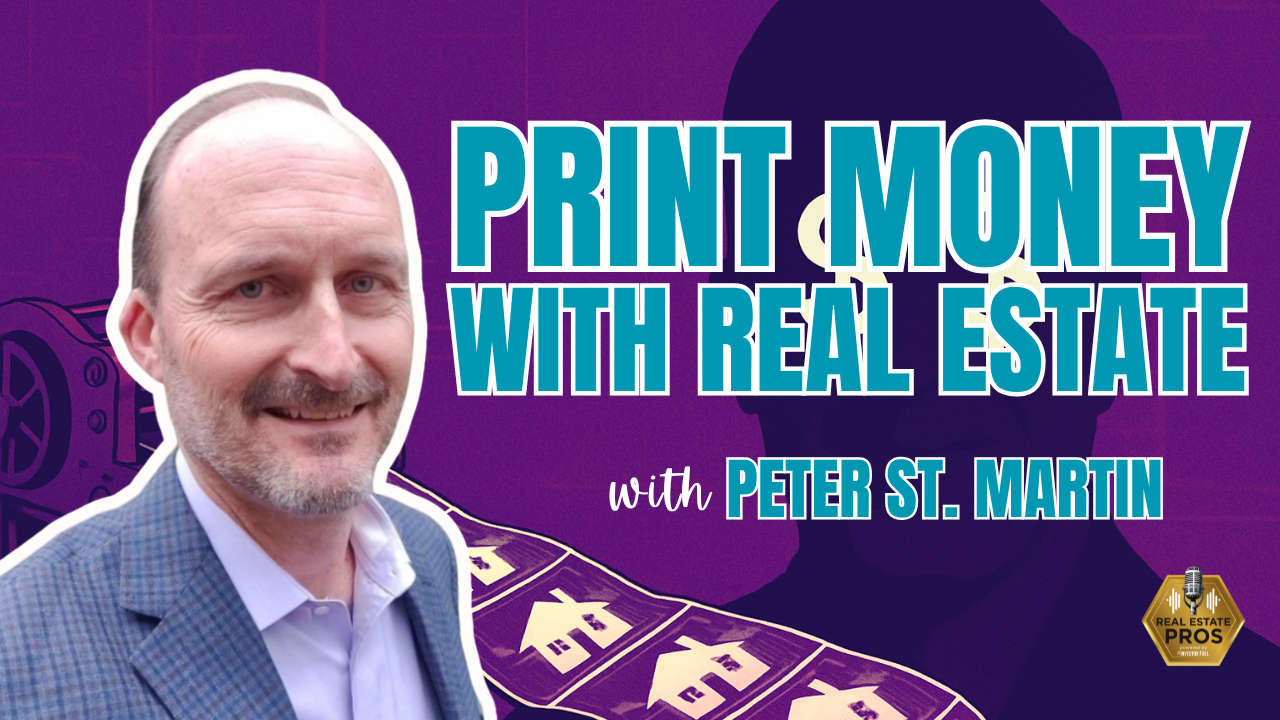
In this conversation, Peter St. Martin shares his extensive journey in the real estate industry, detailing his transition from corporate jobs to becoming a successful lender and investor. He discusses the challenges faced during the 2008 market collapse, the lessons learned from that period, and his current focus on innovative real estate opportunities, including RV parks and affordable housing solutions. Peter emphasizes the importance of adaptability in real estate investing and shares insights on how to navigate the current market landscape.

Resources and Links from this show:
-
-
- Investor Fuel Real Estate Mastermind
- Investor Machine Real Estate Lead Generation
- Mike on Facebook
- Mike on Instagram
- Mike on LinkedIn
- Peter St. Martin’s Website
- Peter St. Martin on Instagram
- Peter St. Martin on Facebook
- Peter St. Martin’s Phone number: (678) 948-6855
-
Listen to the Audio Version of this Episode
Investor Fuel Show Transcript:
Peter St. Martin (00:00)
$700,000. And you know, this is back in
Like that’s still a lot of money, but I almost fell out of my hair. I mean, he just funded $140,000 deal. That means, let me see the math. I could do four or five more deals with it. Three months later, he had $1.2 million on the street.
Dylan Silver (00:06)
Yeah.
Peter St. Martin (00:18)
I just kept coming back to them with more deals and you know that generated $35,000 for me in my pocket. like holy cow it was like a money printing machine.
Dylan Silver (02:01)
Folks, welcome back to the show. Today’s guest is based in Roswell, Georgia in the greater Atlanta area and specializes in residential fix and flip loans for single family properties. Please welcome Peter St. Martin. Peter, welcome to the show.
Peter St. Martin (02:18)
Thanks Dylan, happy to be here. Pretty excited actually.
Dylan Silver (02:20)
I always like,
it’s great to have you Peter. I always like to start off at the top by asking folks how they got into the real estate space.
Peter St. Martin (02:27)
Yes, man, that’s all you’re really taxing my memory here it’s been so long I don’t remember not being in the real estate space, but you know, I’ve always been an entrepreneur I had a lot of corporate jobs. I had plenty of you know sitting at a desk w2 type stuff But I’ve always had an interest in real estate. I didn’t act on that until about 1999 2000 maybe
Dylan Silver (02:32)
Ha ha ha!
Peter St. Martin (02:52)
And I had the Carlton Sheets CDs. You may be too young to even know that name. I was a Ron LeGrand student back in the day. And I just started, you know, consuming education. And then I started just calling again. They used to have these things called newspapers. You may have seen one. And I would call on ads in the newspaper to try to buy houses and fail.
Dylan Silver (02:55)
Yeah.
Peter St. Martin (03:16)
was miserably at that. And then I heard about Ron LeGrand in-person seminar. I was sitting in another seminar at the time. Ron’s pitching this thing. $6,000 course, whatever. But today, special only, $1,500, and you can bring your partner. And I looked over to the guy next to me. We’re in Fort Lauderdale or Miami. can’t remember which. And I said, you want to go Houston with me in a couple of weeks? He said yes.
Dylan Silver (03:37)
Yeah.
Peter St. Martin (03:40)
I
went to Houston, I came back, I did some of the things Ron said, and I bought four houses in six weeks. And that’s how it all started after making calls for weeks and weeks and months and having no success whatsoever.
Dylan Silver (03:47)
Holy smokes.
I want to pivot a bit here and ask you about going from W2 to real estate because I know this is in the early parts of your journey, right? And it’s since scaled and pivoted. But what was that transition like? did you do, it like a pivot or was it a little bit kind of transitioning out and then going full time with real estate?
Peter St. Martin (04:13)
Yeah, so that’s another interesting question. You know, that’s that’s different for everybody and the way it worked for me. It just was like serendipity. I was working in the IT field. was managing managing a small team of IT developers, but I had already gotten into lending and I was doing.
at least one deal a month, maybe two deals a month at that time. And that was enough to make more in real estate than I was making at my job. we, was working on a big project for the state of Georgia and the state pulled the plug on the project. Actually, no, okay, my son was born and thank you Bill Clinton, I took advantage of the Family Medical Leave Act.
Dylan Silver (04:42)
Well.
Peter St. Martin (05:43)
So I got, what was it, 12 weeks or something like that? You didn’t get paid, but you got to keep your job for those 12 weeks. So I took that time off, went full time into the business. It was going so well, I was gonna go back to work and put my two weeks in and quit. The state of Georgia pulled the project in the middle of my family medical leave act and the whole project, everybody got laid.
Dylan Silver (05:51)
Yeah.
Peter St. Martin (06:09)
off.
So they can lay you off if they lay off the whole group. So I got laid off in the middle of my family medical leave act and that was it. I did go back that was like what year was that? Gosh that was 2000? Yeah I can’t remember maybe 2000 probably 2002 2003.
Dylan Silver (06:15)
everybody at once.
Peter St. Martin (06:30)
Then when 2008 hit and business just stopped, I did go back to corporate world again and got my securities license and got into financial advisory. But I only did that for about four years and I came back to real estate full time.
Dylan Silver (06:45)
Early 2000s, great time to be kind of getting your sea legs in the real estate space, right? Early early 2000s.
Peter St. Martin (06:48)
Oh, amazing.
You couldn’t, anything, it didn’t matter how good you were, how bad you were, everything you touched turned to gold and the market, you you did nothing but tail, know, tailwinds, just filling your sails and pushing you forward. I saw lots of bad deals, just work out just fine and then wow, did that change in a hurry in 2008.
Dylan Silver (07:11)
I speak to so many people who were in the business at that point in time. A lot of lenders came into the business and went out of the business because you were seeing a lot of people making money kind of hand over fist on the traditional mortgage side and then that just evaporated because if you had a pulse and a part time job here’s a house. But then after that you get Dodd-Frank and you get all this compliance and regulation and restriction and it’s now a lot more challenging.
to get a mortgage today, but I want to ask you about going through those pivots. You mentioned getting in, going full time, going back, getting back in. Did you ever at any point in time look at this and say, what’s the 15, 20, 30 year plan when it comes to real estate? And what is my portfolio or how do I want to structure my life around this? Or was a lot of it really figuring out on the fly?
Peter St. Martin (08:01)
Yeah, I mean, I would say a combination of both, right? I think back to when that collapse happened and it was way more than Dodd-Frank, right? Because the collapse happened, then Dodd-Frank comes out of that. So there’s this period in between where literally the credit market evaporated. There was no, nobody was lending money. So we couldn’t do any new loans because
Dylan Silver (08:16)
Yeah.
Peter St. Martin (08:23)
Nobody, there was nobody there to lend to somebody to take us out. So we just stopped doing, I was doing five to six loans a month in 2007, slowing down in 2008. In 2009 I did three loans all year. And the total was $75,000. I mean wasn’t making a living doing loans. So I got into the car business, I got into securities, but I lost track of your question.
Dylan Silver (08:48)
The ability to pivot, think, is a hallmark of a real estate investor, someone who’s been doing it a while. also, I ask folks this, it’s almost hard to have an idea in your head, like, this is exactly what I want my business to look like, because you really don’t know. I feel that way. I used to think, this is exactly what I want to do. I used to say to myself, I want to be a commercial realtor. I want to get involved in commercial. Now I’m like,
I don’t know if I want to be involved in commercial at all because it went through COVID and we saw things come back and now I’m thinking I like land deals. But ultimately, I just know I like real estate and I want to be involved in the real estate space. But I don’t really know which vertical I’m going to be in even in five years. Did you have that kind of same mentality or were you more like, hey, I’m the lone guy. This is what I do. I love loans and this is kind of the space that I’m playing in.
Peter St. Martin (09:26)
Yeah.
Yeah, so the loan thing just happened. It was not I never set out a plan to be a lender. In fact, I’ll back up a little bit and tell you a quick story. We were I met a bunch of guys at the local RIA group. Georgia RIA was a big organization at the time, one of the largest in the country. But you go there, there’s 200 people, maybe more. And there’s a very small percentage of people that are actually active and doing deals. So I found some of those people.
we’re lending to each other. I’m lending to Chris out of my IRA, Chris is lending to Jeff out of his IRA, Jeff is lending to me out of his IRA.
So all of a sudden people start hearing that I’m a lender. Well one day I get this call, it’s like, hey, I heard you’re a lender and it kind of caught me off guard because at the time I was just trying to buy. That wasn’t my business, I wasn’t trying to lend. I was just lending for convenience and so they would lend to me. I was like, okay, cool, yeah. And then I need $145,000, here are the numbers, here’s the deal. Okay, let me see what I can do. I hang up the phone, I’m like, I don’t have $100,000.
We were lending 10, 20, $15,000 out of our IRAs. And I picked up the phone, I made two phone calls and funded that deal. And I was like, wow, okay, this is interesting. So I call that guy back after we get the deal closed. I’m like, hey, Pat, how much money would you want to invest in these types of deals? He hasn’t received a payment yet. We just closed it, right? He funded, he doesn’t even have his paperwork yet.
He’s like, oh, I don’t know,
$700,000. And you know, this is back in 2002. Like that’s still a lot of money, but I almost fell out of my hair. I mean, he just funded $140,000 deal. That means, let me see the math. I could do four or five more deals with it. Three months later, he had $1.2 million on the street.
Dylan Silver (11:42)
Yeah.
Peter St. Martin (11:54)
I just kept coming back to them with more deals and you know that generated $35,000 for me in my pocket. like holy cow it was like a money printing machine.
So anyway that’s how I got in.
Dylan Silver (12:08)
That’s how you got in.
Peter St. Martin (12:09)
It pivoted into the business, didn’t really have a particular strategy around lending. Then when 08 happened and the lending stopped completely, I remember I put out a post on Twitter and the post said something to the effect of, 10 years from now, we are going to be kicking ourselves if we didn’t buy as many rental properties as we possibly could. I knew that. I absolutely knew that. But I was pretty shell shocked by my business just ending. People didn’t get hurt. It just stopped.
I couldn’t do deals anymore. I couldn’t continue to make money that way. I just, lost the, if I had had the confidence then that I have now to continue to raise capital, ⁓ my gosh, I would have bought more houses and you could shake a stick at. And one of my lenders did just that. He bought about 400 homes in that time period. He has a cat, he still owns most of them. couldn’t turn off his cashflow if he wanted to.
Dylan Silver (12:42)
Yeah.
I want to ask you about that. That time…
That time period, mean, hindsight is of course 2020, but it didn’t end, really, depending on how you look at it, until somewhere between 2010 and 2012 is when people started kind of waking up from that situation, right? So is the strategy like, you have to buy and then if people can’t afford or if whatever the, it’s not cash flowing, you basically just have to hold on for five years? Is that the kind of…
You buy right because it’s so cheap everything is like a fire sale but you might have to hold on to it for years. Let’s call it four years before you can sell it.
Peter St. Martin (14:19)
Yeah, yeah, you know what’s interesting looking back on it now in 2009 specifically I bought four houses that year so I did the right thing but I should have bought 40 right like those four houses alone if I still owned them would pay all of my bills today. It wouldn’t create any it wouldn’t create massive lifestyle but and I would also be able to pull a half a million dollars in equity out of them if I just kept them.
Dylan Silver (14:34)
Holy smokes.
Peter St. Martin (14:42)
So that was a huge mistake to sell them. But yeah, I mean, one thing I would say, like.
People are like, well, the market’s high. don’t want to buy now. Interest rates are too high. Inflation is real. Inflation is not going away. The government’s going to keep printing dollars. You have to own assets. Don’t wait to buy real estate. Buy real estate and wait. That’s the famous quote, right? Now, that said, I don’t buy retail, right? I look for deeply discounted deals. so when you get connect people like us, you can learn that because the average person out there on the street doesn’t know
Dylan Silver (15:02)
don’t.
Peter St. Martin (15:16)
there’s a wholesale market for real estate. And we can help the retail buyer get into deals creatively and on the wholesale market. And that’s a whole other just huge strategy within this world. So back to your other question, what am I going to be doing in real estate in five years? I’m not sure.
Dylan Silver (15:18)
Right.
Peter St. Martin (15:32)
I take it a day at a time. I make a plan, right? And I’m focused on right now. My focus is social media and getting my brand out there and getting people to know me because I have so much knowledge in this space. I know I can help thousands of people. And that’s what I’m up to right now. But am I going to be buying RV parks? Am I going to be buying self storage? Am I going to be buying office buildings? I suspect I’m going to own all of those is the reality because I have
Dylan Silver (15:33)
It’s hard to say. No one yet.
Peter St. Martin (16:00)
that
that are experts in all of those spaces.
Dylan Silver (16:03)
I want to talk about the RV park and self storage is another one, but RV park specifically because it’s a really interesting real estate play. makes use of both vacant land. It also makes use of aging RV parks that are currently existing. And then it also addresses this idea of the affordability of living. ⁓ And people don’t really see that. I think a lot of people might say, well, RV,
Peter St. Martin (16:22)
100%.
Dylan Silver (16:28)
I’m from Northern New Jersey. I didn’t see an RV growing up. I live in Texas now in a suburb of Dallas and ⁓ we see a lot of RVs. There’s an RV park half a mile away from where I live. oftentimes it’s kind of like, well, if it’s out of sight, out of mind. Now that I’m in the investing side of real estate, it’s almost like the red car thing. Every time that someone says RV park, I see more RV parks. Just like when someone mentions red car, you see more red cars.
And so I really do think like there’s a huge, huge, huge opportunity in the RV park space and like offsite modular homes that you can build and in any of this kind of alternative cost effective housing. I’m curious to get your take on that.
Peter St. Martin (17:10)
Absolutely. that’s like, I mean, it’s a very attractive space because they’re cash cows, right? They generate a lot of income. But like you said, it’s also solving a major problem in or at least helping to solve the major problem in the market right now with affordability.
People just don’t have the options. They cannot can’t even afford apartments. Never mind buying a house. I mean, there’s a brand new apartment complex there I can see it looking out my window People are paying 50 to 75 percent more than I pay to live in my house in a high-end neighborhood To live in those apartments now, they’re brand new and they’re nice, but they’re apartments. They don’t own
Dylan Silver (17:32)
Yeah.
Yeah.
Peter St. Martin (17:48)
So it’s brutal out there. These people are just throwing so they can’t save money. So, yeah, it’s that’s I’m I’m a big fan of mobile home or, know, we say RV parks and mobile home RV parks, kind of the same concept. A lot of these things are not they’re fixed, right? They don’t have wheels. They’re they’re a permanent structure. And some of them, they’re they’re not it’s doesn’t they have such a stigma, right? Some of these places are nice, like really nice.
Dylan Silver (17:51)
It’s brutal.
Same idea,
I know.
and RV parks. Yeah, I’ve seen some of them and I’ve had guests tell me that there’s attractions, know, rest drive. I haven’t seen all of that but I believe it and again I know it’s out there. Peter, we are coming up on time here. Where can folks go if maybe they’d like to reach out
you or if they’ve got a deal
in the greater Atlanta area for you to look at or if they’d just like to get in contact with you?
Peter St. Martin (18:39)
Yeah, so you know, like I said at the beginning, I don’t even have a website which I absolutely have to fix, especially now that I’m getting so much more active online. I’ve got to have a place to drive people. But I’m on Facebook. It’s just Peter St. Martin. You’ll find me if you search for that on Facebook. On Instagram, I’m Peter St. Martin 87. That’s no period, just Peter St. Martin 87. I mean, I don’t know if it’s appropriate to put my phone number out there, but I don’t have
Dylan Silver (19:05)
Go ahead.
Peter St. Martin (19:06)
I’m doing that so you can reach me anytime at six seven eight nine four eight six eight five five six seven eight nine four eight six eight five five now I would recommend texting me I get so many phone calls and if you if I don’t answer Definitely text me because I have so many missed calls. I can’t follow up on all of them. There’s just it’s not possible
Dylan Silver (19:31)
Peter, thank you so much for coming on the show today.
Peter St. Martin (19:35)
Hey, thanks Dylan. I really appreciate it. Enjoyed it. I look forward to talking to you again.