Subscribe via:



Show Summary
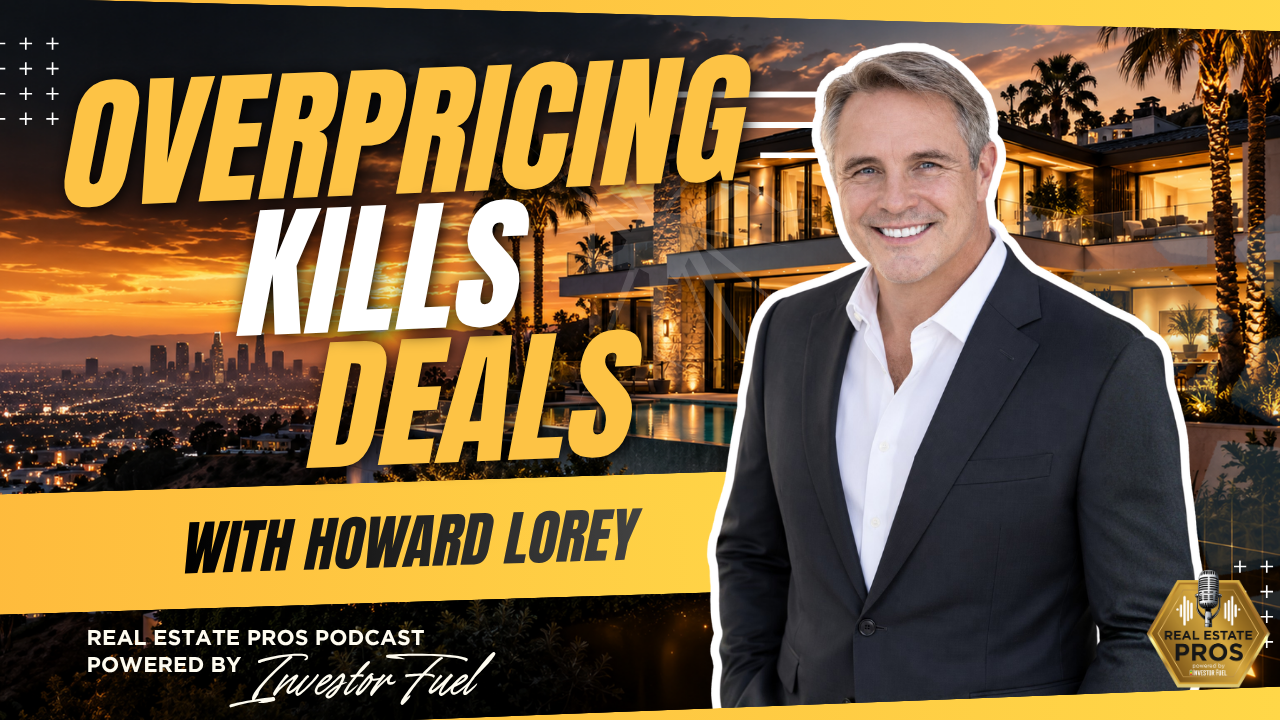
In this episode, Howard Lorey, an experienced Beverly Hills real estate executive, shares insights on navigating the Los Angeles real estate market, the importance of presentation and marketing, and how natural hazards influence property decisions. In this episode, we explore the intricacies of Los Angeles real estate, the importance of local expertise, and the evolving role of agents in a competitive market. Howard shares insights on market dynamics, client relationships, and the value of boutique brokerages.

Chapters
00:00 Meet Howard Lorey: Beverly Hills Real Estate
00:36 The Truth About the Los Angeles Housing Market
02:31 Where Buyers Are Looking in Los Angeles
04:12 Why Mortgage Preapproval Comes First
05:44 Boutique vs. Large Real Estate Brokerages
07:46 Why Broker Relationships Matter
11:25 Four Keys to Selling a Home Successfully
14:53 Video Marketing and Digital Real Estate Listings
16:35 Can Technology Replace Real Estate Agents?
18:37 Natural Hazards and Property Disclosures
20:46 What Really Motivates Homebuyers?
23:40 Life Changes, Downsizing, and Home Equity
27:45 Buying a Home Before Selling Your Current One
31:33 Renovations, Home Staging, and Property Value
40:08 Why Experienced Real Estate Agents Still Matter
Resources and Links from this show:
Listen to the Audio Version of this Episode
Investor Fuel Show Transcript:
Howard Lorey (00:00)
you’re not seeing the street. You’re not seeing what’s down the street on the corner. And I feel like the human part of it is still the most important thing because I don’t think tech can replace that. I think tech can speed up what we’re doing. Make it easier, give us tools to move through all the data, but it’s not gonna replace the agent being able to help the consumer make a savvy investment. That’s gonna come from a human.
Dylan Silver (00:58)
Hey folks, welcome back to the show. Today we’re joined by Howard Lorey, the executive vice president of the Nourmand & Associates Beverly Hills office. He’s also the brokerage manager, bringing more than 25 years of experience across Los Angeles and a career built around brokerage leadership, agent development, and deep local market relationships. Howard, thanks for joining us here today.
Howard Lorey (01:23)
Thank you. Thanks, Dylan. Thanks for having me. Nice to be here.
Dylan Silver (01:26)
What types of deals and conversations are coming across your desk these days?
Howard Lorey (01:31)
Well, it’s it’s pretty it’s pretty eclectic because we’re we’re across the city in Los Angeles. Our brokerage starts at basically at the coast and comes all the way across to what they would deem as the east side. So the sizes of the deals are vast. I think there’s a bit of a misconception that they that the market is bad right now because of the rising interest rates, but actually we’ve had a relatively busy year and their product is moving through our cycle pretty in a at a pretty healthy clip. So that’s been interesting because that’s not necessarily what you see written or talked about in public forums.
Dylan Silver (02:09)
No, you hear a lot of people who are pessimists about the current real estate conditions and people talking about rising interest rates and homes b being unaffordable for many folks and how can I get approved, right? But you’re in Beverly Hills, right? And when we talk about that market, it’s of course gonna be different than many other markets. I wanna ask you about the urban sprawl, if you will, of Los Angeles as a whole. And when people look at buying a home in Los Angeles, I can imagine that there’s a lot that goes into this, but it’s also where do you want to buy? And that could mean many different opportunities. I’ve also heard this idea from another guest, this idea of being like a super commuter, right? And so commuting relatively far distances. on a on a what we’ll call it, bird’s eye view looking looking into this. Where do people start? How do they start this conversation?
Howard Lorey (03:05)
That’s a that’s a good question. our market here is really diverse. it’s it’s our city is comprised of a bunch of different communities kind of all mashed together. And every community, every neighborhood has its own personality, kind of its own people, so to speak. most people when they start, most people when they start wanting to buy in Los Angeles are tend to be more east side focused. So east side in Los Angeles would be considered Los Feliz, Silver Lake, Echo Park, and then what they call NELA, Northeast LA, which would be Highland Park, Eagle Rock, Atwater Village. those communities kind of all blend from one into the other. But that’s generally typically where they start and then it works west from there.
Dylan Silver (03:52)
Now when folks are trying to determine their budget, I can imagine a lot goes into this because they might not know what to expect. Right. I’m sure people can look on Zillow and they can they can do some cursory research, but a lot of this comes down to not just what they can expect, but what they can get qualified for. When you have homes that are priced where they’re priced at, I can imagine that That’s a challenging component of this. where does, you know, the lending arm of this come in into play and how soon should people be looking at, getting qualified before they look at, where or what they’ll be buying?
Howard Lorey (04:30)
Yeah, I I kind of believe the rule of thumb is you go ahead and you get qualified. When you’re when you’re seriously in the market and you’re thinking about acquiring, you sh that’s the very first thing you should do because you don’t want to be looking at inventory and potential purchases if you can’t qualify because it just then you’re you’re kind of you’re looking through the forest blindly, So Once and a lot of times too, what a person qualifies for can help them determine and make some difficult decisions on where they’re what part of the city they’re actually going to live in. Right. obviously the west side, the further west you go, the higher it gets price per square foot. although we have seen the price per square foot on the east side in some of those communities that I talked about earlier catching up to the west side. So it has flattened out a little bit, but As a whole, the properties on the east side are typically a little smaller. there are some other parts of some select neighborhoods where there’s very large homes, but for the most part they’re they’re smaller. So as a whole, it’s typically a little more affordable.
Dylan Silver (05:31)
I wanna ask you about the benefits of working with a boutique brokerage like yourself, and when folks should really look for that niche experience and particularly when they’re looking at buying a home in an area that they might be f unfamiliar with.
Howard Lorey (06:27)
Sure, sure. Well, everybody everybody knows a an agent, as There’s a lot of agents. And with all of the merger acquisitions, consolidation that’s happened, everything’s starting to feel very homogenized, very large. Everything’s starting to look and feel the same. So, I believe that the boutique model gives the client some diff gets consumer some differentiation and some ability to have a little more customized service than you typically get with some of the large national conglomerates. Yeah. the boutique experience is more, it’s more centralized, it’s more customized, it’s more focused on the market that you’re in because generally those companies are based and founded in the city that they’re in. Where A lot of the other firms are not. they may be founded in New York or New Jersey, back east somewhere, and they’re run from those headquarters where they may not know the Los Angeles market or wherever you may be, if you’re in Dallas or whatever city, they may not understand that market because every every market is a little different. So the boutique, the boutique strategy gives you, I think, a better bird’s eye view of what’s happening in the market that you’re in.
Dylan Silver (07:40)
I also think, th this sometimes goes underspoken to. It it’s not just, the understanding of the market value and the comps and what the neighborhoods look like. It’s also the other broker relationships. And when someone sees, okay, well, th this agent is with Nourmand & Associates They understand that this offer has maybe more weight behind it. And I think sometimes that doesn’t get spoken to enough.
Howard Lorey (08:07)
Right. Right. No, yeah, I agree. The relationship part of it is very important. It’s the most important thing. and kind of the way that comes together with the consumer and the agent is a is an integral part of the experience, as you’re moving through and making decisions based on where you’re gonna live. Cause it’s it’s an important decision. I mean, it’s one of the biggest decisions you make as a as a human, Where you’re gonna live, where you’re gonna raise your family, where you’re where you’re gonna send your kids to school, where you’re gonna plant your flag. It’s a it’s a big one.
Dylan Silver (08:37)
I it is a big one. And on the other side of this too, you have working with sellers, right? and I can imagine that having that close, intimate knowledge of the market is of course critical. But again, going back to that idea of the significance of these broker relationships, having brand recognition and deep relational capital where you are goes a long way. especially if folks know that they may be looking for a a seller that they can trust and feel confident in that this deal will be smooth if they’re working with maybe a buyer that they’re they’re particularly, cautious about, providing the absolute best experience, they know, okay, well, we we’ve done great business with Nourmand & Associates previously, so this deal should go off without a hitch.
Howard Lorey (09:25)
Right. Yeah. Obviously, I mean we’re, we’re what would be considered a legacy brand. We’ve been in we’ve been in Los Angeles. We were created here. We’ve been here fifty years. I think we’re the longest tenured company in the city, in the entire city. there’s not many of us left. I think there’s four four boutiques left. most of them have been consumed by large corporate entities. but you’re right, the broker relationship part of it is as important as the client relationship because you need those you need those that it’s like connective tissue you need those relationships and those the ability to network and talk to people about what’s happening and also when you’re when you’re representing someone and potentially doing a transaction with someone it helps to have that connectivity with them know who they are know the type of firm they work with, know the type of business they do and how they how they move through the marketplace.
Dylan Silver (10:19)
I want to pivot here and talk about expectations. I think this is the most important thing wherever you are, especially when you’re dealing with sellers, right? And I can say wearing my Texas realtor hat that a lot of times in many cases people are looking at what their neighbors’ home sold for, but they’re also looking at a very unique market in Texas, if I may, where homes are sitting for a little while longer than people may be prepared for. And so having those expectations is so critical. Now Los Angeles is a different market entirely. I can’t imagine it’s it’s bears any resemblance to certainly Texas, but in many ways very unique even compared to the other coast. When folks are having seller conversations, what do you think is the most important thing or several of the most important things that they have to get right when they’re talking to sellers?
Howard Lorey (11:13)
Okay, from a and you’re talking from a broker perspective, the things to get right. I think it’s it’s actually three three main things. I think that’s a really good question because there’s so much noise that I think brokers and agents can get lost on what they’re actually trying to convey and what the really important things is. So the first thing in today’s market. Is presentation. I think the presentation of the home is one of the most important things. And that is a big evolution from where we came from 15 years ago. Because it used to not matter so much. it was a fixer or it wasn’t a fixer. but now when you go see a home, 90% of the homes you go see look like a model home. and I and I relate that to HGTV. I think that’s because of the shows and everybody now kind of expects a listing to look like it, like it’s brand new. So presentation is the first thing. Second thing is intelligent pricing, making sure that you’re pricing it attractively, that you’re not overly aggressive, that you’re not, or as they would say, too rich, too high, because that is that is a kiss of death in this market. Because our days on market, our cycle is longer than it used to be. And then the third is the mark type of marketing you’re doing, because that has changed. That has changed in the last 10 years. And the way you market properties, particularly in cities, is very different from the way we used to do it 10 years ago. And you have to embrace social media, you have to embrace digital marketing, you have to embrace video and reels and carousels. And 10 years ago we didn’t do any of that or very little of it. So and then the last thing, I guess it’s four, is making sure you’re exposed to the entire market. And there’s been some push in the last few years with pocket listings and pro or private exclusives or a a yeah private exclusive worth with a brokerage here or there. And in those cases, that listing is not being seen by the entire market. So you need, as a seller, you need to be exposed to the entire brokerage community. Otherwise, you’re missing at least half of the market that’s out there to purchase. So it’s those four things. If you get those four things right, it’s it’s hard to fail.
Dylan Silver (13:24)
You mentioned the importance of video. I think everyone who’s a consumer in any capacity can relate to this. I could be buying a twenty dollar wallet anywhere online and I still want to see a video of it to confirm that it’s real, right? And of course, this is even more important when you’re gonna be living in the space. when folks are looking at you mentioned staging, you mentioned video. how important is not just the presentation, but also the that video component and the presentation of what it looks like online. Is this something where especially in Los Angeles, that’s a difference maker.
Howard Lorey (14:02)
Absolutely. Absolutely. It’s it it’s such an important part of what we do now, because of the way the consumer moves and the way they the way they transact and the way that their their phone is integrated into their life, whether it’s an iPhone or a droid or whatever whatever device they use. and that reel or video clip or digital What would I call it? Like a it’s like a digital collateral, whatever you have, can be texted, can be emailed, can be posted on social media. There’s a million different way, not a million, but a lot of different ways to disseminate that information. yeah.
Dylan Silver (14:37)
W when we talk about the virtual component, a lot of people can relate to this. You’ll get a text and it’ll even be maybe a preview, right? So if you’re sending an address, you’ll send a text and you’ll see, my goodness, I’ve got a photo of the home here. So the buying process can feel, very much cultivated to exactly what you’re looking for. And you can really start to see people making decisions remotely and fairly quickly, based off of, a text message that they see and the central photo. how close do you think we are if we just look at Los Angeles, how close do you think we are to folks who are predominantly purchasing homes virtually and maybe not even walking through these properties? D do you think that we’re at all close to that?
Howard Lorey (15:20)
not really. Not really. I think what it’s doing, no, I don’t I don’t think we’re not in a market. I’m gonna speak for Los Angeles, where, in my opinion, a buyer is gonna come in and click away and buy a house or buy a home. I it’s we’re it’s too expensive. it’s too much of an investment. We have too many natural hazards, too many disclosure. We’re a very heavy disclosure state due to. the natural hazards we have, which everybody’s aware of. we have, we have fires, we have mudslides, we have fault lines, we have earthquakes, we have all this stuff that we have to deal with because of our topography and the way our city’s built. And then on top of that, the diversity of the neighborhoods. It’s too different. You can have two neighborhoods right next to each other and they can be completely different. And you’re not going to know that unless you go get out and look at it. And if you’re looking at a if you’re looking at a virtual tour or you’re looking at a real, you’re only seeing the inside and the exterior. You’re not seeing you’re I mean,
Dylan Silver (16:17)
The neighborhood around it.
Howard Lorey (16:18)
you’re not seeing the street. You’re not seeing what’s down the street on the corner. And I feel like that’s and the human part of it, that’s where the human part of it is still the most important thing because I don’t think tech can replace that. I think tech can speed up what we’re doing. Make it easier, give us tools to move through all the data, but it’s not gonna replace the agent being able to help the consumer make a savvy investment. That’s gonna come from a human.
Dylan Silver (16:46)
You mentioned the disclosures, right? And f outside perspective looking in, I can imagine folks having fair concern, about natural hazards. what are some things that maybe they should be particularly aware of or keen to maybe look twice at this if they’re seeing this type of disclosure?
Howard Lorey (17:05)
Well, the hazards that we have do not present the types of problems that you probably see in the press. on a consistent basis. It’s just when we have when we have extraordinary weather, like we’re about to enter a very rainy season, so we’re probably gonna have some flooding and things like that. But the things to be most aware of would be would be f High fire severity areas. That’s a very hot topic right now because of what happened in the Palisades and what happened to Pasadena and Altadena. being aware if you’re in one and if you’re not in one, being aware if you’re in, a liquefaction zone. But you get all of those materials. Those are called natural hazards zone disclosures. You get that once you’re in the escrow period and you’re able, and it’s provided by. a professional company that does that type of disclosure. So you get that disclosure and then you as the agent you review it with your consumer so that they understand what the hazards are of where they live. And every and every community is different because one community might be flat and may not have any high fire, but you might be in a fault line or in a liquefaction area or you might be in the hills like I live in the hills. So We’re in a more high fire area, but we’re not necessarily on a fault line. So it’s you can’t really get away from it if you’re gonna live in Southern California. It’s just like which one, which one are you in and which one are you can you live with? So
Dylan Silver (18:25)
D do you see, when folks are evaluating the different things that would drive a purchase? N the neighborhood, the home itself, how much that they’re they’re they’re paying for the home, the natural hazards that come along with it. but then also, their commute, right? I if they are if they are commuting. Is there, one factor above all else that you think drives purchasing right now?
Howard Lorey (18:46)
If there’s one thing that drives purchasing, it’s probably need. It’s a it’s a real need. It’s not a discretionary buyer who I may want another house in the at the beach, or I want to buy a house in the hills. it’s more I’m having a life event, I need to downsize. I’m getting married and having a baby. I’m getting married, I need to buy a home. Or I’m having another baby, I need a larger home. Or someone has passed away, we need to liquidate the estate. So I would say that’s the number one driver. But then kind of back to your question, that’s kind of the interesting thing about our industry is the priority for the consumer that you’re dealing with is always different. It’s different from one consumer to another. One consumer might be extremely architecturally focused, I only want this type of house. Another one might be, I only want to live in the hills, or I only want to live in the flats where I can have a pool, or I have to be in this school district. Every consumer is different. So as a broker, you have to be able to listen and understand what that is for the consumer you’re working with.
Dylan Silver (19:52)
you mentioned life events and I’m thinking about of the deals that I’ve done, especially when there’s been some kind of distress at play. That’s when people oftentimes are forced to action. I didn’t think we would be having this conversation when I’m talking about, Los Angeles and Beverly Hills, but of course, people have lifestyle creep and then things be become sometimes unaffordable. And ultimately they do have to downsize. When that happens, I’m imagining a huge conversation here as well, we have to sell the home that we’re in. Are we in an equitable position? is this maybe a short sale? And then where are we going to move to? What are we comfortable with? Are we moving? you mentioned the eastern parts of the city. What goes into that decision? Is this something that i is oftentimes driven by like a time and a date and we have to make a decision by X? Or is this maybe a conversation that folks are able to predict and see and plan out rather than, have their back against the wall?
Howard Lorey (20:54)
Well, unfortunately the need part of it usually happens. It’s usually not planned. whoa my gosh, we found out we’re gonna have another baby, we need a beer house. And we wanna do it before we have the baby. So we have five months or six months. that happens a lot. Or unfortunately we’re not gonna be married anymore. So we need to sell our home and divide the divide the equity. Happens a lot. so those are those are generally what drives those decisions. the silver lining of it is if you if you buy and you hold in our city for five to six years, you’re usually in a pretty good equitable position, usually, provided you didn’t overpay when you acquired or that you haven’t had some sort of catastrophic event like what happened in the Pacific Palisades. Right. So did I answer your question? Did I
Dylan Silver (21:39)
No, yeah, yeah. absolutely. I wanna touch on the having a child and realizing you’ve got five months and you have to find a larger home. in that s situation, y you have some time, but it’s not like you’ve got all the time in the world and you can afford maybe to look around, but i hate to say this when we’re talking about home purchase, but you can be picky, but how picky can you really be? I’m imagining that’s kind of a nuanced, tricky conversation, right? Because folks have to be realistic. They have to see see, what they can get into in now, but also it’s a huge investment, right? So th this is a situation where, they could stay in the current place that they’re in and maybe be a little bit cramped, or they can, get their ducks in a row and find a place quickly. Is that generally how these conversations matriculate, what does that look like?
Howard Lorey (22:29)
Generally, yeah, you’re you’re you’re in the right direction. Generally we get the call from the client and they’re like, hey, I need to talk and this is what’s happened. This is the event that’s happened. And we need to we need to go up or we need to go down. Now, the interesting thing about that is usually that consumer already kind of knows where they want to be. they’ve they’ve already done the research on the neighborhoods. They know how big of a space or small of a space they need. They kind of know what area they need to be in. So, and I think that’s a distinct difference in our market today and our market from like 2005, the 20, that 20-year curve. Because in 2005, they didn’t know. They just knew they needed a change. And you had to, you had to do all of that for them. But now all of the data is web-based. So they have access to it. They have Zillow, they Redfin, they have all that stuff. So generally, by the time they’re calling us, they know I need a larger house, I need a third bedroom and a third bathroom. I want to be in these two neighborhoods. I can spend up to this much. And I also need to sell my how my home that I’m in. So how do we do that? So that’s really when the expertise of the agent comes into play, because the ability of the agent to take smooth out the edges. and show them the process and make them understand the steps and then take them through that from beginning to end. It’s a, it’s a, it’s a high skill set. It takes a lot of different skills to do that.
Dylan Silver (23:57)
I’m imagining and correct me if I’m if I’m wrong here, but there there’s sales that are then contingent upon the sale of their home, right? So if they’re looking at purchasing, i it’s I need to sell this first. how often do those deals, fall apart at the finish line? Is that something that happens because either the home doesn’t sell or they decide to stay put? W what what’s that like?
Howard Lorey (24:17)
So the contingent sale in our city is not a super popular thing. it’s a definite need. but buying a house contingent upon your home selling is a difficult offer to get accepted in our market. Most sellers don’t want to deal with it because the volatility is high, obviously. So generally, not always, but generally we either try The first thing we try to do is a savvy broker will see if the if the client has the ability to do some creative financing, to obtain an equity position to purchase the new house and then move into the new home and then market the old one. Or if they don’t have the ability to do that, what they’ll do is try to have them list first. There are contingent sales that we do, but they’re but it’s not very often that we
Dylan Silver (25:09)
Yeah, I can imagine being on the receiving end of it. Well I have this contingent offer, I have a non contingent offer. I’m gonna go with the non contingent offer. I can also imagine that be because we’re
Howard Lorey (25:19)
Exactly. You nailed it. That’s what’s hard. And because of the size of our city and the lack of the inventory, that’s a difficult deal to get accepted.
Dylan Silver (25:27)
Yeah, and i it in turn puts puts pressure on folks who are in that situation because now th they have to do two things cleanly. They’ve got to purchase a home and they’ve got to sell a home. And you could be in a position where you’ve sold the home and then the home that you’re looking at sells or your offer’s not chosen, or you could be purchasing that property and now you’ve got, two mortgages that you’re responsible for and especially like if you’re downsizing, right? Right. And so I can imagine that this does require like a very surgical approach, especially when you’re the broker involved because you’re the one that’s hand holding these people through this process.
Howard Lorey (26:06)
That’s right. Well, the other part of it is too now think about it. If you have, let’s say you have a family of three and they’re going to have another baby and they need they need another a larger home, they’re going to need to realize as much as they can on the sale of their home. And they’re generally not ready to sell their home, meaning it’s not ready for the market. So you have to go in and help them prepare for that, because if you don’t, They’re not going to realize as much as they could.
Dylan Silver (26:32)
Mm.
Howard Lorey (26:33)
That’s a process, and that’s a stressful process for a family that needs to upsize because they’re having a baby. Because you got to like sometimes get in there and convince them of what they need to do based on where they live in the market that they’re in. And sometimes they don’t want to do that. And then you have to know how to convey to them like, look, this is going to have a real impact on your. On the amount of time it’s going to take us to move you through the market and the amount of money that we can achieve for you. So it is a it is a skilled conversation to learn how to do that. and the best agents know how to do it. And it’s and again, this wasn’t something we were doing 20 years ago. You just you would just list it in its current state, clean it up a little bit, and it was what it was, but that’s not the way it works now, Our consumer has a different expectation of what it should look like.
Dylan Silver (27:23)
Now are we talking like light rehab value add here, or are we talking about, making sure that it it’s, presentation ready? what what’s the scope of work of readiness here?
Howard Lorey (27:33)
Well, it can vary. It can vary, it could be it could be a like a deep clean and painting, and maybe some light landscaping, things like that. Or it could be like we’re gonna do the bath two bathrooms and do the kitchen floor and we’re gonna refinish the hardwood floors and we’re gonna paint and we’re gonna paint the exterior. I mean, it could be substantial. Yeah. and what’s so interesting now is if you really do the work, if you really look at the data. You can show the difference in the value. you can show the cost, the cost differential. This sold for this number with no renovations or very little. And this sold with this for with for this number based on the work that was done. And it could be hundreds of thousands of dollars difference for a
Dylan Silver (28:18)
And I Yeah, and I can imagine, for folks who are looking at, a purchase and a sale, they’re thinking, I mean we we’re looking at selling our home and now we have to put money into, the kitchens, bathrooms, and the floor. They’re gonna push back there. And that’s a another delicate nuanced conversation ’cause, if you’re a listing agent, you want to secure the listing, but at the same point in time you understand that you’re gonna be responsible for this person selling and buying. You don’t want them to say, well, how come our home didn’t sell for top of market value? So you’ve kind of got to delay the ultimate win of getting that listing for setting the right expectations up front. even maybe if you risk losing that listing because you want folks to understand, look, you have a great home, but this is what it’s competing against. So you really do have to, d do a substantial renovation in the bathroom, for instance.
Howard Lorey (29:10)
So this kind of goes back to some of the stuff that we talked about earlier about this is the part that tech can’t replace. This is the part where an agent really shows their value because they’re able to convey articulately and effectively what needs to happen to get that goal that the seller wants. And I think as agents and as brokers, we had to learn how to have those conversations. We had to get good at having really tough conversations, because they are tough conversations. Because sometimes you do have to tell a seller, look, I you need to invest forty thousand dollars to get your number. If you don’t, you don’t have to. We can still move it through, but your expectation has to change because it’s the consumer that’s driving the value. Yeah. Not the agent, not the brokerage, not the marketing. It’s the consumer and the perception of what the value is based on the presentation. That’s why I think presentation right now, and maybe it’ll evolve out of that. I don’t know. But right now it’s it’s key. It’s one of the most important things that you do.
Dylan Silver (30:13)
N now w when folks are living in the home, one of the immediate questions that comes to mind is, this is someone with a young family, how intensive i is the process of showings and how much of a disruption should folks reasonably expect?
Howard Lorey (30:27)
with how much disruption should they expect?
Dylan Silver (30:29)
Yeah, like like how much time should they expect folks to be in and out of their house? Okay.
Howard Lorey (30:34)
Well, there’s creative ways of doing it. you can if you’re still living in the house and say you have kids and it’s it’s a big disruption, then what your what your broker can do is they can do they can they can pick certain clusters of time. they could say we’re gonna show it on Tuesdays and Thursdays between noon and three or whatever works for the for the client. And then we’re gonna have it available one day on the weekend because it is disruptive. It is. I mean, it’s gonna be disruptive because people are coming, coming and going through your house and they’re walking through and poking through your closets and looking, looking at everything and deciding if that’s something that they can live with. So yeah, there’s there’s really no way to do it without disrupting the life flow. And I think from a from a broker standpoint, the best result generally comes from. prepping a home after the consumers moved out of it. You can really address the things that need to be addressed and stage it perfectly. And then your presentation of your marketing is gonna be beautiful and just look ideal. And a lot of times we’re selling we’re advertising the home in a way that nobody’s gonna live that way. they’re not they’re not gonna live that way, but. For whatever reason, that’s how they see it. That’s how it appeals to them.
Dylan Silver (31:49)
Yeah, preferring to list the home while it is vacant, of course, makes sense. That’s another portion of this which I can imagine can be can be tricky and nuanced as well, because the seller may think, well, I don’t want to sell the home first. I wanna they may say I want to buy that property first before that they go and make a sale. what are those conversations like? Do sellers sometimes push back on that and say, I understand it may sell for more, but I really want to be here until the home sells.
Howard Lorey (32:15)
yeah, yeah. They push back all the time. And it’s ultimately their decision. We don’t we don’t try, and I’m speaking for our firm, our agents, we have we have just under 200 agents in our firm, three offices. So and every market’s a little different, so we let the consumer decide what the decision is, but the thing that we have done with our agents is to Educate them, coach them, and teach them how to have those conversations. It’s how to say it, when to say it, what to say. It’s like those three things: what you say, how you say it, and when you say it. and the consumer decides. So if the consumer says, I don’t want to vacate the house, I want to be here till it’s sold, and then after it’s sold, then I’ll acquire. That’s fine. We can do it that way. And then we adjust our approach in the way we’re gonna present the home based on that, And then we’ll give them a list of things they need to address before the sale. And if they ultimately decide, I don’t want to do that, I don’t have the bandwidth or the money to do it. I don’t want to do it, that’s fine. We will market it. We will, we will go still go full tilt on all the marketing, but we have to have those some of those hard conversations like we want to prepare you that it’s probably gonna take longer to move through the cycle, significantly longer, and we we’re gonna you’re probably at the end gonna realize less.
Dylan Silver (33:33)
as we’re talking here, I’m thinking just in this conversation alone, how many variables have come up, and we’ve been talking for thirty some odd minutes, possibly possibly less. preferring to sell vacant in order to get top dollar, cursory cleaning versus cleaning, re repainting or a value add. having those right expectations, managing both the sale and the purchase on a timeline, whether someone is, i increasing due to may maybe adding a new family member or they’re they’re downsizing. And then you have the emotions of the seller that go in here. So you also ha it’s it’s a tightrope, right? You have to steer not steer. We don’t want to use that when we’re talking about brokerage, but you have to ensure that you’re your client understands what reasonable expectations look like while while also making sure that you’re you’re of course growing a business as a broker and so you want to do that in a way that that’s both educational but also setting the right expectations for sure.
Howard Lorey (34:32)
Yeah, it’s it’s really it’s really kind of fascinating. And I think that agents are really talented. they really they have to be good at a lot of things. And it’s hard. It’s not easy. And I kind of I kind of align it with or compare it to you’re kind of escorting someone through the forest, and you’re trying you’re trying to show them the easiest path. But at the end of the day, they may want to take a harder path. That’s you, that’s fine. You’re going with them. But you have to convey the dangers and the pitfalls in doing that. And do it in a way where they don’t feel you’re trying to upsell them or have an ulterior motive to why you’re telling them that. And I think we’ve come a long way. I think that I think that people understand They see it actually when they’re when they’re in the fire and they’re doing these transactions. They see what the work the agent is doing and they’re like, my gosh, wow, I had no idea that because now the realtor needs to know all these vendors, all these professionals, videographers, photographers, designers for staging, painters, tradesmen, you gotta. Know all those people to pull them together to help your principal get their home ready.
Dylan Silver (35:46)
I mean, that’s a pretty sh a heavy lift. And I’m thinking about this, and I’m thinking about what’s at stake. If something is going to increase the value of the home five percent in Los Angeles, that’s a huge, swing. And I think when folks think about trying to simplify this and they’re looking at well, what type of value is my agent, my broker bringing, this is the value, right? It it’s both in being able to have these nuanced conversations with their client, and relaying that in a way that is educational while also having reasonable expectations. And then it’s those local relationships with a contractor, with a videographer, with someone who is going to come and stage the home, or they do it themselves. And then it’s the broker relationships on the other side of it so you have y the first shot, if you will, at the highest, intent buyers. And so much goes into this and and I I hope it doesn’t get lost on folks, who are evaluating the worth of their realtor.
Howard Lorey (36:46)
Yeah, I, I have a generally positive view of that. I think that when the old perception of agents from 20 plus years ago was you get a license, everything was software based, you put a sign in the yard, you put it in the MLS. Those days are gone. They’ve been gone for a long time. You need an expert when you’re selling. You need somebody that understands all the stuff we’ve discussed and understands who the buyers are for that neighborhood because neighborhoods can be different even. Like the Los Feliz buyer is very different from the Beverly Hills buyer. Two different they want two different things. And an agent has to know that, has to understand that. and I would actually say that that’s true in any city. I was in Miami. earlier this year and I would looked at a few things and what the Miami buyer wants is very different from what the LA buyer wants. Aesthetic
Dylan Silver (37:40)
yeah.
Howard Lorey (37:41)
is different, the type of renovations they’re doing is different. And that really requires an expert to know that, who’s immersed in the in the business and the culture of what we’re doing and understands, the gravity of what their responsibility is when they’re representing a homeowner. It’s it’s a lot. It’s a there’s a lot of things you have to be good at.
Dylan Silver (38:00)
It is, it is. You have to be someone who’s capable of wearing many hats. You have to be capable of having the hard conversations while also being able to build rapport and bridge gaps and i and that’s scratching the surface, I’m I’m sure. We are coming up on time here, though, Howard. Any new projects or activities that you’re working on these days, also anything you’d like to mention directly to our audience?
Howard Lorey (38:59)
No, I you just see the as far as projects go, we don’t have any new projects right now. We had one in Brentwood that we’ve moved through the cycle. It’s pretty much done. but I would just say I I’m very much a believer in the boutique style company because all of the things that we’ve discussed are the skill sets you’re gonna learn, then that you’re gonna have people that are gonna get in the water with you and teach you. And walk you through all of that stuff and help you accumulate the knowledge that you need so you can navigate that stuff. And I think that I have nothing against the large corporate models. I worked for one for many, many years and had very successful years there and great relationships, but they didn’t teach me any of that. I learned all of that stuff at a boutique because boutiques is a more customized experience and they’re able to. kind of curate your career as an agent. And I would just encourage agents to look at it deeper because our industry is more competitive than it’s ever been. The order to be an agent is taller than it’s ever been. And I think the skill set is higher than it’s ever been. So I believe in that and I encourage agents to look at that.
Dylan Silver (40:08)
Howard, thank you so much for joining us today. Thanks for your time.
Howard Lorey (40:12)
I appreciate it. Thank you, Dylan, for having me.