Subscribe via:



Show Summary
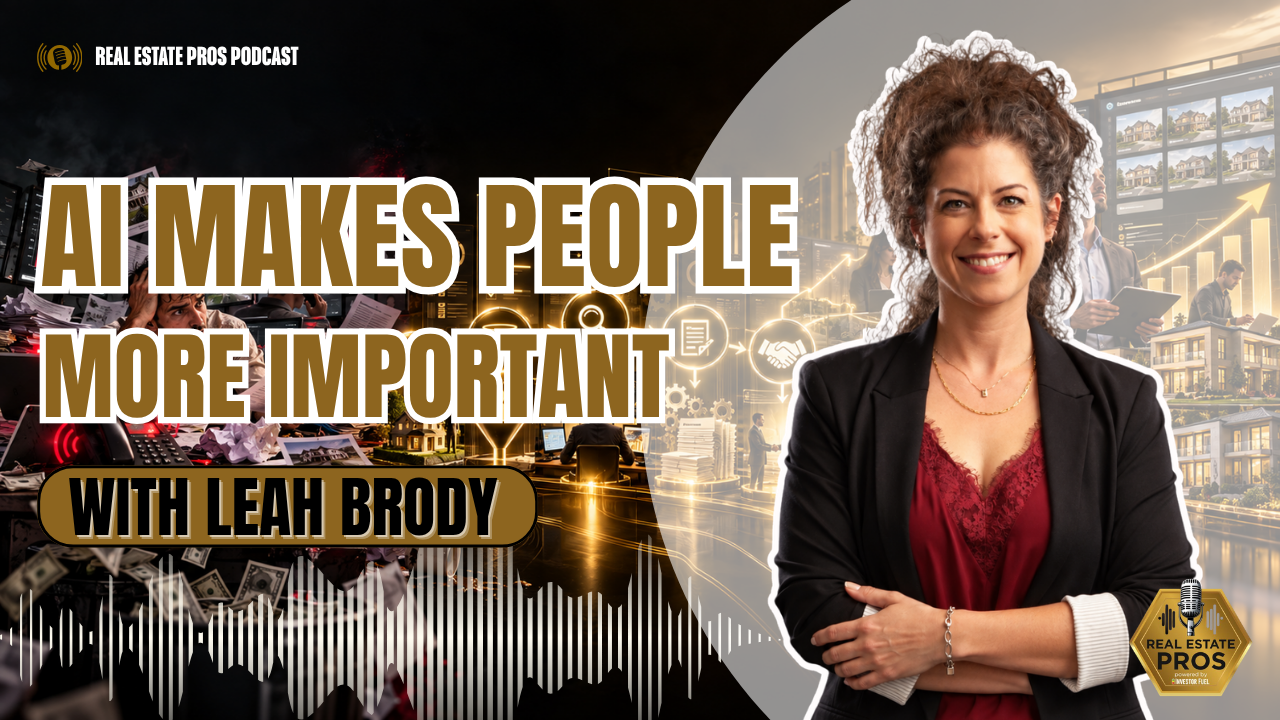
In this episode, Leah Brody, CEO of HRTT Consultants, shares insights on HR strategies, business growth, and the importance of human capital management for real estate investors and entrepreneurs. Discover how her market-agnostic approach and AI integration can help your business thrive.
Resources and Links from this show:
Listen to the Audio Version of this Episode
Investor Fuel Show Transcript:
Leah Brody (00:00)
I’ll talk from a human relational perspective because with AI moving in and the way that technical tactical operations is becoming more automated, the human aspect of business is becoming more important more now than ever. So in that is emotional intelligence and servant leadership, right? And what I’ve seen consistently, you know, because typically we’ll go into organizations and there are challenges. You know, we’re not our services are not typically going into an organization where everything is perfect and nobody’s perfect, right? We strive for excellence, not perfection.
Issa Hanna (02:07)
Welcome back to another episode of the Real Estate Pros Show. I’m your host, Issa Hanna, and today we have Leah Brody with us to share our knowledge. Leah, welcome to the show.
Leah Brody (02:15)
Thank you, Issa. Nice to be here.
Issa Hanna (02:16)
I’m super excited to have you. you’re somebody who is well versed and has so much knowledge of not just the real estate industry, but many, many different industries. And that’s because you consult for them. So, for my viewers at home, can you kind of give us a rundown of what HRTT Consultants does and then a day-to-day in the life of Leah Brody, the CEO and founder
Leah Brody (02:38)
Sure. So a brief overview of our HRTT consultants LLC is we are an HR strategy and planning practice and we partner with executives, boards, and company owners to evaluate their current state of HR plus business operations. And we’ve actually added AI in there as well. So we have AI as part of our business strategy solutions going on now. And we really truly we really evaluate the strengths, opportunities, risks and gaps that we
uncover it within an organization and then we formulate best practice solutions around those risks and gaps to really help that organization propel themselves to the next level. it’s typically around their five year growth plan and, you know, what their anticipated revenue targets would be around that that five year timeframe.
Issa Hanna (03:19)
I love that. And then what does a day to day look like in your world? you’re in the office all day, you’re working from home, you’re always working.
Leah Brody (03:26)
Well,
we are a remote first organization. So thankfully, you know, I do have that flexibility and I most definitely need it because you never know which way the day is going to go. you know, which client is gonna call you randomly out of the blue or, you know, where you just have to be kind of heads down, that report to get it out to a client before the deadline. So it just really depends and I take my days as I need to and I try to keep them fluid, you know, and work around my schedule as best as I can.
Issa Hanna (03:52)
I love that. Yeah. in the professional world, whatever aspect you’re in, you know, we have to be good time managers, right? we don’t get to clock in and clock out. We’re always on the clock. We’re always held accountable for our business. So yeah, we we definitely gotta manage our time correctly and and learn how to do that. And you know, people think it’s easy, but we’re trading in the eight hours a day in a paycheck for
You know, for twelve, fifteen hour days and and nothing guaranteed. So it’s always funny when I talk to people about that. and what I wanted to pull out in terms of how you can help a real estate investor too, like a lot of real estate investors, you know, we are single normal people. We’re not huge firms, ten partners all investing together, what whatever it is, but we’re not financial professionals.
We’re not business professionals. I was lucky enough to come in as a real estate agent. A lot of people come in from different fields that might not understand and and be able to assess what kind of problems that that come in, what they’re doing wrong, what they’re doing right, that kind of stuff. firm like HRTT could come in and and literally clean your whole business up as far as like LLC stuff, tax stuff, everything, A to Z. And I love that you guys are incorporating AI.
Right now, because that is the future. All the good businesses are you know are starting to do that. And I and your first answer definitely gave us a lot of knowledge and aspect of what you guys are doing and how great you can be for us investors. but I wanted to get your origin story right. We all start somewhere. Yeah, you know, founding a business, founding a company is like not easy, and then it always comes with the
the greatest stories. I wanna hear your origin story. How’d you found the company?
Leah Brody (05:31)
That’s a great question. I love people. So I didn’t always know that I wanted to be a business owner. And I didn’t always know I wanted to be in human resources either. So I started in the clinical world in nursing when I thought that was going to be, you know, the best way for me to contribute to my community. And it fast, I mean, quickly became
Not the route that I wanted to go. So, you know, bless anybody in that clinical environment, I made a turn and I went into community and population health. And, you know, I thought that, you know, being a health educator was going to be my way to be able to change the world. And, you know, I quickly learned that unless someone is willing to help themselves, you can’t really help them.
So I went into a different route of helping people, which was human resources.
So I started an HR in the healthcare space and then I moved solely into HR. you know, just moved out of the healthcare arena because it is definitely a, you know, 24-7, 365 market. So you you definitely have to have a will and gumption to be in that industry for the long haul. so I moved fully into human resources and I really just took all the opportunities I could to immerse myself in challenging situations.
you know, really learn all aspects of HR from every area. and then I moved my way into more so human capital management, which I would call HR for HR. But when you get into human capital management, you’re talking about a whole organizations and populations of people. It’s not just the individuals and it’s not just, you know, human resources that’s managing the tactical day to day like your payroll benefits, team building activities, et cetera. So
There’s a lot that goes on behind the scenes from an organizational perspective. And that’s really, I think, where, you know, we come in to to this industry as well. Because like you had mentioned, as a real estate investor, you’re not necessarily like a financial or business or an HR professional. So that’s where our services are very highly utilized in the vetting process and in the pre-sale process because you want to understand what you’re taking on.
know when you’re buying a business that has that people component no matter if it’s a property management company or if it’s like a multi-door residential that are that you know that has employees hired on that company EIN or if they’ve had a 1099 component you want to understand you know exactly the risks and liabilities that you would be taking on as that new business owner right because you’re not just buying a business you are buying a whole organization because there are people involved
So you need that human aspect in the vetting and the pre-sale process because a lot of the risk and liability comes from the HR area of a business. And you don’t really know that until post-sale. So you want to make sure that before diving in and becoming that, you know, new business owner, that you understand what the cultural tone is, you know, what the claims history is, what the employee psychology is.
You know, just the entire the psychology of the entire organization. So it’s really a comprehensive analysis that I would say should be done when before you you know put pen to paper when there’s a people component in buying a business.
Issa Hanna (09:20)
And I love that because it’s a way to get to know your new business very well before you even step foot in it, before you even decide to sign that piece of paper, like you said. And I love your strength that you gave me when we were talking earlier. You said you guys are market agnostic, which makes you so knowledgeable in all these fields. So you kinda are can you give us a little bit more light on on what you guys do to make you more market agnostic than the other companies?
Leah Brody (09:45)
sure. So we really dive in, especially when we have a client that with it is within a market such as maybe like a church or you know, something that’s very niche, we really dive in to understand what the compliance regulations and you know from a federal, state and local perspective are, you know, as we’re going through the analysis, so that we can better apply those best practice solutions, because every market has their compliance regulation and
you have to stick with it to make sure that you know, your business is clean and especially when you want to get to either sale or buy, you want a clean business in either scenario.
Issa Hanna (10:18)
Yeah. You want the best record. You want your business to always have that upsending record in every field, and that’s where you guys come in. And I wanted to rewind a little bit from your previous answer. You know, you started in the nursing healthcare field, you wanted to help people, you care about people, You’re the founder, you’re the CEO. So what they’re getting is somebody who cares, you know, they’re not going to like
a big box HR company where they’re just sending one of their agents or one of their people out there. they’re getting somebody who cares about their brand, who cares about their reputation, when they do hire you guys. so I love that. As somebody who I want to relate to you a little bit, my wife is a nurse, so I know how tough it could be in that field and I know how challenging it is and all the stuff that the nurses go out to. So shout out to to all the healthcare workers.
out there and and hopefully you know you guys take that those good paychecks and and invest them and call Leah before you do because she could really help you.
Leah, you have plans to organically grow is what you told me from our pre-conversation. So five years from now, I look you up, Leah Brody, where am I gonna see HRTT at?
Leah Brody (12:09)
We’ll have a much larger footprint within the market. You know, I’m I’m definitely in the credibility and brand building phase right now, getting the name out there, helping, you know, markets understand exactly what it is that we do. And I’m I’m already networking with some really great people that could potentially be consultants within the organization. So I’ve I’ve already got, you know, the forethought out there, which is definitely one of our values, is looking to the future from the now perspective. So, you know,
I’ve definitely kept that five year plan in mind and I would anticipate us to have a much larger revenue footprint as well. So, you know, ideally just e expanding and supporting markets and clients as best as we can.
Issa Hanna (12:45)
I love that. and I don’t doubt that you’re gonna expand with somebody like you at the forefront. truly unbelievable. I can feel how much you care about your clients. You’ve said it so many times, you know, how much you care and putting the clients first and doing all that. So, you know, that big footprint it’s coming. Five years from now I can see you guys being one of the largest firms. and I wanted to kinda ask you now, when you are assessing these businesses, okay?
there’s always a common denominator sometimes when you run across so many different things. So can you give my business owners, my investors one common thing you always find a business doing wrong that you want them to correct?
Leah Brody (13:24)
So I’ll talk from a human relational perspective because with AI moving in and the way that technical tactical operations is becoming more automated, the human aspect of business is becoming more important more now than ever. So in that is emotional intelligence and servant leadership, right? And what I’ve seen
consistently, you know, because typically we’ll go into organizations and there are challenges. we’re not our services are not typically going into an organization where everything is perfect and nobody’s perfect, right? We strive for excellence, not perfection.
So when it comes to really building a business and if you’re growing fast and you’re, you know, you have heads down and you’re you’re really focused on that expansion and you’re growing really a little faster than you anticipated, the culture can become tilted.
So a lot of times it is around the culture and the voice of the employee might not necessarily be as heard as it should be because the focus has has been on production and really expanding and building the business, whatever your case may be. a lot of times though it does boil down to the cultural tone of the organization and you know, the employees’ view of the leadership team.
whether they can openly communicate without feeling like they’ll be retaliated against, and whether they can trust their leadership with true challenges that they’re seeing, you know, they’re the boots on ground employees. So, can they really trust their leadership when they’re facing challenges? So a lot of times that’s where the employee voice can become suppressed and then satisfaction goes down, attrition goes up. You know, so there’s there are a lot of challenges that can be addressed from a cultural
perspective and that’s very common across the board
Issa Hanna (15:07)
Definitely. And that starts with with the leadership and also, you know, with the employees as well. When morale goes down, that culture can be so bad that, you know, the business does suffer. The numbers suffer. So like you said, if you are rapidly growing, keep and focus on the employees that got you there. you know, don’t try to steamroll over your employees. Don’t make them expendable or feel expendable.
I know in a lot of sales jobs, you know, it’s very high competition, expendable people, and the morale tends to dip a lot, you know. So amazing advice. I mean, just an amazing piece of knowledge. And that’s why I asked you that question. you know, we strive to bring knowledge to this show and and you’re bringing so much and and we’re hearing things that we usually don’t hear. So I love it. And now I want to get some advice from you on
business relationships, right? Because every business depends on growing your network and you have to establish these business relationships. So to our young entrepreneurs, to our young investors and future consultants and whatnot, what piece of advice would you have for them on where to start establishing their network?
Leah Brody (16:13)
another good question. I would say I actually just gave some advice the other day similar to this. You know, it’s just really how can I get my name out there, especially if you work from home or it’s like an internet business. And I say get you a big bunch of business cards and start to go to random business expos where you can hand out, you know, your business cards and have those networking conversations and you know, put yourself in environments where you can establish your credibility.
know so if there are community networking events that are related to what you do or even not related to what you do because sometimes you can meet someone in a completely different market but they know someone a lot of good business can come from referrals so really networking and getting your brand out there getting your voice out there establishing your credibility you know as the business owner or founder is ultimately the best way to start.
Issa Hanna (17:03)
Definitely put eyes on you, you guys. Don’t just sit in the house throwing up stuff on Facebook, right? or TikTok. that’s a big part of it too. But you’ve got to actually be out there. You know, there’s a farmer’s market in your town. Go to the farmers market, show up, talk to people, hand out your cards. Anywhere you go, give them that business card. Because, like Leah said, they might not be looking, but somebody they know might be looking. And referrals are huge in our business. I know
Even when you need to call a lawyer for something, do you know whatever it is, you might call the wrong guy, you might call a guy you deal with all the time, and he’s like, you know, I don’t really deal with that. Let me refer you to this guy. that’s just the the business. So amazing advice for the future generations coming up. Get out there, you guys. Give them those cards, put your face on it, establish credibility. Amazing. and now I want to give you the floor. if people
that watch the show, want to get involved with you guys, they want to look you up. Where could they reach you guys at?
Leah Brody (17:58)
So if you want to find HRTT Consultants LLC, we are exclusively on LinkedIn. I don’t have a website on purpose due to the nature of our business. So you can find us on LinkedIn. you can also find my profile as well if you want to understand some history about me as the CEO and founder. And we also have an email, you can email us directly at [email protected]. So [email protected].
Issa Hanna (18:22)
[email protected]. Make sure you guys check them out. you’re getting top-notch services from somebody who actually cares. you’re not just a number, you’re not just another client of theirs. Leah, thank you so much for coming on the show, bringing so much knowledge to the viewers, and bringing such a fresh breath of air to to the show. Thank you so much.
Leah Brody (18:45)
Thank you for having me. It’s been a pleasure.
Issa Hanna (18:46)
Super enjoyed having you and to the viewers at home. If you enjoyed my conversation with Leah and want to see more like it, make sure to hit like and subscribe. I talk to people every day that can bring us different knowledge on every aspect of the real estate industry. Until next time. The pros are out.