Subscribe via:



Show Summary
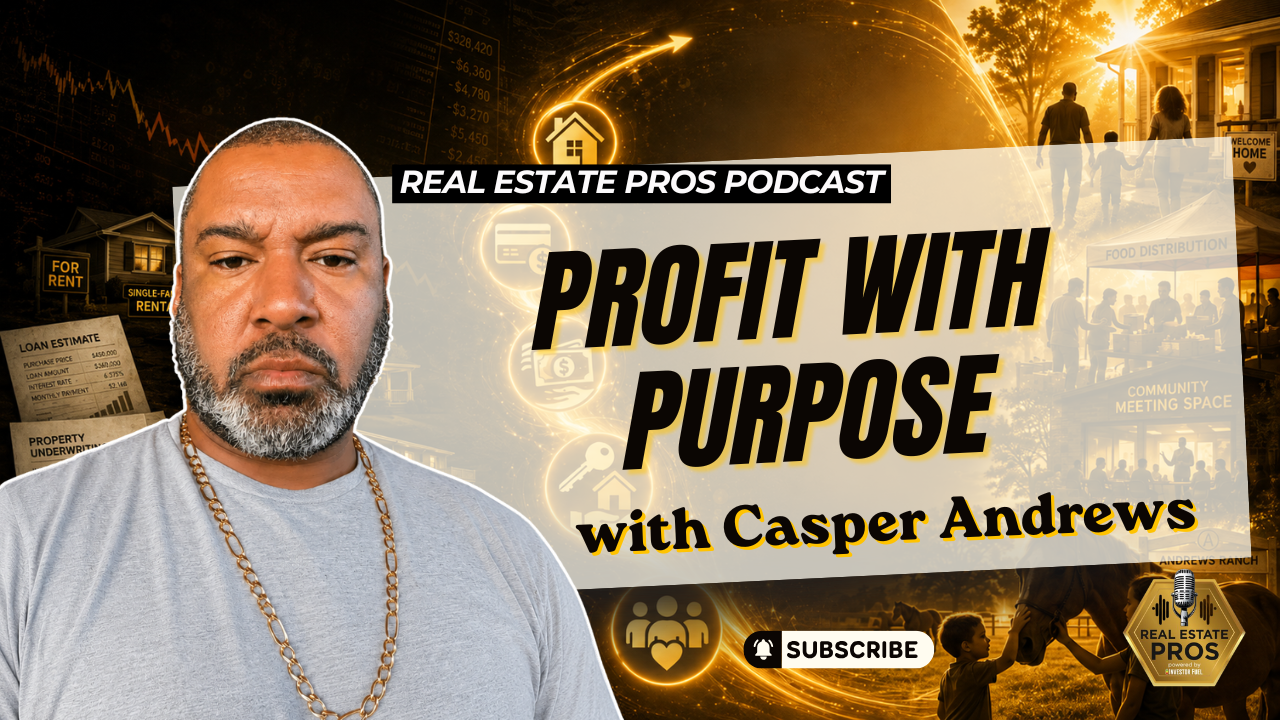
In this episode, Casper Andrews shares his journey from real estate investor to community advocate, highlighting how he uses his properties to support underserved populations and foster social impact. Discover how his mission-driven approach combines business with purpose and learn practical insights for investors interested in social good.
Resources and Links from this show:
Listen to the Audio Version of this Episode
Investor Fuel Show Transcript:
Casper Andrews (00:00)
Or, right, for me, sometimes I look at the situation, not just the application. I try to look at the person’s situation. And that little thing right there is is helping somebody. And I’m not saying no one is obligated to help anybody. However, I believe in the world that we live in.
Sometime helping somebody for them can go a long way. Yeah, for me it’s I feel like that’s what I should be doing. But for them, I can honestly say, I can honestly say that I’ve helped at least one hundred homeless people, two hundred homeless people become housed. Easily I can say that.
Cody Crabb (02:14)
Welcome back to the Real Estate Pros podcast by Investor Fuel. I’m your host, Cody Crabb, and today I’ve got Casper Andrews with me. Casper is the founder of Power and Change in Southern California, where he’s built a real estate portfolio that’s helping provide housing and support
for underserved communities. Casper, thanks so much for joining me today.
Casper Andrews (02:32)
Hey, thanks for having me. I really appreciate you taking the time to hear my story.
Cody Crabb (02:36)
So for people that are are kind of just meeting you for the first time, I would love to hear the story of how you first got involved in real estate and eventually what led to Power and Change.
Casper Andrews (02:48)
Okay. So early on, probably about fourteen, fifteen years old, I my parents, my mom, she was a renter. We lived in a house down the street from a family. And I remember them getting a den extended onto their home. And I came home to mom. I’m like, Ma, you know what? Kind of want my own room, why don’t we extend and get a den or add another room? She said, We can’t do that. I’m like, why why not?
And she said, you can’t do something to a home like that that you don’t own. And we rent here. And it was Section 8 at the time. I’m not sure if you’re familiar with Section 8, but that’s kind of like a governmental subsidized rent for, and then you pay the balance. And I understood what she was saying, but I didn’t like what she was saying. So again, I’m about 14 or 15 years old. And then she bought her first home when I was 18. And and I was really, really excited for that.
This house did actually come with a den on the same street, right? The the story comes full story real soon. Unfortunately, though, at that unfortunately they lost a home or they were losing a home. And I ended up having to buy that home. My mother still lives in that home to this day. I was 25 years old. That was the second home that I bought. My first home was a condo, not far from there. But the reason that I bought that home is because.
She was extremely proud of her accomplishment to be able to buy it, but her marriage it fell apart and she was unable to sustain it on her own. And so, being her her son, I made the majority of my decisions in business, especially when it comes to real estate, are sometimes emotionally driven, which is not a good thing at all. But this was an emotionally driven purchase. It was hard, but it
led me into the journey of where I became now because my mother was actually the first person that lived in a place that I owned because it was important for me that she had somewhere that she wanted to be. And I’ve realized later on in life throughout the duration of my purchasing and I purchased at least somewhere around 30 30 properties. Usually my willingness to my tenants are based on
their situation. Still to this day, I get a call Casper, you have somewhere, a cousin of mine just lost their place. Usually for most investors, that’s a red flag. Well they lost their place. They don’t pay rent. They’re not accountable financially. But for me it was like, okay, well, maybe I could be a second chance opportunity or a or option for them. Sometimes it works really, really well. People appreciate it and you do good. Sometimes I get the same exact results as I had before, you know.
But that’s kind of what led me into my my Power and Change. Power and Change is an LLC that I established and founded. And it’s the investment side of me where I started buying homes for the sake of trying to give people a second chance. So single-family homes, duplexes, condos, multifamily, mixed use, I’ve I’ve done all that. I do all that.
My first ranch I own up in Norco, California, where now we’re implementing some wellness programs. But again, very same or very similar pop situations when it comes to, trying to help somebody out. That can use a hand. And in some situations, those same people that I’ve helped out, in some degree or another, somehow might help me out, whether it’s information or volunteering or
resources. You just never know. But I know that this particular podcast is really probably targeting like investors. But this would be like an investor like an investor with a heart kind of thing. Because I do play a lot of what I do on and my wife cannot stand it sometime. But like on my feelings. I feel like we should help. I feel like this can be all right. So I know I gave you a lot but you know that
Cody Crabb (07:21)
No, that’s that gives us a really great picture of kind of who you are. Because y you you when I even asked you what do you do, there’s a little bit of like, I don’t really know how to kind of explain that. So that I felt that. You were kind of like, let me think. So this is that was a really good explanation. So I’d love to hear like do you have a specific story about a person that you kind of gave one of those second chances to and it really ended up
Changing your perspective on kind of how much that can help some help change someone’s life.
Casper Andrews (07:51)
Yes. So you want a good story or you want a bad story? ‘Cause I have several great stories and then I have I have probably two bad stories. Maybe
Cody Crabb (07:59)
Maybe give me maybe give me a quick bad one and then a nice good one after that. Yeah.
Casper Andrews (08:04)
Quick bad when I had a tenant who had nowhere to go, situation was really, really bad. They were really forced as far as their time. And I gave them a shot at a place and I trusted them, I did get all the the pedigree, your bank statements and all that good stuff. And long story short, after they moved into the place, not too much time went by. They were going to do it okay for the first several months, but after a little bit of time, it fell apart. They couldn’t pay.
And they were willing to come out. And when they did come out and I went and saw the place, it was holes in the walls, missing screens, roaches everywhere. It was bad. And then they kind of just left a lot of stuff there. And I’m like, this is your stuff. Well, just clean it out. I don’t want it. I’m not coming back there. So that was kind of like one of those things that I’m like, but I but I gave you a chance, you know? Yeah. I have to do that. Now great stories, great stories. I can give you one in particular where
I work with a lot of like second chance programs out here, like Salvation Army, HOPICS. They are programs where people are homeless. They will kind of connect them, they’ll do case management, connect them with a landlord, and they’ll do like an SRO, single room occupancy rental. So I had that at a space for men that were in a program that were once in the military, but now they’re having challenges, getting back on their feet. And one particular person
he struggled a lot. But he he did good in his SRO, his single room occupancy at one of my locations. And we developed a relationship, a great rapport. He would help keep the premises clean. He would help, at times when I’m not available to collect the rents or the the subsidized parts of the rents. Eventually he became my property manager. And he is close to me as probably an uncle can be at this point.
And initially, again, when I first met him, he was coming from a really tough time in his life. A really, really tough time. And now he just I talk to him all the time like he’s like a friend, like an uncle. And and I’m grateful to be able to have those kind of stories as a part of what I do and and and why I do it.
Cody Crabb (10:40)
Yeah. Well so this is I find this really interesting because if you listed like if you asked just people on the street, what are the what are the professions or the ways to make a living that attract the worst people? Landlord would probably like be right up there. Like lawyers and landlord like, the people that are the most likely to be in here. And you are out here doing the actual opposite of these things. You’re you’re giving people a chance, you’re
being understanding and forgiving, but you’re also not just letting people get away with anything. I mean, it sounds like you are also you’re you’re giving people a fair chance, but so I’d like to ask you, how do you balance a business decision with a heart decision, as you as you said?
Casper Andrews (11:24)
Okay, so if I were to give a responsible answer to a young person that wants to get in real estate, I would say just do business. Because when you do it my way, it can sometimes create frustrations internally and with people that that care about you. Because you’ll have to accept the fact that sometimes when things don’t go well, accountability is really on you. And for me, I’ve had situations where coming in.
This is the most beautiful place in the world. I love it. I want to be here. I love it. And then when they can’t pay their rent for whatever reasons, it’s you’re a slumlord and you’re at this. And it’s like, wait a minute. Nothing’s changed about the space. It’s the same space. You look like a but then once they fall on their luck, instead of sometime people just saying, Hey, look, things are tough for me right now. Can we work something out? It does not happen like that. The communication becomes really bad.
And California has something here called squatters rights. And a person can literally live in your place for close to a year sometime before the courts can actually get them out. And I’ve had to pay people to move out sometime. And it’s like, okay, on one hand you’re saying you don’t want to be here anymore. Okay, I understand. But on the but you’re not willing to pay, but you loved it when you came in. And but on the other hand, you won’t leave. Which I know common sense tells me you you won’t leave because you can’t leave.
Or because you want the free ride. And I’ve had to deal with that several times. But it’s you got two choices. You can quit and go get a job or do something different, property manage and don’t be the owner. But this is I’ve I’ve I’ve been doing it now. I’m 46, I’m 47 years old. I’ve been buying property since I was 25. I’m grateful for the opportunity. I’m grateful to be in a position for when a person can’t pay their rent, I still find ways to figure it out.
Like I’m not happy, but I’m grateful, for that. And I will tell a young person, hey, listen, if you’re gonna get into this business, always try to remember first that it’s a business. But if you can help people along the way, I feel like you’ll be blessed, you’ll be blessed. I wasn’t born with money. I didn’t get left any trust or anything like that. I really had to figure it out. I worked a regular job.
For 20 years. I worked for the LA County Office of Education for 20 years. And I would literally anything that I would make, and this is a salary job with no overtime allowed. I would I would invest it. I would buy and sell cars on the side and when I get enough, I could buy I could make a deposit on another property. I’ve I’ve used equity in my home. I’ve cross-collateralized my home. I’ve took a second on my homes or different properties to to close on other properties. I’ve I’ve done all these different
maneuverings. I’ve I’ve established tremendous relationships with a lot of private moneylenders and hard moneylenders. Just so that I can continue. But you were gonna ask something. Go ahead.
Cody Crabb (14:56)
No, I was just gonna say, like, I think I find this so interesting ’cause I feel like there must be some inner turmoil. Someone like you going like making a business decision that is like you have to make versus like, you you said i you need to be responsible with it. People are people in your circle are gonna maybe question things that you do like that. And there are gonna be situations that no matter how kind and understanding you are, they just don’t
people don’t accept it or don’t want get the don’t want to take the help that you’re giving for some reason. But I I just really think the the the question I was gonna ask you really was with the bad experiences how how did those affect like did you question should I be this should I should I give people chances like this because of these bad situations or does the good just
kind of wipe it away. Like I think of a bad vacation, right? You have a horrible time, everything’s raining and everything goes wrong and then you come home and it’s like, remember when we went to the you don’t remember that part. So is it kind of like that? You just kind of it wipes away the bad stuff or how does it work?
Casper Andrews (15:59)
I can’t say that it wipes it away. And then sometimes you’ll see behaviors in new situations that can remind you, like, uh-oh, is this about to happen? So kind of like kind of like just being traumatized before, and so you’re trying to really figure out how not to land on them same landmines. However, for me, I am dedicated in what I do. And like right now, like I’m having like real challenges with certain things.
I told you one of my properties that was I just reclaimed or regot because of the tenant and situations. It was so much work I had to do that I was not really ready to have to do financially. And then I’m starting programs for kids there, doing wellness programs. This is a ranch. So now I’ll put some horses up there and some some sheep up there and some chickens and kids love that. However, it’s costs.
And it’s like, if only she would have took care of her business, I wouldn’t be in this position. You have them kind of thoughts. But which is kinda like a post traumatic, ’cause this happened over here and now you carrying it over there. But then I thought about it like, you know what? And I’m I’m not gonna say I’m like a super religious man, but I believe in God. But I’m just like, you know what, God, you got me in this position for a reason. Casper, stop complaining and let’s go. Let’s figure it out. Whether it’s gonna have to be donations for the garden or
Whatever, right? I end up getting sponsors to help with some of the bird feed. Working on sponsors for the horses. So some of these things, sometimes they just work themselves out. But if I were talking to a young investor, I would say, hey, try your best to solidify your business first, so that you know that you’re good. And then, yes, it’s it’s important, I feel. I was born in the city and raised in the city of Compton, California. I feel like it’s important when you come from a place where so many
people with so many challenges, you do your best to to help out. That don’t mean you can save them, that don’t mean can fix it, but do your best to help out. Give a kid an experience that they probably not have been able to get had they not have met you. Or, sign a rental agreement with somebody that probably don’t have the credit because they weren’t taught about credit young enough to understand the importance of it. So, so I’m big on that. I’m big on it.
Cody Crabb (18:09)
Yeah, you when you we were talking a little bit before the podcast and you said you you said you you were trying to build your portfolio in order to do these community goals. Like and and so the I think that’s a really neat way to think of giving because a lot of people b this is a business. I mean this is there’s no question that this is a business. But the I think I like the idea that that’s the vehicle that you’re using to get to the the
community part. A lot of people see that the making the money is the end point when really you’re kind of seeing that as the the reason I’m able to do the community stuff is because of the portfolio. You also said that you have used your properties in in these purposes as well, not just the money. You said every every property has a purpose. So how do you decide where where a property can create the biggest impact but also still allow you to get the cash flow you need.
Casper Andrews (19:04)
So I’ve had challenges with that balance in the past. And I’m gonna give you an example. So I had bought some I had bought practically a whole street of fourplexes up in North Edwards, California, which is right outside of California City. And right there, North Edwards is a air for is a military base. And initially the goal was to buy these properties at which were a really good price. It was five fourplexes, four on the street, one on the back street.
And then we were going to contract with military personnel to be there. So we buy them, we rehab them, everything is going cool, and we getting ready to start interviewing the military staff to start staying there. And somebody the very next day after our first scheduled appointment, somebody started breaking into the places, stealing the counters and the everything that was newly installed, windows.
Copper wire, water heaters, like just I’m like, my God. And I what what I learned from that, now I was able, I just I got scared. We redid the roofs and everything. And I ended up selling it to a different investor, and I made about maybe 200,000. Right. So God looked out. But what I learned from that is I went in it with the wrong mindset, anyways. There were there were populations in that community that were homeless.
And that we could have worked with them to put them in there. However, I was kind of looking at the bigger dollar, which was the military base personnel. And in the in the back end, I discovered maybe I should have stuck with what I normally do. These populations that need it, that’s that’s my thing. So my places that I still have, I truly commit them. And if anybody that knows me ever sees this, they can say, like they they’ll call me
Casper, my son has nowhere to go. He could be 21 years old, never f never lived nowhere on his own, never filled out an application, had a job making, $800 a month. So he could probably pay two or three hundred dollars a month in rent. And I’m like, okay, have him call me so we can sit down and talk. And even though my mortgages may be higher than that, maybe we could figure something out, and and I’m all about that. Not to say that I can s fix everything or save everybody or save anybody, but
I know that for me it’s important to if the opportunity is there to help, then I’m gonna choose to help much faster than I’m gonna choose to make some money. It’s tight for me, but I would rather go that route. Go ahead.
Cody Crabb (21:27)
Love that. Love that. Right now.
No, I think that sounds like you’re asking different questions than a lot of investors ask. Because well, and then on top of that, you’re not only using your abilities to help, you’re using the money that you would have made to also do those things too. So in a lot of ways, like it I bet it’s a challenging thing to say I could do some good by doing this, but I could also make money doing this, which I could do some good with that. That’s probably a whole other question. But
Yeah, I think ha have you ever, do you think the difference is that you’re optimizing for the impact first and then kind of trusting the business to support it? Are you kind of optimizing for the profit and kind of letting the the good happen because of that? Like what how do you how do you think of of these things? Do you just look for needs in your community and go from there?
Casper Andrews (22:16)
So I try to I have a balance, but I also have a basic program design to make sure that I’m meeting my baseline for my mortgages. Period. I have to pay that in order to be able to be in the position I am in. I have to maintain a solid credit report, obviously. But I also have to be able to keep a few private money and hard money lenders in my back pocket for those just in case situations, right? Or for if opportunity of a a nice investment comes up or a pocket deal comes up.
If I’m not in position for whatever the reason, I can make a call and be in be in position now. Bless you. Bless you.
Cody Crabb (22:52)
All right. No, yeah, go ahead.
Casper Andrews (22:53)
So, so part of that is part of my business plan or the way it’s structured, I do meet my baseline. So I figured if my baseline is met to be able to get the certain things that I need to have addressed, address, who am I to not still try to help? You know? Now, of course, money is important to me. And I mentioned to you a couple of times while we’ve been on the phone on this Zoom, it’s tight for me right now. But it’s not tight because I’m I am equity heavy.
So if it came down to it, I could sell something and be untight. But again, every single thing that we have right now is helping somebody. So one of my places is very important. It’s a headquarters for be able to do food distributions. The tenants love doing that. Plus, it helps them. It helps keep their refrigerators full. I have another space where we have our community meetings and gang meetings. That’s important. So to lose that, it’s it’s it’s an area that the community
welcomes it and you don’t have to worry about too many challenges over there. So with these things the ranch, yes, it’s it’s over a million dollars in equity. Easy. Maybe a million and a half in equity there. But the kids love it there. What I’m saying? And the opportunity that it gives them to see something different, which can in turn allow them to visually possibly be something different. You can’t let I can’t let that go without fighting as best I can to
to keep it and grow it and and and give them something different. So
Cody Crabb (24:20)
One thing that I one thing that I want to know from you is so I hear a I hear from a lot of investors and the one thing that I kinda the vibe that I kind of get from some people is like I wish it didn’t have to be do good or be a real estate investor. You clearly don’t see it that way because you’re you’re kind of using it, using it for good. What would you say to somebody who came to you and said, How can I kind of emulate this model and
do something do some of what you’re doing where you’re using this you’re using your powers for good, like how what would you say to them?
Casper Andrews (24:54)
When you first buy a property, normally people have a desire or a plan on how they’re going to use it. For example, investment property, I’m gonna rent it to a to a family. But you can decide the type of family you rent it to. You can rent it to a qualifying family on paper that meets all of your basic contractual requirements, name, birthday, social security number, credit report,
where you want them to geographically come from, what their work is like, like all your basic standards can be met. And and you can go with them.
Or, right, for me, sometimes I look at the situation, not just the application. I try to look at the person’s situation. And that little thing right there is is helping somebody. And I’m not saying no one is obligated to help anybody. However, I believe in the world that we live in.
Sometime helping somebody for them can go a long way. Yeah, for me it’s I feel like that’s what I should be doing. But for them, I can honestly say, I can honestly say that I’ve helped at least one hundred homeless people, two hundred homeless people become housed. Easily I can say that.
‘Cause when I was doing the SROs, those people were coming directly off the streets. And I would, I would
they of course they interviewed through those places that they came through, but it was never a no for me. Casper, we have six women in it. Okay, I got six beds over here. Bring them on over and and we’ll work it out. Now that doesn’t always it I had a woman that was prostituting out in one of my buildings and the sheriff’s department reached out to me. You’re running a brothel. No, I’m not. It’s COVID. I can’t get her out. I’ve been trying. And and she chose to as a tenant,
be a prostitute. And she she lives there. And I cannot tell a person you cannot have company here. Of course she’s gonna say, I’m not doing we can hear all the noise, you can see the cars lined up. I had cameras outside my building. But legally at the time you cannot evict anybody during COVID. And so but when she left and she ended up going to jail over something non related, she called me about two months ago. She said, Casper
I had to find your number on the social media to reach out to you. And I wanted to tell you thank you because you gave me a chance. I had a a drug problem at the time. I was going through a lot emotionally and mentally. And but and thank you. Thank you. I was able to get my kids back. So so I was happy for that. And I and I had those kind of stories with a lot of different people. And not to say the stories are everything, but it just made me feel like my my intentions and my effort is
like it does help somebody.
Cody Crabb (27:34)
Yeah, and I I mean, just from what you’ve told me, it sounds like you’re certainly having an impact on the stuff local there to you, and the stuff that’s the most important to you, which I think is just amazing. So th thanks for all the all the pieces of advice and and tips and things you’ve given to us with this it’s been a really great episode. One thing I’d love to just kind of close us out with is if somebody is, you know
if somebody wants to find some opportunities to do some good locally to them, where would you recommend that they look first in terms of things that things that are are that that people need? Like what are some projects that people could invest in that that really help people that they may not expect? Like you said that community center that that really people really need, like stuff like that.
Casper Andrews (28:19)
So I when I started buying commercial residential or mixed use, it gave me a whole different perspective of limitless opportunities to help other people. Not only can you house them, but you can also bring in resources, people that come in that can do employment workshops or career leading training. So I have
I have this at one of my places. I have a commercial place that barbers will come in, plumbers will come in, electricians will come in and talk to people and show them like this is what it took for me to get here. This is what you can do, this is how much we make. Do you have any questions? Interact with them. So I will tell a person, hey, look, first look inside yourself and see if you’re willing to stomach what comes with this, right? With and help can be so many different things. You can connect with a food bank. Food banks will
freely allow you to come and pick up food or sometimes drop it off to you and you distribute it in your community. You can connect with local hospitals or or clinics and they will come out and do workshops or presentations in your community. You can connect with local housing agencies or homeless support programs, drug support pro alcohol support programs, all these different things can always use a space maybe w when they reform out for housing,
or somewhere that they need to go if you have mixed use for workshops or information, day programs. It’s a it’s a conundrum of opportunities out here to be able to help our communities. At least that’s how I feel. Gang infested communities, intervention and prevention. Give them a space to come to where they can talk. We do it at my building. The different gangs come and and try to talk out ways to slow down the violence.
Churches sometimes people aren’t really super comfortable at churches these days. I don’t know why, but if you just have a neutral space where mothers who lost their kids to gang violence can come or fathers who suffer from getting out of prison and not really sure how to get on their feet again, community members that just want to come somewhere and complain, you give them that. That’s that’s not necessarily
Cody Crabb (30:14)
Like feel like you’re part of something bigger, yeah.
Casper Andrews (30:16)
That’s it, that’s all. Yeah.
Cody Crabb (30:18)
Well, thank you so much. Like I said, this has been a really rich rich feel-good episode. I hope that people hear this and realize that the money making side is there, but sometimes there is a whole lot more. So thank you for that. Definitely. If people want to get in touch with you, work with you, I mean what what can people do if they wanna who should be getting in touch with you and w how can they do that?
Casper Andrews (30:37)
Well, okay, so everything that I shared are always things that people can get involved in. Right. One way a person can get in touch with me, I have a website. It’s www.againstalloddscpt.com. So againstalloddscpt.com. And that is on there you’ll find most of the things that I do or we do.
If you ever want to just if you’re in the Califor Southern California area, you want to come out and check out the ranch or come check out some of the services that we have in the city, I would love for you to if you want to support or write a letter or donate or help a family. I’m here for that. I have kids that I mentor. If you ever want to check in on them, welcome to do that or support them. So yeah, I’m all for any kind of support that people want to give or do or provide.
Cody Crabb (31:25)
Awesome. Well, it make sure you do that. I certainly will be. I so I appreciate that. And listeners, thanks for giving us some of your time today. We we appreciate you and we’ll see you on the next episode. Casper, it has been a real pleasure. Thanks for thanks for joining us today.
Casper Andrews (31:38)
Thanks a lot, man. I really appreciate the time.
Cody Crabb (31:40)
We’ll see you later.
Go deeper on this topic
How Landlords Rent to Second-Chance Tenants and Still Profit