Subscribe via:



Show Summary
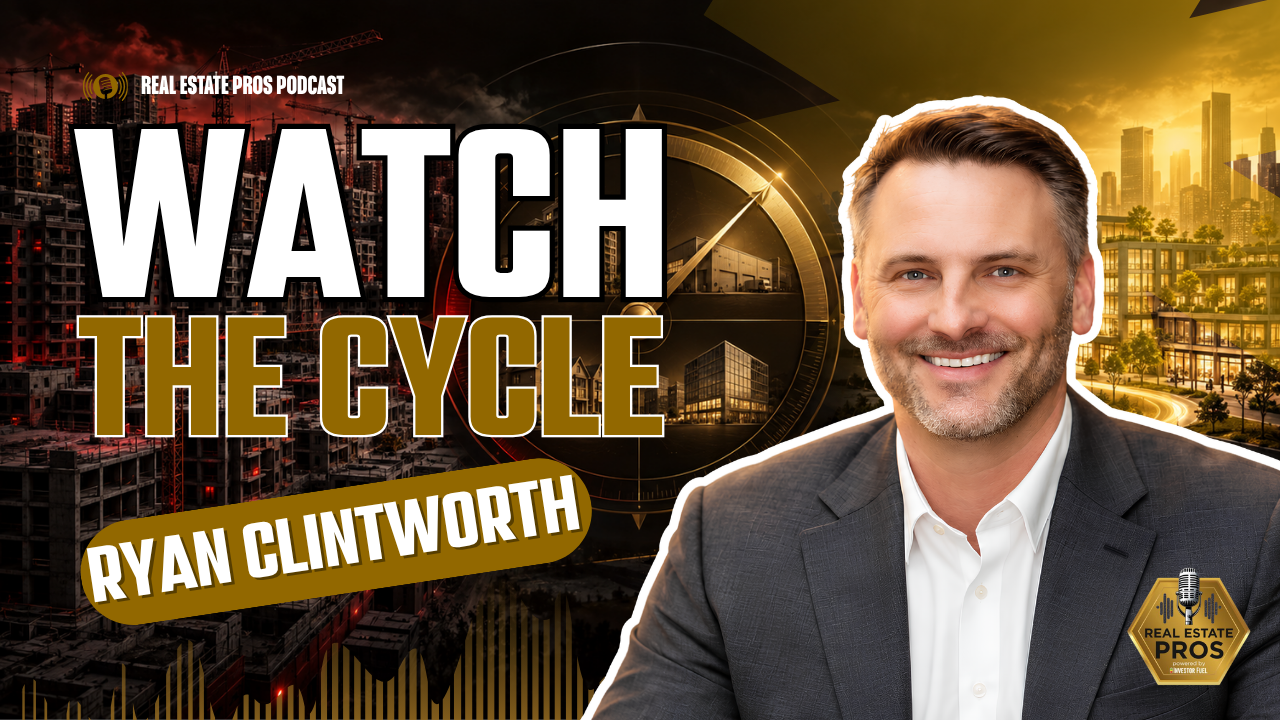
In this episode, Ryan Clintworth shares his journey into real estate development, his hard hat approach to investing, and insights on navigating market cycles and building a successful boutique development firm.

Resources and Links from this show:
-
-
- Investor Fuel Real Estate Mastermind
- Investor Machine Real Estate Lead Generation
- Mike on Facebook
- Mike on Instagram
- Mike on LinkedIn
- Twinpeaks’ Website
- Ryan Clintworth’s Phone no.: 480-203-8483
- Ryan Clintworth on LinkedIn
- Ryan Clintworth’s Email Address: [email protected]
-
Listen to the Audio Version of this Episode
Investor Fuel Show Transcript:
Ryan Clintworth (00:00)
We’re doing two
things which are unique right now. Some might say it’s just dumb. Might be a little bit contrarian, but as Warren Buffett says, be fearful when everyone’s greedy and greedy when everyone’s fearful. And once we’ve got some for-sale townhome product, like I said, yeah, multi’s been the darling asset class, but more importantly, it’s been rental product. And that’s kind of this.
I’ve noticed it it’s not a notice, it’s a fact. It’s all across national news. Politics like to talk about it. There’s this renter ethos, and there’s benefits to that with mobility and short-term leasing and again, just mobility.
Issa Hanna (02:09)
Welcome back to another episode of the Real Estate Pros Show. I’m your host, Issa Hanna and today we have Ryan Clintworth here to share his knowledge. Ryan, welcome to the show.
Ryan Clintworth (02:16)
Issa, thanks for having me. Appreciate it very much.
Issa Hanna (02:18)
Very excited to have you on the show, land developer. So you’re gonna bring us a lot of knowledge in the land development space. You’ve been in it for a while. But for the viewers at home right now, can you kind of give us a rundown, an overview of what you’re doing in real estate and then what a day-to-day in Ryan’s world looks like.
Ryan Clintworth (02:35)
Sure. So yeah, I mean we’re a boutique real estate developer. I often say we’re just kind of gunslinger mavericks, right? It’s me and a couple partners outsource most of our services. We operate strictly between the greater Seattle area, specifically the South Puget Sound of the Greater Metro, and then the Phoenix MSA. So I’m bouncing back and forth, we’re bouncing back and forth between those two markets.
We’ve developed in every single asset class. Maybe not specifically developed because both me and my partners got really deep backgrounds from brokerage to general contracting to investment management with the family office. So we’ve worn all hats and now in this current iteration, which started in 2020 with the company, we’re pure play developers as principals. And the primary asset class that we develop in is housing and specifically urban infill housing.
And just even more specifically, it’s usually vertical construction or some way that we can value add a commercial site and repurpose it for a rezoner or repurpose it for a housing purpose. So that’s primarily our number one asset class. Day-to-day is busy, my man. Like day-to-day is everything, right? I’m C E O, I’m C A O.
Chief allocation officer sometimes is how we like to think about it. All the way down to, washing the company cars, if you will. So day to day is busy, keeping pipelines full, trying to finance and close what’s in the pipeline, stabilize and exit what’s on the back end of a cycle. And then all while in the middle negotiating with contractors and estimating, construction budgets and
paying those draw requests, et cetera, et cetera. I mean it runs the whole gamut that we do in-house. I couldn’t tell you what one day looks like versus the next.
Issa Hanna (04:20)
Definitely. I mean in real estate period. We’re a business of variables, right? You get stuff, different stuff every day thrown at you. You never know what to expect. And for the people at home watching who are not in the real estate industry and think it’s a cushy life, it’s a cushy job. We work for ourselves, but we’re putting in eighteen hours a day sometimes, at least twelve hours. It’s constantly on our brain.
Ryan Clintworth (04:40)
It’s funny you say that I if I may, it’s I in Phoenix, the Urban Land Institute, the Arizona chapter, I’m kind of a chair, we call it facilitator. I’m a co-co-facilitator for a group called NEXT. It’s young leaders in their 30s, let’s say. And we had our seasonal kickoff last month and I was telling some of the guys, it’s like real estate, it at least for guys like me, it’s not a career choice. It is a lifestyle choice.
And most of the mentors that I have and still have to today, these guys, as will I, are gonna be on their deathbeds, so to speak, like buying and selling, what are we doing to make a move on real estate? And so it’s funny because it’s not a job. It’s a lifestyle and you gotta be prepared for that if you wanna succeed.
Issa Hanna (05:25)
One hundred percent. It is a lifestyle. You gotta be constantly on top of the market. I know when me and my investor friends sit around, especially with the recent market, the interest rates being high. You got a lot of guys sitting on the sidelines and they’re just itching. They’re just itching. They’re man, I can’t wait to get back to buying properties like I was a few years ago. So I could definitely relate. And another thing I wanted to pull out of your answer, you’ve worn many different hats in the real estate industry. So you have this basically ground-up knowledge, different aspects of it.
But your strength, I asked you, what is one of your strengths? And you said, we come in with our hard hats on. So not only do you wear, have you worn different hats, but right now when an investor deals with you, you’re coming in with a hard hat. Can you shed some light on that?
Ryan Clintworth (06:53)
Sure. So yeah, we have what we call the Hardhat Approach. And the premise, if you will, behind the Hardhat Approach is, especially when we’re trying to attract capital, as developers, right, we go vertical with construction. And it’s more than the spreadsheets, right? It’s more than the numbers. I can’t tell you how many pro formas that I have underwritten.
Syndicated and then delivered something different than our projections. I’ve been on the LP side where I’m investing with sponsors who put forth a business plan and it didn’t go as planned, right? So there’s a some pivots along the way, whether it was a failure or success, whatever. Those and so what when we look at it with our hard hats, like the Hardhat Approach, especially with development with our investors is you gotta really get behind the mission.
In a way, because of all of those variables and these just the changing of the markets. A real estate developed transactional cycle is going to be a minimum of five years. So you got to be prepared for the long haul. And we like to get buy-in from our investor class, but as well as the subcontractors and all the vendors that are part of us into the essence, if you will. I mean, it might sound a little bit hokey, but
Truly into the spirit of creation, right? So, I mean, everything from the laborer that’s sweeping floors, which we want to treat with the same level of respect and try to get him plugged in and talking to us with financial literacy and real estate, because everybody on the in that field that’s swinging hammers, throwing boards, sitting between wall forms with concrete. 95% of those guys, if you ask them what’s their greatest aspiration, it would be being a developer.
Right. And so and so and so, we want to shepherd that attitude all the way through and get good buy-in, but more importantly to the investor class. Right. Like, I mean, everybody could think and want to be a private equity firm, which is awesome. Private equity’s got a good place in the world, but it’s also got some downsides. It’s stripped some really great companies of legacy and fundamentals in a business, to yield profit. And so, okay, cool. We understand the profit motive, man. Like,
We have to deliver. But at the same time, if it’s not there, there’s got to be a greater mission. And it it’s so vast and exciting and fulfilling when it comes to real estate development, along with the risk. And so that’s the Hardhat Approach is to get the buy-in on the capital side as well as the execution and the resource allocation side of building, right? Of really, making manifest what otherwise wasn’t there.
And that’s what’s fulfilling for us. So and that’s that that’s what we mean when we say we lead each deal with our hard hats on first.
Issa Hanna (09:31)
That and I wanted to highlight you said boutique earlier right you’re not a big-box brand you’re the owner-operator you’re running these things you’re coming in with the Hardhat Approach you’re getting the whole team not just the investors but even the guys sweeping the floors to buy in to the vision that’s what you’re gonna get from a boutique guy as opposed to one of these big-box brands who are gonna just try to go after the paycheck
And sometimes not leads you in the right way. You’ve got somebody who owns it, who cares about the investment and who has a deeper knowledge than a lot of these guys that are working for the big-box brand. So man, I just wanted to highlight that about you, Ryan. And now I wanted to rewind the clock a little bit, right? We all got that cool story of how we got into real estate, right? We, I didn’t grow up thinking I would be a real estate guy, but here I am later on in life very thankful. So I want to get your origin story. How’d you get into our business?
Yeah.
Ryan Clintworth (10:24)
That’s the this the I’m answering this question a lot lately because I actually understand the answer a little bit better as I’ve matured and grown as an entrepreneur. And so in third grade.
I used to always doodle. I used to always draw houses. My mom and dad were always fixing and flipping houses, or my dad would, build them as his own general contractor in the summer as a side hustle, right? My mom liked the interior. So his kids, were running around, watching them talk and point and see and do. But so I always had an interest in that. And I was always drawing houses, floor plans, doodling cities, skyscrapers, and skyline. I see you’ve got, a nice skyline of Austin in the backdrop. Like had I seen that.
At eight years old, I would have started doodling it and try to like map it and draw windows. And so that was just it was always in my in my blood, if you will, even though I didn’t come from a real estate family. And so it the what really set me off, man, was so in third grade, Miss Cody comes in, she goes, Hey guys, you’ve got you’ve 11 by 17 drawing sheet, draw your house and do a 50-word poem up in the top left-hand corner. So the
Cool. I’m nine years old. Let’s do it. I love drawing houses. Submitted it. No big deal. Out playing sports at recess. One month later, Miss Cowie comes, says, Hey, Ryan, you’re, What My Home Means to Me drawing won the county contest. And I was like, that’s awesome. Cool. What do I get? Here’s $50 of Toys “R” Us bucks, awesome. And a ribbon or something like that. Okay, cool.
Three months later, she comes back, she goes, Hey, Ryan, you placed in the top three of the entire state of Washington. And I said, Awesome, what do I get? And she goes, Okay, well, now you get like a trophy and like 200 Toys “R” Us dollars, but you’re gonna have to go down to a town off Interstate Five in Washington, Kelso, where the Washington State Association of REALTORS was having their annual meeting. And so I had to go down there with the other two state winners.
And like read my poem and hold up my house in front of, 200, 300 realtors. I had no idea what was going on. I was nine years old and I just rewarded because I was good at drawing homes because that’s what I like to do. And so I tell I say that a lot now because this is a tough business. And we’re in a tough market. I’ve been through a couple of real estate cycles and
You’ve got to have a passion for a purpose. And so I just try to stay true to my purpose and what I think God put me on this planet to do. And when I’m ever second guessing myself or kind of feeling tired and burnt out, and I’m not, like I just have to go back to why am I doing this? And it was, that’s been my passion and back to What My Home Means to Me as a one off kind of flippant drawing contest when I was in third grade.
I think that’s the true origin of my development story.
Issa Hanna (13:54)
Amazing. I mean, having parents in the game, right? Having a dad who was in GC work gives you even if it just brushes off on you, it gives you a a ground-up knowledge, like I said, and then mixed in with all the other aspects, and then it’s definitely in your blood. I mean, enjoying drawing floor plans, enjoying drawing houses, winning the state a state championship for it, basically. I mean you were meant for this game and and now I know why you’re on the show and I know why you’ve been so successful.
And you’re just crushing it in the industry ’cause man, that is super cool, man. You were definitely built for this. I wanna
Ryan Clintworth (14:29)
I mean it the I will say the I mean the professional tracks been a journey into itself and back to like Issa what you’re saying with wearing all hats I didn’t know real estate was what I wanted to do when I got out of high school and came down to go to Arizona State University. I just knew I wanted to be in the business of buildings, those, however that looked, and so.
I did my undergraduate in construction management. And then, three years into the professional field, I’m like, truly wearing a hard hat. You’re sitting in a job site trailer, turning, pages with superintendents and subs coming in and out. That’s 0405, pre-GFC. And I’m watching these brokers and these developers that were just to me, they were masters of the universe and
they were getting the headlines on the front page of The Arizona Republic or The Seattle Times or Bloomberg. And I’m like, I gotta get out of this job trailer, man. I’ve got too much kind of piss and vinegar for one, because I was young, but also personality because I really love people and I like being out in a sales environment. And so that was a just a I’m done. I’m gonna go get my real estate sales license and then cut my teeth in real estate sales. And so
that’s why I say I’ve worn many hats because that sales and commercial brokerage or Colliers to working directly for a family office, kind of an ultra-high-net-worth guy who’s in the real estate game directly under him to investing in a general contracting business. And then now, we’re running around things. So yeah, I’ve seen it from every single angle. Yeah.
Issa Hanna (15:56)
Exactly. And that’s what gives you such a leg up and gives your investors such a leg up on other people. They’re not just in the office crunching numbers. They didn’t learn about it in school, or they learned about it in school. You got the real world experience from so many different angles, man. You’re bringing such a different spectrum and and I love that. And now I want to get a a real estate nightmare from you, right? We all have an investment nightmare. Give me one that sticks out over these many years.
Ryan Clintworth (16:23)
Well, I mean, the obvious one for me is just the GFC, right? I just, I just described to you that, I left what was a good career path in the general contracting space. And this is at an institutional scale, right? So it’s one of the top 10, 15, 20 general contractors in the country. And getting into commissions-based business and not really understanding, I grew up in Olympia, Washington, which is a government town. It’s a pretty stable.
Economy. Most of my friends and family and like everybody worked for kind of the state government. My family did not, but my my parents as friends and and so I never really gave much thought or paid much attention in class to the business cycle. Right. And so when you’re impressionable and hungry at 25 years old and then 2008 rolls around I mean
You’re just like, wait, what is this? This is this was never part of my plan. And nor did my folks really warn me that these cycles can be this deep. And so I had won a few good assignments and I had a few clients and kind of bought a few of my own, condos on the side. And all of a sudden, like I realized, I’m leveraged up and I’m seeing clients of mine who, again, I had so much respect for go.
Pretty much go BK. And so I Arizona was a tough market. The Sun Belt was extremely tough during the GFC. So I cut tail and run and headed back up to Washington State to what was comfort, quite frankly, with home and what have you. So I mean I’ve had some deals that have been tough, but that cycle was wild. And that instilled I mean that instilled some grit.
And some perseverance in me, knowing that this business will cycle again. And now I’ve seen it come in many, two or three different forms since then. So yeah.
Issa Hanna (18:08)
Hundred percent. As you grow as you make it through these nightmares. And the collapse was the biggest nightmare of our lifetime and possibly since the depression. I mean, when you make it through to the other side, you’ve got such a different perspective on it. I was fortunate enough to get into real estate a few years after the collapse, so I didn’t get to experience all that fallout, but I can tell you just talking to some of my investors and stuff.
And I know you can attest to this, Ryan. It w it was literally financial Armageddon. I mean, banks were just closing overnight and you couldn’t you couldn’t do anything. So yeah, the fact that you’ve been through that and you know what to keep an eye out on for, you know what trends in the market kind of start you could probably foresee the market shifting and going downward a lot sooner than people have gotten in after the collapse. So amazing man. All right.
Ryan Clintworth (18:56)
I hope so. I hope
I certainly have more instinct and intuition for what I would say just behavioral patterns, right? That’s kind of what to look out for. I can’t I never try to be the guy that wants to predict where rates are going or where rents are going, but you want to keep an eye on a particular asset class if it’s if it’s getting overbuilt or if you’re coming into an asset class late in a cycle.
‘Cause because each of the five major food groups, let’s say in commercial real estate kind of do have their own cycles. The darling of the market since, post GFC, kind of when you got in, has been multifamily. Right. Now, I love multifamily, but I also won the state What My Home Means to Me contest when I was nine years old. So I have a reason, but like the that’s been the darling asset class. And then
COVID and supply chain disruption and all of a sudden industrial big-box becomes the darling asset class of the market. And so you I look at these larger kind of macro waves and then just behavioral patterns by staying in contact and participating in the market on a deep level between the brokers and the investment managers and the debt and equity structured finance guys and that’s those are those are the signals that I’m paying the most attention to.
I like I like to read Jay Parsons stuff too on LinkedIn. He’s pretty good. But yeah. Yeah.
Issa Hanna (20:07)
Definitely. Jay Parsons is amazing his stuff. If you guys haven’t looked him up, go look him up. Very knowledgeable guy in the game, just like Ryan’s a knowledgeable guy in the game here. And then I want to shift to the future. You’ve got some plans cooking up. So I want you to kind of take it from there and give us the plans you’ve got for your investment firm.
Ryan Clintworth (20:28)
Yeah, we’re doing two
things which are unique right now. Some might say it’s just dumb. Might be a little bit contrarian, but as Warren Buffett says, be fearful when everyone’s greedy and greedy when everyone’s fearful. And once we’ve got some for-sale townhome product, like I said, yeah, multi’s been the darling asset class, but but more importantly, it’s been rental product. And that’s kind of this.
I’ve noticed it it’s not a notice, it’s a fact. It’s all across national news. Politics like to talk about it. There’s this renter ethos, and there’s benefits to that with mobility and short-term leasing and again, just mobility. But when I got into this business and we trained in 04 or 05 when I was getting into sales, was don’t be a renter. You gotta be a homeowner. And so we’re developing, we’ve got one.
One project up in the Pacific Northwest, which is a for-sale townhome product. We’ve got another one down here in Arizona. We’re about to break ground on. And all the rest of my peers in the market are doing still sticking with rentals. And so we’re on a little bit of a mission to bring homeownership back in the only way that homeownership, despite the headwinds of, your 30-year mortgage rates, interest.
You’ve got to bring supply to the market. And demand will follow supply, but no one’s really has been and currently is, there’s some out there that are delivering new for-sale supply, which in dense urban markets, which again, when I started in this, the like the natural on-ramp to the greatest wealth-creating vehicle in America, which is homeownership, for a lot of us started with a condo or a townhome.
That was that was your on-ramp into the market. And then, you size up and grow up. And so we wanna we think there’s a gap there that we want to try to fill. It’s very hard to do because affordability is real. So that’s one thing. Most of our all of our prior deals, we the in then bucket number two to your question, Issa is like we’ve always syndicated passive investors. We call them LPs in the industry, limited partners basically.
Into our projects and we do each one of those kind of sits in its own special purpose entity or special purpose vehicle. And we’re looking at more of as developers again, trying to it’s not move away from it so much, but set ourselves up to scale a little bit better and align our core skills experience and with
more experienced operators in the form of like co-general partners. And so bringing other operators on, obviously we’ve got to find a fit and an alignment culturally and philosophically in the thesis. But that’s one thing that we’re looking at on an enterprise level. Is the capital structure. And then bucket number one is the product.
Is a little bit of a concerted effort towards for-sale product versus a for rent.
Issa Hanna (23:17)
I love that. And then the townhomes, yeah, they don’t build many townhomes anymore like they used to. As somebody who did get into homeownership, my first home that I ever bought was a townhome. It it’s definitely a great way for young owners to get in. And I know, you got to tackle the affordability crisis we’re having right now, but I’m sure, somebody like you with the with your knowledge and develop so many different types of projects, I’m sure you could come to some type of
Conclusion to where it makes sense, right? 100%. Yeah, right. I want to get your advice for our younger guys now, right? Our business is a business of establishing relationships, growing your network. Super important. You don’t know anybody, you’re never gonna sell anything, you’re never gonna do anything. So for that young guy just starting out trying to establish his first connection, what advice would you have for?
Ryan Clintworth (24:03)
It’s good question. First connection. I subscribe to what’s that guy’s name? San Francisco Tim. He’s got that book, *Tribe of Mentors*.
Issa Hanna (24:11)
What let me look him up. I don’t wanna misquote the name.
Ryan Clintworth (24:13)
But nonetheless, Tim Ferriss. Tim Ferriss
Issa Hanna (24:15)
Tim Ferriss, yeah.
Ryan Clintworth (24:16)
Says that book, *Tribe of Mentors*. I mean, the book is in the title. And so I I’m a I’m a big advocate of that for young guys. And so again, I didn’t really grow up in a real estate family. My folks did some stuff and my dad passed away when I was in college, so young. And when I was coming into the business, I’m grasping for that kind of that role model that was both personal and professional.
And so finding those mentors and sticking with them is so important. Find somebody who’s in real estate that’s got experience, character matters, integrity matters. Hopefully he’s successful. I love the PBD Podcast. Patrick Bet-David’s like the number one thing he tells his kids it’s like, I don’t care what college you go to, your the your number one job should be like find the richest kid in the class.
And actually find out who the richest professor that you have is, and then go make friends with them. Right. So relationships are everything in this business. So pick them good, pick them right, be grateful, be humble in your approach. And if you can lead with gratitude and humility into the ask on a mentor relationship,
You’re gonna get it you’re gonna get everything you want out of it and stick with it. So yeah.
Issa Hanna (25:29)
100%. And I love that you brought up integrity, honesty. Find that mentor and learn from them because when people like you, when people like dealing with you, right, when you’re establishing this connection, it’s not just one connection. Like you said, you might meet the richest kid in your in your class, become good friends with him. He might have 10 different people for you if you treat him the right way when you do business with him. So man, amazing, knowledge. And I know our young guys are probably
Very thankful for that. So I’m gonna just say thank you on behalf of them already. And now I wanna give you the floor. If people wanted to get a hold of you, Ryan, and they wanted to do business with you because you are so knowledgeable, you do care about your investors, where could they get a hold of you guys at?
Ryan Clintworth (26:09)
Sure. Well, I would just visit our website. So it’s Twinpeaks, and that’s plural, like the restaurant, but not. twinpeaksdev.com. So Twinpeaks Development. It’s a good starting point. Sample a little of our portfolio platform philosophy. My phone number, for those that want or willing, wanting to talk.
And explore projects with me in the two markets. Austin’s on our radar too. Issa, I believe that’s where you’re calling in from is Austin. We have a house in Lakeway. So Austin’s probably the next market that we go look at. But we focus on Phoenix MSA and then the Greater Tacoma-Seattle MSA specifically. So I’d like to be talking guys there. But yeah, my phone number is 480-203-8483. That’s my direct cell.
It’s on 24/7. And my email is just Ryan R Y A N at twinpeaksdev.com. You can find me on LinkedIn as well. Try to stay pretty active on LinkedIn. So those are kind of the main channels right there. And yeah, thanks for the plug or the opportunity, Issa.
Issa Hanna (27:10)
No problem. Man, I actually think it’s an opportunity for our investors to get acclimated with somebody in our space and who could really, help them. So to our guys at home, to our investors, to our members here. Ryan, very personable, cares about the investors, knowledgeable, the type of guy you want to do business with. So make sure to check out twinpeaks D E V dot com. Give them a phone call. If it’s the right fit, you guys can definitely make a lot of money together.
Ryan, man, thank you so much for coming on the show. You brought so much knowledge to us.
Ryan Clintworth (27:40)
Yes, but it’s my pleasure, Issa. Thanks a lot for having me. And I’m gonna continue to tune in to Investor Fuel. It’s been good to watch you guys grow and bring high-level content to the market. So very cool.
Issa Hanna (27:51)
We appreciate having you and we appreciate you bringing high content level to our show. And to our viewers at home, if you enjoyed my conversation with Ryan and want to see more like it, make sure to hit like and subscribe. I talk to people every day that can bring us different knowledge on every aspect of the real estate industry. Until next time. The Real Estate Pros are out.