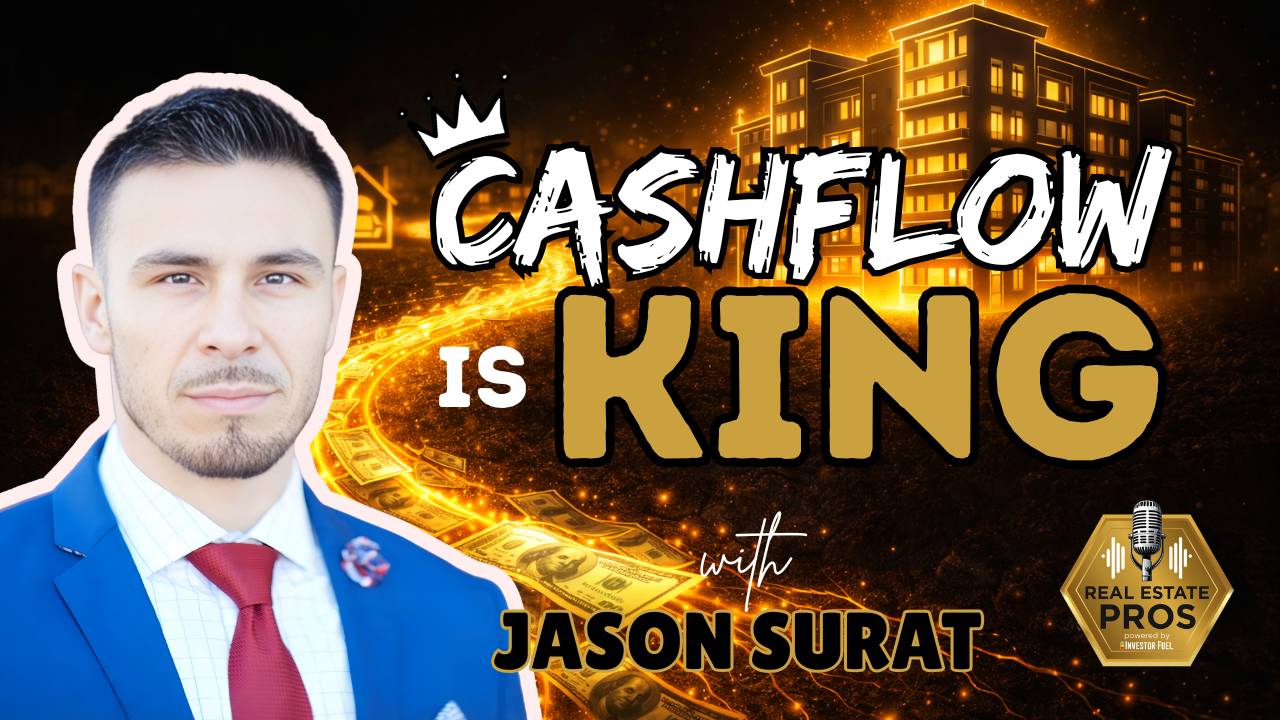
How Ken Chung Bought 120 Houses in 90 Days (The Power of Mentorship)
Show summary
In this episode of the Real Estate Pros podcast, Micah Johnson interviews Ken Chung, a seasoned real estate investor and mentor. They discuss the critical role of mentorship in real estate, Ken’s journey in the industry, and the importance of finding the right mentor. Ken shares valuable insights on being a good mentee, taking actionable steps, and building lasting relationships in business. The conversation emphasizes the significance of mentorship not just for financial success but for personal growth and development.
Key takeaways
- Ken went from a few houses to 120 purchases in 90 days after hiring a real estate mentor who answered his specific questions and showed him exact steps to execute deals.
- When CIBC bank flagged his rapid buying pace (three houses a week) and paused his financing, his mentor advised him to wholesale deals instead of buying them all himself, since paying cash for everything would be bad leverage.
- He built a wholesale system: create a cheat sheet on each deal, send it to his network, and charge buyers the first year's projected return -- deals often returned 25-50%+ cash-on-cash, netting him about $3,000 per deal, three deals a week, roughly $9,000/week.
- When investors didn't want their refinance proceeds back, Ken redeployed capital into a trailer park, a 50,000-square-foot warehouse converted into heated indoor storage in Winnipeg, and land deals.
- Not reorganizing his portfolio into proper trust/corporate structures early cost him an estimated $375,000 to fix later, a lesson that hit right before the 2008 downturn.
- In Canada, mortgage qualification is based on what's titled in your name, not what you've personally guaranteed -- so Ken puts properties into corporations and personally guarantees the loans, which lets him keep qualifying for more financing instead of maxing out personal debt service.
- When choosing a mentor, vet their beliefs and values first, be prepared to take action on their advice, and don't waste their time -- Ken still talks to his original mentor, Ross, regularly decades later.
In this episode
- 00:00The mentor who took Ken from a couple of houses to 120 in 90 days
- 02:38Ken's current projects: Kelowna fourplex, Alberta land development, Clinton, Iowa deal
- 08:00Ken's origin story: grandfather's advice and the no-money-down seminar
- 10:08Scaling to 120 houses in 90 days and hitting the bank's wall
- 12:35The mentor relationship and pivoting to wholesaling
- 16:28Handing the wholesale power team over to friends
- 18:22Becoming a coach and mentor himself
- 20:54How to choose a mentor and be a good mentee
- 25:46Corporate structures, personal guarantees, and qualifying for mortgages in Canada
- 28:07The $375,000 lesson and the 2008 crash
About Ken Chung
Ken Chung is a Canadian real estate investor inducted into the International Hall of Fame for real estate investors in 2005. He has been investing for about 25 years, including buying 120 houses in 90 days early in his career, running a wholesale business out of his garage, developing land and townhouses in Alberta, converting a 50,000-square-foot Winnipeg warehouse into an indoor storage facility, and working on current projects including a fourplex in Kelowna, BC, land development in Three Hills, Alberta, and a deal in Clinton, Iowa. He and his wife also became certified life and business coaches and certified hypnotists, originally to become better parents, and he now mentors other investors.
Listen to the audio
“What took me from just a couple of houses to 120 in 90 days was having that mentor.”
Ken Chung
“A lot of people out there who don't do anything with the information they receive. And I think if you're going to hire a mentor, you want to make sure that you're prepared to take action.”
Ken Chung
“The best lessons in life we learn, we pay for in cash.”
Ken Chung
Questions answered in this episode
How did Ken Chung buy 120 houses in 90 days?
Ken credits hiring a real estate mentor who answered his specific questions and showed him step-by-step how to execute deals he didn't know he was capable of. Once he understood the process, he says he 'went nuts' and kept buying until his bank (CIBC) flagged his rapid growth and called him in to review how he was structuring the purchases in corporations.
What happened when the bank noticed Ken buying three houses a week?
CIBC invited him to meet with three executives on what he calls the 'Imperial Palace' floor. He explained how he used corporations and proper structuring, and the bank told him growth needed to level out so they could see a track record before lending more, effectively stopping his cash purchases.
How did Ken pivot when the bank cut off his financing?
His mentor suggested he wholesale the deals he couldn't finance himself. Ken built a cheat sheet system, used his existing network (hungry to get a piece of his cash-flowing deals), and charged buyers the first year's return on investment -- averaging about $3,000 per deal, doing three deals a week, for roughly $9,000 a week working out of his garage.
How should an investor choose and work with a real estate mentor?
Ken says not every mentor is right for every investor -- you need to learn their thoughts, beliefs and values before committing, since those become the lens for the advice you'll get. As a mentee, you must be prepared to take action on what you learn, not waste the mentor's time, and stay open to learning since even a mentor doesn't know everything.
What mistake do new investors make with how they hold title to properties in Canada?
Ken says most people put properties directly in their own name, which maxes out their personal debt servicing and stops them from qualifying for more loans. Instead, he puts properties into corporations; he still personally guarantees the mortgages, but in Canada qualification is based on what's titled in your name, not what you've guaranteed, so this frees up capacity to keep buying.
Resources and links
- Ken Chung’s Website
- Ken Chung on LinkedIn
- Ken Chung on Facebook
- Ken Chung on Youtube
- Ken Chung on Instagram
- Ken Chung’s Email: ken@kenchung.ca
- Ken Chung’s Phone number: (250) 469-3002
Full transcript
Ken Chung (00:00)
what took me from just a couple of houses to 120 in 90 days was having that mentor. I know, right? I still feel people tell me that. And I said, it was, it was amazing time. And yes, it was busy. It was very busy.
Micah Johnson (00:10)
Bye.
I’d
be.
Ken Chung (00:18)
Well, when they told me that, you know, you could do this, you could do this, you could do this, and this is how you do that. And I said, well, how do I do this part? And then when I asked the questions and I got the answers, it was like, Bing, all this stuff went off in my head. And it’s like, I didn’t know I could do that.
Micah Johnson (02:09)
Hey everyone, welcome to the Real Estate Pros podcast. I’m your host, Micah Johnson. And today I am joined by Ken Chung, who was inducted into the International Hall of Fame for real estate investors in 2005. I think you’re going to love this conversation. I’m excited about it. Ken, welcome in. I’m doing well, man. I’m doing well. I think our listeners are really going to take something away from really how you’ve approached real estate for your whole career, especially how you’ve used mentors, how you found them.
Ken Chung (02:25)
Well, hey, how you doing, Micah?
Micah Johnson (02:38)
how important they were and how they helped you through these different times that we’re gonna dig in. So let’s dive in. So for people who may not know you yet, what’s your main focus right now and what markets are you operating in?
Ken Chung (02:50)
Oh, goodness. Well, main focus is does the deal work? It’s never so much about a specific area. I’ll give you an example. Right now in Kelowna, I’ve got a fourplex. know, BC, we have a dictatorship that demanded that all properties are now zoned for a fourplex minimum. And you have certain requirements, but pretty much every major city, you can have a fourplex without having to rezone. So it’s a huge thing. So I decided to do a fourplex here.
At the same time, in the process of that, I purchased two two and a half acre parcels in Three Hills, Alberta, which is between Calgary and Red Deer. And we’re doing some development. One one of the parcels I’m actually just parceling up the land and selling them off, let people do what they want with it. The other one I’m actually doing a development of townhouses into. And believe it or not, that’ll probably be done before one of BC is done. And I’m also working a deal in Clinton, Iowa.
of all places. And people said, they say what? And I said, yeah, Clinton, Iowa. It’s a really cool deal. If it comes together, it’ll be great. There are lots of lots of considerations to it. We’re working through the details now. And they say, well, you’re all over the place. Well, I can be all over the place because I make sure that when I do these things, the relationships I have with the people that I work with, I bring partners in on deals, not because I was
need to have the partner, but I believe in sharing the wealth. And it also takes a piece of a pie. And I say, hey, some small piece of a pie is better than no pie at all. So I believe in sharing that wealth. And the more people that I work with and the more people I make money with, the more they want to work with you. It’s a funny thing, you know, and it’s a funny thing.
Micah Johnson (04:39)
funny thing.
Ken Chung (04:42)
And people are amazing when you have the opportunity to work with different people. They have different strengths, knowledge, background, resources than you have. And you may not have, you may have known them for 10 or 12 years, but never known all of that. it is one of those things that by involving other people in the things that you do, you can learn so much and you can really, really pool resources when needed, if needed. Right. And I think that was really huge. So for what I do now,
I’m really enjoying trying to create properties and I don’t like the affordable, but I like the attainable concept. you know, housing that is attainable and a reality for people. I think one of the biggest things when you, when, when I first started my real estate stuff, I was buying 1970 style houses, split levels, by levels bungalows that had basements and I was putting sweets in those. The first thing I always did was put sweets into them, but that made them more
attractive whenever I had to let one go or decided I was just doing it to sell it anyway, was for somebody else to get into the market where they couldn’t have afforded otherwise because it didn’t have that setup. And by me creating that opportunity, it was huge. It’s just like you think of townhouses now and where, while townhouses where I live are typically single family, there are no sweets in them. And in Alberta, they’re doing it a lot, but they’re
Micah Johnson (05:50)
God.
Ken Chung (06:54)
they’re selling those as separate things. So what we’re doing on the development project is making the whole main floor garage with a suite behind it and the whole upper floor, all the main residents of the house. So that somebody buying a townhouse can still have a rental income from the suite or if they’re a young couple or a single person live in the suite and rent out the upstairs and allow them to get into a market where they couldn’t have otherwise.
So making attainable housing is a huge thing for us, making it nice and making it what people need where they are. Like in Alberta, having a garage is a huge thing, right? And I can make these townhouses without garages in them, but the key is that I’m trying to make them for what people’s needs are, where they are. And so that’s what I’m doing right now.
Micah Johnson (07:35)
Okay.
Gotcha.
Okay, you got a lot going on. So let’s go back to the beginning. How’d you get here? What led you to where you are today? What’s been one of the most important parts of getting you to where you are?
Ken Chung (08:00)
Wow, okay. ⁓ Listen to those, know, they’re smarter than me. You know, like I said, I think I was telling you earlier, my grandfather was telling me to buy that house next door if I could. And if I did nothing else in life, buying that house next door would have been just enough. You know what I mean? I always believe as I’ve done all these things over the last 25 years that,
I think for every child you have, you should be buying a house or a condo, not in their name, but for their benefit. That’s key in a structure. But making sure you buy one for each of them because that’ll pay for their education. That’ll help them with their business. If they don’t go the education route, it’ll help them down their life later. And I think that’s one of the best investments that parents can make in their children. It’s not always easy for some to grasp or understand, but it is.
And that’s, that’s a whole other conversation. But when I started doing that, I got into realizing what the cafe was like, and I started buying houses and going from there and to being educated on the process. And I think I told you earlier that my friend invited me to one of those, no money down real estate seminars. And I would, you did what and paid how much. And, so I went to it with them. Next thing you know, I’m, I’m calling the.
The power team is as I found it out to be was all the people that I did business with my mortgage brokers, my realtors, my, banker, even, and my, my lawyers, they’re all huge components to reaching the level of success that I did. And it was because I, you know, I worked with them and I trusted them and I understood what was going on. And then I learned better questions and learned what I didn’t know.
And that was key. What didn’t I not know? And by asking more questions all the time, I learned, I still learn it every day. And
what took me from just a couple of houses to 120 in 90 days was having that mentor. I know, right? I still feel people tell me that. And I said, it was, it was amazing time. And yes, it was busy. It was very busy.
Micah Johnson (10:00)
Bye.
I’d
be.
Ken Chung (10:08)
Well, when they told me that, you know, you could do this, you could do this, you could do this, and this is how you do that. And I said, well, how do I do this part? And then when I asked the questions and I got the answers, it was like, Bing, all this stuff went off in my head. And it’s like, I didn’t know I could do that.
Next thing you know, I just went nuts and I kept buying. And then what happened was, you know, what happened to it? The bank finally said.
Whoa, whoa, whoa, whoa, whoa, whoa. This is a lot real fast. We need you to come in and see us. Now in Kelowna, most of our banks are one level, but you know, where I was dealing with CIBC, they had the second floor. We called that the Imperial Palace. And, ⁓ I got invited to the, second floor of the palace and I got put into a room with three of their executives and they’re like, okay, we know what you’ve done. We just don’t know how you did it.
And we need to know more before we can figure out how to proceed. And I said, okay. So I explained to them how I did what I did and, and by putting them in corporations and setting up the structures properly and, this and that. They’re like, ⁓ okay. I get it. For now it needs, it needs to just level out for a little bit and we need to see, you need to see a track record of it working. And I said, okay, but wait a minute. I’m buying three houses a week.
You’re starting my growth here. So having a mentor, which I still today think that is the best thing, the smartest thing I ever did was hire a mentor because he’s been there for me from day one. Now the rules back then for the company were you get your mentor for six months, right? And that’s it. Well, we built a relationship when we became friends and you know,
Micah Johnson (12:09)
Yeah!
Ken Chung (12:35)
The principle of, of mentorship is being there and, and being supportive. And he always basically said, Ken, as long as you don’t mess with me and don’t, don’t waste my time. I’ll be here forever. You know, and I live by that and I respect them for that because I will tell you that at that point when I had, wait a minute, you’re sending my growth. I’m buying three houses a week and you’re telling me no more money. And then he said, well,
What are you going to do? And I said, I don’t know. I’ve got all these great deals coming in. says, well, why don’t you wholesale them off? I said, wholesale them? No, no, no, no, no. You don’t understand. These are good deals. I don’t want to give them away. These are really good deals. And I said, mean, the cashflow is amazing. You know, and I’m able to get like 50 to 80 % cash on cash a year. That’s a good return. And he goes.
Micah Johnson (13:29)
Yeah.
Ken Chung (13:30)
Well, do you have the means to buy them in cash? I said, yeah, but that’s just wrong. Every way from Sunday, that’s wrong. It’s bad leverage. He goes, well, then wholesale. And I said, well, no, I don’t want to do that. And he goes, well, then pay cash. I go, well, no, I don’t want to do that either. So I said, well, how do you wholesale them? Because I didn’t know at the time I wasn’t wholesaling. And he said, you can’t listen. You got to figure out how much you want for it, but effectively use your network and follow these principles and these steps, create a cheat sheet, send it off.
And I started doing that. Next thing you know, the network I had, they were hungry for them because they all knew that I bought all these houses and I was making all this cash flow. They were trying to figure out how to get a piece of that. So I was just sharing it with them because I couldn’t buy them myself. Well, I could, but I didn’t want to because it didn’t make good leverage. Right. So I started sharing the wealth, if you will. And that opened up my mind to a whole different world. And so by sharing that wealth, I had these things being sold and I was selling
Micah Johnson (14:09)
Yeah.
Ken Chung (14:27)
Everyone I got pretty much for a while there. And I decided that based on the cashflow, what I had to put in or what somebody would have to put in and how much they would get back every year on the return. Okay. So if I, if I could tell you, Micah that you could get this house, put 10,000 in, you’re going to see three to 5,000 return annually on your money. That’s 35 % return. Give or take.
500 bucks. Would that be a good deal for you? You know, that’s all said and done. 3,500 bucks in your pocket at end of every year for the 10 grand you put out. That’s pretty good return most people would think. Right? So I charged the first year of their return and people were ecstatic with that. They were like, no problem. So on average though, I was making about $3,000 a deal. Cause some deals were that good, some were a little bit less, 25%. But on average, about $3,000 a deal. And I was doing three a week.
My power team was doing all the work for me, but they were making money, right? So they were happy too. And so I was making nine grand a week, working out of my garage in Kelowna, maybe about 45 minutes worth of time per deal. So for less than three hours a week, I was making 9,000 bucks a week. That was a pretty good lifestyle.
Micah Johnson (16:09)
Yeah.
Not bad.
Not bad.
Ken Chung (16:28)
Not bad.
Right. So then I had my friends who started this journey with me and you know, they were taking some of these courses with me and they’re like, Ken, how do you, how do you do this? And I’m like, well, this is what I do. And I said, listen, if you guys are willing to move out there and take this on, I will turn over my power team to you. I will turn everything over to you. And so they did. I went out there and I showed them how to do it. I gave them my system and just let them run with it.
Micah Johnson (16:31)
Right.
Ken Chung (16:57)
And that ended up that ended most of my wholesaling. So it was awesome. And, you know, I was able to help make a difference with other people. And, you know, one of the things was that I looked I look back in those days and I think having that mentor for me, being able to pivot when I needed to. That made a huge difference, you know, and then the next problem I had was I was able to refi some of these properties that I had and I wanted to give people their money back.
They didn’t want it back. So I’m like, well, what do I do now? So was talking, you know, I couldn’t buy these things the way I was buying them. I gave up my wholesaling portfolio to these guys. And so I called my mentor again. I said, what do I do? And he goes, well, what’s going on in real estate where you are right now? And I said, well, okay. So I got into some land and then I bought, you know, I bought a trailer park and I bought a warehouse, 50,000 square foot warehouse with, you know,
four levels and I turned it into the indoor storage facility in downtown Winnipeg. Heated indoor storage, you know? So I started doing all these different things because nobody wanted their money back, so I had to put it to work. And so I just kept the process going and I learned more. And that mentorship meant everything to me. I still talk to Ross, know, Ross and I talk every few months and if it’s me not calling him for something, it’s him calling me for something.
Micah Johnson (18:09)
Right?
Ken Chung (18:22)
And I said, what are you calling me for? ah, can I learn stuff from you every day? you know, it’s.
Micah Johnson (18:27)
saying that the students
become the teacher.
Ken Chung (18:31)
And to have that relationship has been huge. you know, so he Ross is an amazing mentor. He’s not the only one I’ve had. I’ve had, he’s the only one I had in real estate that I hired. and I had other mentors for personal development and things in my life to open my mind to different possibilities. And I’ve learned so much from that, that years ago, I decided to,
offer to do some coaching. My wife and I, you know, it’s funny you were talking about children earlier. My wife and I decided to become life business coaches. Let me rephrase that certified life and business coaches. And we also decided to become certified hypnotist, not for anything to do with the business, only to become better parents. So that we could be be the best parents we could possibly be for our children, give them every opportunity and be as strong as we could for them.
Micah Johnson (19:16)
Okay.
Ken Chung (19:23)
And that’s what, that’s what we did it for. But because of all that, I ended up going down this path and, and I was doing some, some coaching and, and I realized that the coaching, way it was structured and things like that wasn’t necessarily for me because I became somebody’s accountability partner and I didn’t really like that. so I decided to do the odd mentoring and it was only because people kept asking me. And so.
going through that process, I asked my mentor, says, you know, what do you think about this? And he goes, well, I learned stuff from you all the time, your wealth of information, you’ve been there, done that you go through the highs and the lows and understanding how to maneuver around that is probably more important than learning how to avoid it. I mean, he says, would you rather learn from somebody who is still riding the what riding the, you know, the high on something and never never ridden the low and
and not going up and down the roller coaster? Or would you rather be with a guy that knows how to do all that and has been there, done that and doing it again? And I thought that was a huge, huge impact.
Micah Johnson (20:31)
you’ve empowered or you really took on getting a wealth of information from mentors. You also had that share the wealth mentality that’s gone with you through your career. What would you tell someone who is thinking about hiring a mentor? How do you go about looking for one? And then how do you make sure you’re the best mentee possible? What kind of attitude should you take?
Ken Chung (20:54)
Wow. ⁓ Okay. You know what? I’m to tell you that not every mentor is the right mentor for you. I’m not the right mentor for every real estate investor. That’s for sure. I have my thoughts, my beliefs and my values. And I think that’s really important to find out what those are for those people, because those are the suggestions, the information and the guidelines that you’re going to look up to. I think that it’s important, even though somebody might have, you know,
been where you want to be and been there, done that kind of thing of where you want to be. They still might not be the right person for you. So do the right thing, get to know them, invest your time, you know, learning about them before you, you know, jump into that path. I think that one of the things that really makes a huge difference when I evaluate relationships of my mentees and when even when I was a mentor, I think the biggest thing that for me,
Was I was constantly learning. was constantly being open to new suggestions and realizing that even my mentor didn’t know it all. But one of the things that I learned from my, from my mentor and, I still use it. I stole it from him. It’s not mine. I stole it from him. You know, it’s this, it’s like Henry Ford. Henry Ford used to say that I don’t need to have all the answers. I just have a button on my phone that’ll get me the answer to the right guy. Right. You know,
You know, I know a guy who knows a guy, right? And being able to pull those strings and be able to help people, that’s huge because I’ve got relationships that I’ve had for 15, 20 years. Some guys I haven’t talked to in a couple of years, but I know if I picked up the phone and called them, they’d answer the call. Right? So that’s huge. But I think from a mentee standpoint, I still, you know, the first, not the first actually, but the second.
⁓ menti that I took on, I’m still friends with him today. mean, we together, helped him make millions of dollars years ago. he’s still doing real estate. He still calls me for things, you know, he comes through town and, know, I always get the phone call. always connect. and it’s always wonderful to see that he’s still doing something. And I think one of the key parts was.
Micah Johnson (23:07)
Mm-hmm.
Ken Chung (23:11)
Being able to share the knowledge and the information is great, but knowing that they’re open to taking that and doing something with it. Taking action is huge. As a mentee, you have to know that you can do it. There’s a lot of… ⁓
People said, well, it didn’t work. No, there’s a lot of people out there who don’t. Bless you. And a lot of, a lot of people out there who don’t do anything with the information they receive. And I think if you’re going to hire a mentor, you want to make sure that you’re prepared, that you’re prepared to take action, that you’re prepared to be open and listen and that, and to absorb because I still have notes.
Micah Johnson (23:34)
Thank you.
Ken Chung (23:58)
from years ago from sessions that I had with people. And I review that stuff from time to time because it keeps me grounded. And it keeps me remembering that I don’t know everything even today, you know, I’m still learning. And I think that being open to all that is really important as a mentee. I’m actually, I did take on a couple recently who are taking, they’re taking the action.
Micah Johnson (24:06)
Hmm.
Ken Chung (24:27)
They were ready to do things. They had gotten started a little bit. And I’ll tell you that most people make the mistake of getting into this, doing everything in their name, not realizing corporate structures and the benefits of it and how to do that. People say, well, that’s too early for you to do that yet. No, it’s not because, you know, I’ll give you an example. My new friends and mentees, they ended up…
putting three houses in their name. Now they don’t debt service anything and they can’t buy anymore. So the first things we’re doing is we’re taking them out of their name, putting them into corporations and getting the loans. Now, yes, they’ll have to personally guarantee the mortgages, but when you personally guarantee a mortgage in Canada, you’re not on title. You’re only on as a guarantor. So that I can personally guarantee 200 mortgages. It doesn’t matter. When they ask you about your qualifications in Canada, they’re asking you,
What you own, what is in your name? Well, I don’t own them, the companies do. Companies are entities here. And so they own them. Mortgages are in their name. Yeah, I help them qualify. It’s no different than my son. If I help co-sign a car for him, I guarantee that car loan. I’m not on title. I just guarantee it right? So now helping them restructure so that they can go forth and do
Micah Johnson (25:46)
Gotcha.
Ken Chung (25:51)
more things is huge and we’re in the middle of that process. And of course now they’ve already got offers in on other places and they’re, they’re working towards doing some development and some, They’re severing some land off of, of the properties and the, and we’re going down this process. So they’re still doing things, but they’re taking action. They’re actively investing in their own business and their own lives because they have two young children. That’s their why.
Micah Johnson (26:05)
Okay.
Ken Chung (26:17)
You know, so everybody has their why, but make sure that you’re prepared to take action. And more importantly, that you do take action. Cause the, the one thing that you don’t want to do is waste somebody’s time. And, you know, it’s wonderful when you see the people are doing things like I have, I have other mentees that, you know, they, they get off on a tangent and they, next thing you know, they’re, they’re decided to go buy and fix four or five houses. And I don’t hear from them for a year because they’re busy doing what they’re doing.
Then they call me and say, yeah, we want to, we want to develop a, you know, a small building or apartment building on this property. I’m like, okay, all right, great idea. Okay. Let’s run through it. And it’s because they don’t waste my time that I’m always there for them. I followed that principle from my mentor. You know, they don’t, I don’t waste their time. They don’t waste my time. It’s wonderful. Don’t get me wrong. We all get caught up in our social chit chat and all that kind of things. And we catch up every time and, and things, but that’s our relationships and that’s great.
But the important part is that I don’t feel they’re wasting my time. Um, when they’re, when they’re coming to real estate and they want to do what they want to do. And more importantly, it was helping people structure what they have to do when they’re moving along the process. Because the, the, the one thing that I learned the hard way, even though when I took all my training.
I was taught to put things into a family trust. I was taught to do all these things. Now, since then, Trudeau’s changed a lot of that and some of the rules are different. So you have to get some new advice, but going through that, when the downtime happened for me, I wouldn’t have lost it all if I had done the structure. And I did go to my local, ⁓ estate planning lawyer and he said, Ken, you’re not ready for that yet. You don’t need this structure yet.
But he didn’t know I was going to go buy 120 houses in 90 days either. Neither did I. Right. I did. And, you know, so I started that process, you know, funny enough that I realized for me to reverse what I had done was going to cost me, oh, Jesus, upwards of about $375,000 just to do, just to fix what I had to fix.
Micah Johnson (28:07)
Yeah, you live that one out first hand. That’s true.
Ken Chung (28:35)
And I thought, my God, well, I don’t want to do that. So why don’t I just reorganize my portfolio and liquidate these and go this way in this other direction? So that’s what I was doing in the process. And then 2008 hit and that was a whole different world. So going through all that, you know you learn the toughest, actually that’s what we say, the best lessons in life we learn, we pay for in cash. Right.
Micah Johnson (28:51)
Yeah.
Very true. Very true.
Ken Chung (29:03)
And they’re
some of the tough ones. So being open as a mentee, that’s probably the biggest thing and being able to take action.
Micah Johnson (29:14)
think you nailed it too with that taking time upfront, because whether you’re hiring a mentor or a coach or anything, you need to be ready to fire them just as fast if they’re not the right fit. And it’s, it lands around what you were just talking about. Cause my, I’ve got mentors in my life that I don’t use them professionally anymore, but we are friends and we will always be friends because that’s what led that off is we build a really good, deep relationship to where whenever I need to call or they want to call,
we can talk to each other and there is that chit chat, the social part, but that’s part of it too. Because as you’re growing, especially in real estate, you just get more more niche down to where you don’t really mess a whole lot with other people. Your world can kind of shrink at the same time because you’re getting so focused on what you like doing. We’re making sure that they’re a good fit for you. There’s nothing wrong with doing that part. It is so important because it’s going to tell you one, if you’re even going to listen to them.
Right? Because if you don’t like somebody or work well with them, you’re going to start distrusting their advice, especially when it gets hard. And when you hit some of those challenging patches where you thought you were doing it like they said to do it and it still didn’t work out and you’ve got to go have that conversation. It gets you through all of those times because it’s built on something bigger than someone just trying to help you make money. And that’s really where it lands is it’s the byproduct of a good mentorship is you make a lot of money. It is not the point, in my opinion.
Ken Chung (30:32)
Absolutely.
Yes.
Micah Johnson (30:41)
It makes you a better person. shows you, you don’t even know what you don’t know. You were saying that earlier, like when you go into it as a mentee, keep your mind open. We do not know. And on that note, we’ve got to wrap it up for today, Ken. I really appreciate your time, your story and perspective. If someone did want to reach out to you and connect with you, what is the best way to get ahold of you?
Ken Chung (31:04)
⁓ simple. Go to kenchung.ca and you’ll, you’ll, it’s my, basically my online bio, my website, you know, email me at ken@kenchung.ca or heck just phone me 250-469-3002 Add that number for 30 years. I’m not giving it up. ⁓
Micah Johnson (31:21)
I heard that.
Well, thank you all so much for watching today. If you got value out of this episode, please like and subscribe to the podcast. We’ll make sure that Ken’s information is in the description so you’re able to reach out to him. Ken, we need more people in the business like you doing it, my friend, doing it the right way, growing a real business. So thank you again so much for joining me and we’ll see you on the next episode. Have a great day.