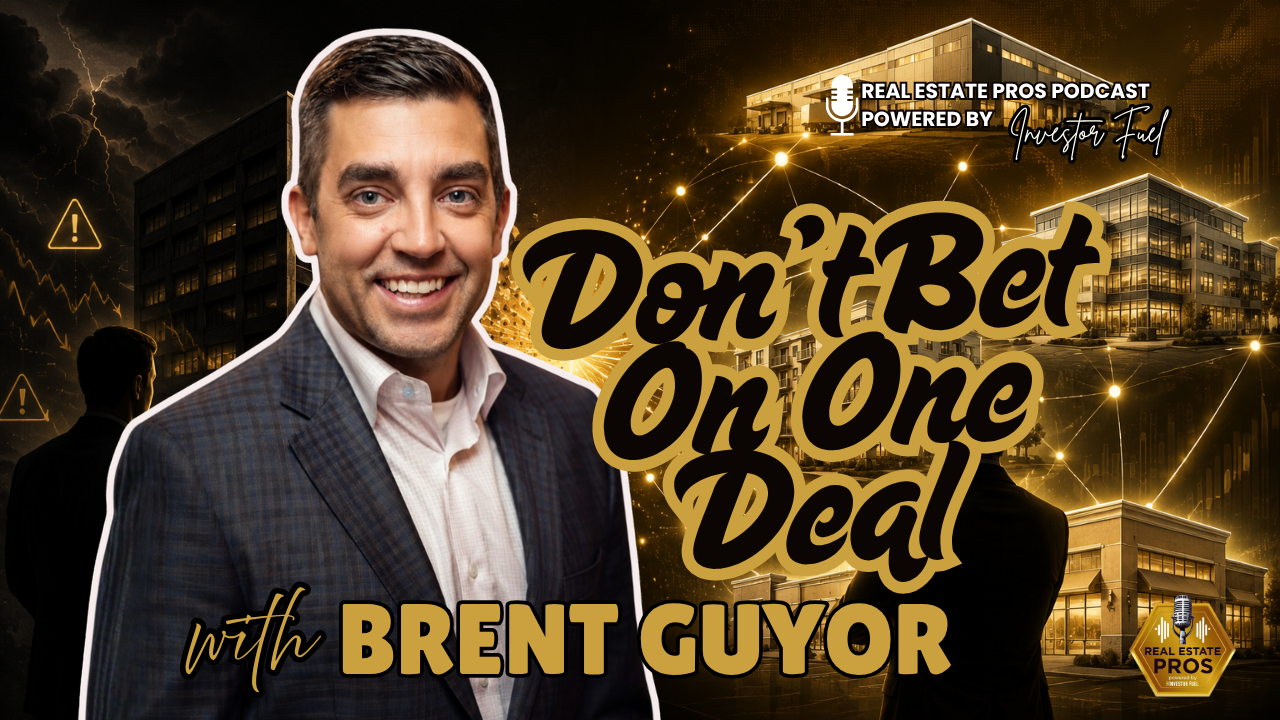
How Jason Neu Built a Transparent Remodeling Company by Fixing the Broken Contractor Process
Show summary
In this episode, Jason shares his journey from industry insider to remodeling expert, emphasizing transparency, building trust, and strategic growth in the remodeling industry. Discover how his unique approach is reshaping customer experience and business success.
Key takeaways
- LuxeLine Remodeling, started about a year and a half ago, focuses on whole-home remodels and additions in DuPage County (Chicago western suburbs) and Milwaukee, with average project spend in the couple-hundred-thousand-dollar range.
- Jason Neu educates customers on product choices (e.g., cabinets for high-moisture rooms, countertop tradeoffs) before they sign a contract so they understand exactly what they're paying for and why, reducing price fear and fear of disruption.
- His near-term growth goal is deliberately limited: 9-10 projects a year in DuPage County or southeastern Wisconsin, prioritizing raving-fan referrals over volume to keep marketing costs low.
- His longer-term strategy is to own more of the upstream supply chain (fabrication, carpentry, manufacturing) beyond just the 'last mile' of installation, arguing that controlling the source lets you control quality and price and pass savings to clients.
- When a deal looked risky (a prior contractor missing for two months, a bounced deposit check), he chose to ask more questions instead of walking away immediately; it turned out to be a miscommunication and the client became one of his largest repeat customers.
- He builds his network through NARI (National Association of the Remodeling Industry) events, local groups like Windy City Networking, and relationships with realtors, designers, and architects rather than relying heavily on paid advertising.
- His networking philosophy: avoid the 'What's in it for me' (WIIFM) mindset common at events, and instead give more than you receive to grow referral relationships faster.
In this episode
- 00:00Cold open: the contractor who went to Europe
- 02:01Introducing Jason Neu and LuxeLine Remodeling
- 02:47LuxeLine's focus: Chicago and Milwaukee whole-home remodels
- 04:08Why transparency is the core of the business
- 09:33A deal that almost fell apart: the bounced deposit check
- 13:48Next goals: 9-10 projects a year and owning more of the supply chain
- 17:50Building a network through referrals, not paid ads
- 22:24How to reach Jason Neu and LuxeLine Remodeling
About the guest
Jason Neu is the owner-operator of LuxeLine Remodeling, a whole-home remodeling and additions company serving the western Chicago suburbs (DuPage County) and Milwaukee. He has spent almost 30 years in the remodeling and building products industry, including VP roles in merchandising, supply chain, and product strategy, and previously ran his own tile company that grew into a full remodeling company over 10 years in Florida. He grew up around the trades, his family owns a contractor-focused hardware store, and he briefly worked as a finished carpenter, plumber, electrician, and flooring installer before founding LuxeLine about a year and a half ago.
Listen to the audio
“We don't want 50 jobs— I don't want volume. I want to build a company where every client of mine has my cell phone number and they actually are honest and they mean it when they refer me to their customers.”
Jason Neu
“When you can have your business built on referrals, there is no acquisition cost. The only acquisition cost you have is your time and your energy that you pour into the relationship.”
Jason Neu
“If we can adopt a spirit of giving rather than receiving, I promise you the relationship funnel will expand threefold, twice as fast. So give more than you receive, especially at networking events.”
Jason Neu
Questions answered in this episode
What areas does LuxeLine Remodeling serve?
LuxeLine operates in the Chicago market, primarily the western suburbs including DuPage County, and also has a team in Milwaukee since Jason Neu was born and raised there.
What size projects does LuxeLine Remodeling take on?
They focus on larger home remodeling work like whole-home remodels and additions. The average customer spends a couple hundred thousand dollars on a project.
How does LuxeLine build transparency with customers?
Jason educates homeowners up front on product choices before they sign a contract, explaining things like which cabinet material works in a high-moisture room or why one countertop is better than another, so customers know exactly what they're buying and why. He says every customer has a fear, whether it's price, being disrupted for months, or something unknown, and the contractor's job is to address that fear directly.
How does Jason Neu approach growing his referral network?
He attends NARI (National Association of the Remodeling Industry) events and local networking groups like Windy City Networking, and builds relationships with realtors, designers, and architects. His main advice is to give more than you receive at networking events rather than focusing on 'what's in it for me,' which he says expands your relationship funnel faster.
What is LuxeLine Remodeling's growth strategy?
Rather than chasing volume, Jason wants only nine to ten projects a year in DuPage County or southeastern Wisconsin so every client has his cell number and becomes a genuine referral source. Longer term, he's working to own more of the supply chain upstream of remodeling (fabrication, carpentry, manufacturing) so he controls quality and price instead of relying on a middleman.
What should contractors or investors learn from Jason's story about the bounced check?
He met a home flipper whose prior contractor had left for two months, took the job despite red flags, and her deposit check initially bounced due to a fraud alert mix-up. Rather than immediately walking away, he asked more questions and kept trust going, and that customer became one of his largest repeat clients, reinforcing that trust should run both ways between contractor and client.
Resources and links
- Premium Home Remodeling’s Website
- Premium Home Remodeling on Instagram
- Premium Home Remodeling on Youtube
- Jason Neu on LinkedIn
- Premium Home Remodeling on LinkedIn
- Jason Neu’s Phone Number: (773) 771-9245
Full transcript
Jason Neu (00:00)
It was actually a great learning moment for me. And I know that any other contractor listening to this is probably going to relate. This was a recent— let’s call it a transaction. I met with this homeowner who was actually a very large home flipper. And I showed up to the job site and part of the project was already done and part of the project needed to be finished. And the conversation was more about my contractors went to Europe and they’re not coming back for two months.
Meghan Escobar (02:01)
Hello everyone, welcome back to Real Estate Pros Podcast. I’m your host, Meghan Escobar, and today I have the pleasure of sitting down with our guest Jason Neu. I really have been looking forward to this conversation. He is making some moves in the remodeling world. He is owner-operator of LuxeLine Remodeling in the Chicago area. And I think our audience is going to be able to walk away with some great insights from your journey and the way that you have built your business. So thank you so much for taking the time, Jason, to be here. Let’s dive in.
Jason Neu (2:34)
Glad to be here.
Meghan Escobar (02:36)
You’re welcome. First off, for people who may not be familiar with your worlds, give us a thirty-thousand-foot view of what your main focus is these days and what markets you’re operating in.
Jason Neu (02:47)
Yeah. So we started LuxeLine, the brand, about a year and a half ago in the Chicago market. And I was born and raised in Milwaukee, so it just made sense since we’re so close to have a Milwaukee operation too. So we’ve got teams both in Milwaukee and in the Chicago suburbs. We do most of our work in the Western suburbs of Chicago, so a lot of in DuPage County. And the reason that we started LuxeLine is we did not feel comfortable with how the remodeling industry has not been as transparent as it should be, and the process in which homeowners have to go through to accept such large contracts. So we cater to, I would say, larger home remodeling. So we do whole-home remodeling, additions. So, you know, the average customer is going to spend a couple hundred thousand dollars on a remodeling project. And so we understand that process, and we know where the landmines are for the customer. And so we exist because we want to change that narrative for the customer. And so we can— we can deep dive into that in a little bit when we talk about some other stuff, but that’s really why we exist.
Meghan Escobar (04:08)
Yeah. I love that. And you know what caught my attention about the way that you’ve been able to provide transparency was something that came up a lot during our pre-conversation here. And, you know, I think that’s something that’s really important from the, you know, contractor to the customer. And you know, like you mentioned, that a lot of people don’t provide. And so—
Jason Neu (04:33)
Yeah.
Meghan Escobar (04:35)
—I— I feel like that’s just not an easy thing to do, especially in the climate that we’re in with cost of everything and people trying to negotiate and and all those things. So talk to us a little bit about, you know, why that’s such an important piece in your business to provide.
Jason Neu (04:52)
Yeah, that’s a great callout, Meghan. And again, I wanted to expand upon that because there really is a broken process here with a lot of contractors that I meet with and the homeowners that I talk to. And it’s again, it’s the reason why we decided to exist. Look, I’ve spent almost 30 years inside of this industry, and I think it’s our strength and our huge value prop. That journey really was part of merchandising, supply chain, product strategy. These were VP roles where I saw exactly how products were made, how they got priced, how they got marked up, and what separates good product, like the product you should be using, versus maybe a good sales story. But it really began for me as a child. So I grew up in and around the trades, and my family actually owns a specialized hardware store that’s geared towards contractors, and it’s still in business today. So, I kind of grew up in that— that surrounding, if you will.
So I decided to take a journey down that— that trail to become a tradesman. And so, and I was a— I was a finished carpenter for a week, I was a plumber for a week, I was an electrician for a week, I was a flooring guy for a week. I kind of tried them all, and I kind of fell in love with flooring. And so for— for 10, almost 11 years, I ran my own tile company, and that tile company grew into a full-fledged remodeling company, 10 years’ worth down in Florida. So when I tell my customer and I sit in front of them and I tell them we’re there to help them through the process, the transparency comes when you can actually help that customer who’s going to give you a couple hundred thousand dollars to renovate their home, a sense of security and credibility that what we’re explaining to them as far as product go, it’s the best product for their project and here’s why. And so when they’re signing that contract, they know exactly what they’re buying and why they’re buying it.
You know, for example, the type of cabinet that they’re going to use in a moisture— in a high-moisture room, or the kind of countertop they’re going to buy, and the good, the bad, the ugly of why you wouldn’t choose this versus this. So there is a real education in the front end before they even sign anything. And so I feel like, you know, we’re not exclusive to that experience, but we excel and we really do well with that process. And I think that that’s really what separates us from most contractors in the market, and why almost all of our customers that you would contact would tell you that that was probably one of the most pleasurable parts of the experiences for them because there was a lot of… look, every customer has fear, right? Either it’s a price fear, or it’s a fear of being disrupted for months on end, or some other unknown fear. And our job as contractors or realtors is to address those fears. And that’s part of the transparency that we bring. So our entire process is built on transparency, right from the products to the process to our teams. That’s why we exist, and I think that that’s what makes us unique.
Meghan Escobar (09:04)
Yeah, I think that’s huge as well. And, you know, being able to provide such transparency creates a trust which will help customers overcome that fear. So that’s a— a— a— a really great quality to have, for sure. And you know, every operator that I know has a moment where things got real. That could be a deal that had gone sideways, Jason, or a time that you had to pivot really fast. Would you mind sharing one of those moments for you?
Jason Neu (09:33)
Where I had to pivot really fast?
Meghan Escobar (09:35)
Yeah. Or a deal that went bad that you know, last minute didn’t expect, or yeah, any of those situations. Yeah. Just a moment where you— you as a business owner were like, “Crap, this is either, you know, we’re— we’re— we’re either gonna overcome this or we’re throwing in the towel.”
Jason Neu (09:52)
Yeah, it was a— it was actually a great learning moment for me. And I know that any other contractor listening to this is probably going to relate. This was a recent— let’s call it a transaction. I met with this homeowner who was actually a very large home flipper. And I showed up to the job site and part of the project was already done and part of the project needed to be finished. And the conversation was more about, “My contractors went to Europe and they’re not coming back for two months.” That right there, that single phrase could be repeated several times because we’ve all experienced that contractor left for two months and they’re not coming back. So for me, that was already a red flag. Right. Something happened with one contractor or two contractors, and now I’m here to clean up. Fast-forward… I decide that we’re going to give this a shot, right? We signed the contract, she gives me a deposit, and that deposit check bounced. So—
Meghan Escobar (12:05)
Wow.
Jason Neu (12:06)
The reason I say all this is that there are times where as contractors or as realtors, we make decisions, even though our gut tells us we probably shouldn’t, we do anyways. And it turns out that the check was just a miscommunication on a fraudulent alert that she didn’t catch, so the money was fine. The contractor that she had hired was really in Europe for two months because he came back, and he came to the job site and we met each other, and the story was true. And it turns out this customer of mine is now one of our largest repeat customers that we have. So the moral of the story is, is that even though as contractors, we have these preconceived notions that if something is said or we see something that we have to back out right away… and sometimes maybe I just got lucky, but maybe, just maybe, it was the fact that I had to trust a little bit and dig a little bit deeper and ask more questions and ask more questions and get different answers. And so don’t always assume that because something is the way it has always been that it needs to be written off, right? So just trust a little bit sometimes and it may turn out to your benefit.
Meghan Escobar (12:46)
Wow. Yeah, Jason, that’s a really incredible perspective. And I— I— I think our listeners and put— other contractors may be able to take some value from that. Well, because when you— when you look at it from the outside in, it’s like, well, you’re asking the customer to trust you, so it’s a two— it’s— it should be a two-way street.
Jason Neu (13:09)
Yeah. Right. Yeah.
Meghan Escobar (13:11)
And that’s the stuff that people don’t talk about enough. You know, honestly, it’s truly what I believe separates the folks who just dabble from the ones who are, you know, here to stay in the game long term. And with thirty years of experience, I think that speaks volume for you, Jason, even though, you know, LuxeLine is— is a fairly new project for you, doesn’t eliminate your expertise and experience in the field. So let me ask you this: what do you guys most focus on scaling or solving next? What is the next real big goal for Jason and LuxeLine Remodeling?
Jason Neu (13:48)
Yeah, I love that question because it— it encourages me to make sure that my vision board is up to date, right? My goals are set appropriately. Look, I— I need to stay focused, right? So we are a year and a half in, we are infants in this marketplace. We’re not new to remodeling, but we’re new to this market. And so we are— our main goal right now is just to get brand awareness any way that we can, but to answer your question directly, yes, we do have goals and we do have things in our sights. There’s really two answers here: there is something that’s happening soon, and then there’s the honest answer, right? In the near term, the goal is quite simple. LuxeLine Remodeling wants between, let’s say, nine and 10 projects in a year in DuPage County or in southeastern Wisconsin, and that is for a specific reason. We don’t want 50 jobs— I don’t want volume. I want to build a company where every client of mine has my cell phone number and they actually are honest and they mean it when they refer me to their customers. I want to build raving fans so that our marketing budget doesn’t have to be so high. But here’s the honest answer, and it’s a little bit bigger. So my background, a lot of it is in supply chain, so when I look at remodeling, I see everything that’s upstream of it, right? It’s the fabrication, it’s the carpentry, it’s the plumbing, it’s the manufacturing. So I am currently, actively working towards owning more of that chain and not just the last mile that I’m currently in, right? And so when you control the source, you control the quality and you control the price. So whatever you save in that, you can pour that then into your clients instead of into a middleman. And so I don’t want to say too much more than that, but you know, stay tuned, yeah. But underneath all of that is my real mission. And the real mission for me is to re-educate— re-educate this industry’s customer, right? One homeowner, one podcast episode, one kitchen table at a time kind of thing. So if in 10 years, a homeowner in one of my small cities can read a remodeling quote and actually understand something, and some contractor grumbles that his clients are asking harder questions now… I’ll take that, right? That’s the legacy that I’m after, so.
Meghan Escobar (17:00)
I think that’s huge. It’s huge. And you know, that next move is going to be able to either compound things for you or— or create a little chaos in the middle, depending on how it’s played. And now I know a lot of people listening, they are either very on in their journey or journey, Jason, you know, getting their feet wet in the real estate world, whether that’s becoming a developer, an investor, a remodeler, or whatever the case may be. And we also have, you know, folks who have been in the game for a long time and are just really looking to level up to the next best thing. And so I really think that they would benefit from hearing this. Like when it comes to building relationships and growing your network, what do you feel has been or has made the biggest difference for you?
Jason Neu (17:50)
In growing our network?
Meghan Escobar (17:51)
Yeah, and just creating and building specific relationships depending on, you know, the rooms that you’re in, the— the people that you’re surrounding yourself with. How do you think that plays a role in your success as a business?
Jason Neu (18:05)
Well, it’s paramount. And every great realtor or every great contractor, if they want to have scale, really grow the business, can’t just be all about— this is my opinion— it can’t just be about paid advertisement, right? It can’t be about spending thousands of dollars a month to get a conversion rate that you might get from social media or paid Google ads. The way you can build real business, repeat business, is through connections. It’s through the people that we meet. It’s the referral business— every contractor, every realtor, that’s what they want. There’s no… look, when you can have your business built on referrals, there is no acquisition cost. The only acquisition cost you have is your time and your energy that you pour into the relationship. And so, like I said, we’re new to the market, and so we’re actively participating in NARI events, the National Association of the Remodeling Industry. We attend a lot of networking sessions— I think one’s called Windy City Networking. We spend a lot of time networking ourselves. We also do a lot of podcasts— we have a podcast— but we also do a lot of social media, but the social media is based on education. So we like to look at the way we market ourselves that matches why we exist, right? It’s about this industry, the remodeling industry. In our opinion, the industry has not done homeowners, customers a great service on educating them, because for years— for years— it’s been kind of faux pas that the homeowner needs to ask a lot of questions to the contractor. And the contractor wasn’t really expecting them to ask a lot of questions. It just was, “Here’s the price, here’s what we’re going to do,” and they did it. And so in the day and age that we live, the speed of knowledge has not caught up to the industry’s trends of transparency. And so it’s only through connections with people that you can explain that story. You can explain that in jargon on a marketing advertisement— it’s really, really hard. And so it’s through the connections. And so we are looking for more ways to get connected here in the markets— realtors is a great one for us, designers, architects, these are great connections for us. But I think here’s the most important thing, and I think that every listener will understand this and see the value in it, is that I go to too many networking events where it’s just… have you heard the phrase WIIFM?— “What’s in it for me?” Yeah. “What’s in it for me?” Yeah. You’re seeing way, way, way, way, way too much WIIFM at these events. Way too much. If we can adopt a spirit of giving rather than receiving, I promise you the relationship funnel will expand threefold, twice as fast. So give more than you receive, especially at networking events.
Meghan Escobar (21:21)
A hundred percent. I can’t agree with you more. And yes, I’m very familiar with that term. And truthfully, you know, it’s— again, incredible perspective here, Jason. Like, that is what you have to understand and what the other person is always thinking: what’s in it for me? And so instead of thinking about that on an internal perspective, right, externalize it. Allow the— allow the— the individual to receive, like, what can you do for them? Relationships are everything in this space, you know. And it’s something that you just can’t fake. And coming from somebody who stands on transparency and authenticity, I think, you know, it— it makes a huge difference and speaks volume about who you are as an operator and as an individual. And Jason, you know, before we wrap things here, if someone wanted to reach you, connect with you, and just potentially collaborate or learn more about what you’re doing, what would be the best way for one to reach you? Is it a social or email, phone number?
Jason Neu (22:24)
Yeah, I mean, we’re— we’re pretty active on all of those, you know. Like everyone, we have instant alerts when we have messages or, you know, someone pings us through social media. Our website is always the best way, because there— there’s access, there’s links to the social media, there’s a link to the podcast, there’s links to everything on our— on our website. It’s www.luxelineremodeling.com. Can always call us at (773) 771-9245. But yeah.
Meghan Escobar (23:00)
Okay. Well perfect. Thank you again for your time, your story, and more importantly, your perspective. You’ve created a lot of value here for our guest, and I— I know for a fact that we need more people in this space who are doing things the right way. So thank you again, Jason, for being here. And for those of you that are tuning in, if you did get any value from this, please be sure to hit subscribe. We’ve got more conversations coming in with operators just like Jason here, who are out here building real businesses in real time with real people. We’ll see you on the next episode.